

The DOI matches its Crossref record; 1 of the 1 references it cites were found in a registry or an index.
Functional characterization and comparative analysis of gene repression-mediating domains interacting with yeast pleiotropic corepressors Sin3, Cyc8 and Tup1
Open accessPreprint — published as 10.1007/s00294-023-01262-6
Abstract
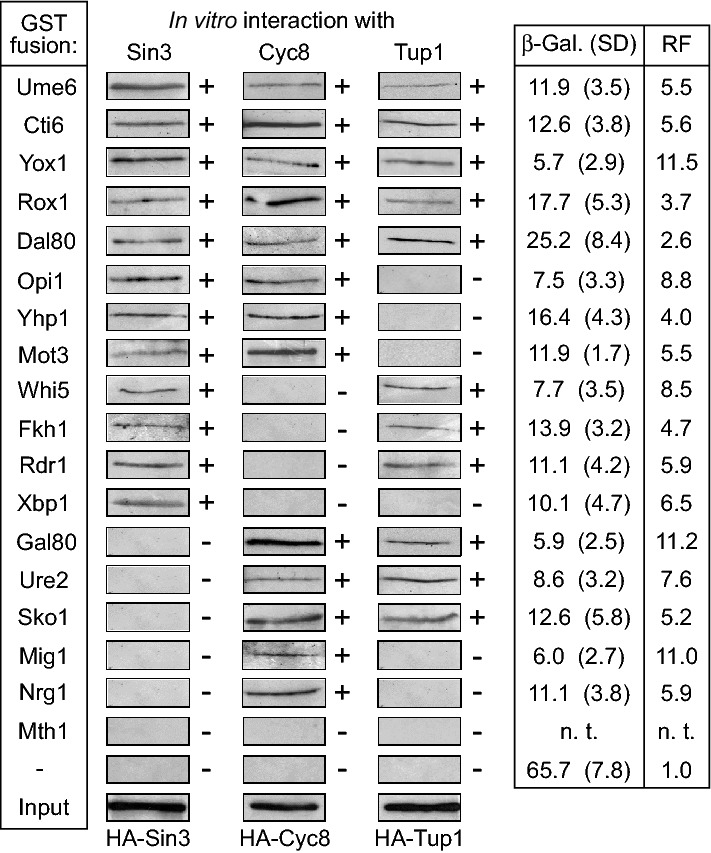
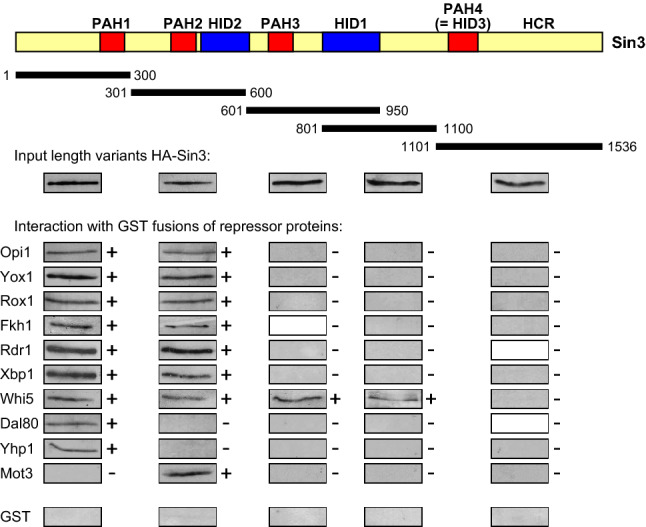
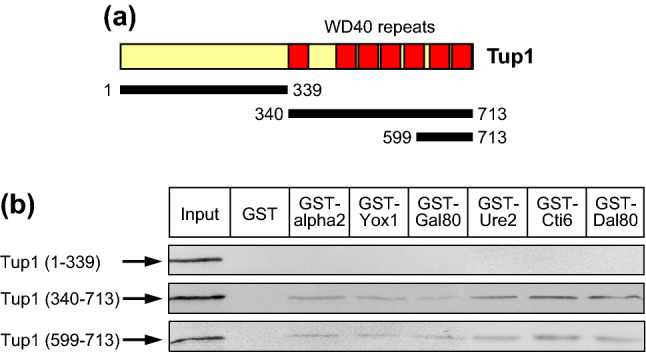
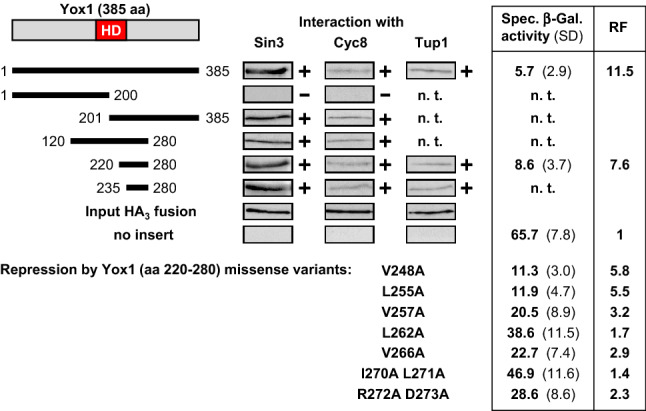
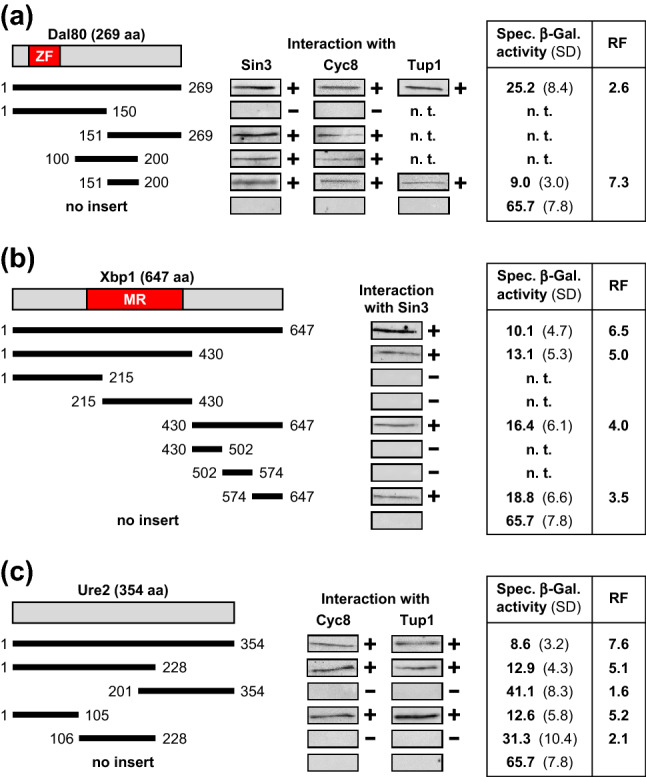
Transcriptional corepressors Sin3, Cyc8 and Tup1 are important for downregulation of gene expression by recruiting various histone deacetylases once they gain access to defined genomic locations by interaction with pathway-specific repressor proteins. In this work we systematically investigated whether 17 yeast repressor proteins (Cti6, Dal80, Fkh1, Gal80, Mig1, Mot3, Nrg1, Opi1, Rdr1, Rox1, Sko1, Ume6, Ure2, Xbp1, Yhp1, Yox1 and Whi5) representing several unrelated regulatory pathways are able to bind to Sin3, Cyc8 and Tup1. Our results show that paired amphipathic helices 1 and 2 (PAH1 and PAH2) of Sin3 are functionally redundant for some regulatory pathways. WD40 domains of Tup1 proved to be sufficient for interaction with repressor proteins. Using length variants of selected repressors, we mapped corepressor interaction domains (CIDs) in vitro and assayed gene repression in vivo. Systematic comparison of CID minimal sequences allowed us to define several related positional patterns of hydrophobic amino acids some of which could be confirmed as functional important by site-directed mutagenesis. Although structural predictions indicated that certain CIDs may be α-helical, most repression domains appear to be randomly structured and must be considered as intrinsically disordered regions (IDR) adopting a defined conformation only by interaction with a corepressor.
Overview
The claims and statistics of this paper haven’t been checked yet.
Run the check — free, no account needed. It reads the open-access text and checks the sources it cites.
Integrity signals
Registry
Cites
Statistics
Figures
Verification
Claims the paper makes
The claims and statistics of this paper haven’t been checked yet.
Run the check — free, no account needed. It reads the open-access text and checks the sources it cites.
Self-check
Percentages, sums and reported differences re-computed from the paper’s own numbers.
The self-check needs the paper’s full text.
Citations
Cites
Highly accurate protein structure prediction with AlphaFold
Jumper, J., Evans, R., Pritzel, A., Green, T., Figurnov, M., Ronneberger, O., Tunyasuvunakool, K., Bates, R., Žídek, A., Potapenko, A., et al. (2021) · Nature · doi:10.1038/s41586-021-03819-2 · Cited by 43,764
Research works printed but not linked: 67
- Adams GE, Chandru A, Cowley SM (2018) Co-repressor, co-activator and general transcription factor: the many faces of the Sin3 histone deacetylase (HDAC) complex. Biochem J 475:3921–3932. doi: 10.1042/BCJ20170314 · DOI
- Aref R, Sanad MNME, Schüller HJ (2021) Forkhead transcription factor Fkh1: insights into functional regulatory domains crucial for recruitment of Sin3 histone deacetylase complex. Curr Genet 67:487–499. doi: 10.1007/s00294-021-01158-3 · DOI
- Aref R, Schüller HJ (2020) Functional analysis of Cti6 core domain responsible for recruitment of epigenetic regulators Sin3, Cyc8 and Tup1. Curr Genet 66:1191–1203. doi: 10.1007/s00294-020-01109-4 · DOI
- Baxa U, Speransky V, Steven AC, Wickner RB (2002) Mechanism of inactivation on prion conversion of the Saccharomyces cerevisiae Ure2 protein. Proc Natl Acad Sci USA 99:5253–5260. doi: 10.1073/pnas.082097899 · DOI
- Brubaker K, Cowley SM, Huang K, Loo L, Yochum GS, Ayer DE, Eisenman RN, Radhakrishnan I (2000) Solution structure of the interacting domains of the Mad-Sin3 complex: implications for recruitment of a chromatin-modifying complex. Cell 103:655–665. doi: 10.1016/s0092-8674(00)00168-9 · DOI
- Carrozza MJ, Li B, Florens L, Suganuma T, Swanson SK, Lee KK, Shia WJ, Anderson S, Yates J, Washburn MP, Workman JL (2005) Histone H3 methylation by Set2 directs deacetylation of coding regions by Rpd3S to suppress spurious intragenic transcription. Cell 123:581–592. doi: 10.1016/j.cell.2005.10.023 · DOI
- J Biol Chem 274:205–210. doi: 10.1074/jbc.274.1.205 · DOI
- Cooper TG (2002) Transmitting the signal of excess nitrogen in Saccharomyces cerevisiae from the Tor proteins to the GATA factors: connecting the dots. FEMS Microbiol Rev 26:223–238. doi: 10.1111/j.1574-6976.2002.tb00612.x · DOI
- Cortajarena AL, Wang J, Regan L (2010) Crystal structure of a designed tetratricopeptide repeat module in complex with its peptide ligand. FEBS J 277:1058–1066. doi: 10.1111/j.1742-4658.2009.07549.x · DOI
- Cumberworth A, Lamour G, Babu MM, Gsponer J (2013) Promiscuity as a functional trait: intrinsically disordered regions as central players of interactomes. Biochem J 454:361–369. doi: 10.1042/BJ20130545 · DOI
- Cunningham TS, Cooper TG (1993) The Saccharomyces cerevisiae DAL80 repressor protein binds to multiple copies of GATAA-containing sequences (URSGATA). J Bacteriol 175:5851–5861. doi: 10.1128/jb.175.18.5851-5861.1993 · DOI
- D'Andrea LD, Regan L (2003) TPR proteins: the versatile helix. Trends Biochem Sci 28:655–662. doi: 10.1016/j.tibs.2003.10.007 · DOI
- Davie JK, Edmondson DG, Coco CB, Dent SY (2003) Tup1-Ssn6 interacts with multiple class I histone deacetylases in vivo. J Biol Chem 278:50158–50162. doi: 10.1074/jbc.M309753200 · DOI
- Deckert J, Khalaf RA, Hwang SM, Zitomer RS (1999) Characterization of the DNA binding and bending HMG domain of the yeast hypoxic repressor Rox1. Nucleic Acids Res 27:3518–3526. doi: 10.1093/nar/27.17.3518 · DOI
- Grigat M, Jäschke Y, Kliewe F, Pfeifer M, Walz S, Schüller HJ (2012) Multiple histone deacetylases are recruited by corepressor Sin3 and contribute to gene repression mediated by Opi1 regulator of phospholipid biosynthesis in the yeast Saccharomyces cerevisiae. Mol Genet Genomics 287:461–472. doi: 10.1007/s00438-012-0692-x · DOI
- Grzenda A, Lomberk G, Zhang JS, Urrutia R (2009) Sin3: master scaffold and transcriptional corepressor. Biochim Biophys Acta 1789:443–450. doi:10.1016/j.bbagrm.2009.05.007 · DOI
- He X, Nie Y, Zhou H, Hu R, Li Y, He T, Zhu J, Yang Y, Liu M (2021) Structural insight into the binding of TGIF1 to SIN3A PAH2 domain through a C-terminal amphipathic helix. Int J Mol Sci 22:12631. doi: 10.3390/ijms222312631 · DOI
- Hellauer K, Akache B, MacPherson S, Sirard E, Turcotte B (2002) Zinc cluster protein Rdr1p is a transcriptional repressor of the PDR5 gene encoding a multidrug transporter. J Biol Chem 277:17671–17676. doi: 10.1074/jbc.M201637200 · DOI
- Hildmann C, Riester D, Schwienhorst A (2007) Histone deacetylases - an important class of cellular regulators with a variety of functions. Appl Microbiol Biotechnol 75:487–497. doi: 10.1007/s00253-007-0911-2 · DOI
- Hongay C, Jia N, Bard M, Winston F (2002) Mot3 is a transcriptional repressor of ergosterol biosynthetic genes and is required for normal vacuolar function in Saccharomyces cerevisiae. EMBO J 21:4114–4124. doi: 10.1093/emboj/cdf415 · DOI · Paper page
- Jäschke Y, Schwarz J, Clausnitzer D, Müller C, Schüller HJ (2011) Pleiotropic corepressors Sin3 and Ssn6 interact with repressor Opi1 and negatively regulate transcription of genes required for phospholipid biosynthesis in the yeast Saccharomyces cerevisiae. Mol Genet Genomics 285:91–100. doi: 10.1007/s00438-010-0589-5 · DOI
- Kadosh D, Struhl K (1997) Repression by Ume6 involves recruitment of a complex containing Sin3 corepressor and Rpd3 histone deacetylase to target promoters. Cell 89:365–371. doi: 10.1016/s0092-8674(00)80217-2 · DOI
- Kliewe F, Engelhardt M, Aref R, Schüller HJ (2017) Promoter recruitment of corepressors Sin3 and Cyc8 by activator proteins of the yeast Saccharomyces cerevisiae. Curr Genet 63:739–750. doi: 10.1007/s00294-017-0677-8 · DOI
- Komachi K, Redd MJ, Johnson AD (1994) The WD repeats of Tup1 interact with the homeo domain protein α2. Genes Dev 8:2857–2867. doi: 10.1101/gad.8.23.2857 · DOI
- Kuchin S, Carlson M (1998) Functional relationships of Srb10-Srb11 kinase, carboxy-terminal domain kinase CTDK-I, and transcriptional corepressor Ssn6-Tup1. Mol Cell Biol 18:1163–1171. doi: 10.1128/MCB.18.3.1163 · DOI
- Kumar GS, Xie T, Zhang Y, Radhakrishnan I (2011) Solution structure of the mSin3A PAH2-Pf1 SID1 complex: a Mad1/Mxd1-like interaction disrupted by MRG15 in the Rpd3S/Sin3S complex. J Mol Biol 408:987–1000. doi: 10.1016/j.jmb.2011.03.043 · DOI
- Laherty CD, Yang WM, Sun JM, Davie JR, Seto E, Eisenman RN (1997) Histone deacetylases associated with the mSin3 corepressor mediate mad transcriptional repression. Cell 89:349–356. doi: 10.1016/s0092-8674(00)80215-9 · DOI
- Lettow J, Aref R, Schüller HJ (2022) Transcriptional repressor Gal80 recruits corepressor complex Cyc8-Tup1 to structural genes of the Saccharomyces cerevisiae GAL regulon. Curr Genet 68:115–124. doi: 10.1007/s00294-021-01215-x · DOI
- Mai B, Breeden L (2000) CLN1 and its repression by Xbp1 are important for efficient sporulation in budding yeast. Mol Cell Biol 20:478–487. doi: 10.1128/MCB.20.2.478-487.2000 · DOI
- Malavé TM, Dent SY (2006) Transcriptional repression by Tup1-Ssn6. Biochem Cell Biol 84:437–443. doi: 10.1139/o06-073 · DOI
- Marcum RD, Radhakrishnan I (2020) The neuronal transcription factor Myt1L interacts via a conserved motif with the PAH1 domain of Sin3 to recruit the Sin3L/Rpd3L histone deacetylase complex. FEBS Lett 594:2322–2330. doi: 10.1002/ 1873-3468.13811
- Mumberg D, Müller R, Funk M (1994) Regulatable promoters of Saccharomyces cerevisiae: comparison of transcriptional activity and their use for heterologous expression. Nucleic Acids Res 22:5767–5768. doi: 10.1093/nar/22.25.5767 · DOI
- Nehlin JO, Carlberg M, Ronne H (1992) Yeast SKO1 gene encodes a bZIP protein that binds to the CRE motif and acts as a repressor of transcription. Nucleic Acids Res 20:5271–5278. doi: 10.1093/nar/20.20.5271 · DOI
- Nomura M, Uda-Tochio H, Murai K, Mori N, Nishimura Y (2005) The neural repressor NRSF/REST binds the PAH1 domain of the Sin3 corepressor by using its distinct short hydrophobic helix. J Mol Biol 354:903–915. doi: 10.1016/j.jmb.2005.10.008 · DOI
- Östling J, Carlberg M, Ronne H (1996) Functional domains in the Mig1 repressor. Mol Cell Biol 16:753–761. doi: 10.1128/MCB.16.3.753 · DOI
- Papamichos-Chronakis M, Petrakis T, Ktistaki E, Topalidou I, Tzamarias D (2002) Cti6, a PHD domain protein, bridges the Cyc8-Tup1 corepressor and the SAGA coactivator to overcome repression at GAL1. Mol Cell 9:1297–1305. doi: 10.1016/ s1097-2765(02)00545-2
- Pascual-Ahuir A, Posas F, Serrano R, Proft M (2001) Multiple levels of control regulate the yeast cAMP-response element-binding protein repressor Sko1p in response to stress. J Biol Chem 276:37373–37378. doi: 10.1074/jbc.M105755200 · DOI
- Pramila T, Miles S, GuhaThakurta D, Jemiolo D, Breeden LL (2002) Conserved homeodomain proteins interact with MADS box protein Mcm1 to restrict ECB-dependent transcription to the M/G1 phase of the cell cycle. Genes Dev 16:3034–3045. doi: 10.1101/gad.1034302 · DOI
- Proft M, Struhl K (2002) Hog1 kinase converts the Sko1-Cyc8-Tup1 repressor complex into an activator that recruits SAGA and SWI/SNF in response to osmotic stress. Mol Cell 9:1307–1317. doi: 10.1016/s1097-2765(02)00557-9 · DOI
- Parnell EJ, Parnell TJ, Stillman DJ (2021) Genetic analysis argues for a coactivator function for the Saccharomyces cerevisiae Tup1 corepressor. Genetics 219:iyab120. doi: 10.1093/genetics/iyab120 · DOI
- Sahu SC, Swanson KA, Kang RS, Huang K, Brubaker K, Ratcliff K, Radhakrishnan I (2008) Conserved themes in target recognition by the PAH1 and PAH2 domains of the Sin3 transcriptional corepressor. J Mol Biol 375:1444–1456. doi:10.1016/j.jmb. 2007.11.079 · DOI
- Schultz J, Marshall-Carlson L, Carlson M (1990) The N-terminal TPR region is the functional domain of SSN6, a nuclear phosphoprotein of Saccharomyces cerevisiae. Mol Cell Biol 10:4744–4756. doi: 10.1128/mcb.10.9.4744-4756.1990 · DOI
- Smith RL, Redd MJ, Johnson AD (1995) The tetratricopeptide repeats of Ssn6 interact with the homeo domain of α2. Genes Dev 9:2903–2910. doi: 10.1101/gad. 9.23.2903 · DOI
- Sprague ER, Redd MJ, Johnson AD, Wolberger C (2000) Structure of the C-terminal domain of Tup1, a corepressor of transcription in yeast. EMBO J 19:3016–3027. doi: 10.1093/emboj/19.12.3016 · DOI
- Spronk CA, Tessari M, Kaan AM, Jansen JF, Vermeulen M, Stunnenberg HG, Vuister GW (2000) The Mad1-Sin3B interaction involves a novel helical fold. Nat Struct Biol 7:1100–1104. doi: 10.1038/81944 · DOI
- Sternberg PW, Stern MJ, Clark I, Herskowitz I (1987) Activation of the yeast HO gene by release from multiple negative controls. Cell 48:567–577. doi: 10.1016/0092-8674(87)90235-2 · DOI
- Stirnimann CU, Petsalaki E, Russell RB, Müller CW (2010) WD40 proteins propel cellular networks. Trends Biochem Sci 35:565–574. doi: 10.1016/j.tibs.2010.04.003 · DOI
- Swanson KA, Knoepfler PS, Huang K, Kang RS, Cowley SM, Laherty CD, Eisenman RN, Radhakrishnan I (2004) HBP1 and Mad1 repressors bind the Sin3 corepressor PAH2 domain with opposite helical orientations. Nat Struct Mol Biol 11:738–746. doi: 10.1038/nsmb798 · DOI
- Tzamarias D, Struhl K (1994) Functional dissection of the yeast Cyc8-Tup1 transcriptional co-repressor complex. Nature 369:758–761. doi: 10.1038/369758a0 · DOI
- Tzamarias D, Struhl K (1995) Distinct TPR motifs of Cyc8 are involved in recruiting the Cyc8-Tup1 corepressor complex to differentially regulated promoters. Genes Dev 9:821–831. doi: 10.1101/gad.9.7.821 · DOI
- van Ingen H, Lasonder E, Jansen JF, Kaan AM, Spronk CA, Stunnenberg HG, Vuister GW (2004) Extension of the binding motif of the Sin3 interacting domain of the Mad family proteins. Biochemistry 43:46–54. doi: 10.1021/bi0355645 · DOI
- Varanasi US, Klis M, Mikesell PB, Trumbly RJ (1996) The Cyc8 (Ssn6)-Tup1 corepressor complex is composed of one Cyc8 and four Tup1 subunits. Mol Cell Biol 16:6707–6714. doi: 10.1128/MCB.16.12.6707 · DOI
- Vidal M, Strich R, Esposito RE, Gaber RF (1991) RPD1 (SIN3/UME4) is required for maximal activation and repression of diverse yeast genes. Mol Cell Biol 11:6306–6316. doi: 10.1128/mcb.11.12.6306-6316.1991 · DOI
- Wagner C, Dietz M, Wittmann J, Albrecht A, Schüller HJ (2001) The negative regulator Opi1 of phospholipid biosynthesis in yeast contacts the pleiotropic repressor Sin3 and the transcriptional activator Ino2. Mol Microbiol 41:155–166. doi: 10.1046/ j.1365-2958.2001.02495.x
- Wang H, Stillman DJ (1993) Transcriptional repression in Saccharomyces cerevisiae by a SIN3-LexA fusion protein. Mol Cell Biol 13:1805–1814. doi: 10.1128/mcb.13.3. 1805-1814.1993. · DOI
- Wang H, Clark I, Nicholson PR, Herskowitz I, Stillman DJ (1990) The Saccharomyces cerevisiae SIN3 gene, a negative regulator of HO, contains four paired amphipathic helix motifs. Mol Cell Biol 10:5927–5936. doi: 10.1128/mcb.10.11. 5927-5936.1990 · DOI
- Washburn BK, Esposito RE (2001) Identification of the Sin3-binding site in Ume6 defines a two-step process for conversion of Ume6 from a transcriptional repressor to an activator in yeast. Mol Cell Biol 21:2057–2069. doi: 10.1128/MCB.21.6.2057-2069.2001 · DOI
- sequencing enhances cell proliferation through ERα expression. Sci Rep 8:16000. doi: 10.1038/s41598-018-34290-1 · DOI
- Watson AD, Edmondson DG, Bone JR, Mukai Y, Yu Y, Du W, Stillman DJ, Roth SY (2000) Ssn6-Tup1 interacts with class I histone deacetylases required for repression. Genes Dev 14:2737–2744. doi: 10.1101/gad.829100 · DOI
- Williams FE, Trumbly RJ (1990) Characterization of TUP1, a mediator of glucose repression in Saccharomyces cerevisiae. Mol Cell Biol 10:6500–6511. doi: 10.1128/mcb.10.12.6500-6511.1990 · DOI
- Wong KH, Struhl K (2011) The Cyc8-Tup1 complex inhibits transcription primarily by masking the activation domain of the recruiting protein. Genes Dev 25:2525–2539. doi: 10.1101/gad.179275.111 · DOI
- Wu J, Suka N, Carlson M, Grunstein M (2001) TUP1 utilizes histone H3/H2B specific HDA1 deacetylase to repress gene activity in yeast. Mol Cell 7:117–126. doi: 10.1016/s1097-2765(01)00160-5 · DOI
- Xu C, Min J (2011) Structure and function of WD40 domain proteins. Protein Cell 2:202–214. doi: 10.1007/s13238-011-1018-1 · DOI
- Zaman Z, Ansari AZ, Koh SS, Young R, Ptashne M (2001) Interaction of a transcriptional repressor with the RNA polymerase II holoenzyme plays a crucial role in repression. Proc Natl Acad Sci USA 98:2550–2554. doi: 10.1073/pnas.041611198 · DOI
- Zeytuni N, Zarivach R (2012) Structural and functional discussion of the tetra-trico-peptide repeat, a protein interaction module. Structure 20:397–405. doi: 10.1016/j.str. 2012.01.006 · DOI
- Zhang L, Guarente L (1994) Evidence that TUP1/SSN6 has a positive effect on the activity of the yeast activator HAP1. Genetics 136:813–817. doi: 10.1093/genetics/ 136.3.813 · DOI
- Zhang Z, Reese JC (2005) Molecular genetic analysis of the yeast repressor Rfx1/Crt1 reveals a novel two-step regulatory mechanism. Mol Cell Biol 25:7399–7411. doi: 10.1128/MCB.25.17.7399-7411.2005 · DOI
Metadata
- Authors
- Lettow, J., Kliewe, F., Aref, R., & Schüller, H.-J.
- Affiliations
- Universität Greifswald (DE)
- Universitätsmedizin Greifswald (DE)
- Ain Shams University (EG)
- Corresponding author
- Schüller, Hans-Joachim
- Venue
- Current Genetics
- Publisher
- Research Square Platform LLC
- Published
- 2023-01-18
- Volume
- 69
- Issue
- 2-3
- Pages
- 127-139
- ISSN
- 0172-8083 (ISSN-L)
- PMC
- PMC10163088
- OpenAlex
- W4322720308
- Cited by
- 4
- References
- 1
- Citations by year
- 2026: 1 · 2024: 2 · 2023: 1
- FWCI
- 0.35
- Type
- journal article
- Language
- en
- Open access
- hybrid
- doi.org
- Locations
- Current Genetics (publishedVersion, cc-by)
- Research Square (acceptedVersion, cc-by)
- PubMed Central (publishedVersion, cc-by)
- PubMed (publishedVersion)
- Greater South Information System
- Funders
- Universität Greifswald
- Topics
- Life Sciences › Biochemistry, Genetics and Molecular Biology › Molecular Biology › Genomics and Chromatin Dynamics
- Life Sciences › Biochemistry, Genetics and Molecular Biology › Molecular Biology › Fungal and yeast genetics research
- Life Sciences › Biochemistry, Genetics and Molecular Biology › Molecular Biology › Protein Structure and Dynamics
- Keywords
- corepressors, Sin3, Tup1, gene repression, repressor protein, WD40 domain, intrinsically disordered regions, Saccharomyces cerevisiae, histone deacetylase, protein-protein interaction domains
- MeSH terms
- Carrier Proteins, DNA-Binding Proteins, Glutathione Peroxidase, Nuclear Proteins, Phosphatidate Phosphatase, Prions, Repressor Proteins, Saccharomyces cerevisiae, Transcription Factors, Transcription, Genetic, Gene Expression Regulation, Fungal, Cell Cycle Proteins, Saccharomyces cerevisiae Proteins, Basic-Leucine Zipper Transcription Factors, GATA Transcription Factors, Forkhead Transcription Factors, Co-Repressor Proteins
About these checks
Registry, retraction, Cites and statistics results are computed, not judged, with one exception: a printed reference that no index lists is read once by a model before it counts as a citation error. Claims are extracted by a model and kept only when their quote appears verbatim in the text; each cited source is then checked, with a model’s help, for whether it says what the claim relies on. Those verdicts can be wrong — read the claim’s quote and the cited source before relying on one.
Statistics and arithmetic are recomputed, not judged.
Confidence bands are shown only for fields calibrated on our annotated test set. None is calibrated yet, so no band is shown.
What counts as a claim ›How we measure confidence ›How we check this ›
Are you an author, or do you see a problem with this page? Request a review
How to cite
Cite CoChat for the checks on this page, and the paper for its own findings.
- This page
- CoChat. (2026). Citation check: Functional characterization and comparative analysis of gene repression-mediating domains interacting with yeast pleiotropic corepressors Sin3, Cyc8 and Tup1. https://app.cochat.ai/papers/10.21203/rs.3.rs-2475911/v1
- The paper
- Lettow, J., Kliewe, F., Aref, R., & Schüller, H.-J. (2023). Functional characterization and comparative analysis of gene repression-mediating domains interacting with yeast pleiotropic corepressors Sin3, Cyc8 and Tup1. Current Genetics. https://doi.org/10.21203/rs.3.rs-2475911/v1
