

The DOI matches its Crossref record; 2 of the 2 references it cites were found in a registry or an index.
Deep learning-based classification model for GPR151 activator activity prediction
Open accessPreprint — published as 10.1186/s12859-023-05369-y · Paper page
Abstract
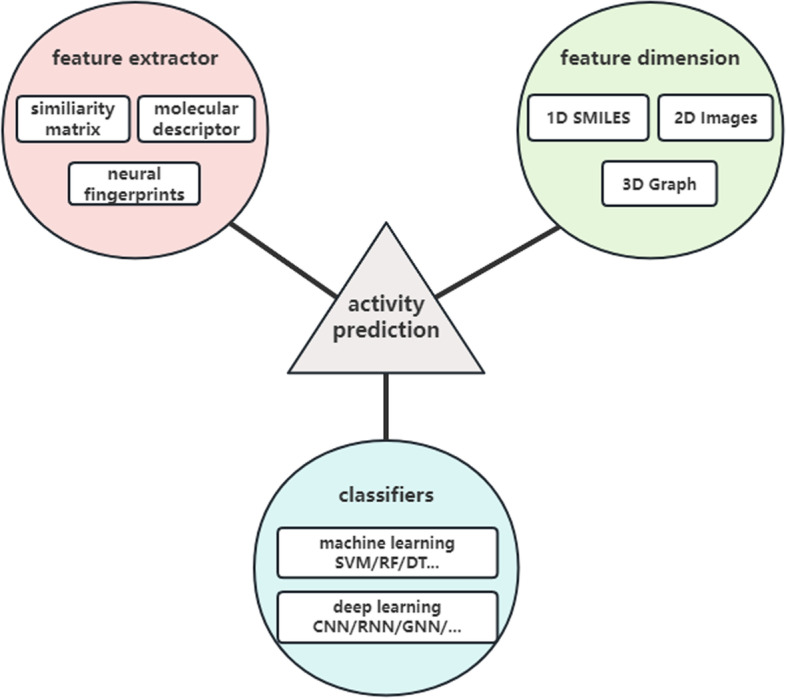
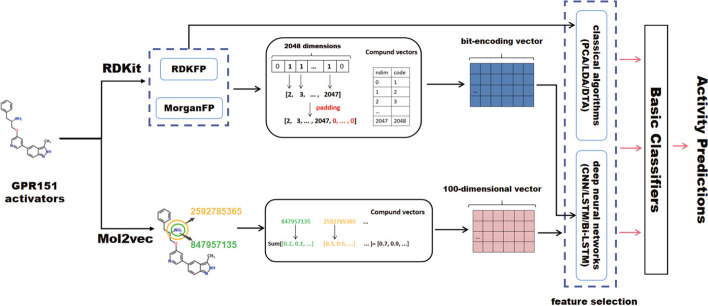
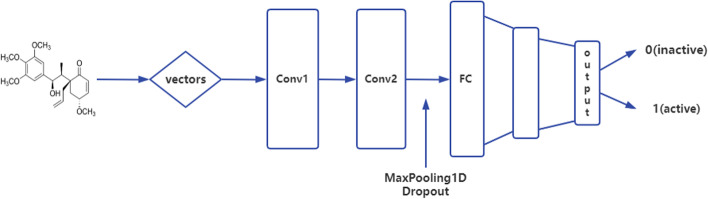
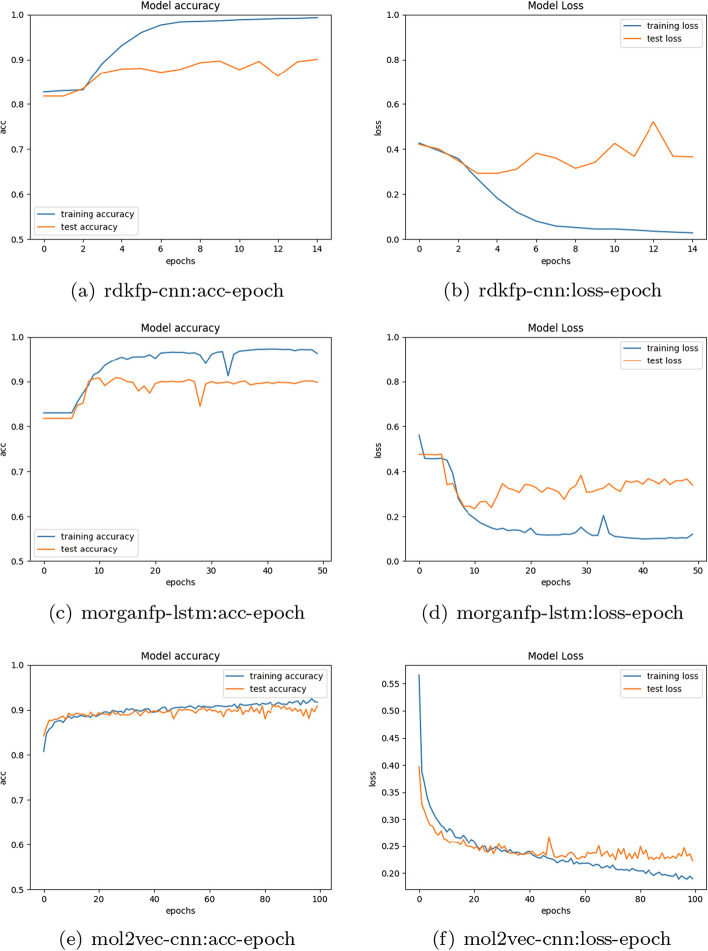
Background: GPR151 is a kind of protein belonging to G protein-coupled receptor (GPCR) family that is closely associated with a variety of physiological and pathological processes. The potential use of GPR151 as a therapeutic target for the management of metabolic disorders has been demonstrated in severalstudies, highlighting the demand to explore its activators further. Activity prediction serves as a vital preliminary step in drug discovery, which is both costly and time-consuming. Thus, the development of reliable activity classification model has become an essential way in the process of drug discovery, aiming to enhance the efficiency of virtual screening. Results: We propose a learning-based method based on feature extractor and deep neural network to predict the activity of GPR151 activators. We first introduce a new molecular feature extraction algorithm which utilizes abag-of-words model in natural language processing to densify the sparse fingerprint vector. Mol2vec method is also used to extract diverse features. Then, we construct three types of deep learning model to enhance the representational capacity of molecules and predicted activity label by five different classifiers. Our method is evaluated on the GPR151 activator dataset built in this paper. The results demonstrate high classification accuracy and stability, with the optimal model Mol2vec-CNN significantly improving performance across multiple classifiers. The svm classifier achieves the best accuracy of 0.92 and F1 score of 0.76 which indicates promising applications for our method in the field of activity prediction. Conclusion: All the experimental results show that the performance of feature extraction algorithm is better than that of the traditional classifiers and the proposed method is appropriately designed.
Overview
The claims and statistics of this paper haven’t been checked yet.
Run the check — free, no account needed. It reads the open-access text and checks the sources it cites.
Integrity signals
Registry
Cites
Statistics
Figures
Verification
Claims the paper makes
The claims and statistics of this paper haven’t been checked yet.
Run the check — free, no account needed. It reads the open-access text and checks the sources it cites.
Self-check
Percentages, sums and reported differences re-computed from the paper’s own numbers.
The self-check needs the paper’s full text.
Citations
Cites
Highly accurate protein structure prediction with AlphaFold
Jumper, J., Evans, R., Pritzel, A., Green, T., Figurnov, M., Ronneberger, O., Tunyasuvunakool, K., Bates, R., Žídek, A., Potapenko, A., et al. (2021) · Nature · doi:10.1038/s41586-021-03819-2 · Cited by 43,764
Review of deep learning: concepts, CNN architectures, challenges, applications, future directions
Alzubaidi, L., Zhang, J., Humaidi, A. J., Al-Dujaili, A., Duan, Y., Al-Shamma, O., Santamaría, J., Fadhel, M. A., Al-Amidie, M., & Farhan, L. (2021) · Journal of Big Data · doi:10.1186/s40537-021-00444-8 · Cited by 7,906
Metadata
- Authors
- Xu, H., Zhang, B., & Liu, Q.
- Affiliations
- Chinese Academy of Sciences (CN)
- Corresponding author
- Liu, Qian
- Venue
- BMC Bioinformatics
- Publisher
- Research Square Platform LLC
- Published
- 2023-04-24
- Volume
- 24
- Issue
- 1
- Pages
- 245-245
- ISSN
- 1471-2105 (ISSN-L)
- PMC
- PMC10257328
- OpenAlex
- W4380085318
- Cited by
- 4
- References
- 2
- Citations by year
- 2025: 4
- FWCI
- 0.57
- Type
- journal article
- Language
- en
- Open access
- gold
- doi.org
- Locations
- BMC Bioinformatics (publishedVersion, cc-by)
- Research Square (acceptedVersion, cc-by)
- PubMed Central (publishedVersion, cc-by)
- PubMed (publishedVersion)
- DOAJ (DOAJ: Directory of Open Access Journals) (submittedVersion, cc-by-sa)
- Funders
- Chinese Academy of Sciences
- Oak Ridge Institute for Science and Education
- Topics
- Life Sciences › Pharmacology, Toxicology and Pharmaceutics › Drug Discovery › Computational Drug Discovery Methods
- Life Sciences › Biochemistry, Genetics and Molecular Biology › Molecular Biology › Machine Learning in Bioinformatics
- Physical Sciences › Materials Science › Materials Chemistry › Machine Learning in Materials Science
- Keywords
- G protein-coupled receptors, feature selection, virtual screening, drug discovery, deep neural network, support vector machine
- MeSH terms
- Deep Learning, Algorithms, Drug Evaluation, Preclinical, Neural Networks, Computer, Drug Discovery
About these checks
Registry, retraction, Cites and statistics results are computed, not judged, with one exception: a printed reference that no index lists is read once by a model before it counts as a citation error. Claims are extracted by a model and kept only when their quote appears verbatim in the text; each cited source is then checked, with a model’s help, for whether it says what the claim relies on. Those verdicts can be wrong — read the claim’s quote and the cited source before relying on one.
Statistics and arithmetic are recomputed, not judged.
Confidence bands are shown only for fields calibrated on our annotated test set. None is calibrated yet, so no band is shown.
What counts as a claim ›How we measure confidence ›How we check this ›
Are you an author, or do you see a problem with this page? Request a review
How to cite
Cite CoChat for the checks on this page, and the paper for its own findings.
- This page
- CoChat. (2026). Citation check: Deep learning-based classification model for GPR151 activator activity prediction. https://app.cochat.ai/papers/10.21203/rs.3.rs-2825069/v1
- The paper
- Xu, H., Zhang, B., & Liu, Q. (2023). Deep learning-based classification model for GPR151 activator activity prediction. BMC Bioinformatics. https://doi.org/10.21203/rs.3.rs-2825069/v1
