

Interpretable AI/ML for High-stakes Tasks with Human-in-the-loop: Critical Review and Future Trends
Open accessThe DOI matches its Crossref record; 49 of the 49 references it cites were found in a registry or an index.
Abstract
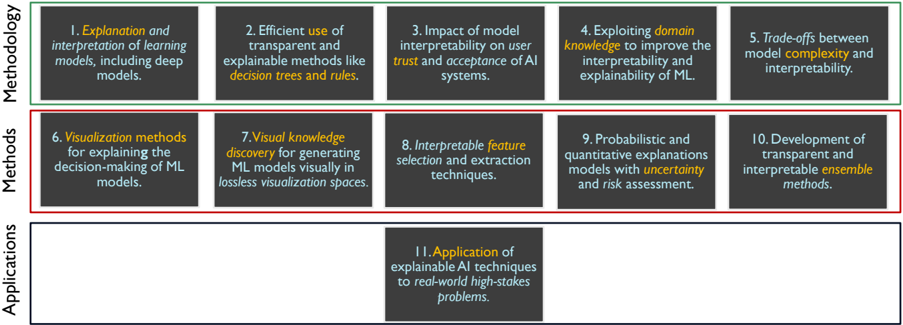
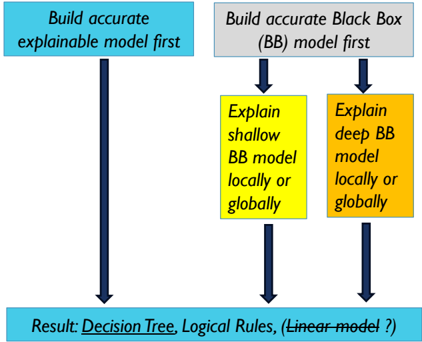
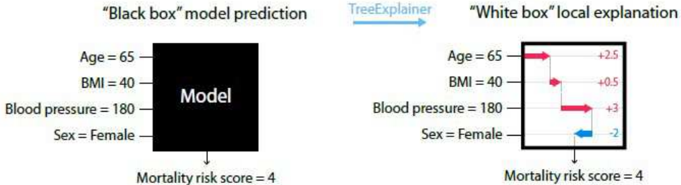
Domains with high-stakes tasks include medical diagnosis, financial decision-making, autonomous vehicles, criminal justice, disaster response, search and rescue operations, and others. In high-stakes tasks the effects of incorrect decisions or predictions can cause significant harm to individuals or society. This paper presents (1) major topics of research in interpretable AI/ML models for high-stakes tasks with human-in-the-loop, and (2) motivates and explains topics of emerging importance in this area. It is widely accepted that model explanations should accurately describe the model’s inner decision making and be convincing to the user. However, quite often these properties are missing. revealing only a quasi-explanation of the model, thus not serving the goal of true model explanation. This paper presents both benefits and deficiencies of current methods and ways to overcome deficiencies with a focus on high-stakes AI/ML tasks, where incorrect decisions or predictions can result in devastating consequences. While a human-in-the-loop is necessary for solving explainability problems, the success heavily depends on human cognitive abilities and limitations. This makes human visual knowledge discovery with granular computing critical for the progress of interpretable machine learning. Therefore, a significant part of the paper is devoted to presenting interpretable ML models built with human visual knowledge discovery methods.
Overview
The claims and statistics of this paper haven’t been checked yet.
Free: it reads the open-access text and checks the first 5 claims that cite a source we can check. Create a free account to check every claim.
Integrity signals
Registry
Cites
Statistics
Figures



Verification
Claims the paper makes
The claims and statistics of this paper haven’t been checked yet.
Free: it reads the open-access text and checks the first 5 claims that cite a source we can check. Create a free account to check every claim.
Claims other papers make about this one
Each is checked against this paper’s own text: does it say what the citing paper says it does?
The source backs part of the claim, not all of it — or backs it for a different population, condition or comparison.
In the citing paper
“Explanations that interrupt workflow, require excessive cognitive effort to process, or provide irrelevant detail can reduce rather than enhance human performance [4].”
From Human-in-the-Loop Artificial Intelligence: A Systematic Review of Concepts, Methods, and Applications (2026) · cites this paper as [4]
Experimental — accuracy not yet measuredThe cited source says what the claim attributes to it.
In the citing paper
“Explainable AI is a term that comprises various methods that make AI model behavior comprehensible to humans, thus aiding them in decision-making based on when to trust AI suggestions and when not to [4].”
From Human-in-the-Loop Artificial Intelligence: A Systematic Review of Concepts, Methods, and Applications (2026) · cites this paper as [4]
Self-check
Percentages, sums and reported differences re-computed from the paper’s own numbers.
The self-check needs the paper’s full text.
Citations
Cites
A Unified Approach to Interpreting Model Predictions
Lundberg, S., & Lee, S.-I. (2017) · arXiv · doi:10.48550/arxiv.1705.07874 · Cited by 23,707
Gauriat, C.-M., Pencolé, Y., Ribot, P., & Brouillet, G. (2024) · HAL (Le Centre pour la Communication Scientifique Directe) · doi:10.4230/oasics.dx.2024.27 · Cited by 12,586
From local explanations to global understanding with explainable AI for trees
Lundberg, S. M., Erion, G., Chen, H., DeGrave, A., Prutkin, J. M., Nair, B., Katz, R., Himmelfarb, J., Bansal, N., & Lee, S.-I. (2020) · Nature Machine Intelligence · doi:10.1038/s42256-019-0138-9 · Cited by 10,551
Explaining and Harnessing Adversarial Examples
Goodfellow, I. J., Shlens, J., & Szegedy, C. (2014) · arXiv · doi:10.48550/arxiv.1412.6572 · Cited by 10,381
Towards A Rigorous Science of Interpretable Machine Learning
Doshi-Velez, F., & Kim, B. (2017) · arXiv · doi:10.48550/arxiv.1702.08608 · Cited by 3,121
The false hope of current approaches to explainable artificial intelligence in health care
Ghassemi, M., Oakden-Rayner, L., & Beam, A. L. (2021) · The Lancet Digital Health · doi:10.1016/s2589-7500(21)00208-9 · Cited by 1,724
Interpretable machine learning
Parliamentary Office of Science and Technology, & Christie, L. (2020) · doi:10.58248/pn633 · Cited by 952
Journal of Ambient Intelligence and Humanized Computing
(2013) · Journal of Ambient Intelligence and Humanized Computing · doi:10.1007/12652.1868-5145 · Cited by 840
Albahri, A. S., Duhaim, A. M., Fadhel, M. A., Alnoor, A., Baqer, N. S., Alzubaidi, L., Albahri, O. S., Alamoodi, A. H., Bai, J., Salhi, A., et al. (2023) · Information Fusion · doi:10.1016/j.inffus.2023.03.008 · Cited by 716
Hein, M., Andriushchenko, M., & Bitterwolf, J. (2019) · 2019 IEEE/CVF Conference on Computer Vision and Pattern Recognition (CVPR) · doi:10.1109/cvpr.2019.00013 · Cited by 428
Shapley values for feature selection: the good, the bad, and the axioms
Fryer, D., Strumke, I., & Nguyen, H. (2021) · IEEE Access · doi:10.1109/access.2021.3119110 · Cited by 347
Classification with a Reject Option using a Hinge Loss
Bartlett, P. L., & Wegkamp, M. H. (2008) · QUT ePrints (Queensland University of Technology) · doi:10.5555/1390681.1442792 · Cited by 317
Severe Testing as a Basic Concept in a Neyman–Pearson Philosophy of Induction
Mayo, D. G., & Spanos, A. (2006) · The British Journal for the Philosophy of Science · doi:10.1093/bjps/axl003 · Cited by 270
Explainable AI for Trees: From Local Explanations to Global Understanding
Lundberg, S., Erion, G., Chen, H., DeGrave, A. J., Prutkin, J. M., Nair, B. G., Katz, R., Himmelfarb, J., Bansal, N., & Lee, S. (2019) · arXiv (Cornell University) · doi:10.48550/arxiv.1905.04610 · Cited by 249
"How do I fool you?": Manipulating User Trust via Misleading Black Box Explanations
Lakkaraju, H., & Bastani, O. (2020) · Proceedings of the AAAI/ACM Conference on AI, Ethics, and Society · doi:10.1145/3375627.3375833 · Cited by 241
Problems with Shapley-value-based explanations as feature importance measures
Kumar, I. E., Venkatasubramanian, S., Scheidegger, C., & Friedler, S. (2020) · arXiv · doi:10.48550/arxiv.2002.11097 · Cited by 228
Sahoh, B., & Choksuriwong, A. (2023) · Journal of Ambient Intelligence and Humanized Computing · doi:10.1007/s12652-023-04594-w · Cited by 146
Why black box machine learning should be avoided for high-stakes decisions, in brief
Rudin, C. D. (2022) · Nature Reviews Methods Primers · doi:10.1038/s43586-022-00172-0 · Cited by 128
Beyond generalization: a theory of robustness in machine learning
Freiesleben, T., & Grote, T. (2023) · Synthese · doi:10.1007/s11229-023-04334-9 · Cited by 106
A Survey on Learning to Reject
Zhang, X.-Y., Xie, G.-S., Li, X., Mei, T., & Liu, C. (2023) · Proceedings of the IEEE · doi:10.1109/jproc.2023.3238024 · Cited by 88
Survey of Explainable Machine Learning with Visual and Granular Methods Beyond Quasi-Explanations
Kovalerchuk, B., Ahmad, M. A., & Teredesai, A. M. (2021) · Studies in computational intelligence · doi:10.1007/978-3-030-64949-4_8 · Cited by 74
Self-citationDefending Multimodal Fusion Models against Single-Source Adversaries
Yang, K., Lin, W.-Y., Barman, M., Condessa, F., & Kolter, J. Z. (2021) · IEEE Computer Society Conference on Computer Vision and Pattern Recognition/Proceedings - IEEE Computer Society Conference on Computer Vision and Pattern Recognition/Proceedings · doi:10.1109/cvpr46437.2021.00335 · Cited by 71
Visual Knowledge Discovery and Machine Learning
Kovalerchuk, B. (2018) · Intelligent systems reference library · doi:10.1007/978-3-319-73040-0 · Cited by 61
Self-citationMachine Learning: A Constraint-Based Approach
Gori, M. (2017) · Cited by 51
Probabilistically Robust Learning: Balancing Average- and Worst-case PerformancePreprint
Robey, A., Chamon, L. F. O., Pappas, G. J., & Hassani, H. (2022) · arXiv (Cornell University) · doi:10.48550/arxiv.2202.01136 · Cited by 42
Huang, Z., Wang, H., Huang, D., Lee, Y. J., & Xing, E. P. (2022) · IEEE Computer Society Conference on Computer Vision and Pattern Recognition/Proceedings - IEEE Computer Society Conference on Computer Vision and Pattern Recognition/Proceedings · doi:10.1109/cvpr52688.2022.00941 · Cited by 35
Integrating Artificial Intelligence and Visualization for Visual Knowledge Discovery
(2022) · Studies in computational intelligence · doi:10.1007/978-3-030-93119-3 · Cited by 35
Human Interface and the Management of Information
Mori, H., & Asahi, Y. (2023) · Lecture notes in computer science · doi:10.1007/978-3-031-35129-7 · Cited by 33
A Theoretical Framework for AI Models Explainability with Application in Biomedicine
Rizzo, M., Veneri, A., Albarelli, A., Lucchese, C., Nobile, M. S., & Conati, C. (2023) · IEEE Conference on Computational Intelligence in Bioinformatics and Computational Biology (CIBCB) · doi:10.1109/cibcb56990.2023.10264877 · Cited by 30
"How do I fool you?": Manipulating User Trust via Misleading Black Box Explanations
Lakkaraju, H., & Bastani, O. (2019) · arXiv (Cornell University) · doi:10.48550/arxiv.1911.06473 · Cited by 22
Enhancement of Cross Validation Using Hybrid Visual and Analytical Means with Shannon Function
Kovalerchuk, B. (2020) · Studies in computational intelligence · doi:10.1007/978-3-030-31041-7_29 · Cited by 19
Self-citationTowards Reliable Learning for High Stakes Applications
Gao, J., Yao, J., & Shao, Y. (2019) · Proceedings of the AAAI Conference on Artificial Intelligence · doi:10.1609/aaai.v33i01.33013614 · Cited by 17
Balancing Average and Worst-case Accuracy in Multitask LearningPreprint
Michel, P., Ruder, S., & Yogatama, D. (2021) · arXiv (Cornell University) · doi:10.48550/arxiv.2110.05838 · Cited by 15
Visual Knowledge Discovery with General Line Coordinates
Huber, L., Kovalerchuk, B., & Recaido, C. (2024) · Studies in computational intelligence · doi:10.1007/978-3-031-46549-9_5 · Cited by 14
Self-citationKovalerchuk, B., Dunn, A., Worland, A., & Wagle, S. (2024) · Studies in computational intelligence · doi:10.1007/978-3-031-46549-9_1 · Cited by 14
Self-citationMartinez, F. E. L., & Núñez‐Valdéz, E. R. (2018) · Advances in business information systems and analytics book series · doi:10.4018/978-1-5225-3805-9.ch008 · Cited by 11
Reversible Data Visualization to Support Machine Learning
Kovalerchuk, B., & Grishin, V. A. (2018) · Lecture notes in computer science · doi:10.1007/978-3-319-92043-6_4 · Cited by 9
Self-citationVisualization of Decision Trees based on General Line Coordinates to Support Explainable Models
Worland, A., Wagle, S., & Kovalerchuk, B. (2022) · International Conference on Information Visualisation (IV) · doi:10.1109/iv56949.2022.00065 · Cited by 9
Self-citationQuest for rigorous intelligent tutoring systems under uncertainty: Computing with Words and Images
Kovalerchuk, B. (2013) · Joint IFSA World Congress and NAFIPS International Conference · doi:10.1109/ifsa-nafips.2013.6608483 · Cited by 6
Self-citationDefending Multimodal Fusion Models against Single-Source AdversariesPreprint
Yang, K., Lin, W., Barman, M., et al. (2022) · arXiv (Cornell University) · doi:10.48550/arxiv.2206.12714 · Cited by 5
Visual Explainable Machine Learning for High-Stakes Decision-Making with Worst Case Estimates
Recaido, C., & Kovalerchuk, B. (2023) · Springer optimization and its applications · doi:10.1007/978-3-031-31654-8_19 · Cited by 5
Self-citationParallel Coordinates for Discovery of Interpretable Machine Learning Models
Hayes, D., & Kovalerchuk, B. (2024) · Studies in computational intelligence · doi:10.1007/978-3-031-46549-9_4 · Cited by 5
Self-citationPrincipal Components in General Line Coordinates for Visualization and Machine Learning
Kovalerchuk, B., & Fegley, B. D. (2023) · International Conference on Information Visualisation (IV) · doi:10.1109/iv60283.2023.00058 · Cited by 4
Self-citationExplainable Machine Learning and Visual Knowledge Discovery
Kovalerchuk, B. (2023) · Springer eBooks · doi:10.1007/978-3-031-24628-9_39 · Cited by 2
Self-citationA Theoretical Framework for AI Models Explainability with Application in BiomedicinePreprint
Rizzo, M., Veneri, A., Albarelli, A., et al. (2022) · arXiv (Cornell University) · doi:10.48550/arxiv.2212.14447 · Cited by 2
Survey of explainable machine learning with visual and granular methods beyond quasi-explanationsPreprint
Kovalerchuk, B., Ahmad, M. A., & Teredesai, A. M. (2020) · arXiv (Cornell University) · doi:10.48550/arxiv.2009.10221 · Cited by 1
Self-citationVisual Knowledge Discovery with General Line CoordinatesPreprint
Huber, L., Kovalerchuk, B., & Recaido, C. (2023) · arXiv (Cornell University) · doi:10.48550/arxiv.2305.18429 · Cited by 1
Self-citationDunn, B. K. A., Worland, A., & Wagle, S. (2023) · arXiv (Cornell University) · doi:10.48550/arxiv.2305.18432
Parallel Coordinates for Discovery of Interpretable Machine Learning ModelsPreprint
Hayes, D., & Kovalerchuk, B. (2023) · arXiv (Cornell University) · doi:10.48550/arxiv.2305.18434
Self-citation
Research works printed but not linked: 3
- [28]28. Lei J, Li D, Xu C, Fang L, Hospedales TM, Fu Y. Worst-case Feature Risk Minimization for Data-Efficient Learning. Transactions on Machine Learning Research. 2023 Oct 26;2023(09):1-9.
- [42]42. Theisen RC. Beyond Worst-Case Generalization in Modern Machine Learning, Doctoral dissertation, University of California, Berkeley, 2023, https://escholarship.org/uc/item/62j5g7vd.
- [43]43. VKD, CWU Visual Knowledge Discovery Lab software, 2024, https://github.com/CWU-VKD-LAB, 44. Watson DS, Conceptual challenges for interpretable machine learning, Synthese (2022) 200:65, https://link.springer.com/content/pdf/10.1007/s11229-022-03485-5.pdf · doi:10.1007/s11229-022-03485-5.pdf
Cited by
Hettikankanamage, N. D., Shafiabady, N., Chatteur, F., Wu, M., Din, F. U., & Zhou, J. J. (2025) · Sensors · doi:10.3390/s25216649 · Cited by 78
Lazaros, K., Vrahatis, A. G., & Kotsiantis, S. (2026) · Entropy · doi:10.3390/e28040377 · Cited by 50
Artificial intelligence in nephrology: predicting CKD progression and personalizing treatment
Yuan, S., Guo, L., & Xu, F. (2025) · International Urology and Nephrology · doi:10.1007/s11255-025-04878-4 · Cited by 20
Boosting of Classification Models with Human-in-the-Loop Computational Visual Knowledge Discovery
Williams, A., & Kovalerchuk, B. (2025) · Lecture notes in computer science · doi:10.1007/978-3-031-93429-2_26 · Cited by 2
Self-citationMusa, A. A., Musa, U. S., Sai, A. M. V. V., & Yu, W. (2025) · Elsevier eBooks · doi:10.1016/b978-0-44-326572-3.00012-7 · Cited by 1
Metadata
- Authors
- Kovalerchuk, B.
- Affiliations
- Central Washington University (US)
- Corresponding author
- Kovalerchuk, Boris
- ORCID
- Kovalerchuk, Boris
- Venue
- Research Square
- Published
- 2024-02-29
- OpenAlex
- W4392298119
- Cited by
- 9
- References
- 43
- Citations by year
- 2026: 3 · 2025: 5 · 2024: 1
- Type
- posted content
- Language
- en
- Open access
- green
- doi.org
- Locations
- Research Square (acceptedVersion, cc-by)
- Topics
- Physical Sciences › Computer Science › Artificial Intelligence › Explainable Artificial Intelligence (XAI)
- Physical Sciences › Computer Science › Artificial Intelligence › Ethics and Social Impacts of AI
- Physical Sciences › Computer Science › Computer Graphics and Computer-Aided Design › Data Visualization and Analytics
- Keywords
- model interpretability, high-stakes decision making, human-in-the-loop, model explanation, human cognitive limitations, granular computing, diagnosis, autonomous vehicles, criminal justice, financial decision-making, disaster response
About these checks
Registry, retraction, Cites and statistics results are computed, not judged, with one exception: a printed reference that no index lists is read once by a model before it counts as a citation error. Claims are extracted by a model and kept only when their quote appears verbatim in the text; each cited source is then checked, with a model’s help, for whether it says what the claim relies on. Those verdicts can be wrong — read the claim’s quote and the cited source before relying on one.
Statistics and arithmetic are recomputed, not judged.
Confidence bands are shown only for fields calibrated on our annotated test set. None is calibrated yet, so no band is shown.
What counts as a claim ›How we measure confidence ›How we check this ›
Are you an author, or do you see a problem with this page? Request a review
Data sources
Bibliographic data: Semantic Scholar, OpenAlex, Crossref.
Contains information from the Semantic Scholar Academic Graph Datasets, made available under the ODC Attribution License (ODC-BY 1.0).
Semantic Scholar’s data is described in: Kinney, R., et al. (2023). The Semantic Scholar Open Data Platform. arXiv:2301.10140.
