

The DOI matches its Crossref record; 1 of the 1 references it cites were found in a registry or an index.
Determining Molecular Structure, Coordination Geometry, and Molecular Symmetry
Open accessPreprint — published as 10.1038/s41467-025-66054-7 · Paper page
Abstract
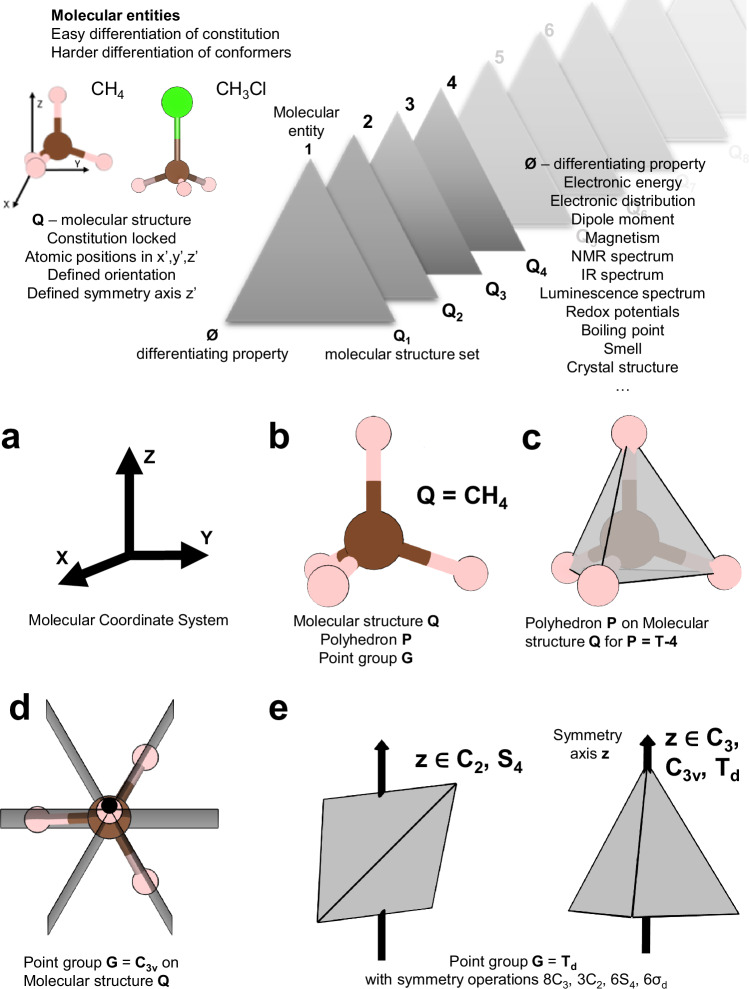
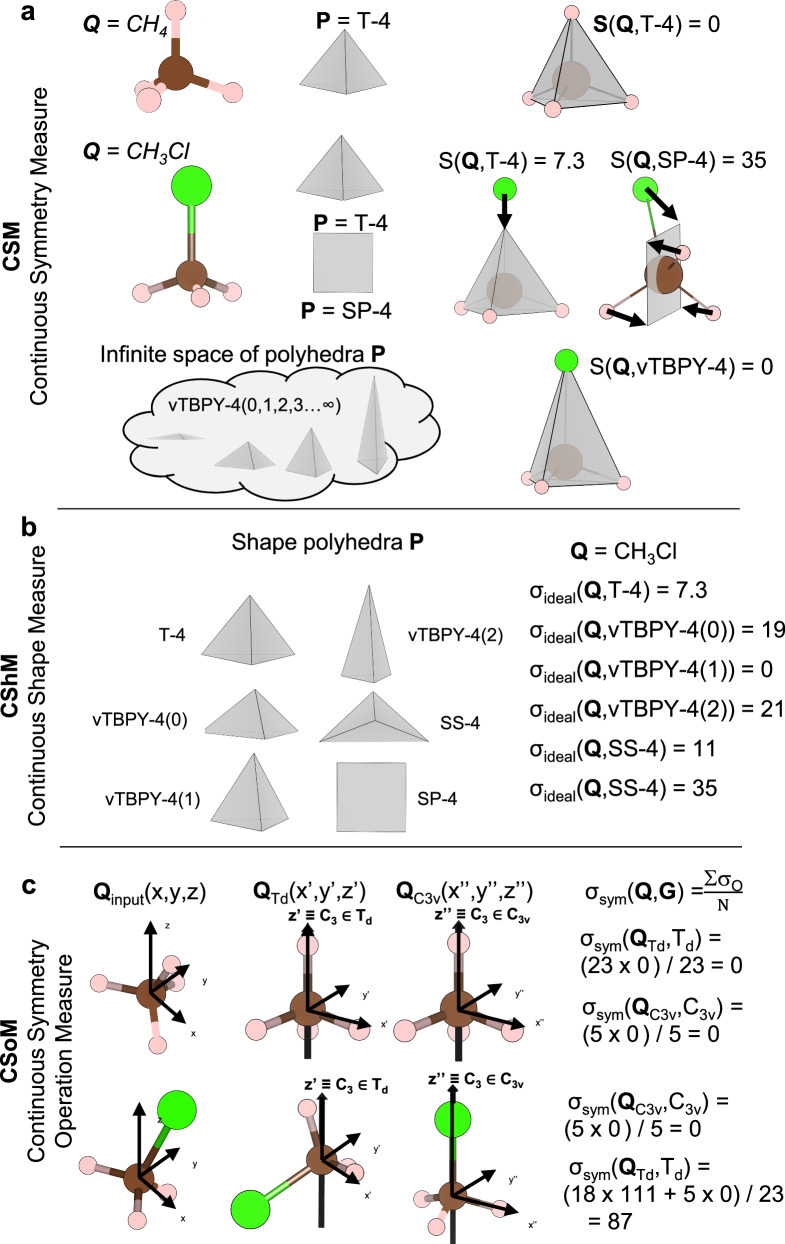
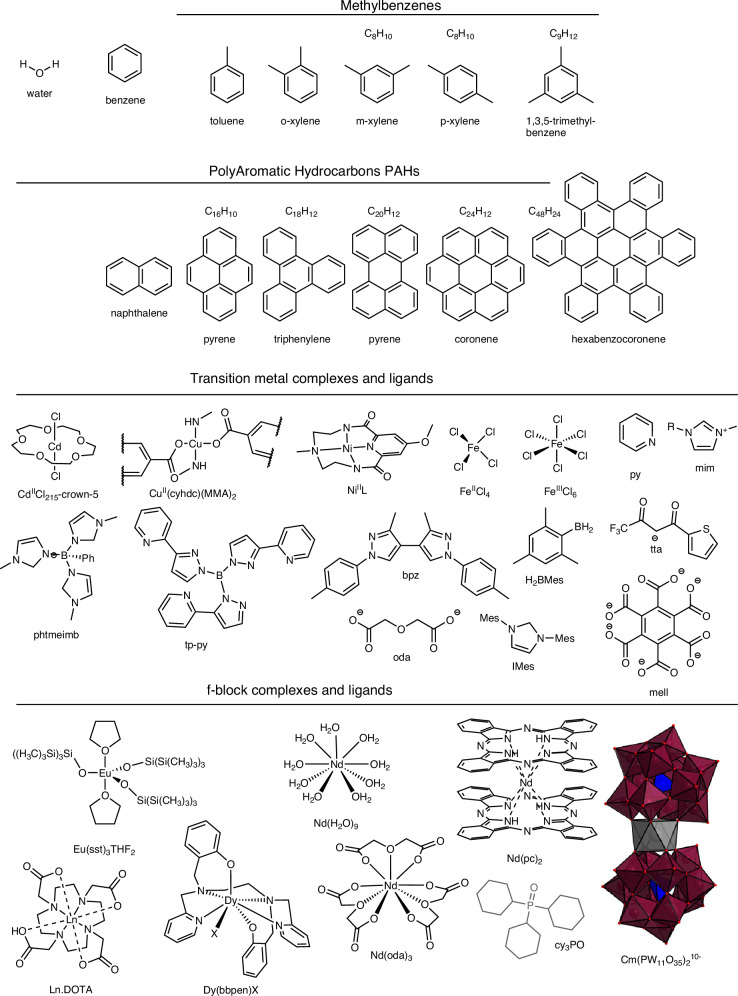
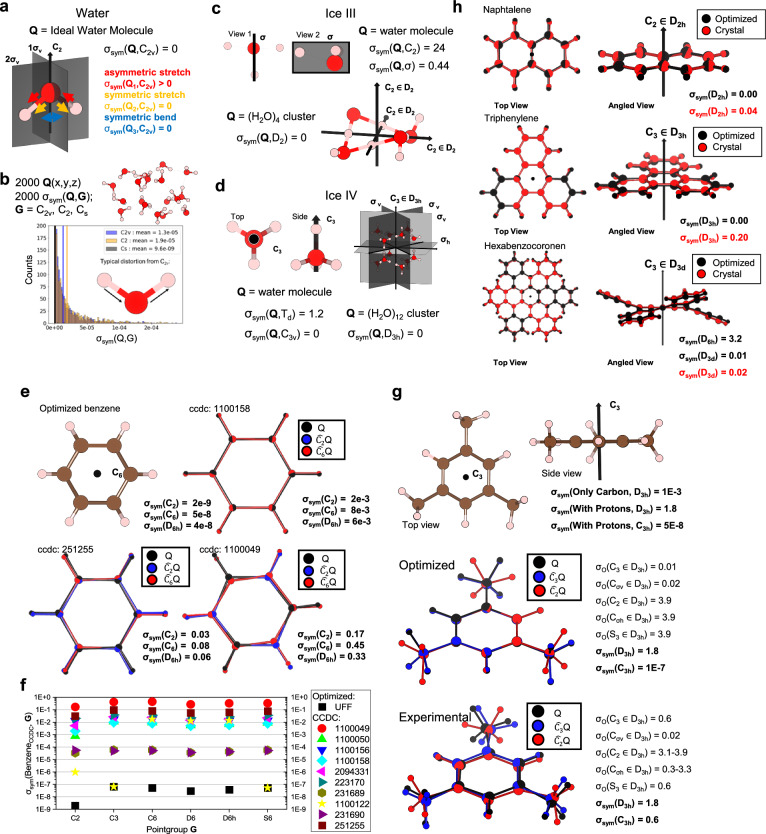
Chemists have a strong language describing and defining idealized polyhedra P and symmetry point groups G , but no efficient measure to correlate these to real molecular structures Q . Symmetry and structure have been ascribed through experience, but this approach is error-prone and provides no measure that can correlate molecular structure to molecular properties. Quantification of molecular structure and symmetry is crucial, and this requires two tools: a tool that orients a molecular structure to a symmetry axis, and a tool that measures the deviation of the molecular structure from symmetry. The first approach developed was the Continuous Symmetry Measure (CSM), which does both tasks and is exact across all symmetries as well as mathematically elegant. Unfortunately as a tool the CSM is close to impossible to implement. This led to the development of the Continuous Shape Measure (CShM) that measures how close a molecular structure Q is to a set of selected structures P ’. The CShM tool have severe limitations, and we suggest that the Continuous Symmetry operation Measure (CSoM) should be the preferred tool. The CSoM tool can quantify the symmetry of any structure that can be described as a list of points in space. Here, we describe the CSM, CShM, and CSoM approaches and demonstrate how these can be used as tools to determine molecular structure, coordination geometry, and symmetry of water, organic molecules, transition metal complexes, and lanthanide compounds.
Overview
The claims and statistics of this paper haven’t been checked yet.
Run the check — free, no account needed. It reads the open-access text and checks the sources it cites.
Integrity signals
Registry
Cites
Statistics
Figures
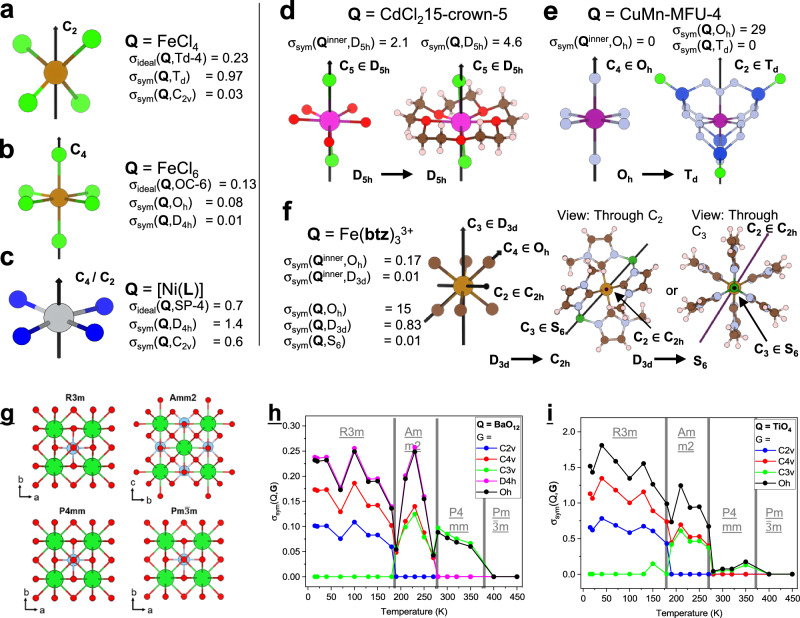
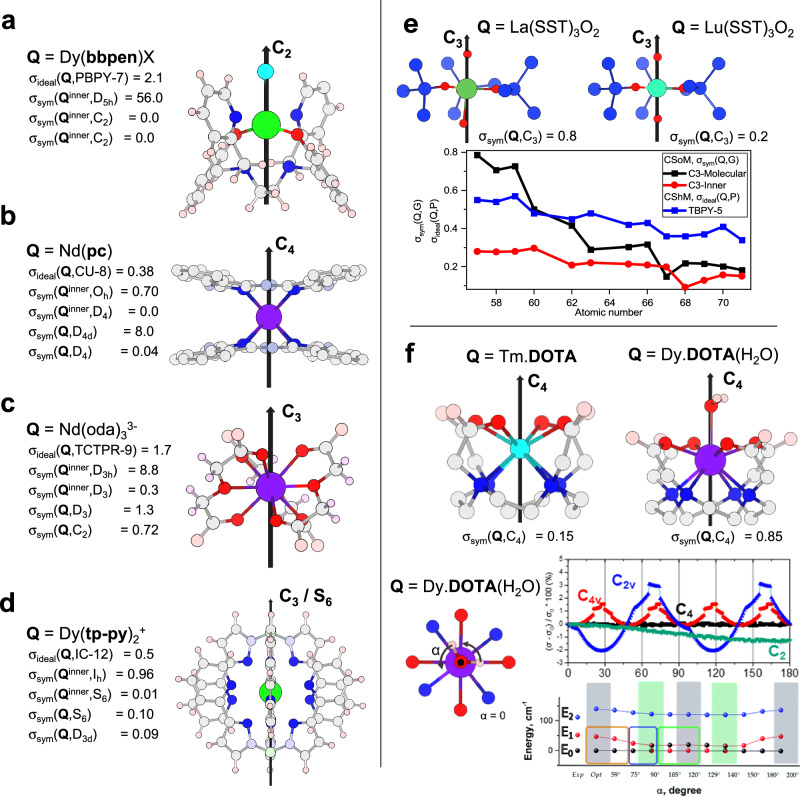
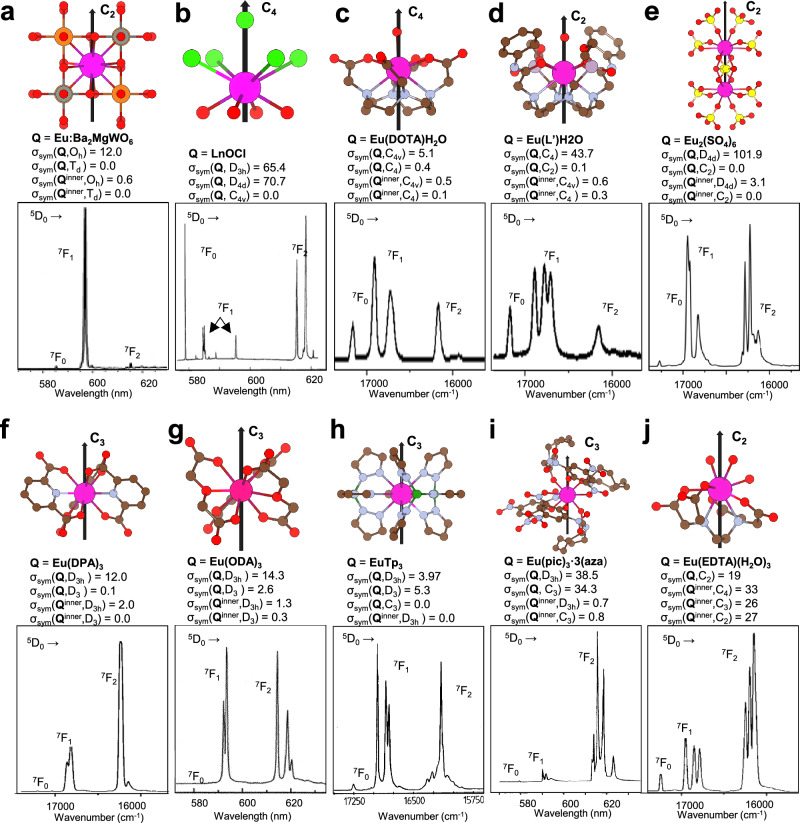
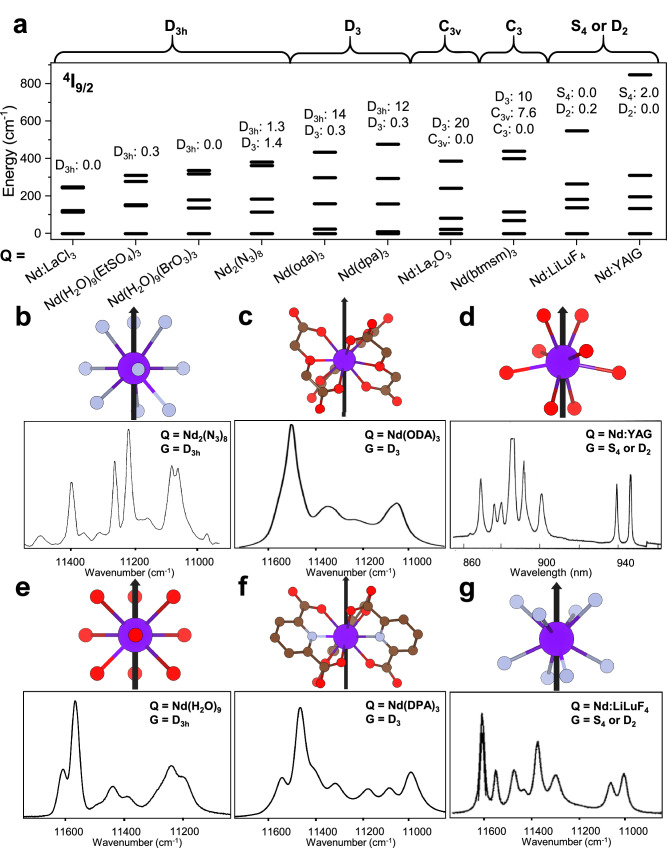
Verification
Claims the paper makes
The claims and statistics of this paper haven’t been checked yet.
Run the check — free, no account needed. It reads the open-access text and checks the sources it cites.
Self-check
Percentages, sums and reported differences re-computed from the paper’s own numbers.
The self-check needs the paper’s full text.
Citations
Cites
Highly accurate protein structure prediction with AlphaFold
Jumper, J., Evans, R., Pritzel, A., Green, T., Figurnov, M., Ronneberger, O., Tunyasuvunakool, K., Bates, R., Žídek, A., Potapenko, A., et al. (2021) · Nature · doi:10.1038/s41586-021-03819-2 · Cited by 43,764
Research works printed but not linked: 204
- Sheka EF, Razbirin BS, Nelson DK (2011) Continuous Symmetry of C60 Fullerene and Its Derivatives. J Phys Chem A 115:3480–3490. 10.1021/jp109128v · DOI
- Nielsen VRM, Le Guennic B, Sørensen TJ (2024) Evaluation of Point Group Symmetry in Lanthanide(III) Complexes: A New Implementation of a Continuous Symmetry Operation Measure with Autonomous Assignment of the Principal Axis. J Phys Chem A 128:5740–5751. 10.1021/acs.jpca.4c00801 · DOI
- Pilati T, Forni A (1998) SYMMOL: a program to find the maximum symmetry group in an atom cluster, given a prefixed tolerance. J Appl Crystallogr 31:503–504. https://doi.org/10.1107/S0021889898002180 · DOI
- Knowles PJ (2022) The determination of point groups from imprecise molecular geometries. J Math Chem 60:161–171. 10.1007/s10910-021-01302-x · DOI
- Alon G, Tuvi-Arad I (2018) Improved algorithms for symmetry analysis: structure preserving permutations. J Math Chem 56:193–212. 10.1007/s10910-017-0788-y · DOI
- Dryzun C, Avnir D (2009) Generalization of the continuous symmetry measure: the symmetry of vectors, matrices, operators and functions. Phys Chem Chem Phys 11:9653–9666. 10.1039/B911179D · DOI
- Pinsky M, Zait A, Bonjack M, Avnir D (2013) Continuous symmetry analyses: C(nv) and D(n) measures of molecules, complexes, and proteins. J Comput Chem 34:2–9. 10.1002/jcc.23092 · DOI
- Largent RJ, Polik WF, Schmidt JR (2012) Symmetrizer: algorithmic determination of point groups in nearly symmetric molecules. J Comput Chem 33:1637–1642. 10.1002/jcc.22995 · DOI
- Maheshwary S, Patel N, Sathyamurthy N, Kulkarni AD, Gadre SR (2001) Structure and Stability of Water Clusters (H2O)n, n = 8 – 20: An Ab Initio Investigation. J Phys Chem A 105:10525–10537. 10.1021/jp013141b · DOI
- Jensen CV, Vogt E, Poulsen AS, Kjaergaard HG (2024) Room Temperature Gas Phase Equilibrium Constants of the Methanol Dimer, Trimer, and Tetramer. J Phys Chem A 128:6382–6391. 10.1021/acs.jpca.4c02730 · DOI
- Cioslowski J, Strasburger K (2023) Symmetry Equiincidence of Natural Orbitals. J Phys Chem Lett 14:9296–9303. 10.1021/acs.jpclett.3c01738 · DOI
- Heit YN, Gendron F, Autschbach J (2018) Calculation of Dipole-Forbidden 5f Absorption Spectra of Uranium(V) Hexa-Halide Complexes. J Phys Chem Lett 9:887–894. 10.1021/acs.jpclett.7b03441 · DOI
- Sinha N, Wenger OS (2023) Photoactive Metal-to-Ligand Charge Transfer Excited States in 3d6 Complexes with Cr0, MnI, FeII, and CoIII. J Am Chem Soc 145:4903–4920. 10.1021/jacs.2c13432 · DOI
- Kazmierczak NP, Mirzoyan R, Hadt RG (2021) The Impact of Ligand Field Symmetry on Molecular Qubit Coherence. J Am Chem Soc 143:17305–17315. 10.1021/jacs.1c04605 · DOI
- Kasha M, 50 YEARS OF THE JABLONSKI DIAGRAM (1987) Acta Phys Pol A 71:661–670
- Griffiths J (1976) Colour and Constitution of Organic Molecules. Academic
- Lyu Z-Y, Dong H, Yang X-F, Sun L-D, Yan C-H (2021) Highly Polarized Upconversion Emissions from Lanthanide-Doped LiYF4 Crystals as Spatial Orientation Indicators. J Phys Chem Lett 12:11288–11294. 10.1021/acs.jpclett.1c03409 · DOI
- Chen X et al (2023) Achieving Ultralong Room-Temperature Phosphorescence in Two-Dimensional Metal Halide Perovskites by Alkyl Chain Engineering. J Phys Chem Lett 14:8638–8647. 10.1021/acs.jpclett.3c01794 · DOI
- Zhao J et al (2019) Circularly Polarized Luminescence from Achiral Single Crystals of Hybrid Manganese Halides. J Am Chem Soc 141:15755–15760. 10.1021/jacs.9b08780 · DOI
- Rajca A, Safronov A, Rajca S, Wongsriratanakul J (2000) D2-Symmetric Dimer of 1,1‘-Binaphthyl and Its Chiral π-Conjugated Carbodianion. J Am Chem Soc 122:3351–3357. 10.1021/ja993286k · DOI
- Ananias D, Paz FAA, Yufit DS, Carlos LD, Rocha J (2015) Photoluminescent Thermometer Based on a Phase-Transition Lanthanide Silicate with Unusual Structural Disorder. J Am Chem Soc 137:3051–3058. 10.1021/ja512745y · DOI
- Rudowicz C, Bramley R (1985) On standardization of the spin Hamiltonian and the ligand field Hamiltonian for orthorhombic symmetry. J Chem Phys 83:5192–5197. 10.1063/1.449731 · DOI
- Muller P (1994) Glossary of terms used in physical organic chemistry (IUPAC Recommendations 1994). Pure Appl Chem 66:1077–1184. 10.1351/pac199466051077 · DOI
- Waterbeemd H et al (1997) v. d. Glossary of terms used in computational drug design (IUPAC Recommendations 1997). Pure and Applied Chemistry 69, 1137–1152, doi:10.1351/pac199769051137 · DOI
- Hartshorn RM, Hellwich K-H, Yerin A, Damhus T, Hutton AT (2015) Brief guide to the nomenclature of inorganic chemistry. Pure Appl Chem 87:1039–1049. 10.1515/pac-2014-0718 · DOI
- Wernet P et al (2004) The structure of the first coordination shell in liquid water. Science 304:995–999. 10.1126/science.1096205 · DOI
- Eaves JD et al (2005) Hydrogen bonds in liquid water are broken only fleetingly. Proc Natl Acad Sci USA 102:13019–13022. 10.1073/pnas.0505125102 · DOI
- Gruenloh CJ et al (1997) Infrared spectrum of a molecular ice cube: The S-4 and D-2d water octamers in benzene-(water)(8). Science 276:1678–1681. 10.1126/science.276.5319.1678 · DOI
- Smith JD et al (2004) Energetics of hydrogen bond network rearrangements in liquid water. Science 306:851–853. 10.1126/science.1102560 · DOI
- Malenkov G (2009) Liquid water and ices: understanding the structure and physical properties. J Phys-Condens Mat 21. 10.1088/0953-8984/21/28/283101 · DOI
- Myneni S et al (2002) Spectroscopic probing of local hydrogen-bonding structures in liquid water. J Phys-Condens Mat 14:L213–L219. 10.1088/0953-8984/14/8/106 · DOI
- Rudberg E, Rubensson EH, Sałek P, Kruchinina A (2018) Ergo: An Open-Source Program for Linear-Scaling Electronic Structure Calculations. SoftwareX 7:107–111 · DOI
- Algara-Siller G et al (2015) Square ice in graphene nanocapillaries. Nature 519:443–. 10.1038/nature14295 · DOI
- Takaiwa D, Hatano I, Koga K, Tanaka H (2008) Phase diagram of water in carbon nanotubes. Proc Natl Acad Sci USA 105:39–43. 10.1073/pnas.0707917105 · DOI
- Pauling L (1935) The structure and entropy of ice and of other crystals with some randomness of atomic arrangement. J Am Chem Soc 57:2680–2684. 10.1021/ja01315a102 · DOI
- Kuhs WF, Finney JL, Vettier C, Bliss DV (1984) STRUCTURE AND HYDROGEN ORDERING IN ICE-VI, ICE-VII, AND ICE-VIII BY NEUTRON POWDER DIFFRACTION. J Chem Phys 81:3612–3623. 10.1063/1.448109 · DOI
- Mishima O, Stanley HE (1998) The relationship between liquid, supercooled and glassy water. Nature 396:329–335. 10.1038/24540 · DOI
- Wang C-R, Sugai T, Kai T, Tomiyama T, Shinohara H (2000) Production and isolation of an ellipsoidal C80 fullerene. Chem Commun 557–558. 10.1039/b000387p · DOI
- Bethune DS VIBRATIONAL RAMAN AND, INFRARED-SPECTRA OF CHROMATOGRAPHICALLY et al (1991) SEPARATED C60 AND C70 FULLERENE CLUSTERS. Chem Phys Lett 179, 181–186. 10.1016/0009-2614(91)90312-w · DOI
- Iwasa Y et al (1994) NEW PHASES OF C-60 SYNTHESIZED AT HIGH-PRESSURE. Science 264:1570–1572. 10.1126/science.264.5165.1570 · DOI
- Thess A et al (1996) Crystalline ropes of metallic carbon nanotubes. Science 273:483–487. 10.1126/science.273.5274.483 · DOI
- Casanova D, Alemany P (2010) Quantifying the symmetry content of the electronic structure of molecules: molecular orbitals and the wave function. Phys Chem Chem Phys 12:15523–15529. 10.1039/C0CP01326A · DOI
- Boltalina OV, Borschevskii AY, Sidorov LN, Street JM, Taylor R (1996) Preparation of C60F36 and C70F36/38/40. Chem Commun. 10.1039/cc9960000529 · DOI
- Maki G (1958) Ligand Field Theory of Ni(II) Complexes. I. Electronic Energies and Singlet Ground-State Conditions of Ni(II) Complexes of Different Symmetries. J Chem Phys 28:651–662. 10.1063/1.1744207 · DOI
- Mouesca JM, Chen JL, Noodleman L, Bashford D, Case DA (1994) Density-Functional Poisson-Boltzmann Calculations of Redox Potentials for Iron-Sulfur Clusters. J Am Chem Soc 116:11898–11914. 10.1021/ja00105a033 · DOI
- Gewirth AA, Solomon EI (1988) Electronic-Structure of Plastocyanin - Excited-State Spectral Features. J Am Chem Soc 110:3811–3819. 10.1021/ja00220a015 · DOI
- Waldmann O (2025) Relation between Electrostatic Charge Density and Spin Hamiltonian Models of Ligand Field in Lanthanide Complexes. Inorg Chem. 10.1021/acs.inorgchem.4c04392 · DOI
- Rao SV, Maganas D, Sivalingam K, Atanasov M, Neese F (2024) Extended Active Space Ab Initio Ligand Field Theory: Applications to Transition-Metal Ions. Inorg Chem 63:24672–24684. 10.1021/acs.inorgchem.4c03893 · DOI
- Gouveia LdaC, Maganas T, D., Neese F (2024) Restricted Open-Shell Hartree–Fock Method for a General Configuration State Function Featuring Arbitrarily Complex Spin-Couplings. J Phys Chem A 128:5041–5053. 10.1021/acs.jpca.4c00688 · DOI
- Aakesson R, Pettersson LGM, Sandstroem M, Wahlgren U (2002) Ligand Field Effects in the Hydrated Divalent and Trivalent Metal Ions of the First and Second Transition Periods. J Am Chem Soc 116:8691–8704. 10.1021/ja00098a032 · DOI
- Tsukahara N et al (2009) Adsorption-induced switching of magnetic anisotropy in a single iron(II) phthalocyanine molecule on an oxidized Cu(110) surface. Phys Rev Lett 102:167203. 10.1103/PhysRevLett.102.167203 · DOI
- Janiak C (2003) Engineering coordination polymers towards applications. Dalton Trans 2781–2804. 10.1039/b305705b · DOI
- Bousseksou A, Molnár G, Salmon L, Nicolazzi W (2011) Molecular spin crossover phenomenon: recent achievements and prospects. Chem Soc Rev 40:3313–3335. 10.1039/c1cs15042a · DOI
- Ogawa T, Sinha N, Pfund B, Prescimone A, Wenger OS (2022) Molecular Design Principles to Elongate the Metal-to-Ligand Charge Transfer Excited-State Lifetimes of Square-Planar Nickel(II) Complexes. J Am Chem Soc. 10.1021/jacs.2c08838 · DOI
- Oppermann M, Zinna F, Lacour J, Chergui M (2022) Chiral control of spin-crossover dynamics in Fe (II) complexes. Nat Chem 14:739–. 10.1038/s41557-022-00933-0 · DOI
- Sinha N, Wenger OS (2023) Photoactive Metal-to-Ligand Charge Transfer Excited States in 3d < SUP > 6 Complexes with Cr < SUP > 0, Mn < SUP > I, Fe < SUP > II, and Co < SUP > III. Journal of the American Chemical Society, 10.1021/jacs.2c13432 · DOI
- Bramwell ST, Gingras MJ (2001) Spin ice state in frustrated magnetic pyrochlore materials. Science 294:1495–1501. 10.1126/science.1064761 · DOI
- Stöhr J (1999) Exploring the microscopic origin of magnetic anisotropies with X-ray magnetic circular dichroism (XMCD) spectroscopy. J Magn Magn Mater 200:470–497. 10.1016/S0304-8853(99)00407-2 · DOI
- Groot F (2005) d. Multiplet effects in X-ray spectroscopy. Coord Chem Rev 249:31–63. 10.1016/j.ccr.2004.03.018 · DOI
- Long J, Guari Y, Ferreira RAS, Carlos LD, Larionova J (2018) Recent advances in luminescent lanthanide based Single-Molecule Magnets. Coord Chem Rev 363:57–70. https://doi.org/10.1016/j.ccr.2018.02.019 · DOI
- Bogani L, Wernsdorfer W (2008) Molecular spintronics using single-molecule magnets. Nat Mater 7:179–186. 10.1038/nmat2133 · DOI
- Rinehart JD, Long JR (2011) Exploiting single-ion anisotropy in the design of f-element single-molecule magnets. Chem Sci 2:2078–2085. 10.1039/c1sc00513h · DOI
- Goodwin CAP, Ortu F, Reta D, Chilton NF (2017) Mills, D. P. Molecular magnetic hysteresis at 60 kelvin in dysprosocenium. Nature 548:439–442. 10.1038/nature23447 · DOI
- Li HD, Wu SG, Tong ML (2023) Lanthanide-radical single-molecule magnets: current status and future challenges. Chem Commun 59:6159–6170. 10.1039/d2cc07042a · DOI
- Long JR, Chilton NF, Vincent AH, Whyatt YL (2023) Strong Axiality in a Dysprosium(III) Bis(borolide) Complex Leads to Magnetic Blocking at 65 K. J Am Chem Soc 145:1572–1579. 10.1021/jacs.2c08568 · DOI
- Meihaus KR, Long JR (2013) Magnetic blocking at 10 K and a dipolar-mediated avalanche in salts of the bis(eta8-cyclooctatetraenide) complex [Er(COT)2]. J Am Chem Soc 135:17952–17957. 10.1021/ja4094814 · DOI
- Liu JL, Chen YC, Tong ML (2018) Symmetry strategies for high performance lanthanide-based single-molecule magnets. Chem Soc Rev 47:2431–2453. 10.1039/c7cs00266a · DOI
- Randall McClain K et al (2018) High-temperature magnetic blocking and magneto-structural correlations in a series of dysprosium(iii) metallocenium single-molecule magnets. Chem Sci 9:8492–8503. 10.1039/c8sc03907k · DOI
- Chilton NF, Goodwin CA, Mills DP, Winpenny RE (2015) The first near-linear bis(amide) f-block complex: a blueprint for a high temperature single molecule magnet. Chem Commun (Camb) 51:101–103. 10.1039/c4cc08312a · DOI
- Liu J-L et al (2013) Switching the anisotropy barrier of a single-ion magnet by symmetry change from quasi-D5h to quasi-Oh. Chem Sci 4. 10.1039/c3sc50843a · DOI
- Aldamen MA, Clemente-Juan JM, Coronado E, Marti-Gastaldo C, Gaita-Arino A (2008) Mononuclear lanthanide single-molecule magnets based on polyoxometalates. J Am Chem Soc 130:8874–8875. 10.1021/ja801659m · DOI
- Le Roy JJ, Korobkov I, Murugesu M (2014) A sandwich complex with axial symmetry for harnessing the anisotropy in a prolate erbium(III) ion. Chem Commun (Camb) 50:1602–1604. 10.1039/c3cc48557a · DOI
- Ferguson A et al (2007) A mixed-valence Co7 single-molecule magnet with C3 symmetry. Chem Commun (Camb) 3473–3475. 10.1039/b706238a · DOI
- Canaj AB et al (2019) Insight into D(6h) Symmetry: Targeting Strong Axiality in Stable Dysprosium(III) Hexagonal Bipyramidal Single-Ion Magnets. Angew Chem Int Ed Engl 58:14146–14151. 10.1002/anie.201907686 · DOI
- Sun WB et al (2016) High symmetry or low symmetry, that is the question - high performance Dy(iii) single-ion magnets by electrostatic potential design. Chem Sci 7:684–691. 10.1039/c5sc02986d · DOI
- Pedersen KS et al (2015) Design of Single-Molecule Magnets: Insufficiency of the Anisotropy Barrier as the Sole Criterion. Inorg Chem 54:7600–7606. 10.1021/acs.inorgchem.5b01209 · DOI
- Kofod N, Nawrocki P, Platas-Iglesias C, Sørensen TJ (2021) Electronic Structure of Ytterbium(III) Solvates—a Combined Spectroscopic and Theoretical Study. Inorg Chem 60:7453–7464. 10.1021/acs.inorgchem.1c00743 · DOI
- Prokop KA et al (2024) Unusual emission from 2F5/2 two lowest excited levels of Yb3+-doped LuPO4 nano/micro-crystalline materials. J Lumin 275:120777. https://doi.org/10.1016/j.jlumin.2024.120777 · DOI
- Goodwin CAP, Reta D, Ortu F, Chilton NF, Mills DP (2017) Synthesis and Electronic Structures of Heavy Lanthanide Metallocenium Cations. J Am Chem Soc 139:18714–18724. 10.1021/jacs.7b11535 · DOI
- Binnemans K (2015) Interpretation of europium(III) spectra. Coord Chem Rev 295:1–45. 10.1016/j.ccr.2015.02.015 · DOI
- Duan C-K, Tanner PA (2010) What Use Are Crystal Field Parameters? A Chemist’s Viewpoint. J Phys Chem A 114:6055–6062. 10.1021/jp1015214 · DOI
- Nawrocki PR, Sørensen TJ (2023) Optical spectroscopy as a tool for studying the solution chemistry of neodymium(iii). Phys Chem Chem Phys 25:19300–19336. 10.1039/D3CP02033A · DOI
- Nielsen VRM, Grasser M, Mortensen SS, Le Guennic B, Sørensen TJ (2024) Electronic Structure of a Neodymium(III) Tris(oxidiacetate) Complex from Luminescence Data and Ab Initio Calculations. Inorg Chem 63:18596–18607. 10.1021/acs.inorgchem.4c02242 · DOI
- Zabrodsky H, Peleg S, Avnir D (1992) Continuous symmetry measures. J Am Chem Soc 114:7843–7851. 10.1021/ja00046a033 · DOI
- Zabrodsky H, Peleg S, Avnir D (1993) Continuous symmetry measures. 2. Symmetry groups and the tetrahedron. J Am Chem Soc 115:8278–8289. 10.1021/ja00071a042 · DOI
- Dryzun C, Alemany P, Casanova D, Avnir D (2011) A continuous symmetry analysis of chemical bonding. Chemistry 17:6129–6141. 10.1002/chem.201003093 · DOI
- Alemany P, Casanova D, Dryzun C (2011) Electronic Structure and Symmetry in Conjugated π-Electron Systems. Chem – Eur J 17:14896–14906. https://doi.org/10.1002/chem.201101329 · DOI
- Vonci M et al (2017) Rationalization of Anomalous Pseudocontact Shifts and Their Solvent Dependence in a Series of C3-Symmetric Lanthanide Complexes. J Am Chem Soc 139:14166–14172. 10.1021/jacs.7b07094 · DOI
- Nawrocki PR, Kofod N, Juelsholt M, Jensen KMØ, Sørensen TJ (2020) The effect of weighted averages when determining the speciation and structure–property relationships of europium(iii) dipicolinate complexes. Phys Chem Chem Phys 22:12794–12805. 10.1039/D0CP00989J · DOI
- Nielsen LG, Sørensen TJ (2019) Including and Declaring Structural Fluctuations in the Study of Lanthanide(III) Coordination Chemistry in Solution. Inorg Chem 59:94–105. 10.1021/acs.inorgchem.9b01571 · DOI
- Zabrodsky H, Peleg S, Avnir D, CONTINUOUS SYMMETRY (1993) MEASURES.2. SYMMETRY GROUPS AND THE TETRAHEDRON. J Am Chem Soc 115:8278–8289. 10.1021/ja00071a042 · DOI
- Zabrodsky H, Peleg S, Avnir D, SYMMETRY AS A CONTINUOUS (1995) FEATURE. Ieee Transactions on Pattern Analysis and Machine Intelligence 17, 1154–1166. 10.1109/34.476508 · DOI
- Alemany P, Casanova D, Alvarez S, Dryzun C, Avnir D (2017) in Reviews in Computational Chemistry, Vol 30 Vol. 30 Reviews in Computational Chemistry (eds A. L. Parrill & K. B. Lipkowitz) 289–352
- Thomsen MS, Sørensen TJ (2022) Delicate, a study of the structural changes in ten-coordinated La(iii), Ce(iii), Pr(iii), Nd(iii), Sm(iii) and Eu(iii) sulfates. Dalton Trans 51:8964–8974. 10.1039/D2DT00832G · DOI
- Thomsen MS, Anker AS, Kacenauskaite L, Sørensen TJ (2022) We Are Never Ever Getting (back to) Ideal Symmetry: Structure and Luminescence in a Ten-Coordinated Europium(III) Sulfate Crystal. Dalton Trans. 10.1039/D2DT01522F · DOI
- Pinsky M, Avnir D (1998) Continuous Symmetry Measures. 5. The Classical Polyhedra. Inorg Chem 37:5575–5582. 10.1021/ic9804925 · DOI
- Pinsky M, Dryzun C, Casanova D, Alemany P, Avnir D (2008) Analytical Methods for Calculating Continuous Symmetry Measures and the Chirality Measure. J Comput Chem 29:2712–2721. 10.1002/jcc.20990 · DOI
- Casanova D et al (2004) Minimal Distortion Pathways in Polyhedral Rearrangements. J Am Chem Soc 126:1755–1763. 10.1021/ja036479n · DOI
- Alvarez S et al (2005) Shape maps and polyhedral interconversion paths in transition metal chemistry. Coord Chem Rev 249:1693–1708. https://doi.org/10.1016/j.ccr.2005.03.031 · DOI
- Ruiz-Martínez A, Alvarez S (2009) Stereochemistry of Compounds with Coordination Number Ten. Chem – Eur J 15:7470–7480. https://doi.org/10.1002/chem.200900547 · DOI
- Ruiz-Martínez A, Casanova D, Alvarez S (2008) Polyhedral Structures with an Odd Number of Vertices: Nine-Coordinate Metal Compounds. Chem – Eur J 14:1291–1303. https://doi.org/10.1002/chem.200701137 · DOI
- Zabrodsky H, Avnir D (1995) Continuous symmetry measures. 4. Chirality. J Am Chem Soc 117:462–473 · DOI
- Alvarez S et al (2005) Shape maps and polyhedral interconversion paths in transition metal chemistry. Coord Chem Rev 249:1693–1708. 10.1016/j.ccr.2005.03.031 · DOI
- Keinan S, Avnir D (2001) Continuous symmetry analysis of tetrahedral/planar distortions. Copper chlorides and other AB(4) species. Inorg Chem 40:318–323. 10.1021/ic000681z · DOI
- Pinsky M, Lipkowitz KB, Avnir D (2001) Continuous symmetry measures. VI. The relations between polyhedral point-group/subgroup symmetries. J Math Chem 30:109–120. 10.1023/a:1013133602531 · DOI
- Alvarez S, Avnir D, Llunell M, Pinsky M (2002) Continuous symmetry maps and shape classification. The case of six-coordinated metal compounds. New J Chem 26:996–1009. 10.1039/b200641n · DOI
- Alvarez S, Alemany P, Avnir D (2005) Continuous chirality measures in transition metal chemistry. Chem Soc Rev 34:313–326. 10.1039/b301406c · DOI
- Dryzun C (2014) Continuous symmetry measures for complex symmetry group. J Comput Chem 35:748–755. https://doi.org/10.1002/jcc.23548 · DOI
- Cirera J, Ruiz E, Alvarez S (2005) Continuous Shape Measures as a Stereochemical Tool in Organometallic Chemistry. Organometallics 24:1556–1562. 10.1021/om049150z · DOI
- Cirera J, Ruiz E, Alvarez S (2008) Stereochemistry and Spin State in Four-Coordinate Transition Metal Compounds. Inorg Chem 47:2871–2889. 10.1021/ic702276k · DOI
- Cirera J, Alemany P, Alvarez S (2004) Mapping the stereochemistry and symmetry of tetracoordinate transition-metal complexes. Chemistry 10:190–207. 10.1002/chem.200305074 · DOI
- Alvarez S, Avnir D, Llunell M, Pinsky M (2002) Continuous symmetry maps and shape classification. The case of six-coordinated metal compoundsElectronic supplementary information (ESI) available: tables of CSD refcodes, structural parameters and symmetry measures for the studied compounds. See http://www.rsc.org/suppdata/nj/b2/b202096n. New Journal of Chemistry 26, 996–1009, 10.1039/b200641n · DOI
- Casanova D, Alemany P, Bofill JM, Alvarez S (2003) Shape and Symmetry of Heptacoordinate Transition-Metal Complexes: Structural Trends. Chem – Eur J 9:1281–1295. https://doi.org/10.1002/chem.200390145 · DOI
- Casanova D, Llunell M, Alemany P, Alvarez S (2005) The rich stereochemistry of eight-vertex polyhedra: a continuous shape measures study. Chemistry 11:1479–1494. 10.1002/chem.200400799 · DOI
- Ruiz-Martinez A, Casanova D, Alvarez S (2008) Polyhedral structures with an odd number of vertices: nine-atom clusters and supramolecular architectures. Dalton Trans 2583–2591. 10.1039/b718821h · DOI
- Ruiz-Martinez A, Casanova D, Alvarez S (2008) Polyhedral structures with an odd number of vertices: nine-coordinate metal compounds. Chemistry 14:1291–1303. 10.1002/chem.200701137 · DOI
- Ruiz-Martinez A, Alvarez S (2009) Stereochemistry of compounds with coordination number ten. Chemistry 15:7470–7480. 10.1002/chem.200900547 · DOI
- Kabsch W (1976) A solution for the best rotation to relate two sets of vectors. Acta Crystallogr Sect A 32:922–923. https://doi.org/10.1107/S0567739476001873 · DOI
- Pinsky M et al (2008) Symmetry operation measures. J Comput Chem 29:190–197. https://doi.org/10.1002/jcc.20772 · DOI
- Knowles PJ (2021) The determination of point groups from imprecise molecular geometries. J Math Chem 60:161–171. 10.1007/s10910-021-01302-x · DOI
- Alon G, Tuvi-Arad I (2017) Improved algorithms for symmetry analysis: structure preserving permutations. J Math Chem 56:193–212. 10.1007/s10910-017-0788-y · DOI
- Beruski O, Vidal L (2014) N. Algorithms for computer detection of symmetry elements in molecular systems. J Comput Chem 35:290–299. 10.1002/jcc.23493 · DOI
- Dryzun C (2014) Continuous symmetry measures for complex symmetry group. J Comput Chem 35:748–755. 10.1002/jcc.23548 · DOI
- Dryzun C, Avnir D (2009) Generalization of the continuous symmetry measure: the symmetry of vectors, matrices, operators and functions. Phys Chem Chem Phys 11:9653–9666. 10.1039/b911179d · DOI
- Casanova D, Alemany P (2010) Quantifying the symmetry content of the electronic structure of molecules: molecular orbitals and the wave function. Phys Chem Chem Phys 12:15523–15529. 10.1039/c0cp01326a · DOI
- Casanova D, Alemany P, Alvarez S (2010) Symmetry measures of the electron density. J Comput Chem 31:2389–2404. 10.1002/jcc.21532 · DOI
- McFarlan RL (1936) The Structure of Ice III. J Chem Phys 4:253–259. 10.1063/1.1749832 · DOI
- Goto A, Hondoh T, Mae S (1990) The electron density distribution in ice Ih determined by single-crystal x‐ray diffractometry. J Chem Phys 93:1412–1417. 10.1063/1.459150 · DOI
- Catalano VJ, Malwitz MA, Etogo AO (2004) Pyridine Substituted N-Heterocyclic Carbene Ligands as Supports for Au(I) – Ag(I) Interactions: Formation of a Chiral Coordination Polymer. Inorg Chem 43:5714–5724. 10.1021/ic049604k · DOI
- Dahlmann M, Erker G, Fröhlich R, Meyer O (2000) Structural Dichotomy in Single-Component Ziegler Catalyst Systems: Characterization of Zr···F and Zr···C-Bonded Structural Types of Group 4 Metallocene [C4H6 – B(C6F5)3] Betaines. Organometallics 19, 2956–2967. 10.1021/om0003741 · DOI
- Tsunoda M, Gabbaï FP (2000) µ6-η2:η2:η2:η2:η2:η2 As a New Bonding Mode for Benzene. J Am Chem Soc 122:8335–8336. 10.1021/ja0016598 · DOI
- Yamaura H, Yamamoto K, Murahashi T (2021) Selective dimerization of a trinuclear mixed-metal sandwich complex: construction of an axially chiral metal skeleton. Chem Commun 57:9120–9123. 10.1039/D1CC03719F · DOI
- Yi CS et al (2000) Acid-Promoted Homogeneous Hydrogenation of Alkenes Catalyzed by the Ruthenium – Hydride Complex (PCy3)2(CO)(Cl)RuH: Evidence for the Formation of 14-Electron Species from the Selective Entrapment of the Phosphine Ligand. Organometallics 19:2909–2915. 10.1021/om000315n · DOI
- Mokuolu QF et al (2004) Early–late, mixed-metal compounds supported by amidophosphine ligands. Dalton Trans 1960–1970. 10.1039/B402409E · DOI
- Hong SH, Day MW, Grubbs RH (2004) Decomposition of a Key Intermediate in Ruthenium-Catalyzed Olefin Metathesis Reactions. J Am Chem Soc 126:7414–7415. 10.1021/ja0488380 · DOI
- He X, Noll BC, Beatty A, Mulvey RE, Henderson KW (2004) Ketone Deprotonation Mediated by Mono- and Heterobimetallic Alkali and Alkaline Earth Metal Amide Bases: Structural Characterization of Potassium, Calcium, and Mixed Potassium – Calcium Enolates. J Am Chem Soc 126:7444–7445. 10.1021/ja048750m · DOI
- Marc Veen E, Feringa L, Postma BM, Jonkman PT, H., Spek L (1999) A. Solid state organisation of C60 by inclusion crystallisation with triptycenes†. Chem Commun 1709–1710. 10.1039/A904457D · DOI
- Nakano K et al (2003) Mechanism of Selective and Unselective Enclathration by a Host Compound Possessing Open, Flexible Host Frameworks. European Journal of Organic Chemistry 2428–2436. https://doi.org/10.1002/ejoc.200200711 (2003) · DOI
- Zhang J et al (2017) Solvent Accommodation: Functionalities Can Be Tailored Through Co-Crystallization Based on 1:1 Coronene-F4TCNQ Charge-Transfer Complex. ACS Appl Mater Interfaces 9:1183–1188. 10.1021/acsami.6b15027 · DOI
- Ikumura Y, Habuka Y, Hori A (2021) Co-crystal structures and Hirshfeld surface analysis of mesitylene and/or p-xylene solvated pseudopolymorphs of fully fluorinated Pd(II) complex. Polyhedron 197:115035. https://doi.org/10.1016/j.poly.2021.115035 · DOI
- Xiao S et al (2005) Molecular Wires from Contorted Aromatic Compounds. Angew Chem Int Ed 44:7390–7394. https://doi.org/10.1002/anie.200502142 · DOI
- Fedyanin IV (2022) Control of supramolecular chirality in co-crystals of achiral molecules via stacking interactions and hydrogen bonding. CrystEngComm 24:2591–2601. 10.1039/D2CE00081D · DOI
- Nikolayenko VI, Heyns A, Barbour LJ (2017) Threading the needle: guest transport in a versatile 0D porous molecular crystal. Chem Commun 53:11306–11309. 10.1039/C7CC06676G · DOI
- Singh M, Chopra D (2018) Diversity in Mechanical Response in Donor–Acceptor Coupled Cocrystal Stoichiomorphs Based on Pyrene and 1,8-Dinitroanthraquinone Systems. Cryst Growth Des 18:6670–6680. 10.1021/acs.cgd.8b00918 · DOI
- Hu P, Du K, Wei F, Jiang H, Kloc C, Crystal Growth (2016) HOMO–LUMO Engineering, and Charge Transfer Degree in Perylene-FxTCNQ (x = 1, 2, 4) Organic Charge Transfer Binary Compounds. Cryst Growth Des 16:3019–3027. 10.1021/acs.cgd.5b01675 · DOI
- Graf KI, Huang AJ, Meihaus KR, Long JR (2024) Methylamine Separations Enabled by Cooperative Ligand Insertion in Copper–Carboxylate Metal–Organic Frameworks. J Am Chem Soc 146:23943–23954. 10.1021/jacs.4c06718 · DOI
- Juvanteny A et al (2024) Unraveling the Mechanism of Hydrogen Atom Transfer by a Nickel-Hypochlorite Species and the Influence of Electronic Effects. Inorg Chem 63:14325–14334. 10.1021/acs.inorgchem.4c00360 · DOI
- Smith NE, Bernskoetter WH, Hazari N, Mercado BQ (2017) Synthesis and Catalytic Activity of PNP-Supported Iron Complexes with Ancillary Isonitrile Ligands. Organometallics 36:3995–4004. 10.1021/acs.organomet.7b00602 · DOI
- Han J, Nishihara S, Inoue K, Kurmoo M (2014) On the Nature of the Structural and Magnetic Phase Transitions in the Layered Perovskite-Like (CH3NH3)2[FeIICl4]. Inorg Chem 53:2068–2075. 10.1021/ic402535u · DOI
- Liu Y et al (2015) A Heteroleptic Ferrous Complex with Mesoionic Bis(1,2,3-triazol-5-ylidene) Ligands: Taming the MLCT Excited State of Iron(II). Chem – Eur J 21:3628–3639. https://doi.org/10.1002/chem.201405184 · DOI
- Prakash O et al (2020) A Stable Homoleptic Organometallic Iron(IV) Complex. Chem – Eur J 26:12728–12732. https://doi.org/10.1002/chem.202002158 · DOI
- Yabuuchi Y et al (2024) Geometric Tuning of Coordinatively Unsaturated Copper(I) Sites in Metal–Organic Frameworks for Ambient-Temperature Hydrogen Storage. J Am Chem Soc 146:22759–22776. 10.1021/jacs.4c08039 · DOI
- Chábera P et al (2017) A low-spin Fe(iii) complex with 100-ps ligand-to-metal charge transfer photoluminescence. Nature 543:695–699. 10.1038/nature21430 · DOI
- Miao L-P et al (2022) Direct observation of geometric and sliding ferroelectricity in an amphidynamic crystal. Nat Mater 21:1158–1164. 10.1038/s41563-022-01322-1 · DOI
- Luz C et al (2024) Construction of a Boron Chain on a Single Metal by Dehydrocoupling of Borane Ligands. J Am Chem Soc 146:23741–23751. 10.1021/jacs.4c04926 · DOI
- Boyle TJ et al (2022) Synthesis and Characterization of Solvated Lanthanide Tris(trimethylsilyl)siloxides. Inorg Chem 61:5048–5059. 10.1021/acs.inorgchem.1c03997 · DOI
- Liu J et al (2016) A Stable Pentagonal Bipyramidal Dy(III) Single-Ion Magnet with a Record Magnetization Reversal Barrier over 1000 K. J Am Chem Soc 138:5441–5450. 10.1021/jacs.6b02638 · DOI
- Chen Y-C et al (2016) Symmetry-Supported Magnetic Blocking at 20 K in Pentagonal Bipyramidal Dy(III) Single-Ion Magnets. J Am Chem Soc 138:2829–2837. 10.1021/jacs.5b13584 · DOI
- Ishikawa N, Sugita M, Wernsdorfer W (2005) Nuclear Spin Driven Quantum Tunneling of Magnetization in a New Lanthanide Single-Molecule Magnet: Bis(Phthalocyaninato)holmium Anion. J Am Chem Soc 127:3650–3651. 10.1021/ja0428661 · DOI
- Blois L et al (2024) Unusually Large Ligand Field Splitting in Anionic Europium(III) Complexes Induced by a Small Imidazolic Counterion. Inorg Chem 63:16861–16871. 10.1021/acs.inorgchem.4c02729 · DOI
- Benetollo F, Bombieri G, Calabi L, Aime S, Botta M (2003) Structural Variations Across the Lanthanide Series of Macrocyclic DOTA Complexes: Insights into the Design of Contrast Agents for Magnetic Resonance Imaging. Inorg Chem 42:148–157. 10.1021/ic025790n · DOI
- Nielsen VRM, Grasser M, Mortensen SS, Le Guennic B, Sorensen TJ (2024) Electronic Structure of a Neodymium(III) Tris(oxidiacetate) Complex from Luminescence Data and Ab Initio Calculations. Inorg Chem. 10.1021/acs.inorgchem.4c02242 · DOI
- Chatterjee A, Maslen EN, Watson KJ (1988) The effect of the lanthanoid contraction on the nonaaqualanthanoid(III) tris(trifluoromethanesulfonates). Acta Crystallogr Sect B 44:381–386. 10.1107/S0108768188001764 · DOI
- Thomas JR, Giansiracusa MJ, Mole RA, Sulway SA (2024) Increasing the Symmetry around Lanthanide Ions: The Effect on Single-Ion Magnet Behavior and Electronic Structure. Cryst Growth Des 24:573–583. 10.1021/acs.cgd.3c01380 · DOI
- Colliard I, Deblonde GJP (2024) Polyoxometalate Ligands Reveal Different Coordination Chemistries Among Lanthanides and Heavy Actinides. JACS Au 4:2503–2513. 10.1021/jacsau.4c00245 · DOI
- Beck NB et al (2022) Two Neptunium(III) Mellitate Coordination Polymers: Completing the Series Np–Cf of Trans-Uranic An(III) Mellitates. Inorg Chem 61:17730–17737. 10.1021/acs.inorgchem.2c02873 · DOI
- Nielsen VRM, Grasser M, Le Guennic B, So̷rensen TJ (2025) Neodymium(III) Aqua Ion as a Model System in Ab Initio Crystal Field Analysis Beyond Point Charges and Crystal Field Theory. Inorg Chem 64:3463–3475. 10.1021/acs.inorgchem.4c05044 · DOI
- Briganti M et al (2019) Covalency and magnetic anisotropy in lanthanide single molecule magnets: the DyDOTA archetype. Chem Sci 10:7233–7245. 10.1039/C9SC01743G · DOI
- Thomsen MS, Madsen AO, Sorensen TJ (2021) Crystal structure and optical properties of a two-sited EuIII compound: an EuIII ion coordinated by two [EuIII(DOTA)]- complexes (DOTA is 1,4,7,10-tetraazacyclododecane-1,4,7,10-tetraacetate). Acta Crystallogr Sect C 77. 10.1107/S2053229621005647 · DOI
- Storm Thomsen M, Sørensen TJ (2022) Delicate, a study of the structural changes in ten-coordinated La(iii), Ce(iii), Pr(iii), Nd(iii), Sm(iii) and Eu(iii) sulfates. Dalton Trans 51:8964–8974. 10.1039/D2DT00832G · DOI
- Seitz M, Oliver AG, Raymond K (2007) N. The lanthanide contraction revisited. J Am Chem Soc 129:11153–11160. 10.1021/ja072750f · DOI
- Raymond KN, Wellman DL, Sgarlata C, Hill AP (2010) Curvature of the lanthanide contraction: An explanation. C R Chim 13:849–852. 10.1016/j.crci.2010.03.034 · DOI
- Ellis RJ et al (2016) Straining to Separate the Rare Earths: How the Lanthanide Contraction Impacts Chelation by Diglycolamide Ligands. Inorg Chem 56:1152–1160. 10.1021/acs.inorgchem.6b02156 · DOI
- Colliard I, Deblonde GJP (2025) Similar but Different: Structural and Spectroscopic Characterization of Series of Neodymium, Europium, Americium, and Curium Coordination Complexes. J Am Chem Soc 147:14455–14467. 10.1021/jacs.5c00861 · DOI
- Bagio S et al (2025) Redox, spectroscopic and magnetic properties of C3-symmetric rare earth complexes featuring atypical ortho-dioxolene binding. Dalton Trans 54:5061–5074. 10.1039/D4DT03474K · DOI
- Desreux JF (1980) Nuclear Magnetic-Resonance Spectroscopy of Lanthanide Complexes with a Tetraacetic Tetraaza Macrocycle - Unusual Conformation Properties. Inorg Chem 19:1319–1324. 10.1021/ic50207a042 · DOI
- Loncin MF, Desreux JF, Merciny E (1986) Coordination of lanthanides by two polyamino polycarboxylic macrocycles: formation of highly stable lanthanide complexes. Inorg Chem 25:2646–2648. 10.1021/ic00235a031 · DOI
- Aime S, Botta M, Ermondi GNMR (1992) Study of Solution Structures and Dynamics of Lantbanide(III) Complexes of DOTA. Inorg Chem 31:4291–4299 · DOI
- Aime S et al (1997) Conformational and Coordination Equilibria on DOTA Complexes of Lanthanide Metal Ions in Aqueous Solution Studied by 1H-NMR Spectroscopy. Inorg Chem 36:2059–2068 · DOI
- Parker D, Dickins RS, Puschmann H, Crossland C, Howard JA (2002) K. Being Excited by Lanthanide Coordination Complexes: Aqua Species, Chirality, Excited-State Chemistry, and Exchange Dynamics. Chem Rev 102:1977–2010 · DOI
- Caravan P, Ellison JJ, McMurry TJ, Lauffer RB (1999) Gadolinium(III) chelates as MRI contrast agents: Structure, dynamics, and applications. Chem Rev 99:2293–2352. 10.1021/Cr980440x · DOI
- Sørensen TJ, Faulkner S (2018) Multimetallic Lanthanide Complexes: Using Kinetic Control To Define Complex Multimetallic Arrays. Acc Chem Res 51:2493–2501. 10.1021/acs.accounts.8b00205 · DOI
- Cucinotta G et al (2012) Magnetic Anisotropy in a Dysprosium/DOTA Single-Molecule Magnet: Beyond Simple Magneto-Structural Correlations. Angew Chem Int Ed 51:1606–1610. https://doi.org/10.1002/anie.201107453 · DOI
- Görller-Walrand C, Binnemans K (1996) Chapter 155 Rationalization of crystal-field parametrization. Handb Phys Chem Rare Earths 23:121–283. 10.1016/S0168-1273(96)23006-5 · DOI
- Miniajluk N, Bondzior B, Stefańska D, Dereń PJ (2019) Eu3 + ions in the highly symmetrical octahedral site in Ba2MgWO6 double perovskite. J Alloys Compd 802:190–195. 10.1016/j.jallcom.2019.06.211 · DOI
- Kang J-G, 김택진 (2005) Luminescence and Crystal-Field Analysis of Europium and Terbium Complexes with Oxydiacetate and 1,10-Phenanthroline. Bull Korean Chem Soc 26:1057–1064. 10.5012/BKCS.2005.26.7.1057 · DOI
- Bünzli J-C, Eliseeva S (2011) in Lanthanide Luminescence Vol. 7 Springer Series on Fluorescence (eds Pekka Hänninen & Harri Härmä) Ch. 3, 1–45Springer Berlin Heidelberg
- Carlson EH, Dieke GH (1961) The State of the Nd3 + Ion as Derived from the Absorption and Fluorescence Spectra of NdCl3 and Their Zeeman Effects. J Chem Phys 34:1602–1609. 10.1063/1.1701052 · DOI
- Gruber JB, Satten RA (1963) Analysis of the Electronic Spectra of Neodymium Ethylsulfate. J Chem Phys 39:1455–1463. 10.1063/1.1734464 · DOI
- Starynowicz P, Bukietyn´ska K, Ryba-Romanowski W, Dominiak-Dzik G, Goł¸b S (1994) Spectroscopy and structure of complexes with LNN bonds (III). Structure and spectroscopy of ethylenediammonium octaazi dodineodymate. Polyhedron 13:1069–1075. https://doi.org/10.1016/S0277-5387(00)83034-X · DOI
- Satten RA (1953) Analysis of the Spectrum of the Nd+++ Ion in the Bromate Crystal. J Chem Phys 21:637–648. 10.1063/1.1698982 · DOI
- Nielsen VRM, Nawrocki PR, Sørensen TJ (2023) Electronic Structure of Neodymium(III) and Europium(III) Resolved in Solution Using High-Resolution Optical Spectroscopy and Population Analysis. J Phys Chem A. 10.1021/acs.jpca.3c00233 · DOI
- Henderson JR, Muramoto M, Gruber JB (1967) Spectrum of Nd3 + in Lanthanide Oxide Crystals. J Chem Phys 46:2515–2520. 10.1063/1.1841079 · DOI
- Guttenberger C, Unrecht B, Reddmann H, Amberger HD (2003) Electronic structures of organometallic complexes of f elements.: LV. Parametric analysis of the crystal field splitting pattern of tris(bis(trimethylsilyl)methyl)neodymium(III). Inorg Chim Acta 348:165–172. https://doi.org/10.1016/S0020-1693(02)01471-8 · DOI
- Huang P et al (2019) Unraveling the Electronic Structures of Neodymium in LiLuF4 Nanocrystals for Ratiometric Temperature Sensing. Adv Sci 6:1802282. https://doi.org/10.1002/advs.201802282 · DOI
- Koningstein JA, Geusic JE (1964) Energy Levels and Crystal-Field Calculations of Neodymium in Yttrium Aluminum Garnet. Phys Rev 136:A711–A716. 10.1103/PhysRev.136.A711. Important citations · DOI
- Nielsen VRM, Le Guennic B, Sørensen TJ (2024) Evaluation of Point Group Symmetry in Lanthanide(III) Complexes: A New Implementation of a Continuous Symmetry Operation Measure with Autonomous Assignment of the Principal Axis. The Journal of Physical Chemistry A 128, 5740–5751. 10.1021/acs.jpca.4c00801 The report describing how the SoM method can be extented to the CSoM method with an analysis on molecules Q of all the point groubs G. The report includes the molecular alignment algorithm · DOI
- Dryzun C, Avnir D (2009) Generalization of the continuous symmetry measure: the symmetry of vectors, matrices, operators and functions. Physical Chemistry Chemical Physics 11, 9653–9666. 10.1039/b911179d A paper describing that the continuous measures are not limited to molecular structures but can be used on all objects described by coordinates such as vectors, electron densities and wavefunctions · DOI
- Largent RJ, Polik WF, Schmidt JR (2012) Symmetrizer: algorithmic determination of point groups in nearly symmetric molecules. J Comput Chem 33, 1637–1642. 10.1002/jcc.22995 A paper describing a different approach to implement a symmetry operation measure · DOI
- Pinsky M, Avnir D (1998) Continuous symmetry measures. 5. The classical polyhedra. Inorganic chemistry 37, 5575–5582. 10.1021/ic9804925 An investigaton of how CSM can be used to manually evaluate compounds that adobt the most common coordination polyhedra · DOI
200 of 204 shown
Metadata
- Authors
- Sørensen, T. J., & Nielsen, V.
- Affiliations
- University of Copenhagen (DK)
- Corresponding author
- Sørensen, Thomas Just
- Venue
- Nature Communications
- Published
- 2025-06-19
- Volume
- 16
- Issue
- 1
- Pages
- 11122-11122
- ISSN
- 2041-1723 (ISSN-L)
- PMC
- PMC12706060
- OpenAlex
- W4416506368
- Cited by
- 5
- References
- 1
- Citations by year
- 2026: 5
- FWCI
- 1.09
- Type
- journal article
- Language
- en
- Open access
- gold
- doi.org
- Licence
- Locations
- Nature Communications (publishedVersion, cc-by-nc-nd)
- Research Square (acceptedVersion, cc-by)
- Europe PMC (PubMed Central) (publishedVersion, cc-by-nc-nd)
- PubMed (publishedVersion)
- PubMed Central (publishedVersion, cc-by-nc-nd)
- Research at the University of Copenhagen (University of Copenhagen) (publishedVersion, cc-by-nc-nd)
- DOAJ (DOAJ: Directory of Open Access Journals) (submittedVersion, cc-by-sa)
- Funders
- Teknologi og Produktion, Det Frie Forskningsråd
- Villum Fonden
- Carlsbergfondet
- Novo Nordisk
- Novo Nordisk Fonden
- Topics
- Physical Sciences › Chemistry › Inorganic Chemistry › Crystal structures of chemical compounds
- Physical Sciences › Physics and Astronomy › Atomic and Molecular Physics, and Optics › Advanced Chemical Physics Studies
- Physical Sciences › Chemistry › Physical and Theoretical Chemistry › Advanced Physical and Chemical Molecular Interactions
- Keywords
- molecular symmetry, coordination geometry, molecular structure determination, polyhedra, transition metal complexes, lanthanide compounds, water, phase transitions, luminescence
About these checks
Registry, retraction, Cites and statistics results are computed, not judged, with one exception: a printed reference that no index lists is read once by a model before it counts as a citation error. Claims are extracted by a model and kept only when their quote appears verbatim in the text; each cited source is then checked, with a model’s help, for whether it says what the claim relies on. Those verdicts can be wrong — read the claim’s quote and the cited source before relying on one.
Statistics and arithmetic are recomputed, not judged.
Confidence bands are shown only for fields calibrated on our annotated test set. None is calibrated yet, so no band is shown.
What counts as a claim ›How we measure confidence ›How we check this ›
Are you an author, or do you see a problem with this page? Request a review
