

Combining cell type-specific genomic/epigenomic analyses and experimental validation identifies genetic drivers across three neurodegenerative diseases
Open accessThe DOI matches its Crossref record; 48 of the 48 references it cites were found in a registry or an index; none of the 35 sources its claims cite is checked for support yet.
Abstract
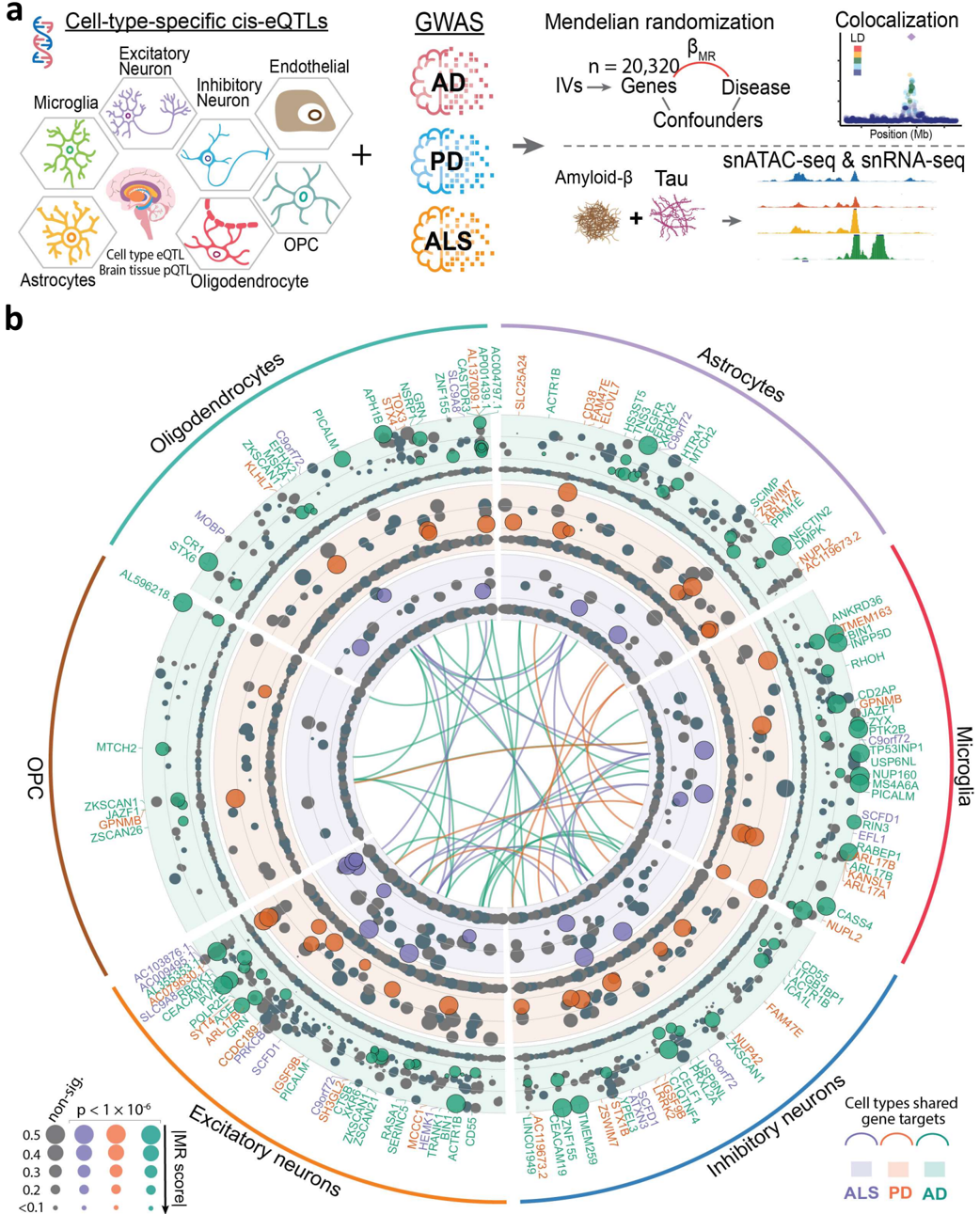
The genetic underpinnings of neurodegenerative disease risk remain poorly characterized due to the lack of a unified framework for synthesizing causal evidence from diverse statistical and biological sources. Here, we present an integrative approach to analyze Alzheimer’s disease (AD), Parkinson’s disease (PD), and amyotrophic lateral sclerosis (ALS) risk that unifies evidence from Mendelian randomization, colocalization, cell type-specific genomic and epigenomic profiling, human induced pluripotent stem cell (iPSC) and mouse model-based functional validation. We identified 173 high confidence risk genes: 105 for AD, 50 for PD, and 27 for ALS. Single-nucleus multi-omics revealed distinct cell type-specific regulatory architectures, with AD risk genes enriched in microglia and PD and ALS risk genes predominantly associated with neurons and oligodendrocytes. Functional mechanisms were elucidated for specific variants, including a non-coding variant (rs1171832) that regulates expression of the DNA repair and cell cycle CCDC6 gene by modulating chromatin accessibility in microglia and we further validate it in human iPSC derived microglia by CRISPRi experiments. A nonsynonymous mutation (p.P290A) in the mitochondrial metabolism gene MTCH2 (rs1064608) that increases its neuronal expression and elevates AD risk. We found that AAV-mediated delivery of mutated MTCH2 gene ameliorated cognitive deficits in a mouse model, indicating a protective role. This work establishes a functional genomic framework that bridges genetic association with molecular mechanism and target validation, uncovering cell type-specific genetic drivers of neurodegenerative diseases.
Overview
CoChat Summary
TL;DR
The paper presents an integrative framework combining Mendelian randomization, colocalization, fine-mapping, single-nucleus multiomics, and experimental validation to identify cell type-specific genetic drivers across Alzheimer’s disease (AD), Parkinson’s disease (PD), and amyotrophic lateral sclerosis (ALS). It reports 173 high-confidence risk genes (105 AD, 50 PD, 27 ALS) and validates selected mechanisms, including rs1171832–CCDC6 in microglia and MTCH2 p.P290A in neurons.
Key findings
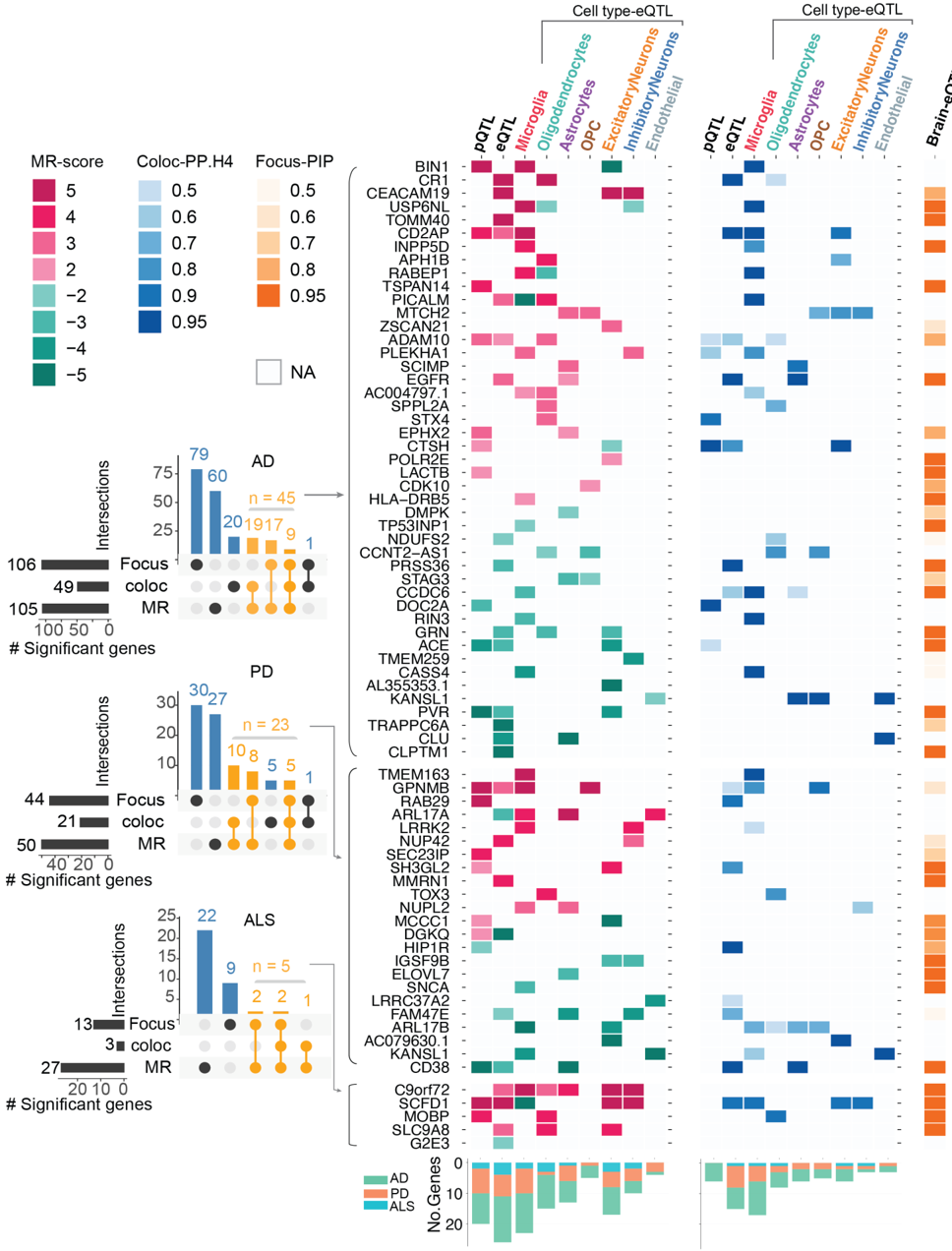
- Genome-wide MR identified 173 genes with likely causal effects at p < 1×10⁻⁶: 105 for AD, 50 for PD, and 27 for ALS. AD MR effects were enriched in microglia and excitatory neurons; PD and ALS showed most significant MR associations in excitatory neurons, with PD/ALS risk genes predominantly associated with neurons and oligodendrocytes.
- Cross-validation with colocalization (PP.H4 > 0.5) and fine-mapping (FOCUS, PIP > 0.5) supported 45 AD genes, with 9 validated by all three methods (USP6NL, ACE, EGFR, INPP5D, CASS4, CCDC6, ADAM10, NDUFS2, PRSS36); 23 PD genes, with 5 validated by all three (FAM47E, SH3GL2, CD38, GPNMB, HIP1R); ALS signals were primarily in excitatory and inhibitory neurons, with MOBP validated by colocalization and FOCUS in oligodendrocytes.
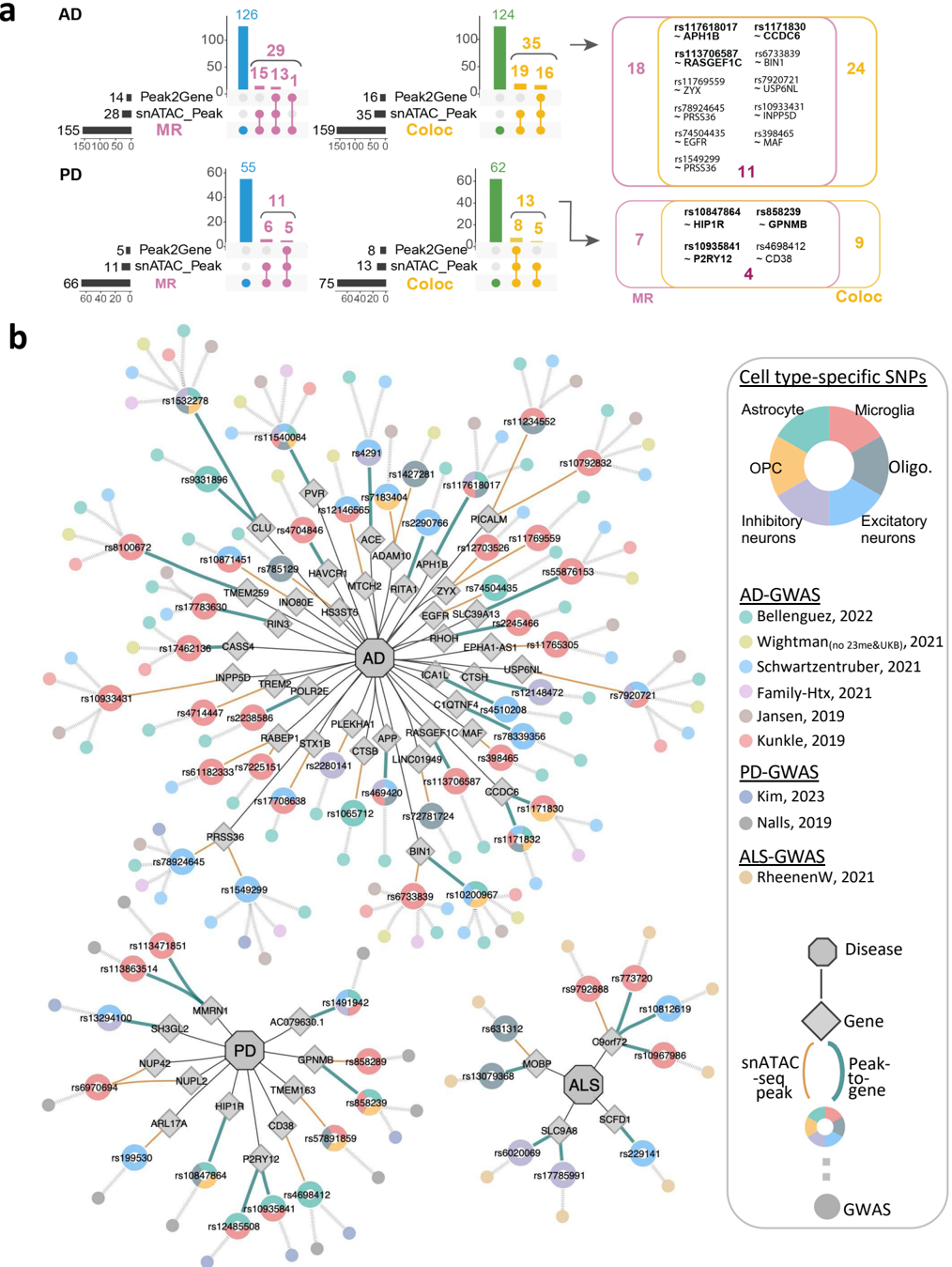
- Single-nucleus ATAC-seq and RNA-seq prioritized SNP–gene pairs: for AD, 155 pairs by ND-MR score, 29 in open chromatin, 14 with significant peak-to-gene associations, and 11 supported by both MR and colocalization plus snATAC/peak-to-gene evidence; for PD, 66 pairs, 11 open chromatin, 5 peak-to-gene, and 4 consistently prioritized; for ALS, 6 SNP–gene pairs supported by snATAC-seq and snRNA-seq.
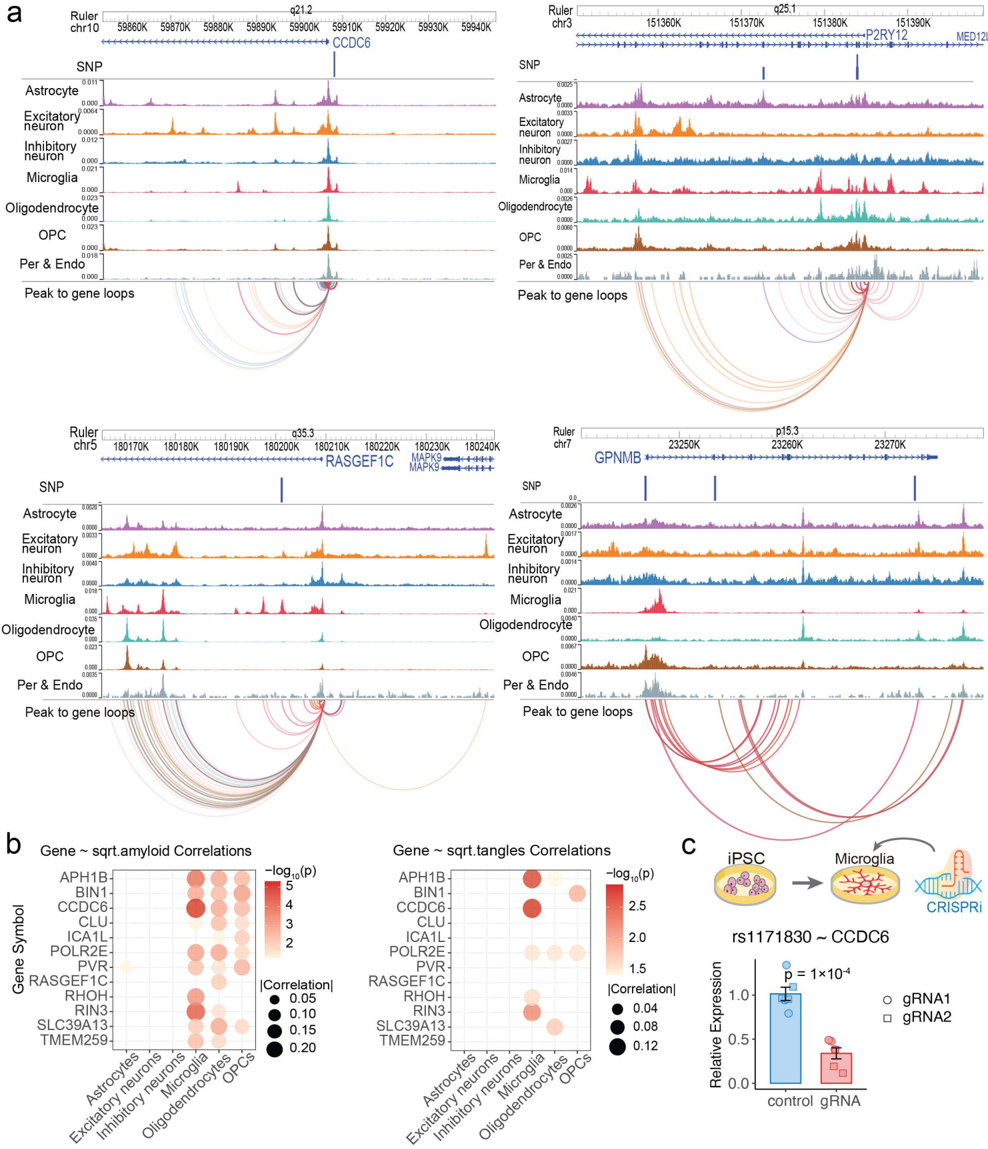
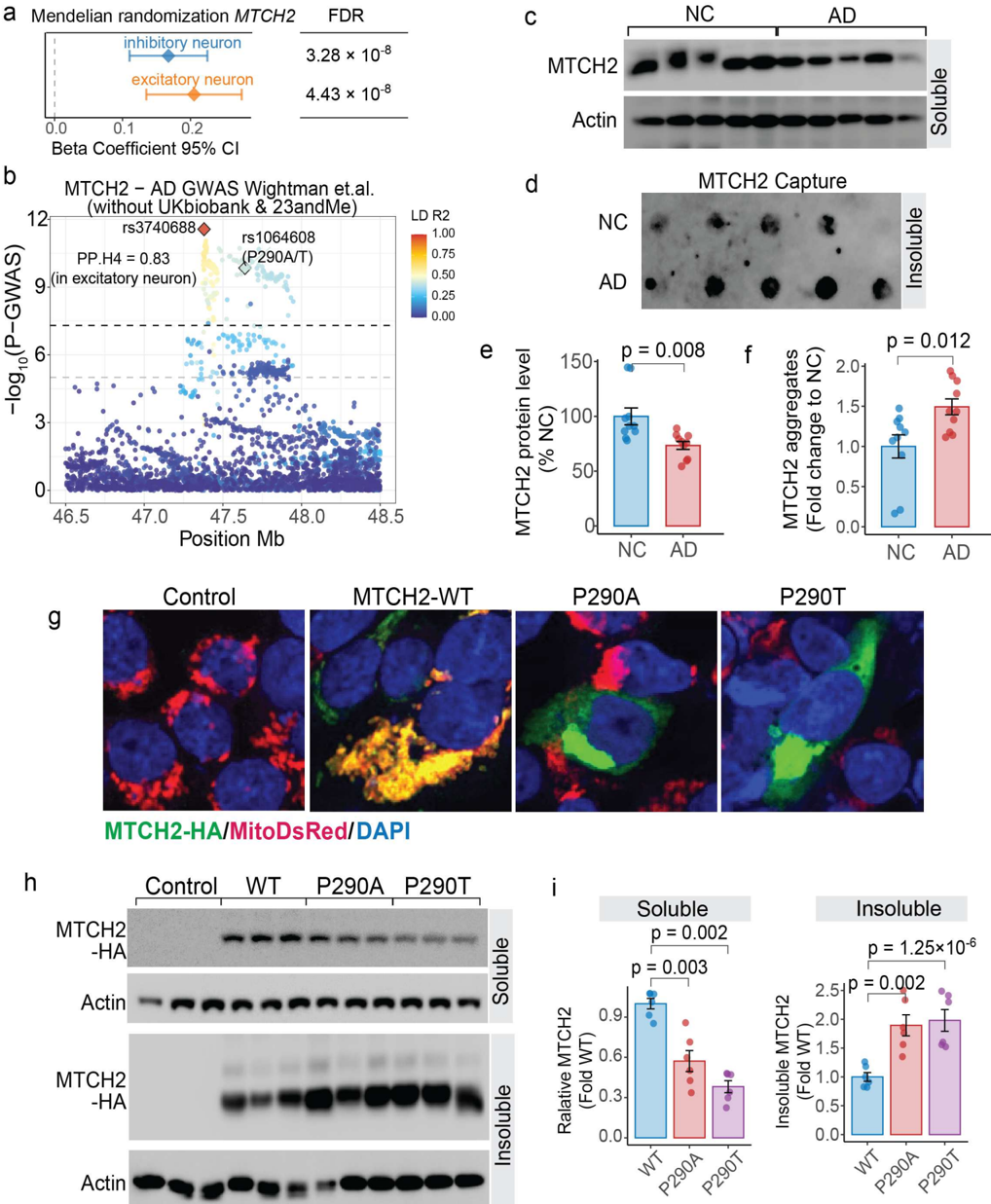
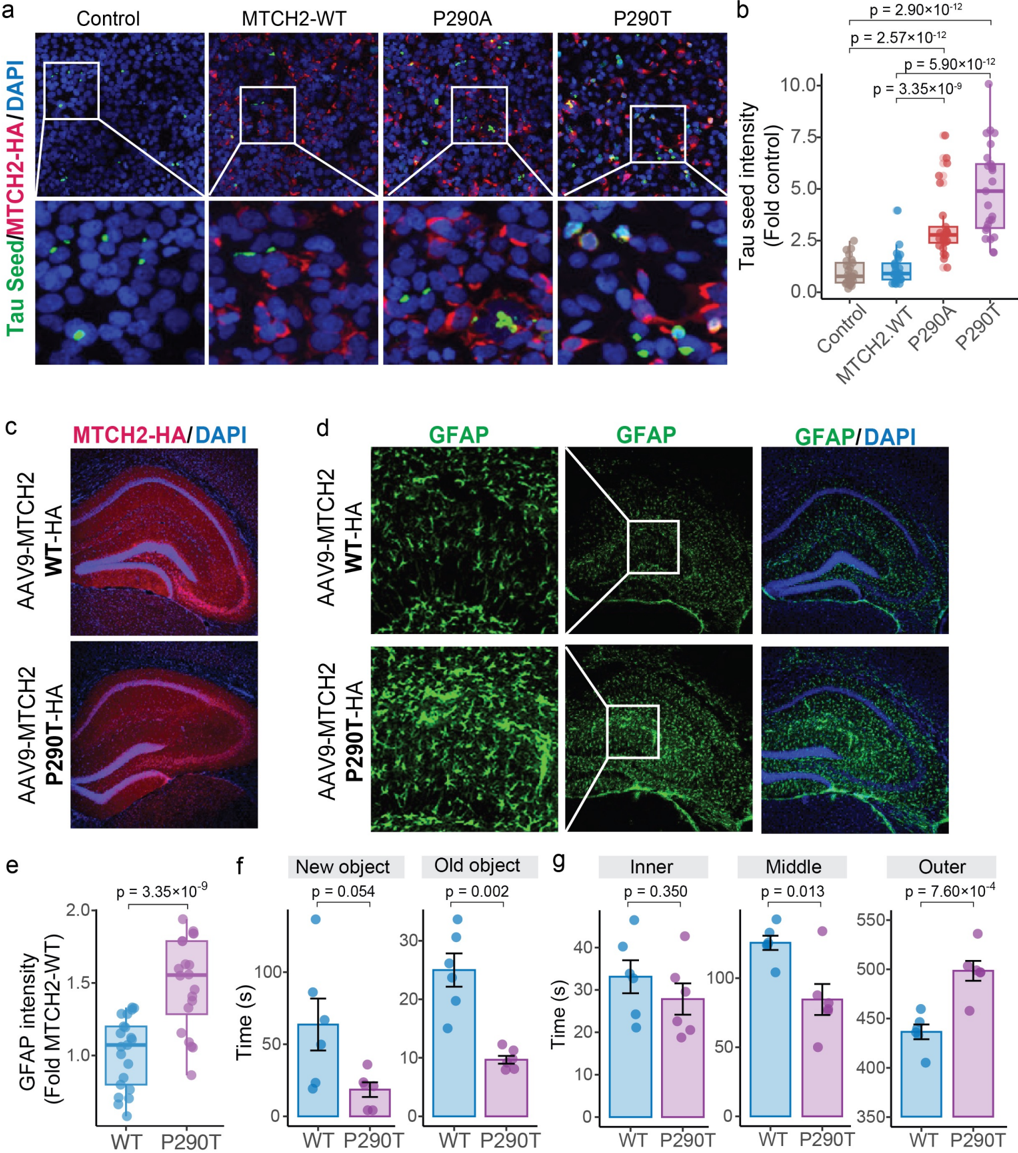
- CRISPRi in human iPSC-derived microglia showed that blocking the rs1171832 region significantly reduced CCDC6 expression (p = 1×10⁻⁴). For MTCH2, rs1064608 p.P290A was associated with elevated MTCH2 expression in excitatory and inhibitory neurons and increased AD risk (excitatory FDR = 4.43×10⁻⁸; inhibitory p = 3.28×10⁻⁸), with colocalization at the locus (PP.H4 = 0.83). AD brains (n = 10) vs controls (n = 10) showed reduced soluble MTCH2 (p = 0.008) and increased insoluble MTCH2 (p = 0.012); MTCH2 p.P290A and p.P290T enhanced tau seeding (p = 3.35×10⁻⁹ and p = 5.90×10⁻¹²), and AAV9 MTCH2-p.P290T mice (n = 6/group) showed increased GFAP/Iba1, impaired novel object recognition (new object p = 0.054; old object p = 0.002), and heightened anxiety-like behavior in open field (p = 7.60×10⁻⁴).
Methods
- Genome-wide univariable MR used cell type-specific eQTLs as instrumental variables to evaluate 20,320 human genes across AD, PD, and ALS GWAS datasets. The consensus ND-MR score aggregates normalized Z-statistics across xQTL and GWAS cohorts; instrumental variables were filtered for FDR q < 0.05, SNP F-statistic > 10, LD r² < 0.1 within 500 kb, and association with no more than two other gene products.
- Colocalization used coloc (PP.H4 > 0.5) and fine-mapping used FOCUS (PIP > 0.5). MR instrumental variables and fine-mapped SNPs were mapped to cell type-specific chromatin accessibility from ROSMAP snATAC-seq/snRNA-seq data (850K RNA and ATAC cells in 92 AD case-control individuals), with peak-to-gene associations at FDR < 0.05.
- Functional validation included CRISPRi in WTC11 iPSC-derived microglia, immunoblot of human cortical samples from AD patients (n = 10) and matched controls (n = 10), tau FRET biosensor assays in HEK293T/HT22 cells, and AAV9 stereotaxic hippocampal injection in C57BL/6J mice (n = 6 per group) followed by immunohistochemistry and behavioral testing (novel object recognition, open field).
Limitations
- The paper states that snRNA-seq and snATAC-seq validation captures a static view of regulatory relationships that likely change across disease stages, environments, and genetic backgrounds; experimental validation was constrained to specific cell types and conditions; and AAV-mediated delivery/overexpression does not confirm naturally occurring endogenous expression changes.
- Evident from the text: this is a preprint (DOI 10.21203/rs.3.rs-8779983/v1), so it has not been peer-reviewed. The text also contains an apparent inconsistency: the abstract states that AAV-mediated delivery of mutated MTCH2 ameliorated cognitive deficits and indicates a protective role, whereas the Results report that MTCH2-p.P290T mice exhibited impaired exploratory behavior and heightened anxiety-like phenotypes.
Model-written summary. Check it against the paper before relying on it.
Integrity signals
Registry
Cites
Statistics
Figures
Verification
Claims the paper makes
0 Valid · 0 Not valid · 22 Not checked · 115 Own results and interpretations
A result the paper reports from its own data — it cites no other source for it, so there is none to check. The quote shows it is in the paper.
In the paper
“In both PD and ALS, excitatory neurons exhibited the most significant MR associations.”
§ Combining cell type-specific genomic/epigenomic analyses and experimental validation identifies genetic drivers across three neurodegenerative diseases > Brain cell type-specific gene effect for AD, PD and ALS
plainstates an association- Asserted: passes — The authors put it forward as true.
- Checkable: passes — It can be checked against evidence.
- Load-bearing: passes — The paper’s conclusions depend on it.
- Based: passes — The paper gives a reason why it holds.
A result the paper reports from its own data — it cites no other source for it, so there is none to check. The quote shows it is in the paper.
In the paper
“Beyond single cell type-specific effects, we observed that several genes influenced multiple cell types.”
§ Combining cell type-specific genomic/epigenomic analyses and experimental validation identifies genetic drivers across three neurodegenerative diseases > Brain cell type-specific gene effect for AD, PD and ALS
plainstates an association- Asserted: passes — The authors put it forward as true.
- Checkable: passes — It can be checked against evidence.
- Load-bearing: passes — The paper’s conclusions depend on it.
- Based: passes — The paper gives a reason why it holds.
A result the paper reports from its own data — it cites no other source for it, so there is none to check. The quote shows it is in the paper.
In the paper
“Single-nucleus multiomics revealed distinct cell type-specific regulatory architectures, with AD risk genes enriched in microglia and PD and ALS risk genes predominantly associated with neurons and oligodendrocytes.”
- Also stated in: § Discussion · plain
“The matched snATAC-seq and snRNA-seq results revealed distinct cellular regulatory architectures for each disease.”
§ Combining cell type-specific genomic/epigenomic analyses and experimental validation identifies genetic drivers across three neurodegenerative diseases > Abstract
plainstates an association- Asserted: passes — The authors put it forward as true.
- Checkable: passes — It can be checked against evidence.
- Load-bearing: passes — The paper’s conclusions depend on it.
- Based: passes — The paper gives a reason why it holds.
- Also stated in: § Discussion · plain
A result the paper reports from its own data — it cites no other source for it, so there is none to check. The quote shows it is in the paper.
In the paper
“PD and ALS risk genes predominantly associated with neurons and oligodendrocytes.”
- Also stated in: § Discussion · plain
“PD and ALS, on the other hand, displayed focused effects in excitatory neurons and oligodendrocytes”
§ Combining cell type-specific genomic/epigenomic analyses and experimental validation identifies genetic drivers across three neurodegenerative diseases > Abstract
plainstates an association- Asserted: passes — The authors put it forward as true.
- Checkable: passes — It can be checked against evidence.
- Load-bearing: passes — The paper’s conclusions depend on it.
- Based: passes — The paper gives a reason why it holds.
- Also stated in: § Discussion · plain
A result the paper reports from its own data — it cites no other source for it, so there is none to check. The quote shows it is in the paper.
In the paper
“we further validate it in human iPSC derived microglia by CRISPRi experiments.”
- Also stated in: § Cell type-specific correlations between gene expression and AD pathology · plain
“Our CRISPRi experiment supported a cis-regulatory relationship between the AD risk SNP rs1171832 and CCDC6 in iPSC-derived microglia”
§ Combining cell type-specific genomic/epigenomic analyses and experimental validation identifies genetic drivers across three neurodegenerative diseases > Abstract
plainstates a cause- Asserted: passes — The authors put it forward as true.
- Checkable: passes — It can be checked against evidence.
- Load-bearing: passes — The paper’s conclusions depend on it.
- Based: passes — The paper gives a reason why it holds.
- Also stated in: § Cell type-specific correlations between gene expression and AD pathology · plain
74 more claims
Create a free account to see all 137 claims and every source verdict.
- It may state two separate claims as one. 41
- Probably not a substantial claim. 25
- The quote only partly states this claim. 1
Self-check
Percentages, sums and reported differences re-computed from the paper’s own numbers.
Each contradiction between two passages listed here was confirmed by an independent check.
Rated major: it would touch a result — a value a result rests on, reported and recomputed p-values on opposite sides of the significance level, two passages that conflict with no sign which is right, or a cited work retracted before this paper was published.
In the paper
§ Combining cell type-specific genomic/epigenomic analyses and experimental validation identifies genetic drivers across three neurodegenerative diseases > Abstract
“We found that AAV-mediated delivery of mutated MTCH2 gene ameliorated cognitive deficits in a mouse model, indicating a protective role.”
§ Combining cell type-specific genomic/epigenomic analyses and experimental validation identifies genetic drivers across three neurodegenerative diseases > Open Field and Novel Object Recognition
“MTCH2p.P290T and p.P290A mutations exert deleterious effects on brain function through multiple pathological mechanisms.The mutations enhance tau seeding and aggregation in cellular models, elicited neuroinflammatory responses in vivo using an AAV overexpression mouse model system, and induce behavioral deficits including anxietylike responses.”
Rated minor: it would not touch a result — a value no result rests on, a p-value that stays on the same side of the significance level, or a conflict that is clerical, resolved elsewhere in the paper, or outside its own findings.
In the paper
§ Combining cell type-specific genomic/epigenomic analyses and experimental validation identifies genetic drivers across three neurodegenerative diseases > Additional information
“Cell type-specific eQTL analysis (cf.Methods) found that the nonsynonymous mutation rs1064608 p.P290A (G/C) was significantly associated with elevated mitochondrial carrier homolog 2 (MTCH2) gene expression in excitatory and inhibitory neurons (Supplementary Fig. 7a).”
§ Combining cell type-specific genomic/epigenomic analyses and experimental validation identifies genetic drivers across three neurodegenerative diseases > Additional information
“a, Cell type specific eQTL of MTCH2 nonsynonymous mutation rs10646608 p.P290A (C>G).”
Rated minor: it would not touch a result — a value no result rests on, a p-value that stays on the same side of the significance level, or a conflict that is clerical, resolved elsewhere in the paper, or outside its own findings.
In the paper
§ Combining cell type-specific genomic/epigenomic analyses and experimental validation identifies genetic drivers across three neurodegenerative diseases > Discovery of microglia specific cis-regulatory variant of CCDC6 in AD by CRISPRi
“Next, we performed CRISPRi experiments using human iPSC-derived microglia (cf.Methods) to validate the cis-regulatory relationship between rs1171832 and CCDC6 expression (Fig. 4c).”
§ Combining cell type-specific genomic/epigenomic analyses and experimental validation identifies genetic drivers across three neurodegenerative diseases > Open Field and Novel Object Recognition
“c.CRISPRi experimental validation of causal relationship between SNP rs1171830 and CCDC6 expression in human iPSC-derived microglia.”
Rated minor: it would not touch a result — a value no result rests on, a p-value that stays on the same side of the significance level, or a conflict that is clerical, resolved elsewhere in the paper, or outside its own findings.
In the paper
“We analyzed 19 cell type specific eQTL datasets from brain tissue.Seven datasets came from DLPFC tissue 1 and eight datasets 43 came from prefrontal cortex, temporal cortex, and deep white matter.”
§ Combining cell type-specific genomic/epigenomic analyses and experimental validation identifies genetic drivers across three neurodegenerative diseases > Multi-source quantitative trait loci (QTL) data
Reported 19 · recomputed 20
Cited works that were retracted
Works this paper cites that were later retracted, from the retraction notices publishers deposit. Major when the notice came out before this paper was published.
A note, not an issue: for example, a cited work that was retracted only after this paper was published, which its authors could not have known.
Cited work 10.1371/journal.pone.0036177 · retracted 2026-09-24 · notice 10.1371/journal.pone.0359046 · this paper published 2026-03-03
Citations
Cites
1 retracted
Merolla, F., Luise, C., Muller, M. T., Pacelli, R., Fusco, A., & Celetti, A. (2012) · PLoS ONE · doi:10.1371/journal.pone.0036177 · Cited by 53
RetractedVerbanck, M., Chen, C.-Y., Neale, B., & Do, R. (2018) · Nature Genetics · doi:10.1038/s41588-018-0099-7 · Cited by 8,591
Interpreting findings from Mendelian randomization using the MR-Egger method.
Burgess, S., & Thompson, S. G. (2017) · European Journal of Epidemiology · doi:10.1007/s10654-017-0255-x · Cited by 4,571
Alzheimer Disease Genetics Consortium (ADGC), Kunkle, B. W., The European Alzheimer’s Disease Initiative (EADI), Cohorts for Heart and Aging Research in Genomic Epidemiology Consortium (CHARGE), Genetic and Environmental Risk in AD/Defining Genetic, P. A. E. R. F. A. D. C. (., Grenier-Boley, B., Sims, R., Bis, J. C., Damotte, V., Naj, A. C., et al. (2019) · Nature Genetics · doi:10.1038/s41588-019-0358-2 · Cited by 2,946
New insights into the genetic etiology of Alzheimer’s disease and related dementias
Bellenguez, C., Küçükali, F., Jansen, I. E., Kleineidam, L., Moreno-Grau, S., Amin, N., Naj, A. C., Campos-Martin, R., Grenier-Boley, B., Andrade, V., et al. (2022) · Nature Genetics · doi:10.1038/s41588-022-01024-z · Cited by 2,498
Jansen, I. E., Savage, J. E., Watanabe, K., Bryois, J., Williams, D. M., Steinberg, S., Sealock, J., Karlsson, I. K., Hägg, S., Athanasiu, L., et al. (2019) · Nature Genetics · doi:10.1038/s41588-018-0311-9 · Cited by 2,277
Benefits and limitations of genome-wide association studies
Tam, V., Patel, N., Turcotte, M., Bossé, Y., Paré, G., & Meyre, D. (2019) · Nature Reviews Genetics · doi:10.1038/s41576-019-0127-1 · Cited by 2,092
Genome-wide association studies
Uffelmann, E., Huang, Q. Q., Munung, N. S., de Vries, J., Okada, Y., Martin, A. R., Martin, H. C., Lappalainen, T., & Posthuma, D. (2021) · Nature Reviews Methods Primers · doi:10.1038/s43586-021-00056-9 · Cited by 1,849
Wightman, D. P., Jansen, I. E., Savage, J. E., Shadrin, A. A., Bahrami, S., Holland, D., Rongve, A., Børte, S., Winsvold, B. S., Drange, O. K., et al. (2021) · Nature Genetics · doi:10.1038/s41588-021-00921-z · Cited by 1,011
A robust and efficient method for Mendelian randomization with hundreds of genetic variants
Burgess, S., Foley, C. N., Allara, E., Staley, J. R., & Howson, J. M. M. (2020) · Nature Communications · doi:10.1038/s41467-019-14156-4 · Cited by 681
Research works printed but not linked: 2
- Jang, B. et al. SingleBrain: A Meta-Analysis of Single-Nucleus eQTLs Linking Genetic Risk to Brain Disorders. medRxiv (2025).
- Bogacki, E.C., Longmore, G., Lewis, P.A. & Herbst, S. GPNMB is a biomarker for lysosomal dysfunction and is secreted via LRRK2-modulated lysosomal exocytosis. bioRxiv, 2025.01.01.630988 (2025).
Metadata
- Authors
- Hou, Y., Wetzel, L., Chen, X., Yang, X., Bugybayeva, D., Thomas, T., Song, W., Liu, Z., Li, Y., Tan, Z., Hu, M., Li, Y., Zhu, X., Pillai, J., Pieper, A., Cummings, J., Liu, T., & Cheng, F.
- Affiliations
- Cleveland Clinic (US)
- Case Western Reserve University (US)
- Washington University in St. Louis (US)
- University of Nevada, Las Vegas (US)
- Corresponding author
- Cheng, Feixiong
- ORCID
- Venue
- Research Square
- Published
- 2026-03-03
- OpenAlex
- W7133329095
- Cited by
- 0
- References
- 47
- Type
- posted content
- Language
- en
- Open access
- green
- doi.org
- Locations
- Research Square (submittedVersion, cc-by)
- Funders
- Alzheimer's Association (ALZDISCOVERY-1051936)
- Alzheimer's Drug Discovery Foundation (19PABH134580006, P20GM109025)
- National Institute on Aging (R01AG066707, RF1AG082211, R01AG084250, R01AG082118, R01AG076448, R01AG092591, U01AG073323)
- National Institute of Neurological Disorders and Stroke (RF1NS133812)
- Topics
- Life Sciences › Neuroscience › Cellular and Molecular Neuroscience › Alzheimer's disease research and treatments
- Life Sciences › Biochemistry, Genetics and Molecular Biology › Genetics › Genetic Associations and Epidemiology
- Life Sciences › Neuroscience › Neurology › Neuroinflammation and Neurodegeneration Mechanisms
- Keywords
- neurodegenerative diseases, Alzheimer's disease, Parkinson's disease, amyotrophic lateral sclerosis, risk genes, cell type-specific gene regulation, microglia, neurons, oligodendrocytes, chromatin accessibility, CCDC6, MTCH2, mitochondrial metabolism, Mendelian randomization, colocalization, iPSC-derived microglia, AAV gene delivery, cognitive impairment, non-coding variants, non-synonymous mutations
About these checks
Registry, retraction, Cites and statistics results are computed, not judged, with one exception: a printed reference that no index lists is read once by a model before it counts as a citation error. Claims are extracted by a model and kept only when their quote appears verbatim in the text; each cited source is then checked, with a model’s help, for whether it says what the claim relies on. Those verdicts can be wrong — read the claim’s quote and the cited source before relying on one.
A language model drew the claims from the paper on 2026-11-27, under version 3 of the claim definition (model deepseek-v4.1-flash, prompt extract-v3).
A second model labelled each claim on 2026-11-27 (model jev-1.13-20260917, definition revision gold-guideline-v0.2).
Statistics and arithmetic are recomputed, not judged.
Confidence bands are shown only for fields calibrated on our annotated test set. None is calibrated yet, so no band is shown.
What counts as a claim ›How we measure confidence ›How we check this ›
Are you an author, or do you see a problem with this page? Request a review
Data sources
Bibliographic data: Semantic Scholar, OpenAlex, Crossref.
Contains information from the Semantic Scholar Academic Graph Datasets, made available under the ODC Attribution License (ODC-BY 1.0).
Semantic Scholar’s data is described in: Kinney, R., et al. (2023). The Semantic Scholar Open Data Platform. arXiv:2301.10140.
