

The DOI matches its Crossref record; 83 of the 94 references it cites were found in a registry or an index; 7 of the 99 sources its claims cite were checked for support.
Challenges and Solutions in Implementing Continuous Integration and Continuous Testing for Agile Quality Assurance
Open accessAbstract
As software development undergoes a transformation, it necessitates a corresponding adaptation on the part of quality specialists. The fundamental feature of agile approach is quality, which is assessed by both developers and customers in order to enhance the system's overall quality. This approach has the potential to enhance the quality of output, but at the expense of less involvement from the quality assurance team. The Agile methodology places emphasis on expediting the software development process while also reducing costs. Additionally, within the framework of Agile Quality Assurance (QA) and software development, Continuous Integration (CI) and Continuous Testing are key methodologies. The programmers ensure that changes to the code are regularly applied, examined, and verified throughout the whole development cycle. Within the Agile Quality Assurance (QA) paradigm, continuous integration and continuous testing are important approaches that offer routine code integration, automated testing, and quick feedback. They play a key role in the swift and iterative delivery of software of the highest calibre in Agile development setups. This study's major goal is to address the Problems and Solutions of Putting Continuous Integration and Continuous Testing intoPractise for Agile Quality Assurance.Agile techniques, agile software quality assurance, continuous integration practices of agile software development, difficulties, and solutions for these practises have all been covered in this review article.Additionally, the practises for continuous testing in agile quality assurance, difficulties, and solutions have been studied in the following part.
Overview
CoChat Summary
TL;DR
This review examines challenges and solutions in implementing continuous integration (CI) and continuous testing (CT) for agile quality assurance, with attention to DevOps and agile testing practices. It synthesizes literature on CI/CT, agile QA time horizons, and reported benefits such as reduced development time and improved software quality.
Key findings
- CI and CT are presented as key agile QA practices: CI involves frequent code integration, automated builds/tests, and quick feedback, while CT automates testing to provide continuous feedback and detect defects earlier.
- The paper identifies agile testing challenges and solutions, including testing activities in the agile lifecycle, distributed agile testing, regression testing, and test-case prioritization; proposed solutions include stakeholder engagement, a distributed-environment framework, regression test selection using user-story graphs, and linguistic/risk-based prioritization.
- Reported quantitative claims include: Saff’s estimate that continuous testing removes 92–98% of waste; an experiment showing continuous testing reduced overall development time by around 15%; DevOps use by several European banks yielded a 25% enhancement in online services; and Silva et al. found development–operations interaction lowered operational effort by 50% and DevOps reduced failures by 3%.
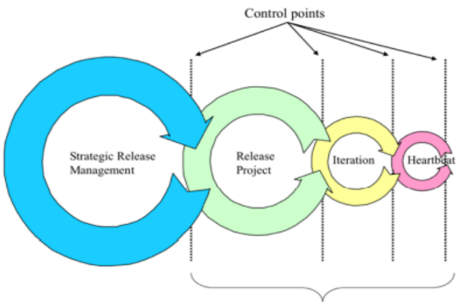
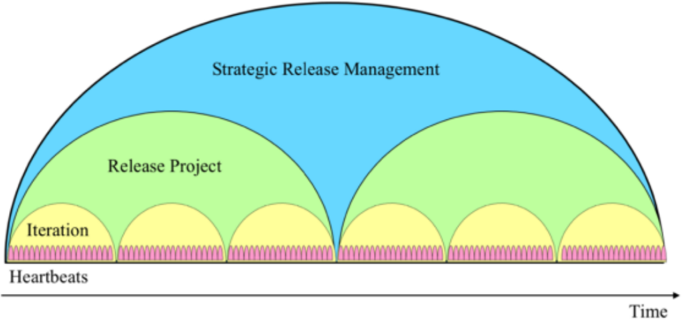
- QA coverage varies by time horizon: heartbeat has the most QA practices (e.g., unit testing, continuous integration, pair programming), iteration has fewer, and release-level QA processes are difficult to locate; the paper proposes an independent tester role for the iteration horizon and session-based exploratory testing for the heartbeat horizon.
Methods
- Design: a review article covering agile techniques, agile software quality assurance, CI practices, CT practices, and associated challenges and solutions.
- Data/sample: existing literature and prior studies on agile QA, CI, CT, DevOps, and software testing; no primary empirical sample is reported.
- Main analysis: thematic synthesis and comparison of agile QA practices using Itkonen et al.’s temporal pacing/time-horizon model and the Cycles of Control framework, with tables summarizing QA procedures, quality elements, and challenge–solution mappings.
Limitations
- Stated: the study focuses only on continuous integration and testing methods in agile software development; future work could explore other agile methods such as pair programming and combine affected quality criteria into a single quality framework.
- Stated: there is a lack of comprehensive guidance on integrating destructive and independent testing into agile development, a dearth of research on architecture’s impact on CT/CD in production settings, and a need for empirical evidence on TDD+CT synergy in industrial settings.
- Evident: as a review, it does not provide primary empirical data or a systematic review protocol, and several conclusions rely on secondary literature and reported claims rather than new experiments conducted by the author.
Model-written summary. Check it against the paper before relying on it.
Integrity signals
Registry
Cites
Statistics
Figures

Verification
Claims the paper makes
7 Valid · 16 Not valid · 84 Not checked · 84 Own results and interpretations
In the paper
“As indicated in Table 1, there are much fewer quality assurance practises on the iteration time horizon of agile methodologies than there are on the heartbeat time horizon.”
- Also stated in: § b) Quality Assurance Iteration · plain
“There are far fewer QA procedures in agile methodologies on the iteration time horizon than there are on the heartbeat time horizon.”
What the sources say
- Not matchedcites [34]
Couldn’t be matched to a paper in Crossref, so it can’t be checked.
plain- Asserted: passes — The authors put it forward as true.
- Checkable: passes — It can be checked against evidence.
- Load-bearing: unclear — It is unclear whether the paper’s conclusions depend on it.
- Based: passes — The paper gives a reason why it holds.
- Also stated in: § b) Quality Assurance Iteration · plain
A result the paper states — it cites no source for it, so there is none to check. The quote shows it is in the paper.
In the paper
“For instance, we were unable to locate any quality assurance procedures among the sample techniques shown in Table 1 that would be appropriate for the release time horizon.”
plain- Asserted: passes — The authors put it forward as true.
- Checkable: passes — It can be checked against evidence.
- Load-bearing: unclear — It is unclear whether the paper’s conclusions depend on it.
- Based: passes — The paper gives a reason why it holds.
A result the paper reports from its own data — it cites no other source for it, so there is none to check. The quote shows it is in the paper.
In the paper
“Our study demonstrated that using time horizons to describe the development process and the procedures used facilitates the identification of areas where testing processes may be improved.”
boostedstates a cause- Asserted: passes — The authors put it forward as true.
- Checkable: passes — It can be checked against evidence.
- Load-bearing: passes — The paper’s conclusions depend on it.
- Based: passes — The paper gives a reason why it holds.
A result the paper states — it cites no source for it, so there is none to check. The quote shows it is in the paper.
In the paper
“Less defined than those on the heartbeat time horizon are the procedures on the iteration time horizon.”
plain- Asserted: passes — The authors put it forward as true.
- Checkable: passes — It can be checked against evidence.
- Load-bearing: unclear — It is unclear whether the paper’s conclusions depend on it.
- Based: passes — The paper gives a reason why it holds.
In the paper
“According to Itkonen et al. (2005) [34], Table 1 shows that it is challenging to locate any quality assurance processes in agile approaches on the release time horizon.”
- Also stated in: § c) Quality Assurance Release · plain
“It is quite difficult to identify any quality assurance processes in agile methodologies on the release time horizon.”
What the sources say
- Not matchedcites [34]
Couldn’t be matched to a paper in Crossref, so it can’t be checked.
plain- Asserted: passes — The authors put it forward as true.
- Checkable: passes — It can be checked against evidence.
- Load-bearing: unclear — It is unclear whether the paper’s conclusions depend on it.
- Based: passes — The paper gives a reason why it holds.
- Also stated in: § c) Quality Assurance Release · plain
28 more claims
Create a free account to see all 191 claims and every source verdict.
- Probably not a substantial claim. 148
- It may state two separate claims as one. 48
- The quote only partly states this claim. 1
Self-check
Percentages, sums and reported differences re-computed from the paper’s own numbers.
Each contradiction between two passages listed here was confirmed by an independent check.
Rated major: it would touch a result — a value a result rests on, reported and recomputed p-values on opposite sides of the significance level, two passages that conflict with no sign which is right, or a cited work retracted before this paper was published.
In the paper
§ 9. Conclusion
“For the iteration time horizon, an independent tester position has been proposed, and for the heartbeat time horizon, session-based exploratory testing is being examined.”
§ 4.3 Agile Testing Improvements for QA
“There is potential for improvement in the quality assurance (QA) methods related to heartbeat. One such enhancement is the incorporation of an independent tester who collaborates with the developer to test each completed feature.”
Rated minor: it would not touch a result — a value no result rests on, a p-value that stays on the same side of the significance level, or a conflict that is clerical, resolved elsewhere in the paper, or outside its own findings.
In the paper
§ 9. Conclusion
“for the heartbeat time horizon, session-based exploratory testing is being examined.”
§ 4.3 Agile Testing Improvements for QA
“Sessionbased exploratory testing is an example of agile testing that takes place within an iteration time horizon [47].”
Rated minor: it would not touch a result — a value no result rests on, a p-value that stays on the same side of the significance level, or a conflict that is clerical, resolved elsewhere in the paper, or outside its own findings.
In the paper
§ International Journal of Science and Research (IJSR)
“Table 3: Quality before to and after using continuous integration”
§ 8.2 Solution
“Table 3: Challenges' Solution”
Citations
Cites
Manifesto for agile software development
Beck, K., Beedle, M., van Bennekum, A., Cockburn, A., Cunningham, W., Fowler, M., & Thomas, D. A. (2001) · Cited by 4,284
Guide to Advanced Empirical Software Engineering
(2008) · Springer eBooks · doi:10.1007/978-1-84800-044-5 · Cited by 1,003
Embracing change with extreme programming
Beck, K. (1999) · Computer · doi:10.1109/2.796139 · Cited by 979
Continuous Delivery: Reliable Software Releases Through Build, Test, and Deployment Automation
Humble, J., & Farley, D. R. (2010) · Cited by 911
Garousi, V., Felderer, M., & Mäntylä, M. V. (2019) · Information and Software Technology · doi:10.1016/j.infsof.2018.09.006 · Cited by 831
A Practical Guide to Feature-Driven Development
Palmer, S. R., & Felsing, M. (2002) · Medical Entomology and Zoology · Cited by 652
Devops: A Software Architect's Perspective
Bass, L., Weber, I. M., & Zhu, L. (2015) · CERN Document Server (European Organization for Nuclear Research) · Cited by 561
Continuous Integration: Improving Software Quality and Reducing Risk
Duvall, P., Matyas, S., & Glover, A. (2007) · Cited by 510
A Survey of DevOps Concepts and Challenges
Leite, L., Rocha, C., Kon, F., Milojicic, D., & Meirelles, P. (2020) · ACM Computing Surveys · doi:10.1145/3359981 · Cited by 484
Jeffries, R., Anderson, A., & Hendrickson, C. (2000) · Cited by 416
Cited by
Bose, S. R., Sirajudheen, M. A. S., Kirupanandan, G., Arunagiri, S., Regin, R., & Rajest, S. S. (2023) · Advances in computational intelligence and robotics book series · doi:10.4018/979-8-3693-0502-7.ch017 · Cited by 29
Implementing and Using CI/CD: Addressing Key Challenges Faced by Software Developers
Shanmukhi, B. S. (2024) · INTERANTIONAL JOURNAL OF SCIENTIFIC RESEARCH IN ENGINEERING AND MANAGEMENT · doi:10.55041/ijsrem37128 · Cited by 1
Dias, I., Wickramarachchi, R., & Jayasinghe, S. (2025) · International Research Conference on Smart Computing and Systems Engineering (SCSE) · doi:10.1109/scse65633.2025.11031019 · Cited by 1
“At the same time, challenges like skill gaps, communication issues, and increased costs add to the complexity of CI/CD integration in Agile environments [20], [21].”
Jemima, P. P., Gokul, R., Ashwin, R., & Matheswaran, S. (2023) · Advances in computational intelligence and robotics book series · doi:10.4018/979-8-3693-0502-7.ch018
MÜƏSSİSƏLƏRDƏ AGİLE TRANSFORMASİYASININ TƏTBİQİ ÇƏTİNLİKLƏRİ VƏ HƏLL YOLLARI
İbrahimov, S., Məmmədzadə, H., & Əkbərov, S. (2024) · SCIENTIFIC WORK · doi:10.36719/2663-4619/102/239-244
Metadata
- Authors
- Bhanushali, A.
- Affiliations
- West Virginia University (US)
- Corresponding author
- Bhanushali, Amit
- Venue
- International Journal of Science and Research (IJSR)
- Published
- 2023-10-05
- Volume
- 12
- Issue
- 10
- Pages
- 1626-1644
- ISSN
- 2319-7064 (ISSN-L)
- OpenAlex
- W4388193285
- Cited by
- 11
- References
- 94
- Citations by year
- 2026: 2 · 2025: 4 · 2024: 3 · 2023: 2
- FWCI
- 2.58
- Type
- journal article
- Language
- en
- Open access
- diamond
- doi.org
- Licence
- cc-by-sa
- Locations
- International Journal of Science and Research (IJSR) (publishedVersion, cc-by-sa)
- Topics
- Physical Sciences › Computer Science › Information Systems › Software Engineering Techniques and Practices
- Physical Sciences › Computer Science › Software › Software Testing and Debugging Techniques
- Physical Sciences › Computer Science › Information Systems › Software Engineering Research
- Keywords
- continuous integration, continuous testing, test automation, software quality, agile software development, implementation barriers
About these checks
Registry, retraction, Cites and statistics results are computed, not judged, with one exception: a printed reference that no index lists is read once by a model before it counts as a citation error. Claims are extracted by a model and kept only when their quote appears verbatim in the text; each cited source is then checked, with a model’s help, for whether it says what the claim relies on. Those verdicts can be wrong — read the claim’s quote and the cited source before relying on one.
The claim verdicts this report counts are experimental: their accuracy is not yet measured.
A language model drew the claims from the paper on 2026-09-28, under version 3 of the claim definition (prompt extract-v3).
A second model labelled each claim on 2026-09-28 (model jev-1.13-20260917, definition revision gold-guideline-v0.2).
Statistics and arithmetic are recomputed, not judged.
Confidence bands are shown only for fields calibrated on our annotated test set. None is calibrated yet, so no band is shown.
What counts as a claim ›How we measure confidence ›How we check this ›
Are you an author, or do you see a problem with this page? Request a review
How to cite
Cite CoChat for the checks on this page, and the paper for its own findings.
- This page
- CoChat. (2026). Citation check: Challenges and Solutions in Implementing Continuous Integration and Continuous Testing for Agile Quality Assurance. https://app.cochat.ai/papers/10.21275/sr231021114758
- The paper
- Bhanushali, A. (2023). Challenges and Solutions in Implementing Continuous Integration and Continuous Testing for Agile Quality Assurance. International Journal of Science and Research (IJSR). https://doi.org/10.21275/sr231021114758
Data sources
Bibliographic data: Semantic Scholar, OpenAlex, Crossref.
Contains information from the Semantic Scholar Academic Graph Datasets, made available under the ODC Attribution License (ODC-BY 1.0).
Semantic Scholar’s data is described in: Kinney, R., et al. (2023). The Semantic Scholar Open Data Platform. arXiv:2301.10140.
