

The DOI matches its Crossref record.
The Effectiveness and Benefits of Disaster Simulation Training for Undergraduate Medical Students in Saudi Arabia
Abstract
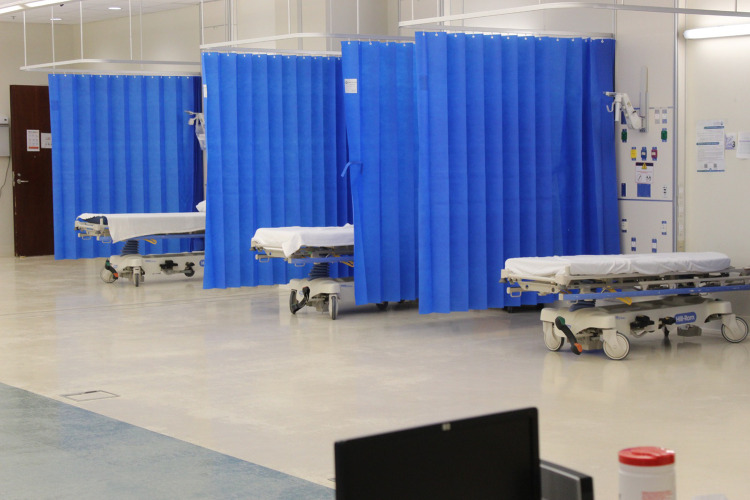
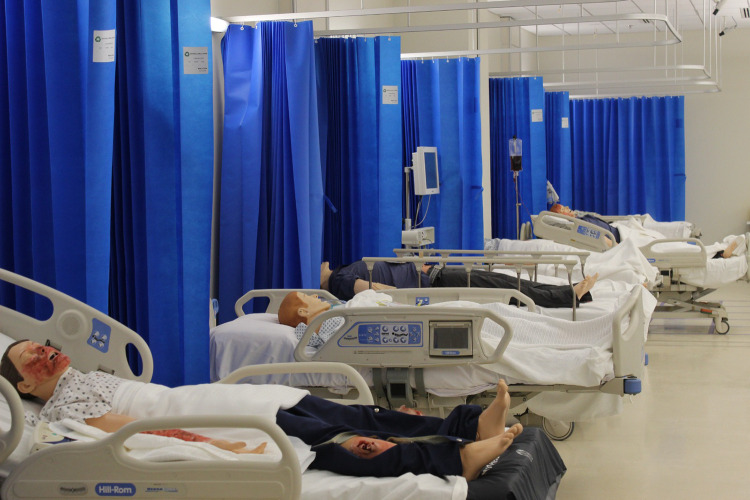
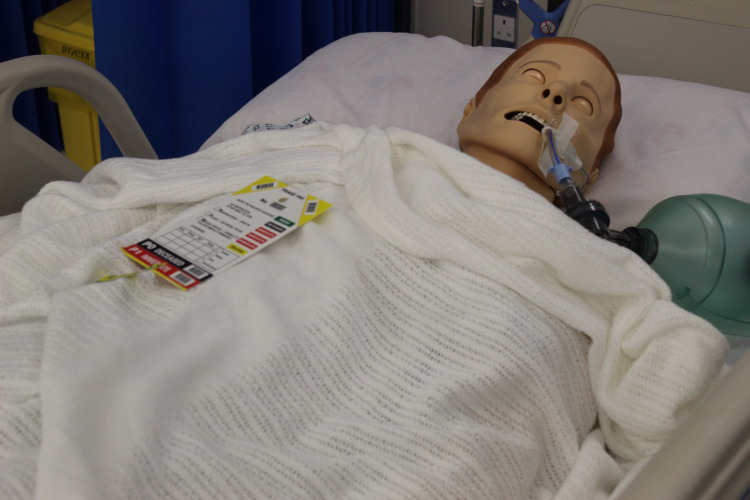
Background There is a growing recognition of the need for disaster management training for medical students in Saudi Arabia, but there is limited research on its effectiveness. Thus, this study evaluated the effectiveness of a disaster simulation training program for undergraduate medical students in Saudi Arabia. Methods A disaster management simulation activity was conducted for 32 medical students. The students attended a 30-minute lecture about mass casualty incidents (MCIs) and completed a pre-simulation survey. They were then randomly assigned to one of three groups (performer, actor, observer) and asked to apply their skills to triage patients after a Level C MCI. A debriefing session was conducted using the plus/delta debriefing method. Then, the students completed a post-simulation survey. Results The results showed that after the simulation training the students’ self-confidence in their ability to respond to a disaster increased from 40.7% to 59.4% (p value < 0.01), to utilize incident command structure increased from 37.9% to 62.5% (p value < 0.01), to demonstrate START triage for victims of a disaster increased from 28.2% to 65.7% (p value < 0.01), and to apply safe search and rescue techniques increased from 40.7% to 59.4% (p value < 0.01). The students’ self-confidence in their ability to perform basic first aid skills also increased after the simulation. Conclusion The study findings suggest that disaster management simulation training can be an effective way to increase medical students’ self-confidence and preparedness for disaster response.
Overview
The claims and statistics of this paper haven’t been checked yet.
Run the check — free, no account needed. It reads the open-access text and checks the sources it cites.
Integrity signals
Registry
Cites
Statistics
Figures
Verification
Claims the paper makes
The claims and statistics of this paper haven’t been checked yet.
Run the check — free, no account needed. It reads the open-access text and checks the sources it cites.
Claims other papers make about this one
Each is checked against this paper’s own text: does it say what the citing paper says it does?
In the citing paper
“Regular training programs, effective risk communication, and participation in simulations have been shown to improve rapid response during emergencies (Doumi et al., 2024;Goddard et al., 2018).”
From The Mediating Role of Risk Perception in the Effect of Information Literacy on Students’ Disaster Preparedness (2026) · cites this paper as Doumi et al., 2024
Self-check
Percentages, sums and reported differences re-computed from the paper’s own numbers.
The self-check needs the paper’s full text.
Citations
Cites
No references could be resolved yet.
Research works printed but not linked: 14
- Kaji, 2010, Teach Learn Med, 22, 116, 10.1080/10401331003656561 · DOI
- Almazroui, 2020, Atmosphere, 11, 964, 10.3390/atmos11090964 · DOI
- Hermann, 2021, BMC Med Educ, 21, 610, 10.1186/s12909-021-03043-6 · DOI
- Wiesner, 2018, J Emergency Med, 54, 348, 10.1016/j.jemermed.2017.12.008 · DOI
- Bajow, 2022, Front Public Health, 2022, 2440
- Gable, 2021, J Med Educ Curric Develop, 8, 23821205211020751, 10.1177/23821205211020751 · DOI
- Bentley, 2019, MedEdPORTAL, 15, 10823, 10.15766/mep_2374-8265.10823 · DOI
- O’Regan, 2016, Advan Simulat, 1, 1, 10.1186/s41077-015-0004-8 · DOI · Paper page
- Thidemann, 2013, Nurse Education Today, 33, 1599, 10.1016/j.nedt.2012.12.004 · DOI
- Patel, 2023, Int J Environ Res Public Health, 20, 4447, 10.3390/ijerph20054447 · DOI · Paper page
- Booker, 2021, Family Pract, 38, 699, 10.1093/fampra/cmab070 · DOI
- Amri, 2017, Nat Hazards Earth Sys Sci, 17, 595, 10.5194/nhess-17-595-2017 · DOI
- Rantatalo, 2019, J Vocat Educ Train, 71, 482, 10.1080/13636820.2018.1522364 · DOI
- Billett, 2014, Educ Res Rev, 12, 1, 10.1016/j.edurev.2014.01.002 · DOI
Cited by
Andini, N. F., Putra, R. W., & Aldebaran, M. F. (2026) · JURNAL GEOGRAFI · doi:10.24114/jg.v18i1.72188
Metadata
- Authors
- Doumi, R., Alassaf, W., Aljahany, M., Aldobeaban, S., Mirghani, H., BinSaleh, Y., & Ibrahim, S.
- Venue
- Advances in Medical Education and Practice
- Publisher
- Informa UK Limited
- Published
- 2024-07
- Volume
- Volume 15
- Pages
- 707-714
- ISSN
- 1179-7258
- PMC
- PMC11268575
- Cited by
- 12
- References
- 0
- Language
- en
About these checks
Registry, retraction, Cites and statistics results are computed, not judged, with one exception: a printed reference that no index lists is read once by a model before it counts as a citation error. Claims are extracted by a model and kept only when their quote appears verbatim in the text; each cited source is then checked, with a model’s help, for whether it says what the claim relies on. Those verdicts can be wrong — read the claim’s quote and the cited source before relying on one.
Statistics and arithmetic are recomputed, not judged.
Confidence bands are shown only for fields calibrated on our annotated test set. None is calibrated yet, so no band is shown.
What counts as a claim ›How we measure confidence ›How we check this ›
Are you an author, or do you see a problem with this page? Request a review
How to cite
Cite CoChat for the checks on this page, and the paper for its own findings.
- This page
- CoChat. (2026). Citation check: The Effectiveness and Benefits of Disaster Simulation Training for Undergraduate Medical Students in Saudi Arabia. https://app.cochat.ai/papers/10.2147/amep.s453879
- The paper
- Doumi, R., Alassaf, W., Aljahany, M., Aldobeaban, S., Mirghani, H., BinSaleh, Y., & Ibrahim, S. (2024). The Effectiveness and Benefits of Disaster Simulation Training for Undergraduate Medical Students in Saudi Arabia. Advances in Medical Education and Practice. https://doi.org/10.2147/amep.s453879
Data sources
Bibliographic data: Semantic Scholar, OpenAlex, Crossref.
Contains information from the Semantic Scholar Academic Graph Datasets, made available under the ODC Attribution License (ODC-BY 1.0).
Semantic Scholar’s data is described in: Kinney, R., et al. (2023). The Semantic Scholar Open Data Platform. arXiv:2301.10140.
