

Medication Administration Errors and Associated Factors Among Nurses
Open accessThe DOI matches its Crossref record; 28 of the 28 references it cites were found in a registry or an index.
Abstract
INTRODUCTION: Medication error has the potential to lead to harm to the patient. It is the leading cause of threatens trust in the healthcare system, induce corrective therapy, and prolong patients' hospitalization, produces extra costs and even death. This study aimed to assess medication administration error (MAE) and associated factors among nurses in referral hospitals of Ethiopia. METHODS: Institutional-based, cross-sectional study design was used, and 422 study participants were selected using a simple random sampling method. Data were collected using a semi-structured and pre-tested self-administered questionnaire and observational checklist. The collected data were analyzed using descriptive and analytical statistics and binary logistic regression was done to identify factors associated with medication administration errors. P-value ≤ 0.05 was considered statistically significant. RESULTS: Four hundred fourteen participants with a response rate of 98.1% were involved and 54.3% were females. The median age was 30 with IQR (28-34) years and the majority of them (83.8%) had BSc qualification in nursing. The prevalence of MAE in this study was 57.7% and 30.4% of them made it more than three times. Wrong time (38.6%), wrong assessment (27.5%), and wrong evaluation (26.1%) were the most frequently perpetuated medication administration errors. Significant association between medication administration errors and lack of training [AOR=2.20; 95% CI (1.09, 4.46)], unavailability of guideline [AOR=1.65; 95% CI (1.03, 2.79)], poor communication when face problem [AOR=3.31; 95% CI (2.04, 5.37)], interruption [AOR = 3.37, 95% CI (2.15, 5.28)] and failure to follow medication administration rights [AOR=1.647; 95% CI (1.00, 2.49)] was noticed. CONCLUSION: MAE was high in the study area as compared to studies from Jimma University Specialized Hospital, Adigrat and Mekelle University Hospital, and the University of Gondar Referral Hospital and hence developing guidelines, providing training, and develop strategies to minimize distracters are better to be undertaken.
Overview
The claims and statistics of this paper haven’t been checked yet.
Free: it reads the open-access text and checks the first 5 claims that cite a source we can check. Create a free account to check every claim.
Integrity signals
Registry
Cites
Statistics
Figures


Verification
Claims the paper makes
The claims and statistics of this paper haven’t been checked yet.
Free: it reads the open-access text and checks the first 5 claims that cite a source we can check. Create a free account to check every claim.
Claims other papers make about this one
Each is checked against this paper’s own text: does it say what the citing paper says it does?
The source backs part of the claim, not all of it — or backs it for a different population, condition or comparison.
In the citing paper
“Apart from very few studies focused on the interruption of medication administration, which is considered a priority in nursing care [2], there is a lack of investigations on specific nursing tasks.”
From Workflow interruption and nurses’ mental workload in electronic health record tasks: An observational study (2023) · cites this paper as [2]
Experimental — accuracy not yet measuredThe source backs part of the claim, not all of it — or backs it for a different population, condition or comparison.
In the citing paper
“However, interruptions in EHR tasks are quite common, as EHR tasks are considered one of the lowest priorities in nursing care under the modern nursing emphasis on being”
From Workflow interruption and nurses’ mental workload in electronic health record tasks: An observational study (2023) · cites this paper as [2]
Experimental — accuracy not yet measuredIn the citing paper
“some studies have suggested that they are associated with compromised working efficiency, error and patient safety [2].”
From Workflow interruption and nurses’ mental workload in electronic health record tasks: An observational study (2023) · cites this paper as [2]
Self-check
Percentages, sums and reported differences re-computed from the paper’s own numbers.
The self-check needs the paper’s full text.
Citations
Cites
Improving Patient Care: The Implementation of Change in Health Care
(2013) · doi:10.1002/9781118525975 · Cited by 506 · cited 1×
“Having a consistent reporting system and providing care based on guidelines could prevent 75% of the occurrence of harm to hospitalized patients.(21) Medication administration errors can also be prevented by the use of technology like bar-coding for medications and patients, smart infusion pumps for intravenous admini…”
BackgroundWestbrook, J. I., Rob, M. I., Woods, A., & Parry, D. (2011) · BMJ Quality & Safety · doi:10.1136/bmjqs-2011-000089 · Cited by 348 · cited 4×
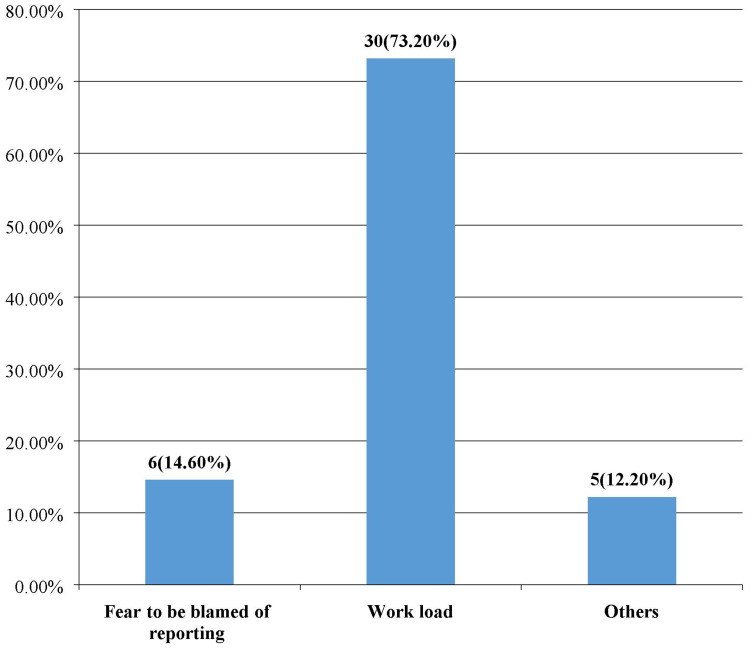
“On the other hand, the result of this finding was lower than studies conducted in two public hospitals of Southern Ethiopia, the pediatrics ward at JUSH and teaching hospitals in Australia.(26,30,34) This may be attributed to the variation in the number of hospitals considered during Figure 4 Reason for not reporting…”
ResultInfluentialMedication Errors in the Southeast Asian Countries: A Systematic Review
Salmasi, S., Khan, T. M., Hong, Y. H., Ming, L. C., & Wong, T. W. (2015) · PLOS ONE · doi:10.1371/journal.pone.0136545 · Cited by 183
Medication administration error: magnitude and associated factors among nurses in Ethiopia
Feleke, S. A., Mulatu, M. A., & Yesmaw, Y. S. (2015) · BMC Nursing · doi:10.1186/s12912-015-0099-1 · Cited by 175
Nurses’ perceptions of medication errors and their contributing factors in South Korea
Kim, K. S., Kwon, S., Kim, J., & Cho, S. (2011) · Journal of Nursing Management · doi:10.1111/j.1365-2834.2011.01249.x · Cited by 162 · cited 3×
“Poor communication with other nurses when they had problems was another factor significantly associated with medication administration which was similar to a study conducted in South Korea.36 Effective communication and collaboration between healthcare providers, such as open communications, error reporting, and team…”
ResultInfluentialAdverse Drug Events and Medication Errors in African Hospitals: A Systematic Review
Mekonnen, A. B., Alhawassi, T. M., McLachlan, A. J., & Brien, J.-A. E. (2017) · Drugs - Real World Outcomes · doi:10.1007/s40801-017-0125-6 · Cited by 143
Fathi, A., Hajizadeh, M., Moradi, K., Zandian, H., Dezhkameh, M., Kazemzadeh, S., & Rezaei, S. (2017) · Epidemiology and Health · doi:10.4178/epih.e2017022 · Cited by 111 · cited 2×
“The prevalence of MAE in this self-reported study was relatively consistent with studies conducted at Felege Hiwot referral hospital and research done in Kenya(25,27) but much higher than a study conducted in teaching hospitals in west Iran.(24) The difference might be because the previous study was done in a develope…”
ResultBarriers to Medical Error Reporting for Physicians and Nurses
Soydemir, D., Seren Intepeler, S., & Mert, H. (2017) · Western Journal of Nursing Research · doi:10.1177/0193945916671934 · Cited by 82
Medication administration errors in an intensive care unit in Ethiopia
Abejew, A. A., Ayele, Y., Bedada, W., & Woldie, M. K. (2012) · International Archives of Medicine · doi:10.1186/1755-7682-5-15 · Cited by 81 · cited 1×
“Medication administration error was most commonly practiced at referral hospitals of Amhara region as compared Jimma University Specialized Hospital, Adigrat and Mekelle University Hospitals, and university of Gondar referral hospital.(22,32,33) Although all these findings were from Ethiopian Hospitals, the constitute…”
Baraki, Z., Abay, M., Tsegay, L., Gerensea, H., Kebede, A., & Teklay, H. (2018) · BMC Pediatrics · doi:10.1186/s12887-018-1294-5 · Cited by 81 · cited 4×
“open access to scientific and medical research Open Access Full Text Article Globally, medication errors are leading causes of different injuries and avoidable harms in the health care system attributing to about 10% of the overall preventable harm for hospitalized patients.10–12 In 2017, World Health Organization rep…”
BackgroundInfluential
Research works printed but not linked: 2
- Mohajan HK. Medical Errors Must be Reduced for the Welfare of the Global Health Sector. Int J Public Health Health Sys. 2018; 3(5): 91– 101.
- Yemisirach F, Biniyam G. Medication administration errors involving pediatric in-patients in a hospital in Ethiopia. Tropical J Pharm Res. 2010; 9(4): 401– 407.
Cited by
Shan, Y., Shang, J., Yan, Y., & Ye, X. (2023) · BMC Nursing · doi:10.1186/s12912-023-01209-9 · Cited by 79
“However, interruptions in EHR tasks are quite common, as EHR tasks are considered one of the lowest priorities in nursing care under the modern nursing emphasis on being "human oriented"; hence, there is a dearth of studies examining EHR tasks [2].”
BackgroundInfluentialEvaluation of Applying the PDCA Cycle on Medication Administration in the Emergency Departments
Salameh, W. M. K. B., Mohammad, A. A. S., Alshurideh, M. T., Alolayyan, M. N., Hunitie, M. F. A., Rababah, M. W., Haija, A. A. A., Al-Hawary, S. I. S., Alzyoud, M. S., & Al-hawajreh, K. M. (2025) · Studies in computational intelligence · doi:10.1007/978-3-031-74220-0_24 · Cited by 50
Öztürk Şahin, Ö., Aközlü, Z., & Taşdelen, Y. (2023) · Nurse Education in Practice · doi:10.1016/j.nepr.2023.103712 · Cited by 23
Schroers, G., Ross, J. G., & Moriarty, H. (2022) · Journal of Professional Nursing · doi:10.1016/j.profnurs.2022.05.012 · Cited by 28
Mohammed, T., Mahmud, S., Gintamo, B., Mekuria, Z. N., & Gizaw, Z. (2022) · BMJ Open · doi:10.1136/bmjopen-2022-066531 · Cited by 21
Arslan, S., Fidan, Ö., Zeyrek, A. Ş., & Ok, D. (2022) · International Emergency Nursing · doi:10.1016/j.ienj.2022.101190 · Cited by 14
Fekadu, G., Tobiano, G., Muir, R., Engidaw, M. T., & Marshall, A. P. (2025) · BMC Health Services Research · doi:10.1186/s12913-025-12762-1 · Cited by 29
“Tsegaye et al. 2020 [61], Ethiopia To assess medication administration error and associated factors.”
Bante, A., Mersha, A. M., Aschalew, Z., & Ayele, A. (2023) · Heliyon · doi:10.1016/j.heliyon.2023.e15375 · Cited by 12
Gebrye, D. B., Wudu, M. A., & Hailu, M. K. (2023) · SAGE Open Nursing · doi:10.1177/23779608231201466 · Cited by 10
“, 2020), and five referrals from the Amhara Regional State (Tsegaye et al., 2020).”
BackgroundMethodResultInfluentialEducational intervention to improve the safety medication process: a review using the GRADE approach
Giannetta, N., Dionisi, S., Tonello, M. G. M., Cappadona, R., Muzio, M. D., & Simone, E. D. (2021) · Journal of Pharmaceutical Health Services Research · doi:10.1093/jphsr/rmab014 · Cited by 10
Schroers, G., Huggins, E., Sasangohar, F., & O’Rourke, J. (2025) · Journal of Advanced Nursing · doi:10.1111/jan.70032 · Cited by 16
Eze, A. U., Marufu, T. C., Amagyei, A., Nelson, D., Laparidou, D., & Manning, J. C. (2025) · Journal of Clinical Nursing · doi:10.1111/jocn.70109 · Cited by 12
“Unsafe medication practices and medication errors are a leading cause of injury and avoidable harm in health care systems across the world (World Health Organization 2017a; Tsegaye et al. 2020).”
An Interruption Management Education Bundle: Feasibility Testing With Nursing Students
Schroers, G., Pfieffer, J., Andersen, B., & O’Rourke, J. (2023) · Nurse Educator · doi:10.1097/nne.0000000000001583 · Cited by 10
Alotaibi, J. S. (2024) · Belitung Nursing Journal · doi:10.33546/bnj.3249 · Cited by 8
“Similar findings have been highlighted by other studies, which have reported that a heavy workload is one of the contributing factors to medication administration errors (Alblowi et al., 2021; Brabcova et al., 2023; Hammoudi et al., 2018; Tsegaye et al., 2020).”
BackgroundResultInfluentialBasil, J. H., Premakumar, C. M., Ali, A. M., Tahir, N. A. M., Seman, Z., Voo, J. Y. H., Ishak, S., & Shah, N. M. (2024) · Journal of Advanced Nursing · doi:10.1111/jan.16247 · Cited by 14
Medication Administration Error Reporting Among Nurses: A Descriptive Qualitative Study
Tuvor, D., Kumah, A., Abiti, R., Afakorzi, S. H., Agbemade, P. K., Ahiale, C., Dzodzodzi, M., Dogbedo, A. B., Worlasi, A. P., Obot, E., et al. (2025) · Global Journal on Quality and Safety in Healthcare · doi:10.36401/jqsh-24-33 · Cited by 8
“[1,7] Reporting MAEs reduces their adverse effects and effectively assists in avoiding future errors that can harm patients.”
Tomas, N., & Fillipus, P. N. (2024) · Nurse Education in Practice · doi:10.1016/j.nepr.2024.104098 · Cited by 10
Basil, J. H., Tahir, N. A. M., Premakumar, C. M., Ali, A. M., Seman, Z., Ishak, S., See, K. C., Mohamed, M., Lee, K. Y., Ibrahim, N. A., et al. (2024) · PLoS ONE · doi:10.1371/journal.pone.0305538 · Cited by 7
Khairat, S., Morelli, J., Liao, W.-T., Aucoin, J. W., Edson, B. S., & Jones, C. B. (2025) · JMIR Human Factors · doi:10.2196/67111 · Cited by 10
Mo, L., & Wu, Z. (2024) · Medicine · doi:10.1097/md.0000000000038429 · Cited by 9
Wudu, M. A., Bayked, E. M., Bekalu, Y. E., & Birhanu, T. A. (2025) · BMC Nursing · doi:10.1186/s12912-025-03186-7 · Cited by 6
“Moreover, five studies [27, 30, 31, 33, 35] demonstrated that nurses without guideline availability in their work settings were twice as likely to make MAEs as those with guidelines in their work settings [POR = 2.14; 95% CI: (1.63, 2.66); I² = 0.00%].”
InfluentialZhang, W., Zhang, Y., Guo, Z., He, Y., & Ma, W. (2025) · Worldviews on Evidence-Based Nursing · doi:10.1111/wvn.70067 · Cited by 8
Factors related to self-medication in undergraduate nursing students: a scoping review
Silveira, H. N. G., Secoli, S. R., São‐João, T. M., Menezes, A. C., de Oliveira, F., Andrade, S. N., & Trevisan, D. D. (2025) · Investigación y Educación en Enfermería · doi:10.17533/udea.iee.v43n2e07 · Cited by 4
“(72,73) There were two limitations to consider in this scoping review.”
Dhungana, J., Bajracharya, S., & Reynolds, N. R. (2024) · Nursing Open · doi:10.1002/nop2.70056 · Cited by 7
Tabibzadeh, M., & Mokhtari, M. (2021) · Lecture notes in networks and systems · doi:10.1007/978-3-030-74611-7_63 · Cited by 4
Ramos, R. R. (2024) · Applied Nursing Research · doi:10.1016/j.apnr.2024.151822 · Cited by 4
Deliberate practice of medication administration among nursing students: a pilot study
Schroers, G., Pfieffer, J., Tell, D., Johnson, K. D., & O’Rourke, J. (2025) · International Journal of Nursing Education Scholarship · doi:10.1515/ijnes-2024-0056 · Cited by 6
Aziz, A. N. A. E., Ahmed, S. M., & Abolwafa, N. F. (2021) · Minia Scientific Nursing Journal · doi:10.21608/msnj.2021.105044.1011 · Cited by 4
Frequency of Medication Administration Timing Error in Hospitals: A Systematic Review
Pullam, T., Russell, C. L., & White, S. (2022) · Journal of Nursing Care Quality · doi:10.1097/ncq.0000000000000668 · Cited by 6
“Four (17%) studies included nurses as the sample population, either alone or in addition to a sample of medication doses.(4,31,39,43) Four (17%) articles sampled nurses and patients as medication opportunities occurred, alone or in addition to medication orders, doses, or administration.”
BackgroundMethodInfluentialNurses' Fear of Missing Out on Social Media and Tendency to Make Medical Errors: A Descriptive Study
Polat, H. T., Burucu, R., Aslan, T. K., & Katı, G. N. (2023) · Turkiye Klinikleri Journal of Nursing Sciences · doi:10.5336/nurses.2023-96042 · Cited by 3
Tsang, W. Y., Fan, P. Y. W., Raj, S. D. O. H., Tan, Z. J., Lee, I. Y. Y., Boo, I., & Yap, K. Y. (2022) · International Journal of Digital Health · doi:10.29337/ijdh.45 · Cited by 6
Dinç, F., Şan, E. G., Sefer, N., Kaçak, T. N., & Deli, E. (2024) · Bingöl Üniversitesi Sağlık Dergisi · doi:10.58605/bingolsaglik.1553741 · Cited by 2
Tan, W., Bingham, G., Tong, E., Bonakdeh, E. S., & Wang, W. (2025) · Contemporary Nurse · doi:10.1080/10376178.2025.2588254 · Cited by 2
Fisher, S., Blau, A., & Gendler, Y. (2026) · BMC Nursing · doi:10.1186/s12912-026-04476-4 · Cited by 4
“%) categorized as potentially serious [4, 5].”
Nurses' Perception of Medication Administration Errors in Benghazi Children Hospital
Eltarhuni, A. S., Tawfeeq, H., & Elabidi, J. S. (2021) · Libyan Journal of Medical Sciences · doi:10.4103/ljms.ljms_49_21 · Cited by 2
Ishak, M. S., & Ibrahim, M. I. (2024) · Journal of Nursing Management · doi:10.1155/2024/3055826 · Cited by 2
“Tese disparities in prevalence could be attributed by diferences in reporting standards or medication administration practices [32].”
Jin, S., Choi, S.-Y., & Kim, J. (2025) · Clinical Simulation in Nursing · doi:10.1016/j.ecns.2025.101706 · Cited by 6
Factores asociados a errores en la administración de medicamentos en áreas críticas
Rivera, M., Campuzano-Merchán, L. D., Núñez-Hernández, L. A., & Ávila, P. A. F. (2025) · Revista Arbitrada Interdisciplinaria de Ciencias de la Salud Salud y Vida · doi:10.35381/s.v.v9i17.4424 · Cited by 2
MEDICATION ADMINISTRATION PRINCIPLES AND ERRORS AS PERCEIVED BY NURSES CARING FOR ELDERLY PATIENTS
abouelmaati, E., El-Guindy, H. A., Mahmoud, A., & El-malah, S. (2022) · NILES Journal forGeriatric and Gerontology/NILES Journal for Geriatric and Gerontology · doi:10.21608/niles.2023.255279 · Cited by 2
Ganzi, N., Sanathan, S. R., Jayaram, S. C. B., & Easwaran, V. (2024) · International Journal of Pharmaceutical Investigation · doi:10.5530/ijpi.20251760 · Cited by 2
Abdel‐Qader, D. H., Abdel-Qader, H., Silverthorne, J., Kongkaew, C., Nimrawi, M. A., Meslamani, A. Z. A., Obeidat, N. M., Hayajneh, W. A., Hawari, F. I., Arabi, S. Z., et al. (2025) · PLoS ONE · doi:10.1371/journal.pone.0312050 · Cited by 1
Ishak, M. S., & Ibrahim, M. I. (2025) · BMC Nursing · doi:10.1186/s12912-025-03579-8 · Cited by 1
“These differences may also reflect variations in underreporting practices rather than actual error incidence [23].”
The Influence of Nurse Staffing and Workload on Medication Administration Errors: A Scoping Review
Rachman, M., & Yen, P. (2025) · Journal of Advanced Nursing · doi:10.1111/jan.70341 · Cited by 2
Dankaine, R., Kimbowa, I. M., Vudriko, P., Tayebwa, D. S., Byamukama, B., & Bbosa, G. S. (2025) · Open Journal of Veterinary Medicine · doi:10.4236/ojvm.2025.1511018 · Cited by 1
Lin, T., & Gao, Y. (2026) · International Emergency Nursing · doi:10.1016/j.ienj.2026.101838 · Cited by 1
Gharaibeh, H., Tarawneh, R., & Oweis, A. I. (2026) · BMC Nursing · doi:10.1186/s12912-026-04764-z · Cited by 2
“…peculiarities, dose-dependent requirements, limited physiological reserves, and the inability to inform about adverse reactions cumulatively among all patient groups [3], which makes medication administration (MA) to children one of the most vulnerable to errors and misdiagnoses [4, 5].”
Ramos-Silva, A., Cruz, B. D., Fernandez-Llimos, F., Gouvêa, T., Sandes, V. S., Medeiros, G., Portella, P., Guerra, A., & Elisangela Costa, L. I. M. A. (2026) · Research in Social and Administrative Pharmacy · doi:10.1016/j.sapharm.2026.05.006 · Cited by 1
Al-Nasri, A. Y. H., & Bulushi, A. M. A. (2022) · European journal of applied sciences · doi:10.14738/aivp.104.12648 · Cited by 1
-, P. A. A. P. V., Hamid, A. P. D. S. A., & Basha, A. P. D. M. A. M. K. (2023) · Research Square · doi:10.21203/rs.3.rs-3184502/v1 · Cited by 1
Dengela, T. A. (2022) · Journal of Health, Medicine and Nursing · doi:10.7176/jhmn/101-03
Pereira, R. A. (2022) · Digital Library of Theses and Dissertations (Universidade de São Paulo) · doi:10.11606/t.22.2022.tde-19082022-082650 · Cited by 2
Drug Dose Calculator Application to Prevent Medication Errors
Lestari, M. I., Zulkifli, Z., Zainal, R., & Mulia, M. I. (2021) · JAI (Jurnal Anestesiologi Indonesia) · doi:10.14710/jai.v0i0.43116
Case-Based Patient Scenario Learning Activity on Medication Administration
McDade, S. (2023) · Journal of Nursing Education · doi:10.3928/01484834-20221109-09
Schroers, G., Pfieffer, J., Tell, D., & O’Rourke, J. (2023) · medRxiv · doi:10.1101/2023.05.17.23290098 · Cited by 1
“Interruptions are associated with increased frequency (Bonafide et al., 2020; Tsegaye et al., 2020) and severity of medication”
BackgroundCondições geradoras de risco para administração segura de medicamentos: uma revisão integrativa
Lage, J. S. L., Camerini, F. G., Fortunato, J. G. S., Fassarella, C. S., da Silva, R. F. A., Moreira, A. P. A., & Siqueira, M. B. D. S. (2023) · Revista Enfermagem Atual In Derme · doi:10.31011/reaid-2023-v.97-n.2-art.1525
-, P. A. A. P. V., -, S. B. A. H., -, M. A. B. M. K. B., & Atan, A. (2023) · International Journal For Multidisciplinary Research · doi:10.36948/ijfmr.2023.v05i04.4202
“…high-stress settings like critical care units due to factors like unpleasant working environment IJFMR23044202 Volume 5, Issue 4, July-August 2023 18 ,increase workload ,poor staffing (Cheranghi et al., 2013,Tsegaye et al., 2020 and Mulac et al., 2021, O’Hara et al., 2018 and Khalil et al.,(2022).”
BackgroundNugroho, D. C. A., Chrisantyo, L., Adisaputro, K., Septarda, A. B., Naibaho, Y. P., & Su, E. C. (2023) · International Conference on Medical and Health Informatics (ICMHI) · doi:10.1145/3608298.3608341
“In a study conducted in the United States, up to 7,000 prescription errors can occur each year resulting in losses of US$ 3.5 billion, which patients and National Health Insurance (NHI) must bear [2].”
BackgroundInfluentialEstratégia educacional para aprimoramento do processo de administração de medicamentos
Costa, C. R. D. B. (2023) · Digital Library of Theses and Dissertations (Universidade de São Paulo) · doi:10.11606/t.22.2023.tde-08122023-110459
Melkamu, K. M., & Melkamu, K. M. (2024) · Research Square · doi:10.21203/rs.3.rs-3927948/v1
Hypoglycemia in the Hospitalized Patient: Interventions and Opportunities
Giroir, C., & Calmes, H. M. (2024) · IntechOpen eBooks · doi:10.5772/intechopen.1003906
Do nurses follow the “Right Response”? Mixed methods research
Özdemir, C., & Şahan, S. (2024) · Anadolu Kliniği Tıp Bilimleri Dergisi · doi:10.21673/anadoluklin.1415506
Anwar, M., Muhammad, D., Shah, B. A., Shah, S., Ullah, A., & Bibi, S. (2024) · NURSEARCHER (Journal of Nursing & Midwifery Sciences) · doi:10.54393/nrs.v4i01.71
The Role of Effective Communication in Reducing Medication Errors in Pharmacy Practice
Hermawan, A. (2024) · Journal La Medihealtico · doi:10.37899/journallamedihealtico.v5i4.1441
“The results show that the use of shared drug lists can improve doctor-pharmacist communication and reduce the rate of medication errors (Tsegaye et al., 2020).”
BackgroundTan, W., Bingham, G., Tong, E., Bonakdeh, E. S., & Wang, W. (2024) · medRxiv · doi:10.1101/2024.10.06.24314967
“Therefore, it is necessary to eliminate as many factors as possible to investigate the effect of barcode-assisted medication administration on medication administration errors.”
İntörn Hemşirelik Öğrencileri Perspektifinden Pediatrik İlaç Uygulama Hataları
Arat, N., & Şenol, S. (2024) · Artuklu Health · doi:10.58252/artukluhealth.1564438
Purnamasari, E. R. W., Afrina, R., Rizal, A., Novianti, N., & Ervina (2024) · Journal of Healthcare Administration · doi:10.33546/joha.3527
مطالعه اشتباهات دوایی در جریان پروسهی استفادهی ادویه
نظری, ق. (2025) · Journal of Natural Sciences – Kabul University · doi:10.62810/jns.v5i2.272
Transformational leadership and the medication: Error management climate
Alharbi, F. S. S. A., Alshammari, A. H., Altalhi, O. H., Aldughayyim, F. S., & Alotaibi, W. (2025) · International Journal of Health Sciences · doi:10.53730/ijhs.v9ns1.15558 · Cited by 1
Natarajan, A., & Kumar, B. K. (2025) · International Journal of Research in Medical Sciences · doi:10.18203/2320-6012.ijrms20253178
Krisnawati1, K. M. S., Pandin, M. G. R., & Yunitasari, E. (2025) · Research Square · doi:10.21203/rs.3.rs-7812516/v1
Mahmoud, A., Abdelaziz, S., McErlean, M., Jani, Y. H., Slatter, M., Villena, A., Bird, J., Grailey, K., Taylor, A., & Franklin, B. D. (2025) · BMJ Open · doi:10.1136/bmjopen-2025-109619 · Cited by 1
AL-Dossary, R. N. (2025) · Nutrition and Health · doi:10.1177/02601060251396867
“In response, healthcare systems have increasingly adopted smart infusion pumps, technologically advanced devices designed to improve dosing accuracy, increase safety, and reduce the risk of IV-related medication errors (MacDowell et al., 2024; Tsegaye et al., 2020).”
Right Chemo, Wrong Route: Risks of Intrathecal Administration of Chemotherapy
Jones, A. L., Ryu, S., & Sadeghi, N. (2025) · JCO Oncology Practice · doi:10.1200/op-25-00544
Shan, Y., Shang, J., Yan, Y., & Ye, X. (2023) · Figshare · doi:10.6084/m9.figshare.22617770
Shan, Y., Shang, J., Yan, Y., & Ye, X. (2023) · Figshare · doi:10.6084/m9.figshare.22617767
Mousavi, S., Haririan, H., Hassankhani, H., & Naeri, M. (2024) · Journal of Research Development in Nursing and Midwifery · doi:10.61882/jgbfnm.21.3.30
Reducing medication errors and near misses in an associate degree nursing program
Catalano, L., & Prasun, M. A. (2025) · Teaching and learning in nursing · doi:10.1016/j.teln.2025.11.023
Hemşirelerin İlaç Uygulama Hataları, Nedenleri ve Hata Raporlamada Algıladıkları Engeller
Baran, L., & Baykal, B. (2025) · Ege Üniversitesi Hemşirelik Fakültesi Dergisi · doi:10.53490/egehemsire.1483709
Başcı, B., & Ateş, E. (2026) · Medical Science and Discovery · doi:10.36472/msd.v13i1.1335
Ali, Z. T., & Mikhael, E. M. (2026) · Al-Rafidain Journal of Medical Sciences · doi:10.54133/ajms.v10i1.2677 · Cited by 2
“Medication errors in critically sick patients are a major concern because they can have a negative impact on patient outcomes (increase morbidity and mortality) [3,4] and healthcare expenditures [5].”
Cost-effectiveness of pharmacy automation in hospital settings: systematic review
Alshmemri, M. A., Alharbi, A. M., & Altowairgi, T. (2026) · European Journal of Hospital Pharmacy · doi:10.1136/ejhpharm-2025-004790
Uysal, M., & Bırgılı, F. (2026) · Hemşirelik Bilimi Dergisi · doi:10.54189/hbd.1698129
Medication Errors and Its Contributing Factors in Intensive Care Units
Sahib, A. J., & Yasir, A. A. (2026) · Medical Journal of Babylon · doi:10.4103/mjbl.mjbl_742_23
An innovative prescription transcription service for assessing workload and prescription variability
Gautam, M., & Agrawal, D. (2026) · Journal of Neurosciences in Rural Practice · doi:10.25259/jnrp_227_2025
Mededji, D., Attanasso, M. O., & Senou, M. M. (2026) · Health Systems · doi:10.1080/20476965.2026.2684450
Banakhar, M. A., Katooa, N. E., Alyoubi, N., Aloqmani, S., Alyoubi, R., Alsharif, K., AL-Dossary, R. N., & Almadani, N. A. (2026) · Healthcare · doi:10.3390/healthcare14131850
“Among the factors that affect the non-reporting of MAEs are lack of time to complete the report, lack of knowledge of how the error occurred, low self-confidence, and lack of training [6,10].”
Factors Influencing Medication Errors in Clinical Nurses: A Systematic Review and Meta-analysis
Kim, Y.-H., & Ha, Y. K. (2026) · Journal of Patient Safety · doi:10.1097/pts.0000000000001538 · Cited by 1
abbaszadeh, S. M., Poursaadat, N., Karimi, N., Zarei, R., & Nayeri, N. D. (2026) · Research Square · doi:10.21203/rs.3.rs-10305529/v1
Changuiti, O., Mahou, F. Z., Decormeille, G., Koraich, N., & Hsaïni, H. E. (2026) · BMC Medical Education · doi:10.1186/s12909-026-09983-1
“Medication errors remain a leading cause of preventable adverse events, contributing significantly to patient morbidity, mortality, and increased healthcare costs [1, 2].”
A retrospective exploration of medication administration errors in a tertiary hospital
Reina, C. S. H., Fan, P. E. M., Aloweni, F. B. A. B., Kelley, T. F., & Yuh, A. S. (2026) · Displays · doi:10.1016/j.displa.2026.103632
Gaps in intravenous medication safety practices: A study on nurse compliance in Vietnam
Minh, T. T., Dang, K. N. V., Huynh, N. L. T., Thi, B. L., Bao, K. L., Trong, K. N., & Hoai, T. N. T. (2026) · Journal of Healthcare Quality Research · doi:10.1016/j.jhqr.2026.101232
Hidden harms: A clinical review of drug toxicity in palliative medicine
Kukadia, S. (2026) · Asian Journal of Oncology · doi:10.25259/asjo_118_2025
Mehdizad, M., Ashktorab, T., Zayeri, F., Mehrabian, F., Zarei, E., Alimoradi, M., & Daneshkohan, A. (2026) · Discover Public Health · doi:10.1186/s12982-026-03224-y
Metadata
- Authors
- Tsegaye, D., Alem, G., Tessema, Z., & Alebachew, W.
- Affiliations
- Debre Markos University (ET)
- Venue
- International Journal of General Medicine
- Publisher
- Informa UK Limited
- Published
- 2020-12
- Volume
- Volume 13
- Pages
- 1621-1632
- ISSN
- 1178-7074 (ISSN-L)
- PMC
- PMC7764714
- OpenAlex
- W3115860094
- Cited by
- 93
- References
- 28
- Citations by year
- 2026: 19 · 2025: 26 · 2024: 19 · 2023: 15 · 2022: 9 · 2021: 5
- FWCI
- 6.78
- Type
- journal article
- Language
- en
- Open access
- gold
- doi.org
- Licence
- Locations
- International Journal of General Medicine (publishedVersion, cc-by-nc)
- PubMed Central (publishedVersion, cc-by-nc)
- PubMed (publishedVersion)
- DOAJ (DOAJ: Directory of Open Access Journals) (submittedVersion, cc-by-sa)
- Dove Medical Press (Taylor and Francis Group) (submittedVersion, cc-by-nc)
- Funders
- Debre Markos University
- Topics
- Health Sciences › Medicine › Public Health, Environmental and Occupational Health › Patient Safety and Medication Errors
- Health Sciences › Medicine › Infectious Diseases › Infection Control in Healthcare
- Life Sciences › Pharmacology, Toxicology and Pharmaceutics › Toxicology › Pharmacovigilance and Adverse Drug Reactions
- Keywords
- medication administration errors, nurses, medication errors, nursing training, clinical guidelines, communication, interruptions, referral hospitals, Ethiopia
About these checks
Registry, retraction, Cites and statistics results are computed, not judged, with one exception: a printed reference that no index lists is read once by a model before it counts as a citation error. Claims are extracted by a model and kept only when their quote appears verbatim in the text; each cited source is then checked, with a model’s help, for whether it says what the claim relies on. Those verdicts can be wrong — read the claim’s quote and the cited source before relying on one.
Statistics and arithmetic are recomputed, not judged.
Confidence bands are shown only for fields calibrated on our annotated test set. None is calibrated yet, so no band is shown.
What counts as a claim ›How we measure confidence ›How we check this ›
Are you an author, or do you see a problem with this page? Request a review
Data sources
Bibliographic data: Semantic Scholar, OpenAlex, Crossref.
Contains information from the Semantic Scholar Academic Graph Datasets, made available under the ODC Attribution License (ODC-BY 1.0).
Semantic Scholar’s data is described in: Kinney, R., et al. (2023). The Semantic Scholar Open Data Platform. arXiv:2301.10140.
