

The DOI matches its Crossref record; 1 of the 1 references it cites were found in a registry or an index.
Mechanistic investigation of toxicity of chromium oxide nanoparticles in murine fibrosarcoma cells
Overview
The claims and statistics of this paper haven’t been checked yet.
Run the check — free, no account needed. It reads the open-access text and checks the sources it cites.
Integrity signals
Registry
Cites
Statistics
Figures
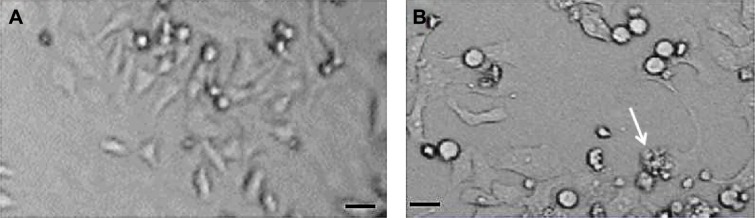
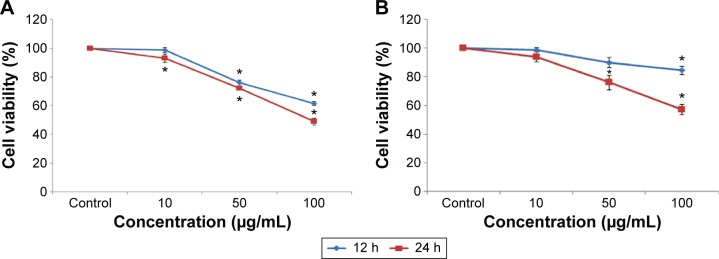
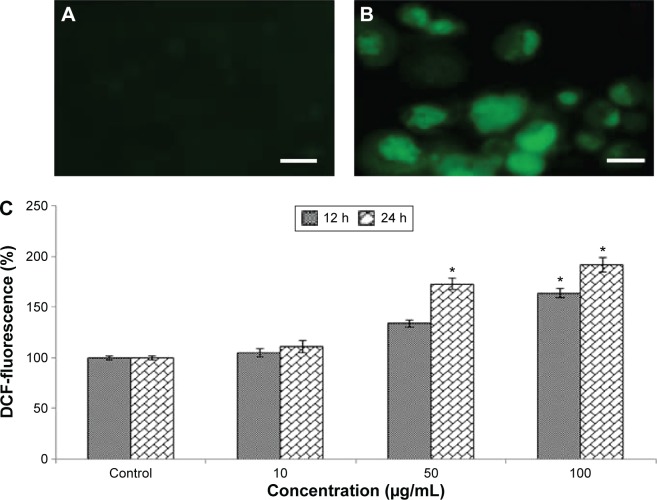
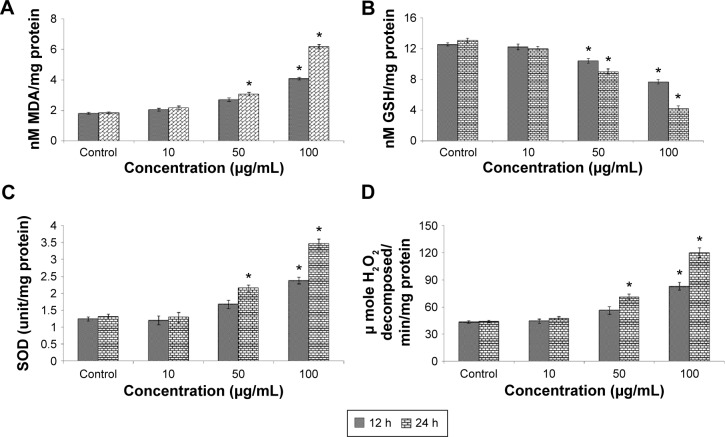
Verification
Claims the paper makes
The claims and statistics of this paper haven’t been checked yet.
Run the check — free, no account needed. It reads the open-access text and checks the sources it cites.
Claims other papers make about this one
Each is checked against this paper’s own text: does it say what the citing paper says it does?
In the citing paper
“Our results demonstrate that the toxicity of 5-FuCrNPs in CACO cells was dose-dependent and achieved better results than 5-Fu alone, as measured by the cellular reduction in MTT [62,63].”
From Novel Green Biosynthesis of 5-Fluorouracil Chromium Nanoparticles Using Harpullia pendula Extract for Treatment of Colorectal Cancer (2021) · cites this paper as [63]
In the citing paper
“Similarly, chromium oxide nanoparticles exert significant cytotoxic activity on murine fibrosarcoma cells (L929) [63].”
From Novel Green Biosynthesis of 5-Fluorouracil Chromium Nanoparticles Using Harpullia pendula Extract for Treatment of Colorectal Cancer (2021) · cites this paper as [63]
Self-check
Percentages, sums and reported differences re-computed from the paper’s own numbers.
The self-check needs the paper’s full text.
Citations
Cites
The Comet Assay for DNA Damage and Repair: Principles, Applications, and Limitations
Collins, A. R. (2004) · Molecular Biotechnology · doi:10.1385/mb:26:3:249 · Cited by 2,892
Research works printed but not linked: 21
- [3]Pan Y Neuss S Leifer A Size-dependent cytotoxicity of gold nanoparticles Small 2007 3 11 1941 1949 17963284
- [5]Borm PJ Robbins D Haubold S The potential risks of nanomaterials: a review carried out for ECETOC Part Fibre Toxicol 2006 3 11 16907977 PMC1584248
- [6]Warheit DB Laurence BR Reed KL Comparative pulmonary toxicity assessment of single-wall carbon nanotubes in rats Toxicol Sci 2004 77 117 125 14514968
- [7]Oberdorster G Oberdorster E Oberdorster J Nanotoxicology: an emerging discipline evolving from studies of ultrafine particles Environ Health Perspect 2005 113 823 839 16002369 PMC1257642
- [8]Krewski D Westphal M Al-Zoughool M Croteau MC Andersen ME New directions in toxicity testing Annu Rev Public Health 2011 32 161 178 21219154
- [9]Lin W Huang YW Zhou XD In vitro toxicity of silica nanoparticles in human lung cancer cells Toxicol Appl Pharmacol 2006 217 252 259 17112558
- [10]Wang C Hu X Gao Y Ji Y ZnO nanoparticles treatment induces apoptosis by increasing intracellular ROS levels in LTEP-a-2 Cells Biomed Res Int 2015 2015 423287 26339612 PMC4538331
- [11]Mossman T Rapid colorimetric assay for cellular growth and survival: application to proliferation and cytotoxicity assays J Immunol Methods 1983 65 55 63 6606682
- [12]Ali D Ray RS Hans RK UVA-induced cyototoxicity and DNA damaging potential of benz (e) acephenanthrylene in human skin cell line Toxicol Lett 2010 199 2 193 200 20832460
- [13]Wang H Joseph JA Quantifying cellular oxidative stress by dichlorofluorescein assay using micro-plate reader Free Radic Biol Med 1999 27 612 616 10490282
- [14]Lowry OH Rosebrough NJ Farr AL Randall RJ Protein measurement with the folin phenol reagent J Biol Chem 1951 193 265 275 14907713
- [15]Ohkawa H Ohishi N Yagi K Assay for lipid peroxides in animal tissues by thiobarbituric acid reaction Anal Biochem 1979 95 351 358 36810
- [16]Alarifi S Ali D Verma A Alakhtani S Ali BA Cytotoxicity and genotoxicity of copper oxide nanoparticles in human skin keratinocytes cells Int J Toxicol 2013 32 4 296 307 23667135
- [17]Elman G Tissue sulfhydryl groups Arch Biochem Biophys 1959 82 70 77 13650640
- [18]Alarifi S Ali D Mechanisms of multi-walled carbon nanotubes-induced oxidative stress and genotoxicity in mouse fibroblast cells Int J Toxicol 2015 34 3 258 265 25998517
- [19]Donaldson K Stone V Tran CL Nanotoxicology Occup Environ Med 2004 61 727 728 15317911 PMC1763673
- [20]Shi XL Dalal NS Chromium (V) and hydroxyl radical formation during the glutathione reductase-catalyzed reduction of chromium (VI) Biochem Biophys Res Commun 1989 163 627 634 2550002
- [21]Xia T Kovochich M Liong M Zink JI Nel AE Cationic polystyrene nanosphere toxicity depends on cell-specific endocytic and mitochondrial injury pathways ACS Nano 2007 2 85 96 19206551
- [22]Kang SJ Kim BM Lee YJ Chung H Barium dioxide nanoparticles trigger p53-mediated damage response in peripheral blood lymphocytes Environ Mol Mutagen 2008 49 399 405 18418868
- [23]Kroemer G Petit P Zamzami N Vayssiere JL Mignotte B The biochemistry of programmed cell death FASEB J 1995 9 1277 1287 7557017
- [24]Chen M Mikecz A Formation of nucleoplasmic protein aggregates impairs nuclear function in response to SiO2 nanoparticles Exp Cell Res 2005 305 1 51 62 15777787
Cited by
Sorted by citations
Saddik, M. S., Elsayed, M. M. A., Abdelkader, M. S. A., El-Mokhtar, M. A., Abdel-Aleem, J. A., Abu-Dief, A. M., Al-Hakkani, M. F., Farghaly, H. S., & Abou-Taleb, H. A. (2021) · Pharmaceutics · doi:10.3390/pharmaceutics13020226 · Cited by 89
Metadata
- Authors
- Ali, D., Alarifi, S., & Alkahtani, S.
- Venue
- International Journal of Nanomedicine
- Publisher
- Informa UK Limited
- Published
- 2016-03
- Pages
- 1253
- ISSN
- 1178-2013
- PMC
- PMC4820233
- Cited by
- 7
- References
- 1
- Language
- en
About these checks
Registry, retraction, Cites and statistics results are computed, not judged, with one exception: a printed reference that no index lists is read once by a model before it counts as a citation error. Claims are extracted by a model and kept only when their quote appears verbatim in the text; each cited source is then checked, with a model’s help, for whether it says what the claim relies on. Those verdicts can be wrong — read the claim’s quote and the cited source before relying on one.
Statistics and arithmetic are recomputed, not judged.
Confidence bands are shown only for fields calibrated on our annotated test set. None is calibrated yet, so no band is shown.
What counts as a claim ›How we measure confidence ›How we check this ›
Are you an author, or do you see a problem with this page? Request a review
