

The DOI matches its Crossref record; 19 of the 19 references it cites were found in a registry or an index.
Optimizing the Communication with Cancer Patients During the COVID-19 Pandemic: Patient Perspectives
Open accessAbstract
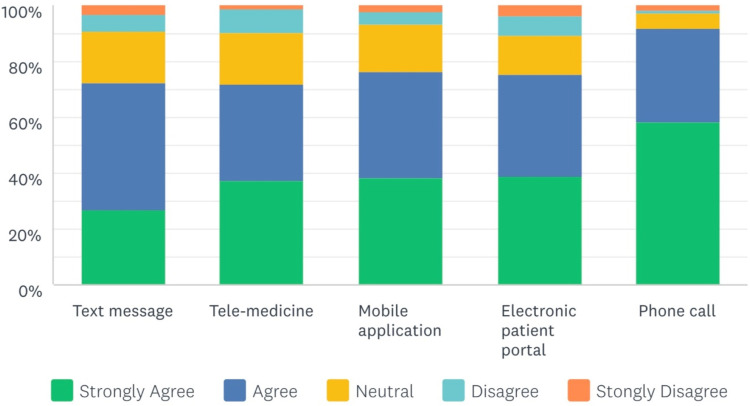
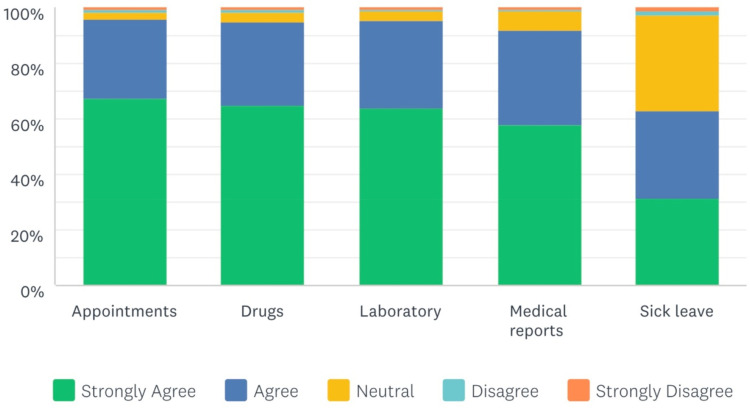
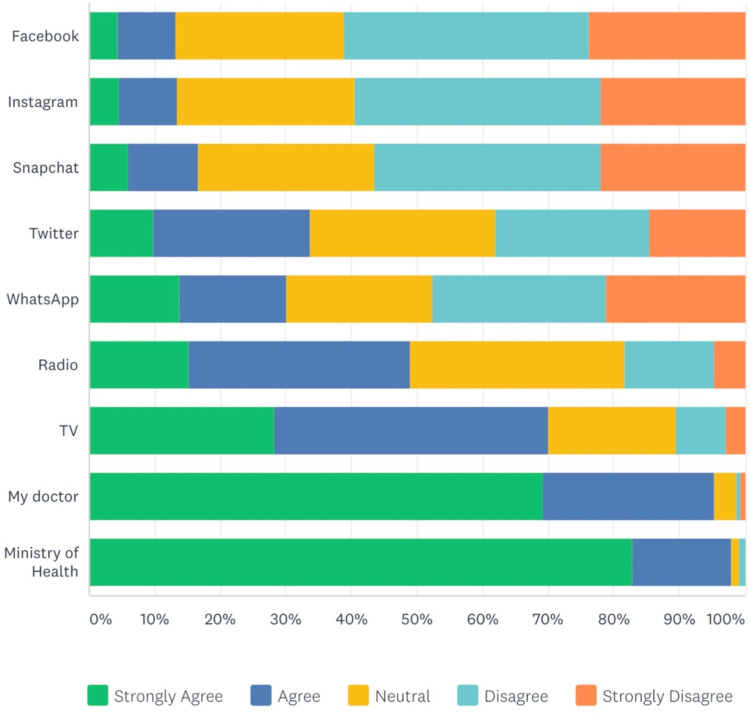
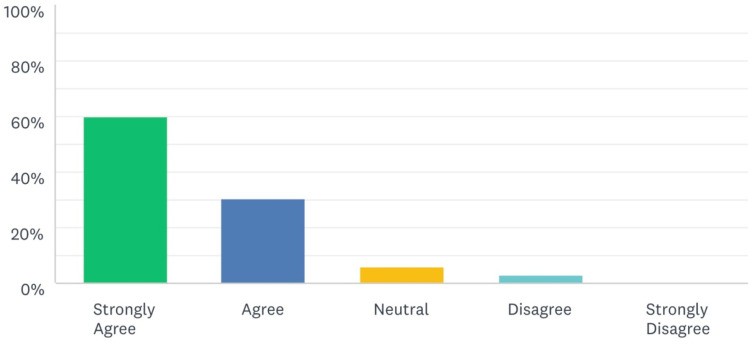
BACKGROUND: During curfew, patients are self-isolated at home and worried. Patient-doctor interactions may be disrupted and therefore need to be replaced by alternative effective communication methods. PURPOSE: To describe the preferences of cancer patients with respect to communication methods and the use of patient-accessible electronic health records (PAEHRs). To record the impact on cancer patients during the COVID-19 pandemic and the knowledge and attitude of the patients towards it. PATIENTS AND METHODS: We created a self-administered electronic survey that was piloted and evaluated for its clinical relevance. Using convenient sampling methods, we surveyed the cancer patients in our Oncology Center. RESULTS: We received 385 responses between April 15 and April 30, 2020. The preferred method for communication was a phone call with a 92% response rate followed by the electronic patient portal, mobile application, telemedicine and text message in 75%, 76%, 73%, and 72%, respectively. The majority (97%) preferred the use of PAEHRs for appointments, 95% for drug delivery and to view laboratory tests, and 92% in requesting medical reports. In our survey, 22% of patients with cancer reported that their medical cancer care had not been affected by COVID-19. They reported that trusted sources of information during COVID-19 included the Ministry of Health with 98% and doctors with 94%. Sixty-one percent know that they are more susceptible to COVID-19 infection and 91% of respondents supported the notion of digital transformation in the caring of cancer patients. CONCLUSION: Our study revealed a general acceptance of patients to telecommunication as substitute to in-person interaction with their physicians. Interaction between cancer patients and health care providers should not be disrupted but should be augmented with more effective platforms to improve health care outcomes.
Overview
The claims and statistics of this paper haven’t been checked yet.
Run the check — free, no account needed. It reads the open-access text and checks the sources it cites.
Integrity signals
Registry
Cites
Statistics
Figures
Verification
Claims the paper makes
The claims and statistics of this paper haven’t been checked yet.
Run the check — free, no account needed. It reads the open-access text and checks the sources it cites.
Claims other papers make about this one
Each is checked against this paper’s own text: does it say what the citing paper says it does?
The cited source says what the claim attributes to it.
In the citing paper
“For example, Tashkandi et al [14] found that cancer patients’ preferred communication method during the Covid-19 pandemic was a telephone call, which the authors attributed to trust and reassurance in the established relationship with their oncologist.”
Self-check
Percentages, sums and reported differences re-computed from the paper’s own numbers.
The self-check needs the paper’s full text.
Citations
Cites
Evaluating barriers to adopting telemedicine worldwide: A systematic review
Scott Kruse, C., Karem, P., Shifflett, K., Vegi, L., Ravi, K., & Brooks, M. (2018) · Journal of Telemedicine and Telecare · doi:10.1177/1357633x16674087 · Cited by 1,735
Pretesting survey instruments: An overview of cognitive methods
Collins, D. (2003) · Quality of Life Research · doi:10.1023/a:1023254226592 · Cited by 1,520
Al-Shamsi, H. O., Alhazzani, W. A., Alhuraiji, A., Coomes, E. A., Chemaly, R. F., Almuhanna, M., Wolff, R. A., Ibrahim, N. K., Chua, M. L. K., Hotte, S. J., et al. (2020) · The Oncologist · doi:10.1634/theoncologist.2020-0213 · Cited by 704
Evaluating mobile phone applications for health behaviour change: A systematic review
McKay, F. H., Cheng, C. C., Wright, A., Shill, J., Stephens, H., & Uccellini, M. (2016) · Journal of Telemedicine and Telecare · doi:10.1177/1357633x16673538 · Cited by 367
Are innovation and new technologies in precision medicine paving a new era in patients centric care?
Seyhan, A. A., & Carini, C. (2019) · Journal of Translational Medicine · doi:10.1186/s12967-019-1864-9 · Cited by 319
The Impact of Telehealthcare on the Quality and Safety of Care: A Systematic Overview
McLean, S., Sheikh, A., Cresswell, K., Nurmatov, U., Mukherjee, M., Hemmi, A., & Pagliari, C. (2013) · PLoS ONE · doi:10.1371/journal.pone.0071238 · Cited by 255
Guidelines for constructing a survey.
Passmore, C., Dobbie, A. E., Parchman, M. L., & Tysinger, J. W. (2002) · PubMed · Cited by 162
Shankar, A., Saini, D., Roy, S., Jarrahi, A. M., Chakraborty, A., Bharati, S. J., & Taghizadeh‐Hesary, F. (2020) · Asian Pacific Journal of Cancer Prevention · doi:10.31557/apjcp.2020.21.3.569 · Cited by 161
Hendren, S. K., Chin, N. P., Fisher, S. G., Winters, P., Griggs, J. J., Mohile, S. G., & Fiscella, K. A. (2011) · Journal of the National Medical Association · doi:10.1016/s0027-9684(15)30409-0 · Cited by 147
Zanaboni, P., Kummervold, P. E., Sørensen, T., & Johansen, M. A. (2019) · Journal of Medical Internet Research · doi:10.2196/16144 · Cited by 111
Patient Use of Secure Electronic Messaging Within a Shared Medical Record: A Cross-sectional Study
Ralston, J. D., Rutter, C. M., Carrell, D., Hecht, J., Rubanowice, D., & Simon, G. E. (2009) · Journal of General Internal Medicine · doi:10.1007/s11606-008-0899-z · Cited by 109
Barsom, E. Z., Jansen, M., Tanis, P. J., van de Ven, A. W. H., van Oud‐Alblas, M. B., Buskens, C. J., Bemelman, W. A., & Schijven, M. P. (2020) · Surgical Endoscopy · doi:10.1007/s00464-020-07499-3 · Cited by 94
Potdar, R. R., Thomas, A. J., DiMeglio, M., Mohiuddin, K., Djibo, D. A., Laudański, K., Dourado, C. M., Leighton, J. C., & Ford, J. G. (2020) · Supportive Care in Cancer · doi:10.1007/s00520-020-05393-1 · Cited by 68
Questionnaire construction and question writing for research in medical education
Woodward, C. A. (1988) · Medical Education · doi:10.1111/j.1365-2923.1988.tb00764.x · Cited by 44
Linde, D. S., Andersen, M., Mwaiselage, J. D., Manongi, R. N., Kjær, S. K., & Rasch, V. (2019) · Journal of Medical Internet Research · doi:10.2196/15863 · Cited by 43
Stubbins, R., He, T., Yu, X., Puppala, M., Ezeana, C. F., Chen, S., y Alvarado, M. V., Ensor, J., Rodriguez, A. A., Niravath, P. A., et al. (2018) · JCO Clinical Cancer Informatics · doi:10.1200/cci.18.00054 · Cited by 41
Chan, B. L., Lyles, C. R., Kaplan, C. P., Lam, R., & Karliner, L. (2018) · Journal of General Internal Medicine · doi:10.1007/s11606-018-4637-x · Cited by 26
Calling an Oncological Emergency Telephone to Seek Advice
Jørgensen, L., Jacobsen, H. R., Pedersen, B., & Uhrenfeldt, L. (2019) · Cancer Nursing · doi:10.1097/ncc.0000000000000778 · Cited by 9
Méndez, L. A. (2016) · Studies in fuzziness and soft computing · doi:10.1007/978-3-319-48317-7_21 · Cited by 4
Research works printed but not linked: 1
- Passmore, 2002, Fam Med, 34, 281
Cited by
Sorted by citations
van Kessel, R., Ranganathan, S., Anderson, M., McMillan, B., & Mossialos, E. A. (2024) · International Journal of Medical Informatics · doi:10.1016/j.ijmedinf.2024.105513 · Cited by 37
The Effects of COVID-19 on Cancer Care Provision: A Systematic Review
Alom, S., Chiu, C. M., Jha, A., Lai, S. H. D., Yau, T., & Harky, A. (2021) · Cancer Control · doi:10.1177/1073274821997425 · Cited by 37
Reynolds, T. L., Cobb, J. G., Steitz, B. D., Ancker, J. S., & Rosenbloom, S. T. (2023) · Applied Clinical Informatics · doi:10.1055/s-0043-1770901 · Cited by 25
Ennis, N., Armas, L. G., Butame, S. A., & Joshi, H. (2021) · AIDS and Behavior · doi:10.1007/s10461-021-03394-7 · Cited by 24
Kelly, R. H., Gordon, P. C., Thompson, R., & Semple, C. J. (2022) · Journal of Cancer Survivorship · doi:10.1007/s11764-022-01168-1 · Cited by 20
Metadata
- Authors
- Tashkandi, E., BaAbdullah, M., Zeeneldin, A., AlAbdulwahab, A., Elemam, O., Elsamany, S., Alfayez, M., Dabash, Y., Khayat, E., Hassanin, F., Abdulhameed, R., & Jazieh, A. R.
- Affiliations
- Umm al-Qura University (SA)
- King Abdullah Medical City (SA)
- Cairo University (EG)
- Mansoura University (EG)
- King Saud bin Abdulaziz University for Health Sciences (SA)
- Corresponding author
- Tashkandi, Emad
- ORCID
- Venue
- Patient Preference and Adherence
- Publisher
- Informa UK Limited
- Published
- 2020-07
- Volume
- Volume 14
- Pages
- 1205-1212
- ISSN
- 1177-889X (ISSN-L)
- PMC
- PMC7381793
- OpenAlex
- W3042274227
- Cited by
- 30
- References
- 19
- Citations by year
- 2025: 3 · 2024: 3 · 2023: 3 · 2022: 10 · 2021: 11
- FWCI
- 4.50
- Type
- journal article
- Language
- en
- Open access
- gold
- doi.org
- Licence
- Locations
- Patient Preference and Adherence (publishedVersion, cc-by-nc)
- PubMed Central (publishedVersion, cc-by-nc)
- PubMed (publishedVersion)
- Dove Medical Press (Taylor and Francis Group) (submittedVersion, cc-by-nc)
- Topics
- Health Sciences › Medicine › Public Health, Environmental and Occupational Health › Telemedicine and Telehealth Implementation
- Health Sciences › Medicine › Oncology › COVID-19 and healthcare impacts
- Health Sciences › Health Professions › General Health Professions › Patient-Provider Communication in Healthcare
- Keywords
- cancer patients, COVID-19 pandemic, patient-provider communication, patient preferences, patient-accessible electronic health records, telemedicine, telecommunications, patient portals, mobile health apps, self-isolation, digitalization of healthcare, COVID-19 susceptibility
About these checks
Registry, retraction, Cites and statistics results are computed, not judged, with one exception: a printed reference that no index lists is read once by a model before it counts as a citation error. Claims are extracted by a model and kept only when their quote appears verbatim in the text; each cited source is then checked, with a model’s help, for whether it says what the claim relies on. Those verdicts can be wrong — read the claim’s quote and the cited source before relying on one.
Statistics and arithmetic are recomputed, not judged.
Confidence bands are shown only for fields calibrated on our annotated test set. None is calibrated yet, so no band is shown.
What counts as a claim ›How we measure confidence ›How we check this ›
Are you an author, or do you see a problem with this page? Request a review
