

The DOI matches its Crossref record, with a small difference in title or year; 27 of the 29 references it cites were found in a registry or an index.
مستویات عمق المعرفة الریاضیاتیة فی بیئات تعلم الریاضیات (دراسة تحلیلیة مقارنة)
Open accessAbstract
هدف البحث الحاضر إلى تعرف مدى تمکن کل من: معلمى، وتلاميذ الصف السادس الابتدائى من أداءات عمق المعرفة الرياضياتية في بيئات تعلم الرياضيات، ومدى تباين هذا التمکن باختلاف بيئات تعلم الرياضيات، وتمثلت عينة البحث في عينة من معلمى وتلاميذ الصف السادس الابتدائى بمدرسة محمد سعد مصطفى، ومدرسة نبيل الوقاد الرسمية لغات، ومدرسة شفيق الخشن، واُستخدم فى البحث المنهج الوصفى التحليلى المقارن؛ للتحقق من فروضه، وتمثلت أدوات البحث فى اختبار مستويات عمق المعرفة الرياضياتية لدى تلاميذ الصف السادس الابتدائي، واستمارة ملاحظة أداءات التدريس وفق مستويات عمق المعرفة لدى معلمى الرياضيات، فضلاً عن استمارة مقابلة مجموعة بؤرية من معلمي الرياضيات بالمرحلة الابتدائية. أشارت نتائج البحث إلى انخفاض مستوى تمکن عينة التلاميذ من أداءات عمق المعرفة الرياضياتية، وخاصة فى مستويى المفاهيم والمهارات، والتفکير الاستراتيجي، وقد حقق التلاميذ في بيئة تعلم الرياضيات باللغة العربية مستوى تمکن أعلى من نظرائهم في بيئة تعلم الرياضيات باللغة الإنجليزية، کما أشارت النتائج إلى انخفاض مستوى تمکن عينة المعلمين من أداءات التدريس وفق مستويات عمق المعرفة الرياضياتية، وخاصة في مستويى التفکير الاستراتيجي، والتفکير الممتد، وکشفت النتائج عن عدم وجود فروق في مستوى التمکن من هذه الأداءات بين عينة معلمى الرياضيات باللغة العربية، ومعلمى الرياضيات باللغة الإنجليزية. ترتيبًا على النتائج التي أسفر عنها البحث تم طرح دليل استرشادى لمعلمى الرياضيات لتنمية مستويات عمق المعرفة الرياضياتية لدى تلاميذهم بالصف السادس الإبتدائى، وقد وأوصى البحث بضرورة دمج أنشطة تنمية مستويات عمق المعرفة الرياضياتية فى مناهج الرياضيات، وتدريب التلاميذ عبر أداءات التقييم التکوينى المستمر على أنشطة مستويات عمق المعرفة الرياضياتية المختلفة، وکذا توفير برامج تنمية مهنية لمعلمى الرياضيات على کيفية تنمية مستويات عمق المعرفة الرياضياتية، وضرورة عناية برامج إعداد معلم الرياضيات باستراتيجيات، ونماذج تنمية مستويات عمق المعرفة الرياضياتية عبر مقررات طرق التدريس، فضلاً عن توجيه الباحثين، والمعلمين، ومخططى المناهج العناية نحو استخدام مستويات عمق المعرفة في تقييم نواتج تعلم الرياضيات. الکلمات الدالة: عمق المعرفة، مستويات عمق المعرفة، عمق المعرفة الرياضياتية، مستويات عمق المعرفة الرياضياتية. Abstract: The present research aimed at knowing the extent to which teachers and sixth grade students are able to perform the depth of Mathematical knowledge in Mathematics learning environments, and the extent to which this mastery varies according to different Mathematics learning environments. The sample of the research was a sample of teachers and sixth grade primary students at Mohamed Saad Mostafa School, Nabil Al-Waqaad Official Language School, and Shafiq Al-Kheshin School. The descriptive analytical comparative method was used in this research to verify its hypotheses, and the research tools consisted of a test of the levels of depth of Mathematical knowledge for sixth grade primary school students, an observation sheet for observing teaching performance according to the Mathematics teachers' levels of depth of knowledge, as well as a form for interviewing a focus group of primary Mathematics teachers. The results of the research indicated a low level of ability of the sample of students to perform the depth of Mathematical knowledge, especially at the levels of concepts, skills, and strategic thinking. Students in Arabic language Mathematics learning environment have achieved a higher level of mastery than their counterparts in the English language Mathematics learning environment. Results also indicated a low level of ability of the sample of teachers in teaching performance according to the levels of depth of Mathematical knowledge, especially at the levels of strategic thinking and extended thinking, and the results revealed that there are no differences in the level of mastery of these performances between the sample of Mathematics teachers in Arabic language and Mathematics teachers in English language. Based on the results of the research, a guide was presented for Mathematics teachers to develop the levels of depth of Mathematical knowledge for their students in the sixth grade of primary school. The research recommended the following: integrating activities for developing the levels of depth of Mathematical knowledge in the Mathematics curricula, training students through continuous formative assessment on the activities of the different levels of depth of Mathematical knowledge, providing professional development programs for Mathematics teachers on how to develop the levels of the depth of Mathematical knowledge, making Mathematics teacher preparation programs pay attention to strategies and models for developing levels of depth of Mathematical knowledge in Teaching Methods courses, as well as directing researchers, teachers and curriculum planners towards using levels of depth of knowledge in evaluating Mathematics learning outcomes. Key words: depth of knowledge, levels of depth of knowledge, depth of Mathematical knowledge, levels of depth of Mathematical knowledge.
Overview
CoChat Summary
TL;DR
The study analyzes and compares depth levels of mathematical knowledge (Webb’s Depth of Knowledge) in Arabic- and English-language mathematics learning environments. It finds students’ overall DOK performance below the expected mean, with Arabic-language students outperforming English-language students overall and at Level 2, while teachers’ practices fall short especially at Levels 3 and 4.
Key findings
- On the student DOK test (42 items covering Levels 1–3; Level 4 was not included), the overall mean was 19.54 against an expected 22, SD 2.554, 45% mastery, t=2.264, p=.025. Level 1 mean was 9.19 vs expected 6.5, t=24.313, p=.000; Level 2 mean was 7.11 vs expected 7.5, t=2.174, p=.031; Level 3 mean was 3.24 vs expected 6, t=24.381, p=.000.
- Comparing student environments, Arabic-language students (N=86) had an overall mean of 20.21 vs English-language students (N=69) 18.70, t=3.826, p=.000; Level 2 was 7.63 vs 6.46, t=3.327, p=.001. No significant differences appeared at Level 1 (9.33 vs 9.01, p=.163) or Level 3 (3.26 vs 3.22, p=.867).
- On the teacher observation checklist (N=12), the overall mean was 21.25 vs expected 32, t=21.104, p=.000; Level 3 mean was 2.83 vs expected 8, t=13.385, p=.000; Level 4 mean was 2.33 vs expected 8, t=19.934, p=.000. Levels 1 and 2 were not significant (p=.674 and p=.862). No significant difference was found between teachers in Arabic vs English environments overall (21.50 vs 21.00, t=.473, p=.646).
Methods
- Analytical comparative design using Webb’s Depth of Knowledge (DOK) framework to compare mathematics learning environments in Arabic and English languages.
- Data included a researcher-built DOK test of 42 items (13 Level 1, 15 Level 2, 12 Level 3; no Level 4), an observation checklist for teachers, and a focus-group/teacher-survey component.
- Analysis used one-sample t-tests against expected means and independent-samples t-tests between Arabic- and English-language environments, with significance set at α<0.05.
Limitations
- Stated in the paper: the study is limited to mathematics learning environments in Arabic and English languages, to the academic year 2021/2022, and to the DOK levels examined; the student test did not include Level 4 (extended thinking).
- Evident from the text: the OCR is heavily garbled, making some sample and table details difficult to verify; sample sizes are uneven (86 vs 69 students; 6 vs 6 teachers in the comparison), and teacher data rely on observation/checklist and focus-group methods rather than an experimental design.
Model-written summary. Check it against the paper before relying on it.
Integrity signals
Registry
Cites
Statistics
Figures
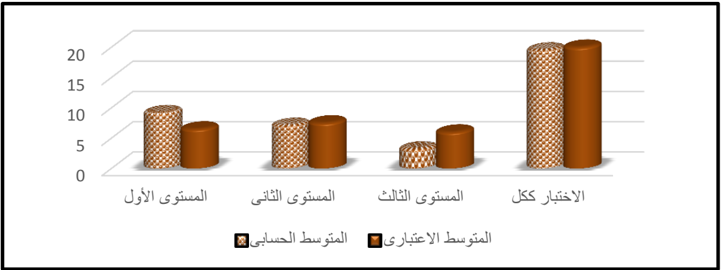
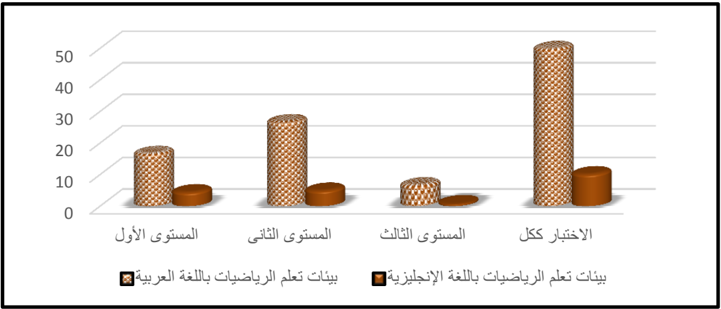
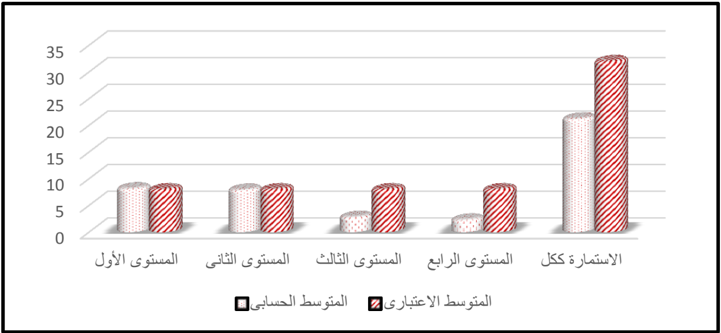
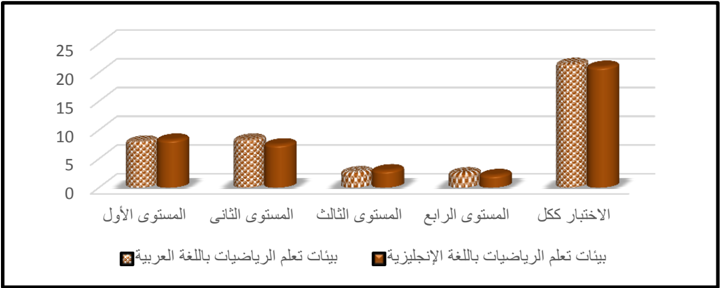
Verification
Claims the paper makes
0 Valid · 0 Not valid · 0 Not checked · 2 Own results and interpretations
A result the paper reports from its own data — it cites no other source for it, so there is none to check. The quote shows it is in the paper.
In the paper
“55.6 اٛٔبئ٠خ اٛ٠جبششح األعئٜخ هٜ٬ ٯوز٠ذ٩١ اٛ٠وٜ٠ٰ٢ هذد اع٠بٛٮ ٢ٟ % اٛ٠٨بساد ٩رـجْٰ اٛشٯبػٰبرٰخ، ٩اٛ٠وٜ٪ٟبد اٛؾٔبئْ، اعزذهبء هٜ٬ ٩أ١ ٟجبشش، ثش٘ٚ اٛشٯبػٰبرٰخ 11.1”
plain- Asserted: passes — The authors put it forward as true.
- Checkable: passes — It can be checked against evidence.
- Load-bearing: passes — The paper’s conclusions depend on it.
- Based: passes — The paper gives a reason why it holds.
A result the paper reports from its own data — it cites no other source for it, so there is none to check. The quote shows it is in the paper.
In the paper
“44.4 اٛ٠وٜ٠ٰ٢ هذد اع٠بٛٮ ٢ٟ % ٛضٯبدح ثٜ٪ٝ؛ ٟغز٪ٯبد هٜ٬ ُٔؾ ٯوز٠ذ٩١”
plain- Asserted: passes — The authors put it forward as true.
- Checkable: passes — It can be checked against evidence.
- Load-bearing: passes — The paper’s conclusions depend on it.
- Based: passes — The paper gives a reason why it holds.
Self-check
Percentages, sums and reported differences re-computed from the paper’s own numbers.
Each contradiction between two passages listed here was confirmed by an independent check.
Rated major: it would touch a result — a value a result rests on, reported and recomputed p-values on opposite sides of the significance level, two passages that conflict with no sign which is right, or a cited work retracted before this paper was published.
In the paper
“اٌّغّٛع 42 100”
Reported 42 · recomputed 40
Rated minor: it would not touch a result — a value no result rests on, a p-value that stays on the same side of the significance level, or a conflict that is clerical, resolved elsewhere in the paper, or outside its own findings.
In the paper
“اٌّغّٛع 12 66 89 155”
Reported 89 · recomputed 82
Rated minor: it would not touch a result — a value no result rests on, a p-value that stays on the same side of the significance level, or a conflict that is clerical, resolved elsewhere in the paper, or outside its own findings.
In the paper
“اٌّغّٛع 12 66 89 155”
Reported 66 · recomputed 73
Rated minor: it would not touch a result — a value no result rests on, a p-value that stays on the same side of the significance level, or a conflict that is clerical, resolved elsewhere in the paper, or outside its own findings.
In the paper
“وىً االخزجبس 19.54 22 2.554 72 45 % 2.264 .025”
Reported 45 · recomputed 46.451613
Rated minor: it would not touch a result — a value no result rests on, a p-value that stays on the same side of the significance level, or a conflict that is clerical, resolved elsewhere in the paper, or outside its own findings.
In the paper
§ Abstract
“1 ، 4 ، 7 ، 12 ، 13 ، 16 ، 19 ، 22 ، 25 ، 28 ، 31 ، 34 ، 37 ، 38”
§ Abstract
“12 اٌؼشش٠خ األػذاد ػشة اٌضبٌش”
Citations
Cites
Knowing What Students Know: The Science and Design of Educational Assessment
Pellegrino, J. W., Chudowsky, N., & Glaser, R. A. (2013) · Cited by 2,402
Critical thinking in education: a review
Pithers, R. T., & Soden, R. (2000) · Educational Research · doi:10.1080/001318800440579 · Cited by 810
Issues Related to Judging the Alignment of Curriculum Standards and Assessments
Webb, N. L. (2007) · Applied Measurement in Education · doi:10.1080/08957340709336728 · Cited by 229
Language and mathematics education : multiple perspectives and directions for research
Moschkovich, J. N. (2010) · Cited by 165
The depth of knowledge: surface, shallow or deep?
Bennet, D., & Bennet, A. (2008) · VINE · doi:10.1108/03055720810917679 · Cited by 90
Ríordáin, M. N., & O’Donoghue, J. (2008) · Educational Studies in Mathematics · doi:10.1007/s10649-008-9158-9 · Cited by 89
Han, Y., & Ginsburg, H. P. (2001) · Mathematical Thinking and Learning · doi:10.1080/10986065.2001.9679973 · Cited by 72
Alt, M., Arizmendi, G. D., & Beal, C. R. (2014) · Language Speech and Hearing Services in Schools · doi:10.1044/2014_lshss-13-0003 · Cited by 72
Chinese L2 Learners’ Depth of Vocabulary Knowledge and Its Role in Reading Comprehension
Zhang, D., & Yang, X. (2016) · Foreign Language Annals · doi:10.1111/flan.12225 · Cited by 58
Hess, K., Jones, B. S., Carlock, D., & Walkup, J. R. (2009) · SHAREOK (University of Oklahoma; Oklahoma State University; Central Oklahoma University) · Cited by 54
Research works printed but not linked: 7
- Brock-Utne, B. (2002, January7-9). The most recent developments concerning the debate on language of instruction in Tanzania(Scientific Article). NETREED conference, University of Oslo, Norway. https://www.netreed.uio.no/conferences/papersconf.html
- Czarnocha, B., & Baker, W. (2018). Assessment of the depth of knowledge acquired during the Aha! moment insight. Journal of Mathematics Education, 11(3), 90-104. DOI: 10.5281/zenodo.4456081. · DOI
- Elezi, E. & Kennedy, K. (2015). A Case Study Examining if Being Bilingual Can Improve One's Math Skills. Global Education journal, 2015(3), 28-39.
- Gardia&Ahmed(2016) . the effect of vocabulary Knowledge depth on reading comprehension of Sudanese EFL learners. Journal of Humanities Sciences, 17(2).191-199.(MD:755930)
- Moschkovich, J.N. (2007) Bilingual Mathematics Learners: How views of language, bilingual learners, and mathematical communication impact instruction.In N. Nasir and P. Cobb (Eds.), Diversity, Equity, and Access to Mathematical Ideas(pp.89-104). New York: Teachers College Press.
- Schleppegrell,M.J.(2010).Language in Mathematics teaching and learning a research review.Languge and Mthematics education.In
- Swelyn, D. (2007). Highly quantified teachers: NCLB and teacher education. Journal of Teacher Education, 58(2), 124-137.
Cited by
Still being checked.
Metadata
- Authors
- الغنام, س., & مرسال, إ.
- Venue
- مجلة تربویات الریاضیات
- Published
- 2022-04-01
- Volume
- 25
- Issue
- 4
- Pages
- 197-267
- ISSN
- 2090-0562 (ISSN-L)
- 2682-4337
- OpenAlex
- W4288048974
- Cited by
- 0
- References
- 29
- FWCI
- 0.00
- Type
- journal article
- Language
- ar
- Open access
- diamond
- doi.org
- Licence
- cc-by-nc
- Locations
- مجلة تربويات الرياضيات (publishedVersion, cc-by-nc)
- DOAJ (DOAJ: Directory of Open Access Journals) (submittedVersion, cc-by-sa)
- Topics
- Social Sciences › Education › Mathematics Education and Teaching Techniques
- Social Sciences › Education › Mathematics Education and Pedagogy
- Social Sciences › Psychology › Developmental and Educational Psychology › Education, Achievement, and Giftedness
- Keywords
- mathematical knowledge for teaching, mathematics teachers, sixth grade students, strategic thinking, conceptual understanding, mathematical skills, mathematics teaching practice, teacher professional development, mathematics curriculum reform, mathematics education policy, Jordanian higher education
About these checks
Registry, retraction, Cites and statistics results are computed, not judged, with one exception: a printed reference that no index lists is read once by a model before it counts as a citation error. Claims are extracted by a model and kept only when their quote appears verbatim in the text; each cited source is then checked, with a model’s help, for whether it says what the claim relies on. Those verdicts can be wrong — read the claim’s quote and the cited source before relying on one.
A language model drew the claims from the paper on 2026-11-16, under version 3 of the claim definition (model deepseek-v4.1-flash, prompt extract-v3).
A second model labelled each claim on 2026-11-16 (model jev-1.13-20260917, definition revision gold-guideline-v0.2).
Statistics and arithmetic are recomputed, not judged.
Confidence bands are shown only for fields calibrated on our annotated test set. None is calibrated yet, so no band is shown.
What counts as a claim ›How we measure confidence ›How we check this ›
Are you an author, or do you see a problem with this page? Request a review
How to cite
Cite CoChat for the checks on this page, and the paper for its own findings.
- This page
- CoChat. (2026). Citation check: مستویات عمق المعرفة الریاضیاتیة فی بیئات تعلم الریاضیات (دراسة تحلیلیة مقارنة). https://app.cochat.ai/papers/10.21608/armin.2022.251036
- The paper
- الغنام, س., & مرسال, إ. (2022). مستویات عمق المعرفة الریاضیاتیة فی بیئات تعلم الریاضیات (دراسة تحلیلیة مقارنة). مجلة تربویات الریاضیات. https://doi.org/10.21608/armin.2022.251036
Data sources
Bibliographic data: Semantic Scholar, OpenAlex, Crossref.
Contains information from the Semantic Scholar Academic Graph Datasets, made available under the ODC Attribution License (ODC-BY 1.0).
Semantic Scholar’s data is described in: Kinney, R., et al. (2023). The Semantic Scholar Open Data Platform. arXiv:2301.10140.
