

The DOI matches its Crossref record; 230 of the 230 references it cites were found in a registry or an index.
Targeted Thromboelastographic (TEG) Blood Component and Pharmacologic Hemostatic Therapy in Traumatic and Acquired Coagulopathy
Open accessAbstract
Trauma-induced coagulopathy (TIC) is a recently described condition which traditionally has been diagnosed by the common coagulation tests (CCTs) such as prothrombin time/international normalized ratio (PT/INR), activated partial thromboplastin time (aPTT), platelet count, and fibrinogen levels. The varying sensitivity and specificity of these CCTs have led trauma coagulation researchers and clinicians to use Viscoelastic Tests (VET) such as Thromboelastography (TEG) to provide Targeted Thromboelastographic Hemostatic and Adjunctive Therapy (TTHAT) in a goal directed fashion to those trauma patients in need of hemostatic resuscitation. This review describes the utility of VETs, in particular, TEG, to provide TTHAT in trauma and acquired non-trauma-induced coagulopathy. Keywords: Thromboelastography, point-of-care, acquired coagulopathy, blood component therapy, systemic hemostatic agents, trauma-induced coagulopathy, hemostatic resuscitation, tranexamic acid, targeted pharmacologic therapy.
Overview
The claims and statistics of this paper haven’t been checked yet.
Run the check — free, no account needed. It reads the open-access text and checks the sources it cites.
Integrity signals
Registry
Cites
Statistics
Figures
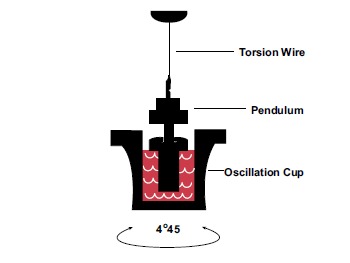
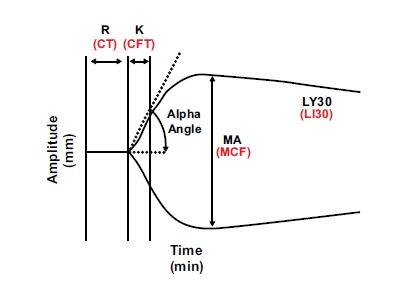
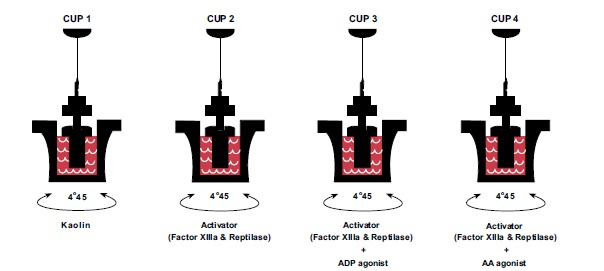
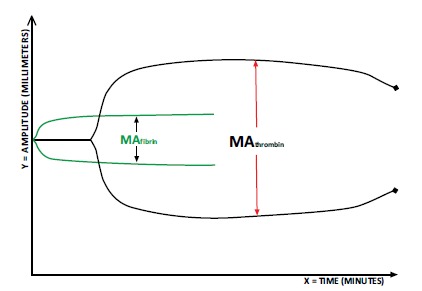
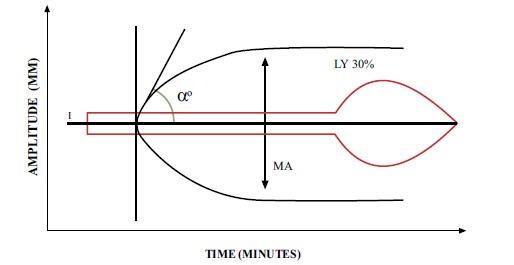
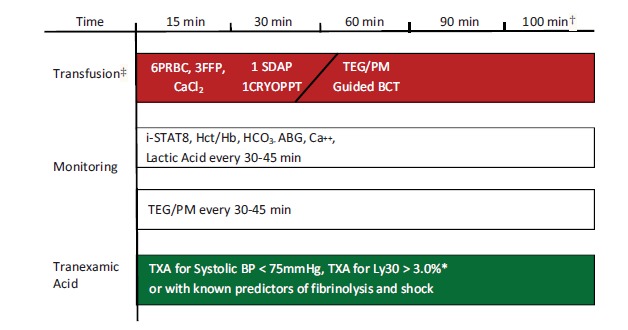
Verification
Claims the paper makes
The claims and statistics of this paper haven’t been checked yet.
Run the check — free, no account needed. It reads the open-access text and checks the sources it cites.
Claims other papers make about this one
Each is checked against this paper’s own text: does it say what the citing paper says it does?
The cited source says what the claim attributes to it.
In the citing paper
“Additionally, these point-of-care tests may direct resuscitative efforts to avoid over treatment (89–91).”
From Placental abruption at near-term and term gestations: Pathophysiology, epidemiology, diagnosis, and management (2023) · cites this paper as [89]
Self-check
Percentages, sums and reported differences re-computed from the paper’s own numbers.
The self-check needs the paper’s full text.
Citations
Cites
Dabigatran versus warfarin in patients with atrial fibrillation
Connolly, S. J., Ezekowitz, M. D., Yusuf, S., Eikelboom, J., Oldgren, J., Parekh, A., Pogue, J., Reilly, P. A., Themeles, E., Varrone, J., et al. (2009) · New England Journal of Medicine · doi:10.1056/nejmoa0905561 · Cited by 11,215
Rivaroxaban versus warfarin in nonvalvular atrial fibrillation
Patel, M. R., Mahaffey, K. W., Garg, J., Pan, G., Singer, D. E., Hacke, W., Breithardt, G., Halperin, J. L., Hankey, G. J., Piccini, J. P., et al. (2011) · New England Journal of Medicine · doi:10.1056/nejmoa1009638 · Cited by 9,430
Edoxaban versus warfarin in patients with atrial fibrillation
Giugliano, R. P., Ruff, C. T., Braunwald, E., Murphy, S. A., Wiviott, S. D., Halperin, J. L., Waldo, A. L., Ezekowitz, M. D., Weitz, J. I., Špinar, J., et al. (2013) · New England Journal of Medicine · doi:10.1056/nejmoa1310907 · Cited by 5,164
Hematological Problems in Pediatric Intensive Care
Revel‐Vilk, S., Cox, P. N., Robitaille, N., & Blanchette, V. S. (2013) · Pediatric and adolescent medicine · doi:10.1159/000350346 · Cited by 3,526
National Center for Injury Prevention and Control (U.S.). Division of Injury Response., Faul, M., Wald, M. M., Wu, L., & Coronado, V. G. (2010) · doi:10.15620/cdc.5571 · Cited by 3,494
Holcomb, J. B., Tilley, B. C., Baraniuk, S., Fox, E. E., Wade, C. E., Podbielski, J. M., del Junco, D. J., Brasel, K. J., Bulger, E. M., Callcut, R. A., et al. (2015) · JAMA · doi:10.1001/jama.2015.12 · Cited by 2,577
Brohi, K., Singh, J., Heron, M., & Coats, T. (2003) · The Journal of Trauma: Injury, Infection, and Critical Care · doi:10.1097/01.ta.0000069184.82147.06 · Cited by 1,728
Idarucizumab for Dabigatran Reversal
Pollack, C. V., Reilly, P. A., Eikelboom, J., Glund, S., Verhamme, P., Bernstein, R. A., Dubiel, R., Huisman, M. V., Hylek, E. M., Kamphuisen, P. W., et al. (2015) · New England Journal of Medicine · doi:10.1056/nejmoa1502000 · Cited by 1,552
Damage Control Resuscitation: Directly Addressing the Early Coagulopathy of Trauma
Holcomb, J. B., Jenkins, D. G., Rhee, P., Johannigman, J. A., Mahoney, P. F., Mehta, S. G., Cox, E. D., Gehrke, M. J., Beilman, G. J., Schreiber, M. A., et al. (2007) · The Journal of Trauma: Injury, Infection, and Critical Care · doi:10.1097/ta.0b013e3180324124 · Cited by 1,370
Research works printed but not linked: 2
- [62]Walsh M. Jbara M. Miller A. Lawson J. Thromboelastographic guided blood component therapy for severe hemorrhage. 2014 Blood Bulletin
- [77]Schochl H. Maegele M. Solomon C. Gorlinger K. Voelckel W. Early and individualized goal-directed therapy for trauma-induced coagulopathy. Scand. J. Trauma Resusc. Emerg. Med. 2012 20 15 1 11 22364525 PMC3306198
Cited by
Sorted by citations
Rossaint, R., Bouillon, B., Černý, V., Coats, T., Duranteau, J., Fernández‐Mondejar, E., Filipescu, D. C., Hunt, B. J., Komadina, R., Nardi, G., et al. (2016) · Critical Care · doi:10.1186/s13054-016-1265-x · Cited by 1,495
Spahn, D. R., Bouillon, B., Černý, V., Duranteau, J., Filipescu, D. C., Hunt, B. J., Komadina, R., Maegele, M., Nardi, G., Riddez, L., et al. (2019) · Critical Care · doi:10.1186/s13054-019-2347-3 · Cited by 1,323
Amgalan, A., Allen, T. K., Othman, M., & Ahmadzia, H. K. (2020) · Journal of Thrombosis and Haemostasis · doi:10.1111/jth.14882 · Cited by 151
Brandt, J. S., & Ananth, C. V. (2023) · American Journal of Obstetrics and Gynecology · doi:10.1016/j.ajog.2022.06.059 · Cited by 115
Viscoelastic Hemostatic Assays: A Primer on Legacy and New Generation Devices
Volod, O., Bunch, C. M., Zackariya, N., Moore, E. E., Moore, H. B., Kwaan, H. C., Neal, M. D., Al-Fadhl, M. D., Patel, S. S., Wiarda, G., et al. (2022) · Journal of Clinical Medicine · doi:10.3390/jcm11030860 · Cited by 108
Metadata
- Authors
- Walsh, M., Fritz, S., Hake, D., Son, M., Greve, S., Jbara, M., Chitta, S., Fritz, B., Miller, A., K Bader, M., McCollester, J., Binz, S., Liew-Spilger, A., Thomas, S., Crepinsek, A., Shariff, F., Ploplis, V., & J. Castellino, F.
- Affiliations
- Memorial Hospital of South Bend (US)
- Indiana University South Bend (US)
- Self Regional Healthcare (US)
- Mayo Clinic (US)
- University of Notre Dame (US)
- Corresponding author
- Walsh, Mark
- Venue
- Current Drug Targets
- Publisher
- Bentham Science Publishers Ltd.
- Published
- 2016-05-04
- Volume
- 17
- Issue
- 8
- Pages
- 954-970
- ISSN
- 1389-4501 (ISSN-L)
- PMC
- PMC5374842
- OpenAlex
- W2295828145
- Cited by
- 58
- References
- 227
- Citations by year
- 2026: 5 · 2025: 4 · 2024: 2 · 2023: 9 · 2022: 9 · 2021: 5 · 2020: 10 · 2019: 8 · 2018: 4 · 2017: 1 · 2016: 1
- FWCI
- 0.73
- Type
- journal article
- Language
- en
- Open access
- bronze
- doi.org
- Locations
- Current Drug Targets (publishedVersion)
- PubMed Central (publishedVersion, cc-by-nc)
- PubMed (publishedVersion)
- Digital Commons - East Tennessee State University (East Tennessee State University) (submittedVersion)
- Funders
- CSL Behring
- Haemonetics Corporation
- Topics
- Health Sciences › Medicine › Critical Care and Intensive Care Medicine › Trauma, Hemostasis, Coagulopathy, Resuscitation
- Health Sciences › Medicine › Hematology › Blood transfusion and management
- Health Sciences › Medicine › Hematology › Hemostasis and retained surgical items
- Keywords
- trauma-induced coagulopathy, thromboelastography, viscoelastic coagulation tests, blood component therapy, hemostatic resuscitation, acquired coagulopathy, tranexamic acid, point-of-care coagulation testing, coagulation tests
- MeSH terms
- Blood Coagulation Disorders, Hemostatic Techniques, Humans, Partial Thromboplastin Time, Platelet Count, Prothrombin Time, Sensitivity and Specificity, Thrombelastography, Wounds and Injuries
About these checks
Registry, retraction, Cites and statistics results are computed, not judged, with one exception: a printed reference that no index lists is read once by a model before it counts as a citation error. Claims are extracted by a model and kept only when their quote appears verbatim in the text; each cited source is then checked, with a model’s help, for whether it says what the claim relies on. Those verdicts can be wrong — read the claim’s quote and the cited source before relying on one.
Statistics and arithmetic are recomputed, not judged.
Confidence bands are shown only for fields calibrated on our annotated test set. None is calibrated yet, so no band is shown.
What counts as a claim ›How we measure confidence ›How we check this ›
Are you an author, or do you see a problem with this page? Request a review
