

Inhaled Corticosteroids and Secondary Adrenal Insufficiency
Open accessThe DOI matches its Crossref record; 73 of the 75 references it cites were found in a registry or an index.
Abstract
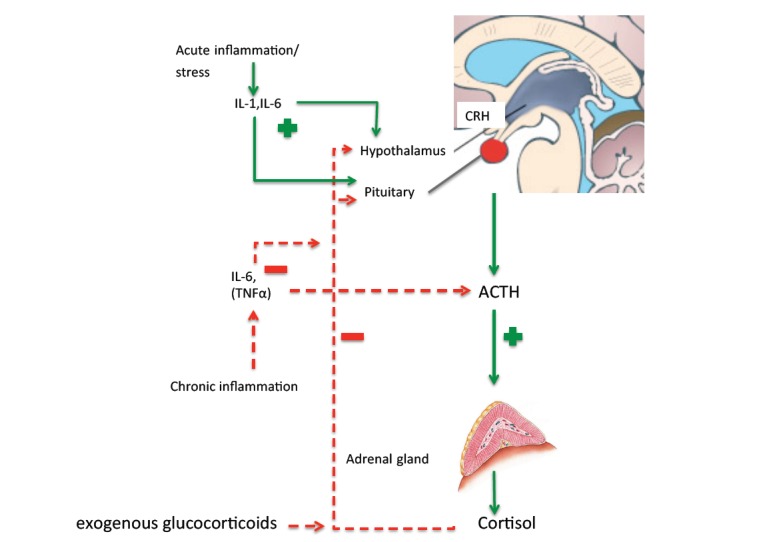
Inhaled corticosteroids (ICS) have been used as first line treatment of asthma for many decades. ICS are a form of exogenous glucocorticosteroids that can suppress the endogenous production of glucocorticosteroids, a condition known as adrenal suppression (AS). As a result, cessation, decreasing the dose or changing the type of ICS may trigger features of adrenal insufficiency (AI). AI may cause a spectrum of presentations varying from vague symptoms of fatigue to potentially life threatening acute adrenal crises. This article reviews the current literature on ICS and AI particularly in adults (although majority of data available is from the paediatric population). It aims to increase awareness of the potential risk of AI associated with ICS use, delineate the pathogenesis of AI and to provide recommendations on screening and management. From our literature review, we have found numerous case reports that have shown an association between ICS and AI particularly in children and patients using high doses. However, there have also been reports of AI in adults as well as in patients using low to moderate doses of ICS. To conclude, we recommend screening for AI in select patient groups with an initial early morning serum cortisol. If results are abnormal, more definitive testing such as the low dose corticotropin stimulation test may be done to confirm the diagnosis.
Overview
The claims and statistics of this paper haven’t been checked yet.
Free: it reads the open-access text and checks the first 5 claims that cite a source we can check. Create a free account to check every claim.
Integrity signals
Registry
Cites
Statistics
Figures
Verification
Claims the paper makes
The claims and statistics of this paper haven’t been checked yet.
Free: it reads the open-access text and checks the first 5 claims that cite a source we can check. Create a free account to check every claim.
Claims other papers make about this one
Each is checked against this paper’s own text: does it say what the citing paper says it does?
The source backs part of the claim, not all of it — or backs it for a different population, condition or comparison.
In the citing paper
“Of note, among all inhaled glucocorticoids fluticasone propionate is most frequently associated with the development of symptomatic glucocorticoid-induced adrenal insufficiency and exogenous Cushing syndrome (100, 104, 107-111).”
From European Society of Endocrinology and Endocrine Society Joint Clinical Guideline: Diagnosis and Therapy of Glucocorticoid-induced Adrenal Insufficiency (2024) · cites this paper as [110]
Experimental — accuracy not yet measuredThe cited source says what the claim attributes to it.
In the citing paper
“Adrenal crisis can occur not only in patients treated with oral glucocorticoids but also in patients receiving only inhaled (110, 130), topical (131), intra-articular (132), or other glucocorticoid formulations (133).”
From European Society of Endocrinology and Endocrine Society Joint Clinical Guideline: Diagnosis and Therapy of Glucocorticoid-induced Adrenal Insufficiency (2024) · cites this paper as [110]
Self-check
Percentages, sums and reported differences re-computed from the paper’s own numbers.
The self-check needs the paper’s full text.
Citations
Cites
Vestbo, J., Hurd, S. S., Agustí, A. G., Jones, P. W., Vogelmeier, C., Anzueto, A., Barnes, P. J., Fabbri, L. M., Martinez, F. J., Nishimura, M., et al. (2013) · American Journal of Respiratory and Critical Care Medicine · doi:10.1164/rccm.201204-0596pp · Cited by 15,983
GLOBAL STRATEGY FOR ASTHMA MANAGEMENT AND PREVENTION
PAUWELS, R. A. (1996) · Arerugī/Arerugi · doi:10.15036/arerugi.45.792 · Cited by 9,994
Expert Panel Report 2: Guidelines for the Diagnosis and Management of Asthma
Program, P., & theDiagnosis, T. E. P. O. (1997) · Cited by 4,927
The global burden of asthma: executive summary of the GINA Dissemination Committee Report
Masoli, M., Fabian, D., Holt, S., Beasley, R., & Program, G. I. F. A. (. (2004) · Allergy · doi:10.1111/j.1398-9995.2004.00526.x · Cited by 3,529 · cited 1×
“1874-3064/14 2014 Bentham Open Keywords: Adrenal insufficiency, adrenal suppression, inhaled corticosteroids.”
Background(2007) · Journal of Allergy and Clinical Immunology · doi:10.1016/j.jaci.2007.09.029 · Cited by 2,181
Harrison's Principles of Internal Medicine.
(1984) · Annals of Internal Medicine · doi:10.7326/0003-4819-100-1-167_1 · Cited by 1,523
Systemic Adverse Effects of Inhaled Corticosteroid Therapy: A Systematic Review and Meta-analysis
Lipworth, B. J. (1999) · Archives of Internal Medicine · doi:10.1001/archinte.159.9.941 · Cited by 918 · cited 3×
“It is also not easy to perform when compared with other tests [66, 67].”
BackgroundResultMorosco, G., & Kiley, J. (2007) · Journal of Allergy and Clinical Immunology · doi:10.1016/j.jaci.2007.09.043 · Cited by 867
Arlt, W., & Allolio, B. (2003) · The Lancet · doi:10.1016/s0140-6736(03)13492-7 · Cited by 819
Charmandari, E., Nicolaides, N. C., & Chrousos, G. P. (2014) · The Lancet · doi:10.1016/s0140-6736(13)61684-0 · Cited by 644
Research works printed but not linked: 2
- Australian Centre for Asthma Monitoring 2011 Asthma in Austra-lia 2011 with a focus chapter on chronic obstructive pulmonary disease. Asthma series no 4 Cat no ACM 22 Canberra AIHW Available from: http://www.aihw.gov. au/publicationdetail/?id=10737420159-0 2011 [cited 7th July 2014]
- Bantle J Ercan-Fang N Niewoehner C The adrenal cortex. Endocrine pathophysiology Raleigh: Hayes Barton Press. 2004 2nd ed pp. 84 108
Cited by
Porsbjerg, C., Melén, E., Lehtimäki, L., & Shaw, D. (2023) · The Lancet · doi:10.1016/s0140-6736(22)02125-0 · Cited by 575
Glucocorticoid induced adrenal insufficiency
Prete, A., & Bancos, I. (2021) · BMJ · doi:10.1136/bmj.n1380 · Cited by 155
Beuschlein, F., Else, T., Bancos, I., Hahner, S., Hamidi, O., van Hulsteijn, L., Husebye, E. S., Karavitaki, N., Prete, A., Vaidya, A., et al. (2024) · The Journal of Clinical Endocrinology & Metabolism · doi:10.1210/clinem/dgae250 · Cited by 172
Beuschlein, F., Else, T., Bancos, I., Hahner, S., Hamidi, O., van Hulsteijn, L. T., Husebye, E. S., Karavitaki, N., Prete, A., Vaidya, A., et al. (2024) · European Journal of Endocrinology · doi:10.1093/ejendo/lvae029 · Cited by 157
Blakey, J., Chung, L. P., McDonald, V. M., Ruane, L. E., Gornall, J., Barton, C., Bosnic-Anticevich, S. Z., Harrington, J., Hew, M. J., Holland, A. E., et al. (2021) · Respirology · doi:10.1111/resp.14147 · Cited by 114
“Ideally, screening for AI should be undertaken in selected patients with asthma, especially people using high-dose ICS, OCS or both.(111,114) The clinical presentation of AI can vary widely, but often includes non-specific features.”
BackgroundKachroo, P., Stewart, I. D., Kelly, R. S., Stav, M., Mendez, K. M., Dahlin, A., Soeteman, D. I., Chu, S. H., Huang, M., Cote, M. F., et al. (2022) · Nature Medicine · doi:10.1038/s41591-022-01714-5 · Cited by 123
“…cases where maximal efficacy was achieved at a dose of 500 mcg per day, 90% of the overall benefit was achieved at doses of 100–250 mcg per day 58,59 , suggesting that, for most individuals, substantial reductions in ICS dose might have minimal clinical impact while simultaneously substantially…”
The use of inhaled corticosteroids in pediatric asthma: update
Hossny, E. M., Rosario, N., Lee, B. W., Singh, M., El-Ghoneimy, D. H., Soh, J. Y., & Souëf, P. N. L. (2016) · World Allergy Organization Journal · doi:10.1186/s40413-016-0117-0 · Cited by 128
“Modified from Sannarangappa and Jalleh [148] AI adrenal insufficiency, HPA-axis hypothalamic pituitary adrenal axis, ICS inhaled corticosteroids Hossny et al.”
BackgroundMethodInfluentialLin, S., Shi, L.-S., & Ye, Y. (2019) · Cells · doi:10.3390/cells8070685 · Cited by 62
Gurnell, M., Heaney, L. G., Price, D., & Menzies-Gow, A. N. (2021) · Journal of Internal Medicine · doi:10.1111/joim.13273 · Cited by 52
Symptomatic adrenal suppression among children in Canada
Goldbloom, E. B., Mokashi, A., Cummings, E. A., Abish, S., Benseler, S. M., Huynh, H. Q., Watson, W., & Ahmet, A. (2017) · Archives of Disease in Childhood · doi:10.1136/archdischild-2016-311223 · Cited by 41
Gyebi, G. A., Ogunyemi, O. M., Ibrahim, I. M., Afolabi, S. O., & Adebayo, J. O. (2021) · Computers in Biology and Medicine · doi:10.1016/j.compbiomed.2021.104406 · Cited by 39
“Unfortunately, the use of GCs is limited by unwanted severe side effects, such as osteoporosis, disorders of glucose and lipid metabolism, and hypertension [12].”
Liu, T., Wang, M., Qi, S., Shen, X., Wang, Y., Jing, W., Yang, Y., Li, X., & Gao, H. (2020) · Bioorganic Chemistry · doi:10.1016/j.bioorg.2020.103573 · Cited by 28
Duse, M., Santamaria, F., Verga, M. C., Bergamini, M., Simeone, G., Leonardi, L., Tezza, G., Bianchi, A., Capuano, A., Cardinale, F., et al. (2021) · The Italian Journal of Pediatrics/Italian journal of pediatrics · doi:10.1186/s13052-021-01013-8 · Cited by 29
“At ocular level, ICS may increase the risk of cataract incidence, although this seems uncommon in the paediatric population [22].”
BackgroundLin, S.-C., Cheng, F.-Y., Liu, J., & Ye, Y.-L. (2018) · International Journal of Molecular Sciences · doi:10.3390/ijms19041231 · Cited by 24
Inhaled glucocorticoid-induced metabolome changes in asthma
Daley‐Yates, P. T., Keppler, B. R., Brealey, N., Shabbir, S. S., Singh, D., & Barnes, N. C. (2022) · European Journal of Endocrinology · doi:10.1530/eje-21-0912 · Cited by 18
“Therefore, the decrease in adrenal metabolites found in this study may indicate the potential for adrenal suppression to occur in subjects receiving high doses of inhaled GCs for extended periods as reported elsewhere (19, 20).”
Morsy, M. A., Patel, S. S., El‐Sheikh, A. A. K., Savjani, J., Nair, A. B., Shah, J., & Venugopala, K. N. (2019) · Mediators of Inflammation · doi:10.1155/2019/3041438 · Cited by 22
“Glucocorticoid therapy, even when given topically, produces adrenal insufficiency through triggering the hypothalamic/pituitary/adrenal axis which might continue for up to one year after termination of glucocorticoid therapy [5, 39].”
BackgroundMansur, A. H., Hassan, M., Duffy, J. E., & Webster, C. (2020) · CHEST Journal · doi:10.1016/j.chest.2020.03.056 · Cited by 14
Inhaled Corticosteroid Treatment in Chronic Obstructive Pulmonary Disease (COPD): Boon or Bane?
Kaplan, A. G. (2020) · The Journal of the American Board of Family Medicine · doi:10.3122/jabfm.2020.02.190227 · Cited by 12
Scalone, G., Nava, S., Ventrella, F., Bussoli, G., Catapano, G. A., Pennisi, A., Dadduzio, F., Schino, P., Pela, R., Bartezaghi, M., et al. (2018) · Pulmonary Pharmacology & Therapeutics · doi:10.1016/j.pupt.2018.09.001 · Cited by 11
Headliner in Physiology and Management of Childhood Asthma: Hypothalamic-Pituitary-Adrenal Axis
Akcan, N., & Bahçeciler, N. N. (2019) · Current Pediatric Reviews · doi:10.2174/1573396315666191026100643 · Cited by 10
Dangers of under‐treatment and over‐treatment with inhaled corticosteroids in children with asthma
Hayes, B., Mahady, S., McGuire, A., Sforza, A., Sforza, J. A., Piedimonte, G., & Skoner, D. P. (2024) · Pediatric Pulmonology · doi:10.1002/ppul.27327 · Cited by 6
Adrenal Suppression Secondary to Interaction of Combined Inhaled Corticosteroid and Antifungal Agent
Pimentel, J. L., KAPADIA, C. R., Newbern, D., & Shaibi, G. Q. (2018) · AACE Clinical Case Reports · doi:10.4158/accr-2017-0187 · Cited by 6
Spiegel, D. R., Nelson, A. B., Lieb, D. C., Pattison, A., Smith, J. M., Zigrossi, P., & Godbout, E. (2017) · PubMed · Cited by 6
Inhalation therapy for equine lower respiratory tract disease
Pirie, R. S., & McGorum, B. C. (2017) · In Practice · doi:10.1136/inp.j2879 · Cited by 5
“…is a recognised consequence of inhaled corticosteroid therapy in people, predominantly, but not exclusively, in children and in association with high dose administration, resulting in recommendations for adrenal suppression screening in select patient groups (Sannarangappa and Jalleh 2014).”
BackgroundTran, D. T., Chen, Y., Zheng, Y., Hecker, J., Hawcutt, D. B., Pirmohamed, M., Lasky-Su, J. A., Wu, A. C., Tantisira, K. G., McGeachie, M. J., et al. (2024) · Immunity Inflammation and Disease · doi:10.1002/iid3.1315 · Cited by 4
“39 Contributing clinical factors include corticosteroid exposure (type, dose, formulation, pharmaco-kinetics, duration of treatment, route of administration), and disease status (asthma severity, presence of exacerbations, comorbidities).”
Lee, H., & Yoon, H. (2024) · Scientific Reports · doi:10.1038/s41598-024-78298-2 · Cited by 7
“Long-term high-dose ICS use has raised concerns about hypothalamic-pituitary-adrenal (HPA) axis suppression, potentially leading to adrenal insufficiency (AI), similar to systemic steroids 11–15 .”
Adrenal Insufficiency in Children with Juvenile Idiopathic Arthritis (JIA) Treated with Prednisolone
Sadeghi, P., Aghighi, Y., Ziaee, V., & Moayeri, H. (2019) · Journal of Comprehensive Pediatrics · doi:10.5812/compreped.64681 · Cited by 3
Goldbloom, E. B., & Ahmet, A. H. (2019) · Paediatrics & Child Health · doi:10.1093/pch/pxy174 · Cited by 2
Dashti, F., & Gregory, I. (2024) · Clinical & Experimental Allergy · doi:10.1111/cea.14458 · Cited by 2
Consideraciones para una corticoterapia segura
(2018) · Archivos Argentinos de Pediatria · doi:10.5546/aap.2018.s71 · Cited by 6
Adrenal insufficiency - causes and laboratory diagnosis
Brutvan, T., Ježková, J., Kotasová, M., & Kršek, M. (2024) · Biomedical Papers · doi:10.5507/bp.2024.033 · Cited by 3
Natural product-based compounds for chronic respiratory disorders
Bisht, D., Joshi, D. C., Bisht, M. S., Joshi, N., Azizov, S., Lalhlenmawia, H., Kumar, D., Dua, K., Shetty, S. R., & Suares, D. (2024) · Elsevier eBooks · doi:10.1016/b978-0-443-27345-2.00010-2 · Cited by 3
Ghanny, S., Aisenberg, J. E., Heinemann, J., Ten, S., & Bhangoo, A. (2025) · JCEM Case Reports · doi:10.1210/jcemcr/luaf039 · Cited by 1
“Comprehensive review of studies has shown that any dose of ICS can cause suppression of the HPA axis [5, 6].”
Pini, L., Beghé, B., Bonini, M., Caminati, M., Carpagnano, G. E., Facchini, C., Latorre, M., Malerba, L., Matucci, A., Santus, P., et al. (2026) · Respiratory Medicine · doi:10.1016/j.rmed.2026.109048 · Cited by 1
Lobato, M., Marques, J. G., Martins, P., & Pinto, P. (2022) · Annals of Allergy Asthma & Immunology · doi:10.1016/j.anai.2022.01.001 · Cited by 1
Kanno, A., Sumitomo, K., Narai, D., Suzuki, K., Katsuta, Y., Kurosawa, E., Oizumi, T., Mashiko, S., Ohara, T., & Furukawa, K. (2023) · Geriatrics and gerontology international/Geriatrics & gerontology international · doi:10.1111/ggi.14587 · Cited by 1
Editorial: Inhaled Corticosteroids: The Endocrine and Metabolic Complications
Pappachan, J. M. (2014) · The Open Respiratory Medicine Journal · doi:10.2174/1874210601408010055
“[20] in this issue of the journal alerts clinicians about this potential complication of ICS therapy, its clinical presentation, and strategies for evaluation and management.”
BackgroundSoares, R. A., Silva, J. B., Soares, J. K. B., & Coelho, E. (2015)
Expanding Allergen-specific Tr-1 CD4+ T cells to treat Allergic Asthma
Chakraborty, M. (2017) · Libraries and Cultural Resources (University of Calgary) · doi:10.11575/prism/26039
Is there a role for inhaled corticosteroids in early life wheeze?
Hossny, E. M. (2018) · The Egyptian Journal of Pediatric Allergy and Immunology · doi:10.21608/ejpa.2018.30633
Öçal, R., & Öcal, N. (2019) · International Journal of Medical Reviews and Case Reports · doi:10.5455/ijmrcr.alterations-hemogram-parameters-with-inhaled-corticosteroids
Factors Associated with Failure of Stepping-Down Treatment in Pediatric Asthma
Krobtrakulchai, W. (2023) · Journal of Child Science · doi:10.1055/s-0043-1768243
Insights into In Silico Methods to Explore Plant Bioactive Substances in Combating SARS-CoV-2
Pramanik, S., Seth, D., & Debnath, S. (2023) · Springer eBooks · doi:10.1007/978-981-99-3664-9_9
A Case Report on Inhaled Budesonide Induced Addison's Disease
Ani, E. X. B. (2024) · International Journal of Science and Research (IJSR) · doi:10.21275/sr24207215154
“[7] Case report by Francesco Lapi on “The use of inhaled corticosteroids and the risk of adrenal insufficiency” which concludes the risk of adrenal insufficiency in relation to current use of ICSs at high dose appeared higher among patients with COPD [8].”
Can we improve information accompanying drug safety warnings?
Treadwell, J. S. (2025) · Drug and Therapeutics Bulletin · doi:10.1136/dtb.2024.000051
Adrenal Insufficiency Associated with Inhaled Corticosteroid Use
Cherian, E. E., & Jacob, J. J. (2025) · IntechOpen eBooks · doi:10.5772/intechopen.1012711
Blakey, J., Cecchi, L., Domingo, C., D’Urzo, T. D., Singh, D., & Verma, M. (2026) · Advances in Therapy · doi:10.1007/s12325-026-03512-8 · Cited by 1
AbdulWahab, A., Alsiddig, R., Al-Naimi, A. R., Maarafiya, M., Abushahin, A., Hani, Y., Singh, R., Jerobin, J., Bettahi, I., & Abu‐Hasan, M. (2026) · Journal of Asthma and Allergy · doi:10.2147/jaa.s600420
“11 However, obtaining early morning serum steroids levels in children is invasive and inconvenient.”
Shirai, R., Yamagata, E., Ando, M., Matsumoto, H., Shuto, H., Koyama, K., Ohta, H., & Tomoda, K. (2026) · Internal Medicine · doi:10.2169/internalmedicine.7291-26
Metadata
- Authors
- Sannarangappa, V., & Jalleh, R.
- Affiliations
- Modbury Hospital (AU)
- Corresponding author
- Sannarangappa, Vishnu
- ORCID
- Jalleh, Ryan
- Venue
- The Open Respiratory Medicine Journal
- Publisher
- Bentham Science Publishers Ltd.
- Published
- 2014-12-31
- Volume
- 8
- Issue
- 1
- Pages
- 93-100
- ISSN
- 1874-3064 (ISSN-L)
- PMC
- PMC4319207
- OpenAlex
- W2023842154
- Cited by
- 49
- References
- 75
- Citations by year
- 2026: 4 · 2025: 3 · 2024: 9 · 2023: 4 · 2022: 3 · 2021: 5 · 2020: 3 · 2019: 6 · 2018: 5 · 2017: 3 · 2016: 2 · 2015: 1 · 2014: 1
- FWCI
- 1.88
- Type
- journal article
- Language
- en
- Open access
- hybrid
- doi.org
- Locations
- The Open Respiratory Medicine Journal (publishedVersion, cc-by)
- Europe PMC (PubMed Central) (publishedVersion, cc-by-nc)
- PubMed Central (publishedVersion, cc-by-nc)
- PubMed (publishedVersion)
- Topics
- Health Sciences › Medicine › Endocrinology, Diabetes and Metabolism › Adrenal Hormones and Disorders
- Life Sciences › Neuroscience › Behavioral Neuroscience › Stress Responses and Cortisol
- Life Sciences › Pharmacology, Toxicology and Pharmaceutics › Toxicology › Pharmacovigilance and Adverse Drug Reactions
- Keywords
- inhaled corticosteroids, secondary adrenal insufficiency, adrenal suppression, asthma, glucocorticoid suppression, adrenal crisis, screening, adults, children
About these checks
Registry, retraction, Cites and statistics results are computed, not judged, with one exception: a printed reference that no index lists is read once by a model before it counts as a citation error. Claims are extracted by a model and kept only when their quote appears verbatim in the text; each cited source is then checked, with a model’s help, for whether it says what the claim relies on. Those verdicts can be wrong — read the claim’s quote and the cited source before relying on one.
Statistics and arithmetic are recomputed, not judged.
Confidence bands are shown only for fields calibrated on our annotated test set. None is calibrated yet, so no band is shown.
What counts as a claim ›How we measure confidence ›How we check this ›
Are you an author, or do you see a problem with this page? Request a review
Data sources
Bibliographic data: Semantic Scholar, OpenAlex, Crossref.
Contains information from the Semantic Scholar Academic Graph Datasets, made available under the ODC Attribution License (ODC-BY 1.0).
Semantic Scholar’s data is described in: Kinney, R., et al. (2023). The Semantic Scholar Open Data Platform. arXiv:2301.10140.
