

Electricity, Computing Hardware, and Internet Infrastructures in Health Facilities in Sierra Leone: Field Mapping Study
Open accessPublished version of a preprint
The DOI matches its Crossref record; 10 of the 10 references it cites were found in a registry or an index.
Abstract
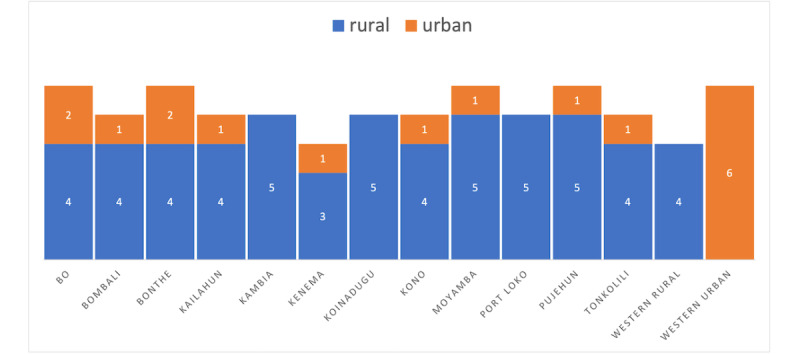
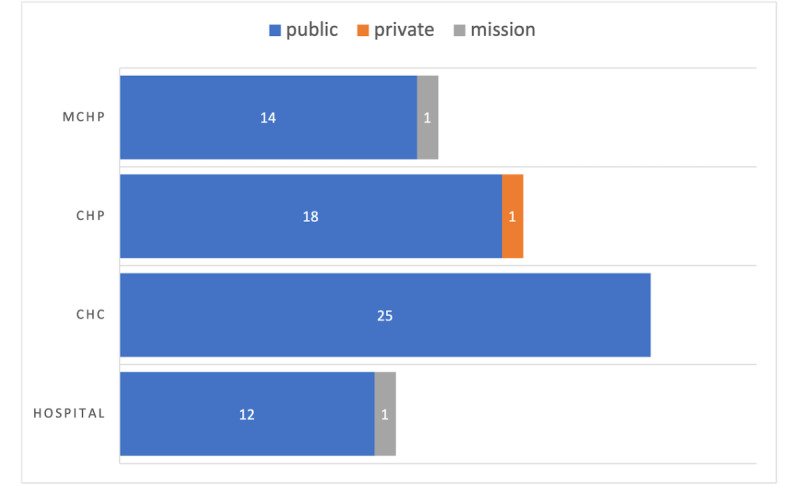
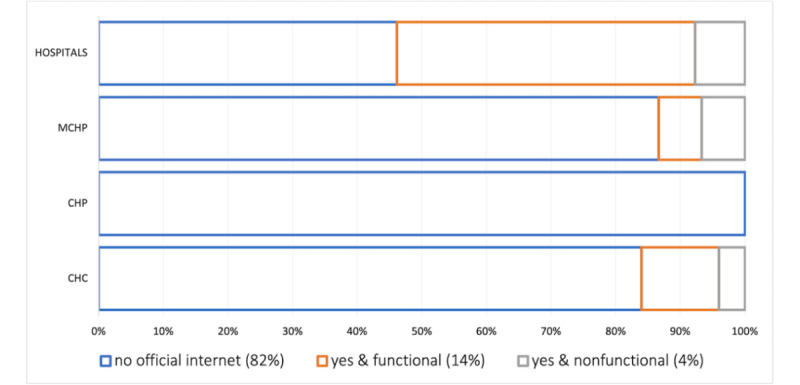
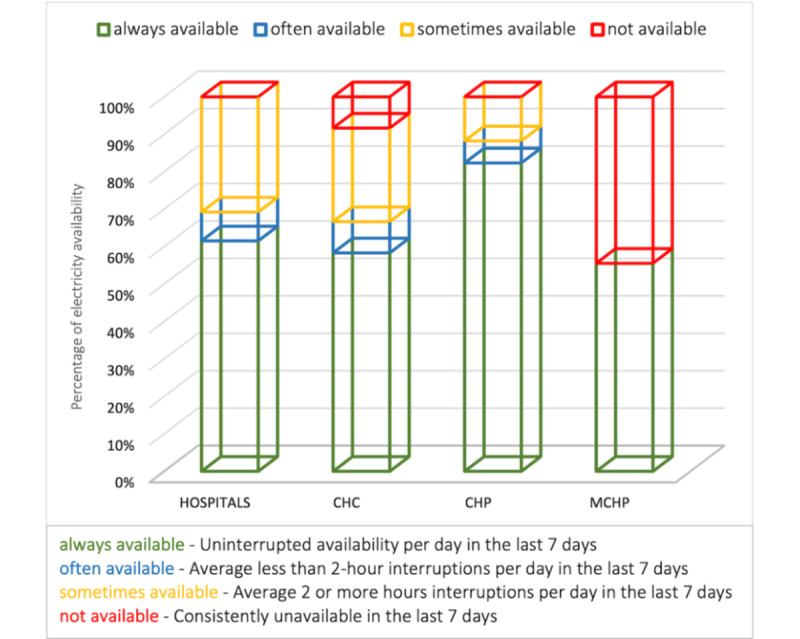
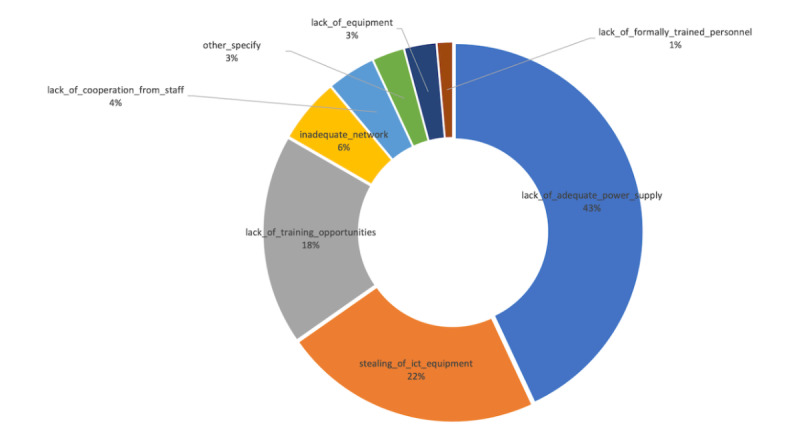
Background: Years of health information system investment in many countries have facilitated service delivery, surveillance, reporting, and monitoring. Electricity, computing hardware, and internet networks are vital for health facility–based information systems. Availability of these infrastructures at health facilities is crucial for achieving national digital health visions. Objective: The aim of this study was to gain insight into the state of computing hardware, electricity, and connectivity infrastructure at health facilities in Sierra Leone using a representative sample. Methods: Stratified sampling of 72 (out of 1284) health facilities distributed in all districts of Sierra Leone was performed, factoring in the rural-urban divide, digital health activity, health facility type, and health facility ownership. Enumerators visited each health facility over a 2-week period. Results: Among the 72 surveyed health facilities, 59 (82%) do not have institutionally provided internet. Among the 15 Maternal and Child Health Posts, as a type of primary health care unit (PHU), 9 (60%) use solar energy as their only electricity source and the other 6 (40%) have no electricity source. Similarly, among the 13 hospitals, 5 (38%) use a generator as a primary electricity source. All hospitals have at least one functional computer, although only 7 of the 13 hospitals have four or more functional computers. Similarly, only 2 of the 59 (3%) PHUs have one computer each, and 37 (63%) of the PHUs have one tablet device each. We consider this health care computing infrastructure mapping to be representative with a 95% confidence level within an 11% margin of error. Two-thirds of the PHUs have only alternate solar electricity, only 10 of the 72 surveyed health facilities have functional official internet, and most use suboptimal computing hardware. Overall, 43% of the surveyed health facilities believe that inadequate electricity is the biggest threat to digitization. Similarly, 16 (22%) of the 72 respondents stated that device theft is a primary hindrance to digitization. Conclusions: Electricity provision for off-electricity-grid health facilities using alternative and renewable energy sources is emerging. The current trend where GSM (Global System for Mobile Communication) service providers provide the internet to all health facilities may change to other promising alternatives. This study provides evidence of the critical infrastructure gaps in health facilities in Sierra Leone.
Overview
The claims and statistics of this paper haven’t been checked yet.
Free: it reads the open-access text and checks the first 5 claims that cite a source we can check. Create a free account to check every claim.
Integrity signals
Registry
Cites
Statistics
Figures
Verification
Claims the paper makes
The claims and statistics of this paper haven’t been checked yet.
Free: it reads the open-access text and checks the first 5 claims that cite a source we can check. Create a free account to check every claim.
Claims other papers make about this one
Each is checked against this paper’s own text: does it say what the citing paper says it does?
The cited source says what the claim attributes to it.
In the citing paper
“Approximately 40% of maternal and child health posts in Sierra Leone report having no electricity source [30]”
From Scale-up of a novel vital signs alert device to improve maternity care in Sierra Leone: a mixed methods evaluation of adoption (2023) · cites this paper as [30]
Self-check
Percentages, sums and reported differences re-computed from the paper’s own numbers.
The self-check needs the paper’s full text.
Citations
Cites
Matplotlib: a 2D graphics environment
Hunter, J. D. (2007) · Computing in Science & Engineering · doi:10.1109/mcse.2007.55 · Cited by 39,249 · cited 1×
“The Excel data were then analyzed with the pandas and matplotlib Python libraries [15].”
Sampling Methods in Research Methodology; How to Choose a Sampling Technique for Research
Taherdoost, H. (2016) · SSRN Electronic Journal · doi:10.2139/ssrn.3205035 · Cited by 1,967
A Hybrid AC/DC Microgrid and Its Coordination Control
Liu, X., Wang, P., & Loh, P. C. (2011) · IEEE Transactions on Smart Grid · doi:10.1109/tsg.2011.2116162 · Cited by 1,192 · cited 1×
“This mapping shows without a doubt that direct current–based renewable-energy alternatives may be better suited for targeting off-grid PHUs [19] (see [20] for technical differences between direct and alternating current electricity systems).”
Foust, J. (2018) · IEEE Spectrum · doi:10.1109/mspec.2019.8594798 · Cited by 118 · cited 1×
“Alternative internet networks such as fiber internet provided by the Ministry of Information [21] and satellite-based internet sources such as SpaceX can better serve off-the-grid health facilities [22].”
Ngwenyama, O. K., & Morawczynski, O. (2009) · Information Technology for Development · doi:10.1002/itdj.20128 · Cited by 108 · cited 6×
“Individualized care can be better optimized for data use when seamless HIS electricity, computing devices, and internet-network infrastructures are available.”
InfluentialTechnical efficiency of primary health units in Kailahun and Kenema districts of Sierra Leone
Kirigia, J. M., Sambo, L. G., Renner, A., Alemu, W., Seasa, S., & Bah, Y. (2011) · International Archives of Medicine · doi:10.1186/1755-7682-4-15 · Cited by 56 · cited 1×
“The MCHPs operate at the village level, which serve less than 5000 people and are mainly staffed by Maternal and Child Health (MCH) aides who provide mainly maternal health services [10].”
Current State of ICT in Healthcare Delivery in Developing Countries
Omotosho, A., Ayegba, P. O., Emuoyibofarhe, J. O., & Meinel, C. (2019) · International Journal of Online and Biomedical Engineering (iJOE) · doi:10.3991/ijoe.v15i08.10294 · Cited by 52 · cited 1×
“Omotosho et al [4] surveyed the current state of information and communications technology (ICT) and related infrastructure supporting eHealth deployment in Africa.”
Developing national eHealth infrastructures--results and lessons from Europe.
Stroetmann, K. A., Artmann, J., & Stroetmann, V. N. (2011) · PubMed Central · Cited by 44
eHealth interconnection infrastructure challenges and solutions overview
Liu, W., Park, E. K., & Krieger, U. R. (2012) · IEEE International Conference on e-Health Networking, Applications and Services (Healthcom) · doi:10.1109/healthcom.2012.6379417 · Cited by 21 · cited 1×
“Liu et al [2] explored the challenges and solutions of deploying eHealth infrastructure.”
OECD (2011) · OECD eBooks · doi:10.1787/9789264113541-5-en · Cited by 2
Research works printed but not linked: 1
- Fathah A Design of a boost converter. Bachelor of Technology Thesis Department of Electrical Engineering National Institute of Technology Rourkela 2013 2021-01-21 http//ethesis.nitrkl.ac.in/4811/1/109EE0612.pdf
Cited by
Aisyah, D. N., Setiawan, A. H., Lokopessy, A. F., Faradiba, N., Setiaji, S., Manikam, L., & Kozlakidis, Z. (2024) · JMIR Medical Informatics · doi:10.2196/55959 · Cited by 62
Critical success factors for EHR systems implementation in developing countries: a systematic review
Mwogosi, A., & Kibusi, S. M. (2024) · Global Knowledge, Memory and Communication · doi:10.1108/gkmc-05-2024-0264 · Cited by 23
Bright, S., Moses, F., Ridout, A., Sam, B., Momoh, M., Goodhart, V., Smart, F., Mannah, M., Issa, S., Herm-Singh, S., et al. (2023) · Reproductive Health · doi:10.1186/s12978-022-01551-2 · Cited by 12
“Approximately 40% of maternal and child health posts in Sierra Leone report having no electricity source [30], and previous studies have commented that unstable power”
BackgroundSelf-citationSesay, A. D. D., Koroma, A. L., van der Kwaak, A., Seguin, E., Kanu, A. F., Falama, A. M., Bakker, M. I., & de Vries, I. (2026) · BMC Pregnancy and Childbirth · doi:10.1186/s12884-026-09152-8 · Cited by 4
“Limited resources lead to a shortage of ultrasound equipment and trained personnel [2], while unreliable access to electricity and internet connectivity further hinders the implementation and sustainability of digital solutions [3, 4].”
Melingui, B. F., Basant, J., Taguebue, J.-V., Massom, D. M., Terquem, E. L., Norval, P.-Y., Salomao, A., Dim, B., Tek, C. E., Borand, L., et al. (2024) · Tropical Medicine & International Health · doi:10.1111/tmi.14053 · Cited by 3
“The authors pointed out that digitisation of healthcare facilities should consider the use of renewable energy sources [22].”
Metadata
- Authors
- Chukwu, E., Garg, L., Foday, E., Konomanyi, A., Wright, R., & Smart, F.
- Affiliations
- University of Malta (MT)
- Ministry of Health and Sanitation (SL)
- United Nations Children's Fund (US)
- Corresponding author
- Chukwu, Emeka
- Venue
- JMIR Medical Informatics
- Publisher
- JMIR Publications Inc.
- Published
- 2022-02-03
- Volume
- 10
- Issue
- 2
- Pages
- e30040
- ISSN
- 2291-9694 (ISSN-L)
- PMC
- PMC8855303
- OpenAlex
- W3185363072
- Cited by
- 14
- References
- 10
- Citations by year
- 2026: 4 · 2025: 1 · 2024: 5 · 2023: 4
- FWCI
- 2.03
- Type
- journal article
- Language
- en
- Open access
- gold
- doi.org
- Licence
- cc-by
- Locations
- JMIR Medical Informatics (publishedVersion, cc-by)
- PubMed Central (publishedVersion, cc-by)
- PubMed (publishedVersion)
- OAR@UM (University of Malta) (submittedVersion, other-oa)
- DOAJ (DOAJ: Directory of Open Access Journals) (submittedVersion)
- Greater South Information System
- Funders
- United States Agency for International Development
- UNICEF
- Università ta' Malta
- Topics
- Physical Sciences › Computer Science › Information Systems › ICT in Developing Communities
- Health Sciences › Health Professions › Health Information Management › Electronic Health Records Systems
- Health Sciences › Medicine › Public Health, Environmental and Occupational Health › Healthcare Systems and Practices
- Keywords
- power availability, internet access, solar energy, health information systems, digital health, primary health care posts, hospitals, device theft, rural-urban divide, Sierra Leone
About these checks
Registry, retraction, Cites and statistics results are computed, not judged, with one exception: a printed reference that no index lists is read once by a model before it counts as a citation error. Claims are extracted by a model and kept only when their quote appears verbatim in the text; each cited source is then checked, with a model’s help, for whether it says what the claim relies on. Those verdicts can be wrong — read the claim’s quote and the cited source before relying on one.
Statistics and arithmetic are recomputed, not judged.
Confidence bands are shown only for fields calibrated on our annotated test set. None is calibrated yet, so no band is shown.
What counts as a claim ›How we measure confidence ›How we check this ›
Are you an author, or do you see a problem with this page? Request a review
Data sources
Bibliographic data: Semantic Scholar, OpenAlex, Crossref.
Contains information from the Semantic Scholar Academic Graph Datasets, made available under the ODC Attribution License (ODC-BY 1.0).
Semantic Scholar’s data is described in: Kinney, R., et al. (2023). The Semantic Scholar Open Data Platform. arXiv:2301.10140.
