

The DOI matches its Crossref record; 5 of the 5 references it cites were found in a registry or an index.
Improving the Prognostic Evaluation Precision of Hospital Outcomes for Heart Failure Using Admission Notes and Clinical Tabular Data: Multimodal Deep Learning Model
Open accessPublished version of a preprint
Abstract
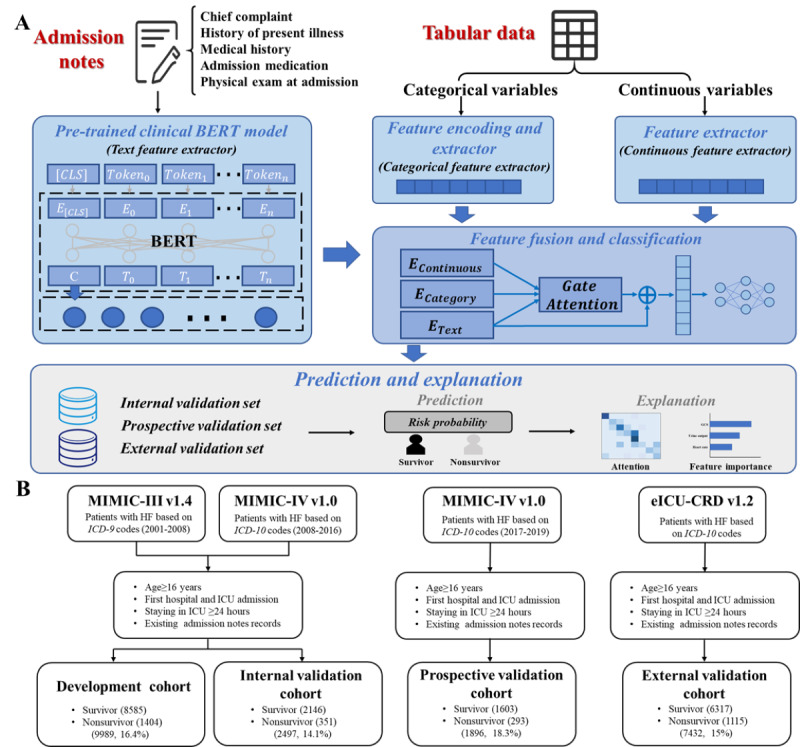
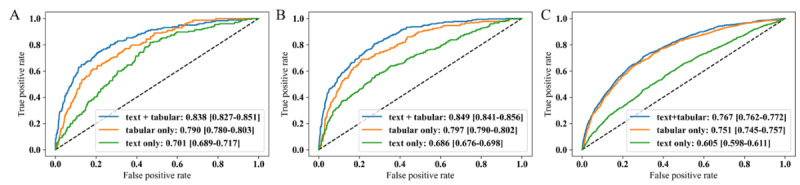
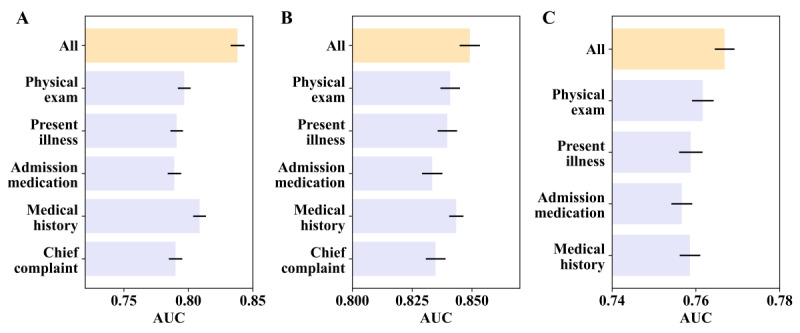
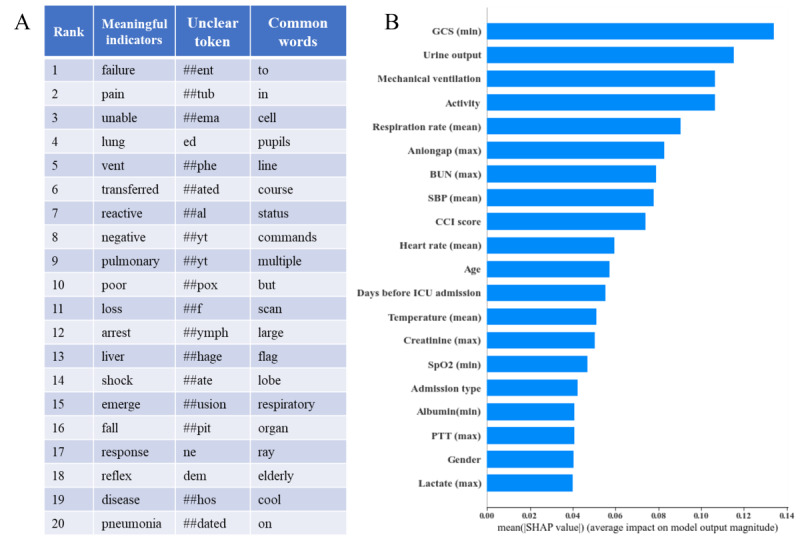
Background: Clinical notes contain contextualized information beyond structured data related to patients’ past and current health status. Objective: This study aimed to design a multimodal deep learning approach to improve the evaluation precision of hospital outcomes for heart failure (HF) using admission clinical notes and easily collected tabular data. Methods: Data for the development and validation of the multimodal model were retrospectively derived from 3 open-access US databases, including the Medical Information Mart for Intensive Care III v1.4 (MIMIC-III) and MIMIC-IV v1.0, collected from a teaching hospital from 2001 to 2019, and the eICU Collaborative Research Database v1.2, collected from 208 hospitals from 2014 to 2015. The study cohorts consisted of all patients with critical HF. The clinical notes, including chief complaint, history of present illness, physical examination, medical history, and admission medication, as well as clinical variables recorded in electronic health records, were analyzed. We developed a deep learning mortality prediction model for in-hospital patients, which underwent complete internal, prospective, and external evaluation. The Integrated Gradients and SHapley Additive exPlanations (SHAP) methods were used to analyze the importance of risk factors. Results: The study included 9989 (16.4%) patients in the development set, 2497 (14.1%) patients in the internal validation set, 1896 (18.3%) in the prospective validation set, and 7432 (15%) patients in the external validation set. The area under the receiver operating characteristic curve of the models was 0.838 (95% CI 0.827-0.851), 0.849 (95% CI 0.841-0.856), and 0.767 (95% CI 0.762-0.772), for the internal, prospective, and external validation sets, respectively. The area under the receiver operating characteristic curve of the multimodal model outperformed that of the unimodal models in all test sets, and tabular data contributed to higher discrimination. The medical history and physical examination were more useful than other factors in early assessments. Conclusions: The multimodal deep learning model for combining admission notes and clinical tabular data showed promising efficacy as a potentially novel method in evaluating the risk of mortality in patients with HF, providing more accurate and timely decision support.
Overview
The claims and statistics of this paper haven’t been checked yet.
Run the check — free, no account needed. It reads the open-access text and checks the sources it cites.
Integrity signals
Registry
Cites
Statistics
Figures
Verification
Claims the paper makes
The claims and statistics of this paper haven’t been checked yet.
Run the check — free, no account needed. It reads the open-access text and checks the sources it cites.
Claims other papers make about this one
Each is checked against this paper’s own text: does it say what the citing paper says it does?
The cited source says what the claim attributes to it.
In the citing paper
“attention mechanisms such as gated attention [40,41], cross-attention [42–45], or transformer encoders [20,36,46–49] are increasingly adopted.”
From Multimodal Artificial Intelligence for Precision Critical Care: A Scoping Review (2026) · cites this paper as [41]
Self-check
Percentages, sums and reported differences re-computed from the paper’s own numbers.
The self-check needs the paper’s full text.
Citations
Cites
BERT: Pre-training of Deep Bidirectional Transformers for Language Understanding
Devlin, J., Chang, M.-W., Lee, K., & Toutanova, K. (2018) · arXiv · doi:10.48550/arxiv.1810.04805 · Cited by 73,173
Heart Failure With Reduced Ejection Fraction: A Review
Murphy, S. P., Ibrahim, N. E., & Januzzi, J. L. (2020) · JAMA · doi:10.1001/jama.2020.10262 · Cited by 769
The MIMIC Code Repository: enabling reproducibility in critical care research
Johnson, A. E. W., Stone, D. J., Celi, L. A., & Pollard, T. J. (2018) · Journal of the American Medical Informatics Association · doi:10.1093/jamia/ocx084 · Cited by 442
Li, F., Xin, H., Zhang, J., Fu, M., Zhou, J., & Lian, Z. (2021) · BMJ Open · doi:10.1136/bmjopen-2020-044779 · Cited by 128 · cited 1×
“…condition, particularly when accompanied by advanced organ dysfunction or severe complications, a considerable portion of patients with HF may require immediate access to advanced, high-technology, life-saving care, which is typically available only in intensive care units (ICUs) [7].”
Lyu, W., Dong, X., Wong, R., Zheng, S., Abell-Hart, K., Wang, F., & Chen, C. (2022) · arXiv · doi:10.48550/arxiv.2208.10240 · Cited by 46 · cited 2×
“For instance, the phrase “the patient has been extubated” is tokenized into “the patient has been ex ##tub ##ated” as the input sequence [35].”
Research works printed but not linked: 32
- 10.1093/eurheartj/ehv548 · DOI · Paper page
- 10.1016/j.pharmthera.2008.05.007 · DOI
- 10.1007/s10741-019-09831-z · DOI
- 10.1093/cvr/cvac013 · DOI
- 10.1038/nrcardio.2016.25 · DOI
- 10.1161/circulationaha.112.001088 · DOI
- 10.1161/jaha.114.001708 · DOI
- 10.1097/ccm.0b013e318186aec8 · DOI
- 10.1016/j.ahj.2004.08.005 · DOI
- 10.1002/ejhf.1628 · DOI
- 10.1016/j.jchf.2019.06.013 · DOI
- 10.2196/46934 · DOI
- 10.1161/CIR.0000000000000767 · DOI · Paper page
- 10.1016/j.jacc.2008.04.028 · DOI
- 10.1016/j.jchf.2019.06.013 · DOI
- 10.1016/j.jchf.2022.05.010 · DOI
- 10.2196/38082 · DOI
- 10.3390/bios13020282 · DOI
- 10.1177/0141076816661316 · DOI
- 10.2196/26486 · DOI
- 10.1001/jamanetworkopen.2022.34924 · DOI
- 10.5606/tftrd.2022.5287 · DOI
- 10.1145/3511616.3513115 · DOI
- 10.48550/arXiv.2102.04110 · DOI
- 10.1038/sdata.2016.35 · DOI · Paper page
- 10.1038/sdata.2018.178 · DOI · Paper page
- 10.48550/arXiv.1904.05342 · DOI · Paper page
- 10.18653/v1/2020.acl-main.214 · DOI
- 10.5555/3305890.3306024 · DOI
- 10.1038/s41576-022-00532-2 · DOI
- Lyu, W, 2022, AMIA Annu Symp Proc, 2022, 719
- 10.1109/tetci.2021.3100641 · DOI · Paper page
Cited by
Sorted by citations
Multimodal Artificial Intelligence for Precision Critical Care: A Scoping Review
Yang, M., Shi, N., Chen, H., Po, E. Y. P., Ng, P. Y., Lai, P. C. K., Wu, Y.-C., & Fong, D. Y. T. (2026) · Health Data Science · doi:10.34133/hds.0356 · Cited by 3
“…80 ] (trained on PubMed and MIMIC-III database [ 81 ]), BioBERT [ 82 – 85 ] and BioMedBERT [ 37 ] (trained on PubMed database), ClinicalBERT [ 40 , 41 , 45 , 47 , 49 , 86 – 88 ] (trained on MIMIC-III database [ 81 ]), and SapBERT [ 87 ] (trained on the Unified Medical Language System database […”
Influential
Metadata
- Authors
- Gao, Z., Liu, X., Kang, Y., Hu, P., Zhang, X., Yan, W., Yan, M., Yu, P., Zhang, Q., Xiao, W., & Zhang, Z.
- Affiliations
- University of Science and Technology Beijing (CN)
- Chinese PLA General Hospital (CN)
- Sichuan University (CN)
- Corresponding author
- Zhang, Zhengbo
- ORCID
- Venue
- Journal of Medical Internet Research
- Publisher
- JMIR Publications Inc.
- Published
- 2024-05-02
- Volume
- 26
- Pages
- e54363
- ISSN
- 1438-8871 (ISSN-L)
- PMC
- PMC11099809
- OpenAlex
- W4392949850
- Cited by
- 40
- References
- 5
- Citations by year
- 2026: 20 · 2025: 19 · 2024: 1
- FWCI
- 5.90
- Type
- journal article
- Language
- en
- Open access
- gold
- doi.org
- Licence
- cc-by
- Locations
- Journal of Medical Internet Research (publishedVersion, cc-by)
- PubMed Central (publishedVersion, cc-by)
- PubMed (publishedVersion)
- DOAJ (DOAJ: Directory of Open Access Journals) (submittedVersion, cc-by-sa)
- Funders
- Beth Israel Deaconess Medical Center
- National Natural Science Foundation of China (62173032, 62171471)
- Topics
- Physical Sciences › Computer Science › Artificial Intelligence › Machine Learning in Healthcare
- Health Sciences › Medicine › Cardiology and Cardiovascular Medicine › Heart Failure Treatment and Management
- Health Sciences › Health Professions › Health Information Management › Artificial Intelligence in Healthcare
- Keywords
- heart failure, in-hospital mortality prediction, multimodal deep learning, clinical notes, admission notes, tabular clinical data, electronic health records, MIMIC-III, MIMIC-IV, eICU-CRD, SHAP, integrated gradients, external validation, hospitalization outcomes, clinical decision support, early risk assessment, physical examination
- MeSH terms
- Deep Learning, Aged, Aged, 80 and over, Female, Heart Failure, Hospitalization, Humans, Male, Middle Aged, Prognosis, Retrospective Studies, Hospital Mortality, Electronic Health Records
About these checks
Registry, retraction, Cites and statistics results are computed, not judged, with one exception: a printed reference that no index lists is read once by a model before it counts as a citation error. Claims are extracted by a model and kept only when their quote appears verbatim in the text; each cited source is then checked, with a model’s help, for whether it says what the claim relies on. Those verdicts can be wrong — read the claim’s quote and the cited source before relying on one.
Statistics and arithmetic are recomputed, not judged.
Confidence bands are shown only for fields calibrated on our annotated test set. None is calibrated yet, so no band is shown.
What counts as a claim ›How we measure confidence ›How we check this ›
Are you an author, or do you see a problem with this page? Request a review
