

The DOI matches its Crossref record; 30 of the 30 references it cites were found in a registry or an index.
Design of an mHealth App for the Self-management of Adolescent Type 1 Diabetes: A Pilot Study
Open accessAbstract
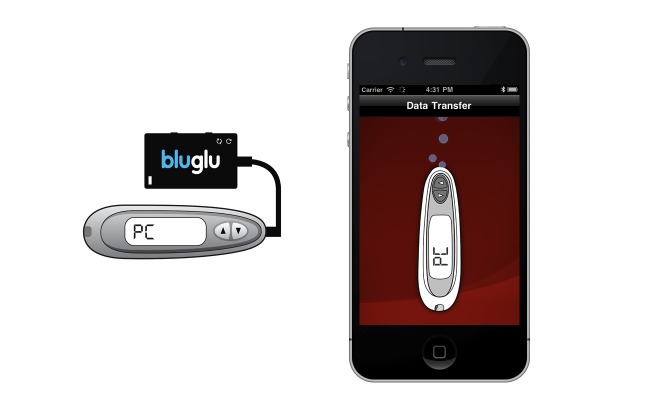
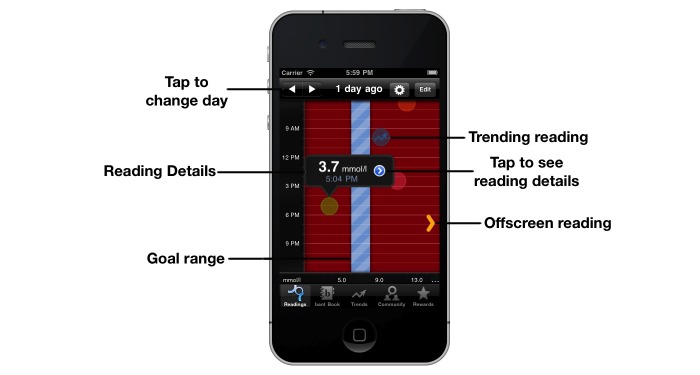
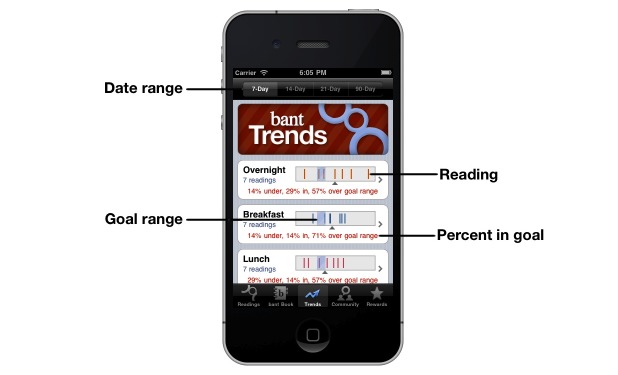
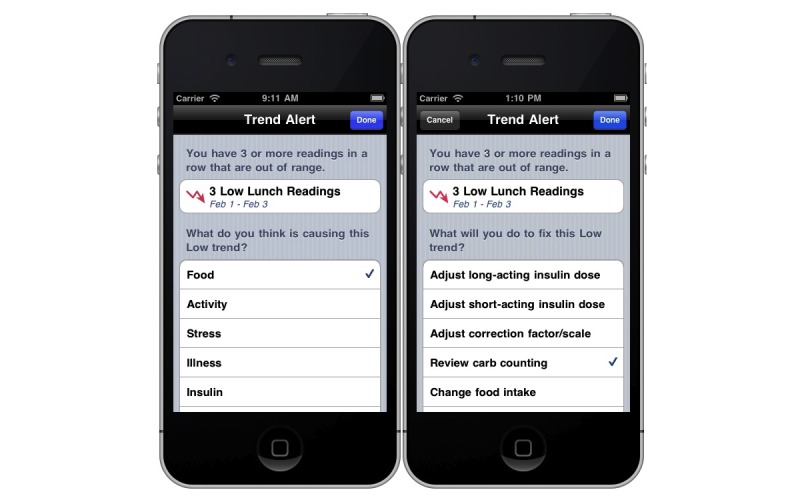
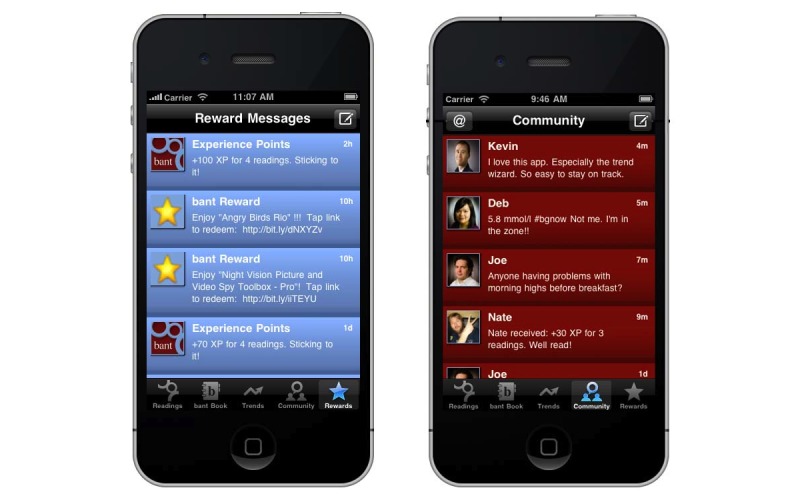
BACKGROUND: The use of mHealth apps has shown improved health outcomes in adult populations with type 2 diabetes mellitus. However, this has not been shown in the adolescent type 1 population, despite their predisposition to the use of technology. We hypothesized that a more tailored approach and a strong adherence mechanism is needed for this group. OBJECTIVE: To design, develop, and pilot an mHealth intervention for the management of type 1 diabetes in adolescents. METHODS: We interviewed adolescents with type 1 diabetes and their family caregivers. Design principles were derived from a thematic analysis of the interviews. User-centered design was then used to develop the mobile app bant. In the 12-week evaluation phase, a pilot group of 20 adolescents aged 12-16 years, with a glycated hemoglobin (HbA(1c)) of between 8% and 10% was sampled. Each participant was supplied with the bant app running on an iPhone or iPod Touch and a LifeScan glucometer with a Bluetooth adapter for automated transfers to the app. The outcome measure was the average daily frequency of blood glucose measurement during the pilot compared with the preceding 12 weeks. RESULTS: Thematic analysis findings were the role of data collecting rather than decision making; the need for fast, discrete transactions; overcoming decision inertia; and the need for ad hoc information sharing. Design aspects of the resultant app emerged through the user-centered design process, including simple, automated transfer of glucometer readings; the use of a social community; and the concept of gamification, whereby routine behaviors and actions are rewarded in the form of iTunes music and apps. Blood glucose trend analysis was provided with immediate prompting of the participant to suggest both the cause and remedy of the adverse trend. The pilot evaluation showed that the daily average frequency of blood glucose measurement increased 50% (from 2.4 to 3.6 per day, P = .006, n = 12). A total of 161 rewards (average of 8 rewards each) were distributed to participants. Satisfaction was high, with 88% (14/16 participants) stating that they would continue to use the system. Demonstrating improvements in HbA(1c) will require a properly powered study of sufficient duration. CONCLUSIONS: This mHealth diabetes app with the use of gamification incentives showed an improvement in the frequency of blood glucose monitoring in adolescents with type 1 diabetes. Extending this to improved health outcomes will require the incentives to be tied not only to frequency of blood glucose monitoring but also to patient actions and decision making based on those readings such that glycemic control can be improved.
Overview
The claims and statistics of this paper haven’t been checked yet.
Run the check — free, no account needed. It reads the open-access text and checks the sources it cites.
Integrity signals
Registry
Cites
Statistics
Figures
Verification
Claims the paper makes
The claims and statistics of this paper haven’t been checked yet.
Run the check — free, no account needed. It reads the open-access text and checks the sources it cites.
Claims other papers make about this one
Each is checked against this paper’s own text: does it say what the citing paper says it does?
The cited source says what the claim attributes to it.
In the citing paper
“Cafazzo et al. (2012) saw rewards (in the form of points that could be redeemed for prizes) to contribute to the frequency of blood glucose measurement among individuals with type 1 diabetes.”
From Gamification for health and wellbeing: A systematic review of the literature (2016) · cites this paper as Cafazzo et al. (2012)
The cited source says what the claim attributes to it.
In the citing paper
“Gamification was found to have a positive influence on healthcare utilization (Allam et al., 2015), the reduction of medication misuse (Allam et al., 2015, Riva et al., 2014) and blood glucose monitoring (Cafazzo et al., 2012).”
From Gamification for health and wellbeing: A systematic review of the literature (2016) · cites this paper as Cafazzo et al., 2012
Self-check
Percentages, sums and reported differences re-computed from the paper’s own numbers.
The self-check needs the paper’s full text.
Citations
Cites
Health Belief Model and Personal Health Behavior
Becker, M. H. (1976) · Medical Entomology and Zoology · Cited by 3,065
Lorig, K. R., Sobel, D. S., Stewart, A. L., Brown, B. W., Bandura, A., Ritter, P., Gonzalez, V. M., Laurent, D. D., & Holman, H. R. (1999) · Medical Care · doi:10.1097/00005650-199901000-00003 · Cited by 2,261
Chronic disease management: what will it take to improve care for chronic illness?
Eh, W. (1998) · PubMed · Cited by 2,095
Heron, K. E., & Smyth, J. M. (2010) · British Journal of Health Psychology · doi:10.1348/135910709x466063 · Cited by 1,438
Quinn, C. C., Shardell, M. D., Terrin, M. L., Barr, E. A., Ballew, S. H., & Gruber-Baldini, A. L. (2011) · Diabetes Care · doi:10.2337/dc11-0366 · Cited by 650
Karter, A. J., Ackerson, L. M., Darbinian, J. A., D’Agostino, R. B., Ferrara, A., Liu, J., & Selby, J. V. (2001) · The American Journal of Medicine · doi:10.1016/s0002-9343(01)00742-2 · Cited by 595
Assessing Family Sharing of Diabetes Responsibilities
Anderson, B. J., Auslander, W., Jung, K. C., Miller, J. P., & Santiago, J. V. (1990) · Journal of Pediatric Psychology · doi:10.1093/jpepsy/15.4.477 · Cited by 496
Skinner, H. A., Biscope, S., Poland, B. D., & Goldberg, E. (2003) · Journal of Medical Internet Research · doi:10.2196/jmir.5.4.e32 · Cited by 371
Association between adherence and glycemic control in pediatric type 1 diabetes: a meta-analysis
Hood, K. K., Peterson, C. M., Rohan, J. M., & Drotar, D. (2009) · Pediatrics · doi:10.1542/peds.2009-0207 · Cited by 347
Ziegler, R., Heidtmann, B., Hilgard, D., Hofer, S., Rosenbauer, J., Holl, R., & DPV-Wiss-Initiative, F. T. (2011) · Pediatric Diabetes · doi:10.1111/j.1399-5448.2010.00650.x · Cited by 334
A Modified Quality-of-Life Measure for Youths: Psychometric Properties
Ingersoll, G. M., & Marrero, D. G. (1991) · The Science of Diabetes Self-Management and Care · doi:10.1177/014572179101700219 · Cited by 325
LOGAN, A., MCISAAC, W., Tislér, A., Irvine, M. J., SAUNDERS, A., Dunai, A., RIZO, C., Feig, D. I., Hamill, M., & Trudel, M. (2007) · American Journal of Hypertension · doi:10.1016/j.amjhyper.2007.03.020 · Cited by 266
de Beaufort, C. E., Swift, P. G. F., Skinner, T. C., Aanstoot, H., Åman, J., Cameron, F. J., Martul, P., Chiarelli, F., Daneman, D., Danne, T., et al. (2007) · Diabetes Care · doi:10.2337/dc07-0475 · Cited by 215
Farmer, A., Gibson, O. J., Tarassenko, L., & Neil, A. (2005) · Diabetic Medicine · doi:10.1111/j.1464-5491.2005.01627.x · Cited by 211
Home telemonitoring of patients with diabetes: a systematic assessment of observed effects
Jaana, M., & Paré, G. (2007) · Journal of Evaluation in Clinical Practice · doi:10.1111/j.1365-2753.2006.00686.x · Cited by 178
Holl, R. W., Swift, P. G. F., Mortensen, H. B., Lynggaard, H., Hougaard, P., Aanstoot, H., Chiarelli, F., Daneman, D., Danne, T., Dorchy, H., et al. (2003) · European Journal of Pediatrics · doi:10.1007/s00431-002-1037-2 · Cited by 171
Lewin, A. B., LaGreca, A. M., Geffken, G. R., Williams, L. B., Duke, D. C., Storch, E. A., & Silverstein, J. H. (2009) · Journal of Pediatric Psychology · doi:10.1093/jpepsy/jsp032 · Cited by 159
Cho, J.-H., Lee, H.-C., Lim, D.-J., Kwon, H.-S., & Yoon, K.-H. (2009) · Journal of Telemedicine and Telecare · doi:10.1258/jtt.2008.080412 · Cited by 155
Health Technologies for Monitoring and Managing Diabetes: A Systematic Review
Russell-Minda, E., Jutai, J., Speechley, M., Bradley, K., Chudyk, A., & Petrella, R. (2009) · Journal of Diabetes Science and Technology · doi:10.1177/193229680900300628 · Cited by 92
Sutcliffe, P., Martin, S., Sturt, J., Powell, J., Griffiths, F., Adams, A., & Dale, J. (2011) · BMC Endocrine Disorders · doi:10.1186/1472-6823-11-1 · Cited by 82
Telehealth Behavior Therapy for the Management of Type 1 Diabetes in Adolescents
Lehmkuhl, H. D., Storch, E. A., Cammarata, C., Meyer, K., Rahman, O., Silverstein, J. H., Malasanos, T., & Geffken, G. R. (2010) · Journal of Diabetes Science and Technology · doi:10.1177/193229681000400125 · Cited by 74
Using a Cell Phone-Based Glucose Monitoring System for Adolescent Diabetes Management
Carroll, A. E., DiMeglio, L. A., Stein, S., & Marrero, D. G. (2011) · The Diabetes Educator · doi:10.1177/0145721710387163 · Cited by 66
Nunn, E., King, B. R., Smart, C. E., & Anderson, D. (2006) · Pediatric Diabetes · doi:10.1111/j.1399-5448.2006.00200.x · Cited by 54
Contracting and Monitoring Relationships for Adolescents with Type 1 Diabetes: A Pilot Study
Carroll, A. E., DiMeglio, L. A., Stein, S., & Marrero, D. G. (2011) · Diabetes Technology & Therapeutics · doi:10.1089/dia.2010.0181 · Cited by 46
Shulman, R. M., O’Gorman, C. S., & Palmert, M. R. (2010) · International Journal of Pediatric Endocrinology · doi:10.1155/2010/536957 · Cited by 37
Self-citationSalamon, K. S., Hains, A. A., Fleischman, K. M., Davies, W. H., & Kichler, J. (2009) · Primary care diabetes · doi:10.1016/j.pcd.2009.10.003 · Cited by 34
Telemanagement of hypertension: a qualitative assessment of patient and physician preferences.
Halifax, N. D., Cafazzo, J., Irvine, M., Hamill, M., Rizo, C., McIsaac, W., Rossos, P., & Logan, A. (2007) · Canadian Journal of Cardiology · doi:10.1016/s0828-282x(07)70807-3 · Cited by 29
Self-citationMobile Phone Technology for Children with Type 1 and Type 2 Diabetes: A Parent Survey
Pena, V., Watson, A. J., Kvedar, J. C., & Grant, R. W. (2009) · Journal of Diabetes Science and Technology · doi:10.1177/193229680900300630 · Cited by 26
The hospital at home: advances in remote patient monitoring.
Cafazzo, J. A., & Seto, E. (2010) · PubMed · Cited by 9
Self-citation
Research works printed but not linked: 2
- Wagner, EH, 1998, Eff Clin Pract, 1, 2
- Cafazzo, JA, 2010, Biomed Instrum Technol, Suppl Home Healthcare, 47
Cited by
Sorted by citations
Gamification in theory and action: a survey
Seaborn, K., & Fels, D. I. (2015) · International Journal of Human-Computer Studies · doi:10.1016/j.ijhcs.2014.09.006 · Cited by 2,515
The Rise of Motivational Information Systems: A Review of Gamification Research
Koivisto, J., & Hamari, J. (2017) · International Journal of Information Management · doi:10.1016/j.ijinfomgt.2018.10.013 · Cited by 2,229
Gamification for health and wellbeing: A systematic review of the literature
Johnson, D., Deterding, S., Kuhn, K.-A., Staneva, A., Stoyanov, S., & Hides, L. (2016) · Internet Interventions · doi:10.1016/j.invent.2016.10.002 · Cited by 1,237
A systematic review of gamification in e-Health
Sardi, L., Idri, A., & Fernández‐Alemán, J. L. (2017) · Journal of Biomedical Informatics · doi:10.1016/j.jbi.2017.05.011 · Cited by 1,041
Mobile-health: A review of current state in 2015
Silva, B. M. C., Rodrigues, J. J. P. C., Díez, I. D. L. T., López-Coronado, M., & Saleem, K. (2015) · Journal of Biomedical Informatics · doi:10.1016/j.jbi.2015.06.003 · Cited by 922
Metadata
- Authors
- Cafazzo, J. A., Casselman, M., Hamming, N., Katzman, D. K., & Palmert, M. R.
- Affiliations
- University Health Network (CA)
- University of Toronto (CA)
- Corresponding author
- Cafazzo, Joseph A
- Venue
- Journal of Medical Internet Research
- Publisher
- JMIR Publications Inc.
- Published
- 2012-05-08
- Volume
- 14
- Issue
- 3
- Pages
- e70
- ISSN
- 1438-8871 (ISSN-L)
- PMC
- PMC3799540
- OpenAlex
- W2142564124
- Cited by
- 676
- References
- 30
- Citations by year
- 2026: 21 · 2025: 22 · 2024: 37 · 2023: 29 · 2022: 54 · 2021: 55 · 2020: 49 · 2019: 66 · 2018: 79 · 2017: 74 · 2016: 69 · 2015: 57 · 2014: 32 · 2013: 24 · 2012: 7
- FWCI
- 68.18
- Type
- journal article
- Language
- en
- Open access
- gold
- doi.org
- Licence
- cc-by
- Locations
- Journal of Medical Internet Research (publishedVersion, cc-by)
- Europe PMC (PubMed Central) (publishedVersion, cc-by)
- PubMed Central (publishedVersion, cc-by)
- PubMed (publishedVersion)
- DOAJ (DOAJ: Directory of Open Access Journals) (submittedVersion, cc-by-sa)
- Funders
- University Health Network
- Hospital for Sick Children
- Topics
- Health Sciences › Health Professions › General Health Professions › Mobile Health and mHealth Applications
- Health Sciences › Medicine › Endocrinology, Diabetes and Metabolism › Diabetes Management and Education
- Health Sciences › Medicine › Endocrinology, Diabetes and Metabolism › Diabetes Management and Research
- Keywords
- type 1 diabetes, adolescents, mobile health apps, self-management, blood glucose monitoring, gamification, user-centered design, HbA1c, social community, family caregivers, user interviews, user satisfaction, health behavior change, decision inertia, health data sharing, rewards and incentives
- MeSH terms
- Adolescent, Diabetes Mellitus, Type 1, Glycated Hemoglobin, Humans, Pilot Projects, Self Care, Software, Cell Phone
About these checks
Registry, retraction, Cites and statistics results are computed, not judged, with one exception: a printed reference that no index lists is read once by a model before it counts as a citation error. Claims are extracted by a model and kept only when their quote appears verbatim in the text; each cited source is then checked, with a model’s help, for whether it says what the claim relies on. Those verdicts can be wrong — read the claim’s quote and the cited source before relying on one.
Statistics and arithmetic are recomputed, not judged.
Confidence bands are shown only for fields calibrated on our annotated test set. None is calibrated yet, so no band is shown.
What counts as a claim ›How we measure confidence ›How we check this ›
Are you an author, or do you see a problem with this page? Request a review
