

In vitro experiments with primary mammalian cells: To Pool or not to Pool?
Open accessThe DOI matches its Crossref record; 2 of the 2 references it cites were found in a registry or an index.
Abstract
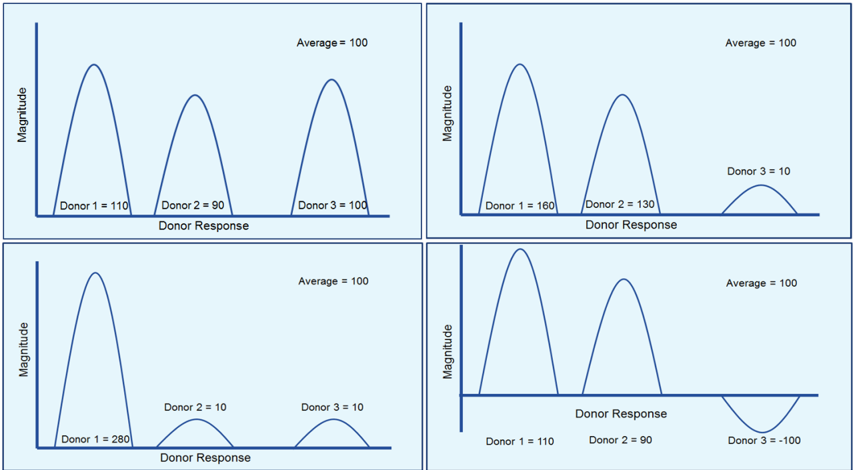
There are various strategies that can be adopted when performing in vitro experiments with primary cells such as mesenchymal stem cells. It is generally accepted that multiple donors need to be investigated to take into account donor to donor variability; this is especially critical when investigating primary human cells. However, increasingly it is being seen that studies are pooling the cells from multiple donors prior to performing the experiment. This has obvious advantages but also many disadvantages, the greatest being loss of statistical power. This loss of statistical power is the reason why the pooling of primary cells for experiments is not to be recommended.
Overview
The claims and statistics of this paper haven’t been checked yet.
Free: it reads the open-access text and checks the first 5 claims that cite a source we can check. Create a free account to check every claim.
Integrity signals
Registry
Cites
Statistics
Figures
Verification
Claims the paper makes
The claims and statistics of this paper haven’t been checked yet.
Free: it reads the open-access text and checks the first 5 claims that cite a source we can check. Create a free account to check every claim.
Claims other papers make about this one
Each is checked against this paper’s own text: does it say what the citing paper says it does?
The source backs part of the claim, not all of it — or backs it for a different population, condition or comparison.
In the citing paper
“This strategy has been shown to significantly reduce variability in proliferation, differentiation, metabolic activity, and other cellular responses, thereby improving experimental reproducibility (Stoddart et al. 2012;Metzger et al. 2020;Kannan et al. 2024).”
From Primary cell cultures versus immortalized cell lines: critical comparative insights into biological fidelity and translational applications (2026) · cites this paper as Stoddart et al. 2012
Experimental — accuracy not yet measured
Self-check
Percentages, sums and reported differences re-computed from the paper’s own numbers.
The self-check needs the paper’s full text.
Citations
Cites
Musculoskeletal Regeneration Program, A. R. I. D., Schätti, O., Grad, S., Goldhahn, J., Salzmann, G., Li, Z., Alini, M., & Stoddart, M. (2011) · European Cells and Materials · doi:10.22203/ecm.v022a17 · Cited by 196 · cited 1×
“This can be seen in a recent paper where one of the 5 donors had a very similar pattern of response but was several orders of magnitude higher (Schätti et al., 2011).”
ResultSelf-citationJames, A. W., Pang, S., Askarinam, A., Corselli, M., Zara, J. N., Goyal, R., Chang, L., Pan, A., Shen, J., Yuan, W., et al. (2012) · Stem Cells and Development · doi:10.1089/scd.2011.0461 · Cited by 92 · cited 1×
“Similarly, it was recently shown that human adipose derived stromal cells increase endogenous expression of Nell-1 but the magnitude of increase is donor dependent (James et al., 2012).”
Background
Cited by
Hulsart‐Billström, G., Dawson, J. I., Hofmann, S., Müller, R., Stoddart, M. J., Alini, M., Redl, R., Haj, A. E., Brown, R. A., Salih, V. M., et al. (2016) · European Cells and Materials · doi:10.22203/ecm.v031a20 · Cited by 163
“To try and overcome donor cell variation when assaying biomaterials for cell responses, several studies have pooled cells from multiple donors (Stoddart et al., 2012).”
BackgroundSelf-citationGardner, O. F. W., Musumeci, G., Neumann, A. J., Eglin, D., Archer, C. W., Alini, M., & Stoddart, M. J. (2016) · Journal of Tissue Engineering and Regenerative Medicine · doi:10.1002/term.2194 · Cited by 80
“While this deviation can be reduced by selecting or pooling donors, the frequency with which a result is observed cannot be determined (Stoddart et al., 2012).”
BackgroundSelf-citationEffect of Tension on Human Periodontal Ligament Cells: Systematic Review and Network Analysis
Sun, C., Ranković, M. J., Folwaczny, M., Otto, S., Wichelhaus, A., & Baumert, U. (2021) · Frontiers in Bioengineering and Biotechnology · doi:10.3389/fbioe.2021.695053 · Cited by 44
Biofabrication of a shape-stable auricular structure for the reconstruction of ear deformities
Otto, I. A., Capendale, P. E., Garcia, J. P., de Ruijter, M., van Doremalen, R. F. M., Castilho, M. D., Lawson, T. B., Grinstaff, M. W., Breugem, C. C., Kon, M., et al. (2021) · Materials Today Bio · doi:10.1016/j.mtbio.2021.100094 · Cited by 37
“This donor-to-donor variance is a well-known challenge in cells from human sources [85] and would require the characterization of a quality control system to predict the cells’ regenerative potential and thus their usability for clinical application.”
BackgroundRecent advances in models of immune-mediated drug-induced liver injury
Tasnim, F., Huang, X., Lee, C. Z. W., Ginhoux, F., & Yu, H. (2021) · Frontiers in Toxicology · doi:10.3389/ftox.2021.605392 · Cited by 32
“On the other hand, primary cells are expensive, show donor variability (Stoddart et al., 2012; Kegel et al., 2015; Kermanizadeh et al., 2019a), not easily accessible and cannot be expanded extensively in in vitro culture (Honegger, 1999).”
Background
Metadata
- Authors
- Musculoskeletal Regeneration Program, A. R. I., Stoddart, M., Richards, R., & Alini, M.
- ORCID
- Alini, M
- Venue
- European Cells and Materials
- Publisher
- Forum Multimedia Publishing LLC
- Published
- 2012-11-09
- Volume
- 24
- Pages
- i-ii
- ISSN
- 1473-2262 (ISSN-L)
- OpenAlex
- W57030667
- Cited by
- 28
- References
- 2
- Citations by year
- 2026: 2 · 2025: 1 · 2024: 2 · 2023: 2 · 2022: 3 · 2021: 4 · 2020: 3 · 2019: 3 · 2018: 2 · 2017: 1 · 2016: 2 · 2014: 2 · 2013: 1
- Type
- journal article
- Language
- en
- Open access
- gold
- doi.org
- Licence
- cc-by
- Locations
- European Cells and Materials (publishedVersion, cc-by)
- PubMed (publishedVersion)
- DOAJ (DOAJ: Directory of Open Access Journals) (submittedVersion, cc-by-sa)
- Topics
- Health Sciences › Veterinary › Small Animals › Animal testing and alternatives
- Life Sciences › Biochemistry, Genetics and Molecular Biology › Cell Biology › Cellular Mechanics and Interactions
- Life Sciences › Biochemistry, Genetics and Molecular Biology › Molecular Biology › Viral Infectious Diseases and Gene Expression in Insects
- Keywords
- cell isolation, cell culture
- MeSH terms
- Data Interpretation, Statistical, Humans, Research Design, Tissue Donors, Reproducibility of Results, Mesenchymal Stem Cell Transplantation, Mesenchymal Stem Cells
About these checks
Registry, retraction, Cites and statistics results are computed, not judged, with one exception: a printed reference that no index lists is read once by a model before it counts as a citation error. Claims are extracted by a model and kept only when their quote appears verbatim in the text; each cited source is then checked, with a model’s help, for whether it says what the claim relies on. Those verdicts can be wrong — read the claim’s quote and the cited source before relying on one.
Statistics and arithmetic are recomputed, not judged.
Confidence bands are shown only for fields calibrated on our annotated test set. None is calibrated yet, so no band is shown.
What counts as a claim ›How we measure confidence ›How we check this ›
Are you an author, or do you see a problem with this page? Request a review
How to cite
Cite CoChat for the checks on this page, and the paper for its own findings.
- This page
- CoChat. (2026). Citation check: In vitro experiments with primary mammalian cells: To Pool or not to Pool? https://app.cochat.ai/papers/10.22203/ecm.v024a00
- The paper
- Musculoskeletal Regeneration Program, A. R. I., Stoddart, M., Richards, R., & Alini, M. (2012). In vitro experiments with primary mammalian cells: To Pool or not to Pool? European Cells and Materials. https://doi.org/10.22203/ecm.v024a00
Data sources
Bibliographic data: Semantic Scholar, OpenAlex, Crossref.
Contains information from the Semantic Scholar Academic Graph Datasets, made available under the ODC Attribution License (ODC-BY 1.0).
Semantic Scholar’s data is described in: Kinney, R., et al. (2023). The Semantic Scholar Open Data Platform. arXiv:2301.10140.
