

The DOI matches its Crossref record; 12 of the 13 references it cites were found in a registry or an index; none of the 15 sources its claims cite is checked for support yet.
¿Qué hacemos con tanto muerto junto? Tratar la muerte violenta y masiva en el Medio Atrato
Open accessAbstract
La masacre de Bojayá ocurrió en el 2002 en la cuenca media del río Atrato (Pacífico colombiano) y produjo la muerte masiva, violenta y privada de ritual de aproximadamente 98 personas. Por más de 18 años los familiares y la comunidad atrateña han buscado que sus seres queridos fallecidos a causa de este crimen de lesa humanidad habiten la vida de los vivos como ancestros y ángeles protectores. Para ello realizaron, reinventaron y crearon prácticas rituales que han supuesto la expansión temporal de su ejecución, la agencia del saber mortuorio de los expertos locales y el diálogo e interpelación con prácticas rituales foráneas. Este artículo presenta una etnografía sobre el entretejido ritual agenciado para que esos difuntos lleguen a puerto seguro y puedan descansar en paz.
Overview
AI snapshot
Written from the paper’s full text.
TL;DR
This ethnographic article examines how Afro-Atrato communities in Colombia treated the dead of the 2002 Bojayá massacre, arguing that mass violent death did not sever relations between the living and the dead but activated and transformed mortuary rituals. It shows how local ritual experts expanded collective mourning cycles beyond Catholic and transitional-justice calendars while negotiating with forensic and state actors.
Key findings
- The 2002 massacre—caused by a gas cylinder explosion in the Bellavista church on 2 May 2002, with deaths between April and May 2002 and more than eighty people killed—was treated as “mala muerte,” yet communities maintained relations with the dead through alabaos, gualíes, rosaries, novenas, dreams, and offerings, making the dead ancestors and protective angels.
- A second forensic exhumation began on 3 May 2017; the final burial and related forensic and ritual procedures occurred between 11 and 27 November 2019, while the first exhumation had occurred fifteen years earlier, in 2002, leaving many dead “perdidos” and later called “desaparecidos.”
- Annual commemorations expanded the ritual cycle: the 2012 tenth anniversary included the first gualí for the dead children; in 2014 a “ritual de cuerpo presente” was held in the church; in 2016 cantadoras at the peace accord insisted “al muerto no se le corta el alabao” and sang for more than three minutes. Not omitting the annual commemoration became the “nuevo precepto.”
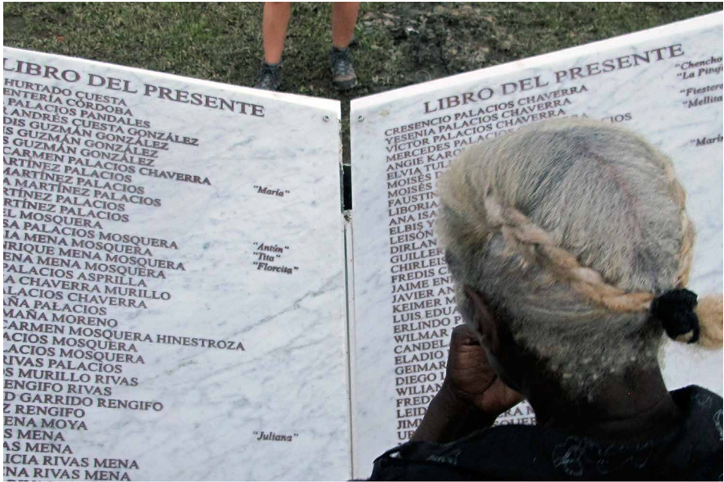
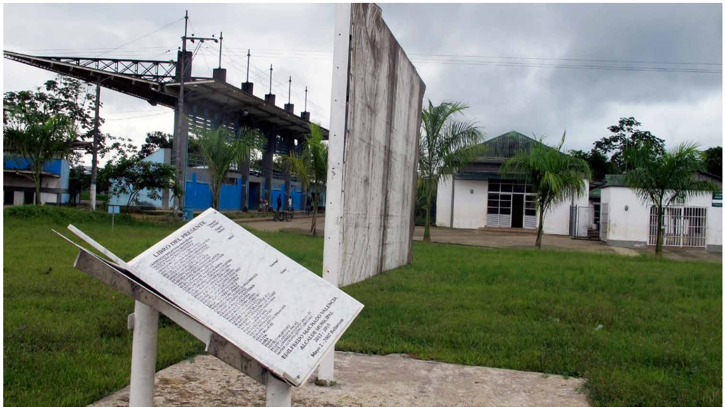
- Tensions with external actors appeared: during the 2017 exhumation of Ubertina Martínez, the fiscal accused participants of disrespect for laughing and joking, while local mortuary practice uses jokes, rummy, dominó, and controlled “bulla” as accompaniment; in 2013 a marble Book sculpture was placed in the plaza rather than the cemetery and later removed for a park.
Methods
- Ethnographic fieldwork and participant observation in the Medio Atrato—especially Bellavista, Vigía del Fuerte, and Pogue—during commemorations, exhumations, and mortuary rituals, with field notes dated from 2012 to 2018.
- Qualitative analysis of ritual practices, local narratives, and interactions among community members, cantadoras, rezanderos, leaders, the Catholic Church, forensic teams, and transitional-justice actors.
- Interpretation draws on secondary ethnographies of Afro-Chocoano death rituals (Velásquez, Losonczy, Arocha et al., Ayala, Quiceno, among others) to frame good death, bad death, and ancestral relations.
Limitations
- Stated: the “ritual de cuerpo presente” requires further exploration and analysis in the Medio Atrato, and the study of relations between indigenous and Afro mortuary practices could add a needed element.
- Stated as a gap in existing literature: Millán’s reflection on death in the church and morning excludes deaths in Napipí, Puerto Conto, and Vigía del Fuerte, as well as people affected physically and emotionally by shrapnel.
- Evident: the analysis is situated in one massacre and region and relies on field notes and local testimonies, without systematic comparison or generalizable quantitative data.
Model-written summary. Check it against the paper before relying on it.
Integrity signals
Registry
Cites
Statistics
Figures







Verification
Claims the paper makes
27 Own interpretation · 10 No basis given · 8 Sources not found · 6 Own result · 3 Not checked yet · 1 No full text of the sources
A result the paper reports from its own data — it cites no other source for it, so there is none to check. The quote shows it is in the paper.
In the paper
“En los más recientes, las prácticas rituales ya no son ejecutadas exclusivamente por los representantes locales de la Iglesia católica, sino que comienzan a ser agenciadas por líderes locales -la mayoría sobrevivientes de la masacre-que basan sus decisiones en el saber de cantadoras, rezanderos y, más recientemente, en médicos tradicionales de las comunidades indígenas embera dovida 40 .”
§ What do We do with All > ¿Qué hacemos con tanto muerto junto?
plaincorrelational- Asserted: passes — The authors put it forward as true.
- Checkable: passes — It can be checked against evidence.
- Load-bearing: passes — The paper’s conclusions depend on it.
- Based: passes — The paper gives a reason why it holds.
The paper states this without a source or data behind it here, so there is nothing to check it against. The quote shows it is in the paper.
In the paper
“Tras el crimen conocido como la masacre de Bojayá, se ha desarrollado un conjunto de prácticas rituales que buscan darles descanso a los muertos que produjo el combate entre la guerrilla y los paramilitares entre abril y mayo del 2002.”
§ What do We do with All > Additional information
plaindirect- Asserted: passes — The authors put it forward as true.
- Checkable: passes — It can be checked against evidence.
- Load-bearing: passes — The paper’s conclusions depend on it.
- Based: passes — The paper gives a reason why it holds.
A result the paper reports from its own data — it cites no other source for it, so there is none to check. The quote shows it is in the paper.
In the paper
“2) ha requerido, para llevarse a cabo, espacios como el cementerio, el río, el hoyo al que en primer lugar fueron trasladados los cuerpos de los muertos, la cancha del polideportivo, entre otros, y no solo la parroquia San Pablo Apóstol del pueblo viejo de Bellavista;”
§ What do We do with All > 41
plaindirect- Asserted: passes — The authors put it forward as true.
- Checkable: passes — It can be checked against evidence.
- Load-bearing: passes — The paper’s conclusions depend on it.
- Based: passes — The paper gives a reason why it holds.
The paper states this without a source or data behind it here, so there is nothing to check it against. The quote shows it is in the paper.
In the paper
“La realización ininterrumpida de aniversarios y conmemoraciones de la mala (y masiva) muerte que ocasionó la masacre de Bojayá ha establecido un ciclo colectivo de acompañamiento ritual que ha rebasado los marcadores temporales prescritos.”
§ What do We do with All > ¿Qué hacemos con tanto muerto junto?
plaindirect- Asserted: passes — The authors put it forward as true.
- Checkable: passes — It can be checked against evidence.
- Load-bearing: passes — The paper’s conclusions depend on it.
- Based: passes — The paper gives a reason why it holds.
The paper states this without a source or data behind it here, so there is nothing to check it against. The quote shows it is in the paper.
In the paper
“Proteger a los muertos de ser quemados, conversar con ellos, pedirles permiso para organizarlos, cargarlos, embarcarlos y llevarlos a un lugar de disposición transitorio, o buscarlos para rezarles, cantarles, velarlos y enterrarlos dan cuenta de la diversificación de las prácticas mortuorias, pese a lo masivo de esta mala muerte y de sus implicaciones para la gente.”
§ What do We do with All > 26
plaincorrelational- Asserted: passes — The authors put it forward as true.
- Checkable: passes — It can be checked against evidence.
- Load-bearing: passes — The paper’s conclusions depend on it.
- Based: passes — The paper gives a reason why it holds.
The paper states this without a source or data behind it here, so there is nothing to check it against. The quote shows it is in the paper.
In the paper
“En la exhumación e inhumación realizada por la Fiscalía y Medicina Legal en el 2002, la experiencia de enterramiento transitorio de los muertos llevada a cabo por Domingo y otros hombres de la comunidad derivó en una situación en la que muchos muertos quedaron perdidos y sin nombre.”
§ What do We do with All > 41
plaindirect- Asserted: passes — The authors put it forward as true.
- Checkable: passes — It can be checked against evidence.
- Load-bearing: passes — The paper’s conclusions depend on it.
- Based: passes — The paper gives a reason why it holds.
The paper states this without a source or data behind it here, so there is nothing to check it against. The quote shows it is in the paper.
In the paper
“La reubicación de Bellavista en El Fuerte puso en evidencia para la población que los cuerpos de los muertos de la toma yacían en el cementerio, en su gran mayoría sin ninguna señal, lápida o nombre.”
§ What do We do with All > 9
plaindirect- Asserted: passes — The authors put it forward as true.
- Checkable: passes — It can be checked against evidence.
- Load-bearing: passes — The paper’s conclusions depend on it.
- Based: passes — The paper gives a reason why it holds.
The paper states this without a source or data behind it here, so there is nothing to check it against. The quote shows it is in the paper.
In the paper
“En las primeras conmemoraciones/aniversarios de la masacre, el nodo de relación colectiva con los muertos fue la misa orientada por la Iglesia católica.”
§ What do We do with All > ¿Qué hacemos con tanto muerto junto?
plain- Asserted: passes — The authors put it forward as true.
- Checkable: passes — It can be checked against evidence.
- Load-bearing: unclear — It is unclear whether the paper’s conclusions depend on it.
- Based: passes — The paper gives a reason why it holds.
A conclusion the paper draws from its own results — it cites no other source for it, so there is none to check. The quote shows it is in the paper.
In the paper
“Existe, además, otro conjunto de vínculos que desborda el campo ritual tradicional orientado a rezar, cantar, acompañar, velar y despedir a los muertos.”
§ What do We do with All > Additional information
plaincorrelational- Asserted: passes — The authors put it forward as true.
- Checkable: passes — It can be checked against evidence.
- Load-bearing: passes — The paper’s conclusions depend on it.
- Based: passes — The paper gives a reason why it holds.
A conclusion the paper draws from its own results — it cites no other source for it, so there is none to check. The quote shows it is in the paper.
In the paper
“La mala (y masiva) muerte ha puesto en tensión las prácticas mortuorias que han eclosionado entre el año del crimen y la actualidad.”
§ What do We do with All > Additional information
plaindirect- Asserted: passes — The authors put it forward as true.
- Checkable: passes — It can be checked against evidence.
- Load-bearing: passes — The paper’s conclusions depend on it.
- Based: passes — The paper gives a reason why it holds.
A conclusion the paper draws from its own results — it cites no other source for it, so there is none to check. The quote shows it is in the paper.
In the paper
“Dolientes y líderes han procurado, por tanto, que la recordación de sus muertos y su presencia en la vida de las comunidades del Medio Atrato den cuenta de una temporalidad ritual que garantice los ritmos locales que son necesarios para el encuentro colectivo atrateño.”
§ What do We do with All > ¿Qué hacemos con tanto muerto junto?
plaindirect- Asserted: passes — The authors put it forward as true.
- Checkable: passes — It can be checked against evidence.
- Load-bearing: passes — The paper’s conclusions depend on it.
- Based: passes — The paper gives a reason why it holds.
A conclusion the paper draws from its own results — it cites no other source for it, so there is none to check. The quote shows it is in the paper.
In the paper
“Así, el conjunto de prácticas mortuorias realizadas los días posteriores a la toma del 2002 manifiesta un trabajo que sostiene y dinamiza la relación de los vivos con sus muertos en medio de la experiencia de sobrevivir y de proteger la vida pese al miedo, los combates y las amenazas.”
§ What do We do with All > 26
plaindirect- Asserted: passes — The authors put it forward as true.
- Checkable: passes — It can be checked against evidence.
- Load-bearing: passes — The paper’s conclusions depend on it.
- Based: passes — The paper gives a reason why it holds.
A conclusion the paper draws from its own results — it cites no other source for it, so there is none to check. The quote shows it is in the paper.
In the paper
“Frente a las difíciles condiciones que presenta la mala (y masiva) muerte ocasionada por la violencia y el conflicto armado, aparecen el diálogo, la concertación o tensión entre prácticas mortuorias diversas que se corresponden con nociones y perspectivas, en ocasiones distintas, sobre la muerte, la vida y la relación entre muertos y vivos de Bojayá.”
§ What do We do with All > 41
hedgedcorrelational- Asserted: passes — The authors put it forward as true.
- Checkable: passes — It can be checked against evidence.
- Load-bearing: passes — The paper’s conclusions depend on it.
- Based: passes — The paper gives a reason why it holds.
A conclusion the paper draws from its own results — it cites no other source for it, so there is none to check. The quote shows it is in the paper.
In the paper
“Aquí, la frontera temporal y espacial establecida por el calendario católico y el calendario transicional de nuevo se amplía para el despliegue innovador, flexible y dinámico de las prácticas rituales afroatrateñas.”
§ What do We do with All > ¿Qué hacemos con tanto muerto junto?
plaindirect- Asserted: passes — The authors put it forward as true.
- Checkable: passes — It can be checked against evidence.
- Load-bearing: passes — The paper’s conclusions depend on it.
- Based: passes — The paper gives a reason why it holds.
A conclusion the paper draws from its own results — it cites no other source for it, so there is none to check. The quote shows it is in the paper.
In the paper
“El chiste, el relato de historias, el juego del rummy, el dominó e incluso la bulla en modos controlados de expresión son todos elementos constitutivos de las prácticas rituales orientadas a los muertos y a permanecer en la compañía colectiva para afrontar el dolor de las ausencias.”
§ What do We do with All > 41
plaindirect- Asserted: passes — The authors put it forward as true.
- Checkable: passes — It can be checked against evidence.
- Load-bearing: passes — The paper’s conclusions depend on it.
- Based: passes — The paper gives a reason why it holds.
A conclusion the paper draws from its own results — it cites no other source for it, so there is none to check. The quote shows it is in the paper.
In the paper
“Este nuevo estatuto temporal para la recordación de los muertos de la masacre de Bojayá entra en diálogo con el estatuto temporal de las fiestas patronales 37 que se ejecutan en cada una de las comunidades del Atrato.”
§ What do We do with All > ¿Qué hacemos con tanto muerto junto?
plaincorrelational- Asserted: passes — The authors put it forward as true.
- Checkable: passes — It can be checked against evidence.
- Load-bearing: passes — The paper’s conclusions depend on it.
- Based: passes — The paper gives a reason why it holds.
A conclusion the paper draws from its own results — it cites no other source for it, so there is none to check. The quote shows it is in the paper.
In the paper
“4) vincula progresivamente, con el paso de los años, las experiencias de acompañamiento ritual que son constitutivas de las prácticas mortuorias;”
§ What do We do with All > 41
plaincorrelationalSingle case- Asserted: passes — The authors put it forward as true.
- Checkable: passes — It can be checked against evidence.
- Load-bearing: passes — The paper’s conclusions depend on it.
- Based: passes — The paper gives a reason why it holds.
A conclusion the paper draws from its own results — it cites no other source for it, so there is none to check. The quote shows it is in the paper.
In the paper
“Por otra parte, el sostenimiento de un ciclo ritual y colectivo con los muertos ha puesto de presente la innovación, creatividad, cambio y espontaneidad de los trabajos orientados a los muertos.”
§ What do We do with All > Additional information
plaindirect- Asserted: passes — The authors put it forward as true.
- Checkable: passes — It can be checked against evidence.
- Load-bearing: unclear — It is unclear whether the paper’s conclusions depend on it.
- Based: passes — The paper gives a reason why it holds.
A conclusion the paper draws from its own results — it cites no other source for it, so there is none to check. The quote shows it is in the paper.
In the paper
“3) ha posicionado la agencia de saberes expertos locales para asegurar la relación entre la vida y la muerte;”
§ What do We do with All > 41
plaindirect- Asserted: passes — The authors put it forward as true.
- Checkable: passes — It can be checked against evidence.
- Load-bearing: passes — The paper’s conclusions depend on it.
- Based: passes — The paper gives a reason why it holds.
A conclusion the paper draws from its own results — it cites no other source for it, so there is none to check. The quote shows it is in the paper.
In the paper
“Sin embargo, la conversación registrada invita a comprender que muertos y vivos configuran una ontología relacional en la que bellavisteños, bojayaseños y atrateños reconocen a quien muere como un acompañante en la experiencia histórica de los pueblos afros y negros.”
§ What do We do with All > 26
hedgedcorrelational- Asserted: passes — The authors put it forward as true.
- Checkable: passes — It can be checked against evidence.
- Load-bearing: passes — The paper’s conclusions depend on it.
- Based: passes — The paper gives a reason why it holds.
In the paper
“En el Atrato los sueños comportan el escenario prioritario de comunicación entre el mundo de los vivos y el de los muertos (Arocha et al. 2008).”
§ What do We do with All > 9
What the sources say
- Not matchedcites Arocha et al. 2008
Couldn’t be matched to a paper in Crossref, so it can’t be checked.
plaincorrelational- Asserted: passes — The authors put it forward as true.
- Checkable: passes — It can be checked against evidence.
- Load-bearing: unclear — It is unclear whether the paper’s conclusions depend on it.
- Based: passes — The paper gives a reason why it holds.
- Not matched
A conclusion the paper draws from its own results — it cites no other source for it, so there is none to check. The quote shows it is in the paper.
In the paper
“Pone de presente, además, que la mala muerte desencadena la agencia de quienes realizan las tareas específicas de sepultar (como en el caso de Domingo), velar, rezar, cantar y acompañar (como en el caso de La Negra y del Consejo Comunitario de Pogue), para garantizar que la relación entre vivos y muertos se produzca y se mantenga.”
§ What do We do with All > 26
plaindirect- Asserted: passes — The authors put it forward as true.
- Checkable: passes — It can be checked against evidence.
- Load-bearing: passes — The paper’s conclusions depend on it.
- Based: passes — The paper gives a reason why it holds.
A conclusion the paper draws from its own results — it cites no other source for it, so there is none to check. The quote shows it is in the paper.
In the paper
“Dicha agencia hace que se renueven y reinventen prácticas mortuorias prescritas como la del gualí o la del ritual de cuerpo presente.”
§ What do We do with All > ¿Qué hacemos con tanto muerto junto?
plaindirect- Asserted: passes — The authors put it forward as true.
- Checkable: passes — It can be checked against evidence.
- Load-bearing: passes — The paper’s conclusions depend on it.
- Based: passes — The paper gives a reason why it holds.
A conclusion the paper draws from its own results — it cites no other source for it, so there is none to check. The quote shows it is in the paper.
In the paper
“Dichos ritmos locales revelan además la expansión de espacios para la realización de las prácticas rituales mortuorias.”
§ What do We do with All > ¿Qué hacemos con tanto muerto junto?
plaindirect- Asserted: passes — The authors put it forward as true.
- Checkable: passes — It can be checked against evidence.
- Load-bearing: passes — The paper’s conclusions depend on it.
- Based: passes — The paper gives a reason why it holds.
A conclusion the paper draws from its own results — it cites no other source for it, so there is none to check. The quote shows it is in the paper.
In the paper
“Las prácticas rituales y las variaciones de la relación entre muertos y vivos para tratar la mala (y masiva) muerte se caracteriza además por una temporalidad que ha expandido el ciclo ritual colectivo de acompañamiento al muerto, es decir, los aniversarios o cabo de año.”
§ What do We do with All > ¿Qué hacemos con tanto muerto junto?
plaindirect- Asserted: passes — The authors put it forward as true.
- Checkable: passes — It can be checked against evidence.
- Load-bearing: passes — The paper’s conclusions depend on it.
- Based: passes — The paper gives a reason why it holds.
A conclusion the paper draws from its own results — it cites no other source for it, so there is none to check. The quote shows it is in the paper.
In the paper
“No dejar de hacer cada año el aniversarioconmemoración de la masacre se ha convertido en el nuevo precepto a cumplir.”
§ What do We do with All > ¿Qué hacemos con tanto muerto junto?
plain- Asserted: passes — The authors put it forward as true.
- Checkable: passes — It can be checked against evidence.
- Load-bearing: passes — The paper’s conclusions depend on it.
- Based: passes — The paper gives a reason why it holds.
A conclusion the paper draws from its own results — it cites no other source for it, so there is none to check. The quote shows it is in the paper.
In the paper
“No obstante, es importante señalar que las acciones que relacionan a los muertos de la masacre de Bojayá con actores externos a la comunidad y a las familias afectadas obran de modo paradójico.”
§ What do We do with All > 41
plaindirect- Asserted: passes — The authors put it forward as true.
- Checkable: passes — It can be checked against evidence.
- Load-bearing: passes — The paper’s conclusions depend on it.
- Based: passes — The paper gives a reason why it holds.
A conclusion the paper draws from its own results — it cites no other source for it, so there is none to check. The quote shows it is in the paper.
In the paper
“A partir de lo señalado, podría decir que el conjunto de prácticas de relación con los muertos de la masacre de Bojayá obedece al carácter flexible, plástico e innovador que caracteriza el campo ritual de las comunidades negras.”
§ What do We do with All > 41
hedgeddirect- Asserted: passes — The authors put it forward as true.
- Checkable: passes — It can be checked against evidence.
- Load-bearing: passes — The paper’s conclusions depend on it.
- Based: unclear — It is unclear why the paper says it holds.
A conclusion the paper draws from its own results — it cites no other source for it, so there is none to check. The quote shows it is in the paper.
In the paper
“Podemos observar que lo que se hace, el lugar donde se hace y el tiempo en que se hace configuran un entretejido ritual, sustentado en una multiplicidad de relaciones emergentes que consolidan respuestas renovadas y diversificadas del vínculo con los muertos.”
§ What do We do with All > 41
plaindirectSingle case- Asserted: passes — The authors put it forward as true.
- Checkable: passes — It can be checked against evidence.
- Load-bearing: passes — The paper’s conclusions depend on it.
- Based: passes — The paper gives a reason why it holds.
- Probably not a substantial claim. 7
- It may state two separate claims as one. 25
- The quote only partly states this claim. 5
A result the paper reports from its own data — it cites no other source for it, so there is none to check. The quote shows it is in the paper.
In the paper
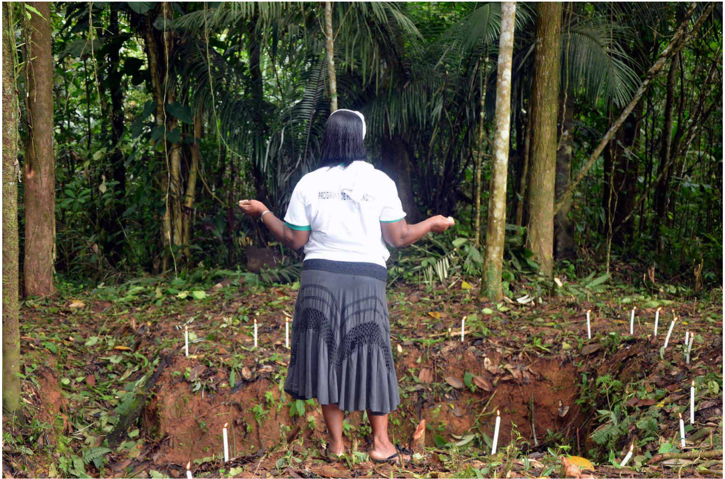
“Domingo, acompañado por un grupo de hombres 19 , emprendió la tarea de recoger y disponer en bolsas negras los cuerpos de amigos, familiares, compadres y comadres, para luego trasladarlos 20 a un hoyo cavado en las orillas del río Bojayá.”
§ What do We do with All > 17
plainSingle case- Asserted: passes — The authors put it forward as true.
- Checkable: passes — It can be checked against evidence.
- Load-bearing: fails — The paper’s conclusions may not depend on it.
- Based: passes — The paper gives a reason why it holds.
Probably not a substantial claim. The paper’s conclusions may not depend on it. It may state two separate claims as one.
The paper states this without a source or data behind it here, so there is nothing to check it against. The quote shows it is in the paper.
In the paper
“En dicho calendario, la fiesta de la Virgen del Carmen, patrona de Bojayá, está fechada el 16 de julio, pero su duración para los bellavisteños y atrateños comprende varios días antes y varios días después de dicho marcador temporal.”
§ What do We do with All > ¿Qué hacemos con tanto muerto junto?
plain- Asserted: passes — The authors put it forward as true.
- Checkable: passes — It can be checked against evidence.
- Load-bearing: unclear — It is unclear whether the paper’s conclusions depend on it.
- Based: passes — The paper gives a reason why it holds.
It may state two separate claims as one.
None of the sources cited for this claim have been checked yet.
In the paper
“Si retomamos el primer gualí realizado en el 2012 por los niños muertos de la toma del 2002, se encuentra que la práctica ritual se realizó diez años después de la masacre y un 1.º de mayo, es decir, un día antes de la fecha que configura el marcador temporal de la conmemoración de la masacre en lo que podríamos llamar el calendario transicional colombiano 38 .”
§ What do We do with All > ¿Qué hacemos con tanto muerto junto?
plainSingle case- Asserted: passes — The authors put it forward as true.
- Checkable: passes — It can be checked against evidence.
- Load-bearing: unclear — It is unclear whether the paper’s conclusions depend on it.
- Based: passes — The paper gives a reason why it holds.
It may state two separate claims as one.
A result the paper reports from its own data — it cites no other source for it, so there is none to check. The quote shows it is in the paper.
In the paper
“Todas disfrutaban y nos hacían disfrutar el gualí, un ritual jugado que por primera vez se realizaba por los niños muertos en la masacre.”
§ What do We do with All > ¿Qué hacemos con tanto muerto junto?
plainn = 20- Asserted: passes — The authors put it forward as true.
- Checkable: passes — It can be checked against evidence.
- Load-bearing: passes — The paper’s conclusions depend on it.
- Based: passes — The paper gives a reason why it holds.
It may state two separate claims as one. The quote only partly states this claim.
The paper states this without a source or data behind it here, so there is nothing to check it against. The quote shows it is in the paper.
In the paper
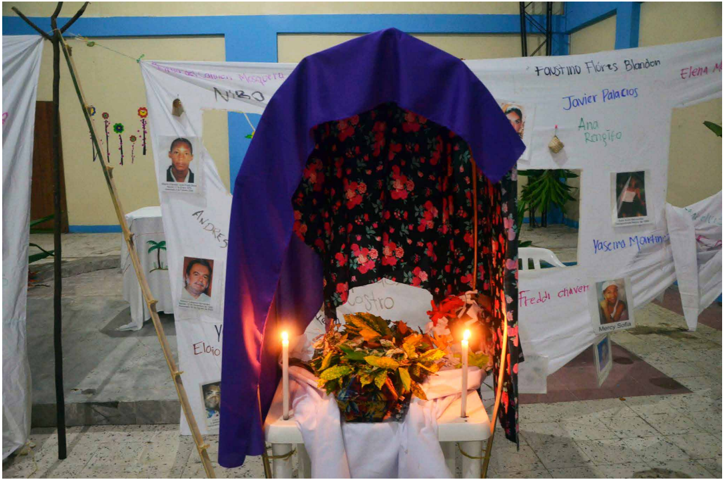
“Así, tenemos que la ejecución del ritual de cuerpo presente se lleva a cabo en la iglesia donde años atrás solo se celebraba la eucaristía católica y la del gualí, en la cancha del pueblo nuevo de Bellavista, un espacio de encuentro comunitario cuya materialidad está orientada al esparcimiento, el juego y el deporte.”
§ What do We do with All > ¿Qué hacemos con tanto muerto junto?
plain- Asserted: passes — The authors put it forward as true.
- Checkable: passes — It can be checked against evidence.
- Load-bearing: passes — The paper’s conclusions depend on it.
- Based: passes — The paper gives a reason why it holds.
It may state two separate claims as one.
In the paper
“es que cuando alguien muere, usted se queda toda la noche con el muerto, se juega rummy, dominó, se le acompaña haciendo bulla, eso sí, cuando hay que rezar, todo eso se para”
§ What do We do with All > 41
What the sources say
- Not matchedcites notas de campo, 2013
Couldn’t be matched to a paper in Crossref, so it can’t be checked.
plainSingle case- Asserted: passes — The authors put it forward as true.
- Checkable: passes — It can be checked against evidence.
- Load-bearing: fails — The paper’s conclusions may not depend on it.
- Based: passes — The paper gives a reason why it holds.
Probably not a substantial claim. The paper’s conclusions may not depend on it. It may state two separate claims as one.
- Not matched
The paper states this without a source or data behind it here, so there is nothing to check it against. The quote shows it is in the paper.
In the paper
“Lo anterior quiere decir que el aniversario/conmemoración: 1) se gesta como práctica ritual más allá del 2 de mayo e incluye ritmos temporales que contemplan el día y la noche para su realización;”
§ What do We do with All > 41
plain- Asserted: passes — The authors put it forward as true.
- Checkable: passes — It can be checked against evidence.
- Load-bearing: passes — The paper’s conclusions depend on it.
- Based: passes — The paper gives a reason why it holds.
It may state two separate claims as one.
None of the sources cited for this claim have been checked yet.
In the paper
“5) recuerda, enuncia y reconoce a los muertos del 2 de mayo a la vez que a los muertos de hechos anteriores y posteriores a la explosión de la pipeta en la iglesia 42 .”
§ What do We do with All > 41
plain- Asserted: passes — The authors put it forward as true.
- Checkable: passes — It can be checked against evidence.
- Load-bearing: passes — The paper’s conclusions depend on it.
- Based: passes — The paper gives a reason why it holds.
It may state two separate claims as one.
A result the paper reports from its own data — it cites no other source for it, so there is none to check. The quote shows it is in the paper.
In the paper
“don Enrique, embarcado desde el río Bojayá, llegó a Bellavista y recogió los cuerpos de su suegra, Rufina Hurtado Cuesta, y de su hijo Ilson Rentería para luego trasladarlos hasta su pueblo, la comunidad de Pogue.”
§ What do We do with All > 17
plainSingle case- Asserted: passes — The authors put it forward as true.
- Checkable: passes — It can be checked against evidence.
- Load-bearing: passes — The paper’s conclusions depend on it.
- Based: passes — The paper gives a reason why it holds.
It may state two separate claims as one. The quote only partly states this claim.
A result the paper reports from its own data — it cites no other source for it, so there is none to check. The quote shows it is in the paper.
In the paper
“En el 2014, cuando las noticias de los diálogos de paz entre el Gobierno y la guerrilla rondaban su fase secreta, las mujeres expertas en la relación cantada con los muertos propusieron realizar para la noche del 2 de mayo un ritual de cuerpo presente en la iglesia donde doce años atrás había acontecido la explosión de una pipeta de gas llena de metralla.”
§ What do We do with All > ¿Qué hacemos con tanto muerto junto?
plainSingle case- Asserted: passes — The authors put it forward as true.
- Checkable: passes — It can be checked against evidence.
- Load-bearing: passes — The paper’s conclusions depend on it.
- Based: passes — The paper gives a reason why it holds.
It may state two separate claims as one. The quote only partly states this claim.
The paper states this without a source or data behind it here, so there is nothing to check it against. The quote shows it is in the paper.
In the paper
“En algún momento, al desarrollo de la eucaristía se le suma la participación de las cantadoras de alabao y más tarde este grupo de mujeres, acompañado de líderes locales, propone los espacios y los tiempos de las prácticas rituales que son acordes con el tipo de muertes ocurridas entre abril y mayo del 2002.”
§ What do We do with All > 41
plaindirect- Asserted: passes — The authors put it forward as true.
- Checkable: passes — It can be checked against evidence.
- Load-bearing: passes — The paper’s conclusions depend on it.
- Based: passes — The paper gives a reason why it holds.
It may state two separate claims as one.
In the paper
“Así, el calendario transicional y el calendario católico son expandidos por las relaciones que la muerte masiva y violenta ha propiciado entre familiares y difuntos, las cuales se materializan en prácticas rituales que, como señala Quiceno (2015), se configuran más bien por principios como el encuentro, la compañía y la solidaridad.”
§ What do We do with All > ¿Qué hacemos con tanto muerto junto?
What the sources say
- Not matchedcites Quiceno (2015)
Couldn’t be matched to a paper in Crossref, so it can’t be checked.
plaindirect- Asserted: passes — The authors put it forward as true.
- Checkable: passes — It can be checked against evidence.
- Load-bearing: passes — The paper’s conclusions depend on it.
- Based: passes — The paper gives a reason why it holds.
It may state two separate claims as one.
- Not matched
In the paper
“Rogerio Velásquez ([1961Velásquez ([ ] 2000) ) documentó que la ritualidad de las comunidades negras se componía de varios preceptos 23 : un tiempo de presagios, en el que la muerte se hace presente a través de signos que la anuncian”
§ What do We do with All > 21
What the sources say
- Not matchedcites Velásquez [1961] 2000
Couldn’t be matched to a paper in Crossref, so it can’t be checked.
plain- Asserted: passes — The authors put it forward as true.
- Checkable: passes — It can be checked against evidence.
- Load-bearing: fails — The paper’s conclusions may not depend on it.
- Based: passes — The paper gives a reason why it holds.
Probably not a substantial claim. The paper’s conclusions may not depend on it. It may state two separate claims as one.
- Not matched
None of the sources cited for this claim could be matched to a paper in Crossref, so there is nothing to check it against.
In the paper
“En los sueños, los muertos pueden relatar letras de oraciones o de alabaos 10 (Quiceno 2015), transmitir secretos y conocimientos (Millán 2009), exigir ofrendas o promesas, predecir la cura o inevitable muerte de alguien enfermo, presagiar algún evento grato o de tormento, o sencillamente visitar y entablar conversación con el familiar vivo querido (Ayala 2011;Losonczy 2006;Velásquez [1961Velás”
§ What do We do with All > 9
What the sources say
- Not matchedcites Quiceno 2015
Couldn’t be matched to a paper in Crossref, so it can’t be checked.
- Not matchedcites Millán 2009
Couldn’t be matched to a paper in Crossref, so it can’t be checked.
- Not matchedcites Ayala 2011
Couldn’t be matched to a paper in Crossref, so it can’t be checked.
plain- Asserted: passes — The authors put it forward as true.
- Checkable: passes — It can be checked against evidence.
- Load-bearing: unclear — It is unclear whether the paper’s conclusions depend on it.
- Based: passes — The paper gives a reason why it holds.
It may state two separate claims as one.
- Not matched
A conclusion the paper draws from its own results — it cites no other source for it, so there is none to check. The quote shows it is in the paper.
In the paper
“Reiterar, por tanto, que los muertos hablan y viven entre los vivos y tienen un lugar, independientemente del modo de morir, es interpelar las maneras como comprendemos sus pervivencias a través de la historia.”
§ What do We do with All > 28
plaindirect- Asserted: passes — The authors put it forward as true.
- Checkable: passes — It can be checked against evidence.
- Load-bearing: passes — The paper’s conclusions depend on it.
- Based: passes — The paper gives a reason why it holds.
Probably not a substantial claim. It may state two separate claims as one.
A conclusion the paper draws from its own results — it cites no other source for it, so there is none to check. The quote shows it is in the paper.
In the paper
“Si bien las prescripciones rituales mortuorias se han transformado (cantar alabaos en actos públicos distintos a velorios, novenas y entierros; hacer un gualí en el polideportivo del pueblo; enterrar en lugares de disposición transitoria, entre otras), las prácticas y quienes las agencian mantienen un nodo para su realización que se expresa, moldea o transforma con respecto a los modos tradicional”
§ What do We do with All > Additional information
plaincorrelational- Asserted: passes — The authors put it forward as true.
- Checkable: passes — It can be checked against evidence.
- Load-bearing: passes — The paper’s conclusions depend on it.
- Based: passes — The paper gives a reason why it holds.
It may state two separate claims as one.
None of the sources cited for this claim have been checked yet.
In the paper
“no suspendió ni quebrantó las relaciones de los vivos con sus muertos; por el contrario, produjo la activación de un conjunto de prácticas rituales”
§ What do We do with All > 12
What the sources say
- Not matchedcites GMH-CNRR 2010
Couldn’t be matched to a paper in Crossref, so it can’t be checked.
- Not matchedcites Arocha et al. 2008
Couldn’t be matched to a paper in Crossref, so it can’t be checked.
- Not checked — no full text of the sourcecites Losonczy 2006 source
plaindirect- Asserted: passes — The authors put it forward as true.
- Checkable: passes — It can be checked against evidence.
- Load-bearing: passes — The paper’s conclusions depend on it.
- Based: passes — The paper gives a reason why it holds.
It may state two separate claims as one. The quote only partly states this claim.
- Not matched
None of the sources cited for this claim could be matched to a paper in Crossref, so there is nothing to check it against.
In the paper
“Así, lo que se constituyó en ese informe como una recomendación sobre justicia y verdad, para las comunidades se experimentaba como una deuda cotidiana con los muertos (Ayala 2011;Velásquez [1961Velásquez [ ] 2000) ) que se expresaba, por ejemplo, en la aparición de los difuntos en los sueños de algunos de sus familiares.”
§ What do We do with All > 9
What the sources say
- Not matchedcites Ayala 2011
Couldn’t be matched to a paper in Crossref, so it can’t be checked.
- Not matchedcites Velásquez [1961] 2000
Couldn’t be matched to a paper in Crossref, so it can’t be checked.
plain- Asserted: passes — The authors put it forward as true.
- Checkable: passes — It can be checked against evidence.
- Load-bearing: unclear — It is unclear whether the paper’s conclusions depend on it.
- Based: passes — The paper gives a reason why it holds.
It may state two separate claims as one.
- Not matched
In the paper
“Para Losonczy (2006), el aniversario de muerte hace parte tanto de la faceta individual como colectiva del ciclo ritual con los muertos.”
§ What do We do with All > ¿Qué hacemos con tanto muerto junto?
What the sources say
- Not checked — no full text of the sourcecites Losonczy 2006 source
plaincorrelational- Asserted: passes — The authors put it forward as true.
- Checkable: passes — It can be checked against evidence.
- Load-bearing: fails — The paper’s conclusions may not depend on it.
- Based: passes — The paper gives a reason why it holds.
Probably not a substantial claim. The paper’s conclusions may not depend on it. It may state two separate claims as one.
In the paper
“La bibliografía revisada es amplia al referirse a la forma que adquieren las prescripciones mortuorias vinculadas a la buena muerte, lo cual no pasa en igual medida con su dimensión opuesta.”
§ What do We do with All > 23
What the sources say
- Not matchedcites Velásquez [1961] 2000
Couldn’t be matched to a paper in Crossref, so it can’t be checked.
plain- Asserted: passes — The authors put it forward as true.
- Checkable: passes — It can be checked against evidence.
- Load-bearing: passes — The paper’s conclusions depend on it.
- Based: passes — The paper gives a reason why it holds.
It may state two separate claims as one. The quote only partly states this claim.
- Not matched
A conclusion the paper draws from its own results — it cites no other source for it, so there is none to check. The quote shows it is in the paper.
In the paper
“Durante mucho tiempo asumí que la relación entre vivos y muertos había sido profundamente quebrantada por la masacre.Sin embargo, documentar estas prácticas me permitió reconocer que la relación se sostuvo desde el mismo momento en que aconteció la muerte masiva y que su configuración se manifestó -y ha venido manifestándose-en íntima concordancia, diálogo y a la vez reinvención con las prescrip”
§ What do We do with All > 21
plaindirect- Asserted: passes — The authors put it forward as true.
- Checkable: passes — It can be checked against evidence.
- Load-bearing: passes — The paper’s conclusions depend on it.
- Based: passes — The paper gives a reason why it holds.
It may state two separate claims as one.
A conclusion the paper draws from its own results — it cites no other source for it, so there is none to check. The quote shows it is in the paper.
In the paper
“Además, aparece el ritmo temporal de la noche para la ejecución de estas dos prácticas rituales en una clara semblanza de la temporalidad en la que se ejecutan los velorios y las novenas; un ritmo que logra convocar la participación de personas que durante muchos años no se sienten en la capacidad de entrar a la iglesia donde aconteció la mala muerte de sus seres queridos, pero que les ofrece”
§ What do We do with All > ¿Qué hacemos con tanto muerto junto?
boosteddirect- Asserted: passes — The authors put it forward as true.
- Checkable: passes — It can be checked against evidence.
- Load-bearing: passes — The paper’s conclusions depend on it.
- Based: passes — The paper gives a reason why it holds.
It may state two separate claims as one.
A conclusion the paper draws from its own results — it cites no other source for it, so there is none to check. The quote shows it is in the paper.
In the paper
“Una y otra perspectiva agencian renovadas prácticas mortuorias que vinculan formas, modos, tiempos, espacios y roles en permanente diversificación.”
§ What do We do with All > 41
plaindirect- Asserted: passes — The authors put it forward as true.
- Checkable: passes — It can be checked against evidence.
- Load-bearing: passes — The paper’s conclusions depend on it.
- Based: fails — The paper may give no reason why it holds.
Probably not a substantial claim. The paper may give no reason why it holds.
In the paper
“Para Millán (2009), la muerte producida por el crimen del 2002 aconteció en la iglesia y en la mañana, es decir, en el espacio-tiempo de lo habitado 41 .”
§ What do We do with All > ¿Qué hacemos con tanto muerto junto?
What the sources say
- Not matchedcites Millán (2009)
Couldn’t be matched to a paper in Crossref, so it can’t be checked.
plainSingle case- Asserted: passes — The authors put it forward as true.
- Checkable: passes — It can be checked against evidence.
- Load-bearing: fails — The paper’s conclusions may not depend on it.
- Based: passes — The paper gives a reason why it holds.
Probably not a substantial claim. The paper’s conclusions may not depend on it. It may state two separate claims as one.
- Not matched
A conclusion the paper draws from its own results — it cites no other source for it, so there is none to check. The quote shows it is in the paper.
In the paper
“A su vez, los actores y estructuras instituidas para hacer justicia, saber la verdad y reparar a las víctimas del conflicto armado colombiano se han entretejido paulatinamente con las prácticas mortuorias que emergieron tras el crimen, las cuales además fueron y siguen siendo dinamizadas por los procedimientos forenses, la histórica relación de las comunidades con la Iglesia católica y el reciente”
§ What do We do with All > 41
plaincorrelationalSingle case- Asserted: passes — The authors put it forward as true.
- Checkable: passes — It can be checked against evidence.
- Load-bearing: passes — The paper’s conclusions depend on it.
- Based: passes — The paper gives a reason why it holds.
It may state two separate claims as one.
A conclusion the paper draws from its own results — it cites no other source for it, so there is none to check. The quote shows it is in the paper.
In the paper
“Dan cuenta de la transformación e innovación de las prescripciones rituales tradicionales, a la vez que mantienen un nodo para su realización que se moldea y modula de acuerdo con el conocimiento de rezanderos, cantadoras o conocedores y trabajadores de la muerte, que se abre paso con el transcurrir de los años.”
§ What do We do with All > ¿Qué hacemos con tanto muerto junto?
plaincorrelational- Asserted: passes — The authors put it forward as true.
- Checkable: passes — It can be checked against evidence.
- Load-bearing: passes — The paper’s conclusions depend on it.
- Based: passes — The paper gives a reason why it holds.
It may state two separate claims as one.
Self-check
Percentages, sums and reported differences re-computed from the paper’s own numbers.
Each contradiction between two passages listed here was confirmed by an independent check.
Rated minor: it would not touch a result — a value no result rests on, a p-value that stays on the same side of the significance level, or a conflict that is clerical, resolved elsewhere in the paper, or outside its own findings.
In the paper
§ What do We do with All > 41
“En julio del 2016, en cumplimiento de la Sentencia 79”
§ What do We do with All > 41
“Sentencia 79 del 31 de octubre del 2016”
Citations
Cites
Religion, Social Memory and Conflict
Oyola, S. M. R. (2015) · Palgrave Macmillan UK eBooks · doi:10.1057/9781137461841 · Cited by 137
Vivir sabroso. Luchas y movimientos afroatrateños, en Bojayá, Chocó, Colombia
Toro, N. Q. (2016) · Editorial Universidad del Rosario eBooks · doi:10.12804/th9789587387506 · Cited by 67
Losonczy, A.-M. (2006) · doi:10.4000/books.ifea.4695 · Cited by 38
Hacia un pensamiento socioambiental: aproximaciones epistemológicas y sociológicas
Floriani, D., & Vergara, N. (2015) · Desenvolvimento e Meio Ambiente · doi:10.5380/dma.v35i0.43541 · Cited by 18
López, J. N. (2014) · Estudios Políticos (Medellín) · doi:10.17533/udea.espo.20205 · Cited by 15
La política del canto y el poder de las alabaoras de Pogue (Bojayá, Chocó)
de Antioquia, U., Toro, N. Q., Sierra, M. O., de Antioquia, U., & Gelves, A. M. V. (2017) · Estudios Políticos (Medellín) · doi:10.17533/udea.espo.n51a09 · Cited by 15
Figueroa, A. V. (2011) · Cited by 14
Alabaos y conflicto armado en el Chocó: noticias de supervivencia y reinvención
Bahamón, A. M. P. (2017) · Revista Encuentros · doi:10.15665/re.v15i3.1096 · Cited by 9
Cosmopolíticas, etno-ontologías y otras epistemologías. La antropología como teoría etnográfica
Goldman, M. (2016) · Cuadernos de antropología social · doi:10.34096/cas.i44.3578 · Cited by 9
Identification, politics, disciplines: missing persons and colonial skeletons in South Africa1
Rousseau, N. (2015) · Manchester University Press eBooks · doi:10.7228/manchester/9780719097560.003.0008 · Cited by 9
Cited by
Sorted by citations
La etnografía y la ética en los estudios sobre la muerte y el morir
Martínez, B. B., & Irrazábal, G. (2022) · Revista M Estudos sobre a morte os mortos e o morrer · doi:10.9789/2525-3050.2022.v7i13.112-126 · Cited by 1
Martínez, J. M. M., & Iglesias, A. E. V. (2023) · PsicoSophia · doi:10.37354/rpsiso.2022.5.2.040 · Cited by 1
Etnografiando la trama burocrática del “imaginado” posconflicto colombiano
Marín, J. J. (2021) · Revista CS · doi:10.18046/recs.i33.4783
Bojayá, salud mental y psicosocial en supervivientes de una masacre. Revisión de alcance
Natib-Rosero, A. C., Ramírez-Cuervo, G., & Mendoza, Z. C. U. (2023) · Revista de Salud Pública · doi:10.15446/rsap.v25n5.100751
El agua en Chocó (2012) de Jhonny Hendrix Hinestroza: vida, reflejo y fuerza ancestral
López, L. P. C. (2025) · CUADERNOS DE LITERATURA · doi:10.15648/cl..40.2024.4525
Metadata
- Authors
- Orjuela Villanueva, D. C.
- Venue
- Revista Colombiana de Antropología
- Published
- 2020-07-01
- Volume
- 56
- Issue
- 2
- Pages
- 51-78
- ISSN
- 0486-6525 (ISSN-L)
- 2539-472X
- OpenAlex
- W3044578521
- Cited by
- 7
- References
- 12
- Citations by year
- 2026: 1 · 2025: 1 · 2023: 2 · 2022: 2 · 2021: 1
- FWCI
- 2.69
- Type
- journal article
- Language
- es
- Open access
- diamond
- doi.org
- Licence
- Locations
- Revista Colombiana de Antropología (publishedVersion, cc-by-nc-nd)
- DOAJ (DOAJ: Directory of Open Access Journals) (submittedVersion, cc-by-sa)
- Redalyc (Universidad Autónoma del Estado de México) (submittedVersion)
- Greater South Information System
- Topics
- Social Sciences › Anthropology › Death, Funerary Practices, and Mourning
- Social Sciences › Sociology and Political Science › Conflict, Peace, and Violence in Colombia
- Social Sciences › Arts and Humanities › History › Memory, violence, and history
- Keywords
- Bojayá massacre, Atrato River, ritual, ancestor veneration, violent death, mass mortality, ritual agency
About these checks
Registry, retraction, Cites and statistics results are computed, not judged, with one exception: a printed reference that no index lists is read once by a model before it counts as a citation error. Claims are extracted by a model and kept only when their quote appears verbatim in the text; each cited source is then checked, with a model’s help, for whether it says what the claim relies on. Those verdicts can be wrong — read the claim’s quote and the cited source before relying on one.
A language model drew the claims from the paper on 2026-11-08, under version 3 of the claim definition (model deepseek-v4.1-flash, prompt extract-v3).
A second model labelled each claim on 2026-11-08 (model jev-1.13-20260917, definition revision gold-guideline-v0.2).
Statistics and arithmetic are recomputed, not judged.
Confidence bands are shown only for fields calibrated on our annotated test set. None is calibrated yet, so no band is shown.
What counts as a claim ›How we measure confidence ›How we check this ›
Are you an author, or do you see a problem with this page? Request a review
