

The DOI matches its Crossref record; 1 of the 1 references it cites were found in a registry or an index.
Effect of Poria cocos Terpenes: Verifying Modes of Action using Molecular Docking, Drug-Induced Transcriptomes, and Diffusion Network
Open accessPreprint — published as 10.3390/ijms25094636 · Paper page
Abstract
Background and Purpose: The presence of unique terpenes in Poria cocos (PC) enables it to treat various diseases. However, the modes of action (MOA) of PC have not been investigated. Hence, the present study was conducted to address this research gap via molecular docking and drug-induced transcriptome analyses. Experimental Approach: For molecular docking analysis, data on PC terpenes and druggable proteomes were collected from public databases. Transcriptome data generated using intestinal and brain cell lines were also collected. We compared the results of docking analysis and transcriptome analysis and constructed a diffusion network (DN) to bridge the gap between the results of the two analyses. The DN analysis was also proposed to confirm its MOA against Alzheimer’s disease (AD). Key Results: The docking and transcriptome analysis of PC allowed for the prediction of its existing clinical efficacy. Differences between the docking and the transcriptome analysis were also confirmed; however, the results of both analyses were complementary. Finally, the DN was constructed for AD, and the submodules of AD with which terpenes interacted were identified. The AD DN analysis confirmed the detailed pharmacological mechanism of PC. Conclusion and Implications: This study identified the MOA of PC using biological data and in silico methods. The method proposed herein can help identify the pharmacological MOA of complex natural products.
Overview
The claims and statistics of this paper haven’t been checked yet.
Run the check — free, no account needed. It reads the open-access text and checks the sources it cites.
Integrity signals
Registry
Cites
Statistics
Figures
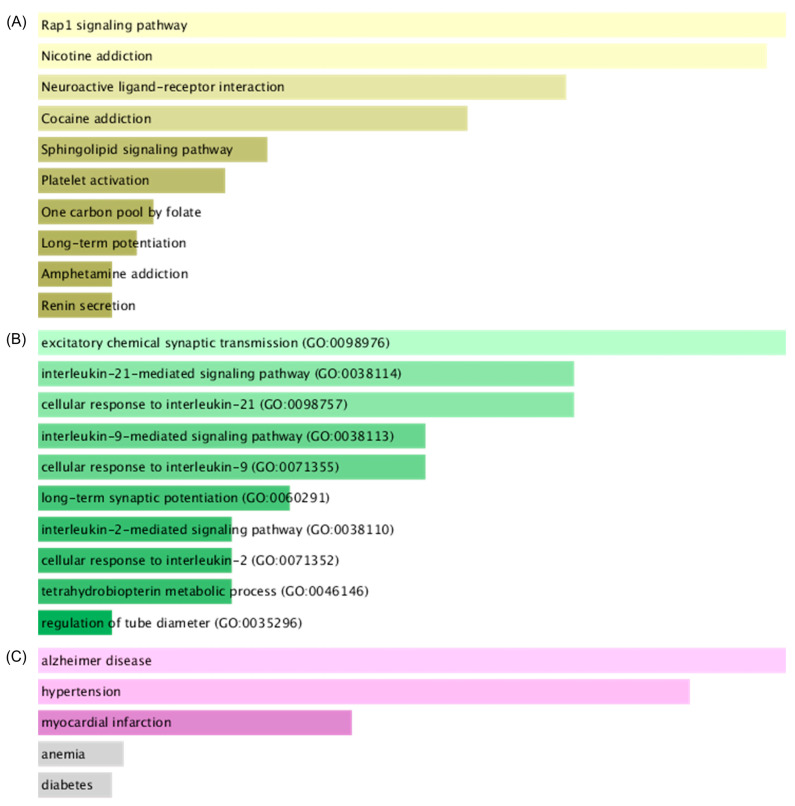
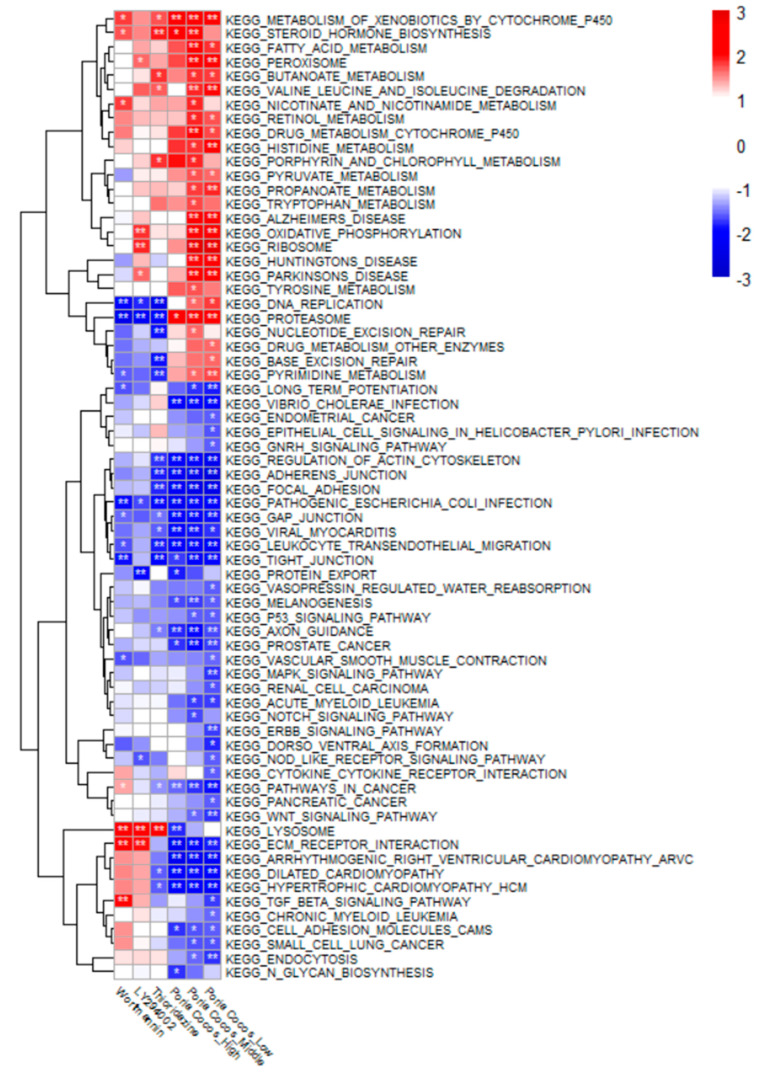
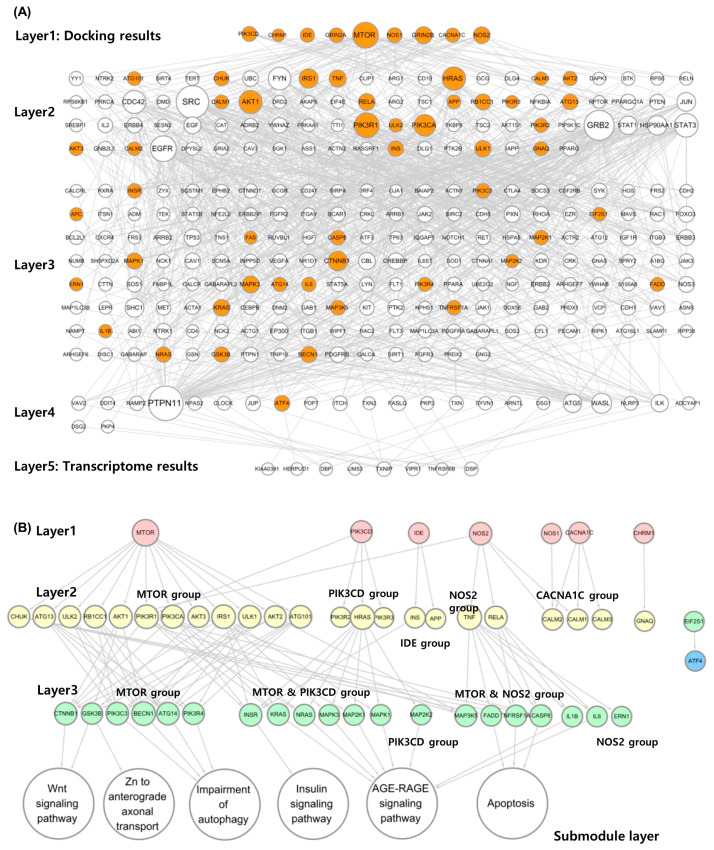
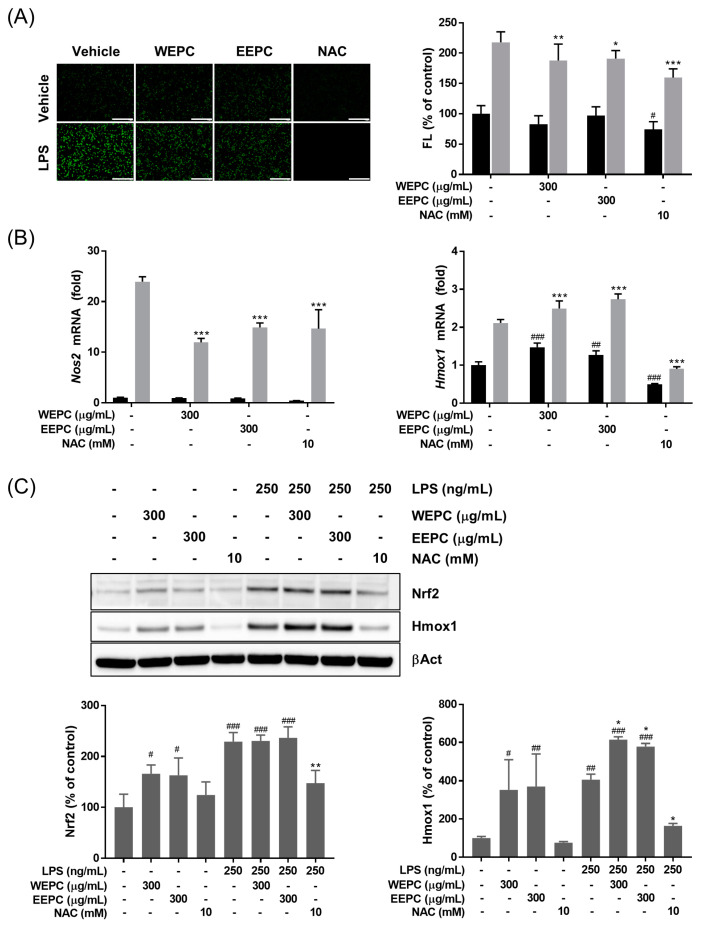
Verification
Claims the paper makes
The claims and statistics of this paper haven’t been checked yet.
Run the check — free, no account needed. It reads the open-access text and checks the sources it cites.
Self-check
Percentages, sums and reported differences re-computed from the paper’s own numbers.
The self-check needs the paper’s full text.
Citations
Cites
Highly accurate protein structure prediction with AlphaFold
Jumper, J., Evans, R., Pritzel, A., Green, T., Figurnov, M., Ronneberger, O., Tunyasuvunakool, K., Bates, R., Žídek, A., Potapenko, A., et al. (2021) · Nature · doi:10.1038/s41586-021-03819-2 · Cited by 43,764
Metadata
- Authors
- Park, M., Lee, S.-Y., Lee, H., & Yi, J.-M.
- Affiliations
- Korea Institute of Oriental Medicine (KR)
- Korea Institute of Oriental Medicine
- Pusan National University (KR)
- Corresponding author
- Park, Musun
- Venue
- International Journal of Molecular Sciences
- Publisher
- Wiley
- Published
- 2023-10-05
- Volume
- 25
- Issue
- 9
- Pages
- 4636-4636
- ISSN
- 1422-0067 (ISSN-L)
- PMC
- PMC11083729
- OpenAlex
- W4395082416
- Cited by
- 11
- References
- 1
- Citations by year
- 2026: 4 · 2025: 5 · 2024: 2
- FWCI
- 2.33
- Type
- journal article
- Language
- en
- Open access
- gold
- doi.org
- Licence
- cc-by
- Locations
- International Journal of Molecular Sciences (publishedVersion, cc-by)
- PubMed Central (publishedVersion, cc-by)
- PubMed (publishedVersion)
- Funders
- National Research Foundation
- Korea Institute of Oriental Medicine (KSN1722122, KSN1731122, NSN2312040)
- National Research Foundation of Korea (NSN2311040, NSN2312040)
- Ministry of Science and ICT, South Korea
- Topics
- Life Sciences › Pharmacology, Toxicology and Pharmaceutics › Drug Discovery › Computational Drug Discovery Methods
- Health Sciences › Medicine › Pharmacology (medical) › Fungal Biology and Applications
- Life Sciences › Agricultural and Biological Sciences › Plant Science › Phytochemistry and Biological Activities
- Keywords
- Poria cocos, terpenes, Alzheimer's disease, microglial cells, antioxidant activity, molecular docking
- MeSH terms
- Wolfiporia, Alzheimer Disease, Animals, Antioxidants, Humans, Terpenes, Microglia, Computational Biology, Gene Expression Profiling, Transcriptome, Molecular Docking Simulation
About these checks
Registry, retraction, Cites and statistics results are computed, not judged, with one exception: a printed reference that no index lists is read once by a model before it counts as a citation error. Claims are extracted by a model and kept only when their quote appears verbatim in the text; each cited source is then checked, with a model’s help, for whether it says what the claim relies on. Those verdicts can be wrong — read the claim’s quote and the cited source before relying on one.
Statistics and arithmetic are recomputed, not judged.
Confidence bands are shown only for fields calibrated on our annotated test set. None is calibrated yet, so no band is shown.
What counts as a claim ›How we measure confidence ›How we check this ›
Are you an author, or do you see a problem with this page? Request a review
Data sources
Bibliographic data: Semantic Scholar, OpenAlex, Crossref.
Contains information from the Semantic Scholar Academic Graph Datasets, made available under the ODC Attribution License (ODC-BY 1.0).
Semantic Scholar’s data is described in: Kinney, R., et al. (2023). The Semantic Scholar Open Data Platform. arXiv:2301.10140.
