

The DOI matches its Crossref record; 54 of the 54 references it cites were found in a registry or an index.
Skeletal Muscle Triglycerides, Diacylglycerols, and Ceramides in Insulin Resistance
Open accessAbstract
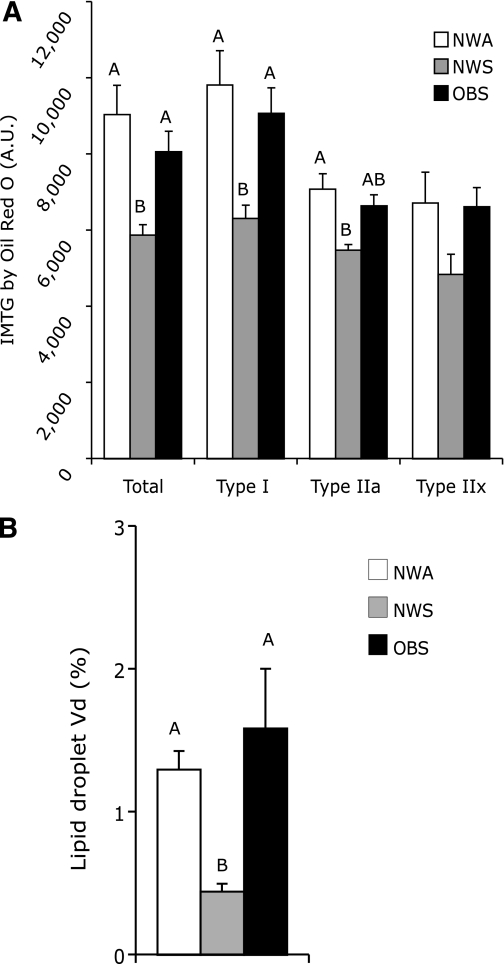
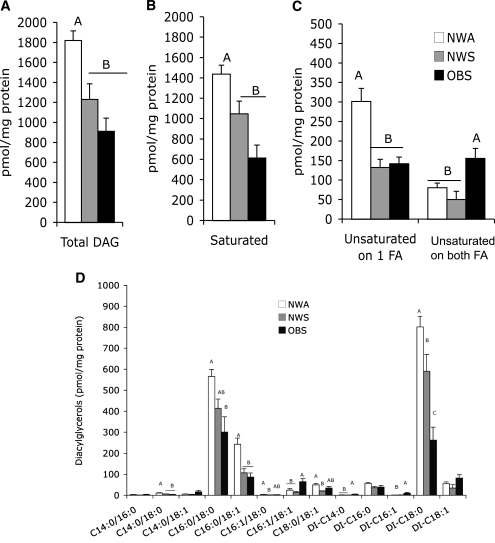
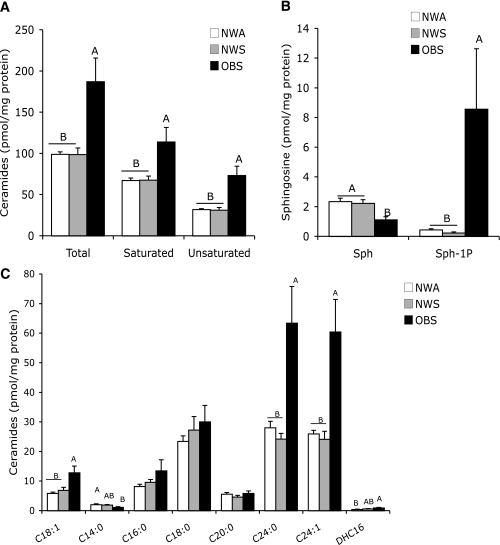
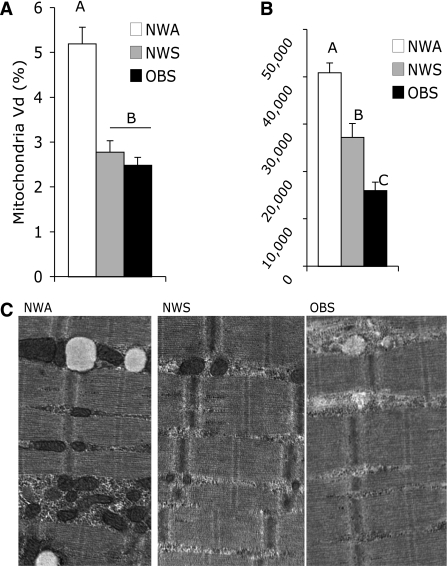
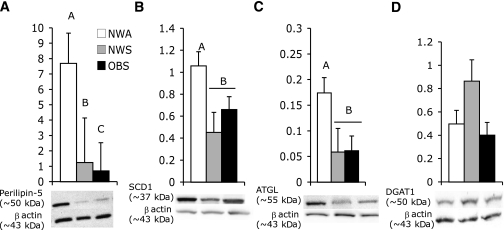
OBJECTIVE: Chronic exercise and obesity both increase intramyocellular triglycerides (IMTGs) despite having opposing effects on insulin sensitivity. We hypothesized that chronically exercise-trained muscle would be characterized by lower skeletal muscle diacylglycerols (DAGs) and ceramides despite higher IMTGs and would account for its higher insulin sensitivity. We also hypothesized that the expression of key skeletal muscle proteins involved in lipid droplet hydrolysis, DAG formation, and fatty-acid partitioning and oxidation would be associated with the lipotoxic phenotype. RESEARCH DESIGN AND METHODS: A total of 14 normal-weight, endurance-trained athletes (NWA group) and 7 normal-weight sedentary (NWS group) and 21 obese sedentary (OBS group) volunteers were studied. Insulin sensitivity was assessed by glucose clamps. IMTGs, DAGs, ceramides, and protein expression were measured in muscle biopsies. RESULTS: DAG content in the NWA group was approximately twofold higher than in the OBS group and ~50% higher than in the NWS group, corresponding to higher insulin sensitivity. While certain DAG moieties clearly were associated with better insulin sensitivity, other species were not. Ceramide content was higher in insulin-resistant obese muscle. The expression of OXPAT/perilipin-5, adipose triglyceride lipase, and stearoyl-CoA desaturase protein was higher in the NWA group, corresponding to a higher mitochondrial content, proportion of type 1 myocytes, IMTGs, DAGs, and insulin sensitivity. CONCLUSIONS: Total myocellular DAGs were markedly higher in highly trained athletes, corresponding with higher insulin sensitivity, and suggest a more complex role for DAGs in insulin action. Our data also provide additional evidence in humans linking ceramides to insulin resistance. Finally, this study provides novel evidence supporting a role for specific skeletal muscle proteins involved in intramyocellular lipids, mitochondrial oxidative capacity, and insulin resistance.
Overview
The claims and statistics of this paper haven’t been checked yet.
Run the check — free, no account needed. It reads the open-access text and checks the sources it cites.
Integrity signals
Registry
Cites
Statistics
Figures
Verification
Claims the paper makes
The claims and statistics of this paper haven’t been checked yet.
Run the check — free, no account needed. It reads the open-access text and checks the sources it cites.
Claims other papers make about this one
Each is checked against this paper’s own text: does it say what the citing paper says it does?
The cited source says what the claim attributes to it.
In the citing paper
“As reported by Amati et al. (26), DAG levels are higher in exercise-trained muscle corresponding to higher insulin sensitivity”
From TFAM Enhances Fat Oxidation and Attenuates High-Fat Diet–Induced Insulin Resistance in Skeletal Muscle (2019) · cites this paper as Amati et al. (26)
Self-check
Percentages, sums and reported differences re-computed from the paper’s own numbers.
The self-check needs the paper’s full text.
Citations
Cites
Current Methods in Medical Image Segmentation
Pham, D. L., Xu, C., & Prince, J. L. (2000) · Annual Review of Biomedical Engineering · doi:10.1146/annurev.bioeng.2.1.315 · Cited by 2,352
Sphingosine-1-phosphate: an enigmatic signalling lipid
Spiegel, S., & Milstien, S. (2003) · Nature Reviews Molecular Cell Biology · doi:10.1038/nrm1103 · Cited by 2,115
Suppression of ceramide-mediated programmed cell death by sphingosine-1-phosphate
Cuvillier, O., Pirianov, G., Kleuser, B., Vanek, P. G., Coso, O. A., Gutkind, J. S., & Spiegel, S. (1996) · Nature · doi:10.1038/381800a0 · Cited by 1,532
Itani, S. I., Ruderman, N. B., Schmieder, F., & Boden, G. (2002) · Diabetes · doi:10.2337/diabetes.51.7.2005 · Cited by 1,390
Goodpaster, B. H. (2001) · Journal of Clinical Endocrinology & Metabolism · doi:10.1210/jc.86.12.5755 · Cited by 1,194
Self-citationSkeletal muscle triglyceride levels are inversely related to insulin action
Pan, D. A., Lillioja, S., Kriketos, A. D., Milner, M. R., Baur, L. A., Bogardus, C., Jenkins, A. B., & Storlien, L. H. (1997) · Diabetes · doi:10.2337/diabetes.46.6.983 · Cited by 1,179
Skeletal Muscle Triglyceride Levels Are Inversely Related to Insulin Action
Pan, D. A., Lillioja, S., Kriketos, A. D., Milner, M. R., Baur, L. A., Bogardus, C., Jenkins, A. B., & Storlien, L. H. (1997) · Diabetes · doi:10.2337/diab.46.6.983 · Cited by 1,179
Ceramide Content Is Increased in Skeletal Muscle From Obese Insulin-Resistant Humans
Adams, J. M., Pratipanawatr, T., Berria, R., Wang, E. L., DeFronzo, R. A., Sullards, M. C., & Mandarino, L. J. (2004) · Diabetes · doi:10.2337/diabetes.53.1.25 · Cited by 677
Bielawski, J., Szulc, Z. M., Hannun, Y. A., & Bielawska, A. E. (2006) · Methods · doi:10.1016/j.ymeth.2006.05.004 · Cited by 543
Intramuscular lipid content is increased in obesity and decreased by weight loss
Goodpaster, B. H., Theriault, R., Watkins, S. C., & Kelley, D. E. (2000) · Metabolism · doi:10.1016/s0026-0495(00)80010-4 · Cited by 526 · cited 1×
“Biopsies were obtained from the vastus lateralis as described previously (19).”
MethodSelf-citation
Cited by
Sorted by citations
Mechanisms of Insulin Action and Insulin Resistance
Petersen, M. C., & Shulman, G. I. (2018) · Physiological Reviews · doi:10.1152/physrev.00063.2017 · Cited by 3,028
The role of estrogens in control of energy balance and glucose homeostasis
Mauvais-Jarvis, F., Clegg, D. J., & Hevener, A. L. (2013) · Endocrine Reviews · doi:10.1210/er.2012-1055 · Cited by 1,329
Ectopic Fat in Insulin Resistance, Dyslipidemia, and Cardiometabolic Disease
Shulman, G. I. (2014) · New England Journal of Medicine · doi:10.1056/nejmra1011035 · Cited by 1,126
Metabolic Flexibility in Health and Disease
Goodpaster, B. H., & Sparks, L. M. (2017) · Cell Metabolism · doi:10.1016/j.cmet.2017.04.015 · Cited by 995
Self-citationCusi, K. J. (2012) · Gastroenterology · doi:10.1053/j.gastro.2012.02.003 · Cited by 940
Metadata
- Authors
- Amati, F., Dubé, J. J., Alvarez-Carnero, E., Edreira, M. M., Chomentowski, P., Coen, P. M., Switzer, G. E., Bickel, P. E., Stefanovic-Racic, M., Toledo, F. G. S., & Goodpaster, B. H.
- Affiliations
- University of Pittsburgh (US)
- Department of Pharmacology and Chemical Biology, School of Medicine, University of Pittsburgh, Pittsburgh, Pennsylvania
- Brown Foundation Institute of Molecular Medicine for the Prevention of Human Diseases (US)
- Department of Medicine, Division of Endocrinology and Metabolism, School of Medicine, University of Pittsburgh, Pittsburgh, Pennsylvania
- Corresponding author
- Goodpaster, Bret H.
- ORCID
- Venue
- Diabetes
- Publisher
- American Diabetes Association
- Published
- 2011-09-16
- Volume
- 60
- Issue
- 10
- Pages
- 2588-2597
- ISSN
- 0012-1797 (ISSN-L)
- 1939-327X
- PMC
- PMC3178290
- OpenAlex
- W2032345647
- Cited by
- 395
- References
- 54
- Citations by year
- 2026: 13 · 2025: 18 · 2024: 13 · 2023: 17 · 2022: 18 · 2021: 16 · 2020: 28 · 2019: 27 · 2018: 38 · 2017: 32 · 2016: 41 · 2015: 41 · 2014: 29 · 2013: 35 · 2012: 27
- FWCI
- 12.09
- Type
- journal article
- Language
- en
- Open access
- hybrid
- doi.org
- Licence
- Locations
- Diabetes (publishedVersion, cc-by-nc-nd)
- PubMed Central (publishedVersion, cc-by-nc-nd)
- PubMed (publishedVersion)
- IRIS (submittedVersion)
- CONICET Digital (CONICET) (submittedVersion, cc-by-nc-sa)
- SERVAL (Université de Lausanne) (submittedVersion, other-oa)
- Funders
- University of Pittsburgh (UL1RR024153, RR024153)
- National Institutes of Health (5p30dk046204-15, RR024153, 1P30DK46204)
- National Institute on Aging (R01 AG20128, P30AG024827)
- National Institute of Diabetes and Digestive and Kidney Diseases (1P30DK-46204, R01DK068046, P30-DK046204)
- National Center for Research Resources (RR-024153, UL1RR024153)
- Topics
- Life Sciences › Biochemistry, Genetics and Molecular Biology › Molecular Biology › Metabolism, Diabetes, and Cancer
- Health Sciences › Medicine › Physiology (medical) › Adipose Tissue and Metabolism
- Life Sciences › Biochemistry, Genetics and Molecular Biology › Biochemistry › Lipid metabolism and biosynthesis
- Keywords
- insulin resistance, intramyocellular triglyceride, diacylglycerol, ceramide, endurance athletes, obesity, perilipin 5, adipose triglyceride lipase, stearoyl-CoA desaturase, mitochondrial oxidative capacity, fatty acid oxidation
- MeSH terms
- Aged, Ceramides, Diglycerides, Female, Humans, Insulin, Insulin Resistance, Male, Middle Aged, Mitochondria, Muscle, Obesity, Oxygen Consumption, Physical Endurance, Triglycerides, Muscle, Skeletal, Athletes
About these checks
Registry, retraction, Cites and statistics results are computed, not judged, with one exception: a printed reference that no index lists is read once by a model before it counts as a citation error. Claims are extracted by a model and kept only when their quote appears verbatim in the text; each cited source is then checked, with a model’s help, for whether it says what the claim relies on. Those verdicts can be wrong — read the claim’s quote and the cited source before relying on one.
Statistics and arithmetic are recomputed, not judged.
Confidence bands are shown only for fields calibrated on our annotated test set. None is calibrated yet, so no band is shown.
What counts as a claim ›How we measure confidence ›How we check this ›
Are you an author, or do you see a problem with this page? Request a review
