

Are Sexual Minorities Hard-to-Survey? Insights from the 2020 Census Barriers, Attitudes, and Motivators Study (CBAMS) Survey
Open accessThe DOI matches its Crossref record; 32 of the 33 references it cites were found in a registry or an index.
Abstract
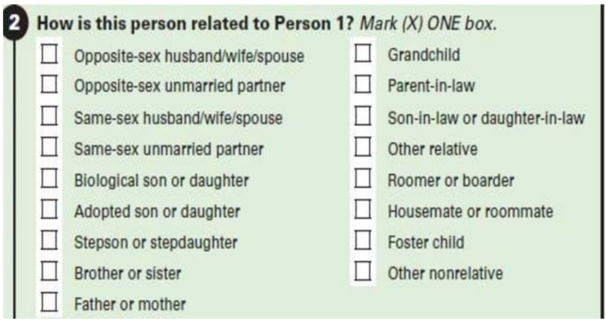
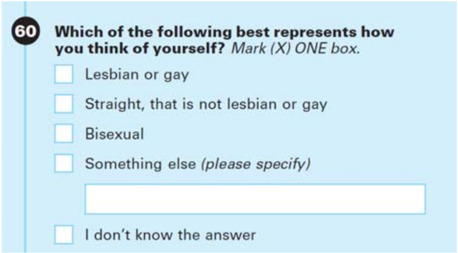
As a stigmatized and vulnerable population, sexual minorities are often assumed to also be a hard-to-survey population. Despite this implicit assumption, there is little empirical evidence on the topic. Using a nationally representative survey that included sexual orientation (the Census Barriers, Attitudes, and Motivators Survey), we examine level of effort, the Census Bureau’s Low Response Score (LRS), and stated intent to respond to the 2020 Census as proxy measures to explore this assumption. We found no evidence that sexual minorities required higher levels of effort to secure participation in the survey. Additionally, we found that compared to straight respondents, lesbians, gays, and bisexuals had a higher intent to respond to the 2020 Census. We surmise the current social climate in the United States may be a contributing factor to these findings.
Overview
The claims and statistics of this paper haven’t been checked yet.
Free: it reads the open-access text and checks the first 5 claims that cite a source we can check. Create a free account to check every claim.
Integrity signals
Registry
Cites
Statistics
Figures
Verification
Claims the paper makes
The claims and statistics of this paper haven’t been checked yet.
Free: it reads the open-access text and checks the first 5 claims that cite a source we can check. Create a free account to check every claim.
Claims other papers make about this one
Each is checked against this paper’s own text: does it say what the citing paper says it does?
The source backs part of the claim, not all of it — or backs it for a different population, condition or comparison.
In the citing paper
“While sexual orientation and gender identity questions have historically been stigmatized, nonresponse rates for sexual orientation questions have improved over time (Bates et al., 2019).”
From Willingness to disclose sexual orientation and gender identity on federal government surveys: A community-based research study with gay, bisexual, transgender, and queer men and nonbinary and Two-Spirit people in Canada (2026) · cites this paper as Bates et al., 2019
Experimental — accuracy not yet measured
Self-check
Percentages, sums and reported differences re-computed from the paper’s own numbers.
The self-check needs the paper’s full text.
Citations
Cites
The theory of planned behavior
Ajzen, I. (1991) · Organizational Behavior and Human Decision Processes · doi:10.1016/0749-5978(91)90020-t · Cited by 134,657 · cited 1×
“Ajzen (1991) argues that there is often a gap between a person’s intended and actual behavior, and unforeseen costs and circumstances ultimately prevent some people from carrying out their intended behavior.”
BackgroundCalibrating Noise to Sensitivity in Private Data Analysis
Dwork, C., McSherry, F., Nissim, K., & Smith, A. (2006) · Lecture Notes in Computer Science · doi:10.1007/11681878_14 · Cited by 7,272
Nonresponse in Household Interview Surveys
Groves, R. M., & Couper, M. P. (1998) · doi:10.1002/9781118490082 · Cited by 761 · cited 3×
“Studies suggest that immigrants, persons experiencing homelessness, renters, and cultural, ethnic, and linguistic minorities, are often classified as such (Rossi et al. 1987; Groves and Couper 1998; Stoop 2005; Massey 2014; Glasser et al. 2014; Harkness et al. 2014; Schwede et al. 2014).”
BackgroundResearch on Adolescent Sexual Orientation: Development, Health Disparities, Stigma, and Resilience
Saewyc, E. M. (2011) · Journal of Research on Adolescence · doi:10.1111/j.1532-7795.2010.00727.x · Cited by 421 · cited 1×
“However, even “don’t know/not sure” and refusal rates have decreased over time (Saewyc 2011).”
BackgroundFredriksen-Goldsen, K. I., Kim, H.-J., Shiu, C., Goldsen, J., & Emlet, C. A. (2015) · The Gerontologist · doi:10.1093/geront/gnu081 · Cited by 407 · cited 1×
“Recent research shows that nonresponse rates to sexual orientation questions have declined over time among older adults (Fredriksen-Goldsend and Kim 2014; Fredriksen-Goldsen et al. 2015).”
BackgroundUsing Survey Participants to Estimate the Impact of Nonparticipation
Lin, I.-F., & Schaeffer, N. C. (1995) · Public Opinion Quarterly · doi:10.1086/269471 · Cited by 356
The Urban Homeless: Estimating Composition and Size
Rossi, P. H., Wright, J. D., Fisher, G. A., & Willis, G. (1987) · Science · doi:10.1126/science.2950592 · Cited by 281 · cited 1×
“Studies suggest that immigrants, persons experiencing homelessness, renters, and cultural, ethnic, and linguistic minorities, are often classified as such (Rossi et al. 1987; Groves and Couper 1998; Stoop 2005; Massey 2014; Glasser et al. 2014; Harkness et al. 2014; Schwede et al. 2014).”
Background(2011) · National Academies Press eBooks · doi:10.17226/13128 · Cited by 259
Society at a Glance 2019: OECD Social Indicators
OECD (2019) · Society at a Glance · doi:10.1787/soc_glance-2019-en · Cited by 232
Trends in U.S. Face-To-Face Household Survey Nonresponse and Level of Effort
Williams, D., & Brick, J. M. (2017) · Journal of Survey Statistics and Methodology · doi:10.1093/jssam/smx019 · Cited by 181 · cited 1×
“As survey and census nonresponse continues to increase (Atrostic et al. 2001; Williams and Brick 2018; De Leeuw et al. 2018; Beullens et al. 2018), more methodologists are focusing attention on which populations should be defined as “hard-to-survey”.”
Background
Research works printed but not linked: 3
- AAPOR. 2016. Standard Definitions Final Dispositions of Case Codes and Outcome Rates for Surveys. 9th edition. Available at: https://www.aapor.org/AAPOR_Main/media/publications/Standard-Definitions20169theditionfinal.pdf (accessed October 2019).
- 40. Moohn, B. 2012. "2010 Census Integrated Communications Program Regional Partnership Assessment Report. 2010 Census Planning Memorandum Series, No. 217." Washington, D.C.: U.S. Census Bureau. Available at: https://www2.cen- sus.gov/programs-surveys/decennial/2010/program-management/5-review/cpex/2010- memo-217.pdf?# (accessed September 2019).
- 42. NORC. 2014. "Same-Sex Marriage and Gay Rights: A Shift in Americans' Attitudes." The Associated Press-NORC Center for Public Affairs Research. Available at: http://www. apnorc.org/projects/Pages/HTML%20Reports/same-sex-marriage-and-gay-rights-a- shift-in-americans-attitudes0305-8272.aspx (accessed May 2019).
Cited by
Julian, C. A., Manning, W. D., & Dush, C. M. K. (2024) · Journal of Marriage and the Family · doi:10.1111/jomf.12957 · Cited by 30
“Research into sampling strategies to effectively target and study SGD populations for survey research are expanding (Bates et al., 2019; Michaels et al., 2019).”
Updates on Terminology of Sexual Orientation and Gender Identity Survey Measures
Morgan, R., Dragon, C., Daus, G., Holzberg, J., Kaplan, R. L., Menne, H. L., Smith, A. S., Spiegelman, M., & United States. Federal Committee on Statistical Methodology (2020) · ROSA P · doi:10.21949/1529889 · Cited by 35
West, B. T., & McCabe, S. E. (2021) · Field Methods · doi:10.1177/1525822x21998516 · Cited by 15
“, “Christian male”), or individuals conflating sexual orientation with gender identity (Bates et al. 2019; Mishel 2019; Ridalfo et al. 2012; Truman et al. 2019).”
BackgroundThe Case for “Other”: Measuring Gender and Sexual Identity in Survey Research
Pao, C., Moran, K. D., Compton, D. R., Kaufman, G., & Dowling, J. A. (2025) · Sociology Compass · doi:10.1111/soc4.70031 · Cited by 15
Budnick, J., Pao, C., & Velasco, K. (2025) · Sex & Sexualities · doi:10.1177/3033371251329931 · Cited by 6
Dueñas, J. M. R. (2022) · Revista Española de Sociología · doi:10.22325/fes/res.2022.135 · Cited by 6
Ceatha, N., Koay, A. C. C., Kelly, A., Killeen, T., McCabe, K., Murray, J., Pope, J., Scully, N. M., Buggy, C., & Crowley, D. (2023) · Youth · doi:10.3390/youth3010018 · Cited by 4
“Implicit assumptions that LGBT+ populations are less likely to participate in surveys are not supported in the literature [14,101].”
BackgroundDueñas, J. M. R. (2022) · Estudios LGBTIQ+ Comunicación y Cultura · doi:10.5209/eslg.79620 · Cited by 3
The development of the Gender Equality Audit and Monitoring survey
Guyan, K., Aldercotte, A., Müller, J., Caprile, M., & Torrado, S. Y. (2022) · Routledge eBooks · doi:10.4324/9781003225546-3 · Cited by 4
Measuring assigned sex, gender identity, and sexual orientation in population surveys.
Bornatici, C., Felder, M., Gianettoni, L., Mordasini, R., & Steinmetz, S. (2025) · IRIS · doi:10.24449/fg-2025-00026 · Cited by 2
Yan, X., Schneider, J. A., Modali, L., Korban, C., & Tabidze, I. L. (2023) · SSM - Population Health · doi:10.1016/j.ssmph.2023.101474 · Cited by 2
Jacobsen, K., Babin, C., Gormezano, A., Blackwell, E., Klassen, B., Higgins, R., Card, K., Ferlatte, O., & Lachowsky, N. J. (2026) · Canadian Journal of Public Health · doi:10.17269/s41997-025-01127-0 · Cited by 1
“While sexual orientation and gender identity questions have historically been stigma-tized, nonresponse rates for sexual orientation questions have improved over time (Bates et al., 2019).”
The Family and the LGBTQ Population
Compton, D. R., & Julian, C. A. (2025) · International handbooks of population · doi:10.1007/978-3-031-87911-1_16 · Cited by 1
MacNeil, S., Sicotte, R., Davisse‐Paturet, C., Chartrand, E., Alexander, E., Lecousy, M., Girard, A., Orri, M., Chadi, N., Ouellet‐Morin, I., et al. (2026) · The Canadian Journal of Psychiatry · doi:10.1177/07067437261442420 · Cited by 1
Counting Children in the U.S. 2020 Census: Assure Our Future is Represented
Seltzer, J. A., & Walker, D. K. (2020) · NAM Perspectives · doi:10.31478/202003d · Cited by 1
Knott, C. E., Gomori, S., Ngyuen, M., Pedrazzani, S. D., Sattaluri, S., Mierzwa, F., & Chantala, K. (2021) · EPJ Data Science · doi:10.1140/epjds/s13688-021-00264-z · Cited by 1
Survey Estimates of Sexual Orientation in the United States
(2022) · Population and Development Review · doi:10.1111/padr.12498 · Cited by 1
Best Practices for Collecting Gender and Sex DataPreprint
Thornton, S., Roy, D., Parry, S. A., LaLonde, D., Martinez, W. L., Ellis, R., & Corliss, D. J. (2021) · arXiv (Cornell University) · doi:10.48550/arxiv.2103.09647 · Cited by 2
Internet-Able Older Adults: Text Notifications and Satisfaction with Online Questionnaires
Nichols, E., Feuer, S., Olmsted-Hawala, E. L., & Gliozzi, R. (2022) · Lecture notes in computer science · doi:10.1007/978-3-031-05581-2_38
Mental Health Service Use in Sexually and Gender Diverse Youths and Cisgender Heterosexual Youths
Anzarouth, L., MacNeil, S., Ryan, N. C., Martineau, A., Orri, M., Temcheff, C. E., Dorais, M., Girard, A., Iyer, S. N., Colman, I., et al. (2026) · JAMA Network Open · doi:10.1001/jamanetworkopen.2026.26797
Metadata
- Authors
- Bates, N., García Trejo, Y. A., & Vines, M.
- Affiliations
- United States Census Bureau (US)
- U.S. Census Bureau, 4600 Silver Hill Rd. Washington, D.C., 20233 , U.S.A.
- ORCID
- Vines, Monica
- Venue
- Journal of Official Statistics
- Publisher
- SAGE Publications
- Published
- 2019-12-01
- Volume
- 35
- Issue
- 4
- Pages
- 709-729
- ISSN
- 0282-423X (ISSN-L)
- 2001-7367
- OpenAlex
- W2995160698
- Cited by
- 19
- References
- 33
- Citations by year
- 2026: 2 · 2025: 4 · 2024: 1 · 2023: 3 · 2022: 5 · 2021: 3 · 2020: 1
- FWCI
- 4.53
- Type
- journal article
- Language
- en
- Open access
- diamond
- doi.org
- Licence
- Locations
- Journal of Official Statistics (publishedVersion, cc-by-nc-nd)
- DOAJ (DOAJ: Directory of Open Access Journals) (submittedVersion)
- Topics
- Social Sciences › Sociology and Political Science › Survey Methodology and Nonresponse
- Social Sciences › Psychology › Social Psychology › LGBTQ Health, Identity, and Policy
- Physical Sciences › Mathematics › Statistics and Probability › Census and Population Estimation
- Keywords
- sexual minorities, 2020 Census, census participation, survey effort, sexual orientation, survey nonresponse, social climate
About these checks
Registry, retraction, Cites and statistics results are computed, not judged, with one exception: a printed reference that no index lists is read once by a model before it counts as a citation error. Claims are extracted by a model and kept only when their quote appears verbatim in the text; each cited source is then checked, with a model’s help, for whether it says what the claim relies on. Those verdicts can be wrong — read the claim’s quote and the cited source before relying on one.
Statistics and arithmetic are recomputed, not judged.
Confidence bands are shown only for fields calibrated on our annotated test set. None is calibrated yet, so no band is shown.
What counts as a claim ›How we measure confidence ›How we check this ›
Are you an author, or do you see a problem with this page? Request a review
Data sources
Bibliographic data: Semantic Scholar, OpenAlex, Crossref.
Contains information from the Semantic Scholar Academic Graph Datasets, made available under the ODC Attribution License (ODC-BY 1.0).
Semantic Scholar’s data is described in: Kinney, R., et al. (2023). The Semantic Scholar Open Data Platform. arXiv:2301.10140.
