

The DOI matches its Crossref record; 1 of the 1 references it cites were found in a registry or an index; none of the 19 sources its claims cite is checked for support yet.
Participación política de las mujeres afroecuatorianas de Esmeraldas, 2009-2021
Open accessAbstract
This article analyzes the application of affirmative actions for the political participation of Afro-Ecuadorian women from the canton of Esmeraldas, from a human rights and gender perspective. To do this, the review of academic articles related to the right of participation and the ethnic-cultural identity of peoples and communities is carried out; in turn, of the pertinent legal and constitutional regulations, and of the statistical results of the 2009-2021 electoral period. Finally, the experiences of Afro-Ecuadorian women in electoral processes and how these women understand the right to political participation in society are incorporated.
Overview
AI snapshot
Written from the paper’s full text.
TL;DR
The article examines affirmative action and political participation of Afro-Ecuadorian women in Esmeraldas canton from 2009–2021, combining legal-documentary review, electoral statistics, and interviews. It finds a persistent parity gap: women were 47% of candidates but only 37% of elected authorities, and only eight Afro-Ecuadorian women (4% of elected women) reached the National Assembly, with affirmative measures described as formal rather than effective.
Key findings
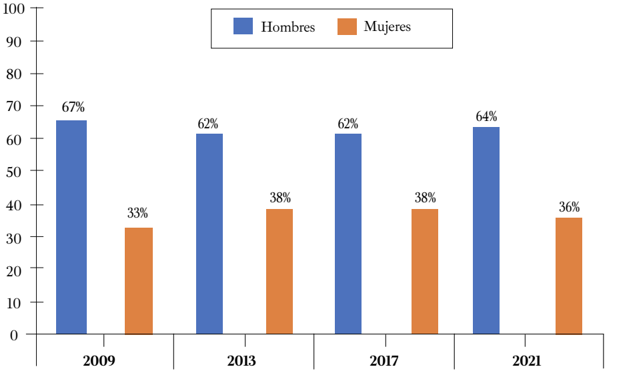
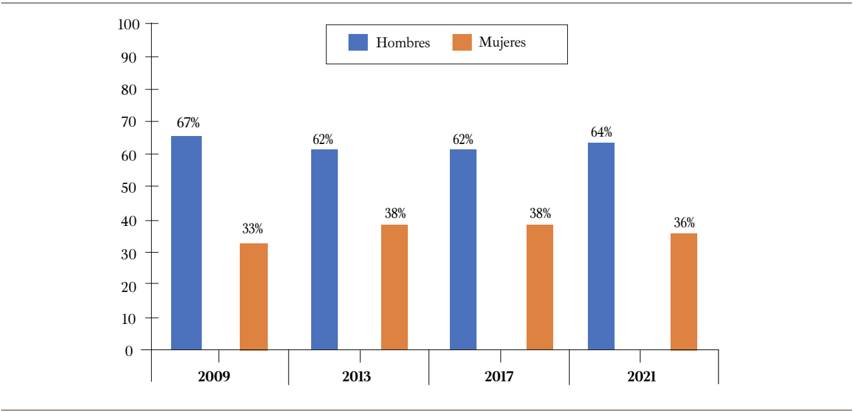
- Across the 2009–2021 general elections, there were 7,215 candidates: 53% (3,824) men and 47% (3,391) women. Of those elected, 352 (63%) were men and 204 (37%) were women; 6,659 were not elected, equivalent to 52% (3,472) men and 48% (3,187) women.
- Afro-Ecuadorian women had minimal representation: of the 204 elected women, only eight (4%) were Afro-Ecuadorian assembly members, and four (2%) were from Esmeraldas province. In 2021, of seven Afro women proposed as national assembly members, only one was elected; in 2013 and 2017, three Afro-Ecuadorian women were elected as assembly members each.
- The paper reports no Afro-Ecuadorian woman elected president/vice-president in 2009–2021; in 2009, no Afro women were elected as national assembly members or Andean parliamentarians, and only one of the 34 elected provincial assembly women was Afro-Ecuadorian.
- Interviewees describe participation as civil, political, electoral, and organizational/community-based. They identify barriers including gender and racial discrimination, rurality, machismo, stereotypes, lack of economic resources, lack of support from political organizations, and state measures that remain formal rather than materialized; the paper concludes parity, alternability, and sequentiality are not fully met, and Afro women are treated as “cuotas de relleno.”
Methods
- The study uses a historical-dialectical, descriptive, and quantitative approach, with documentary/legal review and analysis of electoral statistics for 2009, 2013, 2017 (first and second rounds), and 2021 (first and second rounds).
- Data come from the Consejo Nacional Electoral, the Instituto de la Democracia’s Electoral Atlas, the INEC’s 2018 Gender Atlas, and interviews with Afro-Ecuadorian women from Esmeraldas canton. The paper reports 14 interviewees: six national-level women in institutional, academic-investigative, and organizational roles, and eight Afro-Ecuadorian women from Esmeraldas, interviewed in person and by email.
- Analysis includes statistical segregation of candidates and elected authorities by sex, dignity, and province, plus qualitative thematic analysis of experiences and understandings of political participation.
Limitations
- The paper does not explicitly state methodological limitations; its stated limitations concern women’s participation itself, such as sociocultural, economic, political, racist, and organizational barriers.
- Evident from the text: the study relies on descriptive electoral statistics and self-reported interviews, which limits causal claims, and some tables contain apparent inconsistencies (e.g., Table 1’s total of 65,080 does not match the yearly sums; Table 3 lists 2013 Parlamentarios Andinos as 3 men + 2 women but a total of 45).
- Evident from the text: the interview sample is small and concentrated among Afro-Ecuadorian women from Esmeraldas and national-level women, so it is not representative of all Afro-Ecuadorian women in Ecuador.
Model-written summary. Check it against the paper before relying on it.
Integrity signals
Registry
Cites
Statistics
Figures

Verification
Claims the paper makes
44 No basis given · 23 Own result · 22 Own interpretation · 16 Sources not found · 8 Not checked yet
The paper states this without a source or data behind it here, so there is nothing to check it against. The quote shows it is in the paper.
In the paper
“de las 43 mujeres electas como asambleístas provinciales y por circunscripción en las elecciones generales del 2013, tres mujeres afroecuatorianas fueron electas como asambleístas”
plain- Asserted: passes — The authors put it forward as true.
- Checkable: passes — It can be checked against evidence.
- Load-bearing: unclear — It is unclear whether the paper’s conclusions depend on it.
- Based: passes — The paper gives a reason why it holds.
A result the paper reports from its own data — it cites no other source for it, so there is none to check. The quote shows it is in the paper.
In the paper
“las mujeres afros entrevistadas coinciden que con las luchas sociales se logró el reconocimiento de sus derechos de participación y su respectivo acceso e inclusión en los diferentes espacios.”
plaindirect- Asserted: passes — The authors put it forward as true.
- Checkable: passes — It can be checked against evidence.
- Load-bearing: passes — The paper’s conclusions depend on it.
- Based: passes — The paper gives a reason why it holds.
The paper states this without a source or data behind it here, so there is nothing to check it against. The quote shows it is in the paper.
In the paper
“el porcentaje de autoridades electas ha disminuido el 2% en las elecciones generales del 2021 con relación a las elecciones del 2013 y 2017”
plain- Asserted: passes — The authors put it forward as true.
- Checkable: passes — It can be checked against evidence.
- Load-bearing: unclear — It is unclear whether the paper’s conclusions depend on it.
- Based: passes — The paper gives a reason why it holds.
A result the paper reports from its own data — it cites no other source for it, so there is none to check. The quote shows it is in the paper.
In the paper
“de las ocho mujeres afros electas en el período estudiado, cuatro (2%) son de la provincia de Esmeraldas (ver Tabla 4).”
plain- Asserted: passes — The authors put it forward as true.
- Checkable: passes — It can be checked against evidence.
- Load-bearing: passes — The paper’s conclusions depend on it.
- Based: passes — The paper gives a reason why it holds.
A result the paper reports from its own data — it cites no other source for it, so there is none to check. The quote shows it is in the paper.
In the paper
“en contraste a las demás dignidades como candidatos en los procesos electorales, se evidencia que la diferencia porcentual entre ambos géneros es mínima.”
boosted- Asserted: passes — The authors put it forward as true.
- Checkable: passes — It can be checked against evidence.
- Load-bearing: unclear — It is unclear whether the paper’s conclusions depend on it.
- Based: passes — The paper gives a reason why it holds.
The paper states this without a source or data behind it here, so there is nothing to check it against. The quote shows it is in the paper.
In the paper
“en las elecciones presidenciales y parlamentarias del 2013 y 2017, se cuenta con el 46% de representación de mujeres como candidatas en las diferentes dignidades.”
plain- Asserted: passes — The authors put it forward as true.
- Checkable: passes — It can be checked against evidence.
- Load-bearing: unclear — It is unclear whether the paper’s conclusions depend on it.
- Based: passes — The paper gives a reason why it holds.
The paper states this without a source or data behind it here, so there is nothing to check it against. The quote shows it is in the paper.
In the paper
“en las elecciones del 2021, la participación política electoral de las mujeres afroecuatorianas disminuyó notablemente, ya que de las siete mujeres propuestas como asambleístas nacionales, solo una de ellas fue electa”
plain- Asserted: passes — The authors put it forward as true.
- Checkable: passes — It can be checked against evidence.
- Load-bearing: passes — The paper’s conclusions depend on it.
- Based: passes — The paper gives a reason why it holds.
A result the paper reports from its own data — it cites no other source for it, so there is none to check. The quote shows it is in the paper.
In the paper
“de las 204 mujeres electas, solo ocho (4%) mujeres afros fueron electas para ser asambleístas”
plain- Asserted: passes — The authors put it forward as true.
- Checkable: passes — It can be checked against evidence.
- Load-bearing: passes — The paper’s conclusions depend on it.
- Based: passes — The paper gives a reason why it holds.
The paper states this without a source or data behind it here, so there is nothing to check it against. The quote shows it is in the paper.
In the paper
“en las elecciones generales del 2017, se destaca la participación de tres mujeres afroecuatorianas que integran la Asamblea.”
plain- Asserted: passes — The authors put it forward as true.
- Checkable: passes — It can be checked against evidence.
- Load-bearing: unclear — It is unclear whether the paper’s conclusions depend on it.
- Based: passes — The paper gives a reason why it holds.
A result the paper reports from its own data — it cites no other source for it, so there is none to check. The quote shows it is in the paper.
In the paper
“en el año 2021 se evidencia una baja representación de mujeres en el Gabinete Ministerial, que es del 11%.”
plain- Asserted: passes — The authors put it forward as true.
- Checkable: passes — It can be checked against evidence.
- Load-bearing: unclear — It is unclear whether the paper’s conclusions depend on it.
- Based: passes — The paper gives a reason why it holds.
- Probably not a substantial claim. 41
- It may state two separate claims as one. 55
- The quote only partly states this claim. 4
The paper states this without a source or data behind it here, so there is nothing to check it against. The quote shows it is in the paper.
In the paper
“las mujeres afros coinciden en que el Estado ecuatoriano no ha hecho ni hace nada para crear más oportunidades de participación para las mujeres afros”
plain- Asserted: passes — The authors put it forward as true.
- Checkable: passes — It can be checked against evidence.
- Load-bearing: passes — The paper’s conclusions depend on it.
- Based: passes — The paper gives a reason why it holds.
Probably not a substantial claim.
The paper states this without a source or data behind it here, so there is nothing to check it against. The quote shows it is in the paper.
In the paper
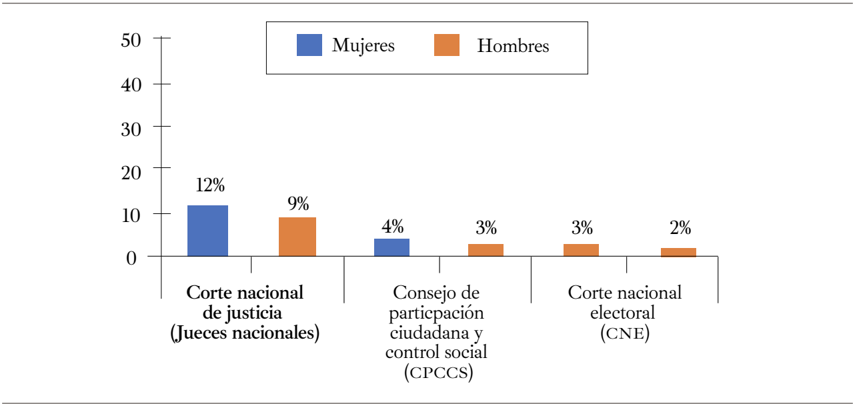
“la Corte Constitucional del Ecuador está conformada por seis juezas y tres jueces; mientras que en el 2019 la conformaron cuatro juezas y cinco jueces.”
plain- Asserted: passes — The authors put it forward as true.
- Checkable: passes — It can be checked against evidence.
- Load-bearing: fails — The paper’s conclusions may not depend on it.
- Based: passes — The paper gives a reason why it holds.
Probably not a substantial claim. The paper’s conclusions may not depend on it. It may state two separate claims as one.
The paper states this without a source or data behind it here, so there is nothing to check it against. The quote shows it is in the paper.
In the paper
“la mayoría de las entrevistadas mencionan que las mujeres afros también participan en los procesos electorales, que consecuentemente, se van visibilizando los logros del feminismo, y que las mujeres que participan más en política poco a poco van ocupando cargos de máximo poder.”
plaindirect- Asserted: fails — The authors may not put it forward as true.
- Checkable: passes — It can be checked against evidence.
- Load-bearing: fails — The paper’s conclusions may not depend on it.
- Based: fails — The paper may give no reason why it holds.
Probably not a substantial claim. The authors may not put it forward as true. The paper’s conclusions may not depend on it. The paper may give no reason why it holds.
A result the paper reports from its own data — it cites no other source for it, so there is none to check. The quote shows it is in the paper.
In the paper
“durante el período 2009-2021, existen 7215 candidatos (as), de los cuales el 53% (3824) son hombres y el 47% (3391) son mujeres.”
plain- Asserted: passes — The authors put it forward as true.
- Checkable: passes — It can be checked against evidence.
- Load-bearing: passes — The paper’s conclusions depend on it.
- Based: passes — The paper gives a reason why it holds.
It may state two separate claims as one.
None of the sources cited for this claim have been checked yet.
In the paper
“Actualmente, las luchas sociales de las mujeres afros se dan por la inclusión de estas mujeres en todos los espacios de participación y en la toma de decisiones; y, por «el direccionamiento del pueblo afro, para que quede en manos de los hermanos afros y no de personas que vienen de otras provincias».”
plain- Asserted: passes — The authors put it forward as true.
- Checkable: passes — It can be checked against evidence.
- Load-bearing: fails — The paper’s conclusions may not depend on it.
- Based: passes — The paper gives a reason why it holds.
Probably not a substantial claim. The paper’s conclusions may not depend on it. It may state two separate claims as one.
A result the paper reports from its own data — it cites no other source for it, so there is none to check. The quote shows it is in the paper.
In the paper
“en las elecciones generales del 2021 no se presenta mayor cambio o variación, debido a que la representatividad de hombres y de mujeres disminuyó al 1%”
plaindirect- Asserted: passes — The authors put it forward as true.
- Checkable: passes — It can be checked against evidence.
- Load-bearing: unclear — It is unclear whether the paper’s conclusions depend on it.
- Based: unclear — It is unclear why the paper says it holds.
It may state two separate claims as one.
The paper states this without a source or data behind it here, so there is nothing to check it against. The quote shows it is in the paper.
In the paper
“Estas mujeres, tienen más carga laboral por las actividades que realizan en el hogar (quehaceres domésticos) y por las funciones que desempeñan fueran del mismo, y en caso de no cumplir con sus responsabilidades dentro del hogar, la mayoría de las mujeres afros, son cuestionadas por la sociedad.”
plaindirect- Asserted: passes — The authors put it forward as true.
- Checkable: passes — It can be checked against evidence.
- Load-bearing: unclear — It is unclear whether the paper’s conclusions depend on it.
- Based: passes — The paper gives a reason why it holds.
It may state two separate claims as one.
The paper states this without a source or data behind it here, so there is nothing to check it against. The quote shows it is in the paper.
In the paper
“el Consejo de la Judicatura (2013-2019), cuenta con tres vocales hombres y dos vocales mujeres.”
plain- Asserted: passes — The authors put it forward as true.
- Checkable: passes — It can be checked against evidence.
- Load-bearing: fails — The paper’s conclusions may not depend on it.
- Based: passes — The paper gives a reason why it holds.
Probably not a substantial claim. The paper’s conclusions may not depend on it.
None of the sources cited for this claim have been checked yet.
In the paper
“las cifras del Consejo de Participación Ciudadana y Control Social determinan que existen 3 mujeres, correspondiente al 57% que desempeñan un cargo”
plain- Asserted: passes — The authors put it forward as true.
- Checkable: passes — It can be checked against evidence.
- Load-bearing: fails — The paper’s conclusions may not depend on it.
- Based: passes — The paper gives a reason why it holds.
Probably not a substantial claim. The paper’s conclusions may not depend on it.
A result the paper reports from its own data — it cites no other source for it, so there is none to check. The quote shows it is in the paper.
In the paper
“en promedio porcentual, desde el período electoral 2009-2021, el 63% de hombres fueron electos como autoridades, mientras que solo el 37% de mujeres fueron electas para desempeñar algún cargo electoral.”
plain- Asserted: passes — The authors put it forward as true.
- Checkable: passes — It can be checked against evidence.
- Load-bearing: passes — The paper’s conclusions depend on it.
- Based: passes — The paper gives a reason why it holds.
It may state two separate claims as one.
The paper states this without a source or data behind it here, so there is nothing to check it against. The quote shows it is in the paper.
In the paper
“las mujeres afros conocen de forma general sobre las luchas sociales de las mujeres, en específico sobre sus propias luchas de las desigualdades sociales, necesidades básicas y urgentes en los ámbitos local, provincial y nacional, a fin de mejorar las condiciones de vida, a pesar de que existe un mínimo conocimiento de las luchas sociales de las mujeres afros por los procesos libertarios y por la”
plain- Asserted: passes — The authors put it forward as true.
- Checkable: passes — It can be checked against evidence.
- Load-bearing: passes — The paper’s conclusions depend on it.
- Based: passes — The paper gives a reason why it holds.
It may state two separate claims as one.
A result the paper reports from its own data — it cites no other source for it, so there is none to check. The quote shows it is in the paper.
In the paper
“en el 2009, hay 32 mujeres para el cargo de asambleístas provinciales frente a 71 hombres; en el 2013 son electas 42 mujeres como asambleístas provinciales frente a 74 hombres; en el 2017 se eligen a 41 mujeres como asambleístas provinciales frente a 74 hombres; finalmente, en el 2021 son electas 43 mujeres como asambleístas provinciales frente a 73 hombres.”
plain- Asserted: passes — The authors put it forward as true.
- Checkable: passes — It can be checked against evidence.
- Load-bearing: passes — The paper’s conclusions depend on it.
- Based: passes — The paper gives a reason why it holds.
It may state two separate claims as one.
None of the sources cited for this claim have been checked yet.
In the paper
“estos derechos siguen «siendo limitados para las mujeres, porque las mujeres no son informadas sobre los derechos que tienen y el acceso de estos en los distintos espacios de participación».”
plaindirect- Asserted: passes — The authors put it forward as true.
- Checkable: passes — It can be checked against evidence.
- Load-bearing: passes — The paper’s conclusions depend on it.
- Based: passes — The paper gives a reason why it holds.
Probably not a substantial claim. It may state two separate claims as one.
None of the sources cited for this claim have been checked yet.
In the paper
“la participación política femenina corresponde a un 43%, es decir, que están designadas 12 mujeres.”
plain- Asserted: passes — The authors put it forward as true.
- Checkable: passes — It can be checked against evidence.
- Load-bearing: unclear — It is unclear whether the paper’s conclusions depend on it.
- Based: passes — The paper gives a reason why it holds.
It may state two separate claims as one.
The paper states this without a source or data behind it here, so there is nothing to check it against. The quote shows it is in the paper.
In the paper
“la participación de las mujeres afros es fuerte en el ámbito organizativo social y comunitario, a diferencia de los cargos directivos, de los puestos por designación en los cargos públicos estatales y en los de elección popular.”
plaincorrelational- Asserted: passes — The authors put it forward as true.
- Checkable: passes — It can be checked against evidence.
- Load-bearing: passes — The paper’s conclusions depend on it.
- Based: passes — The paper gives a reason why it holds.
It may state two separate claims as one.
The paper states this without a source or data behind it here, so there is nothing to check it against. The quote shows it is in the paper.
In the paper
“durante las elecciones generales del período electoral 2009-2021, la representación de las candidaturas no presenta una gran diferencia entre ambos géneros, ya que en estas elecciones se destaca la aplicación del principio de paridad para la conformación de las listas con la diferencia porcentual de un 14% tomando en cuenta las elecciones nacionales.”
plain- Asserted: passes — The authors put it forward as true.
- Checkable: passes — It can be checked against evidence.
- Load-bearing: unclear — It is unclear whether the paper’s conclusions depend on it.
- Based: passes — The paper gives a reason why it holds.
It may state two separate claims as one.
A result the paper reports from its own data — it cites no other source for it, so there is none to check. The quote shows it is in the paper.
In the paper
“Las seis mujeres entrevistadas a nivel nacional, que desempeñan cargos importantes y se destacan desde lo institucional, académico-investigativo y organizacional coinciden sobre el reconocimiento del derecho de participación como un derecho civil (ciudadanos), político y electoral (voto/sufragio), tanto para hombres y mujeres que acceden a todos los espacios de poder y a los asuntos de interés púb”
plain- Asserted: passes — The authors put it forward as true.
- Checkable: passes — It can be checked against evidence.
- Load-bearing: unclear — It is unclear whether the paper’s conclusions depend on it.
- Based: passes — The paper gives a reason why it holds.
It may state two separate claims as one.
In the paper
“las mujeres afros que ejercen cargos por designación son tratadas con respeto, «pero queda la duda de que su trabajo sea realizado de forma excelente y que dé buenos resultados»”
What the sources say
- Not matchedcites Jeanie Vivero Torres
Couldn’t be matched to a paper in Crossref, so it can’t be checked.
hedged- Asserted: passes — The authors put it forward as true.
- Checkable: passes — It can be checked against evidence.
- Load-bearing: fails — The paper’s conclusions may not depend on it.
- Based: passes — The paper gives a reason why it holds.
Probably not a substantial claim. The paper’s conclusions may not depend on it. It may state two separate claims as one.
- Not matched
In the paper
“la mayoría de las mujeres que logran ser electas para ocupar cargos de elección popular no cuentan con el apoyo respectivo de sus organizaciones políticas (op) y desempeñan «roles y competencias en un marco de mucha violencia y anulación de sus propuestas, e incluso son víctimas de persecución y violencia política a nivel personal e incluso familiar»”
What the sources say
- Not matchedcites Haro Guanga, L.
Couldn’t be matched to a paper in Crossref, so it can’t be checked.
plaincorrelational- Asserted: passes — The authors put it forward as true.
- Checkable: passes — It can be checked against evidence.
- Load-bearing: passes — The paper’s conclusions depend on it.
- Based: passes — The paper gives a reason why it holds.
Probably not a substantial claim. It may state two separate claims as one.
- Not matched
The paper states this without a source or data behind it here, so there is nothing to check it against. The quote shows it is in the paper.
In the paper
“los derechos de participación de las mujeres son comprendidos como derechos civiles y políticos, los cuales se efectivizan con mayor o menor fuerza según el contexto político/social en el que se desenvuelven”
plainconditional- Asserted: passes — The authors put it forward as true.
- Checkable: fails — It may be too vague to check against evidence.
- Load-bearing: passes — The paper’s conclusions depend on it.
- Based: passes — The paper gives a reason why it holds.
Probably not a substantial claim. It may be too vague to check against evidence. It may state two separate claims as one.
The paper states this without a source or data behind it here, so there is nothing to check it against. The quote shows it is in the paper.
In the paper
“el Consejo Nacional Electoral (2011-2017) contó con tres vocales hombres y dos vocales mujeres; en cambio, en el 2019 cuenta con una mujer indígena como presidenta, una mujer indígena como vocal, y tres vocales hombres.”
plain- Asserted: passes — The authors put it forward as true.
- Checkable: passes — It can be checked against evidence.
- Load-bearing: fails — The paper’s conclusions may not depend on it.
- Based: passes — The paper gives a reason why it holds.
Probably not a substantial claim. The paper’s conclusions may not depend on it. It may state two separate claims as one.
None of the sources cited for this claim could be matched to a paper in Crossref, so there is nothing to check it against.
In the paper
“las mujeres de su misma identidad étnica del cantón Esmeraldas también acceden a los siguientes espacios de participación: «deporte, cultura y educación»”
What the sources say
- Not matchedcites Ángulo, D.
Couldn’t be matched to a paper in Crossref, so it can’t be checked.
- Not matchedcites Quiñónez Castillo, R.
Couldn’t be matched to a paper in Crossref, so it can’t be checked.
- Not matchedcites Bedón Pata, M.
Couldn’t be matched to a paper in Crossref, so it can’t be checked.
plain- Asserted: passes — The authors put it forward as true.
- Checkable: passes — It can be checked against evidence.
- Load-bearing: passes — The paper’s conclusions depend on it.
- Based: passes — The paper gives a reason why it holds.
It may state two separate claims as one. The quote only partly states this claim.
- Not matched
The paper states this without a source or data behind it here, so there is nothing to check it against. The quote shows it is in the paper.
In the paper
“el Tribunal Contencioso Electoral (2012-2018), se conformó con tres vocales hombres y dos vocales mujeres, lo cual se mantiene en el 2019”
plain- Asserted: passes — The authors put it forward as true.
- Checkable: passes — It can be checked against evidence.
- Load-bearing: fails — The paper’s conclusions may not depend on it.
- Based: passes — The paper gives a reason why it holds.
Probably not a substantial claim. The paper’s conclusions may not depend on it. It may state two separate claims as one.
The paper states this without a source or data behind it here, so there is nothing to check it against. The quote shows it is in the paper.
In the paper
“las mujeres afros analizan sobre los derechos de participación dentro de su contexto político-social y coinciden en que los derechos de participación fueron limitados para las mujeres debido a que eran reconocidos y garantizados exclusivamente para los hombres.”
plaindirect- Asserted: passes — The authors put it forward as true.
- Checkable: passes — It can be checked against evidence.
- Load-bearing: unclear — It is unclear whether the paper’s conclusions depend on it.
- Based: passes — The paper gives a reason why it holds.
It may state two separate claims as one.
In the paper
“en cargos de designación como en el Gabinete Ministerial del 2012, donde el 48% de mujeres accedieron a dichos cargos, y en el 2014 solo ocho mujeres lideraron las Secretarías de Estado”
What the sources say
- Not matchedcites Loyda Olivo
Couldn’t be matched to a paper in Crossref, so it can’t be checked.
plain- Asserted: passes — The authors put it forward as true.
- Checkable: passes — It can be checked against evidence.
- Load-bearing: fails — The paper’s conclusions may not depend on it.
- Based: passes — The paper gives a reason why it holds.
Probably not a substantial claim. The paper’s conclusions may not depend on it. It may state two separate claims as one.
- Not matched
None of the sources cited for this claim have been checked yet.
In the paper
“los aspectos que requieren ser destacados desde la participación política de las mujeres afros y que han incidido a nivel local, son los siguientes: a) talleres de capacitación y escuelas de formación, b) en las actividades barriales, sociales y comunitarias relacionadas a lo cultural, a lo artístico, al turismo y a las mingas, c) en las actividades deportivas, donde las mujeres afros participan,”
plaincorrelational- Asserted: passes — The authors put it forward as true.
- Checkable: passes — It can be checked against evidence.
- Load-bearing: passes — The paper’s conclusions depend on it.
- Based: passes — The paper gives a reason why it holds.
It may state two separate claims as one. The quote only partly states this claim.
None of the sources cited for this claim have been checked yet.
In the paper
“Juana Rodríguez Lojanes, señala que el derecho de participación «actualmente es reconocido por las luchas sociales de las mujeres provenientes de los pueblos, comunidades y nacionalidades que buscaron el acceso de las personas en todos los ámbitos y espacios de participación».”
plaindirect- Asserted: passes — The authors put it forward as true.
- Checkable: passes — It can be checked against evidence.
- Load-bearing: fails — The paper’s conclusions may not depend on it.
- Based: passes — The paper gives a reason why it holds.
Probably not a substantial claim. The paper’s conclusions may not depend on it.
The paper states this without a source or data behind it here, so there is nothing to check it against. The quote shows it is in the paper.
In the paper
“no hay una memoria histórica ni un relato cronológico acerca de las luchas de las mujeres afros.”
plain- Asserted: passes — The authors put it forward as true.
- Checkable: passes — It can be checked against evidence.
- Load-bearing: passes — The paper’s conclusions depend on it.
- Based: fails — The paper may give no reason why it holds.
Probably not a substantial claim. The paper may give no reason why it holds. It may state two separate claims as one.
The paper states this without a source or data behind it here, so there is nothing to check it against. The quote shows it is in the paper.
In the paper
“Con ello, las mujeres ecuatorianas consiguieron representación política en el gabinete ministerial e inclusive llegaron a encabezar la Función Legislativa, Judicial (Corte Nacional de Justicia), Electoral (Consejo Nacional Electoral) y el Consejo de Participación Ciudadana y Control Social.”
plaindirect- Asserted: passes — The authors put it forward as true.
- Checkable: passes — It can be checked against evidence.
- Load-bearing: fails — The paper’s conclusions may not depend on it.
- Based: fails — The paper may give no reason why it holds.
Probably not a substantial claim. The paper’s conclusions may not depend on it. The paper may give no reason why it holds. It may state two separate claims as one.
In the paper
“según el Consejo Nacional de Igualdad de Género, el mayor acceso a cargos públicos por designación proviene de la Corte Nacional de Justicia.”
What the sources say
- Not matchedcites [4]
Couldn’t be matched to a paper in Crossref, so it can’t be checked.
plain- Asserted: passes — The authors put it forward as true.
- Checkable: passes — It can be checked against evidence.
- Load-bearing: fails — The paper’s conclusions may not depend on it.
- Based: passes — The paper gives a reason why it holds.
Probably not a substantial claim. The paper’s conclusions may not depend on it.
- Not matched
In the paper
“la mayoría de las mujeres afros en el ámbito provincial «participan más en las actividades culturales, artísticas y comunitarias, que en los cargos de elección popular»”
What the sources say
- Not matchedcites Marcia Quiñónez
Couldn’t be matched to a paper in Crossref, so it can’t be checked.
plain- Asserted: passes — The authors put it forward as true.
- Checkable: passes — It can be checked against evidence.
- Load-bearing: fails — The paper’s conclusions may not depend on it.
- Based: passes — The paper gives a reason why it holds.
Probably not a substantial claim. The paper’s conclusions may not depend on it.
- Not matched
None of the sources cited for this claim could be matched to a paper in Crossref, so there is nothing to check it against.
In the paper
“las mujeres afros «participan a nivel local y provincial en las dirigencias locales, provinciales y nacionales»”
What the sources say
- Not matchedcites Garbay, S.
Couldn’t be matched to a paper in Crossref, so it can’t be checked.
- Not matchedcites Cevallos, M.
Couldn’t be matched to a paper in Crossref, so it can’t be checked.
plain- Asserted: passes — The authors put it forward as true.
- Checkable: passes — It can be checked against evidence.
- Load-bearing: unclear — It is unclear whether the paper’s conclusions depend on it.
- Based: passes — The paper gives a reason why it holds.
It may state two separate claims as one.
- Not matched
In the paper
“las mujeres afros tienen buena aceptabilidad en los distintos espacios de participación, «pero aún palpan un trato diferenciado con respecto a la toma de decisiones»”
What the sources say
- Not matchedcites Dannys Cecilia Ángulo Girón
Couldn’t be matched to a paper in Crossref, so it can’t be checked.
plaincorrelational- Asserted: passes — The authors put it forward as true.
- Checkable: passes — It can be checked against evidence.
- Load-bearing: passes — The paper’s conclusions depend on it.
- Based: passes — The paper gives a reason why it holds.
Probably not a substantial claim. It may state two separate claims as one.
- Not matched
The paper states this without a source or data behind it here, so there is nothing to check it against. The quote shows it is in the paper.
In the paper
“con las luchas sociales de las mujeres, se logró incorporarlos y reconocerlos en las Constituciones de la República del Ecuador de 1998 y de 2008.”
plaindirect- Asserted: passes — The authors put it forward as true.
- Checkable: passes — It can be checked against evidence.
- Load-bearing: fails — The paper’s conclusions may not depend on it.
- Based: passes — The paper gives a reason why it holds.
Probably not a substantial claim. The paper’s conclusions may not depend on it.
A result the paper reports from its own data — it cites no other source for it, so there is none to check. The quote shows it is in the paper.
In the paper
“De estos candidatos (as), se eligen 352 (63%) hombres y 204 (37%) mujeres, quedando 6659 personas no electas, lo que equivale al 52% (3472) hombres y 48% (3187) mujeres.”
plain- Asserted: passes — The authors put it forward as true.
- Checkable: passes — It can be checked against evidence.
- Load-bearing: passes — The paper’s conclusions depend on it.
- Based: passes — The paper gives a reason why it holds.
It may state two separate claims as one.
A result the paper reports from its own data — it cites no other source for it, so there is none to check. The quote shows it is in the paper.
In the paper
“en las elecciones generales del 2017 se observa un porcentaje mínimo del 12,5% de participación femenina como candidatas, esta disminuyó en un 6,25% en las elecciones del 2021.”
plain- Asserted: passes — The authors put it forward as true.
- Checkable: passes — It can be checked against evidence.
- Load-bearing: unclear — It is unclear whether the paper’s conclusions depend on it.
- Based: passes — The paper gives a reason why it holds.
It may state two separate claims as one.
A result the paper reports from its own data — it cites no other source for it, so there is none to check. The quote shows it is in the paper.
In the paper
“las ocho mujeres afroecuatorianas entrevistadas, señalan que todas las mujeres son reconocidas como actoras políticas y sociales, gracias a las luchas sociales de la década de los noventa, en las cuales participaron varias mujeres, entre ellas mujeres indígenas, como Dolores Cacuango y Tránsito Amaguaña”
plaindirect- Asserted: passes — The authors put it forward as true.
- Checkable: passes — It can be checked against evidence.
- Load-bearing: fails — The paper’s conclusions may not depend on it.
- Based: passes — The paper gives a reason why it holds.
Probably not a substantial claim. The paper’s conclusions may not depend on it. It may state two separate claims as one.
A result the paper reports from its own data — it cites no other source for it, so there is none to check. The quote shows it is in the paper.
In the paper
“el porcentaje de la participación política de las mujeres en el Gabinete Ministerial se ha ido incrementando de a poco y, a pesar de que en los años 2009 y 2012 manifiestan un porcentaje del 34% y 35% por ciento, respectivamente, la participación política de las mujeres en el año 2010, supera el 40%”
plaindirect- Asserted: passes — The authors put it forward as true.
- Checkable: passes — It can be checked against evidence.
- Load-bearing: unclear — It is unclear whether the paper’s conclusions depend on it.
- Based: passes — The paper gives a reason why it holds.
It may state two separate claims as one.
A result the paper reports from its own data — it cites no other source for it, so there is none to check. The quote shows it is in the paper.
In the paper
“el Consejo Nacional Electoral, tiene 3 consejeras que representan el 40% como autoridades”
plain- Asserted: passes — The authors put it forward as true.
- Checkable: passes — It can be checked against evidence.
- Load-bearing: fails — The paper’s conclusions may not depend on it.
- Based: passes — The paper gives a reason why it holds.
Probably not a substantial claim. The paper’s conclusions may not depend on it.
In the paper
“las mujeres afros participan a nivel nacional y provincial en «la parte cultural tenemos actrices, escritoras, bailarinas, pintoras de una excelsa calidad que han dejado el nombre del país muy en alto; en la parte deportiva; en la función pública y en la vida política […] asambleístas electas, alcaldesas, prefectas y varias ministras de Estado»”
What the sources say
- Not matchedcites Mae Montaño
Couldn’t be matched to a paper in Crossref, so it can’t be checked.
plain- Asserted: passes — The authors put it forward as true.
- Checkable: passes — It can be checked against evidence.
- Load-bearing: fails — The paper’s conclusions may not depend on it.
- Based: passes — The paper gives a reason why it holds.
Probably not a substantial claim. The paper’s conclusions may not depend on it. It may state two separate claims as one.
- Not matched
None of the sources cited for this claim have been checked yet.
In the paper
“Ruth Quiñónez Castillo indica que la mayoría de las mujeres afros ven a la participación como un derecho político electoral, que promueve la incidencia en «la toma de decisiones, la libertad de expresión y opinión pública, elegir y ser elegidos a través del voto y el acceso a los cargos públicos estatales, por designación y por elección popular».”
hedged- Asserted: passes — The authors put it forward as true.
- Checkable: passes — It can be checked against evidence.
- Load-bearing: fails — The paper’s conclusions may not depend on it.
- Based: passes — The paper gives a reason why it holds.
Probably not a substantial claim. The paper’s conclusions may not depend on it. It may state two separate claims as one.
The paper states this without a source or data behind it here, so there is nothing to check it against. The quote shows it is in the paper.
In the paper
“la mayoría de las entrevistadas mencionan que las mujeres afros también participan en los procesos electorales, que consecuentemente, se van visibilizando los logros del feminismo, y que las mujeres que participan más en política poco a poco van ocupando cargos de máximo poder.”
plaindirect- Asserted: passes — The authors put it forward as true.
- Checkable: fails — It may be too vague to check against evidence.
- Load-bearing: fails — The paper’s conclusions may not depend on it.
- Based: passes — The paper gives a reason why it holds.
Probably not a substantial claim. It may be too vague to check against evidence. The paper’s conclusions may not depend on it.
In the paper
“aún las mujeres son discriminadas y tienen un trato diferenciado.Pero sí existe la valoración cuando las mujeres afros e indígenas se destacan en cargos superiores”
What the sources say
- Not matchedcites Mónica Cevallos Alarcón
Couldn’t be matched to a paper in Crossref, so it can’t be checked.
plaincorrelational- Asserted: passes — The authors put it forward as true.
- Checkable: passes — It can be checked against evidence.
- Load-bearing: fails — The paper’s conclusions may not depend on it.
- Based: passes — The paper gives a reason why it holds.
Probably not a substantial claim. The paper’s conclusions may not depend on it. It may state two separate claims as one.
- Not matched
The paper states this without a source or data behind it here, so there is nothing to check it against. The quote shows it is in the paper.
In the paper
“Vale destacar que la participación de las mujeres afros no solamente se limita a los procesos electorales, sino que se amplía y se fortalece en las organizaciones políticas/sociales de base, las cuales cuentan con vida jurídica.”
plain- Asserted: passes — The authors put it forward as true.
- Checkable: passes — It can be checked against evidence.
- Load-bearing: passes — The paper’s conclusions depend on it.
- Based: passes — The paper gives a reason why it holds.
Probably not a substantial claim. It may state two separate claims as one.
- Rests on an assumption: The interviewed women's accounts are representative of the political participation of Afro-Ecuadorian women in Esmeraldas.
The paper states this without a source or data behind it here, so there is nothing to check it against. The quote shows it is in the paper.
In the paper
“Asimismo, se destacan en los procesos organizativos sociales y comunitarios, y en la designación de los cargos públicos estatales, sin importar los cargos inferiores que ejercen.”
plaincorrelational- Asserted: passes — The authors put it forward as true.
- Checkable: passes — It can be checked against evidence.
- Load-bearing: passes — The paper’s conclusions depend on it.
- Based: fails — The paper may give no reason why it holds.
Probably not a substantial claim. The paper may give no reason why it holds. It may state two separate claims as one.
- Rests on an assumption: The interviewed women's accounts are representative of the political participation of Afro-Ecuadorian women in Esmeraldas.
The paper states this without a source or data behind it here, so there is nothing to check it against. The quote shows it is in the paper.
In the paper
“Pero todavía queda la duda si ejercen bien o no su cargo, si podrán generar resultados positivos y si podrán cumplir con las obligaciones del cargo que desempeñan, adicionalmente a esto, siguen enfrentando mínimamente ciertas trabas como, por ejemplo: el egocentrismo del género masculino -la superioridad y el ego-, el trato discriminatorio, machista y sexista, y el poco respaldo y apoyo de mujeres”
plain- Asserted: passes — The authors put it forward as true.
- Checkable: passes — It can be checked against evidence.
- Load-bearing: fails — The paper’s conclusions may not depend on it.
- Based: passes — The paper gives a reason why it holds.
Probably not a substantial claim. The paper’s conclusions may not depend on it. It may state two separate claims as one.
- Rests on an assumption: The interviewed women's accounts are representative of the political participation of Afro-Ecuadorian women in Esmeraldas.
The paper states this without a source or data behind it here, so there is nothing to check it against. The quote shows it is in the paper.
In the paper
“Tampoco se destacaron como asambleístas nacionales ni como parlamentarias andinas en las elecciones del 2009.”
plain- Asserted: passes — The authors put it forward as true.
- Checkable: passes — It can be checked against evidence.
- Load-bearing: unclear — It is unclear whether the paper’s conclusions depend on it.
- Based: passes — The paper gives a reason why it holds.
It may state two separate claims as one.
- Rests on an assumption: The number of elected positions and candidacies is an adequate indicator of the political participation of Afro-Ecuadorian women.
The paper states this without a source or data behind it here, so there is nothing to check it against. The quote shows it is in the paper.
In the paper
“Entonces, las mujeres afroecuatorianas que ocupan o desempeñan cargos por designación, por elección popular o en alguna organización política y social a nivel provincial y nacional son más respetadas e incluso tomadas en cuenta para el cargo que ocupan.”
plaindirect- Asserted: passes — The authors put it forward as true.
- Checkable: fails — It may be too vague to check against evidence.
- Load-bearing: fails — The paper’s conclusions may not depend on it.
- Based: fails — The paper may give no reason why it holds.
Probably not a substantial claim. It may be too vague to check against evidence. The paper’s conclusions may not depend on it. The paper may give no reason why it holds.
- Rests on an assumption: The interviewed women's accounts are representative of the political participation of Afro-Ecuadorian women in Esmeraldas.
The paper states this without a source or data behind it here, so there is nothing to check it against. The quote shows it is in the paper.
In the paper
“No obstante, las acciones afirmativas favorecen positivamente a las mujeres en general, y no a las mujeres afros, en cuanto a los cargos de elección popular y de designación”
plaindirect- Asserted: passes — The authors put it forward as true.
- Checkable: passes — It can be checked against evidence.
- Load-bearing: passes — The paper’s conclusions depend on it.
- Based: passes — The paper gives a reason why it holds.
It may state two separate claims as one.
- Rests on an assumption: The interviewed women's accounts are representative of the political participation of Afro-Ecuadorian women in Esmeraldas.
The paper states this without a source or data behind it here, so there is nothing to check it against. The quote shows it is in the paper.
In the paper
“por lo que las mujeres afros siguen enfrentándose con dos problemas generales, como el no ser respaldadas por sus organizaciones políticas/sociales y por el poco interés por parte de los votantes en sus posiciones y de sus planteamientos trazados.”
plain- Asserted: passes — The authors put it forward as true.
- Checkable: passes — It can be checked against evidence.
- Load-bearing: passes — The paper’s conclusions depend on it.
- Based: passes — The paper gives a reason why it holds.
It may state two separate claims as one.
- Rests on an assumption: The interviewed women's accounts are representative of the political participation of Afro-Ecuadorian women in Esmeraldas.
A conclusion the paper draws from its own results — it cites no other source for it, so there is none to check. The quote shows it is in the paper.
In the paper
“Sin embargo, a lo largo de las décadas, la participación política de las mujeres ecuatorianas ha fortalecido la construcción de la democracia y la gobernabilidad del país, ya que ha permitido incluir a las mujeres indígenas y afroecuatorianas como sujetos de derecho.”
plaindirect- Asserted: passes — The authors put it forward as true.
- Checkable: passes — It can be checked against evidence.
- Load-bearing: fails — The paper’s conclusions may not depend on it.
- Based: fails — The paper may give no reason why it holds.
Probably not a substantial claim. The paper’s conclusions may not depend on it. The paper may give no reason why it holds. It may state two separate claims as one.
None of the sources cited for this claim have been checked yet.
In the paper
“las mujeres indígenas que, además de consolidar y fortalecer sus procesos políticos y organizativos, buscan destacarse en el planteamiento de propuestas, a fin de crear «modificaciones estructurales al modelo de Estado y a los sistemas políticos y de representación»”
plain- Asserted: passes — The authors put it forward as true.
- Checkable: passes — It can be checked against evidence.
- Load-bearing: fails — The paper’s conclusions may not depend on it.
- Based: passes — The paper gives a reason why it holds.
Probably not a substantial claim. The paper’s conclusions may not depend on it. It may state two separate claims as one.
A conclusion the paper draws from its own results — it cites no other source for it, so there is none to check. The quote shows it is in the paper.
In the paper
“todavía existe una gran brecha entre la paridad de entrada y salida, e inclusive no hay un cumplimiento total de los principios orientadores de la participación política (paridad, alternabilidad y secuencialidad) ni de las acciones afirmativas (cuotas y paridad)”
plain- Asserted: passes — The authors put it forward as true.
- Checkable: passes — It can be checked against evidence.
- Load-bearing: passes — The paper’s conclusions depend on it.
- Based: passes — The paper gives a reason why it holds.
It may state two separate claims as one.
A conclusion the paper draws from its own results — it cites no other source for it, so there is none to check. The quote shows it is in the paper.
In the paper
“todavía existe la brecha entre la paridad de entrada y salida, por lo que hay un mayor porcentaje de mujeres como candidatas que de mujeres como autoridades electas”
plaindirect- Asserted: passes — The authors put it forward as true.
- Checkable: passes — It can be checked against evidence.
- Load-bearing: passes — The paper’s conclusions depend on it.
- Based: passes — The paper gives a reason why it holds.
It may state two separate claims as one.
A conclusion the paper draws from its own results — it cites no other source for it, so there is none to check. The quote shows it is in the paper.
In the paper
“Seguidamente, se debe mencionar que con la Constitución de 2008, se logra evidenciar la presencia de las mujeres en los diferentes espacios de participación, en especial, de las mujeres afroecuatorianas en los cargos de designación y públicos.”
boosteddirect- Asserted: passes — The authors put it forward as true.
- Checkable: passes — It can be checked against evidence.
- Load-bearing: unclear — It is unclear whether the paper’s conclusions depend on it.
- Based: passes — The paper gives a reason why it holds.
It may state two separate claims as one.
A conclusion the paper draws from its own results — it cites no other source for it, so there is none to check. The quote shows it is in the paper.
In the paper
“estas mujeres son consideradas como cuotas electorales de relleno en las listas de inscripción”
plain- Asserted: passes — The authors put it forward as true.
- Checkable: fails — It may be too vague to check against evidence.
- Load-bearing: passes — The paper’s conclusions depend on it.
- Based: fails — The paper may give no reason why it holds.
Probably not a substantial claim. It may be too vague to check against evidence. The paper may give no reason why it holds.
A conclusion the paper draws from its own results — it cites no other source for it, so there is none to check. The quote shows it is in the paper.
In the paper
“Pero esto solo ha sido de manera formal porque en la práctica no se materializa su aplicación, debido a que falta más fuerza para la implementación de las normativas, a fin de que las instituciones, las organizaciones políticas y sociales sean obligadas a incluir a las mujeres en los procesos políticos, organizativos y sociales.”
plain- Asserted: passes — The authors put it forward as true.
- Checkable: passes — It can be checked against evidence.
- Load-bearing: passes — The paper’s conclusions depend on it.
- Based: passes — The paper gives a reason why it holds.
It may state two separate claims as one.
A conclusion the paper draws from its own results — it cites no other source for it, so there is none to check. The quote shows it is in the paper.
In the paper
“en la sociedad ecuatoriana aún existen obstáculos, barreras o limitaciones que impiden a las mujeres afros participar e incidir activamente y de manera empoderada en los diferentes espacios de participación, ya que son excluidas por su color de piel”
plaindirect- Asserted: passes — The authors put it forward as true.
- Checkable: passes — It can be checked against evidence.
- Load-bearing: passes — The paper’s conclusions depend on it.
- Based: passes — The paper gives a reason why it holds.
It may state two separate claims as one. The quote only partly states this claim.
A conclusion the paper draws from its own results — it cites no other source for it, so there is none to check. The quote shows it is in the paper.
In the paper
“los derechos de participación en nuestro contexto político/social, son entendidos como aquellos derechos accesibles e incluyentes, que nos dan la oportunidad de participar y acceder en todos los espacios de participación y empoderamiento, desde un enfoque de derechos humanos y género”
plain- Asserted: passes — The authors put it forward as true.
- Checkable: fails — It may be too vague to check against evidence.
- Load-bearing: fails — The paper’s conclusions may not depend on it.
- Based: passes — The paper gives a reason why it holds.
Probably not a substantial claim. It may be too vague to check against evidence. The paper’s conclusions may not depend on it.
The paper states this without a source or data behind it here, so there is nothing to check it against. The quote shows it is in the paper.
In the paper
“el Estado ecuatoriano ha promovido los derechos de participación desde la incorporación de normativas jurídicas y legales vigentes, basadas en el principio de igualdad y no discriminación”
plaindirect- Asserted: passes — The authors put it forward as true.
- Checkable: passes — It can be checked against evidence.
- Load-bearing: fails — The paper’s conclusions may not depend on it.
- Based: fails — The paper may give no reason why it holds.
Probably not a substantial claim. The paper’s conclusions may not depend on it. The paper may give no reason why it holds. It may state two separate claims as one.
A conclusion the paper draws from its own results — it cites no other source for it, so there is none to check. The quote shows it is in the paper.
In the paper
“En resumen, el Estado ecuatoriano ha implementado medidas para beneficiar a las mujeres en el acceso de los espacios de participación, pero estas medidas no han sido suficientes o necesarias para las mujeres afros que residen en zonas rurales ni tampoco que ejercen sus derechos de participación en el ámbito local, provincial y nacional.”
plain- Asserted: passes — The authors put it forward as true.
- Checkable: passes — It can be checked against evidence.
- Load-bearing: passes — The paper’s conclusions depend on it.
- Based: passes — The paper gives a reason why it holds.
It may state two separate claims as one.
A conclusion the paper draws from its own results — it cites no other source for it, so there is none to check. The quote shows it is in the paper.
In the paper
“se evidencia notablemente la ausencia de las mujeres afros en los espacios de toma de decisiones, lo cual «afecta al conjunto de la sociedad y muy particularmente a las vidas de las mujeres»”
plaindirect- Asserted: passes — The authors put it forward as true.
- Checkable: fails — It may be too vague to check against evidence.
- Load-bearing: passes — The paper’s conclusions depend on it.
- Based: passes — The paper gives a reason why it holds.
Probably not a substantial claim. It may be too vague to check against evidence.
A conclusion the paper draws from its own results — it cites no other source for it, so there is none to check. The quote shows it is in the paper.
In the paper
“no se cumple con los principios de paridad, alternabilidad y secuencialidad ni con la aplicación de las acciones afirmativas en los cargos de elección popular para la conformación o integración de la Asamblea Nacional.”
plain- Asserted: passes — The authors put it forward as true.
- Checkable: passes — It can be checked against evidence.
- Load-bearing: passes — The paper’s conclusions depend on it.
- Based: passes — The paper gives a reason why it holds.
It may state two separate claims as one.
In the paper
“Además, con la vigencia de la Constitución del 2008 se evidencia que su aplicación queda en el «discurso político más no como un discurso real de igualdad y de respeto».”
What the sources say
- Not matchedcites [64]
Couldn’t be matched to a paper in Crossref, so it can’t be checked.
boostedSingle case- Asserted: passes — The authors put it forward as true.
- Checkable: passes — It can be checked against evidence.
- Load-bearing: passes — The paper’s conclusions depend on it.
- Based: passes — The paper gives a reason why it holds.
It may state two separate claims as one.
- Not matched
The paper states this without a source or data behind it here, so there is nothing to check it against. The quote shows it is in the paper.
In the paper
“llevaron a las mujeres afros e indígenas a empoderarse y contar con una fuerte trayectoria política y social, en relación con las demás mujeres ecuatorianas.”
plaindirect- Asserted: passes — The authors put it forward as true.
- Checkable: passes — It can be checked against evidence.
- Load-bearing: passes — The paper’s conclusions depend on it.
- Based: passes — The paper gives a reason why it holds.
It may state two separate claims as one.
A conclusion the paper draws from its own results — it cites no other source for it, so there is none to check. The quote shows it is in the paper.
In the paper
“su participación no cuentan con garantías para acceder a dichos cargos de elección popular, ni son respaldadas por las organizaciones y movimientos políticos a nivel nacional y provincial al momento de la inscripción de candidaturas, debido a su condición étnica y rural.”
plaindirect- Asserted: passes — The authors put it forward as true.
- Checkable: passes — It can be checked against evidence.
- Load-bearing: passes — The paper’s conclusions depend on it.
- Based: passes — The paper gives a reason why it holds.
It may state two separate claims as one.
In the paper
“según el último censo del 2010, más del 74% de los afroecuatorianos viven en zonas urbanas”
What the sources say
- Not matchedcites [3]
Couldn’t be matched to a paper in Crossref, so it can’t be checked.
plain- Asserted: passes — The authors put it forward as true.
- Checkable: passes — It can be checked against evidence.
- Load-bearing: fails — The paper’s conclusions may not depend on it.
- Based: passes — The paper gives a reason why it holds.
Probably not a substantial claim. The paper’s conclusions may not depend on it.
- Not matched
In the paper
“las mujeres afros e indígenas han sido parte de las luchas sociales, impulsadas por las diferentes organizaciones y movimientos, que les ha permitido construir sus propios procesos organizativos de participación”
What the sources say
- Not matchedcites Luz Haro
Couldn’t be matched to a paper in Crossref, so it can’t be checked.
plaindirect- Asserted: passes — The authors put it forward as true.
- Checkable: passes — It can be checked against evidence.
- Load-bearing: unclear — It is unclear whether the paper’s conclusions depend on it.
- Based: passes — The paper gives a reason why it holds.
It may state two separate claims as one.
- Not matched
A conclusion the paper draws from its own results — it cites no other source for it, so there is none to check. The quote shows it is in the paper.
In the paper
“el Estado sigue siendo un «Estado racista y excluyente»”
plain- Asserted: passes — The authors put it forward as true.
- Checkable: fails — It may be too vague to check against evidence.
- Load-bearing: passes — The paper’s conclusions depend on it.
- Based: passes — The paper gives a reason why it holds.
Probably not a substantial claim. It may be too vague to check against evidence. It may state two separate claims as one.
The paper states this without a source or data behind it here, so there is nothing to check it against. The quote shows it is in the paper.
In the paper
“las mujeres hemos sido siempre partícipes muy activas de la vida, de la sociedad, de la comunidad y de las familias.”
plain- Asserted: passes — The authors put it forward as true.
- Checkable: fails — It may be too vague to check against evidence.
- Load-bearing: fails — The paper’s conclusions may not depend on it.
- Based: fails — The paper may give no reason why it holds.
Probably not a substantial claim. It may be too vague to check against evidence. The paper’s conclusions may not depend on it. The paper may give no reason why it holds.
A conclusion the paper draws from its own results — it cites no other source for it, so there is none to check. The quote shows it is in the paper.
In the paper
“logrando así mayor incidencia política y representatividad de las mujeres en la tarea legislativa”
plaindirectn = 2,013- Asserted: passes — The authors put it forward as true.
- Checkable: passes — It can be checked against evidence.
- Load-bearing: unclear — It is unclear whether the paper’s conclusions depend on it.
- Based: passes — The paper gives a reason why it holds.
It may state two separate claims as one.
- Rests on an assumption: The number of elected positions and candidacies is an adequate indicator of the political participation of Afro-Ecuadorian women.
The paper states this without a source or data behind it here, so there is nothing to check it against. The quote shows it is in the paper.
In the paper
“que garantiza la real y efectiva participación de las mujeres sin distinción o exclusión de las mismas en los procesos electorales.”
plaindirect- Asserted: passes — The authors put it forward as true.
- Checkable: passes — It can be checked against evidence.
- Load-bearing: passes — The paper’s conclusions depend on it.
- Based: fails — The paper may give no reason why it holds.
Probably not a substantial claim. The paper may give no reason why it holds.
The paper states this without a source or data behind it here, so there is nothing to check it against. The quote shows it is in the paper.
In the paper
“como las cuotas electorales, que incrementan la participación femenina en los diferentes espacios o ámbitos del país a nivel local, provincial y nacional”
plaindirect- Asserted: passes — The authors put it forward as true.
- Checkable: passes — It can be checked against evidence.
- Load-bearing: passes — The paper’s conclusions depend on it.
- Based: fails — The paper may give no reason why it holds.
Probably not a substantial claim. The paper may give no reason why it holds.
A conclusion the paper draws from its own results — it cites no other source for it, so there is none to check. The quote shows it is in the paper.
In the paper
“ni logra avances en los procesos electorales actuales del país desde una perspectiva de género.”
plain- Asserted: passes — The authors put it forward as true.
- Checkable: passes — It can be checked against evidence.
- Load-bearing: passes — The paper’s conclusions depend on it.
- Based: passes — The paper gives a reason why it holds.
The quote only partly states this claim.
- Rests on an assumption: The number of elected positions and candidacies is an adequate indicator of the political participation of Afro-Ecuadorian women.
The paper relies on this without support.
La mayoría de los afroecuatorianos que residen en zonas rurales viven en Esmeraldas y en el Valle del Chota.
“la mayoría de los afroecuatorianos que residen en zonas rurales, se encuentran viviendo en Esmeraldas y en el Valle del Chota.”
The paper relies on this without support.
Como resultado de la reforma agraria de 1964, muchas familias campesinas y afroecuatorianas migraron a las ciudades, donde enfrentaron racismo y discriminación étnica, social y cultural, lo cual motivó la creación de diferentes organizaciones.
“como resultado de la promulgación de la reforma agraria de 1964, muchas familias campesinas y afroecuatorianas migraron a las ciudades, donde se enfrentaron con el racismo y la discriminación étnica, social y cultural, lo cual motivó la creación de diferentes organizaciones”
The paper relies on this without support.
Los testimonios de las mujeres afroecuatorianas entrevistadas son una base válida y representativa para generalizar sobre la participación política de las mujeres afroecuatorianas de Esmeraldas.
“La mayoría de las mujeres entrevistadas, coinciden en que las mujeres afros son respetadas, aceptadas y tomadas en cuenta al momento de incidir dentro de los cargos que ocupan o desempeñan por designación, por elección popular o en alguna organización política/social.”
The paper relies on this without support.
The interviewed women's accounts are representative of the political participation of Afro-Ecuadorian women in Esmeraldas.
“Entrevistas a las mujeres que desempeñan u ocuparon cargos importantes y se destacan en el ámbito académico, institucional, investigativo y organizacional defendiendo o promoviendo los derechos de participación de las mujeres afros e indígenas.”
The paper relies on this without support.
The number of elected positions and candidacies is an adequate indicator of the political participation of Afro-Ecuadorian women.
“el presente artículo académico se centra en los resultados estadísticos electorales de las elecciones generales de 2009-2021, para determinar el número de ciudadanos/as que son elegidos/as mediante cargos de elección popular y por nominación.”
Self-check
Percentages, sums and reported differences re-computed from the paper’s own numbers.
Each contradiction between two passages listed here was confirmed by an independent check.
Rated major: it would touch a result — a value a result rests on, reported and recomputed p-values on opposite sides of the significance level, two passages that conflict with no sign which is right, or a cited work retracted before this paper was published.
In the paper
“2009 Nacionales 911 53% 810 47% 1.721 2013 Nacionales 769 54% 665 46% 1.434 2017 Nacionales 985 54% 850 46% 1.835 2021 Nacionales 985 54% 850 46% 1.835 Total 37.314 57% 27.766 43% 65.080”
Reported 65080 · recomputed 6825
Rated major: it would touch a result — a value a result rests on, reported and recomputed p-values on opposite sides of the significance level, two passages that conflict with no sign which is right, or a cited work retracted before this paper was published.
In the paper
§ ALGUNOS ANTECEDENTES DE LA PARTICIPACIÓN POLÍTICA DE LAS MUJERES ECUATORIANAS, 2009-2021
“se registra que en el 2009, hay 32 mujeres para el cargo de asambleístas provinciales frente a 71 hombres”
§ PARTICIPACIÓN DE LAS MUJERES AFROECUATORIANAS, 2009-2021 Y ACCIONES AFIRMATIVAS
“2009 Presidente 1 100% 0 0% 1 Vicepresidente 1 100% 0 0% 1 Asambleístas Nacionales 9 60% 6 40% 15 Parlamentarios Andinos 2 40% 3 60% 5 Asambleístas Provinciales 75 69% 34 31% 109”
Rated minor: it would not touch a result — a value no result rests on, a p-value that stays on the same side of the significance level, or a conflict that is clerical, resolved elsewhere in the paper, or outside its own findings.
In the paper
“2013 Presidente 1 100% 0 0% 1 Vicepresidente 1 100% 0 0% 1 Asambleístas Nacionales 8 53% 7 47% 15 Parlamentarios Andinos 3 60% 2 40% 45”
Reported 45 · recomputed 5
Rated minor: it would not touch a result — a value no result rests on, a p-value that stays on the same side of the significance level, or a conflict that is clerical, resolved elsewhere in the paper, or outside its own findings.
In the paper
§ 1. LA PARTICIPACIÓN POLÍTICA DESDE LAS MUJERES AFROECUATORIANAS EN ECUADOR
“de las 43 mujeres electas como asambleístas provinciales y por circunscripción en las elecciones generales del 2013, tres mujeres afroecuatorianas fueron electas como asambleístas”
§ 3. DESAFÍOS PARA EL CUMPLIMIENTO DEL ESTADO
“2013 Mae Montaño Valencia Asambleísta Nacional Esmeraldas Afrodescendiente Adriana de la Cruz Gaspar Asambleísta Circunscripción 1 del Guayas Guayaquil Afrodescendiente Zobeida Gudiño Mena Asambleísta Provincial Zamora Chinchipe Afrodescendiente”
Rated minor: it would not touch a result — a value no result rests on, a p-value that stays on the same side of the significance level, or a conflict that is clerical, resolved elsewhere in the paper, or outside its own findings.
In the paper
§ ALGUNOS ANTECEDENTES DE LA PARTICIPACIÓN POLÍTICA DE LAS MUJERES ECUATORIANAS, 2009-2021
“Asimismo, en las elecciones generales del 2021 no se presenta mayor cambio o variación, debido a que la representatividad de hombres y de mujeres disminuyó al 1%”
§ ALGUNOS ANTECEDENTES DE LA PARTICIPACIÓN POLÍTICA DE LAS MUJERES ECUATORIANAS, 2009-2021
“2017 Nacionales 985 54% 850 46% 1.835 2021 Nacionales 985 54% 850 46% 1.835”
Rated minor: it would not touch a result — a value no result rests on, a p-value that stays on the same side of the significance level, or a conflict that is clerical, resolved elsewhere in the paper, or outside its own findings.
In the paper
§ ALGUNOS ANTECEDENTES DE LA PARTICIPACIÓN POLÍTICA DE LAS MUJERES ECUATORIANAS, 2009-2021
“en el 2013 son electas 42 mujeres como asambleístas provinciales frente a 74 hombres”
§ PARTICIPACIÓN DE LAS MUJERES AFROECUATORIANAS, 2009-2021 Y ACCIONES AFIRMATIVAS
“Asambleístas Provinciales 48 68% 23 32% 71”
Citations
Cites
The publisher hasn’t deposited this paper’s reference list.
Research works printed but not linked: 4
- CONCLUSIONES De acuerdo con lo analizado, se enfatiza que las mujeres hemos sido siempre partícipes muy activas de la vida, de la sociedad, de la comunidad y de las familias. Por este mo- tivo, es necesario fortalezca nuestra presencia , - rechos participación de las mujeres para incentivarlas a participar en talleres, foros, capacitaciones constantes e incluso, impulsar escuelas de liderazgo para que las muje- res afros e indígenas pierdan el temor, salgan del anonimato y dejen a un lado las limi- taciones u obstáculos con los que se enfrentan cotidianamente. REFERENCIAS Amorós, C., «Tiempo de feminismo. Sobre feminismo, proyecto ilustrado y posmoder- nidad», en Catedra, crítica de libros, 1997, pp. 171-175.
- Ferrajoli, L., «Igualdad y diferencia: cuatro modelos de configuración jurídica de la diferencia», Instituto de Derechos Humanos, 2005, pp. 7-33. http://idh.uv.es/ principiaiuris/articulos/ferrajoli/1.pdf.
- Pacari, N., La participación política de la mujer indígena en el Congreso ecuatoriano. Una tarea pendiente, p. 2. Páez Moreno, A., «La participación ciudadana desde la perspectiva de género: Ecua- dor», en Revista Derecho Electoral, n.° 13, Quito, Tribunal Supremo de Elecciones, 2012, pp. 259-281. http://www.tse.go.cr/revista/art/13/paez_moreno.pdf.
- Torres García, I., «Promoviendo la igualdad: cuotas y paridad en América Latina», en Revista Derecho Electoral, n.º 14, Costa Rica, Universidad de Costa Rica, 2012, pp. 27-41.
Cited by
Sorted by citations
Preferencia electoral en poblaciones indígenas, afroecuatorianas y montuvias en Ecuador
Jaramillo, M. I. A. (2025) · Democracias · doi:10.54887/27376192.140 · Cited by 1
Metadata
- Authors
- Espinoza, J.
- Corresponding author
- Espinoza, Jenniffer
- ORCID
- Espinoza, Jenniffer
- Venue
- REVISTA CAP JURÍDICA CENTRAL
- Publisher
- Universidad Central del Ecuador
- Published
- 2022-12-01
- Volume
- 6
- Issue
- 11
- Pages
- 57-82
- ISSN
- 2550-6595 (ISSN-L)
- OpenAlex
- W4408093453
- Cited by
- 1
- References
- 0
- Citations by year
- 2025: 1
- FWCI
- 0.31
- Type
- journal article
- Language
- es
- Open access
- diamond
- doi.org
- Licence
- cc-by-nc
- Locations
- REVISTA CAP JURÍDICA CENTRAL (publishedVersion, cc-by-nc)
- Topics
- Social Sciences › Gender Studies › Gender Politics and Representation
- Social Sciences › Political Science and International Relations › Political Dynamics in Latin America
- Social Sciences › Gender Studies › Feminism, Gender, and Social Issues
- Keywords
- Afro-Ecuadorian women, political participation, affirmative action, women's political rights, ethnocultural identity, electoral process, gender and human rights, Esmeraldas canton
About these checks
Registry, retraction, Cites and statistics results are computed, not judged, with one exception: a printed reference that no index lists is read once by a model before it counts as a citation error. Claims are extracted by a model and kept only when their quote appears verbatim in the text; each cited source is then checked, with a model’s help, for whether it says what the claim relies on. Those verdicts can be wrong — read the claim’s quote and the cited source before relying on one.
A language model drew the claims from the paper on 2026-11-10, under version 3 of the claim definition (model deepseek-v4.1-flash, prompt extract-v3).
A second model labelled each claim on 2026-11-10 (model jev-1.13-20260917, definition revision gold-guideline-v0.2).
Statistics and arithmetic are recomputed, not judged.
Confidence bands are shown only for fields calibrated on our annotated test set. None is calibrated yet, so no band is shown.
What counts as a claim ›How we measure confidence ›How we check this ›
Are you an author, or do you see a problem with this page? Request a review
How to cite
Cite CoChat for the checks on this page, and the paper for its own findings.
- This page
- CoChat. (2026). Citation check: Participación política de las mujeres afroecuatorianas de Esmeraldas, 2009-2021. https://app.cochat.ai/papers/10.29166/cap.v6i11.4173
- The paper
- Espinoza, J. (2022). Participación política de las mujeres afroecuatorianas de Esmeraldas, 2009-2021. REVISTA CAP JURÍDICA CENTRAL. https://doi.org/10.29166/cap.v6i11.4173
