

The DOI matches its Crossref record.
How do Lonely, Young Adults Perceive Interactive Technologies With Varying Human-Likeness? An Experimental Lab Study
Abstract
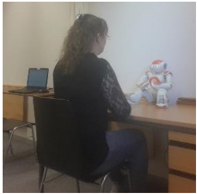
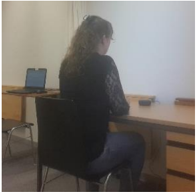
For young adults in particular, it is proposed that interactive technologies can help alleviate loneliness. However, while state loneliness was found to lead to a more positive evaluation of interactive technologies, general loneliness was found to have the opposite effect. Since interactive technologies vary regarding their human-likeness in appearance and behavior, it needs to be investigated how this affects the perception of young adults while considering potential effects of their loneliness. In an experimental lab study with a 2x2 between-subjects design, 101 participants aged 18-35 years interacted either with a social robot or a voice assistant which either displayed a rather human-like or machine-like communication style. General and state loneliness were assessed alongside evaluations of the interactive technology. Overall, the participants appeared to be more comfortable the more their interaction partner looked and talked in a human-like manner. The self-reported state loneliness was very low and appeared to have no influence on evaluations. General loneliness hints towards a trend towards a more negative evaluation of the interactive technology’s social attractiveness - a finding that should be further investigated in future studies.
Overview
The claims and statistics of this paper haven’t been checked yet.
Run the check — free, no account needed. It reads the open-access text and checks the sources it cites.
Integrity signals
Registry
Cites
Statistics
Figures
Verification
Claims the paper makes
The claims and statistics of this paper haven’t been checked yet.
Run the check — free, no account needed. It reads the open-access text and checks the sources it cites.
Claims other papers make about this one
Each is checked against this paper’s own text: does it say what the citing paper says it does?
In the citing paper
“Even further, chronic loneliness is associated with reduced sensitivity to social signals, which may make it even harder for individuals to perceive a chatbot's social cues (Floyd et al., 2022;Horstmann & Boußard, 2024).”
From Understanding Human-Chatbot Romance: A Qualitative and Quantitative Study on Romantic Fantasy and Other Interpersonal Characteristics (2025) · cites this paper as Horstmann & Boußard, 2024
Self-check
Percentages, sums and reported differences re-computed from the paper’s own numbers.
The self-check needs the paper’s full text.
Citations
Cites
No references could be resolved yet.
Research works printed but not linked: 11
- [32]Sijia Li, Feng Yu, and Kaiping Peng. 2020. Effect of state loneliness on robot anthropomorphism: Potential edge of social robots compared to common nonhumans. Fournal of Physics: Conference Series 1631, 1, 12024. DOI: https://doi.org/10.1088/17426596/1631/1/012024. · DOI
- [34]Eetu Marttila, Aki Koivula, and Pekka Räsänen. 2021. Does excessive social media use decrease subjective well-being? A longitudinal analysis of the relationship between problematic use, loneliness and life satisfaction. Telematics and Informatics 59, 101556. DOI: https://doi.org/10.1016/j.tele.2020.101556. · DOI
- [35]Junya Nakanishi, Jun Baba, Itaru Kuramoto, Kohei Ogawa, Yuichiro Yoshikawa, and Hroshi Ishiguro. 2020. Smart speaker vs. social robot in a case of hotel room. In 2020 IEEE/RSF International Conference on Intelligent Robots and Systems (IROS). IEEE, 11391–11396. DOI: https://doi.org/10.1109/IROS45743.2020.9341537. · DOI
- [36]Clifford Nass and Youngme Moon. 2000. Machines and mindlessness: Social responses to computers. Fournal of Social Issues 56, 1, 81–103. DOI: https://doi.org/10.1111/0022-4537.00153. · DOI · Paper page
- [37]L. A. Peplau and D. Pertman. 1982. Loneliness: A sourcebook of current theory, research, and therapy. Wiley.
- [38]Cynthia L. Pickett, Wendi L. Gardner, and Megan Knowles. 2004. Getting a cue: the need to belong and enhanced sensitivity to social cues. Personality & Social Psychology Bulletin 30, 9, 1095-1107. DOI: https://doi.org/10.1177/0146167203262085. · DOI · Paper page
- [39]Samira Rasouli, Garima Gupta, Elizabeth Nilsen, and Kerstin Dautenhahn. 2022. Potential applications of social robots in robot-assisted interventions for social anxiety. International Journal of Social Robotics 14, 5, 1–32. DOI: https://doi.org/10.1007/s12369-021-00851-0. · DOI
- [40]Byron Reeves and Clifford Nass. 1996. The Media Equation: How People Treat Computers, Television, and New Media like Real People and Places. Cambridge University Press.
- [41]Astrid Rosenthal-von der Putten, Carolin Strassmann, and Martina Mara. 2017. A long time ago in a galaxy far, far away...The effects of narration and appearance on the perception of robots. In 26th IEEE International Symposium on Robot and Human Interactive Communication - RO-MAN '17. IEEE, 1169–1174. DOI: https://doi.org/10.1109/ROMAN.2017.8172452. · DOI
- [42]Kennon M. Sheldon and Alexander Gunz. 2009. Psychological needs as basic motives, not just experiential requirements. Fournal of Personality 77, 5, 1467–1492. DOI: https://doi.org/10.1111/j.1467-6494.2009.00589.x. · DOI · Paper page
- [43]Eeske van Roekel, Maaike Verhagen, Rutger C. M. E. Engels, Ron H. J. Scholte, Stephanie Cacioppo, and John T. Cacioppo. 2018. Trait and state levels of loneliness in early and late adolescents: Examining the differential reactivity hypothesis. Fournal of Clinical Child and Adolescent Psychology 47, 6, 888–899. DOI: https://doi.org/10.1080/15374416.2016.1146993. · DOI · Paper page
Cited by
Ebner, P., & Szczuka, J. (2025) · arXiv · doi:10.48550/arxiv.2503.00195 · Cited by 33
Metadata
- Authors
- Horstmann, A., & Boußard, J.
- ORCID
- Horstmann, Aike
- Publisher
- Center for Open Science
- Published
- 2024-05-21
- Cited by
- 0
- References
- 0
- Type
- Preprint
About these checks
Registry, retraction, Cites and statistics results are computed, not judged, with one exception: a printed reference that no index lists is read once by a model before it counts as a citation error. Claims are extracted by a model and kept only when their quote appears verbatim in the text; each cited source is then checked, with a model’s help, for whether it says what the claim relies on. Those verdicts can be wrong — read the claim’s quote and the cited source before relying on one.
Statistics and arithmetic are recomputed, not judged.
Confidence bands are shown only for fields calibrated on our annotated test set. None is calibrated yet, so no band is shown.
What counts as a claim ›How we measure confidence ›How we check this ›
Are you an author, or do you see a problem with this page? Request a review
How to cite
Cite CoChat for the checks on this page, and the paper for its own findings.
- This page
- CoChat. (2026). Citation check: How do Lonely, Young Adults Perceive Interactive Technologies With Varying Human-Likeness? An Experimental Lab Study. https://app.cochat.ai/papers/10.31219/osf.io/7avf8
- The paper
- Horstmann, A., & Boußard, J. (2024). How do Lonely, Young Adults Perceive Interactive Technologies With Varying Human-Likeness? An Experimental Lab Study. https://doi.org/10.31219/osf.io/7avf8
Data sources
Bibliographic data: Semantic Scholar, OpenAlex, Crossref.
Contains information from the Semantic Scholar Academic Graph Datasets, made available under the ODC Attribution License (ODC-BY 1.0).
Semantic Scholar’s data is described in: Kinney, R., et al. (2023). The Semantic Scholar Open Data Platform. arXiv:2301.10140.
