

The DOI matches its Crossref record; 49 of the 51 references it cites were found in a registry or an index.
Convolution Neural Network for Breast Cancer Detection and Classification Using Deep Learning
Open accessAbstract
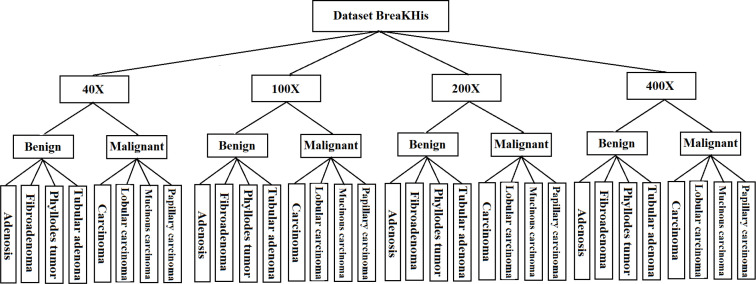
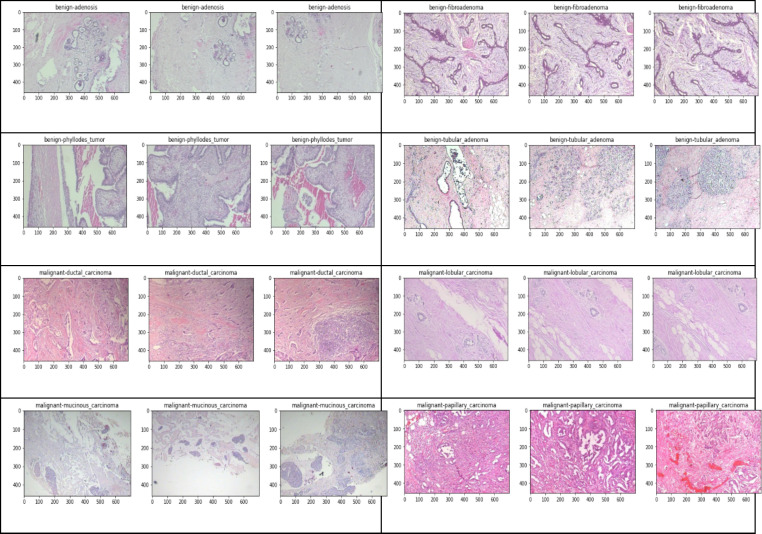
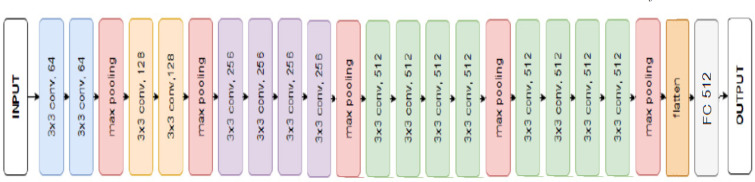
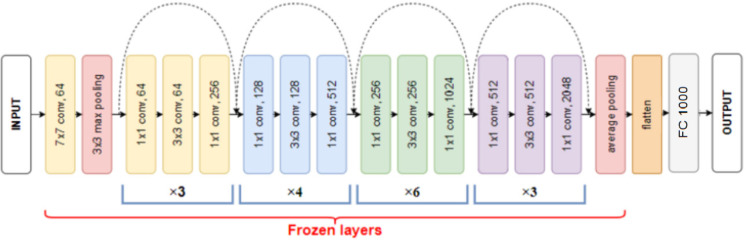
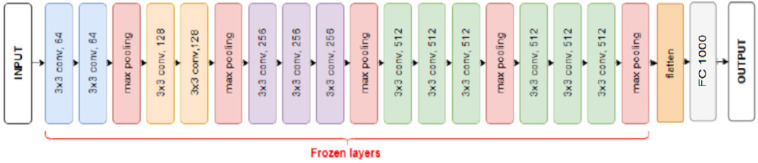
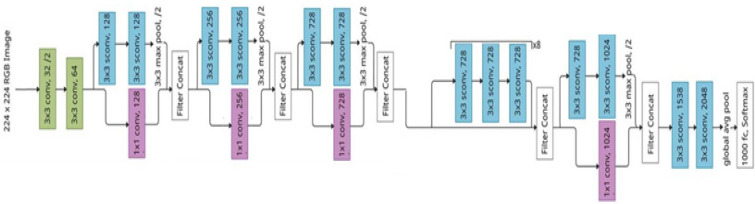
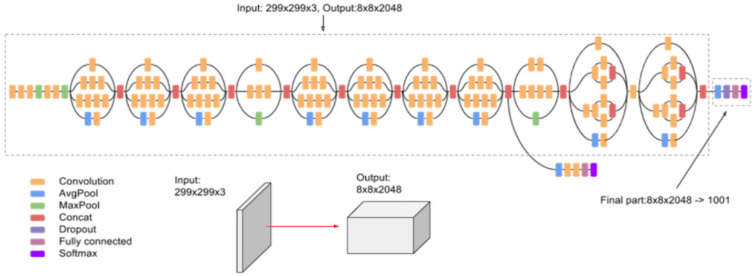
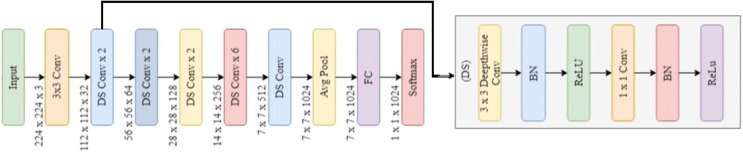
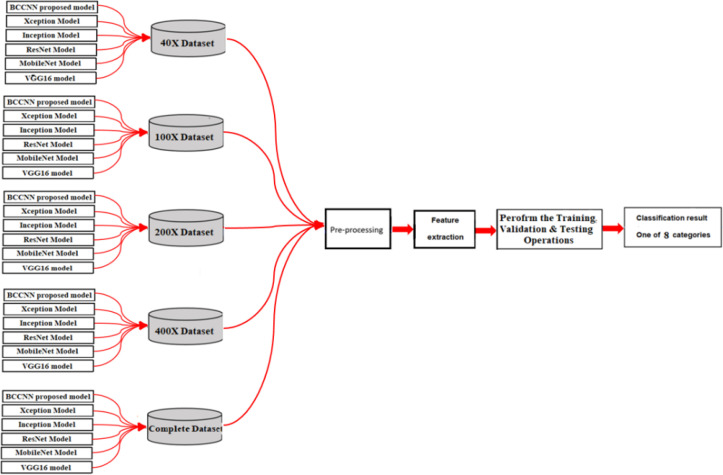
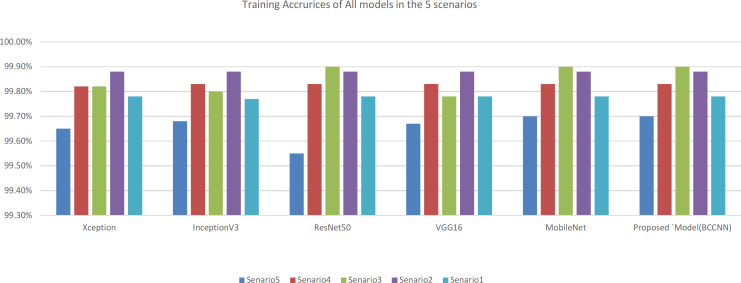
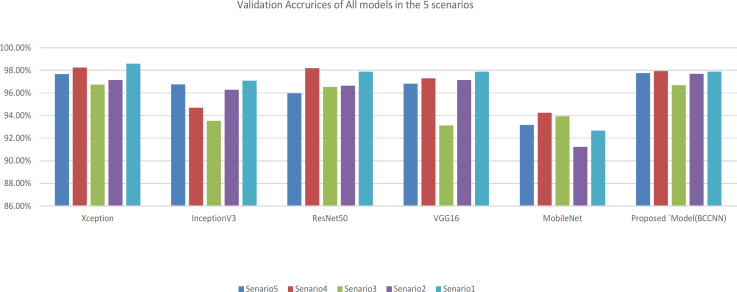
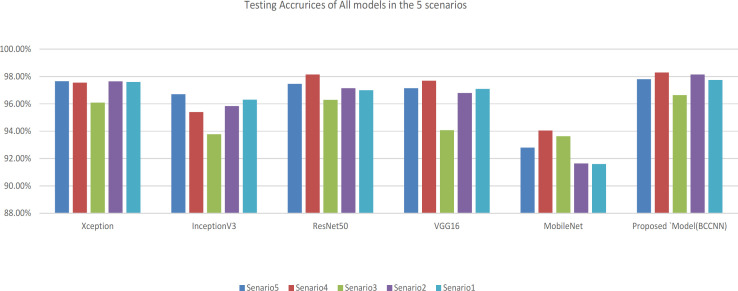
OBJECTIVE: Early detection and precise diagnosis of breast cancer (BC) plays an essential part in enhancing the diagnosis and improving the breast cancer survival rate of patients from 30 to 50%. Through the advances of technology in healthcare, deep learning takes a significant role in handling and inspecting a great number of X-ray, MRI, CTR images. The aim of this study is to propose a deep learning model (BCCNN) to detect and classify breast cancers into eight classes: benign adenosis (BA), benign fibroadenoma (BF), benign phyllodes tumor (BPT), benign tubular adenoma (BTA), malignant ductal carcinoma (MDC), malignant lobular carcinoma (MLC), malignant mucinous carcinoma (MMC), and malignant papillary carcinoma (MPC). METHODS: Breast cancer MRI images were classified into BA, BF, BPT, BTA, MDC, MLC, MMC, and MPC using a proposed Deep Learning model with additional 5 fine-tuned Deep learning models consisting of Xception, InceptionV3, VGG16, MobileNet and ResNet50 trained on ImageNet database. The dataset was collected from Kaggle depository for breast cancer detection and classification. That Dataset was boosted using GAN technique. The images in the dataset have 4 magnifications (40X, 100X, 200X, 400X, and Complete Dataset). Thus we evaluated the proposed Deep Learning model and 5 pre-trained models using each dataset individually. That means we carried out a total of 30 experiments. The measurement that was used in the evaluation of all models includes: F1-score, recall, precision, accuracy. RESULTS: The classification F1-score accuracies of Xception, InceptionV3, ResNet50, VGG16, MobileNet, and Proposed Model (BCCNN) were 97.54%, 95.33%, 98.14%, 97.67%, 93.98%, and 98.28%, respectively. CONCLUSION: Dataset Boosting, preprocessing and balancing played a good role in enhancing the detection and classification of breast cancer of the proposed model (BCCNN) and the fine-tuned pre-trained models' accuracies greatly. The best accuracies were attained when the 400X magnification of the MRI images due to their high images resolution.
Overview
The claims and statistics of this paper haven’t been checked yet.
Run the check — free, no account needed. It reads the open-access text and checks the sources it cites.
Integrity signals
Registry
Cites
Statistics
Figures
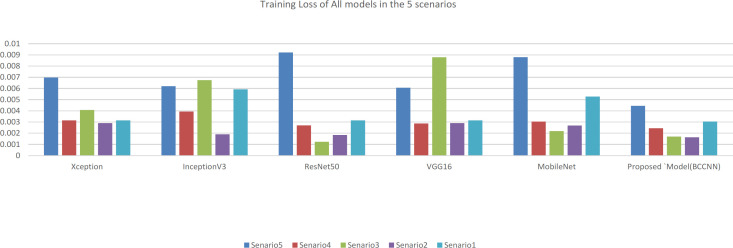
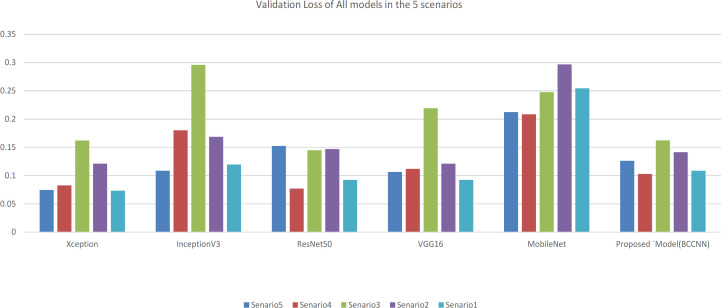
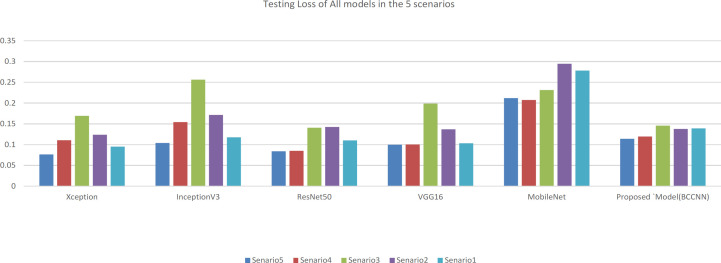
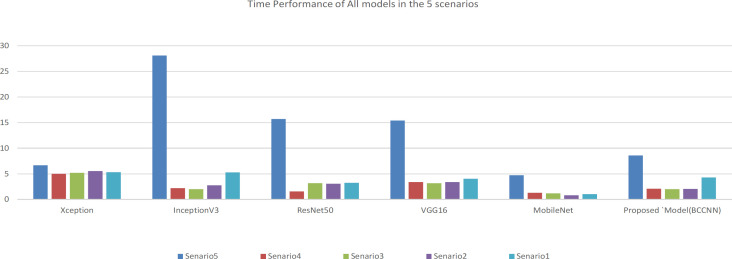
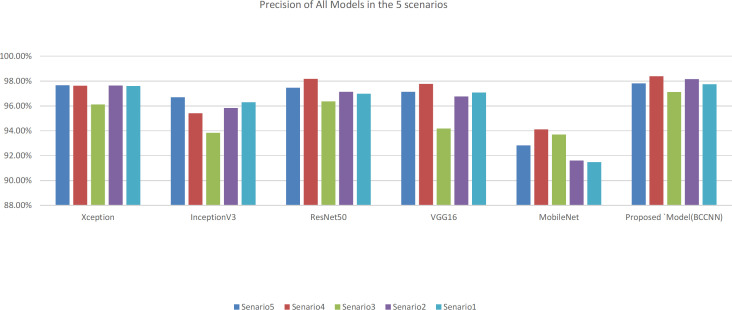
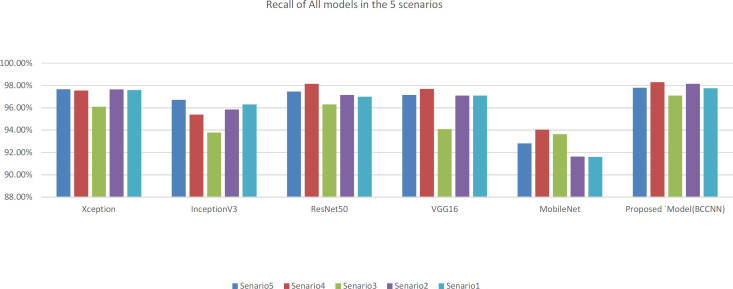
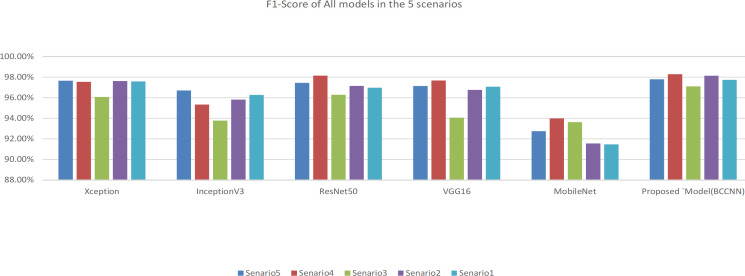
Verification
Claims the paper makes
The claims and statistics of this paper haven’t been checked yet.
Run the check — free, no account needed. It reads the open-access text and checks the sources it cites.
Claims other papers make about this one
Each is checked against this paper’s own text: does it say what the citing paper says it does?
In the citing paper
“These models demonstrated remarkable accuracy in their classification tasks, with rates of 97.54%, 95.33%, 98.14%, 97.67%, 93.98%, and 98.28% respectively”
From A Comprehensive Review on Synergy of Multi-Modal Data and AI Technologies in Medical Diagnosis (2024) · cites this paper as [98]
In the citing paper
“| Abunasser et al. [98] | Original MRI data | MRI | Kaggle depository | 98.28 (F1-score) |”
From A Comprehensive Review on Synergy of Multi-Modal Data and AI Technologies in Medical Diagnosis (2024) · cites this paper as [98]
Self-check
Percentages, sums and reported differences re-computed from the paper’s own numbers.
The self-check needs the paper’s full text.
Citations
Cites
Waks, A. G., & Winer, E. P. (2019) · JAMA · doi:10.1001/jama.2018.19323 · Cited by 5,071
Convolutional Neural Networks for Medical Image Analysis: Full Training or Fine Tuning?
Tajbakhsh, N., Shin, J. Y., Gurudu, S. R., Hurst, R. T., Kendall, C. B., Gotway, M. B., & Liang, J. (2016) · IEEE Transactions on Medical Imaging · doi:10.1109/tmi.2016.2535302 · Cited by 3,277
Khan, J., Wei, J. S., Ringnér, M., Saal, L. H., Ladanyi, M., Westermann, F., Berthold, F., Schwab, M., Antonescu, C. R., Peterson, C., et al. (2001) · Nature Medicine · doi:10.1038/89044 · Cited by 2,644
Deep Learning to Improve Breast Cancer Detection on Screening Mammography
Shen, L., Margolies, L. R., Rothstein, J. H., Fluder, E., McBride, R., & Sieh, W. (2019) · Scientific Reports · doi:10.1038/s41598-019-48995-4 · Cited by 1,151
Breast cancer histopathological image classification using Convolutional Neural Networks
Spanhol, F. A., Oliveira, L. S., Petitjean, C., & Heutte, L. (2016) · International Joint Conference on Neural Networks (IJCNN) · doi:10.1109/ijcnn.2016.7727519 · Cited by 1,028
Overview of resistance to systemic therapy in patients with breast cancer
Gonzalez-Angulo, A. M., Morales-Vasquez, F., & Hortobagyi, G. N. (2007) · Advances in Experimental Medicine and Biology · doi:10.1007/978-0-387-74039-3_1 · Cited by 904
Using Machine Learning Algorithms for Breast Cancer Risk Prediction and Diagnosis
Asri, H., Mousannif, H., Moatassime, H. A., & Noël, T. (2016) · Procedia Computer Science · doi:10.1016/j.procs.2016.04.224 · Cited by 773
Breast cancer detection using deep convolutional neural networks and support vector machines
Ragab, D., Sharkas, M., Marshall, S., & Ren, J.-C. (2019) · PeerJ · doi:10.7717/peerj.6201 · Cited by 438
Breast cancer diagnosis: Imaging techniques and biochemical markers
Jafari, S. H., Saadatpour, Z., Salmaninejad, A., Momeni, F., Mokhtari, M., Nahand, J. S., Rahmati, M., Mirzaei, H., & Kianmehr, M. (2018) · Journal of Cellular Physiology · doi:10.1002/jcp.26379 · Cited by 410
Machine Learning Algorithms For Breast Cancer Prediction And Diagnosis
Naji, M. A., Filali, S. E., Aarika, K., Benlahmar, E. H., Abdelouahid, R. A., & Debauche, O. (2021) · Procedia Computer Science · doi:10.1016/j.procs.2021.07.062 · Cited by 388
Cited by
Sorted by citations
A Comprehensive Review on Synergy of Multi-Modal Data and AI Technologies in Medical Diagnosis
Xu, X., Li, J., Zhu, Z., Zhao, L., Wang, H., Song, C., Chen, Y., Zhao, Q., Yang, J., & Pei, Y. (2024) · Bioengineering · doi:10.3390/bioengineering11030219 · Cited by 242
Mahesh, T. R., Thakur, A., Gupta, M., Sinha, D. K., Mishra, K. K., Venkatesan, V. K., & Guluwadi, S. (2024) · International Journal of Computational Intelligence Systems · doi:10.1007/s44196-023-00397-1 · Cited by 145
Applications and Techniques of Machine Learning in Cancer Classification: A Systematic Review
Yaqoob, A., Aziz, R. M., & Verma, N. K. (2023) · Human-Centric Intelligent Systems · doi:10.1007/s44230-023-00041-3 · Cited by 134
“Numerous machine learning techniques, such as Support Vector Machines (SVM), Artificial Neural Networks (ANN), Random Forest, Decision Trees, and Deep Learning, have been used to categorise various types of cancer [14, 123–126].”
Kumar, Y., Shrivastav, S., Garg, K., Modi, N., Wiltos, K., Woźniak, M., & Ijaz, M. F. (2024) · Scientific Reports · doi:10.1038/s41598-024-75876-2 · Cited by 65
“For detecting and classifying breast cancer, Abunasser et al. (2023) 16 proposed Breast convolutional neural network to identify the patients who fall in different stages of Breast cancer by using histopathological images.”
BackgroundFederated Learning Approach for Breast Cancer Detection Based on DCNN
AlSalman, H., Al-Rakhami, M. S., Alfakih, T. M., & Hassan, M. M. (2024) · IEEE Access · doi:10.1109/access.2024.3374650 · Cited by 58
Metadata
- Authors
- Abunasser, B., AL-Hiealy, M. R., Zaqout, I., & Abu-Naser, S.
- Affiliations
- University Malaysia of Computer Science and Engineering (MY)
- Al-Azhar University – Gaza (PS)
- Corresponding author
- Abunasser, Basem
- Venue
- Asian Pacific Journal of Cancer Prevention
- Publisher
- EpiSmart Science Vector Ltd
- Published
- 2023-02-01
- Volume
- 24
- Issue
- 2
- Pages
- 531-544
- ISSN
- 1513-7368 (ISSN-L)
- 2476-762X
- PMC
- PMC10162639
- OpenAlex
- W4322616751
- Cited by
- 174
- References
- 51
- Citations by year
- 2026: 41 · 2025: 81 · 2024: 45 · 2023: 6
- FWCI
- 16.31
- Type
- journal article
- Language
- en
- Open access
- gold
- doi.org
- Licence
- cc-by
- Locations
- Asian Pacific Journal of Cancer Prevention (publishedVersion, cc-by)
- PubMed Central (publishedVersion, cc-by-nc)
- PubMed (publishedVersion)
- Topics
- Physical Sciences › Computer Science › Artificial Intelligence › AI in cancer detection
- Health Sciences › Medicine › Radiology, Nuclear Medicine and Imaging › MRI in cancer diagnosis
- Health Sciences › Medicine › Radiology, Nuclear Medicine and Imaging › Radiomics and Machine Learning in Medical Imaging
- Keywords
- breast cancer, breast cancer classification, convolutional neural networks, pre-trained models, transfer learning, GAN data augmentation, benign breast tumors, ductal carcinoma, lobular carcinoma, papillary carcinoma, magnification, early detection
- MeSH terms
- Deep Learning, Breast Neoplasms, Carcinoma, Papillary, Female, Fibroma, Humans, Fibroadenoma, Carcinoma, Ductal, Breast, Carcinoma, Lobular
About these checks
Registry, retraction, Cites and statistics results are computed, not judged, with one exception: a printed reference that no index lists is read once by a model before it counts as a citation error. Claims are extracted by a model and kept only when their quote appears verbatim in the text; each cited source is then checked, with a model’s help, for whether it says what the claim relies on. Those verdicts can be wrong — read the claim’s quote and the cited source before relying on one.
Statistics and arithmetic are recomputed, not judged.
Confidence bands are shown only for fields calibrated on our annotated test set. None is calibrated yet, so no band is shown.
What counts as a claim ›How we measure confidence ›How we check this ›
Are you an author, or do you see a problem with this page? Request a review
