

Molecular Gene Expression Testing to Identify Alzheimer’s Disease with High Accuracy from Fingerstick Blood
Open accessThe DOI matches its Crossref record; 28 of the 28 references it cites were found in a registry or an index; none of the 47 sources its claims cite is checked for support yet.
Abstract
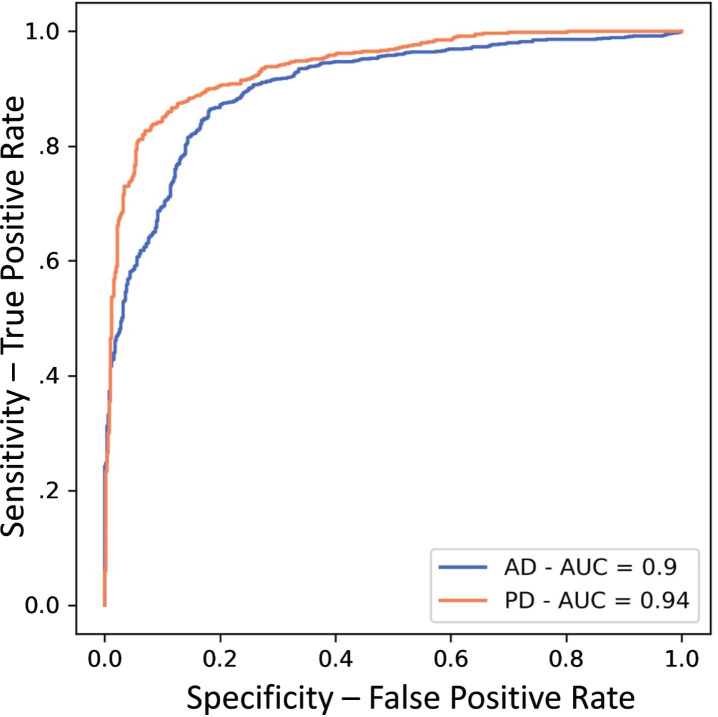
Background: There is no molecular test for Alzheimer’s disease (AD) using self-collected samples, nor is there a definitive molecular test for AD. We demonstrate an accurate and potentially definitive TempO-Seq ® gene expression test for AD using fingerstick blood spotted and dried on filter paper, a sample that can be collected in any doctor’s office or can be self-collected. Objective: Demonstrate the feasibility of developing an accurate test for the classification of persons with AD from a minimally invasive sample of fingerstick blood spotted on filter paper which can be obtained in any doctor’s office or self-collected to address health disparities. Methods: Fingerstick blood samples from patients clinically diagnosed with AD, Parkinson’s disease (PD), or asymptomatic controls were spotted onto filter paper in the doctor’s office, dried, and shipped to BioSpyder for testing. Three independent patient cohorts were used for training/retraining and testing/retesting AD and PD classification algorithms. Results: After initially identifying a 770 gene classification signature, a minimum set of 68 genes was identified providing classification test areas under the ROC curve of 0.9 for classifying patients as having AD, and 0.94 for classifying patients as having PD. Conclusions: These data demonstrate the potential to develop a screening and/or definitive, minimally invasive, molecular diagnostic test for AD and PD using dried fingerstick blood spot samples that are collected in a doctor’s office or clinic, or self-collected, and thus, can address health disparities. Whether the test can classify patients with AD earlier then possible with cognitive testing remains to be determined.
Overview
CoChat Summary
TL;DR
This study reports a TempO-SeqDBS gene expression assay using fingerstick blood dried on filter paper to classify Alzheimer’s disease (AD) and Parkinson’s disease (PD). A minimal 68-gene SVM classifier achieved ROC-AUC 0.9 for AD and 0.94 for PD across three cohorts, with 98% accuracy across 106 samples.
Key findings
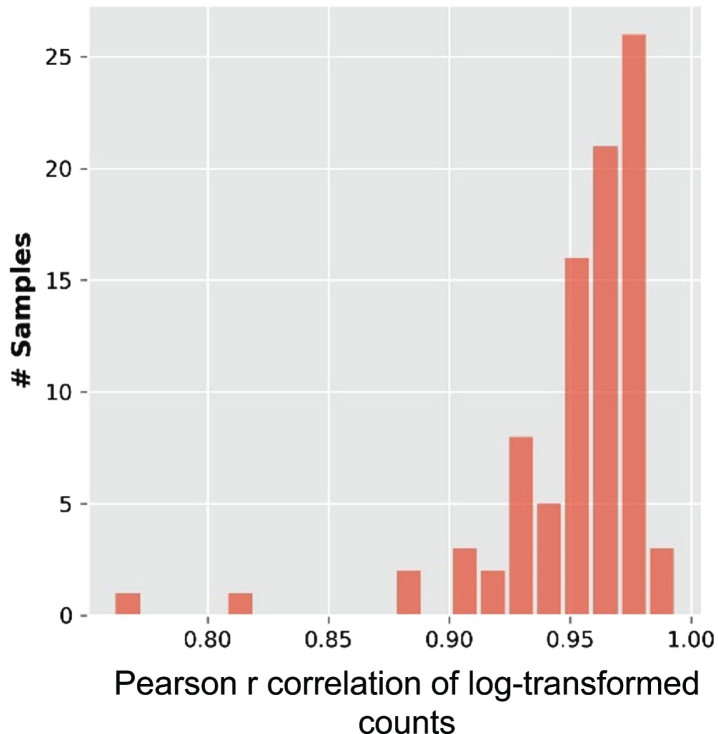
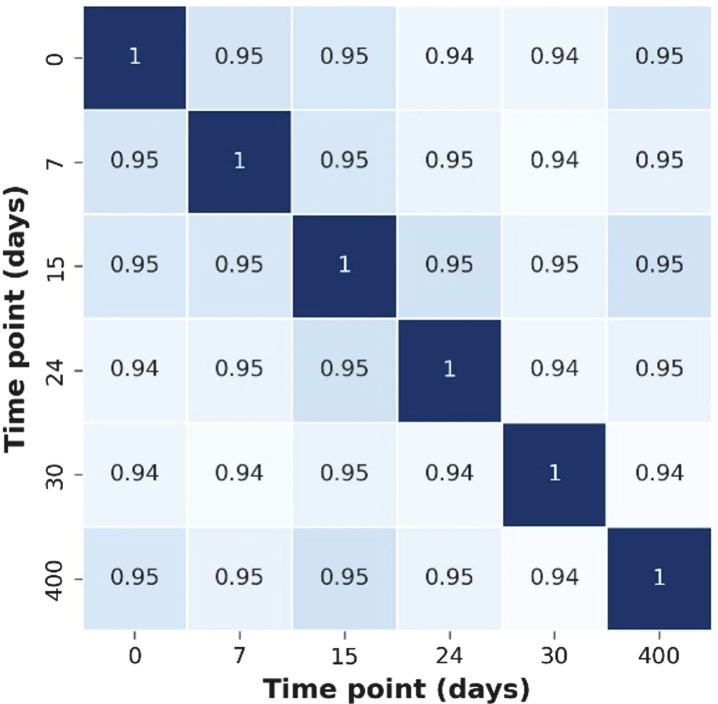
- The TempO-SeqDBS assay successfully profiled whole-transcriptome gene expression from fingerstick blood spotted and dried on filter paper; replicate Pearson correlations were significant at p < 0.05, and same-donor samples tested over 400 days showed reproducibility.
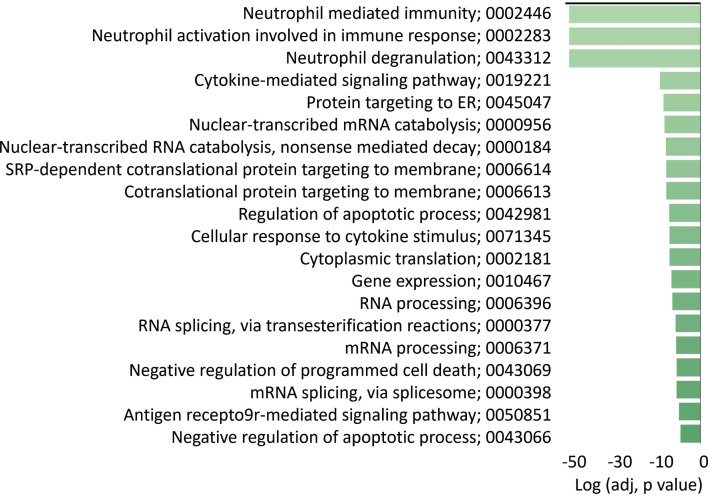
- An initial 770-gene signature was identified; pathway analysis showed predominant immune response pathways, with the three most significant pathways related to neutrophil involvement in immune and inflammatory response.
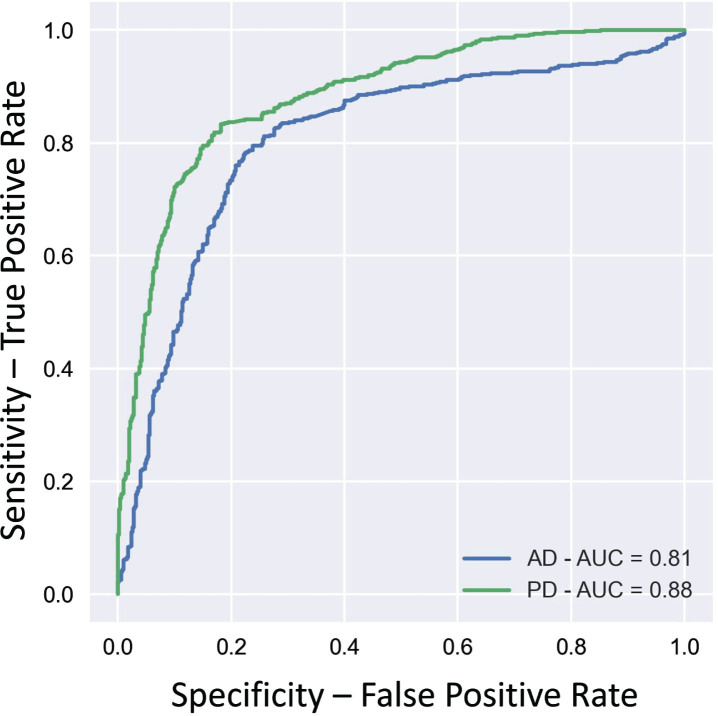
- A minimal 68-gene signature using a linear SVM model (kernel = linear, gamma = 0.1, c = 0.001) yielded ROC-AUCAD = 0.9 and ROC-AUCPD = 0.94 across cohorts A, B, and C, with 98% accuracy across all 106 samples (two misclassified).
- Among 12 AD patients with available Aβ PET scores, all 12 were classified as AD by TempO-SeqDBS, including 9 Aβ PET-positive and 3 Aβ PET-negative; one PD patient with positive Aβ PET and DaTscan was classified as PD.
Methods
- Fingerstick blood (2–3 drops) was spotted onto Whatman filter paper, air-dried, de-identified, shipped, and punched (two 1.6 mm areas per well, four replicate wells per patient). Samples were lysed and tested with the commercial TempO-Seq Whole Transcriptome Whole Blood assay v2.1 measuring ∼21,000 genes, sequenced on Illumina NextSeq to ∼6 M reads/sample; QC removed replicates with Pearson R < 0.9, requiring at least 3 remaining replicates/sample.
- Patients clinically diagnosed with AD or PD and asymptomatic controls were consented under an IRB-approved protocol at the Neurology Center of Southern California. AD diagnosis followed NIA-AA 2011 guidance; PD diagnosis followed UK Parkinson’s Disease Society Brain Bank guidance. Three independent patient cohorts were used for training/retraining and testing/retesting AD and PD classification algorithms.
- Machine learning approaches included k-nearest neighbors, random forest, SVM with linear, polynomial, or RBF kernels, and XGBoost, with hyperparameters tuned by random grid. Random 80% subsets trained classifiers tested on remaining 20%; the linear SVM performed best. Gene selection used 100 random training sets, cumulative weight scores, and ROC curves for top-scoring genes, yielding a final 68-gene signature.
Limitations
- The paper states the risk of overfitting from small sample sizes; the number of PD samples was more limiting and will be the focus of follow-up. Aβ PET scores were available for only 12 (24%) of 50 clinically diagnosed AD patients, and a much larger cohort with Aβ PET and DaTscan data is needed to confirm conclusions.
- The paper states that longitudinal samples are needed to determine how early in AD progression the test can classify patients, whether classification occurs before biomarker or Aβ PET positivity, and whether all classified patients eventually become biomarker and Aβ PET positive. It also states there are no data on whether gene expression changes are connected to disease progression or response, and whole blood single-cell studies are planned to identify contributing cells.
- Evident from the text: all samples came from a single Neurology Center of Southern California, and the paper does not report blinding or validation at independent external sites, which may limit generalizability.
Model-written summary. Check it against the paper before relying on it.
Integrity signals
Registry
Cites
Statistics
Figures
Verification
Claims the paper makes
0 Valid · 0 Not valid · 19 Not checked · 47 Own results and interpretations
A result the paper reports from its own data — it cites no other source for it, so there is none to check. The quote shows it is in the paper.
In the paper
“The coefficients reported in Fig. 1 were all significant with a p < 0.05.”
§ Molecular Gene Expression Testing to Identify Alzheimer’s Disease with High Accuracy from Fingerstick Blood > RESULTS
plainstates an association- Asserted: passes — The authors put it forward as true.
- Checkable: passes — It can be checked against evidence.
- Load-bearing: passes — The paper’s conclusions depend on it.
- Based: passes — The paper gives a reason why it holds.
None of the sources cited for this claim have been checked yet.
In the paper
“Components of whole blood have previously been shown to interfere with certain steps in the TempO-Seq protocol, an interference we were successful in overcoming to establish the Tempo-SeqDBS protocol.32”
§ Molecular Gene Expression Testing to Identify Alzheimer’s Disease with High Accuracy from Fingerstick Blood > RESULTS
plainstates a cause- Asserted: passes — The authors put it forward as true.
- Checkable: passes — It can be checked against evidence.
- Load-bearing: passes — The paper’s conclusions depend on it.
- Based: passes — The paper gives a reason why it holds.
A result the paper reports from its own data — it cites no other source for it, so there is none to check. The quote shows it is in the paper.
In the paper
“After initially identifying a 770 gene classification signature, a minimum set of 68 genes was identified providing classification test areas under the ROC curve of 0.9 for classifying patients as having AD, and 0.94 for classifying patients as having PD.”
§ Molecular Gene Expression Testing to Identify Alzheimer’s Disease with High Accuracy from Fingerstick Blood > Abstract > Results:
plain- Asserted: passes — The authors put it forward as true.
- Checkable: passes — It can be checked against evidence.
- Load-bearing: passes — The paper’s conclusions depend on it.
- Based: passes — The paper gives a reason why it holds.
A result the paper reports from its own data — it cites no other source for it, so there is none to check. The quote shows it is in the paper.
In the paper
“After initially identifying a 770 gene classification signature, a minimum set of 68 genes was identified providing classification test areas under the ROC curve of 0.9 for classifying patients as having AD, and 0.94 for classifying patients as having PD.”
§ Molecular Gene Expression Testing to Identify Alzheimer’s Disease with High Accuracy from Fingerstick Blood > Abstract > Results:
plainstates an association- Asserted: passes — The authors put it forward as true.
- Checkable: passes — It can be checked against evidence.
- Load-bearing: passes — The paper’s conclusions depend on it.
- Based: passes — The paper gives a reason why it holds.
A result the paper reports from its own data — it cites no other source for it, so there is none to check. The quote shows it is in the paper.
In the paper
“This model was used without further retraining to classify an independent cohort of 22 AD patients (cohort B), 18 of which were predicted as AD while the remaining 4 were predicted as PD.”
§ Molecular Gene Expression Testing to Identify Alzheimer’s Disease with High Accuracy from Fingerstick Blood > RESULTS
plainn = 22- Asserted: passes — The authors put it forward as true.
- Checkable: passes — It can be checked against evidence.
- Load-bearing: passes — The paper’s conclusions depend on it.
- Based: passes — The paper gives a reason why it holds.
29 more claims
Create a free account to see all 66 claims and to verify the 39 references still open.
- It may state two separate claims as one. 24
- The quote only partly states this claim. 1
- Probably not a substantial claim. 12
Self-check
Percentages, sums and reported differences re-computed from the paper’s own numbers.
Each contradiction between two passages listed here was confirmed by an independent check.
Rated minor: it would not touch a result — a value no result rests on, a p-value that stays on the same side of the significance level, or a conflict that is clerical, resolved elsewhere in the paper, or outside its own findings.
In the paper
§ Molecular Gene Expression Testing to Identify Alzheimer’s Disease with High Accuracy from Fingerstick Blood > RESULTS
“This model was used without further retraining to classify an independent cohort of 22 AD patients (cohort B)”
§ Molecular Gene Expression Testing to Identify Alzheimer’s Disease with High Accuracy from Fingerstick Blood > DISCUSSION
“the consistent results for the additional independent AD patient Cohort B of 22 samples, tested separately after retraining the 770 gene signature with all the Cohort A samples”
Rated minor: it would not touch a result — a value no result rests on, a p-value that stays on the same side of the significance level, or a conflict that is clerical, resolved elsewhere in the paper, or outside its own findings.
In the paper
§ Molecular Gene Expression Testing to Identify Alzheimer’s Disease with High Accuracy from Fingerstick Blood > RESULTS
“A steady maximum level of AUC was observed when the first 47 of the top scoring genes were selected for both the AD and PD classifications, with 13 of those genes being in common between AD and PD.”
§ Molecular Gene Expression Testing to Identify Alzheimer’s Disease with High Accuracy from Fingerstick Blood > RESULTS
“The final signature consisted of a total of 68 genes.”
Rated minor: it would not touch a result — a value no result rests on, a p-value that stays on the same side of the significance level, or a conflict that is clerical, resolved elsewhere in the paper, or outside its own findings.
In the paper
§ Molecular Gene Expression Testing to Identify Alzheimer’s Disease with High Accuracy from Fingerstick Blood > RESULTS
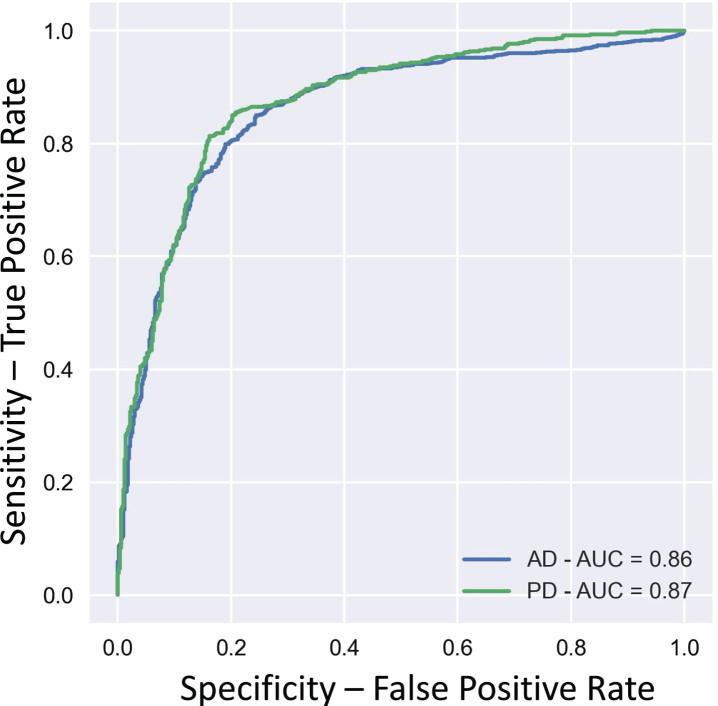
“and for PD (ROC-AUCPD = 0.86).”
§ Molecular Gene Expression Testing to Identify Alzheimer’s Disease with High Accuracy from Fingerstick Blood > RESULTS
“The resulting ROC-AUC vales were 0.81 for AD and 0.88 for PD.”
Citations
Cites
2022 Alzheimer's disease facts and figures
(2022) · Alzheimer's & Dementia · doi:10.1002/alz.12638 · Cited by 2,341
Clinical diagnosis of Alzheimer’s disease: Recommendations of the International Working Group
Dubois, B., Villain, N., Frisoni, G. B., Rabinovici, G. D., Sabbagh, M., Cappa, S., Bejanin, A., Bombois, S., Epelbaum, S., Teichmann, M., et al. (2021) · The Lancet Neurology · doi:10.1016/s1474-4422(21)00066-1 · Cited by 1,051 · cited 2×
“4 This series of tests requires access to a medical specialist and numerous laboratory visits.”
BackgroundHansson, O., Seibyl, J., Stomrud, E., Zetterberg, H., Trojanowski, J. Q., Bittner, T., Lifke, V., Corradini, V., Eichenlaub, U., Batrla, R., et al. (2018) · Alzheimer's & Dementia · doi:10.1016/j.jalz.2018.01.010 · Cited by 808 · cited 1×
“6 Not only is there no definitive molecular test for AD, but there is no molecular test that uses a minimally invasive sample permitting collection in any doctor’s office or self-collection that can be used to screen persons to identify those who should seek further diagnosis for AD.”
BackgroundA trichostatin A expression signature identified by TempO-Seq targeted whole transcriptome profiling
Yeakley, J. M., Shepard, P. J., Goyena, D. E., VanSteenhouse, H. C., McComb, J. D., & Seligmann, B. E. (2017) · PLOS ONE · doi:10.1371/journal.pone.0178302 · Cited by 219
Self-citationGobom, J., Parnetti, L., Rosa-Neto, P., Vyhnalek, M., Gauthier, S., Cataldi, S., Lerch, O., Laczo, J., Cechova, K., Clarin, M., et al. (2022) · Clinical Chemistry and Laboratory Medicine (CCLM) · doi:10.1515/cclm-2021-0651 · Cited by 146
Mitochondrial Dysfunction and Immune Activation are Detectable in Early Alzheimer's Disease Blood
Lunnon, K., on behalf of the AddNeuroMed Consortium, Ibrahim, Z., Proitsi, P., Lourdusamy, A., Newhouse, S., Sattlecker, M., Furney, S., Saleem, M., Soininen, H., et al. (2012) · Journal of Alzheimer's Disease · doi:10.3233/jad-2012-111592 · Cited by 144
Rahman, M. R., Islam, T., Zaman, T., Shahjaman, M., Karim, M. R., Huq, F., Quinn, J. M. W., Holsinger, R. M. D., Gov, E., & Moni, M. A. (2020) · Genomics · doi:10.1016/j.ygeno.2019.07.018 · Cited by 136
Prediction of Alzheimer’s disease using blood gene expression data
Lee, T., & Lee, H. (2020) · Scientific Reports · doi:10.1038/s41598-020-60595-1 · Cited by 136
Majersik, J. J., Ahmed, A., Chen, I.-H. A., Shill, H., Hanes, G. P., Pelak, V. S., Hopp, J. L., Omuro, A., Kluger, B., & Leslie-Mazwi, T. (2021) · Neurology · doi:10.1212/wnl.0000000000012111 · Cited by 133 · cited 2×
“11 , 12 One potential application of the TempO-SeqDBS AD test is as a screening tool for patients who present to their general practitioner (GP) with concerns about early-stage AD or PD.”
BackgroundMethodWillemse, E. A. J., van Maurik, I. S., Tijms, B. M., Bouwman, F. H., Franke, A., Hubeek, I., Boelaarts, L., Claus, J. J., Korf, E. S. C., van Marum, R. J., et al. (2018) · Alzheimer's & Dementia: Diagnosis, Assessment & Disease Monitoring · doi:10.1016/j.dadm.2018.08.006 · Cited by 106
Cited by
Liu, X., Feng, F., Xie, S., Ma, Y., Wang, Y., Zhang, F., Wu, H., & Huang, S. (2025) · IET Systems Biology · doi:10.1049/syb2.70018 · Cited by 4
Proton channel Hv1 modulates microglial responses to neurological disorders
Stratmann, M., Gagliardi, C., & Capasso, M. (2025) · Frontiers in Biophysics · doi:10.3389/frbis.2025.1681011
Deshmukh, R. R., Kulkarni, P. H., & Raje, C. S. (2025) · International Conference on Computing Communication Control and automation · doi:10.1109/iccubea65967.2025.11283965
Hicks, S., Gomes, B. F., & Heslegrave, A. (2026) · Expert Review of Neurotherapeutics · doi:10.1080/14737175.2026.2734450
Petrovska, N., Larrondo-Petrie, M. M., & Pavlović, M. (2025) · International IEEE/EMBS Conference on Neural Engineering · doi:10.1109/ner61569.2025.11588926
Choi, D., & Choi, I.-A. (2026) · Antioxidants · doi:10.3390/antiox15101367
Petrovska, N., Larrondo-Petrie, M. M., & Pavlović, M. (2026) · IEEE Conference on Artificial Intelligence (CAI) · doi:10.1109/cai68641.2026.11536566
Metadata
- Authors
- Seligmann, B., Camiolo, S., Hernandez, M., Yeakley, J. M., Sahagian, G., & McComb, J.
- Affiliations
- Biospyder (United States) (US)
- Neurology Center of Southern California (US)
- Corresponding author
- Seligmann, Bruce
- Venue
- Journal of Alzheimer's Disease
- Publisher
- SAGE Publications
- Published
- 2024-09-11
- Volume
- 101
- Issue
- 3
- Pages
- 813-822
- ISSN
- 1387-2877 (ISSN-L)
- 1875-8908
- PMC
- PMC11492108
- OpenAlex
- W4402514028
- Semantic Scholar
- a223f5d7ad3660063b5909b69d058a5bfa22a16f
- Cited by
- 7
- References
- 28
- Citations by year
- 2026: 3 · 2025: 4
- FWCI
- 1.31
- Type
- journal article
- Language
- en
- Open access
- hybrid
- doi.org
- Licence
- cc-by-nc
- journals.sagepub.com/page/policies/text-and-data-mining-license (tdm)
- Locations
- Journal of Alzheimer s Disease (publishedVersion, cc-by-nc)
- PubMed Central (publishedVersion, cc-by-nc)
- PubMed (publishedVersion)
- Funders
- National Institutes of Health (1r43ag065039-01)
- National Institute on Aging (R44AG065039)
- Topics
- Health Sciences › Medicine › Psychiatry and Mental health › Dementia and Cognitive Impairment Research
- Life Sciences › Neuroscience › Cellular and Molecular Neuroscience › Alzheimer's disease research and treatments
- Life Sciences › Biochemistry, Genetics and Molecular Biology › Molecular Biology › Molecular Biology Techniques and Applications
- Keywords
- Alzheimer's disease, Parkinson's disease
- MeSH terms
- Aged, Aged, 80 and over, Alzheimer Disease, Blood Specimen Collection, Female, Humans, Male, Middle Aged, Parkinson Disease, Gene Expression Profiling
About these checks
Registry, retraction, Cites and statistics results are computed, not judged, with one exception: a printed reference that no index lists is read once by a model before it counts as a citation error. Claims are extracted by a model and kept only when their quote appears verbatim in the text; each cited source is then checked, with a model’s help, for whether it says what the claim relies on. Those verdicts can be wrong — read the claim’s quote and the cited source before relying on one.
A language model drew the claims from the paper on 2026-11-26, under version 3 of the claim definition (model deepseek-v4.1-flash, prompt extract-v3).
A second model labelled each claim on 2026-11-26 (model jev-1.13-20260917, definition revision gold-guideline-v0.2).
Statistics and arithmetic are recomputed, not judged.
Confidence bands are shown only for fields calibrated on our annotated test set. None is calibrated yet, so no band is shown.
What counts as a claim ›How we measure confidence ›How we check this ›
Are you an author, or do you see a problem with this page? Request a review
Data sources
Bibliographic data: Semantic Scholar, OpenAlex, Crossref.
Contains information from the Semantic Scholar Academic Graph Datasets, made available under the ODC Attribution License (ODC-BY 1.0).
Semantic Scholar’s data is described in: Kinney, R., et al. (2023). The Semantic Scholar Open Data Platform. arXiv:2301.10140.
