

Babylonian Physiognomic Omens in Cryptic Hebrew Orthography
Open accessThe DOI matches its Crossref record; 7 of the 7 references it cites were found in a registry or an index; none of the 17 sources its claims cite is checked for support yet.
Abstract
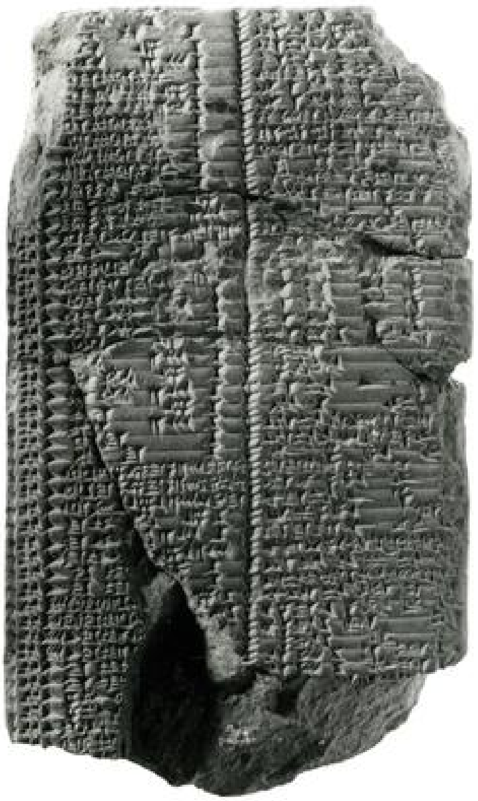
A unique text of physiognomic omens in Hebrew from the Dead Sea Scrolls (4Q186) is remarkable in that it mimics the similar Akkadian omens upon which it is based, in that it is written in a left-to-right format beginning with the column on the left. The Qumran text also avoids final letters and includes some words in Paleo-Hebrew script and Greek letters, all pointing to its Vorlage being an exemplar of Graeco-Babyloniaca (an Akkadian text in Greek transliteration), employed in order to make technical Akkadian more widely accessible. How to cite: Geller, M. J. Babylonian Physiognomic Omens in Cryptic Hebrew Orthography. Aestimatio: Sources and Studies in the History of Science (2023) 4: 1-16. https://doi.org/10.33137/aestimatio.v4.42936
Overview
CoChat Summary
TL;DR
Geller argues that the Hebrew physiognomic omen text 4Q186 from Qumran imitates Babylonian physiognomic omens and was likely translated from a Graeco-Babyloniaca Vorlage (an Akkadian text in Greek transliteration), explaining its left-to-right layout, paleo-Hebrew script, Greek letters, and avoidance of final letters. The paper re-edits the text and identifies Akkadian calques and structural parallels, including “column 2” as shorthand for apodoses in a two-column Vorlage.
Key findings
- 4Q186 is written left-to-right, often avoids final *kaf*, *mem*, and *nun*, uses paleo-Hebrew characters and Greek letters *β* and possibly *α*; Geller reorders the columns left-to-right, rejecting Popovic’s treatment of the right-hand column as column one.
- Hebrew *bhmh* (animal) appears twice meaning “zodiacal sign,” likely a calque of Akkadian *umāmu*; Hebrew *rwḥ* (spirit) is linked to Akkadian *lamassu*; references to “column 2” are interpreted as shorthand for apodoses in a two-column Babylonian Vorlage.
- The text mixes physiognomic protases with birth-omen/horoscope material; the numbers “six and three” occur in the house of darkness, and “eight and one” appears in a light/darkness passage, which Geller connects to Babylonian Calendar Texts and zodiacal “houses.”
- Geller proposes the Vorlage was an exemplar of Graeco-Babyloniaca, which would explain the cryptic Hebrew orthography; 4Q561 may be an Aramaic translation of the same or a similar Vorlage.
Methods
- Philological edition and comparative analysis of 4Q186, relying heavily on Popovic 2007 but proposing alternative readings; readings are based on published photographs rather than collation.
- Compares the Hebrew text with Akkadian physiognomic omens (especially Böck 2000), Late Babylonian astrological/calendar texts, Graeco-Babyloniaca, and Talmudic parallels such as Nedarim 66b.
Limitations
- Stated: readings are based on published photos, not collation; some restorations are guesses; remaining fragments are difficult to see; lack of context makes some references (e.g., the flint stone) uncertain; why Hebrew was chosen over Aramaic is impossible to say.
- Stated: the main problem is whether a Qumran/Judaean scribe could read an Akkadian cuneiform Vorlage; Geller says the answer is likely negative, so the Graeco-Babyloniaca hypothesis is offered as the only plausible way out.
- Evident: the Graeco-Babyloniaca Vorlage is inferential and not directly attested for 4Q186; the fragmentary state and reliance on parallels limit certainty.
Model-written summary. Check it against the paper before relying on it.
Integrity signals
Registry
Cites
Statistics
Figures

Verification
Claims the paper makes
0 Valid · 2 Not valid · 15 Not checked · 22 Own results and interpretations
A result the paper reports from its own data — it cites no other source for it, so there is none to check. The quote shows it is in the paper.
In the paper
“and Greek letters”
§ Babylonian Physiognomic Omens in Cryptic Hebrew Orthography by > Abstract
plain- Asserted: passes — The authors put it forward as true.
- Checkable: passes — It can be checked against evidence.
- Load-bearing: passes — The paper’s conclusions depend on it.
- Based: passes — The paper gives a reason why it holds.
A result the paper states — it cites no source for it, so there is none to check. The quote shows it is in the paper.
In the paper
“The Qumran text also avoids final letters”
§ Babylonian Physiognomic Omens in Cryptic Hebrew Orthography by > Abstract
plainSingle case- Asserted: passes — The authors put it forward as true.
- Checkable: passes — It can be checked against evidence.
- Load-bearing: passes — The paper’s conclusions depend on it.
- Based: passes — The paper gives a reason why it holds.
A result the paper states — it cites no source for it, so there is none to check. The quote shows it is in the paper.
In the paper
“There is some mixing of genres here since some passages in 4Q186 that are not physical descriptions of human anatomy come from birth omens (or horoscopes), which usually predict the future of the subject being described.”
§ Babylonian Physiognomic Omens in Cryptic Hebrew Orthography by > 3. General observations on the text
plainstates an association- Asserted: passes — The authors put it forward as true.
- Checkable: passes — It can be checked against evidence.
- Load-bearing: unclear — It is unclear whether the paper’s conclusions depend on it.
- Based: passes — The paper gives a reason why it holds.
A result the paper states — it cites no source for it, so there is none to check. The quote shows it is in the paper.
In the paper
“A unique text of physiognomic omens in Hebrew from the Dead Sea Scrolls (4Q186) is remarkable”
§ Babylonian Physiognomic Omens in Cryptic Hebrew Orthography by > Abstract
plainSingle case- Asserted: passes — The authors put it forward as true.
- Checkable: passes — It can be checked against evidence.
- Load-bearing: passes — The paper’s conclusions depend on it.
- Based: passes — The paper gives a reason why it holds.
In the paper
“In the multicolumn fragment of 4Q186, Popovic treats the righthand column as column one, with the lefthand column as column four.This is unlikely to be correct in a text in which the direction of writing is from left to right.”
§ Babylonian Physiognomic Omens in Cryptic Hebrew Orthography by > Abstract
What the sources say
- Not matchedcites Popovic 2007
An author–year citation the paper’s reference list doesn’t settle. We don’t search these by name.
hedged- Asserted: passes — The authors put it forward as true.
- Checkable: passes — It can be checked against evidence.
- Load-bearing: passes — The paper’s conclusions depend on it.
- Based: passes — The paper gives a reason why it holds.
- Not matched
11 more claims
Create a free account to see all 39 claims and to verify the 3 references still open.
- Probably not a substantial claim. 16
- It may state two separate claims as one. 13
Self-check
Percentages, sums and reported differences re-computed from the paper’s own numbers.
Each contradiction between two passages listed here was confirmed by an independent check.
Rated minor: it would not touch a result — a value no result rests on, a p-value that stays on the same side of the significance level, or a conflict that is clerical, resolved elsewhere in the paper, or outside its own findings.
In the paper
§ Babylonian Physiognomic Omens in Cryptic Hebrew Orthography by > Abstract
“the Calendar Text tables in BrackBernsen 2022, 4-119”
§ Babylonian Physiognomic Omens in Cryptic Hebrew Orthography by > References
“BrackBernsen, L. 2022. "Babylonian House Numbers and Squares of Zodiacal Signs: The Origin of the Quadruplicities, Part II". Aestimatio ns 3.1: 97-119.”
Citations
Cites
Geller, M. J. (1997) · Zeitschrift für Assyriologie und Vorderasiatische Archäologie · doi:10.1515/zava.1997.87.1.43 · Cited by 43
Self-citationA Late Babylonian Compendium of Calendrical and Stellar Astrology
Steele, J. M. (2015) · Journal of Cuneiform Studies · doi:10.5615/jcunestud.67.2015.0187 · Cited by 27 · cited 1×
“…texts surprising things can happen, such as the Late Babylonian compendium published by John Steele, which is a mixture of calendrical and astrological themes drawn from multiple sources, suggesting that “the text was compiled by a scribe as a handy resource for his own use” [Steele 2015, 187].”
BackgroundVisualizing the invisible with the human body: Physiognomy and ekphrasis in the ancient world
Johnson, J. C., & Stavru, A. (2019) · De Gruyter eBooks · doi:10.1515/9783110642698 · Cited by 8
The Interpretation of Dreams, "Oneirocritica" by Artemidorus
Knox, B. M. W., White, R. J., & Lewis, N. (1977) · The Classical World · doi:10.2307/4348728 · Cited by 5
3. Umṣatu in omen and medical texts: An overview
Salin, S. (2019) · De Gruyter eBooks · doi:10.1515/9783110642698-004 · Cited by 4 · cited 1×
“See Böck 2000, 187, 31–32; Salin 2019, 66.”
Babylonian House Numbers and Squares of Zodiacal Signs: The Origin of the Quadruplicities, Part II
Brack‐Bernsen, L. (2023) · Aestimatio Sources and Studies in the History of Science · doi:10.33137/aestimatio.v3i1.41816 · Cited by 1
5. Late Babylonian astrological physiognomy
(2019) · Visualizing the invisible with the human body · doi:10.1515/9783110642698-006
Research works printed but not linked: 1
- Drawnel, H. 2021. The Aramaic Astronomical Book from Qumran. Oxford.
Cited by
Jacobus, H. R. (2026) · De Gruyter eBooks · doi:10.1515/9783111712314-016
Metadata
- Authors
- Geller, M. J.
- Affiliations
- University College London (GB)
- Corresponding author
- Geller, M. J.
- ORCID
- Geller, M. J.
- Venue
- Aestimatio: Sources and Studies in the History of Science
- Published
- 2024-06-12
- Volume
- 4
- Pages
- 1-16
- ISSN
- 1549-4470 (ISSN-L)
- 1549-4497
- OpenAlex
- W4399654953
- Cited by
- 1
- References
- 7
- Citations by year
- 2026: 1
- FWCI
- 0.77
- Type
- journal article
- Language
- en
- Open access
- diamond
- doi.org
- Licence
- Locations
- Aestimatio Sources and Studies in the History of Science (publishedVersion, cc-by-nc-nd)
- UCL Discovery (University College London) (submittedVersion, cc-by-nc-nd)
- Érudit (Université de Montréal) (submittedVersion, cc-by-nc-nd)
- DOAJ (DOAJ: Directory of Open Access Journals) (submittedVersion)
- Funders
- Alexander von Humboldt-Stiftung
- University College London
- Topics
- Social Sciences › Arts and Humanities › Religious studies › Historical, Religious, and Philosophical Studies
- Social Sciences › Arts and Humanities › Religious studies › Biblical Studies and Interpretation
- Social Sciences › Arts and Humanities › Archeology (arts and humanities) › Ancient Near East History
- Keywords
- Dead Sea Scrolls, Hebrew orthography, Greek transliteration, Qumran
About these checks
Registry, retraction, Cites and statistics results are computed, not judged, with one exception: a printed reference that no index lists is read once by a model before it counts as a citation error. Claims are extracted by a model and kept only when their quote appears verbatim in the text; each cited source is then checked, with a model’s help, for whether it says what the claim relies on. Those verdicts can be wrong — read the claim’s quote and the cited source before relying on one.
A language model drew the claims from the paper on 2026-11-27, under version 3 of the claim definition (model deepseek-v4.1-flash, prompt extract-v3).
A second model labelled each claim on 2026-11-27 (model jev-1.13-20260917, definition revision gold-guideline-v0.2).
Statistics and arithmetic are recomputed, not judged.
Confidence bands are shown only for fields calibrated on our annotated test set. None is calibrated yet, so no band is shown.
What counts as a claim ›How we measure confidence ›How we check this ›
Are you an author, or do you see a problem with this page? Request a review
Data sources
Bibliographic data: Semantic Scholar, OpenAlex, Crossref.
Contains information from the Semantic Scholar Academic Graph Datasets, made available under the ODC Attribution License (ODC-BY 1.0).
Semantic Scholar’s data is described in: Kinney, R., et al. (2023). The Semantic Scholar Open Data Platform. arXiv:2301.10140.
