

The DOI matches its Crossref record.
DEVELOPING THE CONTEXT-BASED CHEMISTRY MOTIVATION SCALE: VALIDITY AND RELIABILITY ANALYSIS
Open accessAbstract
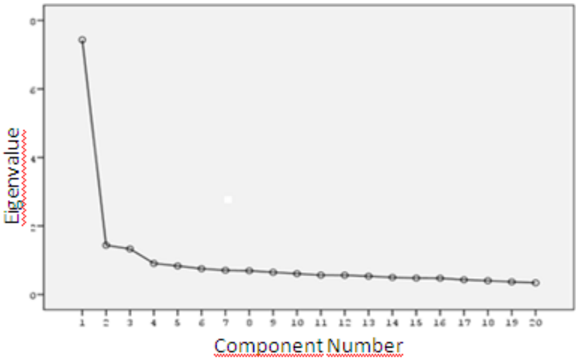
In order to explain chemistry subjects by linking them to everyday life and accordingly, to improve the quality of education, context-based learning has come into use widely in chemistry teaching recently. The aim of this study is to develop a scale to determine secondary school students’ motivations towards chemistry activities supported with context-based learning. Validity and reliability analysis of the scale were done with the participation of 525 high school students. To determine the structural validity of the scale, exploratory factor analysis was done. The factor analysis concluded that the scale had a three-factor structure with 20 items. Cronbach Alpha internal consistency coefficient of the scale was calculated to be 0.91. Cronbach Alpha internal consistency coefficients of sub dimensions were found to be 0,84; 0,80 and 0.81 respectively. In the light of the findings of this study, the scale developed is concluded to be of use in determining high school students’ motivations towards context-based chemistry. Key words: context-based chemistry, high school students, motivation.
Overview
The claims and statistics of this paper haven’t been checked yet.
Run the check — free, no account needed. It reads the open-access text and checks the sources it cites.
Integrity signals
Registry
Cites
Statistics
Figures
Verification
Claims the paper makes
The claims and statistics of this paper haven’t been checked yet.
Run the check — free, no account needed. It reads the open-access text and checks the sources it cites.
Self-check
Percentages, sums and reported differences re-computed from the paper’s own numbers.
The self-check needs the paper’s full text.
Citations
Cites
No references could be resolved yet.
Research works printed but not linked: 33
- Byman, R. (2005). Curiosity and sensation seeking: a conceptual and empirical examination. Personality and Individual Differences, 38, 1365-1379. · DOI
- Acar, B., & Yaman, M. (2011). The effects of context-based learning on students’ levels of knowledge and interest. Hacettepe University Journal of Education, 40, 1-10.
- Balcı, A. (2001). Sosyal bilimlerde araştırma: Yöntem, teknik ve ilkeler (Research in social sciences: Method, techniques and principles (3. Ed). Ankara: PegemA Publication. · DOI
- Barker, V., & Millar, R. (1999). Students’ reasoning about basic chemical reactions: what changes occur during a context-based post-16 chemistry course? International Journal Science Education, 21 (6), 645-665. · DOI
- Bennett, J., & Lubben, F. (2006). Context-based chemistry: The Salters approach. International Journal of Science Education, 28 (9), 999-1015. · DOI
- Bulte, A. M. W., Westbroek, H. B., De Jong, O., & Pilot, A. (2006). A research approach to designing chemistry education using authentic practices as contexts. International Journal of Science Education, 28 (9), 1063-1086. · DOI
- Büyüköztürk, Ş. (2010). Sosyal bilimler için veri analizi el kitabı (Data analysis for social sciences) (12.ed). Ankara: PegemA. · DOI
- Coştu, B., Ünal, S. & Ayas, A. (2007). The use of daily-life events in science teaching. Journal of Kırşehir Education Faculty, 8 (1), 197-207.
- Demirci, B. (2000). Liselerde uygulanan kimya dersinin verimliliği (The performance of chemistry courses in high schools). 4th Congress of Science Education (pp.423-426). Hacettepe University Faculty of Education, Ankara.
- Demircioğlu, H., Demircioğlu, G., & Çalık, M. (2009). Investigating effectiveness of storylines embedded within context based approach: A case for the periodic table. Chemistry Education Research and Practice, 10, 241- 249. · DOI
- Dunteman, G. H. (1989). Principal component analysis. Quantitative applications in the social sciences, 69. Thousand Oaks, CA: Sage Publications. · DOI
- Fraenkel, J. R., &Wallen, N. E. (2006). How to design and evaluate research in education (6.ed).New York: McGraw-Hill International Edition.
- Gilbert, J. K., Justi, R., Van Driel, J. H., De Jong, O., & Treagust, D. F. (2004). Securing a future for chemical education. Chemistry Education: Research and Practice, 5 (1), 5-14. · DOI
- Huntemann, H., Haarmann, E. M., & Parchmann, I. (2000). Schüleraussagen zur unterrichtsreihe «treibstoffe in der diskussion» eine erste untersuchung zur konzeption chemie im kontext. Chemkon, 7 (3), 131-136. · DOI
- Huntemann, H., Paschmann, A., Parchmann, I., & Ralle, B. (1999). Chemie im kontext-ein neues konzept für den chemieunterricht? darstellung einer kontextorientierten konzeption für den 11. jahrgang. Chemkon, 6 (4), 191-196. · DOI
- Karagölge, Z., & Ceyhun, İ. (2002). Öğrencilerin bazı kimyasal kavramları günlük hayatta kullanma becerilerinin tespiti (Determination of students’ using skills of some chemical concept in daily life). Kastamonu Eğitim Dergisi, 10 (2), 287-290.
- Keller, J. M. (1999). Motivation in cyber learning environments. International Journal of Educational Technology, 1 (1), 7- 30.
- Kline, P. (1994). An easy guide for factor analysis. London: Routledge.
- Osborne, R. J., & Collins, J. (2001). Pupils’ views of the role and value of the science curriculum: a focus group study. International Journal of Science Education, 23 (5), 441-467. · DOI
- Özay-Köse, E., & Çam-Tosun, F. (2011). Effect of context based learning in students’ achievement about nervous system. Journal of Turkish Science Education, 2, 91-106.
- Özden, M. (2007). Qualitative and quantitative evaluation of chemistry teachers’ problems encountered during chemistry teaching: Samples of Adıyaman and Malatya. Pamukkale University Journal of Education, 22, 40-53.
- Özmen, H. (2003). Chemistry student teachers’ levels of linking their knowledge with daily life about acid and base concepts. Kastamonu Education Journal, 11 (2), 317- 324.
- Palmer, D. (1997). The effect of context on students’ reasoning about forces. International Journal of Science Education, 19 (6), 681-696. · DOI
- Pekdağ, B. (2010). Alternative methods in learning chemistry: learning with animation, simulation, video and multimedia. Journal of Turkish Science Education, 7 (2), 79-110.
- Pintrich, P. R., & Schunk, D. H. (1996). Motivation in education: Theory, research, and applications. Englewood Cliffs, NJ: Merrill/Prentice Hall.
- Ramsden, M. J. (1997). How does a context‐based approach influence understanding of key chemical ideas at 16+? International Journal of Science Education, 19 (6), 697-710. · DOI
- Schwartz, A. T. (2006). Contextualised chemistry education: The American experience. International Journal of Science Education, 28 (9), 977-998. · DOI
- Shaw, D. G., & Dybdahl, C. S. (2000). Science and the popular media. Science Activities: Classroom Projects and Curriculum Ideas, 37 (20), 22-31. · DOI
- Simon, S. (2000). Student attitudes towards science. In M. Monk & J. Osborne (Eds), Good practice in science teaching: what research has to say (104-119). Buckingham: Open University Press.
- Thompson, B. (2004). Exploratory and confirmatory factor analysis: Understanding concepts and applications. Washington:American Psychological Association. · DOI · Paper page
- Van Driel, J. H., Bulte, A. M. W., & Verloop, N. (2005). The conceptions of chemistry teachers about teaching and learning in the context of a curriculum innovation. International Journal of Science Education, 27 (3), 303-322. · DOI
- Vos, M. A. J., Taconis, R., Jochems, W. M. G. & Pilot, A. (2011). Classroom implementation of context-based chemistry education by teachers: the relation between experiences of teachers and the design of materials. International Journal of Science Education, 33 (10), 1407-1432. · DOI
- Yücel, S., Seçken, N. & Morgil, İ. (2001). Öğrencilerin lise kimya derslerinde öğretilen semboller, sabitler ve birimlerini öğrenme derecelerinin ölçülmesi (Measurement of students’ learning level of symbols, constants and unitsin chemistry courses). Gazi University Journal of gazi Educational Faculty, 21(2), 113-123.
Cited by
Sorted by citations
Situmorang, M., Sinaga, M., Purba, J., Daulay, S. I., Simorangkir, M., Sitorus, M., & Sudrajat, A. (2018) · Journal of Baltic Science Education · doi:10.33225/jbse/18.17.535 · Cited by 37
“Learning innovation conducted in this study has enriched the chemistry contents with contextual examples and the task instructions have supported the learning activities in chemistry (Onen & Ulusoy, 2014).”
Method
Metadata
- Authors
- Önen, A. S., & Ulusoy, F. M.
- Affiliations
- Hacettepe University (TR)
- Venue
- Journal of Baltic Science Education
- Publisher
- Scientia Socialis Ltd
- Published
- 2014-12-15
- Volume
- 13
- Issue
- 6
- Pages
- 809-820
- ISSN
- 1648-3898 (ISSN-L)
- 2538-7138
- OpenAlex
- W2254388139
- Cited by
- 15
- References
- 0
- Citations by year
- 2024: 1 · 2023: 2 · 2022: 3 · 2021: 1 · 2020: 1 · 2019: 2 · 2018: 2 · 2017: 1 · 2016: 1 · 2015: 1
- FWCI
- 5.14
- Type
- journal article
- Language
- en
- Open access
- hybrid
- doi.org
- Licence
- cc-by-nc
- Locations
- Journal of Baltic Science Education (publishedVersion, cc-by-nc)
- Funders
- Hacettepe Üniversitesi
- Topics
- Social Sciences › Education › Chemistry Education and Research
- Social Sciences › Education › Science Education and Pedagogy
- Social Sciences › Education › Educational Methods and Outcomes
- Keywords
- scale development, high school students, motivation measurement, everyday situations, chemistry education
About these checks
Registry, retraction, Cites and statistics results are computed, not judged, with one exception: a printed reference that no index lists is read once by a model before it counts as a citation error. Claims are extracted by a model and kept only when their quote appears verbatim in the text; each cited source is then checked, with a model’s help, for whether it says what the claim relies on. Those verdicts can be wrong — read the claim’s quote and the cited source before relying on one.
Statistics and arithmetic are recomputed, not judged.
Confidence bands are shown only for fields calibrated on our annotated test set. None is calibrated yet, so no band is shown.
What counts as a claim ›How we measure confidence ›How we check this ›
Are you an author, or do you see a problem with this page? Request a review
How to cite
Cite CoChat for the checks on this page, and the paper for its own findings.
- This page
- CoChat. (2026). Citation check: DEVELOPING THE CONTEXT-BASED CHEMISTRY MOTIVATION SCALE: VALIDITY AND RELIABILITY ANALYSIS. https://app.cochat.ai/papers/10.33225/jbse/14.13.809
- The paper
- Önen, A. S., & Ulusoy, F. M. (2014). DEVELOPING THE CONTEXT-BASED CHEMISTRY MOTIVATION SCALE: VALIDITY AND RELIABILITY ANALYSIS. Journal of Baltic Science Education. https://doi.org/10.33225/jbse/14.13.809
