

The DOI matches its Crossref record; 2 of the 2 references it cites were found in a registry or an index.
The role of blood CXCL12 level in prognosis of coronary artery disease: A meta-analysis
Open accessAbstract
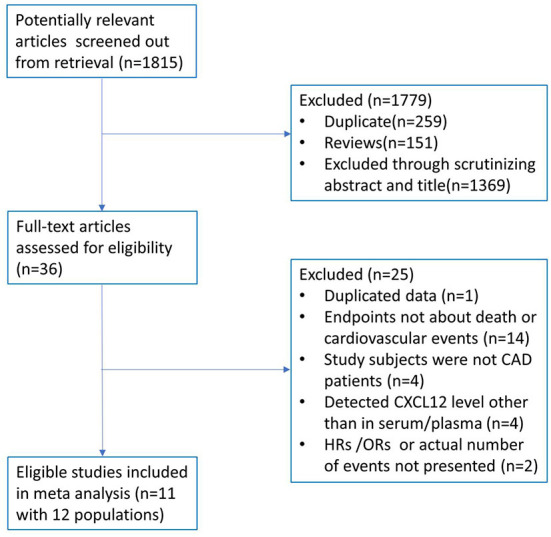
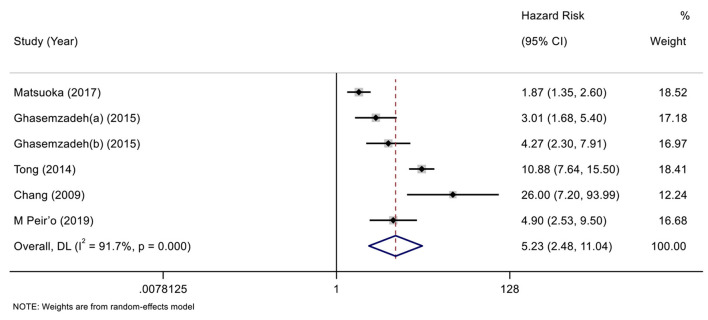
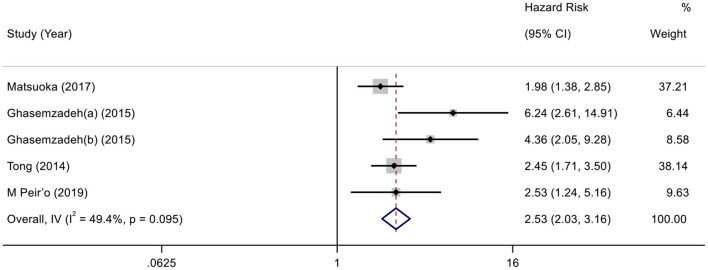
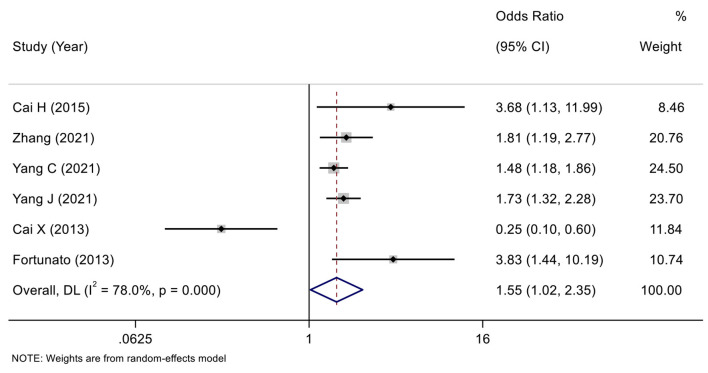
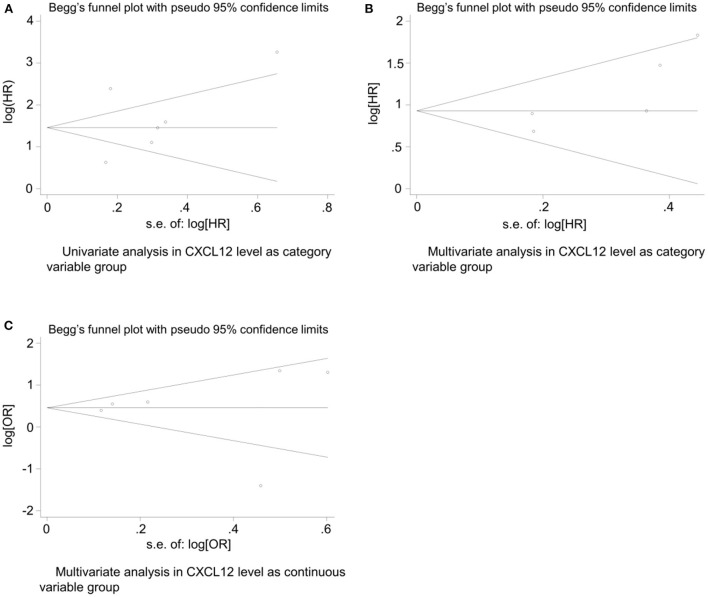
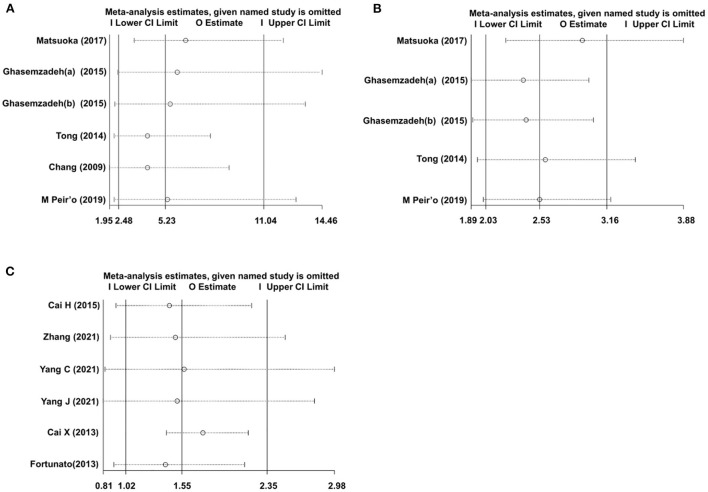
Objective: The role of C-X-C motif chemokine 12 (CXCL12) in atherosclerotic cardiovascular diseases (ASCVDs) has emerged as one of the research hotspots in recent years. Studies reported that the higher blood CXCL12 level was associated with increased major adverse cardiovascular events (MACEs), but the results were inconsistent. The objective of this study was to clarify the prognostic value of the blood CXCL12 level in patients with coronary artery disease (CAD) through meta-analysis. Methods: All related studies about the association between the blood CXCL12 level and the prognosis of CAD were comprehensively searched and screened according to inclusion criteria and exclusion criteria. The quality of the included literature was evaluated using the Newcastle-Ottawa Scale (NOS). The heterogeneity test was conducted, and the pooled hazard risk (HR) or the odds ratio (OR) with a 95% confidence interval (CI) was calculated using the fixed-effect or random-effects model accordingly. Publication bias was evaluated using Begg's funnel plot and Egger's test. Sensitivity analysis and subgroup analysis were also conducted. Results: A total of 12 original studies with 2,959 CAD subjects were included in the final data combination. The pooled data indicated a significant association between higher CXCL12 levels and MACEs both in univariate analysis (HR 5.23, 95% CI 2.48–11.04) and multivariate analysis (HR 2.53, 95% CI 2.03–3.16) in the CXCL12 level as the category variable group. In the CXCL12 level as the continuous variable group, the result also indicated that the higher CXCL12 level significantly predicted future MACEs (multivariate OR 1.55, 95% CI 1.02–2.35). Subgroup analysis of the CXCL12 level as the category variable group found significant associations in all acute coronary syndrome (ACS) (univariate HR 9.72, 95% CI 4.69–20.15; multivariate HR 2.47, 95% CI 1.79–3.40), non-ACS (univariate HR 2.73, 95% CI 1.65–4.54; multivariate HR 3.49, 95% CI 1.66–7.33), Asian (univariate HR 7.43, 95% CI 1.70–32.49; multivariate HR 2.21, 95% CI 1.71–2.85), Caucasian (univariate HR 3.90, 95% CI 2.73–5.57; multivariate HR 3.87, 95% CI 2.48–6.04), short-term (univariate HR 9.36, 95% CI 4.10–21.37; multivariate HR 2.72, 95% CI 1.97–3.76), and long-term (univariate HR 2.86, 95% CI 1.62–5.04; multivariate HR 2.38, 95% CI 1.76–3.22) subgroups. Subgroup analysis of the CXCL12 level as the continuous variable group found significant associations in non-ACS (multivariate OR 1.53, 95% CI 1.23–1.92), Caucasian (multivariate OR 3.83, 95% CI 1.44–10.19), and long-term (multivariate OR 1.62, 95% CI 1.37–1.93) subgroups, but not in ACS (multivariate OR 1.36, 95% CI 0.67–2.75), Asian (multivariate OR 1.40, 95% CI 0.91–2.14), and short-term (multivariate OR 1.16, 95% CI 0.28–4.76) subgroups. No significant publication bias was found in this meta-analysis. Conclusion: The higher blood CXCL12 level is associated with increased MACEs in patients with CAD, and the blood CXCL12 level may serve as an important prognostic index for CAD. Integrating the blood CXCL12 level into CAD risk assessment tools may provide more comprehensive messages for evaluating and managing patients with CAD.
Overview
The claims and statistics of this paper haven’t been checked yet.
Run the check — free, no account needed. It reads the open-access text and checks the sources it cites.
Integrity signals
Registry
Cites
Statistics
Figures
Verification
Claims the paper makes
The claims and statistics of this paper haven’t been checked yet.
Run the check — free, no account needed. It reads the open-access text and checks the sources it cites.
Claims other papers make about this one
Each is checked against this paper’s own text: does it say what the citing paper says it does?
The source backs part of the claim, not all of it — or backs it for a different population, condition or comparison.
In the citing paper
“The elevated blood level of CXCL12 was associated with adverse cardiovascular outcomes both in Mendelian randomization and observational studies.52,53”
From Aortic valve-specific genes dysregulated in calcific aortic valve stenosis as potential biomarkers and therapeutic targets (2025) · cites this paper as [53]
Experimental — accuracy not yet measured
Self-check
Percentages, sums and reported differences re-computed from the paper’s own numbers.
The self-check needs the paper’s full text.
Citations
Cites
Mega, J. L., Stitziel, N. O., Smith, J. G., Chasman, D. I., Caulfield, M. J., Devlin, J. J., Nordio, F., Hyde, C. L., Cannon, C. P., Sacks, F. M., et al. (2015) · The Lancet · doi:10.1016/s0140-6736(14)61730-x · Cited by 704
Stromal cell-derived factor-1α is cardioprotective after myocardial infarction
Saxena, A., Fish, J. E., White, M. D., Yu, S., Smyth, J. W. P., Shaw, R. M., DiMaio, J. M., & Srivastava, D. (2008) · Circulation · doi:10.1161/circulationaha.107.694992 · Cited by 237
Research works printed but not linked: 50
- Khan, 2020, Global epidemiology of ischemic heart disease: results from the global burden of disease study, Cureus., 12, e9349, 10.7759/cureus.9349 · DOI
- Ma, 2020, China cardiovascular diseases report 2018: an updated summary, J Geriatr Cardiol., 17, 1, 10.11909/j.issn.1671-5411.2020.01.001 · DOI
- Bhatt, 2022, Diagnosis and treatment of acute coronary syndromes: a review, Jama., 327, 662, 10.1001/jama.2022.0358 · DOI
- Madhavan, 2018, Coronary artery disease in patients ≥80 years of age, J Am Coll Cardiol., 71, 2015, 10.1016/j.jacc.2017.12.068 · DOI
- Tscherny, 2020, Risk stratification in acute coronary syndrome: evaluation of the GRACE and CRUSADE scores in the setting of a tertiary care centre, Int J Clin Pract., 74, e13444, 10.1111/ijcp.13444 · DOI
- Freitas, 2020, Novel biomarkers in the prognosis of patients with atherosclerotic coronary artery disease, Rev Port Cardiol., 39, 667, 10.1016/j.repc.2020.05.010 · DOI
- Murad, 2021, Role and implications of the CXCL12/CXCR4/CXCR7 axis in atherosclerosis: still a debate, Ann Med., 53, 1598, 10.1080/07853890.2021.1974084 · DOI
- Subramanian, 2014, Stromal cell-derived factor 1 as a biomarker of heart failure and mortality risk, Arterioscler Thromb Vasc Biol., 34, 2100, 10.1161/ATVBAHA.114.303579 · DOI
- Sjaarda, 2018, Blood CSF1 and CXCL12 as causal mediators of coronary artery disease, J Am Coll Cardiol., 72, 300, 10.1016/j.jacc.2018.04.067 · DOI · Paper page
- Chang, 2009, Role of stromal cell-derived factor-1alpha, level and value of circulating interleukin-10 and endothelial progenitor cells in patients with acute myocardial infarction undergoing primary coronary angioplasty, Circ J., 73, 1097, 10.1253/circj.CJ-08-0497 · DOI
- Ghasemzadeh, 2015, Plasma stromal cell-derived factor 1α/CXCL12 level predicts long-term adverse cardiovascular outcomes in patients with coronary artery disease, Atherosclerosis., 238, 113, 10.1016/j.atherosclerosis.2014.10.094 · DOI
- Tong, 2014, Role of stromal cell-derived factor-1 in patients with non-ST elevation acute coronary syndrome, Int Heart J., 55, 219, 10.1536/ihj.13-289 · DOI
- Peiró, 2019, Stromal cell derived factor-1 and long-term prognosis in acute coronary syndrome, Biomark Med., 13, 1187, 10.2217/bmm-2019-0133 · DOI
- Pizzolo, 2021, Basophil blood cell count is associated with enhanced factor ii plasma coagulant activity and increased risk of mortality in patients with stable coronary artery disease: not only neutrophils as prognostic marker in ischemic heart disease, J Am Heart Assoc., 10, e018243, 10.1161/JAHA.120.018243 · DOI
- Cai, 2013, Role of stromal cell-derived factor-1α in patients with acute ST-elevation myocardial infarction, Jiangsu Med J., 39, 791, 10.19460/j.cnki.0253-3685.2013.07.016 · DOI
- Stang, 2010, Critical evaluation of the Newcastle-Ottawa scale for the assessment of the quality of non-randomized studies in meta-analyses, Eur J Epidemiol., 25, 603, 10.1007/s10654-010-9491-z · DOI · Paper page
- Lin, 2020, Comparison of four heterogeneity measures for meta-analysis, J Eval Clin Pract., 26, 376, 10.1111/jep.13159 · DOI
- Zaykin, 2011, Optimally weighted Z-test is a powerful method for combining probabilities in meta-analysis, J Evol Biol., 24, 1836, 10.1111/j.1420-9101.2011.02297.x · DOI
- Matsuoka, 2017, High levels of stromal cell-derived factor-1α predict secondary cardiac events in stable patients with a history of myocardial infarction, J Cardiol., 69, 320, 10.1016/j.jjcc.2016.06.011 · DOI
- Cai, 2015, The clinical significance of serum MCP-1, SDF-1 expression in patients with coronary heart disease, J Nantong Univ Med Sci., 35, 563, 10.16424/j.cnki.cn32-1807/r.2015.06.024 · DOI
- Zhang, 2021, Correlation analysis of serum CXCL4 and CXCL12 levels with prognosis in patients with acute coronary syndrome, Guangdong Med J., 42, 298, 10.13820/j.cnki.gdyx.20200352 · DOI
- Yang, 2021, Study on the relationship between serum CXCR3, CXCL5, CXCL12 levels and the severity of coronary artery disease and prognosis in patients with coronary heart disease, Prog Mod Biomed., 21, 4713, 10.13241/j.cnki.pmb.2021.24.023 · DOI
- Fortunato, 2013, Migratory activity of circulating progenitor cells and serum SDF-1α predict adverse events in patients with myocardial infarction, Cardiovasc Res., 100, 192, 10.1093/cvr/cvt153 · DOI
- Egger, 1997, Bias in meta-analysis detected by a simple, graphical test, Bmj., 315, 629, 10.1136/bmj.315.7109.629 · DOI · Paper page
- Cheng, 2014, The role of CXCL12 and CCL7 chemokines in immune regulation, embryonic development, and tissue regeneration, Cytokine., 69, 277, 10.1016/j.cyto.2014.06.007 · DOI
- Döring, 2014, The CXCL12/CXCR4 chemokine ligand/receptor axis in cardiovascular disease, Front Physiol., 5, 212, 10.3389/fphys.2014.00212 · DOI
- Gao JH Yu, 2019, chemokine ligand 12 (CXCL12) in atherosclerosis: An underlying therapeutic target, Clin Chim Acta., 495, 538, 10.1016/j.cca.2019.05.022 · DOI
- Frederick, 2010, Stromal cell-derived factor-1alpha activation of tissue-engineered endothelial progenitor cell matrix enhances ventricular function after myocardial infarction by inducing neovasculogenesis, Circulation., 122, S107, 10.1161/CIRCULATIONAHA.109.930404 · DOI
- Huang, 2011, SDF-1/CXCR4 mediates acute protection of cardiac function through myocardial STAT3 signaling following global ischemia/reperfusion injury, Am J Physiol Heart Circ Physiol., 301, H1496, 10.1152/ajpheart.00365.2011 · DOI
- Chung, 2015, Changes in ventricular remodeling and clinical status during the year following a single administration of stromal cell-derived factor-1 non-viral gene therapy in chronic Ischaemic heart failure patients: the STOP-HF randomized Phase II trial, Eur Heart J., 36, 2228, 10.1093/eurheartj/ehv254 · DOI
- Libby, 2019, Reassessing the mechanisms of acute coronary syndromes, Circ Res., 124, 150, 10.1161/CIRCRESAHA.118.311098 · DOI
- Rossello, 2021, Influence of sex, age and race on coronary and heart failure events in patients with diabetes and post-acute coronary syndrome, Clin Res Cardiol., 110, 1612, 10.1007/s00392-021-01859-2 · DOI
- Lin, 2018, Quantifying publication bias in meta-analysis, Biometrics., 74, 785, 10.1111/biom.12817 · DOI · Paper page
- Tavakolian Ferdousie, 2017, Serum CXCL10 and CXCL12 chemokine levels are associated with the severity of coronary artery disease and coronary artery occlusion, Int J Cardiol., 233, 23, 10.1016/j.ijcard.2017.02.011 · DOI
- Döring, 2019, CXCL12 derived from endothelial cells promotes atherosclerosis to drive coronary artery disease, Circulation., 139, 1338, 10.1161/CIRCULATIONAHA.118.037953 · DOI
- Leberzammer, 2022, Targeting platelet-derived CXCL12 impedes arterial thrombosis, Blood., 139, 2691, 10.1182/blood.2020010140 · DOI
- Walsh, 2015, SDF-1α is a novel autocrine activator of platelets operating through its receptor CXCR4, Cell Signal., 27, 37, 10.1016/j.cellsig.2014.09.021 · DOI
- Rath, 2017, Platelet surface expression of SDF-1 is associated with clinical outcomes in the patients with cardiovascular disease, Platelets., 28, 34, 10.1080/09537104.2016.1203399 · DOI
- De La Luz Sierra, 2004, Differential processing of stromal-derived factor-1alpha and stromal-derived factor-1beta explains functional diversity, Blood., 103, 2452, 10.1182/blood-2003-08-2857 · DOI
- Koenen, 2019, Atypical Chemokine receptor 3 (ACKR3): a comprehensive overview of its expression and potential roles in the immune system, Mol Pharmacol., 96, 809, 10.1124/mol.118.115329 · DOI
- Torossian, 2014, CXCR7 participates in CXCL12-induced CD34+ cell cycling through β-arrestin-dependent Akt activation, Blood., 123, 191, 10.1182/blood-2013-05-500496 · DOI
- Ma, 2013, Induction of C-X-C chemokine receptor type 7 (CXCR7) switches stromal cell-derived factor-1 (SDF-1) signaling and phagocytic activity in macrophages linked to atherosclerosis, J Biol Chem., 288, 15481, 10.1074/jbc.M112.445510 · DOI
- Gupta, 1999, Modulation of CXCR4 expression and SDF-1alpha functional activity during differentiation of human monocytes and macrophages, J Leukoc Biol., 66, 135, 10.1002/jlb.66.1.135 · DOI
- Chatterjee, 2015, Platelet-derived CXCL12 regulates monocyte function, survival, differentiation into macrophages and foam cells through differential involvement of CXCR4-CXCR7, Cell Death Dis., 6, e1989, 10.1038/cddis.2015.233 · DOI
- Döring, 2017, Vascular CXCR4 limits atherosclerosis by maintaining arterial integrity: evidence from mouse and human studies, Circulation., 136, 388, 10.1161/CIRCULATIONAHA.117.027646 · DOI
- Hao, 2017, Loss of Endothelial CXCR7 Impairs Vascular homeostasis and cardiac remodeling after myocardial infarction: implications for cardiovascular drug discovery, Circulation., 135, 1253, 10.1161/CIRCULATIONAHA.116.023027 · DOI
- Soehnlein, 2021, Targeting inflammation in atherosclerosis - from experimental insights to the clinic, Nat Rev Drug Discov., 20, 589, 10.1038/s41573-021-00198-1 · DOI
- De Klerck, 2005, Pro-inflammatory properties of stromal cell-derived factor-1 (CXCL12) in collagen-induced arthritis, Arthritis Res Ther., 7, R1208, 10.1186/ar1806 · DOI
- O'Boyle, 2009, Anti-inflammatory therapy by intravenous delivery of non-heparan sulfate-binding CXCL12, FASEB J., 23, 3906, 10.1096/fj.09-134643 · DOI
- McCandless, 2006, CXCL12 limits inflammation by localizing mono-nuclear infiltrates to the perivascular space during experimental autoimmune encephalomyelitis, J Immunol., 177, 8053, 10.4049/jimmunol.177.11.8053 · DOI
Cited by
Sorted by citations
Zamani, P., Houessou, U., Manikpurage, H. D., Li, Z., Dahmene, M., Gaudreault, N., Dagenais, F., Clavel, M.-A., Pibarot, P., Arsenault, B. J., et al. (2025) · Human Genetics and Genomics Advances · doi:10.1016/j.xhgg.2025.100448 · Cited by 3
Metadata
- Authors
- Zhang, S., Ding, Y., Feng, F., & Gao, Y.
- Affiliations
- Zhejiang University (CN)
- Corresponding author
- Gao, Yue
- Venue
- Frontiers in Cardiovascular Medicine
- Publisher
- Frontiers Media SA
- Published
- 2022-07-27
- Volume
- 9
- Pages
- 938540-938540
- ISSN
- 2297-055X (ISSN-L)
- PMC
- PMC9363627
- OpenAlex
- W4288033470
- Cited by
- 13
- References
- 2
- Citations by year
- 2026: 4 · 2025: 4 · 2024: 4 · 2023: 1
- FWCI
- 0.24
- Type
- journal article
- Language
- en
- Open access
- gold
- doi.org
- Licence
- Locations
- Frontiers in Cardiovascular Medicine (publishedVersion, cc-by)
- PubMed Central (publishedVersion, cc-by)
- PubMed (publishedVersion)
- DOAJ (DOAJ: Directory of Open Access Journals) (submittedVersion, cc-by-sa)
- Topics
- Life Sciences › Immunology and Microbiology › Immunology › Atherosclerosis and Cardiovascular Diseases
- Health Sciences › Medicine › Oncology › Chemokine receptors and signaling
- Health Sciences › Medicine › Oncology › Inflammatory Biomarkers in Disease Prognosis
- Keywords
- CXCL12, coronary artery disease, prognostic factors, major adverse cardiovascular events, acute coronary syndrome, atherosclerotic cardiovascular disease, serum chemokine levels, risk stratification, risk reclassification, risk prediction model
About these checks
Registry, retraction, Cites and statistics results are computed, not judged, with one exception: a printed reference that no index lists is read once by a model before it counts as a citation error. Claims are extracted by a model and kept only when their quote appears verbatim in the text; each cited source is then checked, with a model’s help, for whether it says what the claim relies on. Those verdicts can be wrong — read the claim’s quote and the cited source before relying on one.
Statistics and arithmetic are recomputed, not judged.
Confidence bands are shown only for fields calibrated on our annotated test set. None is calibrated yet, so no band is shown.
What counts as a claim ›How we measure confidence ›How we check this ›
Are you an author, or do you see a problem with this page? Request a review
