

Top 100 #PCOS influencers: Understanding who, why and how online content for PCOS is influenced
Open accessThe DOI matches its Crossref record; 21 of the 21 references it cites were found in a registry or an index.
Abstract
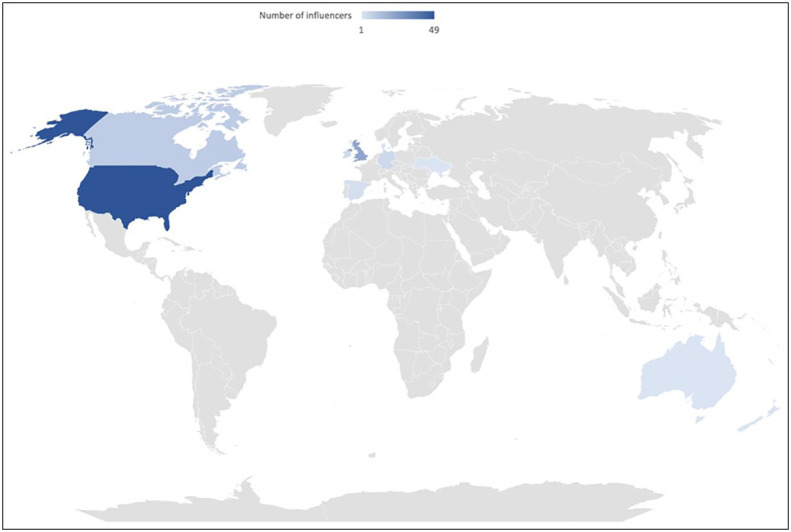
Background: With the exponential increase in digital space of social media platforms, a new group called social media influencers are driving online content of polycystic ovary syndrome (PCOS) which eventually influences behaviour and decision-making process. The objective of this study was to identify the top 100 social media (Twitter) influencers and organizations from across the globe who are advocating for PCOS. We further explored the origin and journey of these social media influencers. Methods: We identified the top 100 PCOS influencers and organizations between July and August 2022 using three social network analysis tools- Cronycle, Symplur and SocioViz. These influencers were invited to a semi-structured interview to explore why they chose to become an influencer and the support they have to deliver their online content. Two independent authors coded the anonymised transcripts from these interviews and broad themes were identified by thematic inductive analysis. Results: 95.0% of individual influencers and 80% of organisations are from high-income countries. Most influencers in our study agree that social media is an essential tool in the present day to raise awareness of PCOS. However, they reiterated social media also has significant disadvantages that require consideration and caution. Most influencers were driven by poor personal experience and worked voluntarily to reduce misinformation and improve the experiences of women diagnosed with PCOS in the future. Although there is an interest in working together, there is currently minimal collaborative work between influencers. Conclusion: There is a global inequity of #PCOS influencers online. Establishing standards and support based on evidence may help develop more influencers, especially in low- and middle-income countries, so we can counter misinformation and provide locally acceptable guidance.
Overview
The claims and statistics of this paper haven’t been checked yet.
Free: it reads the open-access text and checks the first 5 claims that cite a source we can check. Create a free account to check every claim.
Integrity signals
Registry
Cites
Statistics
Figures
Verification
Claims the paper makes
The claims and statistics of this paper haven’t been checked yet.
Free: it reads the open-access text and checks the first 5 claims that cite a source we can check. Create a free account to check every claim.
Claims other papers make about this one
Each is checked against this paper’s own text: does it say what the citing paper says it does?
The source backs part of the claim, not all of it — or backs it for a different population, condition or comparison.
In the citing paper
“Influencers self-identified as PCOS advocates and strived to post on multiple media platforms. Connections with marketing companies enabled them to spread their message through brand sponsorships”
From Availability and Use of Digital Technology Among Women With Polycystic Ovary Syndrome: Scoping Review (2025) · cites this paper as [42]
Experimental — accuracy not yet measuredThe source backs part of the claim, not all of it — or backs it for a different population, condition or comparison.
In the citing paper
“The majority of the top 100 “influencers” were women (73.2%) and from high-income countries (95%), predominantly the USA (n = 49) and the UK (n = 22) [70].”
From Polycystic Ovary Syndrome and the Internet of Things: A Scoping Review (2024) · cites this paper as [70]
Experimental — accuracy not yet measuredThe source backs part of the claim, not all of it — or backs it for a different population, condition or comparison.
In the citing paper
“For example, along with PCOS support groups, some prominent PCOS researchers are also active on social media, particularly during the month of September, i.e., PCOS Awareness Month [70,71].”
From Polycystic Ovary Syndrome and the Internet of Things: A Scoping Review (2024) · cites this paper as [70]
Experimental — accuracy not yet measuredThe cited source says what the claim attributes to it.
In the citing paper
“Researchers who authored 4 of the articles (12%) included information about online platforms: YouTube (Google) [43] and TikTok (ByteDance), Instagram (Meta), Reddit [45], and X, formerly known as Twitter [4246]”
From Availability and Use of Digital Technology Among Women With Polycystic Ovary Syndrome: Scoping Review (2025) · cites this paper as [42]
The cited source says what the claim attributes to it.
In the citing paper
“Ten studies included information regarding the use of social media [40,41,68,69,70,71,72,73,74,75]. Two other studies that mention social media were described in the overall context of mobile apps [60] and machine learning [76] (Supplementary File S3).”
From Polycystic Ovary Syndrome and the Internet of Things: A Scoping Review (2024) · cites this paper as [70]
5 more claims about this paper
Create a free account to see every claim other papers make about this one.
Self-check
Percentages, sums and reported differences re-computed from the paper’s own numbers.
The self-check needs the paper’s full text.
Citations
Cites
Bozdag, G., Mumusoglu, S., Zengin, D., Karabulut, E., & Yildiz, B. O. (2016) · Human Reproduction · doi:10.1093/humrep/dew218 · Cited by 1,526
Who are the social media influencers? A study of public perceptions of personality
Freberg, K., Graham, K., McGaughey, K., & Freberg, L. A. (2011) · Public Relations Review · doi:10.1016/j.pubrev.2010.11.001 · Cited by 1,418 · cited 1×
“With the exponential increase in digital space of social media platforms, a new group called social media influencers (SMIs) have emerged (4).”
BackgroundJoham, A. E., Norman, R. J., Stener-Victorin, E., Legro, R. S., Franks, S., Moran, L. J., Boyle, J., & Teede, H. J. (2022) · The Lancet Diabetes & Endocrinology · doi:10.1016/s2213-8587(22)00163-2 · Cited by 838
Pilgrim, K., & Bohnet-Joschko, S. (2019) · BMC Public Health · doi:10.1186/s12889-019-7387-8 · Cited by 279
Adolescent Peer Influence on Eating Behaviors via Social Media: Scoping Review
Chung, A., Vieira, D., Donley, T., Tan, N., Jean-Louis, G., Kiely Gouley, K., & Seixas, A. (2021) · Journal of Medical Internet Research · doi:10.2196/19697 · Cited by 206
Liu, J., Wu, Q., Hao, Y., Jiao, M., Wang, X., Jiang, S., & Han, L. (2021) · Human Reproduction · doi:10.1093/humrep/deaa371 · Cited by 203
Racial and ethnic differences in the polycystic ovary syndrome metabolic phenotype
Engmann, L., Jin, S., Sun, F., Legro, R. S., Polotsky, A. J., Hansen, K. R., Coutifaris, C., Diamond, M. P., Eisenberg, E., Zhang, H., et al. (2017) · American Journal of Obstetrics and Gynecology · doi:10.1016/j.ajog.2017.01.003 · Cited by 144 · cited 1×
“Several researchers have established the racial and ethnic variation in the prevalence and severity of PCOS phenotypes (22, 23).”
BackgroundPatient Influencers: The Next Frontier in Direct-to-Consumer Pharmaceutical Marketing
Willis, E., & Delbaere, M. (2022) · Journal of Medical Internet Research · doi:10.2196/29422 · Cited by 103
The Top 100 Social Media Influencers in Plastic Surgery on Twitter: Who Should You Be Following?
Chandawarkar, A. A., Gould, D. J., & Stevens, W. G. (2018) · Aesthetic Surgery Journal · doi:10.1093/asj/sjy024 · Cited by 89
Implicating androgen excess in propagating metabolic disease in polycystic ovary syndrome
Kempegowda, P., Melson, E., Manolopoulos, K. N., Arlt, W., & O’Reilly, M. W. (2020) · Therapeutic Advances in Endocrinology and Metabolism · doi:10.1177/2042018820934319 · Cited by 70 · cited 1×
“Latest studies have shown PCOS is no longer a condition affecting only the reproductive age women but a lifelong condition with increased risk for diabetes liver disease, endometrial cancer, obstructive sleep apnoea and impact on emotional wellbeing (3).”
BackgroundSelf-citation
Cited by
Tomassi, A., Falegnami, A., & Romano, E. (2024) · PLoS ONE · doi:10.1371/journal.pone.0303183 · Cited by 108
Malhotra, K., & Kempegowda, P. (2023) · Journal of Medical Internet Research · doi:10.2196/49220 · Cited by 26
“Our group explored the recurring themes associated with PCOS on Twitter [12,13].”
Self-citationElghobashy, M., Lau, G. M., Davitadze, M., Gillett, C. D. T., O’Reilly, M., Arlt, W., PCOS SEva Working Group, Lindenmeyer, A., & Kempegowda, P. (2023) · Frontiers in Endocrinology · doi:10.3389/fendo.2023.1175548 · Cited by 25
Self-citationBaig, S. A., Malhotra, K., Banerjee, A. J., Kowsik, M., Kumar, K., Rahman, F., Batul, S. S., Saiyed, M. F., Venkatesh, V., Iyer, P. V., et al. (2024) · Endocrine Connections · doi:10.1530/ec-24-0059 · Cited by 25
Self-citationAch, T., Gorchane, A., Methnani, J., Abdessalem, F. B., Nassim, B. H. S., & Asma, B. A. (2024) · Clinical Medicine Insights Endocrinology and Diabetes · doi:10.1177/11795514241296777 · Cited by 16
Malhotra, K., Pan, C. S. C., Davitadze, M., Team PCOS SEva, & Kempegowda, P. (2023) · Frontiers in Endocrinology · doi:10.3389/fendo.2023.1109141 · Cited by 15
“Frontiers in Endocrinology 05 In our previous work, we highlighted the importance of influencers and their perspectives about PCOS (24).”
BackgroundSelf-citationPolycystic Ovary Syndrome and the Internet of Things: A Scoping Review
Graca, S., Alloh, F., Lagojda, L., Dallaway, A., Kyrou, I., Randeva, H. S., & Kite, C. (2024) · Healthcare · doi:10.3390/healthcare12161671 · Cited by 14
Livadas, S., Yıldız, B. O., Mastorakos, G. P., Gambineri, A., Pignatelli, D., Giorgino, F., Andersen, M., Obermayer-Pietsch, B., Μacut, D., ESE PCOS Special Interest Group, et al. (2024) · European Journal of Endocrinology · doi:10.1093/ejendo/lvae085 · Cited by 14
Wright, P. J., Burts, C., Harmon, C., & Corbett, C. F. (2025) · JMIR Infodemiology · doi:10.2196/68469 · Cited by 8
“%) included information about online platforms: YouTube (Google) [43] and TikTok (ByteDance), Instagram (Meta), Reddit [45], and X, formerly known as Twitter [42,46].”
InfluentialZhang, J., Zhang, J., Zheng, Z., & Zhang, R. (2025) · European Journal of Obstetrics & Gynecology and Reproductive Biology · doi:10.1016/j.ejogrb.2025.114659 · Cited by 8
Raagel, K. G., Mappillairaju, B., Sharma, K. S. N., Manikandan, P., & Muthu, C. (2023) · Wireless Personal Communications · doi:10.1007/s11277-023-10795-5 · Cited by 7
“This, in turn, could combat the spread of misinformation and offer regionally relevant guidance [13].”
Mi día a día con una ostomía: el rol del paciente influencer en Instagram
García, A. M., Buitrago, Á., & Martínez-Sanz, R. (2024) · Contratexto · doi:10.26439/contratexto2024.n41.6851 · Cited by 5
“Cuando su influencia se proyecta sobre una comunidad, nos referimos a un paciente influencer (Elhariry et al., 2022; Heiss & Rudolph, 2023).”
BackgroundMalhotra, K., Aggarwal, P., Malhotra, S., & Goyal, K. (2023) · JMIR Dermatology · doi:10.2196/49399 · Cited by 4
Self-citationThe Digital Impact of Neurosurgery Awareness Month: Retrospective Infodemiology Study
Malhotra, K., Dagli, M. M., Santangelo, G., Wathen, C. A., Ghenbot, Y. G., Goyal, K., Bawa, A., Ozturk, A. K., & Welch, W. C. (2023) · JMIR Formative Research · doi:10.2196/44754 · Cited by 4
Self-citationMalhotra, K., & Kempegowda, P. (2023) · DIGITAL HEALTH · doi:10.1177/20552076231220787 · Cited by 3
Self-citationMelson, E., Rezai, F., Cuen, P. C. S., Ng, S. S. W., Ogiliev, T., Blendis, E., Sheikh, H., Kaur, H., Cooper, C., Abdelhameed, F., et al. (2024) · BMC Medical Education · doi:10.1186/s12909-024-05772-w · Cited by 2
“Further, there is a deeply rooted mistrust of HCPs among people with PCOS [24, 26].”
BackgroundSelf-citationTrocchi, V., Quan‐Haase, A., & Rubin, V. L. (2024) · Proceedings of the Association for Information Science and Technology · doi:10.1002/pra2.1200 · Cited by 1
“…use to enhance credibility (McCosker, 2018; Wellman, 2023), and other studies have examined the PCOS content available on social media platforms (Elhariry et al., 2022; Malhotra & Kempegowda, 2023; Naroji et al., 2024), no study has looked at the credibility strategies that PCOS influencers use.”
Torabi, M., Hadavandsiri, F., Kazemzadeh, H., & Goodarzi, M. (2026) · Medical Journal of the Islamic Republic of Iran · doi:10.47176/mjiri.40.14 · Cited by 1
“To promote equity, platforms could algorithmically boost diverse voices, and training programs could encourage inclusive engagement (8).”
InfluentialReyes, A. J. P. D., Lopez, K. M., Tuala, J. R. C., Rivera, Z. M. C., Fandialan, R. J. D., Lacambra, G. M., & Quintana, M. L. F. (2024) · Globus Journal of Progressive Education · doi:10.46360/globus.edu.220241008
Examining the Representation of Polycystic Ovary Syndrome (PCOS) on Social Media: A Scoping Review
Kumari, S., & Raj, P. (2026) · Humanities & Social Sciences Reviews · doi:10.18510/hssr.2026.1412
When PCOS Meets Eating Disorders: An Explainable AI Approach to Detecting the Hidden Triple Burden
Prasad, A., & McRoy, S. (2026) · IEEE International Conference on Healthcare Informatics (ICHI) · doi:10.1109/ichi69079.2026.00059
“Research demonstrates that online health communities facilitate greater self-disclosure than face-to-face clinical settings [8], and women freely discuss body image, eating behaviors, and the emotional toll of PCOS across platforms including Reddit, Instagram, and TikTok [7,9,10].”
Saadeh, N. A., Alshogran, O. Y., Allan, A., Alsheqerat, H., Amoorah, J., & Hasan, S. (2026) · Journal of Education and Health Promotion · doi:10.4103/jehp.jehp_754_25
“[18] focused on how influencers could help set standards and provide support, especially in low‑ and middle‑income countries.”
Prasad, A. (2026) · Minds at UW (University of Wisconsin)
Dubé‐Zinatelli, E., Kamineni, D., Alyafei, N., & Smith, A. (2026) · Women s Reproductive Health · doi:10.1080/23293691.2026.2747213
Elghobashy, M., Lau, G. M., Davitadze, M., Gillett, C. D. T., O’Reilly, M. W., Arlt, W., Lindenmeyer, A., & Kempegowda, P. (2023) · doi:10.3389/fendo.2023.1175548.s001
Self-citation
Metadata
- Authors
- Elhariry, M., Malhotra, K., Solomon, M., Goyal, K., & Kempegowda, P.
- Affiliations
- University of Birmingham (GB)
- Dayanand Medical College & Hospital (IN)
- University College London (GB)
- National Health Service (GB)
- Corresponding author
- Kempegowda, Punith
- Venue
- Frontiers in Endocrinology
- Publisher
- Frontiers Media SA
- Published
- 2022-12-07
- Volume
- 13
- Pages
- 1084047-1084047
- ISSN
- 1664-2392 (ISSN-L)
- PMC
- PMC9768020
- OpenAlex
- W4311847558
- Cited by
- 21
- References
- 21
- Citations by year
- 2026: 4 · 2025: 2 · 2024: 8 · 2023: 7
- FWCI
- 3.26
- Type
- journal article
- Language
- en
- Open access
- gold
- doi.org
- Licence
- Locations
- Frontiers in Endocrinology (publishedVersion, cc-by)
- PubMed Central (publishedVersion, cc-by)
- PubMed (publishedVersion)
- DOAJ (DOAJ: Directory of Open Access Journals) (submittedVersion, cc-by-sa)
- University of Birmingham Research Portal (University of Birmingham) (submittedVersion, cc-by)
- Greater South Information System
- Topics
- Social Sciences › Health › Social Media in Health Education
- Health Sciences › Medicine › Reproductive Medicine › Ovarian function and disorders
- Health Sciences › Health Professions › General Health Professions › Health Literacy and Information Accessibility
- Keywords
- polycystic ovary syndrome, social media influencers, Twitter, health misinformation, PCOS awareness, online health content, low- and middle-income countries, women's health
- MeSH terms
- Female, Humans, Polycystic Ovary Syndrome, Social Media
About these checks
Registry, retraction, Cites and statistics results are computed, not judged, with one exception: a printed reference that no index lists is read once by a model before it counts as a citation error. Claims are extracted by a model and kept only when their quote appears verbatim in the text; each cited source is then checked, with a model’s help, for whether it says what the claim relies on. Those verdicts can be wrong — read the claim’s quote and the cited source before relying on one.
Statistics and arithmetic are recomputed, not judged.
Confidence bands are shown only for fields calibrated on our annotated test set. None is calibrated yet, so no band is shown.
What counts as a claim ›How we measure confidence ›How we check this ›
Are you an author, or do you see a problem with this page? Request a review
Data sources
Bibliographic data: Semantic Scholar, OpenAlex, Crossref.
Contains information from the Semantic Scholar Academic Graph Datasets, made available under the ODC Attribution License (ODC-BY 1.0).
Semantic Scholar’s data is described in: Kinney, R., et al. (2023). The Semantic Scholar Open Data Platform. arXiv:2301.10140.
