

Battery SOH estimation based on decision tree and improved support vector machine regression algorithm
Open accessThe DOI matches its Crossref record; 36 of the 36 references it cites were found in a registry or an index.
Abstract
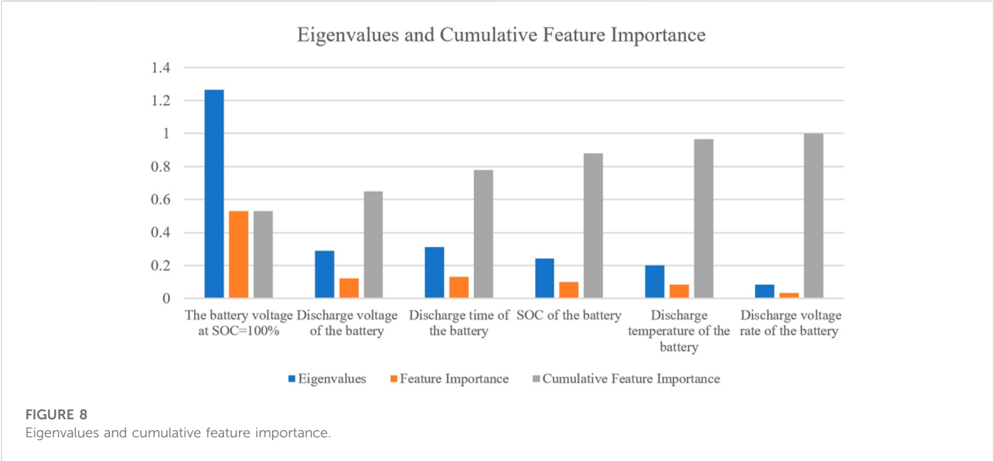
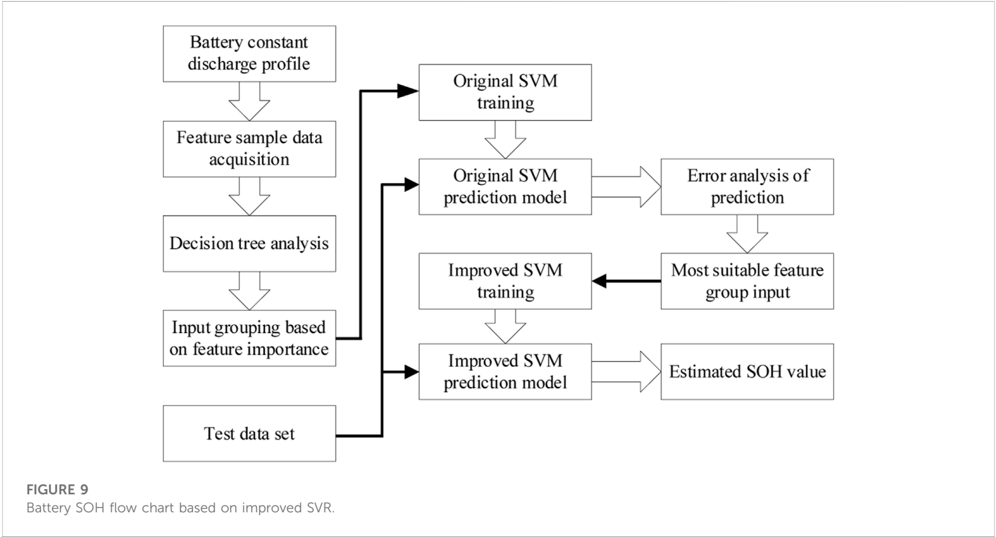
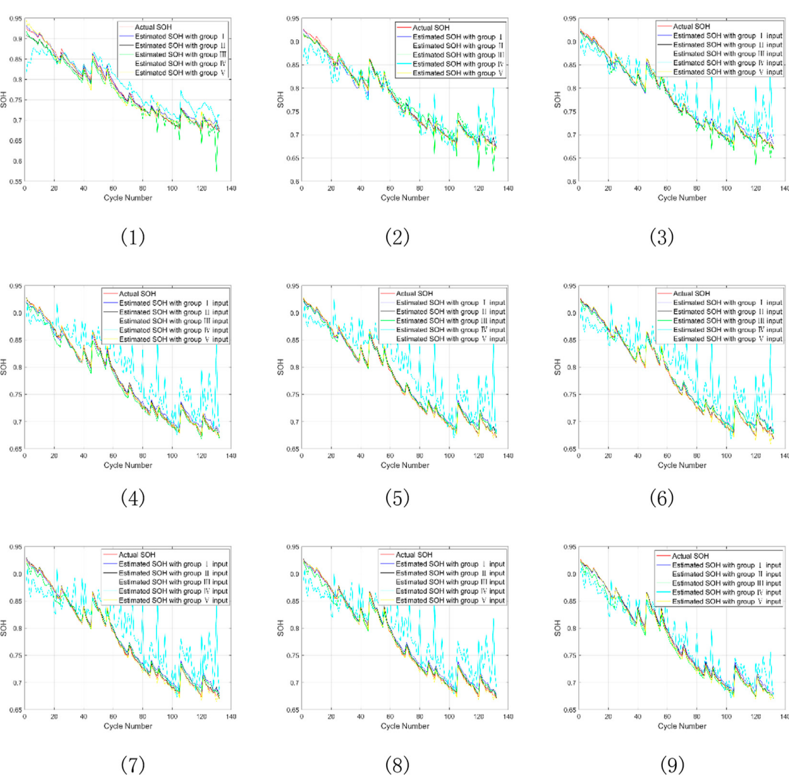
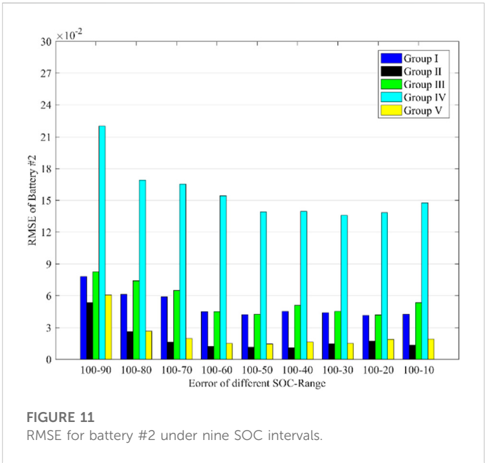
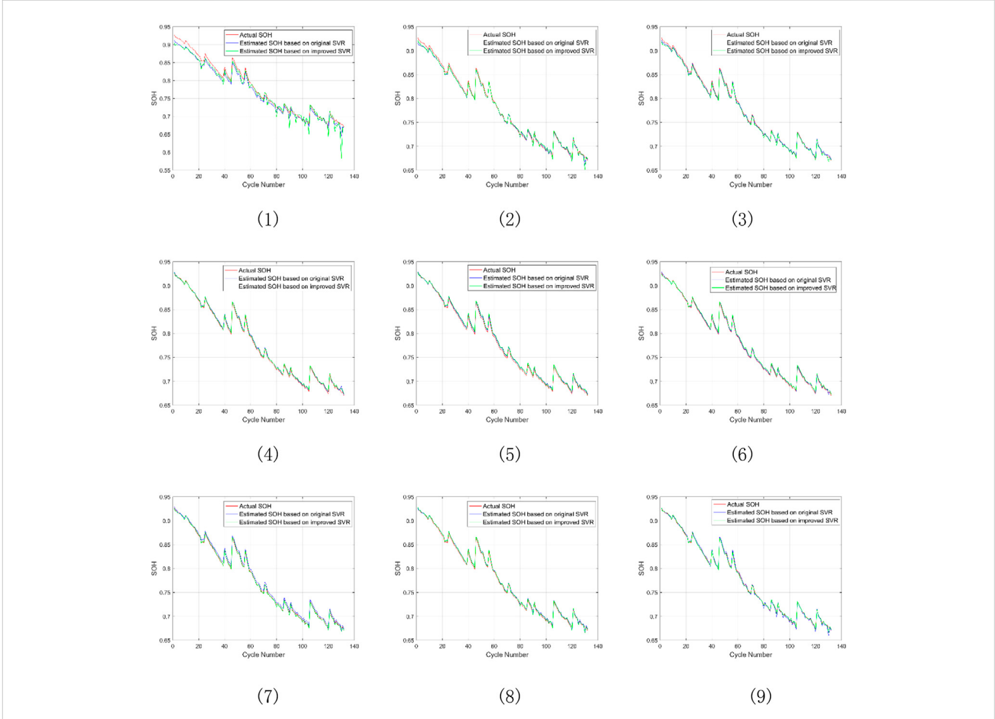
Battery state of health (SOH) estimation is crucial for the estimation of the remaining driving range of electric vehicles and is one of the core functions of the battery management system (BMS). The lithium battery feature sample data used in this paper is extracted from the National Aeronautics and Space Administration (NASA) of the United States. Based on the obtained feature samples, a decision tree algorithm is used to analyze them and obtain the importance of each feature. Five groups of different feature inputs are constructed based on the cumulative feature importance, and the original support vector machine regression (SVR) algorithm is applied to perform SOH estimation simulation experiments on each group. The experimental results show that four battery features (voltage at SOC = 100%, voltage, discharge time, and SOC) can be used as input to achieve high estimation accuracy. To improve the training efficiency of the original SVR algorithm, an improved SVR algorithm is proposed, which optimizes the differentiability and solution method of the original SVR objective function. Since the loss function of the original SVR is non-differentiable, a smoothing function is introduced to approximate the loss function of the original SVR, and the original quadratic programming problem is transformed into a convex unconstrained minimization problem. The conjugate gradient algorithm is used to solve the smooth approximation objective function in a sequential minimal optimization manner. The improved SVR algorithm is applied to the simulation experiment with four battery feature inputs. The results show that the improved SVR algorithm significantly reduces the training time compared to the original SVR, with a slight trade-off in simulation accuracy.
Overview
The claims and statistics of this paper haven’t been checked yet.
Free: it reads the open-access text and checks the first 5 claims that cite a source we can check. Create a free account to check every claim.
Integrity signals
Registry
Cites
Statistics
Figures

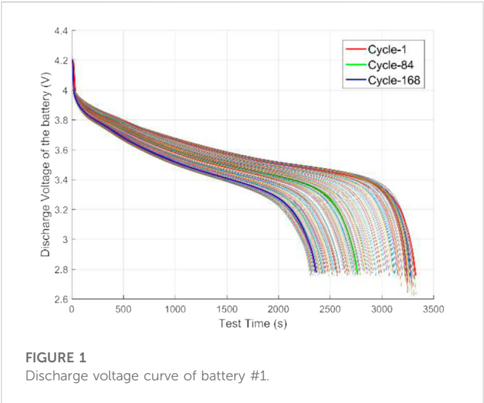
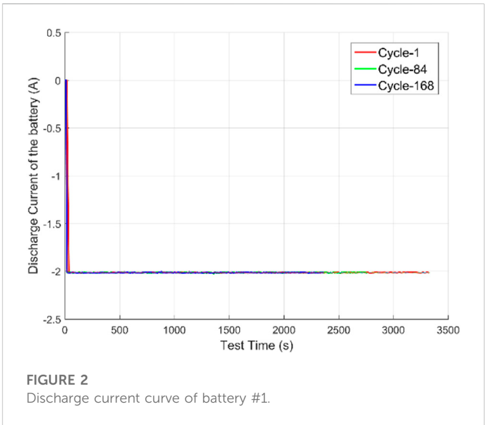
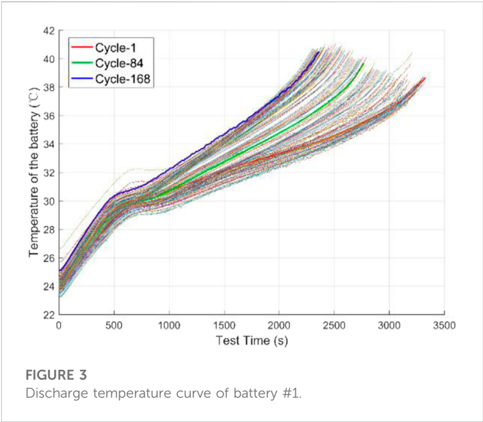
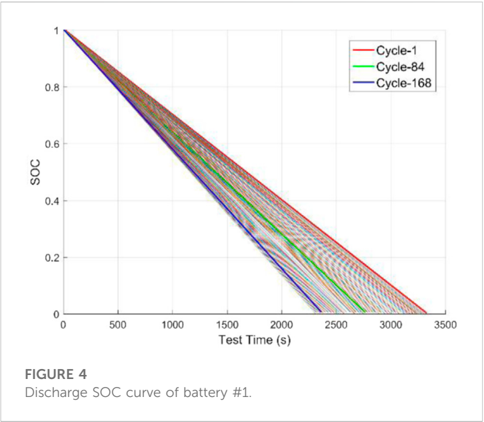
Verification
Claims the paper makes
The claims and statistics of this paper haven’t been checked yet.
Free: it reads the open-access text and checks the first 5 claims that cite a source we can check. Create a free account to check every claim.
Claims other papers make about this one
Each is checked against this paper’s own text: does it say what the citing paper says it does?
The cited source says what the claim attributes to it.
In the citing paper
“the method significantly reduced training time while maintaining high estimation accuracy”
From The State of Health Estimation of Lithium-Ion Batteries: A Review of Health Indicators, Estimation Methods, Development Trends and Challenges (2025) · cites this paper as [120]
Self-check
Percentages, sums and reported differences re-computed from the paper’s own numbers.
The self-check needs the paper’s full text.
Citations
Cites
Cortes, C., & Vapnik, V. (1995) · Machine Learning · doi:10.1007/bf00994018 · Cited by 59,421 · cited 1×
“Under the Mercer condition in the reproducing kernel Hilbert space (RKHS), the kernel function can be approximated as the inner product of two elements K ( x i , x j ) (cid:2) ϕ ( x i ) · ϕ ( x j ) , where ϕ ( x i ) is a nonlinear function (Cortes and Vapnik, 1995).”
A tutorial on support vector regression
Smola, A. J., & Schölkopf, B. (2004) · Statistics and Computing · doi:10.1023/b:stco.0000035301.49549.88 · Cited by 13,387 · cited 1×
“By the representer theorem, the regression function could be rewritten as a linear combination of kernel functions (Smola and Schölkopf, 2004): In the reproducing kernel Hilbert space H , the model complexity term (cid”
MethodData-driven prediction of battery cycle life before capacity degradation
Severson, K. A., Attia, P. M., Jin, N., Perkins, N., Jiang, B., Yang, Z., Chen, M. H., Aykol, M., Herring, P. K., Fraggedakis, D., et al. (2019) · Nature Energy · doi:10.1038/s41560-019-0356-8 · Cited by 3,228 · cited 2×
“In literature (Chen et al., 2018; Ali et al., 2019; Feng et al., 2019; Severson et al., 2019; Kheirkhah-Rad and Moeini-Aghtaie, 2021), researchers constructed input features for SVR by directly selecting or computing the following battery characteristics: full charge voltage, SOC, current, voltage, number of cycles, t…”
BackgroundZhang, Y., Xiong, R., He, H., & Pecht, M. G. (2018) · IEEE Transactions on Vehicular Technology · doi:10.1109/tvt.2018.2805189 · Cited by 1,326 · cited 1×
“They can learn the nonlinear and complex relationship between the SOH and the features through a series of transformations in the input layer, hidden layer, and output layer (Zhang et al., 2018; Shen et al., 2019; Chen et al., 2021; Wang et al., 2022a).”
BackgroundCritical review of state of health estimation methods of Li-ion batteries for real applications
Berecibar, M., Gandiaga, I., Villarreal, I., Omar, N., Van Mierlo, J., & Van den Bossche, P. (2016) · Renewable and Sustainable Energy Reviews · doi:10.1016/j.rser.2015.11.042 · Cited by 1,126 · cited 1×
“The battery SOH change curve has a strong non-linear characteristic (Berecibar et al., 2016).”
BackgroundYang, D., Zhang, X., Pan, R., Wang, Y., & Chen, Z. (2018) · Journal of Power Sources · doi:10.1016/j.jpowsour.2018.03.015 · Cited by 765
Battery Energy Storage System (BESS) and Battery Management System (BMS) for Grid-Scale Applications
Lawder, M. T., Suthar, B., Northrop, P. W. C., De, S., Hoff, C. M., Leitermann, O., Crow, M. L., Santhanagopalan, S., & Subramanian, V. R. (2014) · Proceedings of the IEEE · doi:10.1109/jproc.2014.2317451 · Cited by 713
Patil, M. A., Tagade, P., Hariharan, K. S., Kolake, S. M., Song, T., Yeo, T., & Doo, S. (2015) · Applied Energy · doi:10.1016/j.apenergy.2015.08.119 · Cited by 626 · cited 1×
“SVR is a data-driven method based on the principle of structural risk minimization, which can handle small samples and nonlinear problems, insensitive to the dimension and variation of data, avoid local optimal solutions, and thus achieve accurate prediction of battery SOH (Patil et al., 2015).”
MethodWang, S., Fan, Y., Jin, S., Takyi-Aninakwa, P., & Fernandez, C. (2023) · Reliability Engineering & System Safety · doi:10.1016/j.ress.2022.108920 · Cited by 554
SSVM: A Smooth Support Vector Machine for Classification
Lee, Y.-J., & Mangasarian, O. L. (2001) · Computational Optimization and Applications · doi:10.1023/a:1011215321374 · Cited by 518 · cited 2×
“To deal with non-smooth objective functions using the smoothing approximation idea, some works utilize Newton ’ s method to minimize the smooth objective function (Lee and Mangasarian, 2001).”
MethodVidal, C., Malysz, P., Kollmeyer, P., & Emadi, A. (2020) · IEEE Access · doi:10.1109/access.2020.2980961 · Cited by 512 · cited 1×
“When the battery usage environment and working conditions change drastically, researchers tend to use data-driven methods (Vidal et al., 2020).”
BackgroundFeng, X., Weng, C., He, X., Han, X., Lu, L., Ren, D., & Ouyang, M. (2019) · IEEE Transactions on Vehicular Technology · doi:10.1109/tvt.2019.2927120 · Cited by 505 · cited 1×
“In literature (Chen et al., 2018; Ali et al., 2019; Feng et al., 2019; Severson et al., 2019; Kheirkhah-Rad and Moeini-Aghtaie, 2021), researchers constructed input features for SVR by directly selecting or computing the following battery characteristics: full charge voltage, SOC, current, voltage,…”
BackgroundAdvanced mathematical methods of SOC and SOH estimation for lithium-ion batteries
Andre, D., Appel, C., Soczka-Guth, T., & Sauer, D. U. (2013) · Journal of Power Sources · doi:10.1016/j.jpowsour.2012.10.001 · Cited by 428 · cited 1×
“Some variants of the standard Kalman algorithm, such as extended Kalman, dual extended Kalman, and unscented Kalman, were also used for battery SOH prediction (Andre et al., 2013; Qian and Liu, 2021).”
MethodChiang, Y.-H., Sean, W.-Y., & Ke, J.-C. (2011) · Journal of Power Sources · doi:10.1016/j.jpowsour.2011.01.005 · Cited by 393 · cited 1×
“The direct measurement method estimates the battery SOH by looking up a table that de fi nes the corresponding relationship between open circuit voltage or battery internal resistance and battery SOH (Chiang et al., 2011).”
MethodA deep learning method for online capacity estimation of lithium-ion batteries
Shen, S., Sadoughi, M., Chen, X., Hong, M., & Hu, C. (2019) · Journal of Energy Storage · doi:10.1016/j.est.2019.100817 · Cited by 392 · cited 1×
“They can learn the nonlinear and complex relationship between the SOH and the features through a series of transformations in the input layer, hidden layer, and output layer (Zhang et al., 2018; Shen et al., 2019; Chen et al., 2021; Wang et al., 2022a).”
BackgroundWeng, C., Sun, J., & Peng, H. (2014) · Journal of Power Sources · doi:10.1016/j.jpowsour.2014.02.026 · Cited by 375 · cited 1×
“…prediction model on capacity incremental analysis and applied the multi-island genetic algorithm to optimize the hyperparameters in the model, while Weng et al., 2014 combined the open circuit voltage change with the incremental capacity analysis to establish a battery SOH prediction model.”
MethodData-Driven Battery State of Health Estimation Based on Random Partial Charging Data
Deng, Z., Hu, X., Li, P., Lin, X., & Bian, X. (2022) · IEEE Transactions on Power Electronics · doi:10.1109/tpel.2021.3134701 · Cited by 359
Wang, S., Takyi-Aninakwa, P., Jin, S., Yu, C., Fernandez, C., & Stroe, D.-I. (2022) · Energy · doi:10.1016/j.energy.2022.124224 · Cited by 355 · cited 1×
“In the literature (Wang et al., 2022b) and (Wang et al.”
BackgroundBattery health estimation with degradation pattern recognition and transfer learning
Deng, Z., Lin, X., Cai, J., & Hu, X. (2022) · Journal of Power Sources · doi:10.1016/j.jpowsour.2022.231027 · Cited by 300 · cited 1×
“Deng et al. Combining long short-term memory networks with diverse degradation patterns and transfer learning to improve battery SOH estimation accuracy (Deng et al., 2022).”
BackgroundKhumprom, P., & Yodo, N. (2019) · Energies · doi:10.3390/en12040660 · Cited by 294 · cited 1×
“Table 3 compares the SOH prediction errors of the improved SVR, the original SVR, and other machine learning algorithms from the literature (Khumprom and Yodo, 2019; Li et al., 2021), namely, k-Nearest Neighbors (k-NN), Linear Regression (LR), Arti fi cial Neural Networks (ANN) and PSO-SVM.”
MethodState of health estimation of lithium-ion batteries based on the constant voltage charging curve
Wang, Z., Zeng, S., Guo, J., & Qin, T. (2019) · Energy · doi:10.1016/j.energy.2018.11.008 · Cited by 219 · cited 2×
“An equivalent circuit model was established based on a constant voltage charging pro fi le and a battery health factor was constructed as a feature input to predict the battery SOH in the literature (Wang et al., 2019).”
MethodWang, Z., Ma, J., & Zhang, L. (2017) · IEEE Access · doi:10.1109/access.2017.2759094 · Cited by 205 · cited 1×
“In the literature (Wang et al., 2017), the authors established a battery SOH Gaussian process regression prediction model on capacity incremental analysis and applied the multi-island genetic algorithm to optimize the hyperparameters in the model, while Weng et al., 2014 combined the open circuit…”
MethodAn electrochemistry-based impedance model for lithium-ion batteries
Li, S. E., Wang, B., Peng, H., & Hu, X. (2014) · Journal of Power Sources · doi:10.1016/j.jpowsour.2014.02.045 · Cited by 197 · cited 1×
“The lithium-ion battery impedance model in the literature (Li et al., 2014) was used to construct a battery SOH prediction model, where the impedance model parameters were identified using a particle swarm optimization (PSO) algorithm.”
MethodQin, T., Zeng, S., & Guo, J. (2015) · Microelectronics Reliability · doi:10.1016/j.microrel.2015.06.133 · Cited by 176
A method to estimate battery SOH indicators based on vehicle operating data only
Vichard, L., Ravey, A., Venet, P., Harel, F., Pelissier, S., & Hissel, D. (2021) · Energy · doi:10.1016/j.energy.2021.120235 · Cited by 151 · cited 1×
“The Kalman filter method is an efficient self-adaptivefilteringmethod that can effectively eliminate noise interference in the signal and estimate the battery SOH value based on incomplete and noisy data (Vichard et al., 2021).”
MethodOnline State of Health Estimation for Lithium-Ion Batteries Based on Support Vector Machine
Chen, Z., Sun, M., Shu, X., Xiao, R., & Shen, J. (2018) · Applied Sciences · doi:10.3390/app8060925 · Cited by 133 · cited 1×
“In literature (Chen et al., 2018; Ali et al., 2019; Feng et al., 2019; Severson et al., 2019; Kheirkhah-Rad and Moeini-Aghtaie, 2021), researchers constructed input features for SVR by directly selecting or computing the following battery characteristics: full charge voltage, SOC, current, voltage,…”
BackgroundWang, S., Ren, P., Takyi-Aninakwa, P., Jin, S., & Fernandez, C. (2022) · Energies · doi:10.3390/en15145053 · Cited by 127 · cited 1×
“They can learn the nonlinear and complex relationship between the SOH and the features through a series of transformations in the input layer, hidden layer, and output layer (Zhang et al., 2018; Shen et al., 2019; Chen et al., 2021; Wang et al., 2022a).”
BackgroundEconomic and environmental impact of electric vehicles production in Indonesia
Pirmana, V., Alisjahbana, A. S., Yusuf, A. A., Hoekstra, R., & Tukker, A. (2023) · Clean Technologies and Environmental Policy · doi:10.1007/s10098-023-02475-6 · Cited by 108
Xiong, W., Mo, Y., & Yan, C. (2021) · IEEE Access · doi:10.1109/access.2020.3026552 · Cited by 99 · cited 2×
“In literature (Li et al., 2021), the authors used the full charge voltage, SOC, current voltage, and discharge time as the input features of SVR, and used the PSO algorithm to optimize the hyperparameters of SVR; Xiong et al., 2020 used the weighted least squares method to optimize the hyperparameters of SVR; on this…”
MethodGradient descent algorithms for quantile regression with smooth approximation
Zheng, S. (2011) · International Journal of Machine Learning and Cybernetics · doi:10.1007/s13042-011-0031-2 · Cited by 77 · cited 1×
“To address this problem, we can use a smoothing function to approximate the non-differentiable objective function (Zheng, 2011).”
MethodQian, K., & Xt, L. (2021) · Journal of Energy Storage · doi:10.1016/j.est.2021.103319 · Cited by 69 · cited 1×
“Some variants of the standard Kalman algorithm, such as extended Kalman, dual extended Kalman, and unscented Kalman, were also used for battery SOH prediction (Andre et al., 2013; Qian and Liu, 2021).”
MethodAli, M. U., Zafar, A., Nengroo, S. H., Hussain, S., Park, G.-S., & Kim, H.-J. (2019) · Energies · doi:10.3390/en12224366 · Cited by 56 · cited 1×
“In literature (Chen et al., 2018; Ali et al., 2019; Feng et al., 2019; Severson et al., 2019; Kheirkhah-Rad and Moeini-Aghtaie, 2021), researchers constructed input features for SVR by directly selecting or computing the following battery characteristics: full charge voltage, SOC, current, voltage, number of cycles, t…”
BackgroundOn-Line Estimation Method of Lithium-Ion Battery Health Status Based on PSO-SVM
Li, R., Li, W., Zhang, H., Zhou, Y., & Tian, W. (2021) · Frontiers in Energy Research · doi:10.3389/fenrg.2021.693249 · Cited by 46 · cited 2×
“In literature (Li et al., 2021), the authors used the full charge voltage, SOC, current voltage, and discharge time as the input features of SVR, and used the PSO algorithm to optimize the hyperparameters of SVR; Xiong et al., 2020 used the weighted least squares method to optimize the…”
MethodResearch on battery SOH estimation algorithm of energy storage frequency modulation system
Liu, X., Li, J., Yao, Z., Wang, Z., Si, R., & Diao, Y. (2021) · Energy Reports · doi:10.1016/j.egyr.2021.11.015 · Cited by 29
A fast algorithm for training support vector regression via smoothed primal function minimization
Zheng, S. (2013) · International Journal of Machine Learning and Cybernetics · doi:10.1007/s13042-013-0200-6 · Cited by 18 · cited 1×
“028 (Zheng, 2015), so in this paper we select m 25, M 30, C 2000, ε 0.”
VRLA Battery SOH Estimation Based on WCPSO-LVSVM
Zhuang, H. M., & Xiao, J. (2014) · Applied Mechanics and Materials · doi:10.4028/www.scientific.net/amm.628.396 · Cited by 10 · cited 1×
“…the hyperparameters of SVR; Xiong et al., 2020 used the weighted least squares method to optimize the hyperparameters of SVR; on this basis, Zhuang and Xiao, 2014 combined the PSO algorithm and the least squares method to optimize the hyperparameters of SVR, improving the prediction…”
Method
Research works printed but not linked: 4
- Chen, R. J., Hsu, C. W., Lu, T. F., and Teng, J. H. "Rapid SOH estimation for retired lead-acid batteries[C]," in IEEE International Future Energy Electronics Conference (IFEEC), Taipei, Taiwan, China, November 16-19, 2021, 1-4.
- Corey, G. P. "Batteries for stationary standby and for stationary cycling applications part 6: Alternative electricity storage technologies[C]," in Proceedings of the Power Engineering Society General Meeting, Toronto, ON, Canada, July 13-17, 2003, 164-169.
- Kheirkhah-Rad, E., and Moeini-Aghtaie, M. "A novel data-driven SOH prediction model for lithium-ion batteries[C]," in IEEE 31st Australasian Universities Power Engineering Conference (AUPEC), Perth, Australia, September 26-30, 2021, 1-6.
- Yang, R., Zhang, X., Liu, G., and Hou, S. "State of health estimation for power battery based on support vector regression and particle swarm optimization method[C]," in IEEE 40th Chinese Control Conference (CCC), Shanghai, China, July 26-28, 2021, 6281-6288.
Cited by
Tang, K., Luo, B., Chen, D., Wang, C., Chen, L., Li, F., Cao, Y., & Wang, C. (2025) · World Electric Vehicle Journal · doi:10.3390/wevj16080429 · Cited by 68
Machine Learning in Lithium-Ion Battery: Applications, Challenges, and Future Trends
Valizadeh, A., & Amirhosseini, M. H. (2024) · SN Computer Science · doi:10.1007/s42979-024-03046-2 · Cited by 83
“Proper design can enhance both the SOH and RUL by optimizing battery performance and durability over its lifecycle [28].”
Zhu, T., Wang, S., Fan, Y., Hai, N., Huang, Q., & Fernández, C. (2024) · Energy · doi:10.1016/j.energy.2024.132464 · Cited by 51
Lopez-Salazar, C. A., Ekwaro-Osire, S., Dabetwar, S., & Alemayehu, F. M. (2024) · Reliability Engineering & System Safety · doi:10.1016/j.ress.2024.110517 · Cited by 23
Dannier, A., Brando, G., Ribera, M., & Spina, I. (2025) · Energies · doi:10.3390/en18040786 · Cited by 24
Metadata
- Authors
- Qian, L., Xuan, L., & Chen, J.
- Affiliations
- Hefei University of Technology (CN)
- Corresponding author
- Xuan, Liang
- Venue
- Frontiers in Energy Research
- Publisher
- Frontiers Media SA
- Published
- 2023-06-21
- Volume
- 11
- ISSN
- 2296-598X (ISSN-L)
- OpenAlex
- W4381663952
- Cited by
- 38
- References
- 36
- Citations by year
- 2026: 16 · 2025: 16 · 2024: 6
- FWCI
- 2.76
- Type
- journal article
- Language
- en
- Open access
- gold
- doi.org
- Licence
- Locations
- Frontiers in Energy Research (publishedVersion, cc-by)
- DOAJ (DOAJ: Directory of Open Access Journals) (submittedVersion, cc-by-sa)
- Funders
- National Natural Science Foundation of China
- Topics
- Physical Sciences › Engineering › Automotive Engineering › Battery Modeling and Management
- Physical Sciences › Engineering › Electrical and Electronic Engineering › Advancements in Battery Materials
- Physical Sciences › Engineering › Automotive Engineering › Electric and Hybrid Vehicle Technologies
- Keywords
- battery state of health estimation, lithium-ion batteries, electric vehicles, battery management systems, support vector regression, feature selection, conjugate gradient optimization, training efficiency
About these checks
Registry, retraction, Cites and statistics results are computed, not judged, with one exception: a printed reference that no index lists is read once by a model before it counts as a citation error. Claims are extracted by a model and kept only when their quote appears verbatim in the text; each cited source is then checked, with a model’s help, for whether it says what the claim relies on. Those verdicts can be wrong — read the claim’s quote and the cited source before relying on one.
Statistics and arithmetic are recomputed, not judged.
Confidence bands are shown only for fields calibrated on our annotated test set. None is calibrated yet, so no band is shown.
What counts as a claim ›How we measure confidence ›How we check this ›
Are you an author, or do you see a problem with this page? Request a review
Data sources
Bibliographic data: Semantic Scholar, OpenAlex, Crossref.
Contains information from the Semantic Scholar Academic Graph Datasets, made available under the ODC Attribution License (ODC-BY 1.0).
Semantic Scholar’s data is described in: Kinney, R., et al. (2023). The Semantic Scholar Open Data Platform. arXiv:2301.10140.
