

The DOI matches its Crossref record; 95 of the 95 references it cites were found in a registry or an index.
Resident Memory T Cells in Autoimmune Skin Diseases
Open accessAbstract
Tissue resident memory T cells (TRM) are a critical component of the immune system, providing the body with an immediate and highly specific response against pathogens re-infecting peripheral tissues. More recently, however, it has been demonstrated that TRM cells also form during autoimmunity. TRM mediated autoimmune diseases are particularly destructive, because unlike foreign antigens, the self-antigens are never cleared, continuously activating self-reactive TRM T cells. In this article, we will focus on how TRMs mediate disease in autoimmune skin conditions, specifically vitiligo, psoriasis, cutaneous lupus erythematosus, alopecia areata and frontal fibrosing alopecia.
Overview
The claims and statistics of this paper haven’t been checked yet.
Run the check — free, no account needed. It reads the open-access text and checks the sources it cites.
Integrity signals
Registry
Cites
Statistics
Figures
Verification
Claims the paper makes
The claims and statistics of this paper haven’t been checked yet.
Run the check — free, no account needed. It reads the open-access text and checks the sources it cites.
Claims other papers make about this one
Each is checked against this paper’s own text: does it say what the citing paper says it does?
The source backs part of the claim, not all of it — or backs it for a different population, condition or comparison.
In the citing paper
“Moreover, in other organs than the heart, T RM cells have been incriminated as key drivers of autoimmune diseases including psoriasis, vitiligo, type 1 diabetes, idiopathic arthritis, Alzheimer disease, and multiple sclerosis. 294,302-310”
From Autoimmune Myocarditis, Old Dogs and New Tricks. (2024) · cites this paper as [303]
Experimental — accuracy not yet measured
Self-check
Percentages, sums and reported differences re-computed from the paper’s own numbers.
The self-check needs the paper’s full text.
Citations
Cites
The developmental pathway for CD103+CD8+ tissue-resident memory T cells of skin
Mackay, L. K., Rahimpour, A., Ma, J. Z., Collins, N., Stock, A. T., Hafon, M.-L., Vega-Ramos, J., Lauzurica, P., Mueller, S. N., Stefanovic, T., et al. (2013) · Nature Immunology · doi:10.1038/ni.2744 · Cited by 1,331 · cited 1×
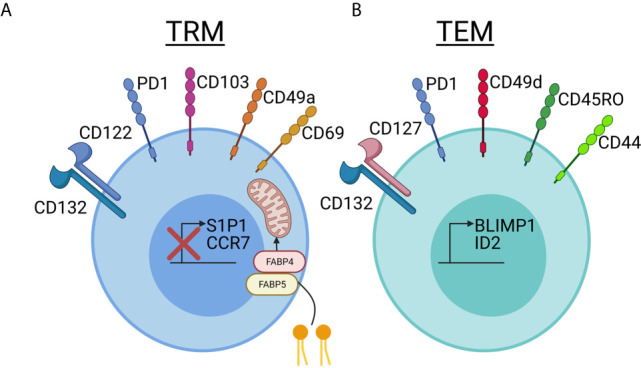
“Mouse models have demonstrated that TRM require IL-15 and TGFb for their differentiation in the skin (12), and human TRM express their receptors (3, 13).”
BackgroundKumar, B. V., Ma, W., Miron, M., Granot, T., Guyer, R. S., Carpenter, D. J., Senda, T., Sun, X., Ho, S.-H., Lerner, H., et al. (2017) · Cell Reports · doi:10.1016/j.celrep.2017.08.078 · Cited by 1,068
Tissue-Resident Memory T Cells
Schenkel, J. M., & Masopust, D. (2014) · Immunity · doi:10.1016/j.immuni.2014.12.007 · Cited by 1,059
Alopecia areata is driven by cytotoxic T lymphocytes and is reversed by JAK inhibition
Xing, L., Dai, Z., Jabbari, A., Cerise, J. E., Higgins, C. A., Gong, W., de Jong, A., Harel, S., DeStefano, G. M., Rothman, L. R., et al. (2014) · Nature Medicine · doi:10.1038/nm.3645 · Cited by 1,002
Skin infection generates non-migratory memory CD8+ TRM cells providing global skin immunity
Jiang, X., Clark, R. A., Liu, L., Wagers, A. J., Fuhlbrigge, R. C., & Kupper, T. S. (2012) · Nature · doi:10.1038/nature10851 · Cited by 883
Distribution and compartmentalization of human circulating and tissue-resident memory T cell subsets
Sathaliyawala, T., Kubota, M., Yudanin, N., Turner, D., Camp, P., Thome, J. J. C., Bickham, K. L., Lerner, H., Goldstein, M., Sykes, M., et al. (2013) · Immunity · doi:10.1016/j.immuni.2012.09.020 · Cited by 848
Genome-wide association study in alopecia areata implicates both innate and adaptive immunity
Petukhova, L., Duvic, M. A., Hordinsky, M., Norris, D. A., Price, V. H., Shimomura, Y., Kim, H., Singh, P., Lee, A., Chen, W. V., et al. (2010) · Nature · doi:10.1038/nature09114 · Cited by 833
Survival of tissue-resident memory T cells requires exogenous lipid uptake and metabolism
Pan, Y., Tian, T., Park, C. O., Lofftus, S. Y., Mei, S., Liu, X., Luo, C., O’Malley, J. T., Gehad, A. E., Teague, J. E., et al. (2017) · Nature · doi:10.1038/nature21379 · Cited by 730
Epidemiology of Vitiligo and Associated Autoimmune Diseases in Caucasian Probands and Their Families
Alkhateeb, A. M., Fain, P. R., Thody, A. J., Bennett, D. C., & Spritz, R. A. (2003) · Pigment Cell Research · doi:10.1034/j.1600-0749.2003.00032.x · Cited by 725
CD49a Expression Defines Tissue-Resident CD8 + T Cells Poised for Cytotoxic Function in Human Skin
Cheuk, S., Schlums, H., Gallais Sérézal, I., Martini, E., Chiang, S. C., Marquardt, N., Gibbs, A., Detlofsson, E., Introini, A., Forkel, M., et al. (2017) · Immunity · doi:10.1016/j.immuni.2017.01.009 · Cited by 678
Cited by
Sorted by citations
Items 101–132 of 132
Microbial Dysbiosis in Photodermatoses: Formation, Pathogenesis and Intervention Strategies
Zhong, L., Wang, T., Tang, L., Han, J., Zhao, Q., & Lin, N. (2026) · Current Issues in Molecular Biology · doi:10.3390/cimb48050493 · Cited by 1
Selective blockade of γc pathway ameliorates alopecia areata in a humanized murine model
Wu, W. C., Sethuraman, M. I. G., Tong, T. K., Ng, H. L., Au, W. Y. D., Lam, L. H., Li, W., Nawabjan, S. A., Chow, B., Xu, A., et al. (2026) · Journal of Investigative Dermatology · doi:10.1016/j.jid.2026.05.028 · Cited by 1
Li, B., Song, X., Shan, C., He, J., Wang, Z., Stevanovic, K., Zuberbier, T., Zhao, Z., & Zhang, L. (2026) · Frontiers in Immunology · doi:10.3389/fimmu.2026.1851255 · Cited by 1
Ke, X., Gao, Y., Huang, J., Li, J., Wu, A., & Shi, W. (2026) · Acta Dermato Venereologica · doi:10.2340/actadv.v106.adv-2026-0453 · Cited by 1
A case of contact dermatitis resulting in contact leukoderma after usage of an herbal hair cream
Anakwenze, L., Sons, J. S., & Dlova, N. C. (2023) · International Journal of Dermatology · doi:10.1111/ijd.16896 · Cited by 1
Relapse or recall? Docetaxel-associated re-emergence of paraneoplastic dermatomyositis
Kuraitis, D., Bogner, P. N., Gopalakrishnan, D., & Pei, S. (2024) · JAAD Case Reports · doi:10.1016/j.jdcr.2024.05.012 · Cited by 1
NF-κB Signaling is Required for X-Chromosome Inactivation Maintenance Following T cell ActivationPreprint
Forsyth, K. S., Toothacre, N. E., Jiwrajka, N., Driscoll, A. M., Shallberg, L. A., Cunningham‐Rundles, C., Barmettler, S., Farmer, J. R., Verbsky, J. W., Routes, J. M., et al. (2024) · bioRxiv (Cold Spring Harbor Laboratory) · doi:10.1101/2024.02.08.579505 · Cited by 1
Park, S. L., Painter, M. M., Manne, S., Alcalde, V., McLaughlin, M., Sullivan, M. A., Mathew, D., Torres, L., Huang, Y., Reeg, D. B., et al. (2025) · bioRxiv (Cold Spring Harbor Laboratory) · doi:10.1101/2025.08.08.669213 · Cited by 1
Setyanto, B., Kalim, H., Poeranto, S., & Widasmara, D. (2023) · F1000Research · doi:10.12688/f1000research.126096.1
Reschke, R., Shapiro, J. W., Yu, J., Rouhani, S. J., Olson, D. J., Zha, Y., & Gajewski, T. F. (2023) · doi:10.1158/2326-6066.c.6550938.v1
Liang, C.-L., Wei, Y., Luo, Y.-N., Qin, F., Chen, Y., Liu, H., Qiu, F., Wu, J., Liu, Y., & Dai, Z. (2023) · Research Square · doi:10.21203/rs.3.rs-3498905/v1
Lupus Erythematosus and Antiphospholipid Syndrome
Dutz, J. P., & Khosravi‐Hafshejani, T. (2024) · Wiley eBooks · doi:10.1002/9781119709268.rook051
Story, M. E., Ferris, L. K., & Mathers, A. R. (2024) · bioRxiv (Cold Spring Harbor Laboratory) · doi:10.1101/2024.07.11.602963
Disease-Modifying Treatment of Psoriasis in Children
Murashkin, N. N., Materikin, A. I., Epishev, R. V., Leonova, M. A., Opryatin, L. A., Fedorov, D. V., Ivanov, R. A., Savelova, A. A., & Pavlova, E. S. (2024) · Вопросы современной педиатрии · doi:10.15690/vsp.v23i5.2799
The 100 Most-Cited Publications in Lichen Planopilaris: A Bibliometric Analysis
Boghosian, T., Bermudez, N. M., & Tosti, A. (2024) · Skin Appendage Disorders · doi:10.1159/000542898
Gao, F., Zhao, X., Li, S., Li, C., Deng, J.-H., Zhang, J., Tan, X.-H., Liu, X.-Y., & Li, C. (2025) · Lupus · doi:10.1177/09612033251366398
Recirculating and Resident Memory CD8+ T Cells
Gebhardt, T., Newland, L. G. M., & Bedoui, S. (2025) · Elsevier eBooks · doi:10.1016/b978-0-12-824465-4.00285-4
Treatment of Psoriasis Based on the “Theory of Latent Stasis”
雷, 晶. (2025) · Advances in Clinical Medicine · doi:10.12677/acm.2025.15113091
Does effective therapy of psoriasis prevent the development of psoriatic arthritis?
Abacar, K., Zabotti, A., Watad, ., & McGonagle, D. (2026) · EULAR Rheumatology Open · doi:10.1016/j.ero.2026.01.005
Faugeroux, A. (2023) · theses.fr (ABES) · doi:10.70675/5ec1f53bzca32z4533za8f3z3ff14e7322be
Merhi, R. (2024) · theses.fr (ABES) · doi:10.70675/9f7d00cdz3de4z4cd5z9784za5bd3ee702e0
Xin, C., Cai, Y., Zang, Y., Jing, H., Qi, X., & Li, W. (2026) · Acupuncture & Electro-Therapeutics Research · doi:10.1177/03601293261446110
Efficacy of Acupuncture Therapy in a Patient with Long-Standing Alopecia Areata: A Case Report
Wang, X., Lan, S., Yu, Q., Chen, L., He, J., Zhu, P., He, S., Ying, X., Han, D., & Zhang, Y. (2026) · Complementary Medicine Research · doi:10.1159/000552417
Role of the IL-15 pathway in vitiligo: Mechanistic insights and therapeutic implications
Tavoletti, G., Avallone, G., Romagnuolo, M., Rossi, L. C., Picardo, M., Marzano, A. V., & Violetti, S. A. (2026) · Journal of Investigative Dermatology · doi:10.1016/j.jid.2026.05.016
CD8 + Tissue‐Resident Memory T Cells in Health and Disease
Ai, Y.-H., Xu, T., Lin, S., Xiao, M., Lin, Y.-X., Ma, H. Y., Liu, Y., Wang, Y., Yin, L., Huang, M., et al. (2026) · MedComm · doi:10.1002/mco2.70838
Wahab, A., Russo, G., & Pappalardo, F. (2026) · Briefings in Bioinformatics · doi:10.1093/bib/bbag416
Epigenetic reprogramming in autoimmune and immune-mediated skin disease
Bilik, S. M., Kraft, G., Sharifi, I., Hanly‐Jorda, F. M., Antonevich, S., Jimenez, J. J., & Satoh, T. K. (2026) · Frontiers in Immunology · doi:10.3389/fimmu.2026.1915200
Early systemic intervention for vitiligo: A prospective bicentric interventional study
Bertold, C., Sénéschal, J., Fontas, É., Blaise, M., Bzioueche, H., Irondelle, M., Boniface, K., Tulić, M. K., & Passeron, T. (2026) · Journal of the European Academy of Dermatology and Venereology · doi:10.1111/jdv.70748
A review of 3D In vitro skin models for psoriasis: from pathophysiology to advanced bioengineering
Cheng, Y., Wang, F., & Wang, B. (2026) · Frontiers in Bioengineering and Biotechnology · doi:10.3389/fbioe.2026.1918162
Beyond melanocyte replacement: A regenerative niche hypothesis for vitiligo cellular therapy
Salman, S., Amin, T. E.-S., Attia, M., Elgarhy, L. H., & Hassan, G. F. R. (2026) · Medical Hypotheses · doi:10.1016/j.mehy.2026.112188
Tajanlangit, P. S., Tajanlangit, S. M., & Khoury, K. S. (2026) · Skin Health and Disease · doi:10.1093/skinhd/vzag170
Metadata
- Authors
- Ryan, G. E., Harris, J. E., & Richmond, J. M.
- Affiliations
- University of Massachusetts Chan Medical School (US)
- Corresponding author
- Ryan, Grace E.
- Richmond, Jillian M.
- Venue
- Frontiers in Immunology
- Publisher
- Frontiers Media SA
- Published
- 2021-05-03
- Volume
- 12
- Pages
- 652191-652191
- ISSN
- 1664-3224 (ISSN-L)
- PMC
- PMC8128248
- OpenAlex
- W3159116143
- Cited by
- 132
- References
- 95
- Citations by year
- 2026: 22 · 2025: 32 · 2024: 33 · 2023: 26 · 2022: 16 · 2021: 3
- FWCI
- 2.00
- Type
- journal article
- Language
- en
- Open access
- gold
- doi.org
- Licence
- Locations
- Frontiers in Immunology (publishedVersion, cc-by)
- PubMed Central (publishedVersion, cc-by)
- PubMed (publishedVersion)
- eScholarship@UMassChan (submittedVersion, other-oa)
- DOAJ (DOAJ: Directory of Open Access Journals) (submittedVersion, cc-by-sa)
- Funders
- Dermatology Foundation
- Lupus Research Alliance
- National Institutes of Health
- U.S. Department of Defense
- Topics
- Life Sciences › Immunology and Microbiology › Immunology › T-cell and B-cell Immunology
- Life Sciences › Immunology and Microbiology › Immunology › Psoriasis: Treatment and Pathogenesis
- Health Sciences › Medicine › Dermatology › Dermatology and Skin Diseases
- Keywords
- tissue-resident memory T cells, autoimmune skin disease, vitiligo, psoriasis, cutaneous lupus erythematosus, alopecia areata, frontal fibrosing alopecia, autoreactive T cells, autoantigens, autoimmunity
- MeSH terms
- Autoantigens, Autoimmune Diseases, Humans, Immunologic Factors, Immunologic Memory, Skin, Skin Diseases, CD4-Positive T-Lymphocytes, CD8-Positive T-Lymphocytes
About these checks
Registry, retraction, Cites and statistics results are computed, not judged, with one exception: a printed reference that no index lists is read once by a model before it counts as a citation error. Claims are extracted by a model and kept only when their quote appears verbatim in the text; each cited source is then checked, with a model’s help, for whether it says what the claim relies on. Those verdicts can be wrong — read the claim’s quote and the cited source before relying on one.
Statistics and arithmetic are recomputed, not judged.
Confidence bands are shown only for fields calibrated on our annotated test set. None is calibrated yet, so no band is shown.
What counts as a claim ›How we measure confidence ›How we check this ›
Are you an author, or do you see a problem with this page? Request a review
