

Identification of lactylation related model to predict prognostic, tumor infiltrating immunocytes and response of immunotherapy in gastric cancer
Open accessThe DOI matches its Crossref record; 56 of the 56 references it cites were found in a registry or an index.
Abstract
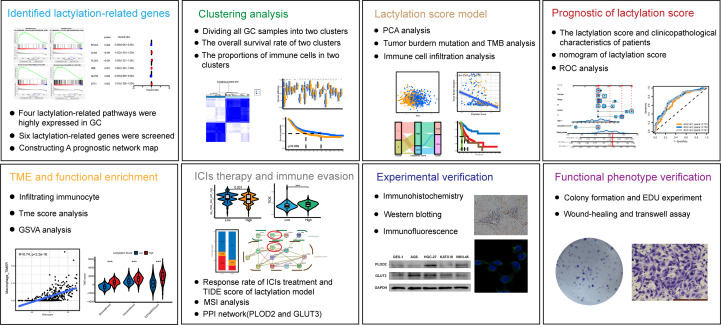
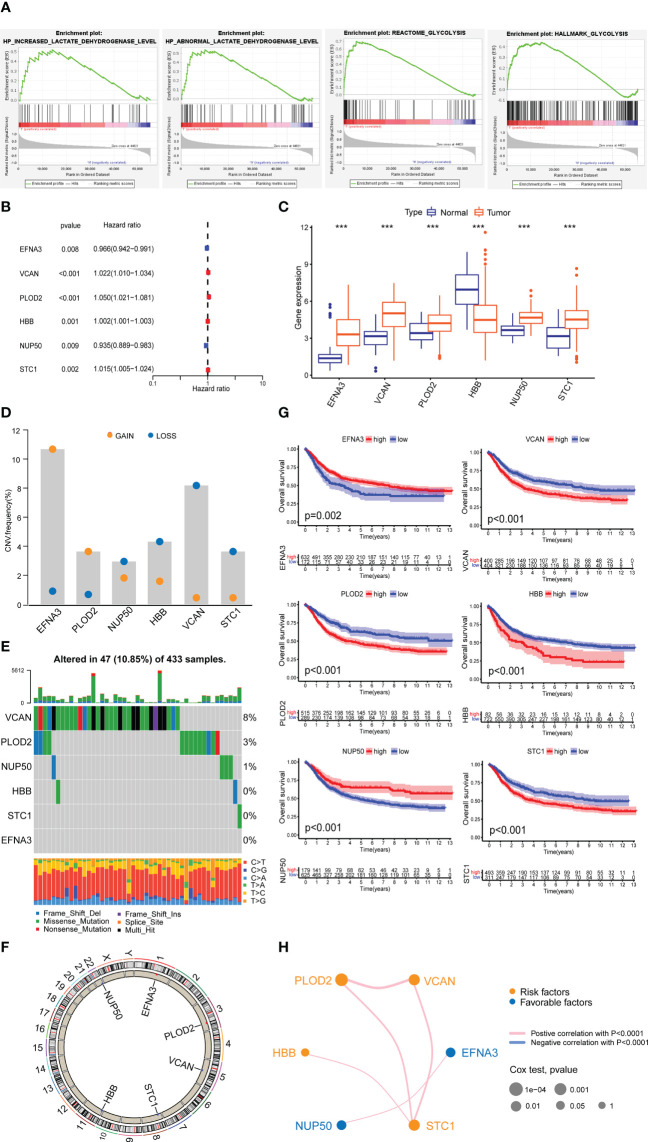
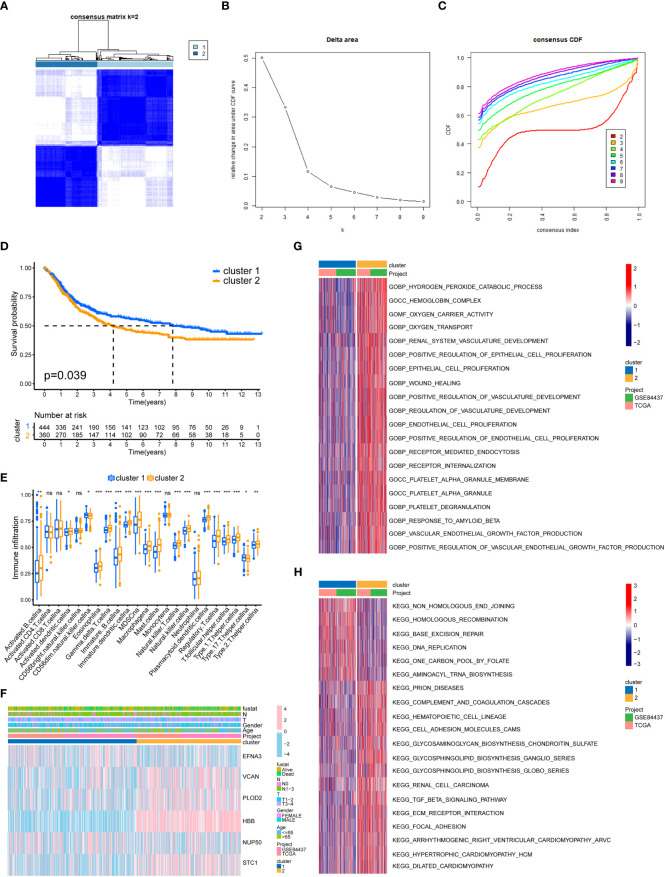
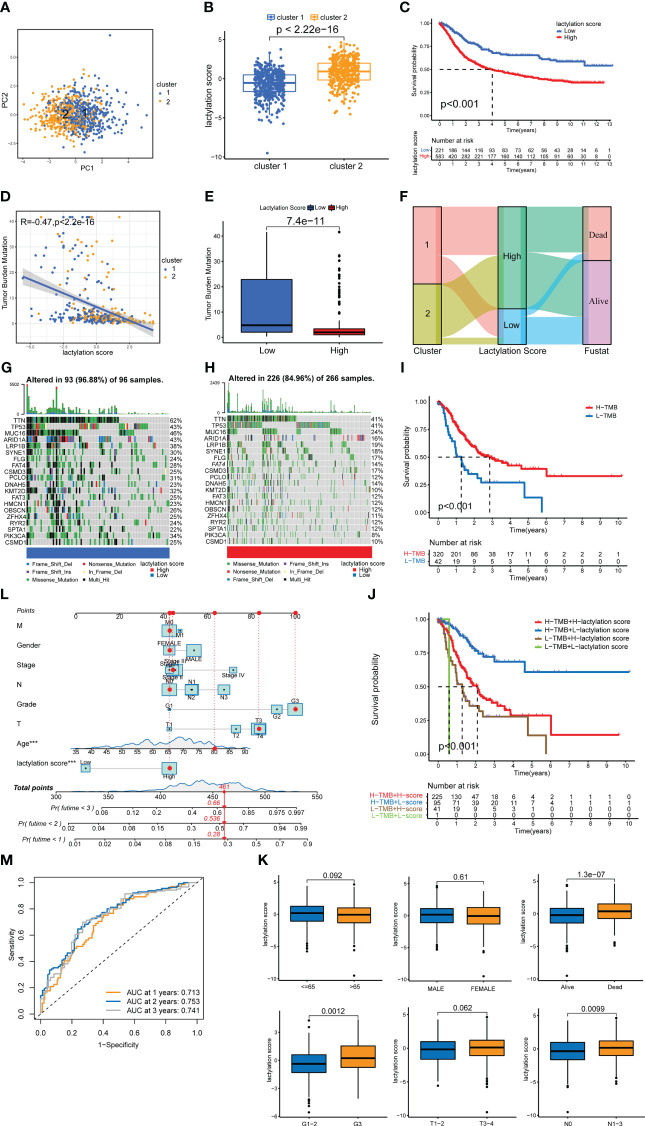
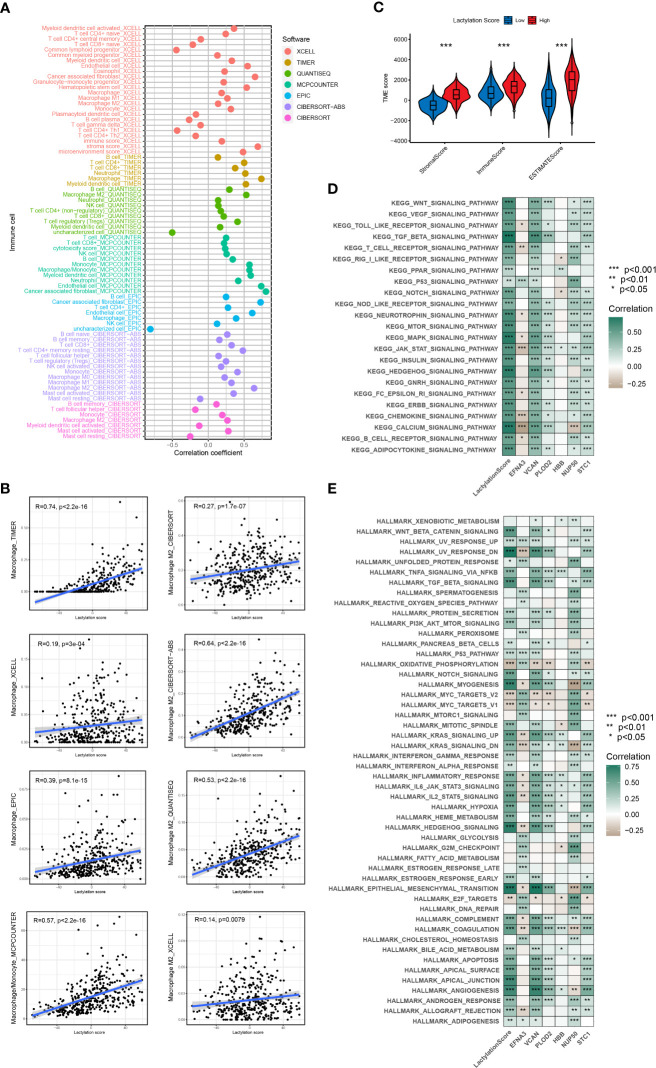
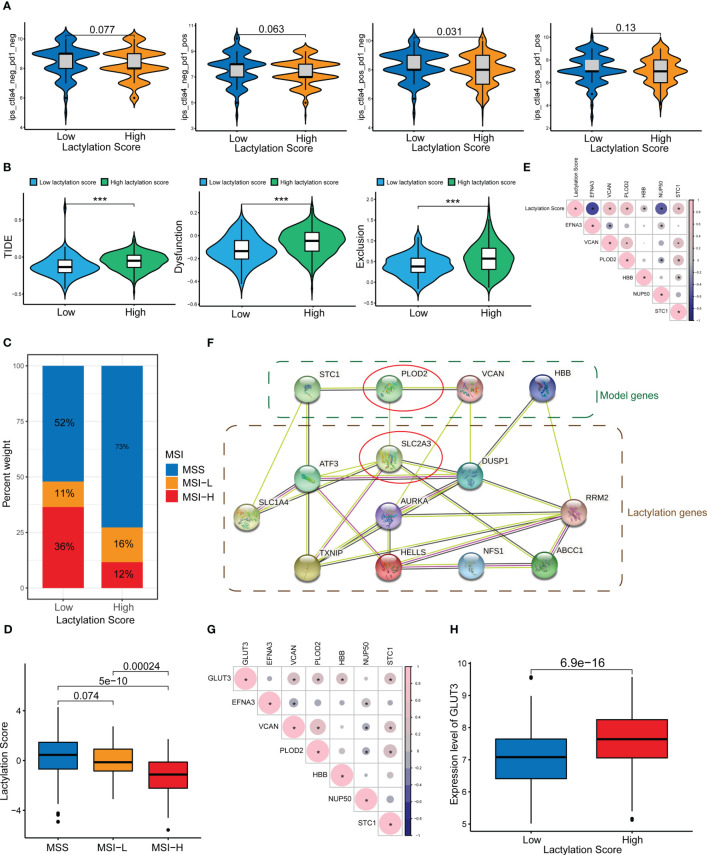
Background: The epigenetic regulatory chemical lactate is a product of glycolysis. It can regulate gene expression through histone lactylation, thereby promoting tumor proliferation, metastasis, and immunosuppression. Methods: In this study, a lactylation-related model for gastric cancer (GC) was constructed, and its relationships to prognosis, immune cell infiltration, and immunotherapy were investigated. By contrasting normal tissues and tumor tissues, four lactylation-related pathways that were substantially expressed in GC tissues were found in the GSEA database. Six lactylation-related genes were screened for bioinformatic analysis. The GC data sets from the TCGA and GEO databases were downloaded and integrated to perform cluster analysis, and the lactylation related model was constructed by secondary clustering. Results: The fingding demonstrated that the lactylation score has a strong correlation with the overall survival rate from GC and the progression of GC. Mechanistic experiments showed that abundant immune cell infiltration (macrophages showed the highest degree of infiltration) and increased genetic instability are traits of high lactylation scores. Immune checkpoint inhibitors (ICIs) demonstrated a reduced response rate in GC with high lactylation scores. At the same time, tumors with high lactylation scores had high Tumor Immune Dysfunction and Exclusion scores, which means that they had a higher risk of immune evasion and dysfunction. Discussion: These findings indicate that the lactylation score can be used to predict the malignant progression and immune evasion of GC. This model also can guide the treatment response to ICIs of GC. The constructed model of the lactate gene is also expected to become a potential therapeutic target for GC and diagnostic marker.
Overview
The claims and statistics of this paper haven’t been checked yet.
Free: it reads the open-access text and checks the first 5 claims that cite a source we can check. Create a free account to check every claim.
Integrity signals
Registry
Cites
Statistics
Figures
Verification
Claims the paper makes
The claims and statistics of this paper haven’t been checked yet.
Free: it reads the open-access text and checks the first 5 claims that cite a source we can check. Create a free account to check every claim.
Claims other papers make about this one
Each is checked against this paper’s own text: does it say what the citing paper says it does?
The source backs part of the claim, not all of it — or backs it for a different population, condition or comparison.
In the citing paper
“GC tissues with a high lactate fraction have higher immune dysfunction and reduced response to immune checkpoint inhibitors, indicating higher risks of immune evasion and dysfunction.”
From Bioinformatics Analysis and Validation of Potential Markers Associated with Prediction and Prognosis of Gastric Cancer (2024) · cites this paper as [71]
Experimental — accuracy not yet measuredThe source backs part of the claim, not all of it — or backs it for a different population, condition or comparison.
In the citing paper
“Another study has described that six lactylation-related prognostic gene models in GC tissues were established using the GSEA, TCGA, and GEO databases [71].”
From Bioinformatics Analysis and Validation of Potential Markers Associated with Prediction and Prognosis of Gastric Cancer (2024) · cites this paper as [71]
Experimental — accuracy not yet measuredThe cited source says what the claim attributes to it.
In the citing paper
“These findings suggested that the lactate score may be useful for predicting prognosis and immune escape of GC.”
From Bioinformatics Analysis and Validation of Potential Markers Associated with Prediction and Prognosis of Gastric Cancer (2024) · cites this paper as [71]
The cited source says what the claim attributes to it.
In the citing paper
“Lactylation score was achieved by infiltrated immune cells and genetic instability amounts, and it was shown that lactylation score was intensely associated with GC prognosis.”
From Bioinformatics Analysis and Validation of Potential Markers Associated with Prediction and Prognosis of Gastric Cancer (2024) · cites this paper as [71]
Self-check
Percentages, sums and reported differences re-computed from the paper’s own numbers.
The self-check needs the paper’s full text.
Citations
Cites
1 retracted
Gilkes, D. M., Bajpai, S., Chaturvedi, P., Wirtz, D., & Semenza, G. L. (2013) · Journal of Biological Chemistry · doi:10.1074/jbc.m112.442939 · Cited by 467
RetractedBray, F., Ferlay, J., Soerjomataram, I., Siegel, R. L., Torre, L. A., & Jemal, A. (2018) · CA: A Cancer Journal for Clinicians · doi:10.3322/caac.21492 · Cited by 84,109
Hallmarks of Cancer: The Next Generation
Hanahan, D., & Weinberg, R. A. (2011) · Cell · doi:10.1016/j.cell.2011.02.013 · Cited by 66,590
Siegel, R. L., Miller, K. D., & Jemal, A. (2016) · CA: A Cancer Journal for Clinicians · doi:10.3322/caac.21332 · Cited by 16,003
Allemani, C., Matsuda, T., Di Carlo, V., Harewood, R., Matz, M., Nikšić, M., Bonaventure, A., Valkov, M., Johnson, C. J., Estève, J., et al. (2018) · The Lancet · doi:10.1016/s0140-6736(17)33326-3 · Cited by 6,145
Signatures of T cell dysfunction and exclusion predict cancer immunotherapy response
Jiang, P., Gu, S., Pan, D., Fu, J., Sahu, A., Hu, X., Li, Z., Traugh, N., Bu, X., Li, B., et al. (2018) · Nature Medicine · doi:10.1038/s41591-018-0136-1 · Cited by 5,179 · cited 1×
“The scores can be used to forecast the impact of immune checkpoint therapy in patients with tumors in addition to being consistent with immune evasion features (26).”
BackgroundMetabolic regulation of gene expression by histone lactylation
Zhang, D., Tang, Z., Huang, H., Zhou, G., Cui, C., Weng, Y., Liu, W., Kim, S., Lee, S., Perez-Neut, M., et al. (2019) · Nature · doi:10.1038/s41586-019-1678-1 · Cited by 4,371 · cited 3×
“In addition to providing the energy required by cells as a fuel substrate, lactate can be utilized as a precursor material to modify histone lysines through lactylation (12).”
BackgroundInfluentialInhibition of lactate dehydrogenase A induces oxidative stress and inhibits tumor progression
Le, A., Cooper, C. R., Gouw, A. M., Dinavahi, R., Maitra, A., Deck, L. M., Royer, R. E., Vander Jagt, D. L., Semenza, G. L., & Dang, C. V. (2010) · Proceedings of the National Academy of Sciences · doi:10.1073/pnas.0914433107 · Cited by 1,516 · cited 1×
“LDHA can promote the conversion of pyruvate to lactate, and its activity is positively correlated with the Warburg effect (34).”
BackgroundLactate: the ugly duckling of energy metabolism
Rabinowitz, J. D., & Enerbäck, S. (2020) · Nature Metabolism · doi:10.1038/s42255-020-0243-4 · Cited by 1,049 · cited 1×
“Frontiers in Immunology 12 and immunosuppression of tumors, such as by acidifying the immune microenvironment and increasing the expression of tumor resistance proteins (27, 28).”
BackgroundLactate in the Regulation of Tumor Microenvironment and Therapeutic Approaches
de la Cruz-López, K. G., Castro-Muñoz, L. J., Reyes-Hernández, D. O., García-Carrancá, A., & Manzo-Merino, J. (2019) · Frontiers in Oncology · doi:10.3389/fonc.2019.01143 · Cited by 940 · cited 1×
“Frontiers in Immunology 12 and immunosuppression of tumors, such as by acidifying the immune microenvironment and increasing the expression of tumor resistance proteins (27, 28).”
Background
Cited by
Items 101–164 of 164
Zhang, B., Shang, L., Kuang, Z. L., Wang, C. H., Sun, B., & Kong, F. (2026) · International Journal of Oncology · doi:10.3892/ijo.2026.5912 · Cited by 3
“Lactylation‑related gene‑expression models show that high lactate signaling coincides with increased M2/MDSC infiltration and reduced cytotoxic T‑cell signa‑ tures (9,26).”
InfluentialLiu, G., Hong, T., Liu, X., Lin, X., Yao, P., Chen, X., Zhang, Y., Sarıca, K., & Hong, X. (2025) · Archivio Italiano di Urologia e Andrologia · doi:10.4081/aiua.2025.13516 · Cited by 4
“In recent years, increasing attention has been focused on the possible role of lactylation modification in carcinogenesis of different tumor types such as bladder cancer (28), lung cancer (29), liver cancer (27, 30), and gastric cancer (31).”
Qiu, Y., Wen, J., Jia, N., Zhang, Y., Xu, J., & Zhao, C. (2025) · Phytomedicine · doi:10.1016/j.phymed.2025.157169 · Cited by 3
A prognostic model for gastric cancer constructed by multiple machine learning algorithms
Yang, X., Huang, X., Ying, W., Deng, T., Zhang, J., & Ding, Q. (2025) · Journal of Molecular Histology · doi:10.1007/s10735-025-10629-7 · Cited by 3
“In recent years, many prognostic risk model of GC have been constructed, but most of them are based on specific biologi - cal processes (Yang et al. 2022, 2023 ; Wan et al. 2023).”
Zhang, Y., Zhang, H., & Liu, L. (2025) · PLoS ONE · doi:10.1371/journal.pone.0322706 · Cited by 2
Research advances of lactylation modification in breast cancer
Shen, P., & Yang, M. (2025) · Discover Oncology · doi:10.1007/s12672-025-03663-0 · Cited by 2
Zhu, J., Luo, M., Yuan, L., He, J., Wang, Z., Deng, Q., Wang, J., Jin, M., Liu, G., Liang, H., et al. (2026) · Cell & Bioscience · doi:10.1186/s13578-026-01538-7 · Cited by 3
“Recent studies have under-scored the importance of lactylation, a lactate-mediated post-translational modification, in regulating both tumor biology and the immune microenvironment [17, 42, 43].”
Glycolysis enzymes and cellular lactylation in tumour
Dai, C., & Wang, L. (2026) · Clinical and Translational Medicine · doi:10.1002/ctm2.70549 · Cited by 2
“214 Beyond these roles, lactylation has also been implicated in the regulation of oncogenic gene expression, such as minichromosome maintenance complex component 7 (MCM7), 215 and the maintenance of cancer stemness through coordination with other PTMs. 216 Given the extensive biological functions…”
邹明扬, Ding, Z., Fu, Y., Yu, W., Song, Y., Wu, X., Pan, Y., Wu, S., & Pan, J. (2026) · Frontiers in Immunology · doi:10.3389/fimmu.2026.1732811 · Cited by 2
Amino acid metabolism-related model for prognosis and immunity in gastric cancer
Zhang, H., Ye, W., Zeng, L., Wang, L., & Gui, L. (2026) · Amino Acids · doi:10.1007/s00726-026-03507-3 · Cited by 2
Chen, J., Hao, Y., Feng, Y., Dai, Y., Shi, H., & Zhu, L. (2026) · Frontiers in Immunology · doi:10.3389/fimmu.2026.1747043 · Cited by 2
Profile and clinical significance of SPARCL1 and its prognostic significance in breast cancer
Xu, X., Han, Y.-W., Song, Y., Zhou, Z., Chen, S., Liu, Y., Zhou, Y. F., & Chen, J. (2025) · Oncology Letters · doi:10.3892/ol.2025.14942 · Cited by 2
“In previous studies, immune cell infiltration has been reported to be a prognostic indicator for cancer progres‑ sion (43,44).”
Deng, H., Zhang, J., Chen, S., Liang, T., Hu, X., Li, J., He, Y., Yu, F., & Yu, C. (2025) · Current Medicinal Chemistry · doi:10.2174/0109298673378818250610053439 · Cited by 2
Lysine Lactylation of Hemoglobin Promotes Oxygen Release in Red Blood Cells
Sheng, M., Jin, H., Tao, S., You, G., Li, W., Chen, C., Wang, Y., Zhao, L., & Zhou, H. M. (2025) · ACS Omega · doi:10.1021/acsomega.5c01888 · Cited by 1
Lin, Z., Xu, Y., Xu, X., Lin, X., Cheng, L., & Zhao, Q. (2025) · Frontiers in Oncology · doi:10.3389/fonc.2025.1533990 · Cited by 1
The Role of EZH2 in Initiating Epigenetic Regulation of CRSwNP
Zeng, R., Wang, Y., Song, X., & Wang, J. (2025) · Journal of Inflammation Research · doi:10.2147/jir.s525688 · Cited by 2
“The control group consisted of 43 patients with septal deviation, while the CRSwNP group comprised 43 patients with CRSwNP.”
InfluentialLiang, Y., Li, M., Zhang, C., Pan, C., Wang, S., Xu, X., & Yu, J. (2025) · iScience · doi:10.1016/j.isci.2025.114400 · Cited by 1
Liu, L., Wu, M., & Liu, Y. (2026) · Frontiers in Immunology · doi:10.3389/fimmu.2026.1636331 · Cited by 1
ITPG: an immune-related transcriptomic predictive model for gastric cancer prognosis
Li, M., Sun, Y., Zhang, L., Lu, Z., Wo, H., Shao, F., Tang, S. H., Zhao, Y., Dai, J., & Yi, H. (2026) · Translational Cancer Research · doi:10.21037/tcr-2025-aw-2368 · Cited by 1
“Furthermore, most models focusing on prognostic biomarkers emphasize the main effects of predictors while neglecting gene-gene (G×G) interactions (23,24).”
Integrative Analysis Identifies Lactylation-Associated Hub Genes in Septic Cardiomyopathy
Jin, R., Dai, J., Zhang, X., Chen, Y., Wei, X., & Qian, Z. (2026) · Shock · doi:10.1097/shk.0000000000002819 · Cited by 1
Cai, W., Luo, Y., Wang, J., Kong, J., Liu, Y., Lu, B., Song, B., Lu, Y., Xu, B., & Shen, X. (2026) · Naunyn-Schmiedeberg s Archives of Pharmacology · doi:10.1007/s00210-026-05327-4 · Cited by 1
“First, a total of 327 previously reported human lactylation-associated candidate hub genes were collected from public databases and literature sources (Pan et al. 2024; Yang et al. 2023).”
Ch, M., Han, J., & Tian, Y. (2026) · Frontiers in Immunology · doi:10.3389/fimmu.2026.1840915 · Cited by 2
Yu, H., Li, S., Wu, Y., Wang, Z., Wang, X., Zhang, S., Guan, X., Dong, B., Hao, C., Tian, X., et al. (2025) · International Journal of Medical Sciences · doi:10.7150/ijms.103802 · Cited by 1
“Immune cell infiltration in the tumor microenvironment significantly impacts immunotherapy efficacy and patient prognosis [15].”
Lactylation affects p53 Nuclear Translocation to Promote Colorectal Cancer ProgressionPreprint
Ma, J., Dai, Y., Da, W., Shen, B., Zhang, Y., Bao, P., Zhu, W., Wang, S., & Wang, D. (2025) · Research Square · doi:10.21203/rs.3.rs-5586218/v1 · Cited by 1
Li, H., Gao, J., Li, M., Liu, L., Liu, L., Hu, B., Wang, Z., Guo, W., & Zhang, S. (2023) · Research Square · doi:10.21203/rs.3.rs-3404975/v1
Xu, Y., Jia, L.-H., Yu, W., & Yang, M. (2024) · Research Square · doi:10.21203/rs.3.rs-3977623/v1
Liu, B., Zheng, M., Liao, J., Zhu, G., & Meng, C. (2025) · Research Square · doi:10.21203/rs.3.rs-6253601/v1
Shen, X., & Liu, Z. (2025) · medRxiv · doi:10.1101/2025.03.19.25324051
Wen, W., Chen, J., Deng, F., Guo, D., Zuo, Y., Chen, X., Li, Y., Li, Y., & Tang, Y. (2025) · Molecular Biotechnology · doi:10.1007/s12033-025-01446-0
Wang, S., Gu, S., & Wu, X. (2025) · Journal of Radiation Research and Applied Sciences · doi:10.1016/j.jrras.2025.101939
Wang, J., Zhou, J., & Chen, X. (2025) · Food & Nutrition Research · doi:10.29219/fnr.v69.13155
Huang, H., Chen, K., Zhu, Y., Hu, Z., Wang, Y., Chen, J., Li, Y., Li, D., & Wei, P. (2024) · Figshare · doi:10.6084/m9.figshare.25310170
Huang, H., Chen, K., Zhu, Y., Hu, Z., Wang, Y., Chen, J., Li, Y., Li, D., & Wei, P. (2024) · Figshare · doi:10.6084/m9.figshare.25310209
Towards the tumor microenvironment scoring methods for immune checkpoint inhibitor response
Zhou, Q., Kirshtein, A., & Shahriyari, L. (2026) · npj Precision Oncology · doi:10.1038/s41698-025-01221-z
Li, L., Wang, M., Li, X., & Ding, J. C. (2026) · Breast Cancer · doi:10.1007/s12282-026-01829-4
“Previous studies have shown that lactate regulates TME acidification [ 42], thereby promoting immune evasion, angiogenesis, and tumor cell migration [ 10 , 43 ].”
Song, Y., Song, D., Li, X., Li, D., Liu, L., Zhao, X., Wang, Y., Wang, Z., Yu, Z., & Sun, R. (2026) · Cancer Cell International · doi:10.1186/s12935-026-04203-8
“Herein, we have established a robust prognostic model that offers valuable insights for forecasting outcomes in HCC. Interestingly, it is reported that lactylation also impacts the outcomes of other tumors like gastric cancer, breast cancer, colorectal cancer, and so on [28–30].”
Kou, R., Zhu, C., Chen, Y., WANG, J., Xu, J., Lan, B., & Qin, Z. (2026) · Frontiers in Oncology · doi:10.3389/fonc.2026.1750088
Lactylation profiling reveals novel biomarkers and immune interactions in pancreatic cancer
Xu, D., Chen, Q., Wang, L. J., Li, L., Cheng, K., Liu, X., & Lin, K. (2026) · Translational Oncology · doi:10.1016/j.tranon.2026.102710 · Cited by 1
“This is in line with recent studies suggesting that lactate, the precursor of lactylation, can modulate the immune microenvironment, potentially impacting immuno-therapy's efficacy [27].”
Tang, Z., Li, W., Ma, R., Wei, P., Huang, J., Wang, R. J., Pan, Y., & Wang, J. (2026) · Translational Cancer Research · doi:10.21037/tcr-2025-1802
“Candidate LRGs were identified from previous studies (12,13).”
Guo, H., Lu, X., Fang, G., Qi, Y., Cui, H., & Zhang, X. (2026) · PeerJ · doi:10.7717/peerj.20761
Li, Y., Li, Z., Liu, X., Qiu, Z., Zhang, R., Li, H., Gao, C., & Guo, C. (2026) · Frontiers in Immunology · doi:10.3389/fimmu.2026.1734414 · Cited by 1
Global profiling of protein lactylation in pancreatic ductal adenocarcinoma
Toledo, D., Oluwole, S. A., Owiredu, S., Carr, G., & Agatemor, C. (2026) · Scientific Reports · doi:10.1038/s41598-026-43771-7 · Cited by 1
Role of histone modifications in gastric cancer (Review)
Zhang, Y., Wang, L., Wang, L., Li, Z., You, R., Meng, X., Gao, Y., Zhu, L., Wei, S., & Li, M. (2026) · International Journal of Oncology · doi:10.3892/ijo.2026.5878
“The lactate production scoring model is a promising diagnostic biomarker for GC because database analysis has revealed four basic lactylation‑related pathways in GC tissues, which led to the selection of six lactylation‑related genes for model development (130).”
Lin, T., Fu, B., & Lu, X. (2026) · Discover Oncology · doi:10.1007/s12672-026-04477-4
Zhou, X., Weng, L., Sun, T., Jiang, Q., Zeng, F., Xu, C., Chang, C., Wang, Y., & Zhou, J. (2026) · Translational Andrology and Urology · doi:10.21037/tau-2026-0190
Zhang, P., Chen, Y., Lu, Y., Li, K., Mi, L., & Li, J. (2026) · Chemistry & Biodiversity · doi:10.1002/cbdv.202502905
“Previous studies have confirmed that aberrant lactic acid buildup generates an immunosuppressive niche in gastric cancer, thereby promoting tumor initiation and progression [ 4–7 ].”
Non-histone lactylation in cancer: current advances and clinical implications
Yang, R. L., & Liang, Y. (2026) · Frontiers in Immunology · doi:10.3389/fimmu.2026.1824457
Xu, X., & Song, Y. (2026) · Scientific Reports · doi:10.1038/s41598-026-58588-7
“This feature importance ranking not only corroborates immunological theories but, more importantly, points out the priority direction for future biomarker development 21 .”
Wang, B., An, Y., Shu, Y., Cheng, X., Chen, X., Zhang, X., & Cheng, Z. (2026) · PLoS ONE · doi:10.1371/journal.pone.0351849
Research progress of lactylation modification in tumors (Review)
Fang, S.-C., & Shi, Z. (2026) · Experimental and Therapeutic Medicine · doi:10.3892/etm.2026.13229
“An increase in the lactylation level of the K72 locus of the moesin protein enhanced its interaction with TGF‑ β receptor I and its downstream SMAD3 signaling, which promoted the genera‑ tion and stabilization of Tregs in the TME, thereby contributing to the formation of an immunosuppressive TME.”
InfluentialZhang, Z., Peng, Q., Wang, S., Xun, Q., Chen, X., Zhou, M., Luo, J., Yang, L., Tang, C., Luo, Y., et al. (2026) · Clinical Epigenetics · doi:10.1186/s13148-026-02200-2
“Evidence suggests that high lactylation scores in gastric cancer are associated with poor responsiveness to immune checkpoint inhibitors [36].”
Wang, Z., Yan, N., Ding, T., Xiong, W., Feng, W., Wang, Y., & Wei, Y. (2026) · Translational Cancer Research · doi:10.21037/tcr-2026-0963
Lactylation in cancer: a new frontier in metabolic-epigenetic regulation and clinical practice
Zhang, Y., Chen, L., Qin, Y., Wang, Y., Liu, X., Zhang, M., & Tang, J. (2026) · Cell Communication and Signaling · doi:10.1186/s12964-026-03085-7 · Cited by 1
“…of programmed cell death pathways (PANoptosis) [94] Hypoxia/Glycolysis/Lipid pathways GC Pathway integration → Multi-metabolic crosstalk captured [132] Multi-pathway integration nomogram GC Prognostic nomogram performance and risk stratification ↑ CREBBP and EP300 mutation profiles Pan-Cancer…”
Fan, Y., Yu, Y., & Jiang, X. (2026) · International Journal of Genomics · doi:10.1155/ijog/9137939
Xia, S., Zhang, X., Tang, L., Li, A., Chen, J., & Tao, Z. (2026) · Oncology Reports · doi:10.3892/or.2026.9180
“…in 2014, delineated four primary subtypes: Epstein‑Barr virus (EBV)‑positive, microsatellite instability‑high (MSI), genomi‑ cally stable (GS) and chromosomal instability (CIN); while the ACRG later proposed an alternative system particularly relevant to Asian patient populations (21,22).”
Feng, Y., Chen, J., Xia, L., Wang, T., Wang, Y., Zhang, L., Zhao, G., Xu, L., Yu, J., She, Y., et al. (2026) · Advanced Science · doi:10.1002/advs.77153
Tsarenkova, E. A., Kalinchuk, A. V., Kazakova, E., Vtorushin, S. V., Grigoryeva, E. S., & Таширева, Л. А. (2026) · Clinical & Translational Oncology · doi:10.1007/s12094-026-04547-7
Jing, S., & Zhu, Z. (2026) · International Journal of Molecular Sciences · doi:10.3390/ijms27177965
“The lactylation-related genes (LRGs) were derived from the previous literature, and a total of 371 LRGs were identified [38,39] (Table S1).”
Guo, H., Zhou, P., Zhao, Q., Chen, D., Liang, X., Wei, L., & Chen, X. (2026) · Scientific Reports · doi:10.1038/s41598-026-69368-8
Meng, G., Li, Y., Gan, L., Chen, X., & Chen, Y. (2026) · Cells · doi:10.3390/cells15181679
“This metabolic competition-driven immune evasion is a major contributor to immunotherapy resistance in GC [88].”
Lactylation in gastric cancer: From mechanisms to clinical applications (Review)
Fang, Y., Chen, P., Gao, Y., Li, Y., & Li, X. (2026) · Molecular Medicine Reports · doi:10.3892/mmr.2026.14030
“Yang et al (108) established a six‑gene lactylation scoring system via pathway enrichment and screening, and found that high scores were notably associated with advanced tumor grade, lymph node metastasis and worse prognosis.”
Chen, Y., Wang, X., Wang, X., Lin, N., Wang, W., Fu, R., Wu, Y., Liu, Y., & Liu, H. (2026) · Clinical and Translational Medicine · doi:10.1002/ctm2.70795
Zhang, W., Chen, H., Fan, J., He, Y., & Liu, J. (2026) · Frontiers in Immunology · doi:10.3389/fimmu.2026.1991810
Lactate and Lactylation: What We Know and What We Expect in Tumour Progression
Zhang, Q., Han, Z., & Duan, Y. (2026) · Cell Proliferation · doi:10.1111/cpr.70293
Metadata
- Authors
- Yang, H., Zou, X., Yang, S., Zhang, A., Li, N., & Ma, Z.
- Affiliations
- Harbin Medical University (CN)
- Corresponding author
- Zou, Xiaoming
- Venue
- Frontiers in Immunology
- Publisher
- Frontiers Media SA
- Published
- 2023-03-03
- Volume
- 14
- Pages
- 1149989-1149989
- ISSN
- 1664-3224 (ISSN-L)
- PMC
- PMC10020516
- OpenAlex
- W4323045532
- Cited by
- 139
- References
- 56
- Citations by year
- 2026: 33 · 2025: 68 · 2024: 32 · 2023: 6
- FWCI
- 17.08
- Type
- journal article
- Language
- en
- Open access
- gold
- doi.org
- Licence
- Locations
- Frontiers in Immunology (publishedVersion, cc-by)
- PubMed Central (publishedVersion, cc-by)
- PubMed (publishedVersion)
- DOAJ (DOAJ: Directory of Open Access Journals) (submittedVersion, cc-by-sa)
- Topics
- Health Sciences › Medicine › Oncology › Cancer Immunotherapy and Biomarkers
- Life Sciences › Biochemistry, Genetics and Molecular Biology › Cancer Research › Ferroptosis and cancer prognosis
- Life Sciences › Biochemistry, Genetics and Molecular Biology › Cancer Research › Cancer, Hypoxia, and Metabolism
- Keywords
- gastric cancer, histone lactylation, lactate, prognostic model, tumor immune cell infiltration, immune checkpoint inhibitors, immunotherapy response, tumor immune dysfunction and exclusion, immune evasion, macrophage infiltration, genomic instability, glycolysis, therapeutic target, diagnostic biomarkers
- MeSH terms
- Humans, Immunosuppression Therapy, Immunotherapy, Prognosis, Stomach Neoplasms, Cluster Analysis
About these checks
Registry, retraction, Cites and statistics results are computed, not judged, with one exception: a printed reference that no index lists is read once by a model before it counts as a citation error. Claims are extracted by a model and kept only when their quote appears verbatim in the text; each cited source is then checked, with a model’s help, for whether it says what the claim relies on. Those verdicts can be wrong — read the claim’s quote and the cited source before relying on one.
Statistics and arithmetic are recomputed, not judged.
Confidence bands are shown only for fields calibrated on our annotated test set. None is calibrated yet, so no band is shown.
What counts as a claim ›How we measure confidence ›How we check this ›
Are you an author, or do you see a problem with this page? Request a review
Data sources
Bibliographic data: Semantic Scholar, OpenAlex, Crossref.
Contains information from the Semantic Scholar Academic Graph Datasets, made available under the ODC Attribution License (ODC-BY 1.0).
Semantic Scholar’s data is described in: Kinney, R., et al. (2023). The Semantic Scholar Open Data Platform. arXiv:2301.10140.
