

The DOI matches its Crossref record; the references it cites are not checked yet.
Ecophysiology and Comparative Genomics of Nitrosomonas mobilis Ms1 Isolated from Autotrophic Nitrifying Granules of Wastewater Treatment Bioreactor
Open accessAbstract
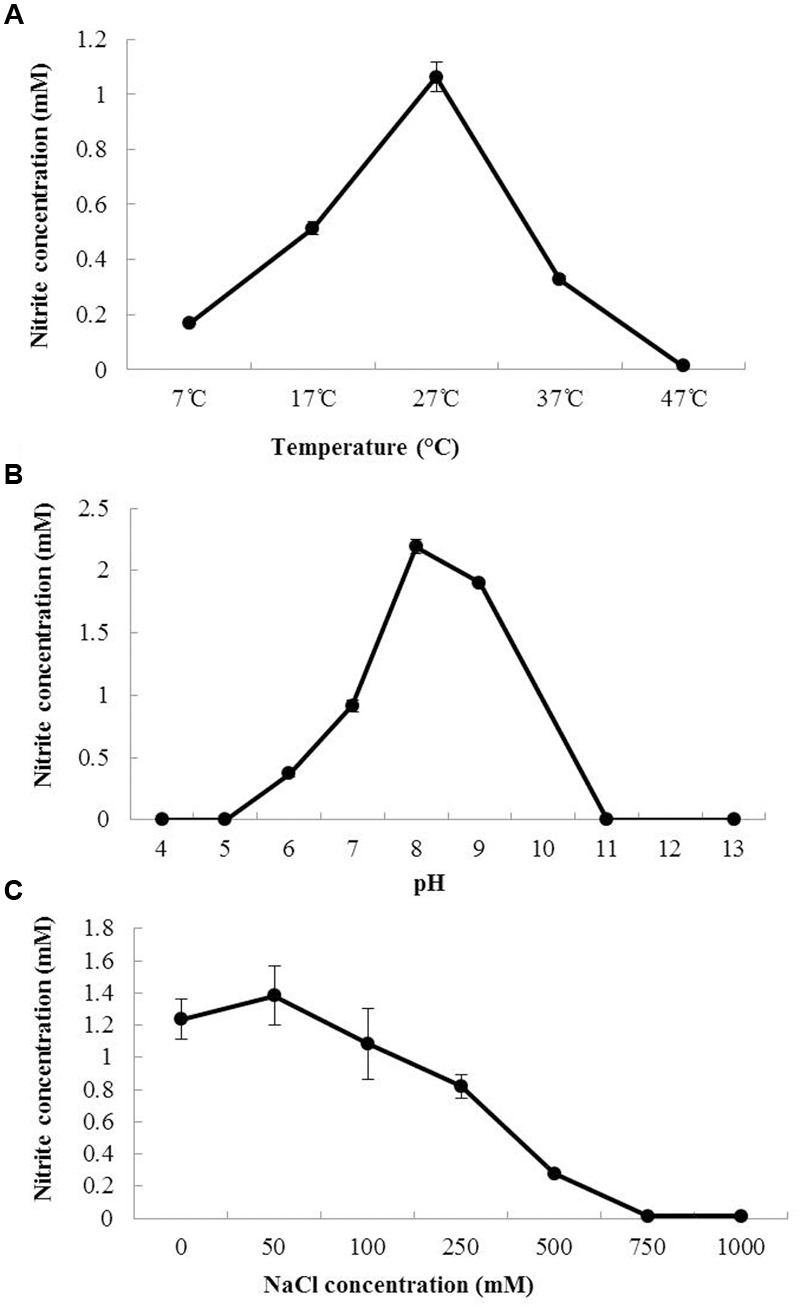
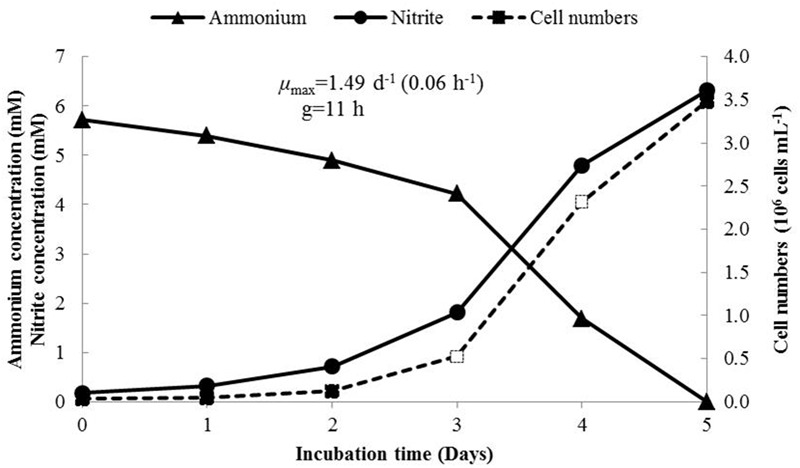
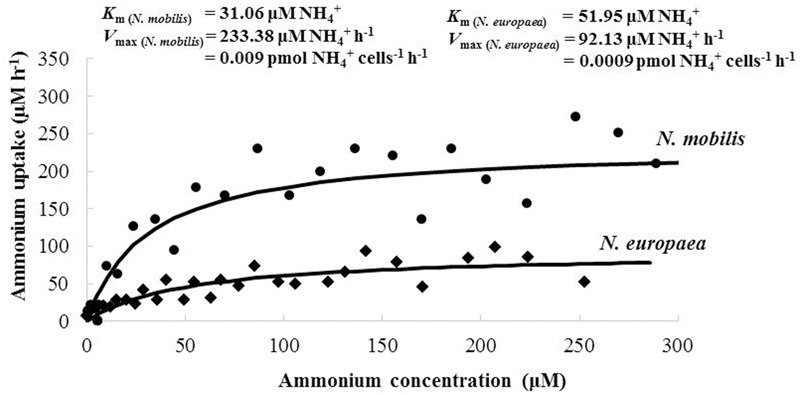
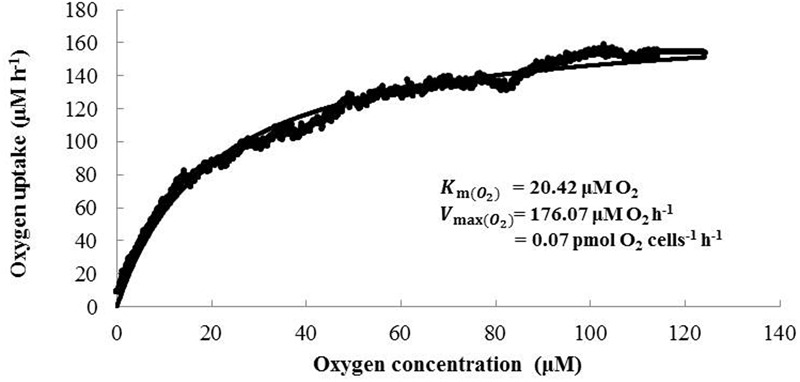
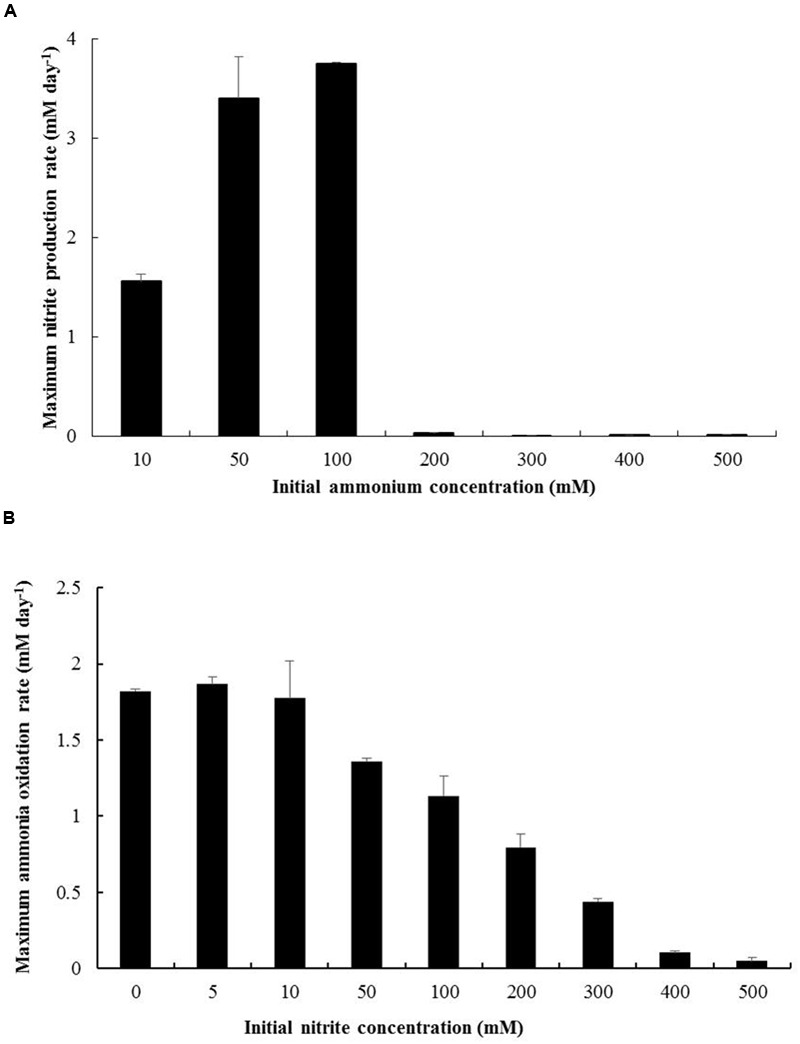
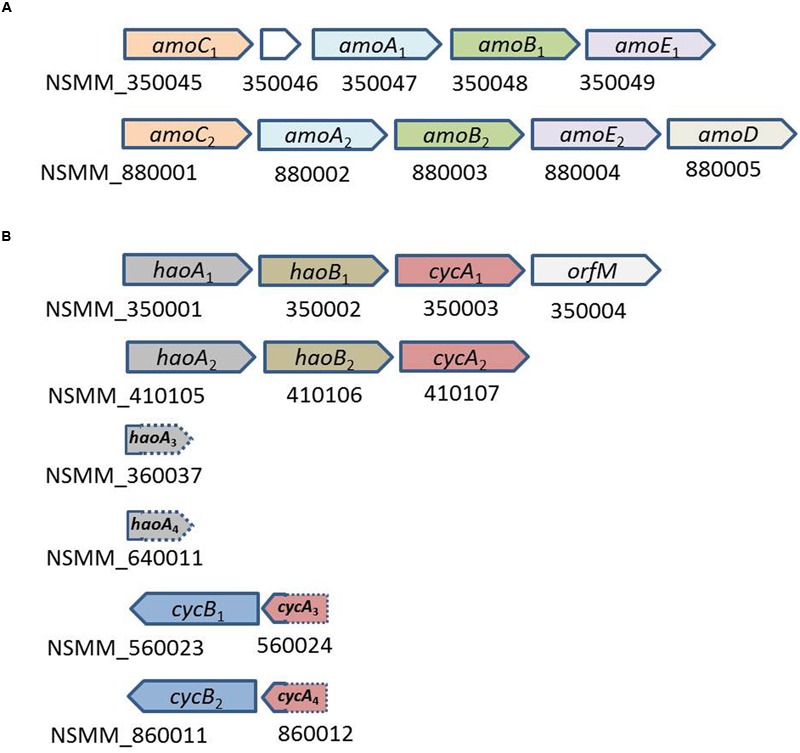
Ammonia-oxidizing bacteria (AOB), which oxidize ammonia to nitrite in the first step of nitrification, play an important role in biological wastewater treatment systems. Nitrosomonas mobilis is an important and dominant AOB in various wastewater treatment systems. However, the detailed physiological and genomic properties of N. mobilis have not been thoroughly investigated because of limited success isolating pure cultures. This study investigated the key physiological characteristics of N. mobilis Ms1, which was previously isolated into pure culture from the nitrifying granules of wastewater treatment bioreactor. The pure culture of N. mobilis Ms1 was cultivated in liquid mineral medium with 30 mg-N L-1 (2.14 mM) of ammonium at room temperature under dark conditions. The optimum growth of N. mobilis Ms1 occurred at 27°C and pH 8, with a maximum growth rate of 0.05–0.07 h-1, which corresponded to a generation time of 10–14 h. The half saturation constant for ammonium uptake rate and the maximum ammonium uptake rate of N. mobilis Ms1 were 30.70±0.51 μM NH4+ and 0.01±0.002 pmol NH4+ cells-1 h-1, respectively. N. mobilis Ms1 had higher ammonia oxidation activity than N. europaea in this study. The oxygen uptake activity kinetics of N. mobilis Ms1 were K_(m(O_2))= 21.74±4.01 μM O2 and V_(max(O_2))= 0.06±0.02 pmol O2 cells-1 h-1. Ms1 grew well at ammonium and NaCl concentrations of up to 100 mM and 500 mM, respectively. The nitrite tolerance of N. mobilis Ms1 was extremely high (up to 300 mM) compared to AOB previously isolated from activated sludge and wastewater treatment plants. The average nucleotide identity between the genomes of N. mobilis Ms1 and other Nitrosomonas species indicated that N. mobilis Ms1 was distantly related to other Nitrosomonas species. The organization of the genes encoding protein inventory involved in ammonia oxidation and nitrifier denitrification processes were different from other Nitrosomonas species. The current study provides a needed physiological and genomic characterization of N. mobilis-like bacteria and a better understanding of their ecophysiological properties, enabling comparison of these bacteria with other AOB in wastewater treatment systems and natural ecosystems.
Overview
The claims and statistics of this paper haven’t been checked yet.
Run the check — free, no account needed. It reads the open-access text and checks the sources it cites.
Integrity signals
Registry
Cites
Statistics
Figures
Verification
Claims the paper makes
The claims and statistics of this paper haven’t been checked yet.
Run the check — free, no account needed. It reads the open-access text and checks the sources it cites.
Self-check
Percentages, sums and reported differences re-computed from the paper’s own numbers.
The self-check needs the paper’s full text.
Citations
The citation lists haven’t been fetched yet
References 54 · Cited by 45
Research works printed but not linked: 54
- Bankevich, 2012, SPAdes: a new genome assembly algorithm and its applications to single-cell sequencing., J. Comput. Biol., 19, 455, 10.1089/cmb.2012.0021 · DOI
- Belser, 1980, Growth and oxidation kinetics of 3 genera of ammonia oxidizing nitrifiers., FEMS Microbiol. Lett., 7, 213, 10.1016/S0378-1097(80)80033-4 · DOI
- Bollmann, 2001, Continuous culture enrichments of ammonia-oxidizing bacteria at low ammonium concentrations., FEMS Microbiol. Ecol., 37, 211, 10.1016/s0168-6496(01)00163-5 · DOI
- Bollmann, 2013, Complete genome sequence of Nitrosomonas sp. Is79, an ammonia oxidizing bacterium adapted to low ammonium concentrations., Stand. Genomic Sci., 7, 469, 10.4056/sigs.3517166 · DOI
- Campbell, 2011, Nitrosococcus watsonii sp. nov., a new species of marine obligate ammonia-oxidizing bacteria that is not omnipresent in the world’s oceans: calls to validate the names ‘Nitrosococcus halophilus’ and ‘Nitrosomonas mobilis’., FEMS Microbiol. Ecol., 76, 39, 10.1111/j.1574-6941.2010.01027.x · DOI
- Cantera, 2007, Molecular diversity of nitrite reductase genes (nirK) in nitrifying bacteria., Environ. Microbiol., 9, 765, 10.1111/j.1462-2920.2006.01198.x · DOI
- Chain, 2003, Complete genome sequence of the ammonia-oxidizing bacterium and obligate chemolithoautotroph Nitrosomonas europaea., J. Bacteriol., 185, 2759, 10.1128/JB.185.21.6496.2003 · DOI
- Chen, 2004, Impact of increased chloride concentration on nitrifying-activated sludge cultures., J. Environ. Eng., 130, 116, 10.1061/(asce)0733-9372(2004)130:2(116) · DOI
- Cortes-Lorenzo, 2015, Effect of salinity on nitrification efficiency and structure of ammonia-oxidizing bacterial communities in a submerged fixed bed bioreactor., Chem. Eng. J., 266, 233, 10.1016/j.cej.2014.12.083 · DOI
- Cua, 2011, Effects of nitrite on ammonia-oxidizing activity and gene regulation in three ammonia-oxidizing bacteria., FEMS Microbiol. Lett., 319, 169, 10.1111/j.1574-6968.2011.02277.x · DOI
- Daims, 2015, Complete nitrification by Nitrospira bacteria., Nature, 528, 504, 10.1038/nature16461 · DOI
- Fujitani, 2015, Selective isolation of ammonia-oxidizing bacteria from autotrophic nitrifying granules by applying cell-sorting and sub-culturing of microcolonies., Front. Microbiol., 6, 10.3389/fmicb.2015.01159 · DOI
- Gieseke, 2003, Structure and activity of multiple nitrifying bacterial populations co-existing in a biofilm., Environ. Microbiol., 5, 355, 10.1046/j.1462-2920.2003.00423.x · DOI
- Griess-Romijn van Eck, 1966, Physiological and Chemical Tests for Drinking Water. NEN 1056, IV-2.
- Head, 1993, The phylogeny of autotrophic ammonia-oxidizing bacteria as determined by analysis of 16s ribosomal RNA gene sequences., J. Gen. Microbiol., 139, 1147, 10.1099/00221287-139-6-1147 · DOI
- Itoh, 2013, Isolation and characterization of a thermotolerant ammonia-oxidizing bacterium Nitrosomonas sp JPCCT2 from a thermal power station., Microbes Environ., 28, 432, 10.1264/jsme2.ME13058 · DOI
- Jones, 1988, A new marine ammonium-oxidizing bacterium, Nitrosomonas cryotolerans sp nov., Can. J. Microbiol., 34, 1122, 10.1139/m88-198 · DOI
- Juretschko, 1998, Combined molecular and conventional analyses of nitrifying bacterium diversity in activated sludge: Nitrosococcus mobilis and Nitrospira-like bacteria as dominant populations., Appl. Environ. Microbiol., 64, 3042, 10.1128/AEM.64.8.3042-3051.1998 · DOI
- Kandeler, 1988, Short-term assay of soil urease activity using colorimetric determination of ammonium., Biol. Fertil. Soils, 6, 68, 10.1007/BF00257924 · DOI
- Klotz, 2011, “Genomics of ammonia-oxidizing bacteria and insights to their evolution,” in, Nitrification, 57, 10.1128/9781555817145.ch4 · DOI
- Konstantinidis, 2006, The bacterial species definition in the genomic era., Phil. Trans. Soc. B, 361, 1929, 10.1098/rstb.2006.1920 · DOI
- Konstantinidis, 2005, Genomic insights that advance the species definition for prokaryotes., Proc. Natl. Acad. Sci. U.S.A., 102, 2567, 10.1073/pnas.0409727102 · DOI
- Koops, 1990, Description of a new species of Nitrosococcus., Arch. Microbiol., 154, 244, 10.1007/bf00248962 · DOI
- Koops, 1991, Classification of eight new species of ammonia-oxidizing bacteria: Nitrosomonas communis sp. nov., Nitrosomonas ureae sp. nov., Nitrosomonas aestuarii sp. nov., Nitrosomonas marina sp. nov., Nitrosomonas nitrosa sp. nov., Nitrosomonas eutropha sp. nov., Nitrosomonas oligotropha sp. nov. and Nitrosomonas halophila sp. nov., J. Gen. Microbiol., 137, 1689, 10.1099/00221287-137-7-1689 · DOI
- Koops, 1985, Deoxyribonucleic acid homologies among 96 strains of ammonia-oxidizing bacteria., Arch. Microbiol., 141, 214, 10.1007/bf00408061 · DOI
- Koops, 1976, Isolation of a moderate halophilic ammonia-oxidizing bacterium, Nitrosococcus mobilis nov sp., Arch. Microbiol., 107, 277, 10.1007/bf00425339 · DOI
- Koops, 2001, Distribution and ecophysiology of the nitrifying bacteria emphasizing cultured species., FEMS Microbiol. Ecol., 37, 1, 10.1111/j.1574-6941.2001.tb00847.x · DOI
- Koops, 2006, The lithoautotrophic ammonia-oxidizing bacteria,” in, Prokaryotes: a Handbook on the Biology of Bacteria, Proteobacteria: Alpha and Beta Subclasses, Vol 5, 778, 10.1007/0-387-30745-1_36 · DOI
- Laanbroek, 1993, Competition for limiting amounts of oxygen between Nitrosomonas europaea and Nitrobacter winogradskyi grown in mixed continuous cultures., Arch. Microbiol., 159, 453, 10.1007/bf00288593 · DOI
- Limpiyakorn, 2007, Effects of ammonium and nitrite on communities and populations of ammonia-oxidizing bacteria in laboratory-scale continuous-flow reactors., FEMS Microbiol. Ecol., 60, 501, 10.1111/j.1574-6941.2007.00307.x · DOI
- Limpiyakorn, 2005, Communities of ammonia-oxidizing bacteria in activated sludge of various sewage treatment plants in Tokyo., FEMS Microbiol. Ecol., 54, 205, 10.1016/j.femsec.2005.03.017 · DOI
- Matsumoto, 2010, Microbial population dynamics and community structure during the formation of nitrifying granules to treat ammonia-rich inorganic wastewater., Microbes Environ., 25, 164, 10.1264/jsme2.ME10107 · DOI
- Mota, 2005, Effects of aeration cycles on nitrifying bacterial populations and nitrogen removal in intermittently aerated reactors., Appl. Environ. Microbiol., 71, 8565, 10.1128/aem.71.12.8565-8572.2005 · DOI
- Nakagawa, 2015, Nitrosomonas stercoris sp nov., a chemoautotrophic ammonia-oxidizing bacterium tolerant of high ammonium isolated from composted cattle manure., Microbes Environ., 30, 221, 10.1264/jsme2.ME15072 · DOI
- Pommerening-Roser, 1996, Phylogenetic diversity within the genus Nitrosomonas., Syst. Appl. Microbiol., 19, 344, 10.1016/S0723-2020(96)80061-0 · DOI
- Prosser, 1989, Autotrophic nitrification in bacteria., Adv. Microb. Physiol., 30, 125, 10.1016/S0065-2911(08)60112-5 · DOI
- Purkhold, 2000, Phylogeny of all recognized species of ammonia oxidizers based on comparative 16S rRNA and amoA sequence analysis: implications for molecular diversity surveys., Appl. Environ. Microbiol., 66, 5368, 10.1128/aem.66.12.5368-5382.2000 · DOI
- Radniecki, 2008, Zinc chloride inhibition of Nitrosococcus mobilis., Biotechnol. Bioeng., 99, 1085, 10.1002/bit.21672 · DOI
- Radniecki, 2011, Transcriptional and physiological responses of Nitrosococcus mobilis to copper exposure., J. Environ. Eng., 137, 307, 10.1061/(asce)ee.1943-7870.0000338 · DOI
- Sekiguchi, 2015, First genomic insights into members of a candidate bacterial phylum responsible for wastewater bulking., PeerJ, 3, 10.7717/peerj.740 · DOI
- Stehr, 1995, The ammonia-oxidizing nitrifying population of the river elbe estury., FEMS Microbiol. Ecol., 17, 177, 10.1111/j.1574-6941.1995.tb00141.x · DOI
- Stein, 1998, Loss of ammonia monooxygenase activity in Nitrosomonas europaea upon exposure to nitrite., Appl. Environ. Microbiol., 64, 4098, 10.1128/AEM.64.10.4098-4102.1998 · DOI
- Stein, 2007, Whole-genome analysis of the ammonia-oxidizing bacterium, Nitrosomonas eutropha C91: implications for niche adaptation., Environ. Microbiol., 9, 2993, 10.1111/j.1462-2920.2007.01409.x · DOI
- Stein, 2013, Energy-mediated vs. Ammonium-regulated gene expression in the obligate ammonia oxidizing bacterium, Nitrosococcus oceani., Front. Microbiol., 4, 10.3389/fmicb.2013.00277 · DOI
- Suwa, 1994, Ammonia-oxidizing bacteria with different sensitive to (NH4)2SO4 in activated sludges., Water Res., 28, 1523, 10.1016/0043-1354(94)90218-6 · DOI
- Suwa, 2011, Genome sequence of Nitrosomonas sp. strain AL212, an ammonia-oxidizing bacterium sensitive to high levels of ammonia., J. Bacteriol., 193, 5047, 10.1128/JB.05521-11 · DOI
- Suwa, 1997, Phylogenetic relationships of activated sludge isolates of ammonia oxidizers with different sensitivities to ammonium sulfate., J. Gen. Appl. Microbiol., 43, 373, 10.2323/jgam.43.373 · DOI
- Tan, 2008, Physiological and phylogenetic study of an ammonium-oxidizing culture at high nitrite concentrations., Syst. Appl. Microbiol., 31, 114, 10.1016/j.syapm.2008.01.002 · DOI
- Tokuyama, 1997, A new psychrotrophic ammonia-oxidizing bacterium, Nitrosovibrio sp. TYM9., J. Ferment. Bioeng., 83, 377, 10.1016/s0922-338x(97)80145-6 · DOI
- Tsuneda, 2003, Characterization of nitrifying granules produced in an aerobic upflow fluidized bed reactor., Water Res., 37, 4965, 10.1016/j.watres.2003.08.017 · DOI
- Vallenet, 2013, MicroScope-an integrated microbial resource for the curation and comparative analysis of genomic and metabolic data., Nucleic Acids Res., 41, E636, 10.1093/nar/gks1194 · DOI
- van Kessel, 2015, Complete nitrification by a single microorganism., Nature, 528, 555, 10.1038/nature16459 · DOI
- Wells, 2009, Ammonia-oxidizing communities in a highly aerated full-scale activated sludge bioreactor: betaproteobacterial dynamics and low relative abundance of Crenarchaea., Environ. Microbiol., 11, 2310, 10.1111/j.1462-2920.2009.01958.x · DOI
- Zhang, 2015, Ammonia-oxidizing bacteria and archaea in wastewater treatment plant sludge and nearby coastal sediment in an industrial area in China., Appl. Microbiol. Biotechnol., 99, 4495, 10.1007/s00253-014-6352-9 · DOI
Metadata
- Authors
- Thandar, S. M., Ushiki, N., Fujitani, H., Sekiguchi, Y., & Tsuneda, S.
- Affiliations
- Mandalay Technological University (MM)
- Waseda University (JP)
- National Institute of Advanced Industrial Science and Technology (JP)
- Corresponding author
- Tsuneda, Satoshi
- Venue
- Frontiers in Microbiology
- Publisher
- Frontiers Media SA
- Published
- 2016-11-22
- Volume
- 7
- Pages
- 1869-1869
- ISSN
- 1664-302X (ISSN-L)
- PMC
- PMC5118430
- OpenAlex
- W2553323154
- Cited by
- 45
- References
- 54
- Citations by year
- 2026: 5 · 2025: 6 · 2024: 9 · 2023: 2 · 2022: 5 · 2021: 8 · 2020: 5 · 2019: 2 · 2018: 3
- FWCI
- 0.91
- Type
- journal article
- Language
- en
- Open access
- gold
- doi.org
- Licence
- cc-by
- Locations
- Frontiers in Microbiology (publishedVersion, cc-by)
- PubMed Central (publishedVersion, cc-by)
- PubMed (publishedVersion)
- DOAJ (DOAJ: Directory of Open Access Journals) (submittedVersion, cc-by-sa)
- Funders
- Institute for Fermentation, Osaka
- Waseda University (2014B-323)
- Tokyo University of Agriculture
- Topics
- Physical Sciences › Environmental Science › Pollution › Wastewater Treatment and Nitrogen Removal
- Life Sciences › Biochemistry, Genetics and Molecular Biology › Molecular Biology › Microbial metabolism and enzyme function
- Physical Sciences › Environmental Science › Ecology › Microbial Community Ecology and Physiology
- Keywords
- ammonia-oxidizing bacteria, nitrification, pure culture isolation, growth kinetics, oxygen uptake kinetics, nitrite tolerance, salt tolerance, average nucleotide identity, comparative genomics, Nitrosomonas europaea
About these checks
Registry, retraction, Cites and statistics results are computed, not judged, with one exception: a printed reference that no index lists is read once by a model before it counts as a citation error. Claims are extracted by a model and kept only when their quote appears verbatim in the text; each cited source is then checked, with a model’s help, for whether it says what the claim relies on. Those verdicts can be wrong — read the claim’s quote and the cited source before relying on one.
Statistics and arithmetic are recomputed, not judged.
Confidence bands are shown only for fields calibrated on our annotated test set. None is calibrated yet, so no band is shown.
What counts as a claim ›How we measure confidence ›How we check this ›
Are you an author, or do you see a problem with this page? Request a review
How to cite
Cite CoChat for the checks on this page, and the paper for its own findings.
- This page
- CoChat. (2026). Citation check: Ecophysiology and Comparative Genomics of Nitrosomonas mobilis Ms1 Isolated from Autotrophic Nitrifying Granules of Wastewater Treatment Bioreactor. https://app.cochat.ai/papers/10.3389/fmicb.2016.01869
- The paper
- Thandar, S. M., Ushiki, N., Fujitani, H., Sekiguchi, Y., & Tsuneda, S. (2016). Ecophysiology and Comparative Genomics of Nitrosomonas mobilis Ms1 Isolated from Autotrophic Nitrifying Granules of Wastewater Treatment Bioreactor. Frontiers in Microbiology. https://doi.org/10.3389/fmicb.2016.01869
