

The DOI matches its Crossref record; 151 of the 154 references it cites were found in a registry or an index, and 1 are not checked yet.
Role of Interleukin-6 in Vascular Health and Disease
Open accessAbstract
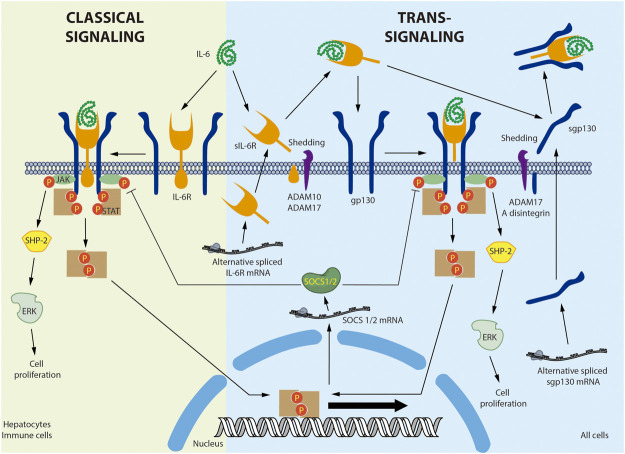
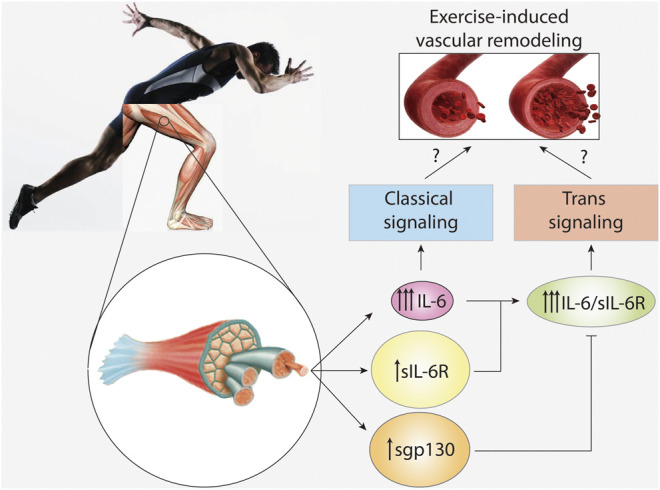
IL-6 is usually described as a pleiotropic cytokine produced in response to tissue injury or infection. As a pro-inflammatory cytokine, IL-6 activates innate and adaptative immune responses. IL-6 is released in the innate immune response by leukocytes as well as stromal cells upon pattern recognition receptor activation. IL-6 then recruits immune cells and triggers B and T cell response. Dysregulated IL-6 activity is associated with pathologies involving chronic inflammation and autoimmunity, including atherosclerosis. However, IL-6 is also produced and released under beneficial conditions, such as exercise, where IL-6 is associated with the anti-inflammatory and metabolic effects coupled with physical adaptation to intense training. Exercise-associated IL-6 acts on adipose tissue to induce lipogenesis and on arteries to induce adaptative vascular remodeling. These divergent actions could be explained by complex signaling networks. Classical IL-6 signaling involves a membrane-bound IL-6 receptor and glycoprotein 130 (gp130), while trans-signaling relies on a soluble version of IL-6R (sIL-6R) and membrane-bound gp130. Trans-signaling, but not the classical pathway, is regulated by soluble gp130. In this review, we discuss the similarities and differences in IL-6 cytokine and myokine signaling to explain the differential and opposite effects of this protein during inflammation and exercise, with a special focus on the vascular system.
Overview
The claims and statistics of this paper haven’t been checked yet.
Run the check — free, no account needed. It reads the open-access text and checks the sources it cites.
Integrity signals
Registry
Cites
Statistics
Figures
Verification
Claims the paper makes
The claims and statistics of this paper haven’t been checked yet.
Run the check — free, no account needed. It reads the open-access text and checks the sources it cites.
Claims other papers make about this one
Each is checked against this paper’s own text: does it say what the citing paper says it does?
The cited source says what the claim attributes to it.
In the citing paper
“In APOE3Ch , IPA analysis indicated activation of anti‐angiogenic IL‐12 signaling, 47 along with predicted inactivation of IL‐6, an upstream regulator associated with inflammation, vascular activation, and coagulation. 48”
From Plasma extracellular vesicles from APOE3 Christchurch carriers display a protective phenotype in early stages of autosomal dominant Alzheimer's disease (2026) · cites this paper as [48]
Self-check
Percentages, sums and reported differences re-computed from the paper’s own numbers.
The self-check needs the paper’s full text.
Citations
Cites
Bettelli, E., Carrier, Y., Gao, W., Korn, T., Strom, T. B., Oukka, M., Weiner, H. L., & Kuchroo, V. K. (2006) · Nature · doi:10.1038/nature04753 · Cited by 6,992
IL‐6 in inflammation, immunity, and disease
Tanaka, T., Narazaki, M., & Kishimoto, T. (2014) · Cold Spring Harbor Perspectives in Biology · doi:10.1101/cshperspect.a016295 · Cited by 5,046
Harrington, L. E., Hatton, R. D., Mangan, P. R., Turner, H., Murphy, T. L., Murphy, K. M., & Weaver, C. T. (2005) · Nature Immunology · doi:10.1038/ni1254 · Cited by 4,742
Role of C-Reactive Protein at Sites of Inflammation and Infection
Sproston, N. R., & Ashworth, J. (2018) · Frontiers in Immunology · doi:10.3389/fimmu.2018.00754 · Cited by 3,243
The pro- and anti-inflammatory properties of the cytokine interleukin-6
Scheller, J., Chalaris, A., Schmidt-Arras, D., & Rose-John, S. (2011) · Biochimica et Biophysica Acta (BBA) - Molecular Cell Research · doi:10.1016/j.bbamcr.2011.01.034 · Cited by 3,212
Impaired immune and acute-phase responses in interleukin-6-deficient mice
Kopf, M., Baumann, H., Freer, G., Freudenberg, M., Lamers, M., Kishimoto, T., Zinkernagel, R., Bluethmann, H., & Köhler, G. (1994) · Nature · doi:10.1038/368339a0 · Cited by 1,768 · cited 1×
“In fact, IL-6-knockoutmice show impaired innate and adaptive immunity to infection by parasites, bacteria, and viruses (Kopf et al., 1994).”
BackgroundCORONARY HEART-DISEASE AND PHYSICAL ACTIVITY OF WORK
Morris, J. N., Heady, J. A., Raffle, P. A. B., Roberts, C., & Parks, J. W. (1953) · The Lancet · doi:10.1016/s0140-6736(53)90665-5 · Cited by 1,699
Gauldie, J., Richards, C. D., Harnish, D. C., Lansdorp, P. M., & Baumann, H. J. (1987) · Proceedings of the National Academy of Sciences · doi:10.1073/pnas.84.20.7251 · Cited by 1,635
gp 130 AND THE INTERLEUKIN-6 FAMILY OF CYTOKINES
Taga, T., & Kishimoto, T. (1997) · Annual Review of Immunology · doi:10.1146/annurev.immunol.15.1.797 · Cited by 1,468
The Global Burden of Cardiovascular Diseases and Risk Factors
Mensah, G. A., Roth, G. A., & Fuster, V. (2019) · Journal of the American College of Cardiology · doi:10.1016/j.jacc.2019.10.009 · Cited by 1,373
Research works printed but not linked: 1
- Croisier, 1999, Effects of training on exercise-induced muscle damage and interleukin 6 production, Muscle Nerve, 22, 208, 10.1002/(sici)1097-459810.1002/(sici)1097-4598(199902)22:2<208:aid-mus8>3.0.co;2-b · DOI
Cited by
Sorted by citations
Burtscher, J., Millet, G. P., Place, N., Kayser, B., & Zanou, N. (2021) · International Journal of Molecular Sciences · doi:10.3390/ijms22126479 · Cited by 164
IL-6 and Cardiovascular Risk: A Narrative Review
Mehta, N. N., deGoma, E. M., & Shapiro, M. D. (2024) · Current Atherosclerosis Reports · doi:10.1007/s11883-024-01259-7 · Cited by 140
Anti-Inflammatory Effect of Muscle-Derived Interleukin-6 and Its Involvement in Lipid Metabolism
Nara, H., & Watanabe, R. (2021) · International Journal of Molecular Sciences · doi:10.3390/ijms22189889 · Cited by 118
Human Coronary Plaque T Cells Are Clonal and Cross-React to Virus and Self
Chowdhury, R. R., D’Addabbo, J., Huang, X., Veizades, S. A., Sasagawa, K., Louis, D. M., Cheng, P. P., Sokol, J., Jensen, A., Tso, A., et al. (2022) · Circulation Research · doi:10.1161/circresaha.121.320090 · Cited by 106
Kreiner, F. F., Kraaijenhof, J. M., von Herrath, M., Hovingh, G. K., & von Scholten, B. J. (2022) · Expert Review of Clinical Immunology · doi:10.1080/1744666x.2022.2045952 · Cited by 115
Vascular Inflammatory Diseases and Endothelial Phenotypes
Immanuel, J., & Yun, S. (2023) · Cells · doi:10.3390/cells12121640 · Cited by 103
How inflammation dictates diabetic peripheral neuropathy: An enlightening review
Cheng, Y., Chen, Y., Li, K., Liu, S., Pang, C., Gao, L., Xie, J., Wenjing, L. V., Yu, H., & Deng, B. (2023) · CNS Neuroscience & Therapeutics · doi:10.1111/cns.14477 · Cited by 107
Results and insights from a phase I clinical trial of Lomecel‐B for Alzheimer's disease
Brody, M., Agronin, M., Herskowitz, B., Bookheimer, S. Y., Small, G. W., Hitchinson, B., Ramdas, K. N., Wishard, T. J., McInerney, K., Vellas, B. J., et al. (2022) · Alzheimer s & Dementia · doi:10.1002/alz.12651 · Cited by 77
RETRACTED: Interleukin-6 in SARS-CoV-2 induced disease: Interactions and therapeutic applications
Majidpoor, J., & Mortezaee, K. (2021) · Biomedicine & Pharmacotherapy · doi:10.1016/j.biopha.2021.112419 · Cited by 71
RetractedDefining the role of anti- and pro-inflammatory outcomes of Interleukin-6 in mental health.
García-Juárez, M. G., & Camacho-Morales, A. (2022) · Neuroscience · doi:10.1016/j.neuroscience.2022.03.020 · Cited by 61
Modulation of Endothelial Function by TMAO, a Gut Microbiota-Derived Metabolite
Querio, G., Antoniotti, S., Geddo, F., Levi, R. C., & Gallo, M. P. (2023) · International Journal of Molecular Sciences · doi:10.3390/ijms24065806 · Cited by 70
Ali, M., Timsina, J., Western, D., Liu, M., Beric, A., Budde, J., Do, A., Heo, G., Wang, L., Gentsch, J., et al. (2025) · Neuron · doi:10.1016/j.neuron.2025.02.014 · Cited by 61
Lifestyle factors as determinants of atherosclerotic cardiovascular health
Schmidt‐Trucksäss, A., Lichtenstein, A. H., & von Känel, R. (2024) · Atherosclerosis · doi:10.1016/j.atherosclerosis.2024.117577 · Cited by 74
Autoinflammatory Diseases and Cytokine Storms—Imbalances of Innate and Adaptative Immunity
Marcuzzi, A., Melloni, E., Zauli, G., Romani, A., Secchiero, P., Maximova, N., & Rimondi, E. (2021) · International Journal of Molecular Sciences · doi:10.3390/ijms222011241 · Cited by 52
Tan, Z. W., Wang, Y., Chen, Y., Liu, Y., Ma, M., Ma, Z., Wang, C., Zeng, H., Xue, L., Chen, Y., et al. (2022) · Frontiers in Bioengineering and Biotechnology · doi:10.3389/fbioe.2022.912133 · Cited by 44
Sex differences in epigenetic age in Mediterranean high longevity regions
Engelbrecht, H.-R., Merrill, S. M., Gladish, N., MacIsaac, J. L., Lin, D. T. S., Ecker, S., Chrysohoou, C. A., Pes, G. M., Kobor, M. S., & Rehkopf, D. H. (2022) · Frontiers in Aging · doi:10.3389/fragi.2022.1007098 · Cited by 43
Gaikwad, P., Rahman, N., Parikh, R., Crespo, J., Cohen, Z. L., & Williams, R. M. (2024) · ACS Applied Materials & Interfaces · doi:10.1021/acsami.4c02711 · Cited by 40
Suzuki, Y., Ozawa, T., Kurata, T., Nakajima, N., Zamponi, G. W., Giles, W. R., Imaizumi, Y., & Yamamura, H. (2022) · Proceedings of the National Academy of Sciences · doi:10.1073/pnas.2117435119 · Cited by 38
Decoding mechanisms and protein markers in lung-brain axis
Huang, S., Zhou, Y., Ji, H., Zhang, T., Liu, S., Ma, L., Deng, D., Ding, Y., Han, L., Shu, S., et al. (2025) · Respiratory Research · doi:10.1186/s12931-025-03272-z · Cited by 38
Whole-body cryostimulation in obesity. A scoping review
Fontana, J. M., Bozgeyik, S., Gobbi, M., Piterà, P., Giusti, E. M., Dugué, B., Lombardi, G., & Capodaglio, P. (2022) · Journal of Thermal Biology · doi:10.1016/j.jtherbio.2022.103250 · Cited by 36
Unveiling cytokine charge disparity as a potential mechanism for immune regulation
Messina, J. M., Luo, M., Hossan, M. S., Gadelrab, H. A., Yang, X., John, A., Wilmore, J. R., & Luo, J. (2023) · Cytokine & Growth Factor Reviews · doi:10.1016/j.cytogfr.2023.12.002 · Cited by 35
Ho, C.-C., Wu, W., Lin, Y.-J., Weng, C.-Y., Tsai, M., Tsai, H.-T., Chen, Y., Yet, S., & Lin, P. (2022) · Particle and Fibre Toxicology · doi:10.1186/s12989-022-00482-x · Cited by 35
Colás-Algora, N., Muñoz-Pinillos, P., Cacho-Navas, C., Ortiz, J. A., de Rivas, G., Barroso, S., López‐Collazo, E., & Millán, J. (2023) · Arteriosclerosis Thrombosis and Vascular Biology · doi:10.1161/atvbaha.123.319695 · Cited by 33
Bachmann, J. C., Baumgart, S. J., Uryga, A., Bosteen, M. H., Borghetti, G., Nyberg, M., & Herum, K. M. (2022) · Cells · doi:10.3390/cells11101657 · Cited by 31
Unravelling the broader complexity of IL-6 involvement in health and disease
Jenkins, R. L., Hughes, S. T. O., Figueras, A. C., & Jones, S. A. (2021) · Cytokine · doi:10.1016/j.cyto.2021.155684 · Cited by 25
Viral Infection and Ischemic Stroke: Emerging Trends and Mechanistic Insights
Clarke, M., Falcione, S. R., Boghozian, R., Todoran, R., Zhang, Y., Real, M. G. C., St-Pierre, A., Joy, T., & Jickling, G. C. (2024) · Journal of the American Heart Association · doi:10.1161/jaha.124.035892 · Cited by 29
Sex Differences in the Relationship between Perceived Stress and Cognitive Trajectories
Paolillo, E. W., You, M. Y., Gontrum, E. Q., Saloner, R., Gaynor, L. S., Kramer, J. H., & Casaletto, K. B. (2022) · American Journal of Geriatric Psychiatry · doi:10.1016/j.jagp.2022.11.009 · Cited by 24
Aljuhani, M., Ashraf, A., & Edison, P. (2024) · Brain Communications · doi:10.1093/braincomms/fcae435 · Cited by 25
Wiejak, J., Murphy, F. A., Maffia, P., & Yarwood, S. J. (2023) · Scientific Reports · doi:10.1038/s41598-023-43221-8 · Cited by 24
Schönke, M., Ying, Z., Kovynev, A., Panhuis, W. I. H., Binnendijk, A., van der Poel, S., Pronk, A. C. M., Streefland, T. C. M., Hoekstra, M., Kooijman, S., et al. (2022) · The FASEB Journal · doi:10.1096/fj.202201304r · Cited by 23
Velusamy, P., Buckley, D. J., Greaney, J. L., Case, A. J., Fadel, P. J., & Trott, D. W. (2025) · American Journal of Physiology-Regulatory, Integrative and Comparative Physiology · doi:10.1152/ajpregu.00289.2024 · Cited by 20
The Impact of CB1 Receptor on Inflammation in Skeletal Muscle Cells
Haddad, M. (2021) · Journal of Inflammation Research · doi:10.2147/jir.s322247 · Cited by 20
Abo-Elmagd, M. I., Hassan, R. M., Aboutabl, M. E., Amin, K. M., El‐Azzouny, A. A., & Aboul-Enein, M. N. (2024) · Bioorganic Chemistry · doi:10.1016/j.bioorg.2024.107577 · Cited by 19
The Future of Targeted Treatment of Primary Sjögren’s Syndrome: A Focus on Extra-Glandular Pathology
Zeng, W., Zhou, X., Liu, R., Quek, C. W. N., Yu, V. H. C., Tay, R. Y. K., 于素兰, Yang, B., Lin, X., & Feng, Y. (2022) · International Journal of Molecular Sciences · doi:10.3390/ijms232214135 · Cited by 18
Pathogenesis of pulmonary hypertension caused by left heart disease
Xiao, M., Lai, D., Yu, Y., Wu, Q., & Zhang, C. (2023) · Frontiers in Cardiovascular Medicine · doi:10.3389/fcvm.2023.1079142 · Cited by 16
Matsuzaka, Y., & Yashiro, R. (2024) · Biologics · doi:10.3390/biologics4020008 · Cited by 16
Il-6 signaling exacerbates hallmarks of chronic tendon disease by stimulating reparative fibroblastsPreprint
Stauber, T., Moschini, G., Hussien, A. A., Jaeger, P. K., Bock, K. D., & Snedeker, J. G. (2023) · eLife · doi:10.7554/elife.87092 · Cited by 15
Mojtahedi, F., Nasiri, M. R., Ali, S. N., Mohammadgholi, A., Mohebbi, S., Shahbazi, Z., Behfar, R., Namazifard, S., Noorbazargan, H., & Baghbani‐Arani, F. (2025) · Colloids and Surfaces A Physicochemical and Engineering Aspects · doi:10.1016/j.colsurfa.2025.137004 · Cited by 14
Wildfire and wood smoke effects on human airway epithelial cells: A scoping review
Heibati, B., Renz, H. E., & Lacy, P. (2025) · Environmental Research · doi:10.1016/j.envres.2025.121153 · Cited by 15
Role of Interleukin-6 in Atherothrombosis and Myocardial Infarction
Huse, C., Gregersen, I., Holme, F. A., Ueland, T., Skjelland, M., Aamodt, A. H., Dahl, T. B., Aukrust, P., & Halvorsen, B. L. (2026) · Current Atherosclerosis Reports · doi:10.1007/s11883-025-01387-8 · Cited by 13
Padeniya, U. M., Davis, D. A., Liles, M. R., LaFrentz, S. A., LaFrentz, B. R., Shoemaker, C. A., Beck, B. H., Wells, D. E., & Bruce, T. J. (2023) · Journal of Fish Diseases · doi:10.1111/jfd.13833 · Cited by 11
Optical nanosensor passivation enables highly sensitive detection of the inflammatory cytokine IL-6Preprint
Gaikwad, P., Rahman, N., Parikh, R., Crespo, J., Cohen, Z. L., & Williams, R. M. (2023) · bioRxiv (Cold Spring Harbor Laboratory) · doi:10.1101/2023.05.10.540217 · Cited by 11
Gonzalez‐Rubio, J., Kubiza, H., Xu, Y., Königs‐Werner, H., Schmitz, M., Schedel, M., Apel, C., Jockenhoevel, S., Cornelissen, C. G., & Thiebes, A. L. (2025) · Advanced Science · doi:10.1002/advs.202408131 · Cited by 11
Macarie, R. D., Tucureanu, M. M., Ciortan, L., Gan, A., Butoi, E. D., & Mânduțeanu, I. (2023) · Scientific Reports · doi:10.1038/s41598-023-46770-0 · Cited by 10
Zika virus: Antiviral immune response, inflammation, and cardiotonic steroids as antiviral agents
de Sales-Neto, J. M., Carvalho, D. C. M., Magalhães, D., Medeiros, A. B. A., Soares, M. M., & Rodrigues‐Mascarenhas, S. (2023) · International Immunopharmacology · doi:10.1016/j.intimp.2023.111368 · Cited by 9
Are peptidomimetics the compounds of choice for developing new modulators of the JAK-STAT pathway?
Cugudda, A., Manna, S. L., & Marasco, D. (2024) · Frontiers in Immunology · doi:10.3389/fimmu.2024.1406886 · Cited by 9
The role of IL-6 in thyroid eye disease: an update on emerging treatments
Murdock, J., Nguyen, J., Hurtgen, B. J., Andorfer, C. A., Walsh, J. H., Lin, A., Tubbs, C., Erickson, K., & Cockerham, K. P. (2025) · Frontiers in Ophthalmology · doi:10.3389/fopht.2025.1544436 · Cited by 12
Liu, C., Yu, Z., Chen, H., Wang, J., Liu, W. Y., Zhou, L., Wang, Y., Chen, H., Zhou, H., Liu, Z., et al. (2021) · Frontiers in Cardiovascular Medicine · doi:10.3389/fcvm.2021.714276 · Cited by 9
Yan, Y., Dong, R., Zhang, C., & Jiang, Q. (2021) · Fish & Shellfish Immunology · doi:10.1016/j.fsi.2021.12.039 · Cited by 9
Lim, B., Jang, M., Oh, S.-M., No, J.-G., Lee, J., Kim, S. E., Ock, S. A., Yun, I. J., Kim, J.-S., Chee, H. K., et al. (2023) · Animal Cells and Systems · doi:10.1080/19768354.2023.2265150 · Cited by 8
Wu, O., Wu, Y., Zhang, X., Liu, W. Y., Zhang, H., Khederzadeh, S., Lu, X., & Zhu, X.-W. (2024) · Immunogenetics · doi:10.1007/s00251-024-01332-0 · Cited by 7
Perin, E. C., Borow, K. M., Henry, T. D., Jenkins, M., Rutman, O., Hayes, J., James, C. W., Rose, E. A., Skali, H., Itescu, S., et al. (2024) · European Journal of Heart Failure · doi:10.1002/ejhf.3522 · Cited by 8
Ferraz‐Amaro, I., Santos‐Concepción, S., Castro‐Hernández, J., Hernández-Hernández, V., Segura, B. T., Luna, C., Delgado-Frías, E., & Díaz‐González, F. (2025) · Frontiers in Immunology · doi:10.3389/fimmu.2025.1486588 · Cited by 9
Structure-Based Design of Small-Molecule Inhibitors of Human Interleukin-6
Joshi, A., Xiao, Z., Suman, S., Cooper, C. J., Ha, K., Agarwal, R., Carson, J. A., Quarles, L. D., Smith, J. C., & Gupta, M. (2025) · Molecules · doi:10.3390/molecules30142919 · Cited by 9
Hamasaki, H. (2022) · Current Diabetes Reviews · doi:10.2174/1573399819666221212145712 · Cited by 8
Tabrez, S. S. M., Jabir, N. R., Zughaibi, T. A., & Suhail, M. (2022) · Molecular Biology Reports · doi:10.1007/s11033-021-07048-8 · Cited by 8
Wu, O., Yuan, C., Leng, J., Zhang, X., Liu, W. Y., Yang, F., Zhang, H., Li, J., Khederzadeh, S., Jiang, Z., et al. (2023) · Cytokine · doi:10.1016/j.cyto.2023.156226 · Cited by 8
Potential Application of Plant-Derived Compounds in Multiple Sclerosis Management
Woodfin, S., Hall, S., Ramerth, A., Chapple, B. E., Fausnacht, D. W., Moore, W., Alkhalidy, H., & Liu, D. (2024) · Nutrients · doi:10.3390/nu16172996 · Cited by 8
Vales‐Villamarín, C., de Dios, O., Pérez-Nadador, I., Gavela‐Pérez, T., Soriano‐Guillén, L., & Garcés, C. (2023) · Nutrients · doi:10.3390/nu15102388 · Cited by 7
Protective effects of sesamol against cigarette smoke toxicity on the blood-brain barrier
Koru, I., & Atasever-Arslan, B. (2025) · BMC Complementary Medicine and Therapies · doi:10.1186/s12906-025-04796-z · Cited by 6
A Panel of Blood Biomarkers for the Diagnosis of Transient Ischemic Attacks
Guamán-Pilco, D. R., Palà, E., Lamana‐Vallverdú, M., Peñalba, A., García‐Rodríguez, P., Rubiera, M., Bustamante, A., Pérez-Sánchez, S., & Montaner, J. (2025) · Cardiovascular Innovations and Applications · doi:10.15212/cvia.2024.0061 · Cited by 6
Filgrastim, fibrinolysis, and neovascularization
Eton, D., Zhou, G., He, T., Bartholomew, A. M., & Patil, R. V. (2022) · Journal of Tissue Engineering and Regenerative Medicine · doi:10.1002/term.3284 · Cited by 6
Mahrous, R. S., Fathy, H. M., Ghareeb, D. A., Abdelhamid, A. S. A., & Ibrahim, R. S. (2025) · npj Science of Food · doi:10.1038/s41538-025-00459-y · Cited by 5
Keding, L. T., Vázquez, J., Liu, R.-Y., Bove, E. M., Dorobek, J., Simmons, H. A., Antony, K. M., Racine, J. L., Shah, D. M., Wieben, O. E., et al. (2025) · Placenta · doi:10.1016/j.placenta.2025.07.083 · Cited by 4
Polyphenolic Compounds in the Prevention and Treatment of Hypertension: A Review
Olędzki, R. (2025) · International Journal of Molecular Sciences · doi:10.3390/ijms262110665 · Cited by 5
Baettig, C. G., Laroche, O., Ockenden, Α., Smith, K. F., Lear, G., & Tremblay, L. A. (2024) · Environmental Toxicology and Chemistry · doi:10.1002/etc.5893 · Cited by 5
Aloperine protects the testis against testicular ischemia/reperfusion injury in rats
Wei, S., Xiao, J., Ju, F., & Hu, Z. (2024) · Andrology · doi:10.1111/andr.13750 · Cited by 5
Li, J., Ge, J., Ran, N., Zheng, C., Fang, Y., Fang, D., Yang, Q., & Ma, Y. (2023) · Journal of Inflammation · doi:10.1186/s12950-023-00351-0 · Cited by 5
Seyedmirzaei, H., Faramarzpour, M., Saghazadeh, A., Teixeira, A. L., & Rezaei, N. (2023) · The World Journal of Biological Psychiatry · doi:10.1080/15622975.2023.2242928 · Cited by 6
Uzlifatin, Y., Andriana, R. A. M., Wardhani, I. L., Subadi, I., Sugianto, P., & Melaniani, S. (2023) · Bali Medical Journal · doi:10.15562/bmj.v12i1.4017 · Cited by 5
Pineda‐Lopez, L., Aguillon, D., Villar‐Vesga, J., Valderrama‐Carmona, P., Guerrero, A., Upreti, A., Arevalo‐Alquichire, S., Correa, L., Mendez‐Castellanos, K., Castaño, D., et al. (2026) · Alzheimer's & Dementia · doi:10.1002/alz.71148 · Cited by 4
Dlamini, S. N., Norris, S. A., & Micklesfield, L. K. (2025) · British Journal Of Nutrition · doi:10.1017/s0007114525000029 · Cited by 5
Farra, Y. M., Sabnis, S., Matz, J., Wilker, H. I. B., Williams, V. A., Trejo, O., Kim, H. H., Rivera, C. F., Vlahos, J., Ramkhelawon, B., et al. (2025) · Arteriosclerosis Thrombosis and Vascular Biology · doi:10.1161/atvbaha.125.320908 · Cited by 5
Associations of adverse childhood experiences, inflammation, and cognition in older Black adults
Rose, D., Drouin, S. M., Thibeadeaux, D., Martinez, J. E., Fani, N., Marsland, A. L., Pfund, G. N., Liu, A., Thorpe, R. J., Barnes, L. L., et al. (2025) · Psychoneuroendocrinology · doi:10.1016/j.psyneuen.2025.107643 · Cited by 4
Abo-Elmagd, M. I., Aboutabl, M. E., Hassan, R. M., Amin, K. M., El‐Azzouny, A. A., & Aboul-Enein, M. N. (2025) · Bioorganic Chemistry · doi:10.1016/j.bioorg.2025.109353 · Cited by 4
Peña-Ocaña, B. A., Silva-Flores, M., Toya, S., García-Gálvez, L., Hernández‐Esquivel, L., Robledo‐Cadena, D. X., Barrera‐Oviedo, D., Pérez-Torres, I., Tostado-Islas, O., Maeda, T., et al. (2024) · Biomedicine & Pharmacotherapy · doi:10.1016/j.biopha.2024.117667 · Cited by 5
Alhazzani, K., Almangour, A., Alsalem, A., Alqinyah, M., Alhamed, A. S., Alhamami, H. N., & Alanazi, A. Z. (2023) · Diseases · doi:10.3390/diseases11040147 · Cited by 4
Adumitrăchioaiei, H., Săsăran, M. O., & Mărginean, C. O. (2024) · International Journal of Molecular Sciences · doi:10.3390/ijms25147655 · Cited by 8
Il-6 signaling exacerbates hallmarks of chronic tendon disease by stimulating reparative fibroblasts
Stauber, T., Moschini, G., Hussien, A. A., Jaeger, P. K., Bock, K. D., & Snedeker, J. G. (2025) · eLife · doi:10.7554/elife.87092.3 · Cited by 3
Updated Mechanisms of IL ‐6 in Human Endothelial Cells
Pirlet, E., Alders, L., Lins, P. M. P., & Bronckaers, A. (2025) · The FASEB Journal · doi:10.1096/fj.202500492rr · Cited by 3
Hejl, C., Burns, C., Cherry, J., Bradford, A., & Szabo, Y. Z. (2023) · Journal of Veterans Studies · doi:10.21061/jvs.v9i1.405 · Cited by 3
Early detection of peripheral neuropathy in patients with diabetes mellitus type 2
Fadel, A. W., Nawar, A. E., Ahwal, L. E., Ghali, A. A., & Ragab, O. A. A. (2024) · The Egyptian Journal of Neurology Psychiatry and Neurosurgery · doi:10.1186/s41983-023-00782-9 · Cited by 5
Zou, S., & Khoo, B. L. (2023) · Frontiers in Immunology · doi:10.3389/fimmu.2023.1053793 · Cited by 2
Oliver, C. E., Carter, J. L., Hong, J. S., Xu, M., Kraus, W. E., Huffman, K. M., & Truskey, G. A. (2025) · Communications Biology · doi:10.1038/s42003-025-07970-8 · Cited by 2
Joo, S. Y., Lee, S. J., Lee, S. J., Seo, S. A., Kim, C.-W., Hong, S., Kim, I., & Kim, M. (2025) · Scientific Reports · doi:10.1038/s41598-025-11100-z · Cited by 2
Lienesch, E., Voß, J., & Andersson, Å. (2025) · Molecular Biology Reports · doi:10.1007/s11033-025-11373-7 · Cited by 2
Yuliasih, Y., Rachma, B., & Sutanto, H. (2025) · Journal of clinical lipidology · doi:10.1016/j.jacl.2025.12.003 · Cited by 2
Serhal, N., Brassart, B., Nannan, L., Audonnet, S., Tournois, C., Poitevin, G., Cornillet‐Lefèbvre, P., Dubuisson, F., Peyret, H., Nguyên, P., et al. (2026) · Journal of Extracellular Biology · doi:10.1002/jex2.70105 · Cited by 2
Targeting IL-6 Signaling Pathways for Musculoskeletal Disorders Treatment: Risks and Benefits
Shanshal, A. M., Aljorani, R. H., & Hussain, S. A. (2023) · Al-Rafidain Journal of Medical Sciences · doi:10.54133/ajms.v4i.101 · Cited by 3
Immunological mechanisms of arterial damage in pediatric patients with primary hypertension
Bujanowicz, A., & Skrzypczyk, P. (2023) · Central European Journal of Immunology · doi:10.5114/ceji.2023.127542 · Cited by 2
Macrophages morphology and cytokine reeducation by ex situ copper thiol complexes
Xool-Tamayo, J., Arana‐Argáez, V. E., la Torre, F. V.-D., Chan‐Zapata, I., Vargas‐Coronado, R. F., & Cauich‐Rodríguez, J. V. (2023) · Immunopharmacology and Immunotoxicology · doi:10.1080/08923973.2023.2245559 · Cited by 2
Immunomodulatory macrophages and Treg in pulmonary hypertension
Olajuyin, A. M., Olajuyin, A. K., Zhang, X., & Hu, Q. (2023) · Comparative Clinical Pathology · doi:10.1007/s00580-023-03540-8 · Cited by 2
RAYIMOVA, F., Dushanova, G. A., Alikulov, B. S., Sayfutdinovich, K. Z., Ruzibakieva, M., NABIYEVA, F., & RAJABOV, A. (2024) · Biodiversitas Journal of Biological Diversity · doi:10.13057/biodiv/d250349 · Cited by 2
Usmani, E. Y., Dewi, R. T. K., & Nurhayatun, E. (2022) · Plexus Medical Journal · doi:10.20961/plexus.v1i2.25 · Cited by 2
Expression and significance of Fractalkine/CX3CL1 in MPO-AAV-associated glomerulonephritis rats
Ma, J., Wang, J., Kang, H., Ma, R., & Zhu, Z. (2024) · BMC Nephrology · doi:10.1186/s12882-024-03565-3 · Cited by 2
Further analysis of natural antibodies against ischemic stroke
Qi, J., Jiang, Q., Wang, P., Wang, Z., & Zhang, X. (2023) · Frontiers in Neurology · doi:10.3389/fneur.2023.1130748 · Cited by 1
ОСОБЛИВОСТІ ПРОЗАПАЛЬНИХ ЦИТОКІНІВ (IL-6 І TNF-α) У ДІТЕЙ ІЗ COVID-19
Лабівка, О. В., & Павлишин, Г. А. (2024) · Актуальні питання педіатрії акушерства та гінекології · doi:10.11603/24116-4944.2024.1.14755 · Cited by 1
Attenuating Plasma Cytokines Response After High-Intensity Exercise Through Selenium Supplementation
Irawan, R. J., Martiana, T., Mahmudiono, T., Nadhiroh, S. R., Alayyannur, P. A., & Rimawati, N. (2025) · International Journal of Disabilities Sports & Health Sciences · doi:10.33438/ijdshs.1552674 · Cited by 1
The intestinal metabolome as a distinct marker for the development of cardiovascular pathologies
Uspenskiy, Y. P., Fominykh, Y. A., Вавилова, Т. В., & Egay, Y. V. (2025) · Экспериментальная и клиническая гастроэнтерология · doi:10.31146/1682-8658-ecg-234-2-207-215 · Cited by 1
Lin, C., Peng, Y.-H., Chen, H.-M., Lin, Y., Lin, Y., & Kao, S. (2025) · European Journal of Pharmacology · doi:10.1016/j.ejphar.2025.178239 · Cited by 1
Metadata
- Authors
- Villar-Fincheira, P., Sanhueza-Olivares, F., Norambuena-Soto, I., Cancino-Arenas, N., Hernandez-Vargas, F., Troncoso, R., Gabrielli, L., & Chiong, M.
- Affiliations
- Advanced Center for Chronic Diseases (CL)
- University of Chile (CL)
- Pontificia Universidad Católica de Chile (CL)
- Corresponding author
- Gabrielli, Luigi
- Chiong, Mario
- Venue
- Frontiers in Molecular Biosciences
- Publisher
- Frontiers Media SA
- Published
- 2021-03-16
- Volume
- 8
- Pages
- 641734-641734
- ISSN
- 2296-889X (ISSN-L)
- PMC
- PMC8004548
- OpenAlex
- W3139260880
- Cited by
- 154
- References
- 154
- Citations by year
- 2026: 20 · 2025: 39 · 2024: 32 · 2023: 35 · 2022: 19 · 2021: 9
- FWCI
- 2.88
- Type
- journal article
- Language
- en
- Open access
- gold
- doi.org
- Licence
- Locations
- Frontiers in Molecular Biosciences (publishedVersion, cc-by)
- PubMed Central (publishedVersion, cc-by)
- PubMed (publishedVersion)
- DOAJ (DOAJ: Directory of Open Access Journals) (submittedVersion, cc-by-sa)
- Universidad de Chile (submittedVersion, cc-by-nc-nd)
- Funders
- Fondo de Financiamiento de Centros de Investigación en Áreas Prioritarias (1170963, 15130011)
- Topics
- Life Sciences › Immunology and Microbiology › Immunology › Cytokine Signaling Pathways and Interactions
- Health Sciences › Medicine › Physiology (medical) › Exercise and Physiological Responses
- Health Sciences › Medicine › Endocrinology, Diabetes and Metabolism › Adipokines, Inflammation, and Metabolic Diseases
- Keywords
- interleukin-6, vascular health, vascular disease, atherosclerosis, chronic inflammation, autoimmunity, physical activity, myokines, IL-6 signaling, trans-signaling, soluble IL-6 receptor, gp130, adipose tissue lipogenesis, vascular remodeling, innate and adaptive immunity
About these checks
Registry, retraction, Cites and statistics results are computed, not judged, with one exception: a printed reference that no index lists is read once by a model before it counts as a citation error. Claims are extracted by a model and kept only when their quote appears verbatim in the text; each cited source is then checked, with a model’s help, for whether it says what the claim relies on. Those verdicts can be wrong — read the claim’s quote and the cited source before relying on one.
Statistics and arithmetic are recomputed, not judged.
Confidence bands are shown only for fields calibrated on our annotated test set. None is calibrated yet, so no band is shown.
What counts as a claim ›How we measure confidence ›How we check this ›
Are you an author, or do you see a problem with this page? Request a review
