

The DOI matches its Crossref record; 238 of the 239 references it cites were found in a registry or an index.
Linking oxidative stress biomarkers to disease progression and antioxidant therapy in hypertension and diabetes mellitus
Open accessAbstract
Oxidative stress (OS) is increasingly recognized as a key factor linking hypertension (HTN) and diabetes mellitus (DM). This review summarizes recent evidence regarding the dual role of OS as both an instigator and an amplifier of cardiometabolic dysfunction. In HTN, reactive oxygen species (ROS) produced by NADPH oxidases (NOXs) and mitochondrial dysfunction contribute to endothelial impairment and vascular remodeling. In DM, hyperglycemia-induced ROS production worsens beta-cell failure and insulin resistance through pathways such as the AGE-RAGE signaling, protein kinase C (PKC) activation, and the polyol pathway. Clinically validated biomarkers of OS, such as F2-isoprostanes (which indicate lipid peroxidation), 8-OHdG (which indicates DNA damage), and the activities of redox enzymes like superoxide dismutase (SOD) and glutathione peroxidase (GPx), show strong correlations with disease progression and end-organ complications. Despite promising preclinical results, the application of antioxidant therapies in clinical settings has faced challenges due to inconsistent outcomes, highlighting the need for targeted approaches. Emerging strategies include: 1. Mitochondria-targeted antioxidants to enhance vascular function in resistant HTN; 2. Nrf2 activators to restore redox balance in early diabetes; and 3. Specific inhibitors of NOX isoforms. We emphasize three transformative areas of research: (i) the interaction between the microbiome and ROS, where modifying gut microbiota can reduce systemic OS; (ii) the use of nanotechnology to deliver antioxidants directly to pancreatic islets or atherosclerotic plaques; and (iii) phenotype-specific diagnosis and therapy guided by redox biomarkers and genetic profiling (for example, KEAP1/NRF2 polymorphisms). Integrating these advances with lifestyle modifications, such as following a Mediterranean diet and exercising regularly, may provide additional benefits. This review outlines a mechanistic framework for targeting OS in the comorbidity of HTN and DM while identifying critical knowledge gaps, particularly regarding the timing of antioxidant signaling and the development of personalized redox medicine, which may serve as a reference for researchers and clinicians working in this area.
Overview
The claims and statistics of this paper haven’t been checked yet.
Run the check — free, no account needed. It reads the open-access text and checks the sources it cites.
Integrity signals
Registry
Cites
Statistics
Figures
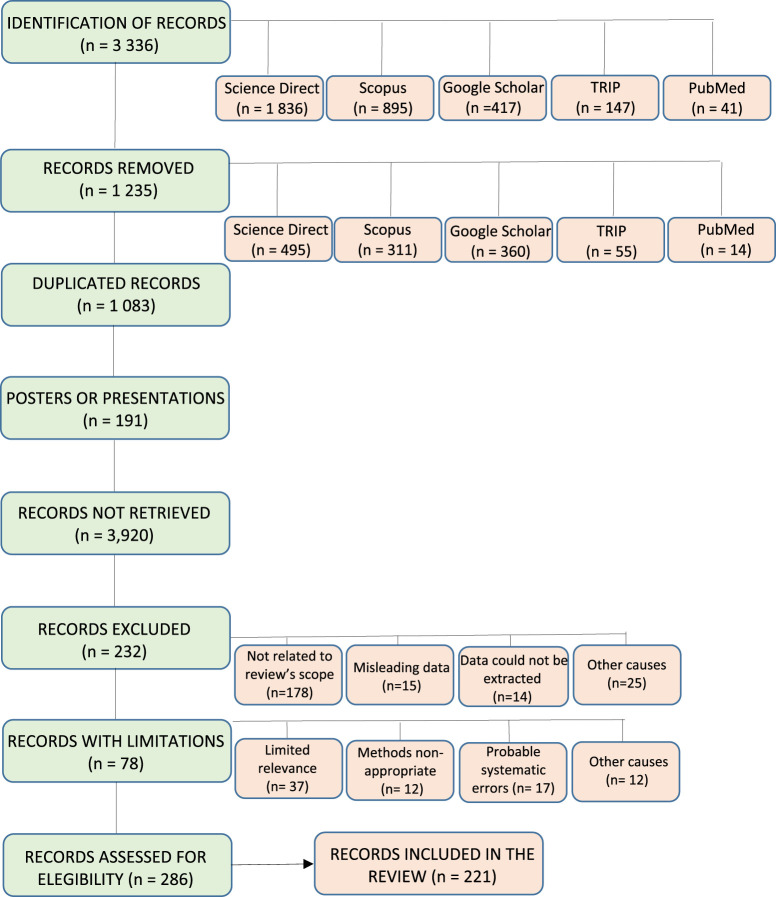
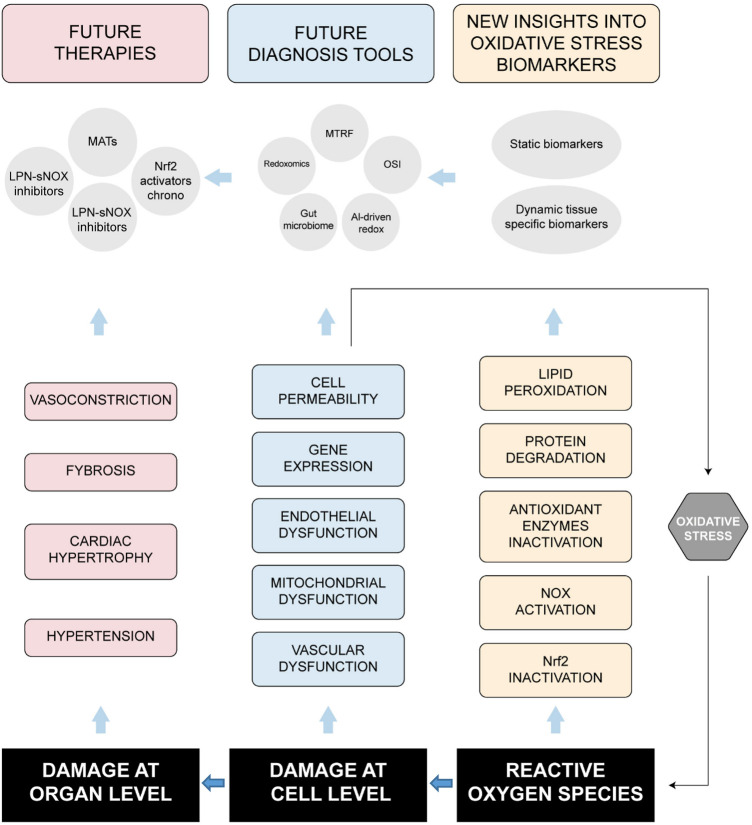
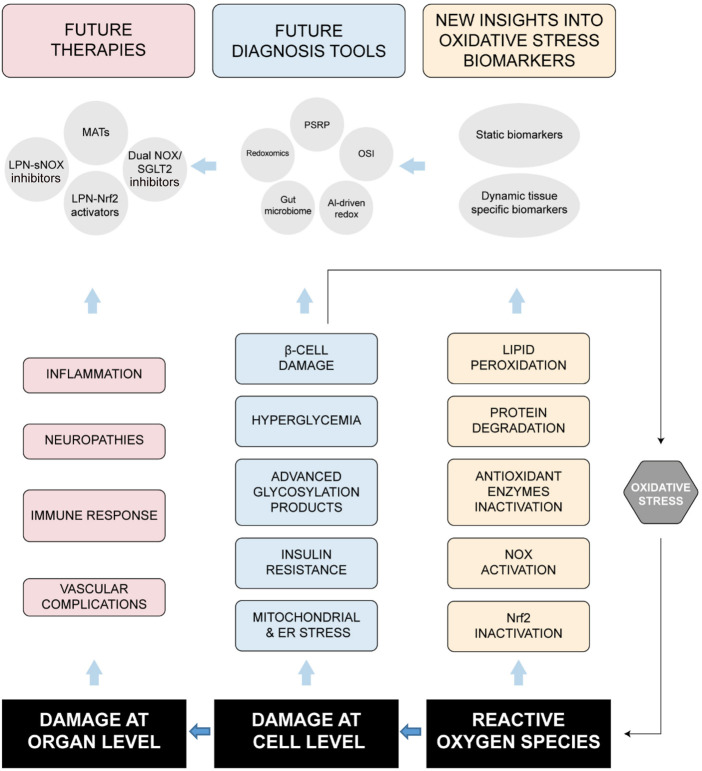
Verification
Claims the paper makes
The claims and statistics of this paper haven’t been checked yet.
Run the check — free, no account needed. It reads the open-access text and checks the sources it cites.
Claims other papers make about this one
Each is checked against this paper’s own text: does it say what the citing paper says it does?
The source backs part of the claim, not all of it — or backs it for a different population, condition or comparison.
In the citing paper
“This supports the idea that lipid peroxidation markers may serve as mechanistically plausible candidate predictors; however, the present evidence base remains heterogeneous in marker selection, assay platform, and standardization, and direct comparative evidence against standard clinic-based models is still limited (20–22).”
From AI-driven cardiovascular risk prediction in patients with diabetes: bridging algorithmic innovation to equitable clinical application (2026) · cites this paper as [22]
Experimental — accuracy not yet measuredThe cited source says what the claim attributes to it.
In the citing paper
“This supports the idea that lipid peroxidation markers may serve as mechanistically plausible candidate predictors; however, the present evidence base remains heterogeneous in marker selection, assay platform, and standardization, and direct comparative evidence against standard clinic-based models is still limited (20–22).”
From AI-driven cardiovascular risk prediction in patients with diabetes: bridging algorithmic innovation to equitable clinical application (2026) · cites this paper as [22]
The cited source says what the claim attributes to it.
In the citing paper
“Oxidative stress plays a central role in the shared pathophysiology of diabetes and cardiovascular disease, with lipid peroxidation representing one of its major downstream consequences.”
From AI-driven cardiovascular risk prediction in patients with diabetes: bridging algorithmic innovation to equitable clinical application (2026) · cites this paper as [22]
The cited source says what the claim attributes to it.
In the citing paper
“Studies have shown that oxidized lipid products and related oxidative stress markers may reflect vascular injury, inflammatory activity, and cardiometabolic dysfunction (18–22).”
From AI-driven cardiovascular risk prediction in patients with diabetes: bridging algorithmic innovation to equitable clinical application (2026) · cites this paper as [22]
The cited source says what the claim attributes to it.
In the citing paper
“Moreover, integrating mechanistic biomarkers—such as those related to lipid peroxidation—holds potential to improve biological relevance and possibly predictive performance (18–22).”
From AI-driven cardiovascular risk prediction in patients with diabetes: bridging algorithmic innovation to equitable clinical application (2026) · cites this paper as [22]
The cited source says what the claim attributes to it.
In the citing paper
“The association between lipid peroxidation and diabetic cardiovascular complications has been extensively discussed in the literature (18, 19, 21, 22).”
From AI-driven cardiovascular risk prediction in patients with diabetes: bridging algorithmic innovation to equitable clinical application (2026) · cites this paper as [22]
Self-check
Percentages, sums and reported differences re-computed from the paper’s own numbers.
The self-check needs the paper’s full text.
Citations
Cites
Items 201–239 of 239
Chang, B., Su, Y., Li, T., Zheng, Y., Yang, R., Lu, H., Wang, H., & Ding, Y. (2024) · PubMed · doi:10.3967/bes2024.111 · Cited by 12
Oxidative Stress in Renal Health
Silva, A. C. S. E. (2025) · Antioxidants · doi:10.3390/antiox14020144 · Cited by 12
Gonzalez, M. R., Axler, M. R., Kaseman, K. E., Lobene, A. J., Farquhar, W. B., Witman, M. A., Kirkman, D. L., & Lennon, S. L. (2023) · American Journal of Physiology-Regulatory, Integrative and Comparative Physiology · doi:10.1152/ajpregu.00101.2023 · Cited by 11
Csiha, S., Hernyák, M., Molnár, Á., Lőrincz, H., Katkó, M., Paragh, G., Bodor, M., Harangi, M., Sztanek, F., & Berta, E. (2025) · Biomedicines · doi:10.3390/biomedicines13020438 · Cited by 11
Rostami, A., Palomer, X., Pizarro‐Delgado, J., Peña, L., Zamora, M., Montori-Grau, M., Barroso, E., Valenzuela‐Alcaráz, B., Crispi, F., Salvador, J. M., et al. (2025) · Cellular and Molecular Life Sciences · doi:10.1007/s00018-025-05704-x · Cited by 11
Naqvi, S., Андреевич, Х. В., Khlebtsov, B. N., Khlebtsov, N. G., Deore, M. S., & Packirisamy, G. (2022) · Frontiers in Cell and Developmental Biology · doi:10.3389/fcell.2022.846175 · Cited by 11
Mazidi, M., Ofori‐Asenso, R., George, E. S., & Vatanparast, H. (2020) · High Blood Pressure & Cardiovascular Prevention · doi:10.1007/s40292-020-00364-3 · Cited by 11
The time to develop treatments for diabetic neuropathy
Rendell, M. (2021) · Expert Opinion on Investigational Drugs · doi:10.1080/13543784.2021.1868433 · Cited by 10
de Oliveira, A. L., Medeiros, M. L., Ghezzi, A. C., dos Santos, G. A., de Mello, G. C., Mónica, F. Z., & Antunes, E. (2023) · American Journal of Physiology-Renal Physiology · doi:10.1152/ajprenal.00089.2023 · Cited by 10
Krupa, K., Fritz, K., & Parmar, M. S. (2020) · NSUWorks (Nova Southeastern University) · Cited by 10
Maternal N-Acetyl-Cysteine Prevents Neonatal Hypoxia-Induced Brain Injury in a Rat Model
Gutziet, O., Iluz, R., Asher, H. B., Segal, L., Zvi, D. B., Ginsberg, Y., Khatib, N., Zmora, O., Ross, M. G., Weiner, Z., et al. (2021) · International Journal of Molecular Sciences · doi:10.3390/ijms222413629 · Cited by 9
Игоревна, Н. В., Николаевич, К. А., Butkova, T. V., Malsagova, K. A., & Kaysheva, A. L. (2024) · Journal of Personalized Medicine · doi:10.3390/jpm14060555 · Cited by 9
Bourgonje, A. R., van Goor, H., Bakker, S. J. L., Hillebrands, J., Bilo, H. J. G., Dullaart, R. P. F., & van Dijk, P. R. (2023) · Free Radical Biology and Medicine · doi:10.1016/j.freeradbiomed.2023.12.025 · Cited by 8
Targeting Nrf2 signaling pathway: new therapeutic strategy for cardiovascular diseases
Wu, Q., Yao, J., Xiao, M., Zhang, X., Zhang, M., & Xi, X. (2024) · Journal of drug targeting · doi:10.1080/1061186x.2024.2356736 · Cited by 8
The Role of Natural Low Molecular Weight Dicarbonyls in Atherogenesis and Diabetogenesis
Lankin, V. Z., Tikhaze, A. K., Sharapov, M. G., & Георгиевна, К. Г. (2024) · Reviews in Cardiovascular Medicine · doi:10.31083/j.rcm2508295 · Cited by 8
Differential Modulation of Markers of Oxidative Stress and DNA Damage in Arterial Hypertension
Kreutzmann, M., Kraus, B. J., Christa, M., Störk, S., Jansen, E. H. J. M., Stopper, H., & Schupp, N. (2023) · Antioxidants · doi:10.3390/antiox12111965 · Cited by 8
Liu, Y., Zeng, Y., Miao, Y., Cheng, X., Deng, S., Hao, X., Jiang, Y., & Wan, Q. (2020) · Postgraduate Medicine · doi:10.1080/00325481.2020.1797311 · Cited by 8
Martyniak, A., Drożdż, D., & Tomasik, P. (2024) · Biomedicines · doi:10.3390/biomedicines12030620 · Cited by 8
Begum, F., & Lakshmanan, K. (2023) · Egyptian Journal of Medical Human Genetics · doi:10.1186/s43042-023-00459-1 · Cited by 7
Direct Measurement and Imaging of Redox Status with Electron Paramagnetic Resonance
Epel, B., Kao, J. P. Y., Eaton, S. S., Eaton, G. R., & Halpern, H. J. (2023) · Antioxidants and Redox Signaling · doi:10.1089/ars.2022.0216 · Cited by 7
De, S., Banerjee, S., Rakshit, P., Banerjee, S., & Kumar, S. K. A. (2024) · Current Diabetes Reviews · doi:10.2174/0115733998291968240429111357 · Cited by 6
Isoform-Selective Nox Inhibitors: Advances and Future Perspectives
Dustin, C. M., Cifuentes-Pagano, E., & Pagano, P. J. (2023) · Springer eBooks · doi:10.1007/978-3-031-23752-2_21 · Cited by 5
Sango, K., Yako, H., Niimi, N., & Takaku, S. (2025) · Frontiers in Endocrinology · doi:10.3389/fendo.2024.1531209 · Cited by 5
Overview of insulin: more than a hormone for controlling glucose level
Regina, I., & Tong, F. (2025) · Biomedical Engineering Communications · doi:10.53388/bmec2025010 · Cited by 5
Vejendla, M., Anagani, M., & Oroszi, T. L. (2024) · Journal of Diabetes Mellitus · doi:10.4236/jdm.2025.151002 · Cited by 5
Biomarkers of oxidative stress in antioxidant therapy
Rossi, W. M., Garrido, G., & Sellés, A. J. N. (2016) · Journal of Pharmacy & Pharmacognosy Research · doi:10.56499/jppres15.083_4.2.62 · Cited by 4
Jindam, A., Kalvala, A. K., Arruri, V. K., Das, S., & Kumar, A. (2024) · Indian Journal of Pharmacology · doi:10.4103/ijp.ijp_540_24 · Cited by 4
Dróżdż, W., Wiciński, M., Szota, A. M., Szambelan, M., Radajewska, I., Popławski, I., & Wojciechowski, P. (2023) · Journal of Clinical Medicine · doi:10.3390/jcm12124012 · Cited by 3
Carlini, N. A., Holder, K. J., Brown, M., Hughes, R. P., Harber, M. P., & Fleenor, B. S. (2024) · Physiology · doi:10.1152/physiol.2024.39.s1.1778 · Cited by 3
Weeks, K. L., & Bernardo, B. C. (2025) · Heart Lung and Circulation · doi:10.1016/j.hlc.2024.11.021 · Cited by 3
Antioxidant therapy for hypertension; a mini-review on the recent findings
Pari, S. M., Memarian, M., & Eskandarian, R. (2024) · Journal of Nephropharmacology · doi:10.34172/npj.2024.12694 · Cited by 3
Oxidative Stress in Type-2 Diabetes Mellitus
Asim, M., Awan, R., Rashid, H. U., & Hussain, F. (2024) · Springer eBooks · doi:10.1007/978-3-031-69962-7_5 · Cited by 3
Cardiac effects of acute administration of a protonophore in a rat model
Muta, E., Kato, T., Shioi, T., Tanada, Y., & Kimura, T. (2018) · Journal of Pharmacy and Pharmacology · doi:10.1111/jphp.12956 · Cited by 2
Padhi, P., Lou, J., Jin, H., Anantharam, V., Kanthasamy, A., & Kanthasamy, A. G. (2019) · The FASEB Journal · doi:10.1096/fasebj.2019.33.1_supplement.lb39 · Cited by 2
NMR-Based Mitochondria Metabolomic Profiling: A New Approach To Reveal Cancer-Associated Alterations
Domingo-Ortí, I., Ferrer-Torres, P., Armiñán, A., Vicent, M. J., Pineda‐Lucena, A., & Palomino‐Schätzlein, M. (2023) · Analytical Chemistry · doi:10.1021/acs.analchem.3c02432 · Cited by 2
The oxidative stress index in human population with arterial hypertension and diabetes mellitus
Sellés, A. J. N., Rossi, W. M., Nuñez-Musa, R. A., Marmolejos, R. G., & Martı́nez-Sánchez, G. (2019) · Journal of Pharmacy & Pharmacognosy Research · doi:10.56499/jppres19.536_7.2.103 · Cited by 2
Self-citationImpact of antioxidant therapy on antioxidant capacity in hypertensive patients
Kumar, A., Sadariya, B., & Dave, U. S. (2022) · National Journal of Physiology Pharmacy and Pharmacology · doi:10.5455/njppp.2023.13.11526202219112022 · Cited by 1
Pérgola, P. E., Appel, G. B., Chin, M. P., Fischbach, B. V., Knebelmann, B., Lieberman, K. V., Meyer, C. J., Nozu, K., Packham, D., Rizk, D. V., et al. (2021) · Journal of the American Society of Nephrology · doi:10.1681/asn.20213210s1417b · Cited by 1
Type 2 Diabetes Mellitus and Cardiovascular Disease: Unraveling the Complex Interplay (Part I of II)
Nunez-Musa, R. (2025) · Acta Scientific Gastrointestinal Disorders · doi:10.31080/asgis.2025.07.0688
Research works printed but not linked: 5
- Engler, 2017, Role of dietary omega-3 fatty acids in hypertension, Ann. Nurs. Pract., 4, 1077
- Nuñez-Musa, 2024, Type 2 diabetes mellitus and cardiovascular disease: unraveling the complex interplay, Acta Sci. Nutr. Health, 8, 45
- Pardina, 2024, Molecular mechanisms involved in hyperglycemia-induced cellular damage, 1814
- Tang, 2018, Oxidative stress and cardiovascular risk in type 1 diabetes mellitus: insights from the DCCT/EDIC study, J. Am. Heart Assoc., 7, e008368, 10.1161/JAHA.117.0083 · DOI
- Wilcox, 2021, Oxidative stress in hypertension and diabetic nephropathy: role of antioxidant mimetics, Antiox Redox Sign, 34, 1236, 10.1089/ars.2020.8115 · DOI
Cited by
Sorted by citations
Antioxidants and Reactive Oxygen Species: Shaping Human Health and Disease Outcomes
Manful, C. F., Fordjour, E., Subramaniam, D., Sey, A. A., Abbey, L., & Thomas, R. (2025) · International Journal of Molecular Sciences · doi:10.3390/ijms26157520 · Cited by 193
Roy, B. (2025) · Medical Sciences · doi:10.3390/medsci13030087 · Cited by 103
Diaconescu, B. I., Dumitru, A. V., Tătaru, C. P., Toader, C., Șerban, M., Covache-Busuioc, R.-A., & Eva, L. (2025) · International Journal of Molecular Sciences · doi:10.3390/ijms262210835 · Cited by 25
Chen, Y., Zhu, J., Gui, H., Liu, M., Zhang, Y., Wu, Z., Liu, C., & Wang, M. (2026) · Antioxidants · doi:10.3390/antiox15070803 · Cited by 8
Martinc, B. (2026) · Diabetes Research and Clinical Practice · doi:10.1016/j.diabres.2026.113197 · Cited by 5
Metadata
- Authors
- Nuñez-Selles, A. J., Nuñez-Musa, R. A., & Guillen-Marmolejos, R. A.
- Venue
- Frontiers in Molecular Biosciences
- Publisher
- Frontiers Media SA
- Published
- 2025-05-26
- Volume
- 12
- Pages
- 1611842-1611842
- ISSN
- 2296-889X (ISSN-L)
- PMC
- PMC12146192
- OpenAlex
- W4410729041
- Cited by
- 51
- References
- 239
- Citations by year
- 2026: 42 · 2025: 9
- FWCI
- 6.67
- Type
- journal article
- Language
- en
- Open access
- gold
- doi.org
- Licence
- Locations
- Frontiers in Molecular Biosciences (publishedVersion, cc-by)
- PubMed Central (publishedVersion, cc-by)
- PubMed (publishedVersion)
- DOAJ (DOAJ: Directory of Open Access Journals) (submittedVersion, cc-by-sa)
- Funders
- Fondo Nacional de Ciencia y Tecnología
- Topics
- Health Sciences › Medicine › Physiology (medical) › Nitric Oxide and Endothelin Effects
- Health Sciences › Medicine › Biochemistry (medical) › Antioxidant Activity and Oxidative Stress
- Life Sciences › Biochemistry, Genetics and Molecular Biology › Molecular Biology › Redox biology and oxidative stress
- Keywords
- oxidative stress, hypertension, diabetes mellitus, antioxidant therapy, reactive oxygen species, NADPH oxidase, mitochondrial dysfunction, endothelial dysfunction, vascular remodeling, hyperglycemia, beta-cell failure, insulin resistance, AGE-RAGE signaling pathway, polyol pathway, protein kinase C, F2-isoprostanes, 8-hydroxy-2'-deoxyguanosine, superoxide dismutase, glutathione peroxidase, Nrf2, gut microbiota, mitochondria-targeted antioxidants, NOX inhibitors, Mediterranean diet, physical activity, cardiometabolic dysfunction
About these checks
Registry, retraction, Cites and statistics results are computed, not judged, with one exception: a printed reference that no index lists is read once by a model before it counts as a citation error. Claims are extracted by a model and kept only when their quote appears verbatim in the text; each cited source is then checked, with a model’s help, for whether it says what the claim relies on. Those verdicts can be wrong — read the claim’s quote and the cited source before relying on one.
Statistics and arithmetic are recomputed, not judged.
Confidence bands are shown only for fields calibrated on our annotated test set. None is calibrated yet, so no band is shown.
What counts as a claim ›How we measure confidence ›How we check this ›
Are you an author, or do you see a problem with this page? Request a review
