

Artificial cognition vs. artificial intelligence for next-generation autonomous robotic agents
Open accessThe DOI matches its Crossref record; 223 of the 223 references it cites were found in a registry or an index.
Abstract
The trend in industrial/service robotics is to develop robots that can cooperate with people, interacting with them in an autonomous, safe and purposive way. These are the fundamental elements characterizing the fourth and the fifth industrial revolutions (4IR, 5IR): the crucial innovation is the adoption of intelligent technologies that can allow the development of cyber-physical systems , similar if not superior to humans. The common wisdom is that intelligence might be provided by AI (Artificial Intelligence), a claim that is supported more by media coverage and commercial interests than by solid scientific evidence. AI is currently conceived in a quite broad sense, encompassing LLMs and a lot of other things, without any unifying principle, but self-motivating for the success in various areas. The current view of AI robotics mostly follows a purely disembodied approach that is consistent with the old-fashioned, Cartesian mind-body dualism, reflected in the software-hardware distinction inherent to the von Neumann computing architecture. The working hypothesis of this position paper is that the road to the next generation of autonomous robotic agents with cognitive capabilities requires a fully brain-inspired, embodied cognitive approach that avoids the trap of mind-body dualism and aims at the full integration of Bodyware and Cogniware. We name this approach Artificial Cognition (ACo) and ground it in Cognitive Neuroscience. It is specifically focused on proactive knowledge acquisition based on bidirectional human-robot interaction: the practical advantage is to enhance generalization and explainability. Moreover, we believe that a brain-inspired network of interactions is necessary for allowing humans to cooperate with artificial cognitive agents, building a growing level of personal trust and reciprocal accountability: this is clearly missing, although actively sought, in current AI. The ACo approach is a work in progress that can take advantage of a number of research threads, some of them antecedent the early attempts to define AI concepts and methods. In the rest of the paper we will consider some of the building blocks that need to be re-visited in a unitary framework: the principles of developmental robotics, the methods of action representation with prospection capabilities, and the crucial role of social interaction.
Overview
The claims and statistics of this paper haven’t been checked yet.
Free: it reads the open-access text and checks the first 5 claims that cite a source we can check. Create a free account to check every claim.
Integrity signals
Registry
Cites
Statistics
Figures
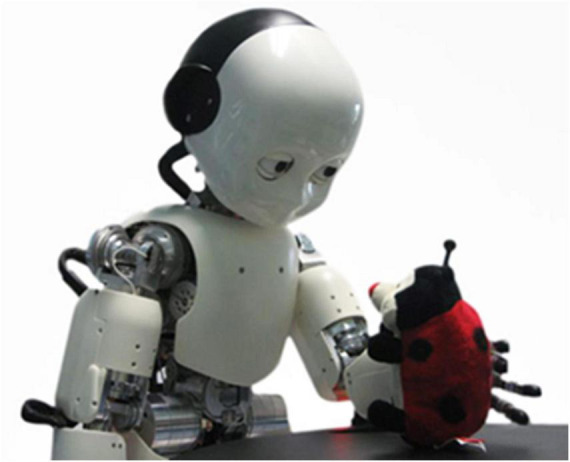
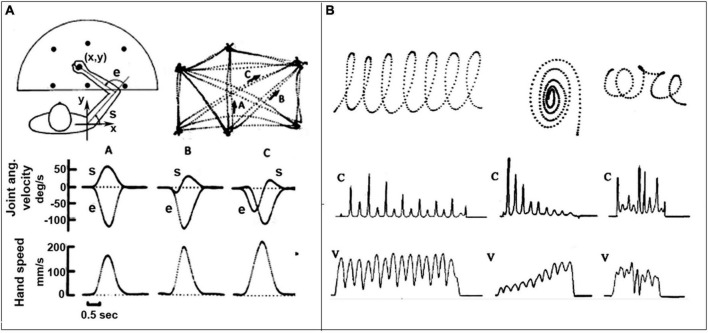
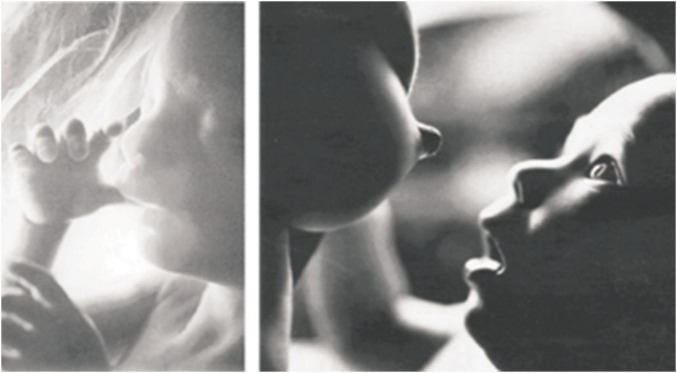
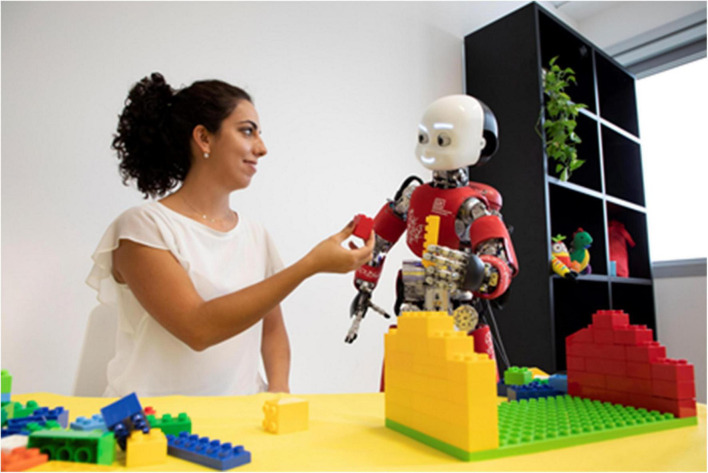
Verification
Claims the paper makes
The claims and statistics of this paper haven’t been checked yet.
Free: it reads the open-access text and checks the first 5 claims that cite a source we can check. Create a free account to check every claim.
Claims other papers make about this one
Each is checked against this paper’s own text: does it say what the citing paper says it does?
The source backs part of the claim, not all of it — or backs it for a different population, condition or comparison.
In the citing paper
“Cognitive robots and collaborative human-robot agent systems can also be used to predict the possible states of a scenario, learn from social interactions with humans, adapt movements based on learning, and collaborate in shared tasks with humans safely [122,124].”
From The Rise of Agentic AI: A Review of Definitions, Frameworks, Architectures, Applications, Evaluation Metrics, and Challenges (2025) · cites this paper as [122]
Experimental — accuracy not yet measuredThe cited source says what the claim attributes to it.
In the citing paper
“These developments have reinforced the view that embodiment is not merely an implementation detail, but a constitutive dimension of cognition, in which the body’s material and organizational features actively shape cognitive potential.”
From Wetware network-based AI: a chemical approach to embodied cognition for robotics and artificial intelligence (2026) · cites this paper as Sandini et al., 2024
The cited source says what the claim attributes to it.
In the citing paper
“Recent research has expanded the material basis of embodied AI, exploring neuromorphic and polymeric substrates, as well as morpho-functional architectures capable of endogenous reconfiguration (e.g., Sandini et al., 2024).”
From Wetware network-based AI: a chemical approach to embodied cognition for robotics and artificial intelligence (2026) · cites this paper as Sandini et al., 2024
Self-check
Percentages, sums and reported differences re-computed from the paper’s own numbers.
The self-check needs the paper’s full text.
Citations
Cites
Items 201–223 of 223
Expressing and Inferring Action Carefulness in Human-to-Robot Handovers
Lastrico, L., Duarte, N. F., Carfì, A., Rea, F., Sciutti, A., Mastrogiovanni, F., & Santos-Victor, J. (2023) · IEEE/RSJ International Conference on Intelligent Robots and Systems (IROS) · doi:10.1109/iros55552.2023.10342111 · Cited by 12
Self-citationDevelopment of infant reaching behaviors: Kinematic changes in touching and hitting
Gonçalves, R. V., Figueiredo, E. M., Mourão, C. B., Colosimo, E. A., Fonseca, S. T., & Mancini, M. C. (2013) · Infant Behavior and Development · doi:10.1016/j.infbeh.2013.09.009 · Cited by 11
Efficient Online Interest-Driven Exploration for Developmental Robots
Rayyes, R., Donat, H., & Steil, J. J. (2020) · IEEE Transactions on Cognitive and Developmental Systems · doi:10.1109/tcds.2020.3001633 · Cited by 11
How Does a Robot Develop Its Reaching Ability Like Human Infants Do?
Luo, D., Hu, F., Zhang, T., Deng, Y., & Wu, X. H. (2018) · IEEE Transactions on Cognitive and Developmental Systems · doi:10.1109/tcds.2018.2861893 · Cited by 10
Wieser, E., & Cheng, G. (2018) · IEEE Transactions on Cognitive and Developmental Systems · doi:10.1109/tcds.2018.2871857 · Cited by 10
Beyond the Self: Using Grounded Affordances to Interpret and Describe Others’ Actions
Saponaro, G., Jamone, L., Bernardino, A. J. M., & Salvi, G. (2019) · IEEE Transactions on Cognitive and Developmental Systems · doi:10.1109/tcds.2018.2882140 · Cited by 10
Across the Universe: Biasing Facial Representations Toward Non-Universal Emotions With the Face-STN
Barros, P. V. A., & Sciutti, A. (2022) · IEEE Access · doi:10.1109/access.2022.3210183 · Cited by 10
Self-citationPerception of Localized Features During Robotic Sensorimotor Development
Giagkos, A., Lewkowicz, D., Shaw, P., Kumar, S., Lee, M., & Shen, Q. (2017) · IEEE Transactions on Cognitive and Developmental Systems · doi:10.1109/tcds.2017.2652129 · Cited by 9
Interest-Driven Exploration With Observational Learning for Developmental Robots
Rayyes, R., Donat, H., Steil, J. J., & Spranger, M. (2021) · IEEE Transactions on Cognitive and Developmental Systems · doi:10.1109/tcds.2021.3057758 · Cited by 9
A developmental approach to sensori-motor coordination in artificial systems
Giorgio Metta, B., Sandini, G., & Konczak, J. (2002) · Conference proceedings/Conference proceedings - IEEE International Conference on Systems, Man, and Cybernetics · doi:10.1109/icsmc.1998.726527 · Cited by 8
Self-citationIncorporating rivalry in reinforcement learning for a competitive game
Barros, P. V. A., Yalçın, Ö. N., Tanevska, A., & Sciutti, A. (2022) · Neural Computing and Applications · doi:10.1007/s00521-022-07746-9 · Cited by 8
Self-citationZhou, J., & Smith, B. A. (2021) · Physical & Occupational Therapy In Pediatrics · doi:10.1080/01942638.2021.1921092 · Cited by 8
Murray, L., Sclafani, V., Rayson, H., Pascalis, L. D., Bozicevic, L., & Ferrari, P. F. (2017) · Behavioral and Brain Sciences · doi:10.1017/s0140525x16001941 · Cited by 7
Progress of the China brain project
Yuan, K., Zhao, H., Zhang, Y., Gong, Y.-M., Liu, X., & Lu, L. (2022) · Medical Review · doi:10.1515/mr-2022-0014 · Cited by 7
Theories of Body Scheme Development
Mitchell, A. W. (1998) · Physical & Occupational Therapy In Pediatrics · doi:10.1080/j006v17n04_03 · Cited by 6
Bootstrapping Developmental AIs: From Simple Competences to Intelligent Human-Compatible AIsPreprint
Stefik, M., & Price, R. (2023) · arXiv (Cornell University) · doi:10.48550/arxiv.2308.04586 · Cited by 5
Guest Editorial Special Issue on Neuromorphic Computing and Cognitive Systems
Tang, H., Huang, T., Krichmar, J. L., Orchard, G., & Basu, A. (2018) · IEEE Transactions on Cognitive and Developmental Systems · doi:10.1109/tcds.2018.2835107 · Cited by 4
Evaluation of Internal Models in Autonomous Learning
Smith, S. C., & Herrmann, J. M. (2018) · IEEE Transactions on Cognitive and Developmental Systems · doi:10.1109/tcds.2018.2865999 · Cited by 4
Mongile, S., Tanevska, A., Rea, F., & Sciutti, A. (2022) · IEEE International Conference on Development and Learning (ICDL) · doi:10.1109/icdl53763.2022.9962184 · Cited by 4
Self-citationAutonomous cognitive developmental models of robots-a survey
Huang, K., Ma, X., Tian, G., & Li, Y. (2017) · Chinese Automation Congress · doi:10.1109/cac.2017.8243108 · Cited by 3
Self-Monitoring, Self-Healing Biomorphic Sensor Technology
Richardson, A., & Cheneler, D. (2019) · IEEE International On-Line Testing Symposium (IOLTS) · doi:10.1109/iolts.2019.8854453 · Cited by 3
Nagai, Y. (2007) · Journal of the Robotics Society of Japan · doi:10.7210/jrsj.25.727 · Cited by 2
Mongile, S., Tanevska, A., Rea, F., et al. (2022) · arXiv (Cornell University) · doi:10.48550/arxiv.2204.03518 · Cited by 1
Research works printed but not linked: 7
- Bernstein, 1967, The Coordination and Regulation of Movements.
- Calvino, 1988, Six Memos for the Next Millennium. Chapter on Visibility.
- Connolly, 1970, Skill development: problems and plans, Mechanisms of Motor Skill Development
- Iglesias, 2022, Artificial cognition: an emergent discipline to explain decision making in artificial neural networks., Ciencia Cogn., 16, 14
- Morasso, 2007, Consciousness as the emergent property of the interaction between brain body and environment: the crucial role of haptic perception, "Artificial Consciousness
- Mussa Ivaldi, 1989, Network models of motor systems with many degrees of freedom, Advances in Control Networks and Large Scale Parallel Distributed Processing Models
- Piaget, 1953, The Origins of Intelligence.
Cited by
Bandi, A., Kongari, B., Naguru, R., Pasnoor, S., & Vilipala, S. V. (2025) · Future Internet · doi:10.3390/fi17090404 · Cited by 207
Waqas, M., & Naseem, A. (2025) · FinTech and Sustainable Innovation · doi:10.47852/bonviewfsi52025321 · Cited by 71
From robots to chatbots: unveiling the dynamics of human-AI interaction
Łukasik, A., & Gut, A. (2025) · Frontiers in Psychology · doi:10.3389/fpsyg.2025.1569277 · Cited by 72
Digital Twin Cognition: AI-Biomarker Integration in Biomimetic Neuropsychology
Gkintoni, E., & Halkiopoulos, C. (2025) · Biomimetics · doi:10.3390/biomimetics10100640 · Cited by 51
Krejčí, J., Babiuch, M., Suder, J., Krys, V., & Bobovský, Z. (2025) · Sensors · doi:10.3390/s25030765 · Cited by 37
Metadata
- Authors
- Sandini, G., Sciutti, A., & Morasso, P.
- Affiliations
- Italian Institute of Technology (IT)
- Corresponding author
- Morasso, Pietro
- Venue
- Frontiers in Computational Neuroscience
- Publisher
- Frontiers Media SA
- Published
- 2024-03-22
- Volume
- 18
- Pages
- 1349408-1349408
- ISSN
- 1662-5188 (ISSN-L)
- PMC
- PMC10995397
- OpenAlex
- W4393091332
- Cited by
- 40
- References
- 222
- Citations by year
- 2026: 15 · 2025: 16 · 2024: 9
- FWCI
- 5.89
- Type
- journal article
- Language
- en
- Open access
- gold
- doi.org
- Licence
- Locations
- Frontiers in Computational Neuroscience (publishedVersion, cc-by)
- PubMed Central (publishedVersion, cc-by)
- PubMed (publishedVersion)
- DOAJ (DOAJ: Directory of Open Access Journals) (submittedVersion, cc-by-sa)
- Funders
- European Commission (804388, HORIZON2020, PE00000013)
- Istituto Italiano di Tecnologia
- NextGenerationEU
- Topics
- Physical Sciences › Computer Science › Artificial Intelligence › Psychiatry, Mental Health, Neuroscience
- Social Sciences › Psychology › Social Psychology › Social Robot Interaction and HRI
- Life Sciences › Neuroscience › Cognitive Neuroscience › Embodied and Extended Cognition
- Keywords
- artificial cognition, artificial intelligence, embodied cognition, mind-body dualism, brain-inspired robotics, human-robot interaction, cognitive neuroscience, developmental robotics, action representation, prospection, social interaction, trust in AI, explainability, cyber-physical systems, von Neumann architecture
About these checks
Registry, retraction, Cites and statistics results are computed, not judged, with one exception: a printed reference that no index lists is read once by a model before it counts as a citation error. Claims are extracted by a model and kept only when their quote appears verbatim in the text; each cited source is then checked, with a model’s help, for whether it says what the claim relies on. Those verdicts can be wrong — read the claim’s quote and the cited source before relying on one.
Statistics and arithmetic are recomputed, not judged.
Confidence bands are shown only for fields calibrated on our annotated test set. None is calibrated yet, so no band is shown.
What counts as a claim ›How we measure confidence ›How we check this ›
Are you an author, or do you see a problem with this page? Request a review
Data sources
Bibliographic data: Semantic Scholar, OpenAlex, Crossref.
Contains information from the Semantic Scholar Academic Graph Datasets, made available under the ODC Attribution License (ODC-BY 1.0).
Semantic Scholar’s data is described in: Kinney, R., et al. (2023). The Semantic Scholar Open Data Platform. arXiv:2301.10140.
