

The DOI matches its Crossref record; 25 of the 25 references it cites were found in a registry or an index.
Neurolinguistic and acoustic analysis of articulatory impairments in Arabic speech disorders
Open accessAbstract
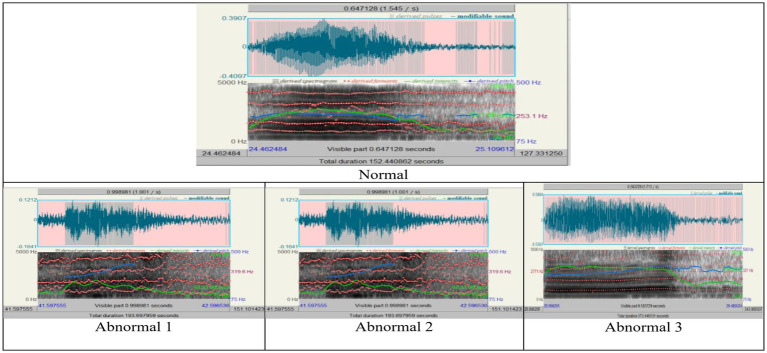
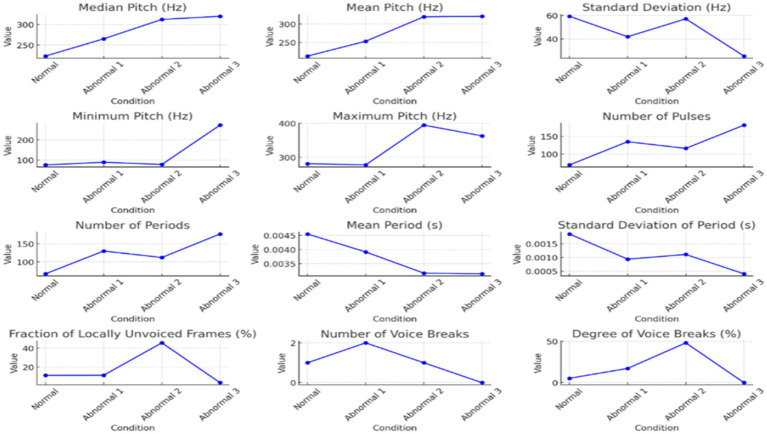
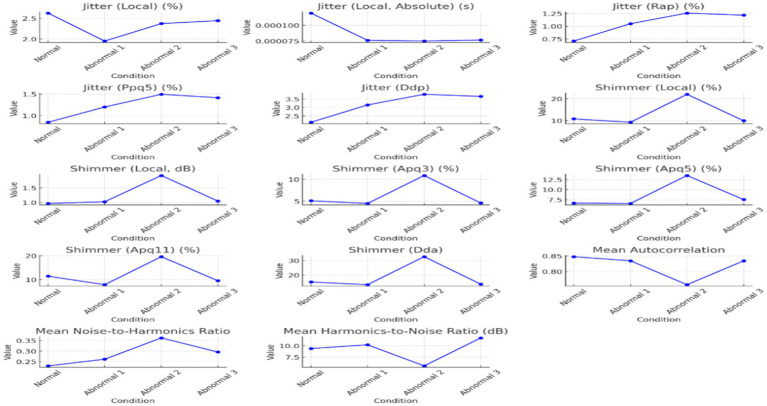
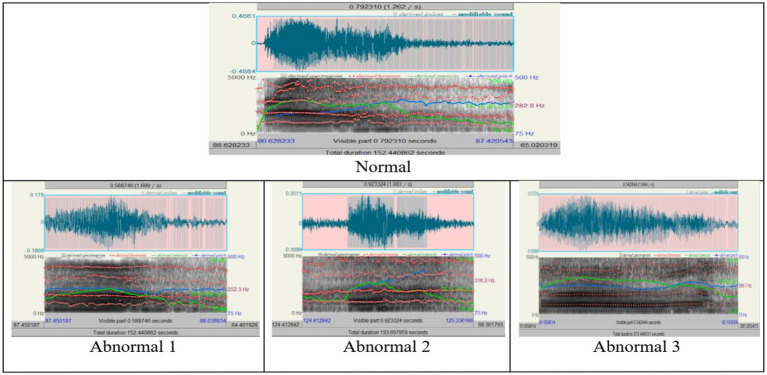
Background: Pharyngeal sounds, integral to Arabic phonetics, require precise vocal tract coordination, posing significant challenges for individuals with speech disorders. Objective: This study investigates the neurolinguistic and acoustic characteristics of pharyngeal sound production in Arabic speakers with speech impairments, aiming to elucidate the impact of neurological disruptions on articulatory precision. Methods: A comparative study was conducted with 20 participants (10 with speech disorders, 10 with typical speech). Acoustic analysis, including spectrographic evaluation, was used to quantify deviations in pharyngeal sound production. Concurrently, neurolinguistic assessments, which included neurological evaluations, identified disruptions in neural pathways governing speech motor control. Results: Individuals with speech disorders exhibited significant neuromotor deficits, correlating with distinct acoustic deviations in pharyngeal sound production. These findings highlight the synergy of neurolinguistic and acoustic approaches in identifying underlying mechanisms of speech impairment. Conclusion: By integrating neurolinguistic and acoustic analyses, this study establishes a novel framework for diagnosing and treating pharyngeal sound disorders in Arabic speakers. The results inform targeted therapeutic interventions and the development of assistive technologies, advancing clinical outcomes in speech-language pathology.
Overview
The claims and statistics of this paper haven’t been checked yet.
Run the check — free, no account needed. It reads the open-access text and checks the sources it cites.
Integrity signals
Registry
Cites
Statistics
Figures
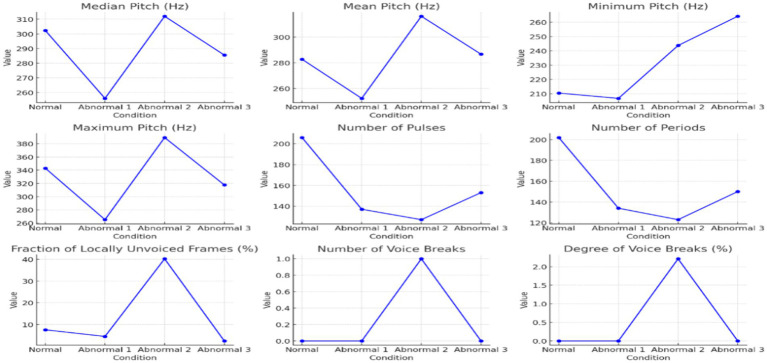
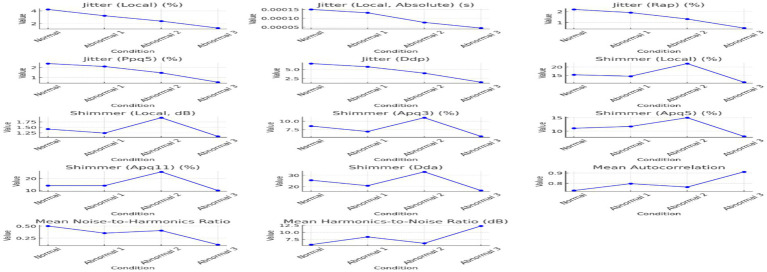
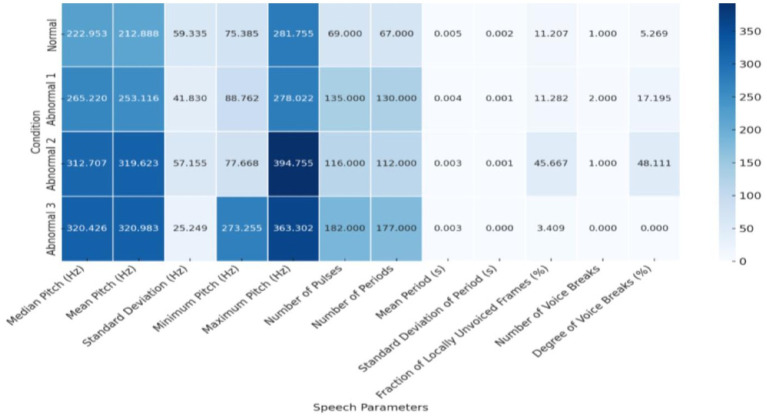
Verification
Claims the paper makes
The claims and statistics of this paper haven’t been checked yet.
Run the check — free, no account needed. It reads the open-access text and checks the sources it cites.
Claims other papers make about this one
Each is checked against this paper’s own text: does it say what the citing paper says it does?
The source backs part of the claim, not all of it — or backs it for a different population, condition or comparison.
In the citing paper
“The limitation of existing acoustic-based approaches such as NAA and TMTLN for simultaneously characterizing the issues related to articulation, cognition, and behavior associated with speech disorders is because of their focus on low-level speech abnormalities while failing to consider neurolinguistic inconsistency related to semantics.”
From NSX-Net: A Neurolinguistic and Acoustic Multimodal Deep Learning Framework for Speech Disorder Classification (2026) · cites this paper as [21]
Experimental — accuracy not yet measured
Self-check
Percentages, sums and reported differences re-computed from the paper’s own numbers.
The self-check needs the paper’s full text.
Citations
Cites
The brain basis of language processing: from structure to function.
Friederici, A. D. (2011) · Physiological Reviews · doi:10.1152/physrev.00006.2011 · Cited by 2,140
Motor Speech Disorders: Substrates, Differential Diagnosis, and Management
Duffy, J. R. (1995) · Cited by 1,892
The Phonology And Morphology Of Arabic
Watson, J. C. E. (2002) · doi:10.1093/oso/9780199257591.001.0001 · Cited by 712
Differential Diagnosis and Treatment of Children with Speech Disorder
Dodd, B. J. (1995) · Medical Entomology and Zoology · Cited by 422
Versteegh, K. (2014) · Edinburgh University Press eBooks · doi:10.1515/9780748645299 · Cited by 413
Research on speech motor control and its disorders
Kent, R. D. (2000) · Journal of Communication Disorders · doi:10.1016/s0021-9924(00)00023-x · Cited by 345
Acoustic studies of dysarthric speech
Kent, R. D., Weismer, G. G., Kent, J. F., Vorperian, H. K., & Duffy, J. R. (1999) · Journal of Communication Disorders · doi:10.1016/s0021-9924(99)00004-0 · Cited by 284
McCormack, J., McLeod, S. L., McAllister, L., & Harrison, L. J. (2009) · International Journal of Speech-Language Pathology · doi:10.1080/17549500802676859 · Cited by 248
Ziegler, W. (2002) · Brain and Language · doi:10.1006/brln.2001.2614 · Cited by 198
Speech Sound Disorders in Children: An Articulatory Phonology Perspective
Namasivayam, A. K., Coleman, D., O’Dwyer, A., & Lieshout, P. H. H. M. V. (2020) · Frontiers in Psychology · doi:10.3389/fpsyg.2019.02998 · Cited by 124
Research works printed but not linked: 3
- Alqudah, 2020, Arabic disordered speech phonetic dictionary generator for automatic speech recognition, J. Theor. Appl. Inf. Technol., 98, 571
- Boersma, 2023, Praat: Doing phonetics by computer [computer program]. Version 6.3.08
- Roach, 2009, English phonetics and phonology paperback with audio CDs (2): A practical course
Cited by
Sorted by citations
Nadeem, A., Khan, M. Z., Sirshar, M., & Thirunavukkarasu, U. (2026) · Diagnostics · doi:10.3390/diagnostics16152377
Self-citationBenafif, S., Conroy, P., & Mitchell, C. (2026) · Advances in Communication and Swallowing · doi:10.1177/27725383261473034
Ilham, M. A., Supriadi, R., Farisi, M. Z. A., & Nurfitri, H. (2025) · OKARA Jurnal Bahasa dan Sastra · doi:10.19105/ojbs.v20i1.24743
Metadata
- Authors
- Algaraady, J., Mahyoob, M., & Khan, M. Z.
- Affiliations
- Taiz University (YE)
- Taibah University (SA)
- Corresponding author
- Algaraady, Jeehaan
- Mahyoob, Mohammad
- Venue
- Frontiers in Human Neuroscience
- Publisher
- Frontiers Media SA
- Published
- 2025-10-07
- Volume
- 19
- Pages
- 1638363-1638363
- ISSN
- 1662-5161 (ISSN-L)
- PMC
- PMC12537716
- OpenAlex
- W4414879916
- Cited by
- 2
- References
- 25
- Citations by year
- 2026: 2
- FWCI
- 1.29
- Type
- journal article
- Language
- en
- Open access
- gold
- doi.org
- Licence
- Locations
- Frontiers in Human Neuroscience (publishedVersion, cc-by)
- Europe PMC (PubMed Central) (publishedVersion, cc-by)
- PubMed (publishedVersion)
- DOAJ (DOAJ: Directory of Open Access Journals) (submittedVersion, cc-by-sa)
- Funders
- King Salman Center for Disability Research (KSRG-2024-141)
- Topics
- Health Sciences › Health Professions › Speech and Hearing › Voice and Speech Disorders
- Social Sciences › Psychology › Experimental and Cognitive Psychology › Phonetics and Phonology Research
- Life Sciences › Neuroscience › Cognitive Neuroscience › Neurobiology of Language and Bilingualism
- Keywords
- speech motor control, neuromotor deficits, speech acoustics, spectrographic analysis, speech-language pathology
About these checks
Registry, retraction, Cites and statistics results are computed, not judged, with one exception: a printed reference that no index lists is read once by a model before it counts as a citation error. Claims are extracted by a model and kept only when their quote appears verbatim in the text; each cited source is then checked, with a model’s help, for whether it says what the claim relies on. Those verdicts can be wrong — read the claim’s quote and the cited source before relying on one.
Statistics and arithmetic are recomputed, not judged.
Confidence bands are shown only for fields calibrated on our annotated test set. None is calibrated yet, so no band is shown.
What counts as a claim ›How we measure confidence ›How we check this ›
Are you an author, or do you see a problem with this page? Request a review
