

The DOI matches its Crossref record; 164 of the 166 references it cites were found in a registry or an index.
HMGB1: A Common Biomarker and Potential Target for TBI, Neuroinflammation, Epilepsy, and Cognitive Dysfunction
Open accessAbstract
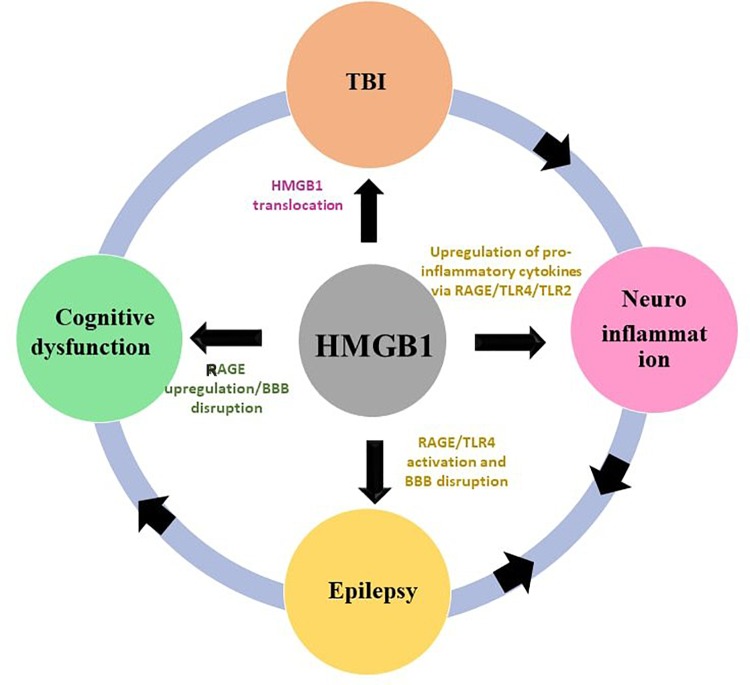
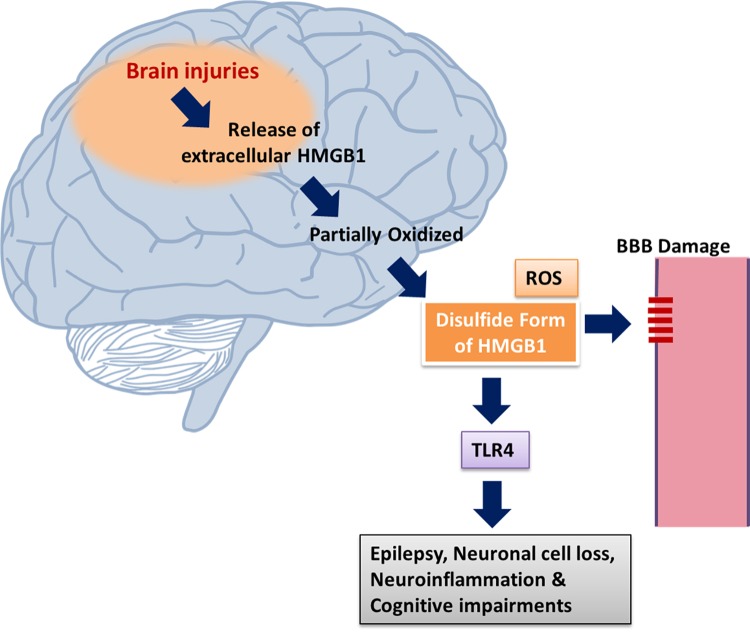
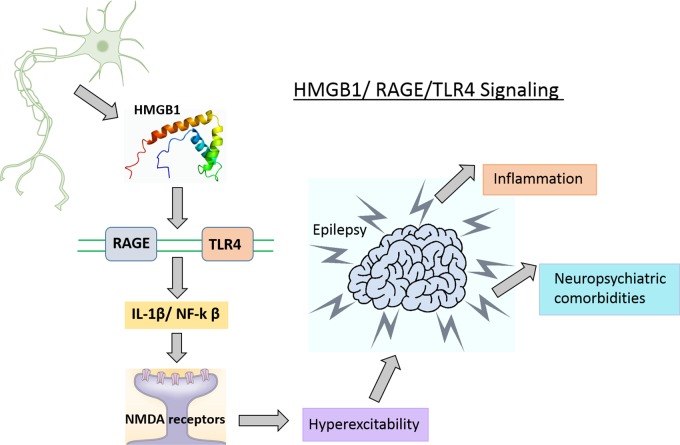
High mobility group box protein 1 (HMGB1) is a ubiquitous nuclear protein released by glia and neurons upon inflammasome activation and activates receptor for advanced glycation end products (RAGE) and toll-like receptor (TLR) 4 on the target cells. HMGB1/TLR4 axis is a key initiator of neuroinflammation. In recent days, more attention has been paid to HMGB1 due to its contribution in traumatic brain injury (TBI), neuroinflammatory conditions, epileptogenesis, and cognitive impairments and has emerged as a novel target for those conditions. Nevertheless, HMGB1 has not been portrayed as a common prognostic biomarker for these HMGB1 mediated pathologies. The current review discusses the contribution of HMGB1/TLR4/RAGE signaling in several brain injury, neuroinflammation mediated disorders, epileptogenesis and cognitive dysfunctions and in the light of available evidence, argued the possibilities of HMGB1 as a common viable biomarker of the above mentioned neurological dysfunctions. Furthermore, the review also addresses the result of preclinical studies focused on HMGB1 targeted therapy by the HMGB1 antagonist in several ranges of HMGB1 mediated conditions and noted an encouraging result. These findings suggest HMGB1 as a potential candidate to be a common biomarker of TBI, neuroinflammation, epileptogenesis, and cognitive dysfunctions which can be used for early prediction and progression of those neurological diseases. Future study should explore toward the translational implication of HMGB1 which can open the windows of opportunities for the development of innovative therapeutics that could prevent several associated HMGB1 mediated pathologies discussed herein.
Overview
The claims and statistics of this paper haven’t been checked yet.
Run the check — free, no account needed. It reads the open-access text and checks the sources it cites.
Integrity signals
Registry
Cites
Statistics
Figures
Verification
Claims the paper makes
The claims and statistics of this paper haven’t been checked yet.
Run the check — free, no account needed. It reads the open-access text and checks the sources it cites.
Claims other papers make about this one
Each is checked against this paper’s own text: does it say what the citing paper says it does?
The source backs part of the claim, not all of it — or backs it for a different population, condition or comparison.
In the citing paper
“elevated HMGB1 levels are found in the brain and CSF of AD patients and aged rodents and correlate with disease severity. 88 , 89 , 90”
From Senescence, brain inflammation, and oligomeric tau drive cognitive decline in Alzheimer's disease: Evidence from clinical and preclinical studies (2024) · cites this paper as [90]
Experimental — accuracy not yet measured
Self-check
Percentages, sums and reported differences re-computed from the paper’s own numbers.
The self-check needs the paper’s full text.
Citations
Cites
1 retracted
Molecular isoforms of high-mobility group box 1 are mechanistic biomarkers for epilepsy
Walker, L. E., Frigerio, F., Ravizza, T., Ricci, E., Tse, K., Jenkins, R. E., Sills, G. J., Jorgensen, A., Porcu, L., Thippeswamy, T., et al. (2017) · Journal of Clinical Investigation · doi:10.1172/jci92001 · Cited by 102
RetractedAmyloid oligomers exacerbate tau pathology in a mouse model of tauopathy
Selenica, M.-L. B., Brownlow, M., Jimenez, J. P., Lee, D. C., Pena, G., Dickey, C. A., Gordon, M. N., & Morgan, D. (2013) · Neurodegenerative Diseases · doi:10.1159/000337230 · Cited by 10,359
From inflammation to sickness and depression: when the immune system subjugates the brain
Dantzer, R., O'Connor, J. C., Freund, G. G., Johnson, R. W., & Kelley, K. W. (2008) · Nature Reviews Neuroscience · doi:10.1038/nrn2297 · Cited by 7,395
Neuroinflammation in Alzheimer's disease
Heneka, M. T., Carson, M. J., Khoury, J. E., Landreth, G. E., Brosseron, F., Feinstein, D. L., Jacobs, A. H., Wyss-Coray, T., Vitorica, J., Ransohoff, R. M., et al. (2015) · The Lancet Neurology · doi:10.1016/s1474-4422(15)70016-5 · Cited by 6,226
Compston, A., & Coles, A. J. (2008) · The Lancet · doi:10.1016/s0140-6736(08)61620-7 · Cited by 4,699
Intestinal microbiota metabolism of l-carnitine, a nutrient in red meat, promotes atherosclerosis
Koeth, R. A., Wang, Z., Levison, B. S., Buffa, J. A., Org, E., Sheehy, B. T., Britt, E. B., Fu, X., Wu, Y., Li, L., et al. (2013) · Nature Medicine · doi:10.1038/nm.3145 · Cited by 4,386
Release of chromatin protein HMGB1 by necrotic cells triggers inflammation
Scaffidi, P., Misteli, T., & Bianchi, M. E. (2002) · Nature · doi:10.1038/nature00858 · Cited by 4,221
HMG-1 as a Late Mediator of Endotoxin Lethality in Mice
Wang, H., Bloom, O., Zhang, M., Vishnubhakat, J. M., Ombrellino, M., Che, J., Frazier, A., Yang, H., Ivanova, S., Borovikova, L. V., et al. (1999) · Science · doi:10.1126/science.285.5425.248 · Cited by 3,386
Yang, Y., Li, S., Yang, Q., Shi, Y., Zheng, M., Liu, Y., Chen, F., Song, G., Xu, H., Wan, T., et al. (2014) · Cellular Physiology and Biochemistry · doi:10.1159/000358696 · Cited by 3,263
High-mobility group box 1 protein (HMGB1): nuclear weapon in the immune arsenal
Lotze, M. T., & Tracey, K. J. (2005) · Nature reviews. Immunology · doi:10.1038/nri1594 · Cited by 2,490
Research works printed but not linked: 1
- Mohamed, 2017, Biochemical and apoptotic biomarkers as indicators of time elapsed since death in experimentally induced traumatic brain injury., SM J. Forensic Res. Criminol., 1
Cited by
Sorted by citations
Roles of neuropathology-associated reactive astrocytes: a systematic review
Lawrence, J. M., Schardien, K., Wigdahl, B., & Nonnemacher, M. R. (2023) · Acta Neuropathologica Communications · doi:10.1186/s40478-023-01526-9 · Cited by 433
Sengupta, U., & Kayed, R. (2022) · Progress in Neurobiology · doi:10.1016/j.pneurobio.2022.102270 · Cited by 318
Fan, H., Tang, H., Chen, Z., Wang, H., Zhang, L., Jiang, Y., Li, T., Yang, C., Wang, X., Li, X., et al. (2020) · Journal of Neuroinflammation · doi:10.1186/s12974-020-01973-4 · Cited by 282
Gaikwad, S., Puangmalai, N., Bittar, A., Montalbano, M., Garcia, S., McAllen, S., Bhatt, N., Sonawane, M., Sengupta, U., & Kayed, R. (2021) · Cell Reports · doi:10.1016/j.celrep.2021.109419 · Cited by 234
Extracellular HMGB1: a therapeutic target in severe pulmonary inflammation including COVID-19?
Andersson, J., Ottestad, W., & Tracey, K. J. (2020) · Molecular Medicine · doi:10.1186/s10020-020-00172-4 · Cited by 232
Metadata
- Authors
- Paudel, Y. N., Shaikh, M. F., Chakraborti, A., Kumari, Y., Aledo-Serrano, Á., Aleksovska, K., Alvim, M. K. M., & Othman, I.
- Affiliations
- Monash University Malaysia (MY)
- University of Alabama at Birmingham (US)
- Ss. Cyril and Methodius University in Skopje (MK)
- Universidade Estadual de Campinas (UNICAMP) (BR)
- Corresponding author
- Shaikh, Mohd. Farooq
- ORCID
- Venue
- Frontiers in Neuroscience
- Publisher
- Frontiers Media SA
- Published
- 2018-09-11
- Volume
- 12
- Pages
- 628-628
- ISSN
- 1662-453X (ISSN-L)
- PMC
- PMC6142787
- OpenAlex
- W2889849480
- Cited by
- 311
- References
- 166
- Citations by year
- 2026: 38 · 2025: 29 · 2024: 36 · 2023: 33 · 2022: 56 · 2021: 45 · 2020: 53 · 2019: 19 · 2018: 2
- FWCI
- 3.87
- Type
- journal article
- Language
- en
- Open access
- gold
- doi.org
- Locations
- Frontiers in Neuroscience (publishedVersion, cc-by)
- Europe PMC (PubMed Central) (publishedVersion, cc-by)
- PubMed Central (publishedVersion, cc-by)
- PubMed (publishedVersion)
- Monash University Research Portal (Monash University) (submittedVersion, cc-by)
- Charles Sturt University Research Output (CRO) (submittedVersion, cc-by)
- DOAJ (DOAJ: Directory of Open Access Journals) (submittedVersion, cc-by-sa)
- Funders
- Monash University
- Monash University Malaysia
- Jaypee University of Information Technology
- Topics
- Life Sciences › Biochemistry, Genetics and Molecular Biology › Clinical Biochemistry › Advanced Glycation End Products research
- Life Sciences › Neuroscience › Neurology › Neuroinflammation and Neurodegeneration Mechanisms
- Health Sciences › Medicine › Clinical Neurology › Traumatic Brain Injury and Neurovascular Disturbances
- Keywords
- HMGB1, traumatic brain injury, neuroinflammation, epileptogenesis, cognitive impairment, TLR4, RAGE, inflammasome, prognostic factors, neuroinflammatory disorders
About these checks
Registry, retraction, Cites and statistics results are computed, not judged, with one exception: a printed reference that no index lists is read once by a model before it counts as a citation error. Claims are extracted by a model and kept only when their quote appears verbatim in the text; each cited source is then checked, with a model’s help, for whether it says what the claim relies on. Those verdicts can be wrong — read the claim’s quote and the cited source before relying on one.
Statistics and arithmetic are recomputed, not judged.
Confidence bands are shown only for fields calibrated on our annotated test set. None is calibrated yet, so no band is shown.
What counts as a claim ›How we measure confidence ›How we check this ›
Are you an author, or do you see a problem with this page? Request a review
