

The DOI matches its Crossref record.
Recent advances and challenges in the interaction between myofibrillar proteins and flavor substances
Abstract
Myofibrillar proteins are an important component of proteins. Flavor characteristics are the key attributes of food quality. The ability of proteins to bind flavor is one of their most fundamental functional properties. The dynamic balance of release and retention of volatile flavor compounds in protein-containing systems largely affects the sensory quality and consumer acceptability of foods. At present, research on flavor mainly focuses on the formation mechanism of flavor components, while there are few reports on the release and perception of flavor components. This review introduces the composition and structure of myofibrillar proteins, the classification of flavor substances, the physical binding and chemical adsorption of myofibrillar proteins and volatile flavor substances, as well as clarifies the regulation law of flavor substances from the viewpoint of endogenous flavor characteristics and exogenous environment factors, to provide a theoretical reference for the flavor regulation of meat products.
Overview
The claims and statistics of this paper haven’t been checked yet.
Run the check — free, no account needed. It reads the open-access text and checks the sources it cites.
Integrity signals
Registry
Cites
Statistics
Figures
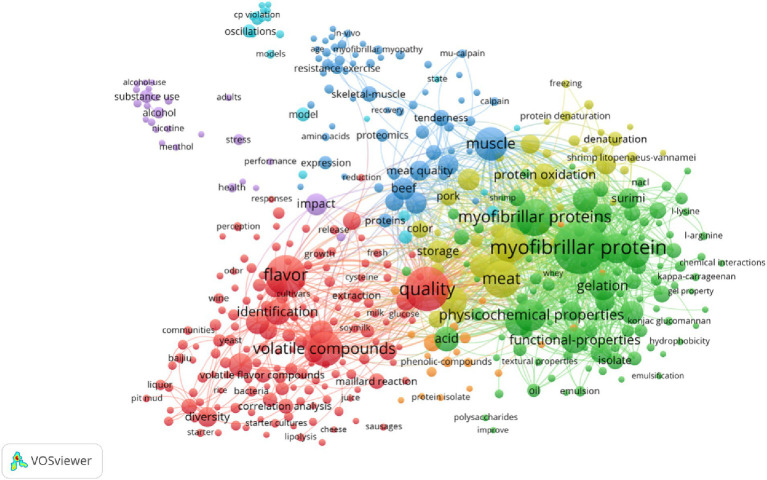
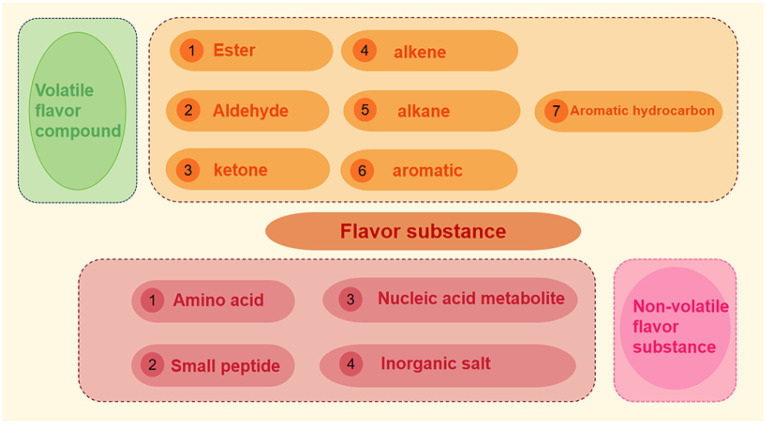
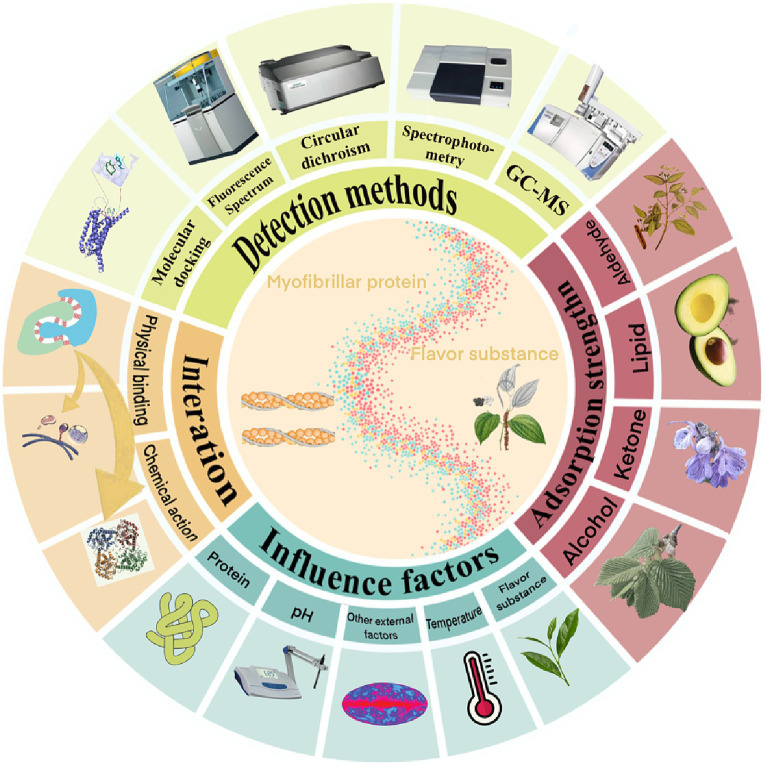
Verification
Claims the paper makes
The claims and statistics of this paper haven’t been checked yet.
Run the check — free, no account needed. It reads the open-access text and checks the sources it cites.
Claims other papers make about this one
Each is checked against this paper’s own text: does it say what the citing paper says it does?
In the citing paper
“Certain terpenes in DEO have been shown to form hydrogen bonds or hydrophobic interactions with myofibrillar proteins, potentially stabilizing their conformations [8,80,81].”
From Preservative Potential of Anethum graveolens Essential Oil on Fish Fillet Quality and Shelf Life During Refrigerated Storage (2025) · cites this paper as [80]
Self-check
Percentages, sums and reported differences re-computed from the paper’s own numbers.
The self-check needs the paper’s full text.
Citations
Cites
No references could be resolved yet.
Research works printed but not linked: 120
- Zhou, 2013, Effects of oxidative modification on gel properties of isolated porcine myofibrillar protein by peroxyl radicals, Meat Sci, 96, 1432, 10.1016/j.meatsci.2013.12.001 · DOI
- Wu, 2023, Probing the mechanism of interaction between capsaicin and myofibrillar proteins through multispectral, molecular docking, and molecular dynamics simulation methods, Food Chem X, 18, 100734, 10.1016/j.fochx.2023.100734 · DOI
- María, 2006, Model studies on the efficacy of protein homogenates from raw pork muscle and dry-cured ham in binding selected flavor compounds, J Agric Food Chem, 54, 4802, 10.1021/jf060374x · DOI
- Guichard, 2002, Interactions between flavor compounds and food ingredients and their influence on flavor perception, Food Rev Intl, 18, 49, 10.1081/fri-120003417 · DOI · Paper page
- O’Neill, 1996, Flavor binding by food proteins: an overview, 59
- Graf, 1996, Performance of vanilla flavor in low-fat ice cream, 24
- Guo, 2020, Effects of concentration of flavor compounds on interaction between soy protein isolate and flavor compounds, Food Hydrocoll, 100, 105388, 10.1016/j.foodhyd.2019.105388 · DOI
- Xu, 2021, Novel technologies for flavor formation in the processing of meat products: a review, Food Rev Int, 39, 802, 10.1080/87559129.2021.1926480 · DOI
- Wang, 2014, Binding of carbonyl flavours to canola, pea and wheat proteins using GC/MS approach, Food Chem, 157, 364, 10.1016/j.foodchem.2014.02.042 · DOI
- Lv, 2017, Effect of trypsin treatments on the structure and binding capacity of volatile compounds of myosin, Food Chem, 214, 710, 10.1016/j.foodchem.2016.07.115 · DOI
- Anantharamkrishnan, 2020, Covalent adduct formation between flavor compounds of various functional group classes and the model protein β-lactoglobulin, J Agric Food Chem, 68, 6395, 10.1021/acs.jafc.0c01925 · DOI
- Bikaki, 2021, Heat induced hydrolytic cleavage of the peptide bond in dietary peptides and proteins in food processing, Food Chem, 357, 129621, 10.1016/j.foodchem.2021.129621 · DOI
- Chambers, 2013, Associations of volatile compounds with sensory aroma and flavor: the complex nature of flavor, Molecules, 18, 4887, 10.3390/molecules18054887 · DOI
- Starowicz, 2021, Analysis of volatiles in food products, Separations, 8, 157, 10.3390/separations8090157 · DOI
- Pérez-Juan, 2007, Binding of aroma compounds by isolated myofibrillar proteins: effect of protein concentration and conformation, Food Chem, 105, 932, 10.1016/j.foodchem.2007.04.051 · DOI
- Dara, 2021, Extraction and characterization of myofibrillar proteins from different meat sources: a comparative study, J Bioresour Bioprod, 6, 367, 10.1016/j.jobab.2021.04.004 · DOI
- Cao, 2017, Effect of glycine on reaction of cysteine-xylose: insights on initial Maillard stage intermediates to develop meat flavor, Food Res Int, 99, 444, 10.1016/j.foodres.2017.06.012 · DOI
- Crocker, 1948, Flavor of meat, J Food Sci, 13, 179, 10.1111/j.1365-2621.1948.tb16609.x · DOI
- Fu, 2022, Flavor formation based on lipid in meat and meat products: a review, J Food Biochem, 46, e14439, 10.1111/jfbc.14439 · DOI
- Shahidi, 1986, Meat flavor volatiles: a review of the composition, techniques of analysis, and sensory evaluation, Crit Rev Food Sci Nutr, 24, 141, 10.1080/10408398609527435 · DOI
- Yu, 2019, Research progress of meat aroma substances, China Condiment, 44, 173, 10.3969/j.issn.1000-9973.2019.10.039 · DOI
- Song, 2019, Aroma patterns characterization of braised pork obtained from a novel ingredient by sensory-guided analysis and gas-chromatography-olfactometry, Foods, 8, 87, 10.3390/foods8030087 · DOI
- Chiang, 2007, Non-volatile taste components of various broth cubes, Food Chem, 101, 932, 10.1016/j.foodchem.2006.02.041 · DOI
- Shahidi, 2022, Role of lipids in food flavor generation, Molecules, 27, 27, 10.3390/molecules27155014 · DOI
- Anantharamkrishnan, 2020, Method to characterize and monitor covalent interactions of flavor compounds with β-lactoglobulin using mass spectrometry and proteomics, J Agric Food Chem, 68, 13121, 10.1021/acs.jafc.9b07978 · DOI
- Zhang, 2022, Evaluation of the adsorption capacity and mechanism of soy protein isolate for volatile flavor compounds: role of different oxygen-containing functional groups, Food Chem, 386, 132745, 10.1016/j.foodchem.2022.132745 · DOI
- Xu, 2023, The impacting mechanism of β-sanshool in Zanthoxylum bungeanum Maxim on the structure of myofibrillar protein in duck meat, LWT, 182, 114838, 10.1016/j.lwt.2023.114838 · DOI
- Wang, 2021, The effect of linalool, limonene and sabinene on the thermal stability and structure of rabbit meat myofibrillar protein under malondialdehyde-induced oxidative stress, LWT, 148, 111707, 10.1016/j.lwt.2021.111707 · DOI
- Wang, 2023, Quality of chicken breast meat improved by dietary pterostilbene referring to up-regulated antioxidant capacity and enhanced protein structure, Food Chem, 405, 134848, 10.1016/j.foodchem.2022.134848 · DOI
- Zhang, 2022, Storage stability and flavor change of marinated pork, Foods, 11, 1825, 10.3390/foods11131825 · DOI
- Chen, 2022, Changes in protein degradation and non-volatile flavor substances of swimming crab (Portunus trituberculatus) during steaming, Foods, 11, 3502, 10.3390/foods11213502 · DOI
- Xie, 2020, Insights into the binding mechanism of polyphenols and fish myofibrillar proteins explored using multi-spectroscopic methods, Food Bioprocess Technol, 13, 797, 10.1007/s11947-020-02439-4 · DOI
- Tian, 2022, Study the interactions between multiple flavonoids and bovine serum albumin by the developed equilibrium dialysis, J Chromatogr B, 1212, 123515, 10.1016/j.jchromb.2022.123515 · DOI
- Li, 2022, Influence of proteolysis on the binding capacity of flavor compounds to myofibrillar proteins, Foods, 11, 891, 10.3390/foods11060891 · DOI
- Xu, 2019, Effect of heat treatment on the binding of selected flavor compounds to myofibrillar proteins, J Sci Food Agric, 99, 5028, 10.1002/jsfa.9744 · DOI
- Sun, 2023, Structural changes induced by ultrasound improve the ability of the myofibrillar protein to bind flavor compounds from spices, Ultrason Sonochem, 98, 106510, 10.1016/j.ultsonch.2023.106510 · DOI
- Zhang, 2022, Role of low molecular additives in the myofibrillar protein gelation: underlying mechanisms and recent applications, Crit Rev Food Sci Nutr, 64, 3604, 10.1080/10408398.2022.2133078 · DOI
- Houde, 2018, Assessment of interaction of vanillin with barley, pea and whey proteins: binding properties and sensory characteristics, LWT, 91, 133, 10.1016/j.lwt.2018.01.022 · DOI
- Meynier, 2004, Hexanal and t-2-hexenal form covalent bonds with whey proteins and sodium caseinate in aqueous solution, Int Dairy J, 14, 681, 10.1016/j.idairyj.2004.01.003 · DOI
- Innocente, 2011, Feasibility of the SPME method for the determination of the aroma retention capacity of proteose-peptone milk protein fraction at different pH values, Food Chem, 124, 1249, 10.1016/j.foodchem.2010.07.056 · DOI
- Dupuis, 2020, The role of disulfide bonds in a Solanum tuberosum saposin-like protein investigated using molecular dynamics, PLoS One, 15, e0237884, 10.1371/journal.pone.0237884 · DOI
- Pelletier, 1998, Measurement of interactions between β-lactoglobulin and flavor compounds (esters, acids, and pyrazines) by affinity and exclusion size chromatography, J Agric Food Chem, 46, 1506, 10.1021/jf970725v · DOI
- Viry, 2018, A predictive model for flavor partitioning and protein-flavor interactions in fat-free dairy protein solutions, Food Res Int, 109, 52, 10.1016/j.foodres.2018.04.013 · DOI
- Pernollet, 2004, Structural recognition between odorants, olfactory‐binding proteins and olfactory receptors—first events in odour coding, 86
- Jacobson, 2016, Quantifying the ion atmosphere of unfolded, single-stranded nucleic acids using equilibrium dialysis and single-molecule methods, Nucleic Acids Res, 44, 3763, 10.1093/nar/gkw196 · DOI
- Wulkersdorfer, 2021, Protein binding of clindamycin in vivo by means of intravascular microdialysis in healthy volunteers, J Antimicrob Chemother, 76, 2106, 10.1093/jac/dkab140 · DOI
- Högstedt, 2021, Investigation of proteins important for microcirculation using in vivo microdialysis after glucose provocation: a proteomic study, Sci Rep, 11, 19093, 10.1038/s41598-021-98672-8 · DOI
- Iftekhar, 2019, Kinetic analysis by affinity chromatography, Front Chem, 7, 673, 10.3389/fchem.2019.00673 · DOI
- Li, 2018, Mobile affinity sorbent chromatography, Anal Chem, 90, 1668, 10.1021/acs.analchem.7b03117 · DOI
- Li, 2019, Study on the affinity characteristics of proteins on the immobilized metal affinity chromatography column, Anal Methods, 11, 4341, 10.1039/C9AY01469A · DOI
- Ni, 2023, Isolation of volatiles in honeysuckle by multiple approaches with determination by gas chromatography-mass spectrometry (GC-MS) and headspace solid-phase microextraction-gas chromatography-mass spectrometry (HS-SPME/GC-MS), Anal Lett, 56, 2359, 10.1080/00032719.2023.2168687 · DOI
- Qi, 2022, Determination of volatiles in flue-cured tobacco by gas chromatography-mass spectrometry (GC-MS) with chemometrics, Anal Lett, 55, 1398, 10.1080/00032719.2021.2006681 · DOI
- Leyva-Porras, 2019, Application of differential scanning calorimetry (DSC) and modulated differential scanning calorimetry (MDSC) in food and drug industries, Polymers, 12, 5, 10.3390/polym12010005 · DOI
- Linkuvienė, 1870, Intrinsic affinity of protein—ligand binding by differential scanning calorimetry, Biochim Biophys Acta, 1870, 140830, 10.1016/j.bbapap.2022.140830 · DOI
- Lv, 2022, A reinforcement learning based method for protein’s differential scanning calorimetry signal separation, Measurement, 188, 110391, 10.1016/j.measurement.2021.110391 · DOI
- Baranauskiene, 2019, Isothermal titration calorimetry for characterization of recombinant proteins, Curr Opin Biotechnol, 55, 9, 10.1016/j.copbio.2018.06.003 · DOI
- Vu, 2021, Isothermal titration calorimetry of membrane proteins., 69, 10.1007/978-1-0716-1394-8_5 · DOI
- Rodler, 2018, Hydrophobic interaction chromatography of proteins: studies of unfolding upon adsorption by isothermal titration calorimetry, J Sep Sci, 41, 3069, 10.1002/jssc.201800016 · DOI
- Rogers, 2019, Electronic circular dichroism spectroscopy of proteins, Chem, 5, 2751, 10.1016/j.chempr.2019.07.008 · DOI
- Micsonai, 2018, Protein fold recognition by circular dichroism spectroscopy, Biophys J, 114, 174a, 10.1016/j.bpj.2017.11.970 · DOI
- Li, 2019, Analysis of silver-associated proteins in pathogen via combination of native SDS-PAGE, fluorescent staining, and inductively coupled plasma mass spectrometry, J Chromatogr A, 1607, 460393, 10.1016/j.chroma.2019.460393 · DOI
- Heckmeier, 2021, Site-specific fragmentation of green fluorescent protein induced by blue light, Biochemistry, 60, 2457, 10.1021/acs.biochem.1c00248 · DOI
- Bupp, 2020, Making sharper peaks for reverse-phase liquid chromatography of proteins, Annu Rev Anal Chem, 13, 363, 10.1146/annurev-anchem-061318-115009 · DOI
- Kartanas, 2021, Label-free protein analysis using liquid chromatography with gravimetric detection, Anal Chem, 93, 2848, 10.1021/acs.analchem.0c04149 · DOI
- de Moraes, 2019, Solid-supported proteins in the liquid chromatography domain to probe ligand-target interactions, Front Chem, 7, 752, 10.3389/fchem.2019.00752 · DOI
- Ayed, 2018, Understanding fat, proteins and saliva impact on aroma release from flavoured ice creams, Food Chem, 267, 132, 10.1016/j.foodchem.2017.10.127 · DOI
- Relkin, 2004, Effect of fat nature and aroma compound hydrophobicity on flavor release from complex food emulsions, J Agric Food Chem, 52, 6257, 10.1021/jf049477a · DOI
- Gong, 2017, Time-dependent categorization of volatile aroma compound formation in stewed Chinese spicy beef using electron nose profile coupled with thermal desorption GC-MS detection, Food Sci Human Wellness, 6, 137, 10.1016/j.fshw.2017.07.001 · DOI
- Song, 2018, GC-O-MS technique and its applications in food flavor analysis, Food Res Int, 114, 187, 10.1016/j.foodres.2018.07.037 · DOI
- Zhao, 2017, Volatile flavor constituents in the pork broth of black-pig, Food Chem, 226, 51, 10.1016/j.foodchem.2017.01.011 · DOI
- Chen, 2018, Rheological behavior, conformational changes and interactions of water-soluble myofibrillar protein during heating, Food Hydrocoll, 77, 524, 10.1016/j.foodhyd.2017.10.030 · DOI
- Boyer, 1996, Heat-induced gelation of myofibrillar proteins and myosin from fast- and slow-twitch rabbit muscles, J Food Sci, 61, 1138, 10.1111/j.1365-2621.1996.tb10948.x · DOI
- Sun, 2024, Insights into the interactions between etheric compounds and myofibrillar proteins using multi-spectroscopy, molecular docking, and molecular dynamics simulation, Food Res Int, 175, 113787, 10.1016/j.foodres.2023.113787 · DOI
- Wang, 2015, Effect of salts and pH on selected ketone flavours binding to salt-extracted pea proteins: the role of non-covalent forces, Food Res Int, 77, 1, 10.1016/j.foodres.2015.03.017 · DOI
- Zhang, 2013, Protein oxidation: basic principles and implications for meat quality, Crit Rev Food Sci Nutr, 53, 1191, 10.1080/10408398.2011.577540 · DOI
- Gu, 2020, The binding of key fishy off-flavor compounds to silver carp proteins: a thermodynamic analysis, RSC Adv, 10, 11292, 10.1039/d0ra01365j · DOI
- Adams, 2001, Flavor-protein binding: disulfide interchange reactions between ovalbumin and volatile disulfides, J Agric Food Chem, 49, 4333, 10.1021/jf0100797 · DOI
- Shen, 2019, Effect of pH on the interaction of porcine myofibrillar proteins with pyrazine compounds, Food Chem, 287, 93, 10.1016/j.foodchem.2019.02.060 · DOI
- Shimizu, 1985, Emulsifying and structural properties of β-lactoglobulin at different pHs, Agric Biol Chem, 49, 189, 10.1271/bbb1961.49.189 · DOI
- Gianelli, 2005, Interaction of soluble peptides and proteins from skeletal muscle with volatile compounds in model systems as affected by curing agents, J Agric Food Chem, 53, 1670, 10.1021/jf040357c · DOI
- Zhang, 2016, Protein encapsulation in alginate hydrogel beads: effect of pH on microgel stability, protein retention and protein release, Food Hydrocoll, 58, 308, 10.1016/j.foodhyd.2016.03.015 · DOI
- Ventanas, 2010, Odour and flavour perception in flavoured model systems: influence of sodium chloride, umami compounds and serving temperature, Food Qual Prefer, 21, 453, 10.1016/j.foodqual.2009.11.003 · DOI
- Rios-Mera, 2017, Effect of ultimate pH and ageing on thermal denaturation of bovine muscle proteins, Meat Sci, 131, 25, 10.1016/j.meatsci.2017.04.017 · DOI
- Li, 2000, Interaction of vanillin with soy and dairy proteins in aqueous model systems: a thermodynamic study, J Food Sci, 65, 997, 10.1111/j.1365-2621.2000.tb09406.x · DOI
- Chen, 2023, Exploring in vitro gastrointestinal digestion of myofibrillar proteins at different heating temperatures, Food Chem, 414, 135694, 10.1016/j.foodchem.2023.135694 · DOI
- Zhou, 2016, The effects of heat treatment time on the absorption capacity of duck myofibrillar protein gels on flavor compounds, Mod Food Sci Technol, 32, 218, 10.13982/j.mfst.1673-9078.2016.3.035 · DOI
- Xu, 2020, Binding of aldehydes to myofibrillar proteins as affected by two-step heat treatments, J Sci Food Agric, 100, 1195, 10.1002/jsfa.10130 · DOI
- Setyabrata, 2021, Elucidating mechanisms involved in flavor generation of dry-aged beef loins using metabolomics approach, Food Res Int, 139, 109969, 10.1016/j.foodres.2020.109969 · DOI
- Zhang, 2020, L-arginine and L-lysine degrade troponin-T, and L-arginine dissociates actomyosin: their roles in improving the tenderness of chicken breast, Food Chem, 318, 126516, 10.1016/j.foodchem.2020.126516 · DOI
- Li, 2022, Investigation of volatile flavor compounds and characterization of aroma-active compounds of water-boiled salted duck using GC-MS-O, GC-IMS, and E-nose, Food Chem, 386, 132728, 10.1016/j.foodchem.2022.132728 · DOI
- Kühn, 2006, Interactions of milk proteins and volatile flavor compounds: implications in the development of protein foods, J Food Sci, 71, R72, 10.1111/j.1750-3841.2006.00051.x · DOI
- Bosse, 2017, Determination of volatile marker compounds in raw ham using headspace-trap gas chromatography, Food Chem, 219, 249, 10.1016/j.foodchem.2016.09.094 · DOI
- Cao, 2018, The effect of oxidation on the structure of G-actin and its binding ability with aroma compounds in carp grass skeletal muscle, Food Chem, 240, 346, 10.1016/j.foodchem.2017.07.068 · DOI
- Wang, 2015, Binding of selected volatile flavour mixture to salt-extracted canola and pea proteins and effect of heat treatment on flavour binding, Food Hydrocoll, 43, 410, 10.1016/j.foodhyd.2014.06.011 · DOI
- Hansen, 1992, Benzaldehyde, citral, and d-limonene flavor perception in the presence of casein and whey proteins1, J Dairy Sci, 75, 1211, 10.3168/jds.S0022-0302(92)77869-2 · DOI
- Han, 2019, Effects of microwave and water bath heating on the interactions between myofibrillar protein from beef and ketone flavour compounds, Int J Food Sci Technol, 54, 1787, 10.1111/ijfs.14079 · DOI
- Weerawatanakorn, 2015, Reactivity and stability of selected flavor compounds, J Food Drug Anal, 23, 176, 10.1016/j.jfda.2015.02.001 · DOI
- Liu, 2023, Oral sensation and gastrointestinal digestive profiles of bigels tuned by the mass ratio of konjac glucomannan to gelatin in the binary hydrogel matrix, Carbohydr Polym, 312, 120765, 10.1016/j.carbpol.2023.120765 · DOI
- Jousse, 2002, Simplified kinetic scheme of flavor formation by the Maillard reaction, J Food Sci, 67, 2534, 10.1111/j.1365-2621.2002.tb08772.x · DOI
- Chaijan, 2007, Effect of ionic strength and temperature on interaction between fish myoglobin and myofibrillar proteins, J Food Sci, 72, C89, 10.1111/j.1750-3841.2006.00236.x · DOI
- Zhang, 2021, Recent advantage of interactions of protein-flavor in foods: perspective of theoretical models, protein properties and extrinsic factors, Trends Food Sci Technol, 111, 405, 10.1016/j.tifs.2021.02.060 · DOI
- Wang, 2017, Effect of protein-flavour binding on flavour delivery and protein functional properties: a special emphasis on plant-based proteins, Flavour Fragr J, 32, 92, 10.1002/ffj.3365 · DOI
- Lou, 2017, The effect of microwave on the interaction of flavour compounds with G-actin from grass carp (Catenopharyngodon idella), J Sci Food Agric, 97, 3917, 10.1002/jsfa.8325 · DOI
- Ma, 2019, Effect of alkyl distribution in pyrazine on pyrazine flavor release in bovine serum albumin solution, RSC Adv, 9, 36951, 10.1039/c9ra06720e · DOI
- Yin, 2022, Probing the interaction between selected furan derivatives and porcine myofibrillar proteins by spectroscopic and molecular docking approaches, Food Chem, 397, 133776, 10.1016/j.foodchem.2022.133776 · DOI
- Menezes, 2020, Insights on the interaction of furfural derivatives with BSA and HTF by applying multi-spectroscopic and molecular docking approaches, J Mol Liq, 317, 114021, 10.1016/j.molliq.2020.114021 · DOI
- Xie, 2008, Volatile flavor constituents in roasted pork of mini-pig, Food Chem, 109, 506, 10.1016/j.foodchem.2007.12.074 · DOI
- Scatchard, 1949, The attractions of proteins for small molecules and ions, Ann N Y Acad Sci, 51, 660, 10.1111/j.1749-6632.1949.tb27297.x · DOI
- Harrison, 1997, Mathematical model of flavor release from liquids containing aroma-binding macromolecules, J Agric Food Chem, 45, 1883, 10.1021/jf9607876 · DOI
- Mohammadzadeh-Aghdash, 2017, Multi-spectroscopic and molecular modeling studies of bovine serum albumin interaction with sodium acetate food additive, Food Chem, 228, 265, 10.1016/j.foodchem.2017.01.149 · DOI
- Li, 2018, Capturing dynamic protein interactions, Science, 359, 1105, 10.1126/science.aat0576 · DOI
- Arroyo-Maya, 2016, Characterization of flavonoid-protein interactions using fluorescence spectroscopy: binding of pelargonidin to dairy proteins, Food Chem, 213, 431, 10.1016/j.foodchem.2016.06.105 · DOI
- Mahmoudpour, 2020, Thermodynamic analysis of albumin interaction with monosodium glutamate food additive: insights from multi-spectroscopic and molecular docking approaches, J Mol Struct, 1221, 128785, 10.1016/j.molstruc.2020.128785 · DOI
- Ross, 1981, Thermodynamics of protein association reactions: forces contributing to stability, Biochemistry, 20, 3096, 10.1021/bi00514a017 · DOI
- Kang, 2016, Effects of power ultrasound on oxidation and structure of beef proteins during curing processing, Ultrason Sonochem, 33, 47, 10.1016/j.ultsonch.2016.04.024 · DOI
- Tan, 2008, Modeling bovine serum albumin binding of flavor compounds (alcohols, aldehydes, esters, and ketones) as a function of molecular properties, J Food Sci, 73, S56, 10.1111/j.1750-3841.2007.00591.x · DOI
- Pérez-Juan, 2007, Effect of ionic strength of different salts on the binding of volatile compounds to porcine soluble protein extracts in model systems, Food Res Int, 40, 687, 10.1016/j.foodres.2006.11.013 · DOI
- Shen, 2019, Interactions of selected ketone flavours with porcine myofibrillar proteins: the role of molecular structure of flavour compounds, Food Chem, 298, 125060, 10.1016/j.foodchem.2019.125060 · DOI
- Morris, 2021, Using molecular docking and molecular dynamics to investigate protein-ligand interactions, Mod Phys Lett B, 35, 2130002, 10.1142/S0217984921300027 · DOI
- Ren, 2021, Unraveling the coupling between conformational changes and ligand binding in ribose binding protein using multiscale molecular dynamics and free-energy calculations, J Phys Chem B, 125, 2898, 10.1021/acs.jpcb.0c11600 · DOI
Cited by
Tayel, A., Hassanin, F. S., Edris, S. N., Hamad, A., & Sabeq, I. I. (2025) · Foods · doi:10.3390/foods14091591 · Cited by 7
Metadata
- Authors
- Qian, R., Sun, C., Bai, T., Yan, J., Cheng, J., & Zhang, J.
- Venue
- Frontiers in Nutrition
- Publisher
- Frontiers Media SA
- Published
- 2024-04-25
- Volume
- 11
- ISSN
- 2296-861X
- PMC
- PMC11079221
- Cited by
- 61
- References
- 0
About these checks
Registry, retraction, Cites and statistics results are computed, not judged, with one exception: a printed reference that no index lists is read once by a model before it counts as a citation error. Claims are extracted by a model and kept only when their quote appears verbatim in the text; each cited source is then checked, with a model’s help, for whether it says what the claim relies on. Those verdicts can be wrong — read the claim’s quote and the cited source before relying on one.
Statistics and arithmetic are recomputed, not judged.
Confidence bands are shown only for fields calibrated on our annotated test set. None is calibrated yet, so no band is shown.
What counts as a claim ›How we measure confidence ›How we check this ›
Are you an author, or do you see a problem with this page? Request a review
How to cite
Cite CoChat for the checks on this page, and the paper for its own findings.
- This page
- CoChat. (2026). Citation check: Recent advances and challenges in the interaction between myofibrillar proteins and flavor substances. https://app.cochat.ai/papers/10.3389/fnut.2024.1378884
- The paper
- Qian, R., Sun, C., Bai, T., Yan, J., Cheng, J., & Zhang, J. (2024). Recent advances and challenges in the interaction between myofibrillar proteins and flavor substances. Frontiers in Nutrition. https://doi.org/10.3389/fnut.2024.1378884
Data sources
Bibliographic data: Semantic Scholar, OpenAlex, Crossref.
Contains information from the Semantic Scholar Academic Graph Datasets, made available under the ODC Attribution License (ODC-BY 1.0).
Semantic Scholar’s data is described in: Kinney, R., et al. (2023). The Semantic Scholar Open Data Platform. arXiv:2301.10140.
