

The DOI matches its Crossref record; its reference list is not available.
Human behavior recognition based on sparse transformer with channel attention mechanism
Open accessAbstract
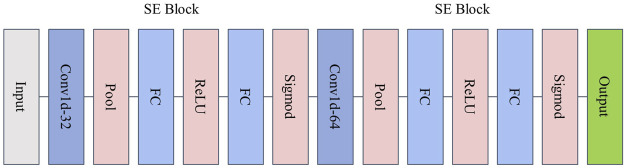
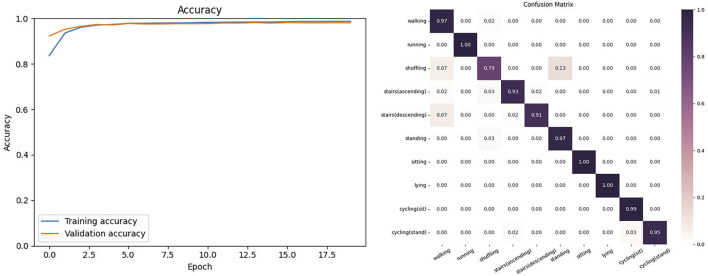
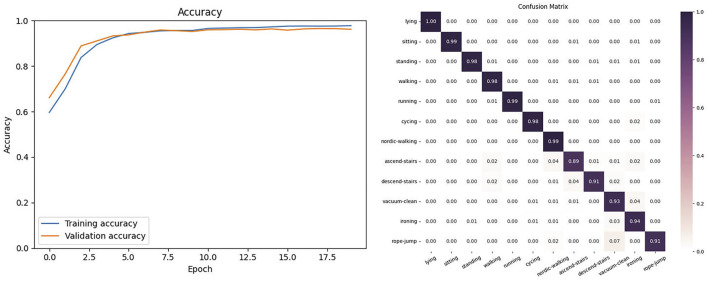
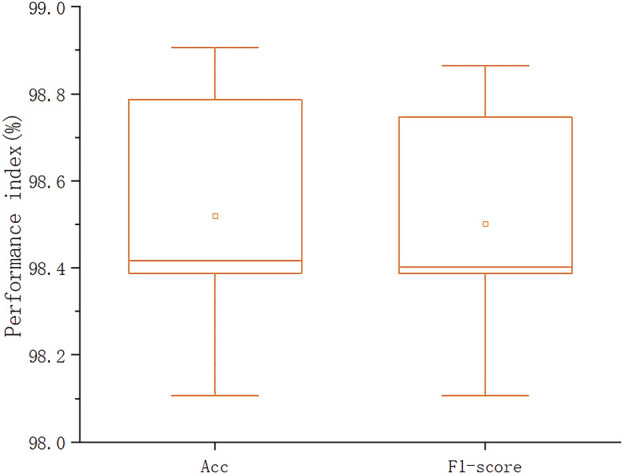
Human activity recognition (HAR) has recently become a popular research field in the wearable sensor technology scene. By analyzing the human behavior data, some disease risks or potential health issues can be detected, and patients’ rehabilitation progress can be evaluated. With the excellent performance of Transformer in natural language processing and visual tasks, researchers have begun to focus on its application in time series. The Transformer model models long-term dependencies between sequences through self-attention mechanisms, capturing contextual information over extended periods. In this paper, we propose a hybrid model based on the channel attention mechanism and Transformer model to improve the feature representation ability of sensor-based HAR tasks. Extensive experiments were conducted on three public HAR datasets, and the results show that our network achieved accuracies of 98.10%, 97.21%, and 98.82% on the HARTH, PAMAP2, and UCI-HAR datasets, respectively, The overall performance is at the level of the most advanced methods.
Overview
The claims and statistics of this paper haven’t been checked yet.
Free: it reads the open-access text and checks the first 5 claims that cite a source we can check. Create a free account to check every claim.
Integrity signals
Registry
Cites
Statistics
Figures



Verification
Claims the paper makes
The claims and statistics of this paper haven’t been checked yet.
Free: it reads the open-access text and checks the first 5 claims that cite a source we can check. Create a free account to check every claim.
Claims other papers make about this one
Each is checked against this paper’s own text: does it say what the citing paper says it does?
The cited source says what the claim attributes to it.
In the citing paper
“More recently, the self-attention mechanism introduced in the Transformer paper [194] has also been successfully applied for sensor-based HAR [20,57,58,129].”
From Past, Present, and Future of Sensor-based Human Activity Recognition Using Wearables: A Surveying Tutorial on a Still Challenging Task (2025) · cites this paper as [20]
Experimental — accuracy not yet measured
Self-check
Percentages, sums and reported differences re-computed from the paper’s own numbers.
The self-check needs the paper’s full text.
Citations
No citation lists for this paper
No citation lists for this paper yet — checked again daily.
References 37 · Cited by 12
Research works printed but not linked: 2
- Hnoohom, 2022, Multi-resolution CNN for lower limb movement recognition based on wearable sensors, 111
- Vaswani, 2017, Attention is all you need
Metadata
- Authors
- Cao, K., & Wang, M.
- Affiliations
- Shenyang Jianzhu University (CN)
- Corresponding author
- Cao, Keyan
- Venue
- Frontiers in Physiology
- Publisher
- Frontiers Media SA
- Published
- 2023-11-02
- Volume
- 14
- Pages
- 1239453-1239453
- ISSN
- 1664-042X (ISSN-L)
- PMC
- PMC10653302
- OpenAlex
- W4388303187
- Cited by
- 12
- References
- 37
- Citations by year
- 2026: 4 · 2025: 6 · 2024: 2
- FWCI
- 1.09
- Type
- journal article
- Language
- en
- Open access
- gold
- doi.org
- Licence
- Locations
- Frontiers in Physiology (publishedVersion, cc-by)
- PubMed Central (publishedVersion, cc-by)
- PubMed (publishedVersion)
- DOAJ (DOAJ: Directory of Open Access Journals) (submittedVersion, cc-by-sa)
- Funders
- National Natural Science Foundation of China
- Topics
- Physical Sciences › Computer Science › Computer Vision and Pattern Recognition › Context-Aware Activity Recognition Systems
- Physical Sciences › Computer Science › Signal Processing › Time Series Analysis and Forecasting
- Physical Sciences › Computer Science › Computer Vision and Pattern Recognition › Human Pose and Action Recognition
- Keywords
- human activity recognition, wearable sensors, sparse transformer, channel attention, self-attention, time series modeling, feature representation, rehabilitation monitoring, health monitoring
About these checks
Registry, retraction, Cites and statistics results are computed, not judged, with one exception: a printed reference that no index lists is read once by a model before it counts as a citation error. Claims are extracted by a model and kept only when their quote appears verbatim in the text; each cited source is then checked, with a model’s help, for whether it says what the claim relies on. Those verdicts can be wrong — read the claim’s quote and the cited source before relying on one.
Statistics and arithmetic are recomputed, not judged.
Confidence bands are shown only for fields calibrated on our annotated test set. None is calibrated yet, so no band is shown.
What counts as a claim ›How we measure confidence ›How we check this ›
Are you an author, or do you see a problem with this page? Request a review
How to cite
Cite CoChat for the checks on this page, and the paper for its own findings.
- This page
- CoChat. (2026). Citation check: Human behavior recognition based on sparse transformer with channel attention mechanism. https://app.cochat.ai/papers/10.3389/fphys.2023.1239453
- The paper
- Cao, K., & Wang, M. (2023). Human behavior recognition based on sparse transformer with channel attention mechanism. Frontiers in Physiology. https://doi.org/10.3389/fphys.2023.1239453
Data sources
Bibliographic data: Semantic Scholar, OpenAlex, Crossref.
Contains information from the Semantic Scholar Academic Graph Datasets, made available under the ODC Attribution License (ODC-BY 1.0).
Semantic Scholar’s data is described in: Kinney, R., et al. (2023). The Semantic Scholar Open Data Platform. arXiv:2301.10140.
