

Screening and evaluation of drought resistance traits of winter wheat in the North China Plain
Open accessThe DOI matches its Crossref record; 73 of the 73 references it cites were found in a registry or an index.
Abstract
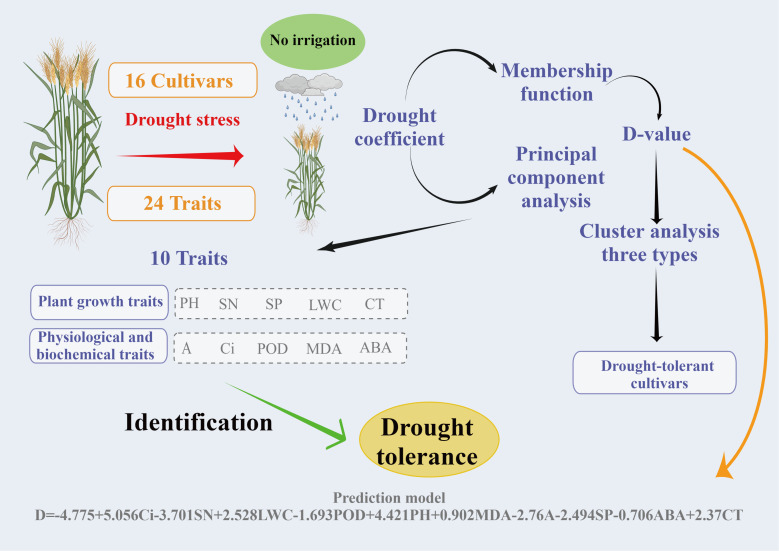
Background: Drought-resistant varieties are an important way to address the conflict between wheat’s high water demand and the scarcity of water resources in the North China Plain (NCP). Drought stress impacts many morphological and physiological indicators in winter wheat. To increase the effectiveness of breeding drought-tolerant varieties, choosing indices that can accurately indicate a variety’s drought resistance is advantageous. Results: From 2019 to 2021, 16 representative winter wheat cultivars were cultivated in the field, and 24 traits, including morphological, photosynthetic, physiological, canopy, and yield component traits, were measured to evaluate the drought tolerance of the cultivars. Principal component analysis (PCA) was used to transform 24 conventional traits into 7 independent, comprehensive indices, and 10 drought tolerance indicators were screened out by regression analysis. The 10 drought tolerance indicators were plant height (PH), spike number (SN), spikelet per spike(SP), canopy temperature (CT), leaf water content (LWC), photosynthetic rate (A), intercellular CO2 concentration (Ci), peroxidase activity (POD), malondialdehyde content (MDA), and abscisic acid (ABA). In addition, through membership function and cluster analysis, 16 wheat varieties were divided into 3 categories: drought-resistant, drought weak sensitive, and drought-sensitive. Conclusion: JM418, HM19,SM22, H4399, HG35, and GY2018 exhibited excellent drought tolerance and,therefore, can be used as ideal references to study the drought tolerance mechanism in wheat and breeding drought-tolerant wheat cultivars.
Overview
The claims and statistics of this paper haven’t been checked yet.
Free: it reads the open-access text and checks the first 5 claims that cite a source we can check. Create a free account to check every claim.
Integrity signals
Registry
Cites
Statistics
Figures
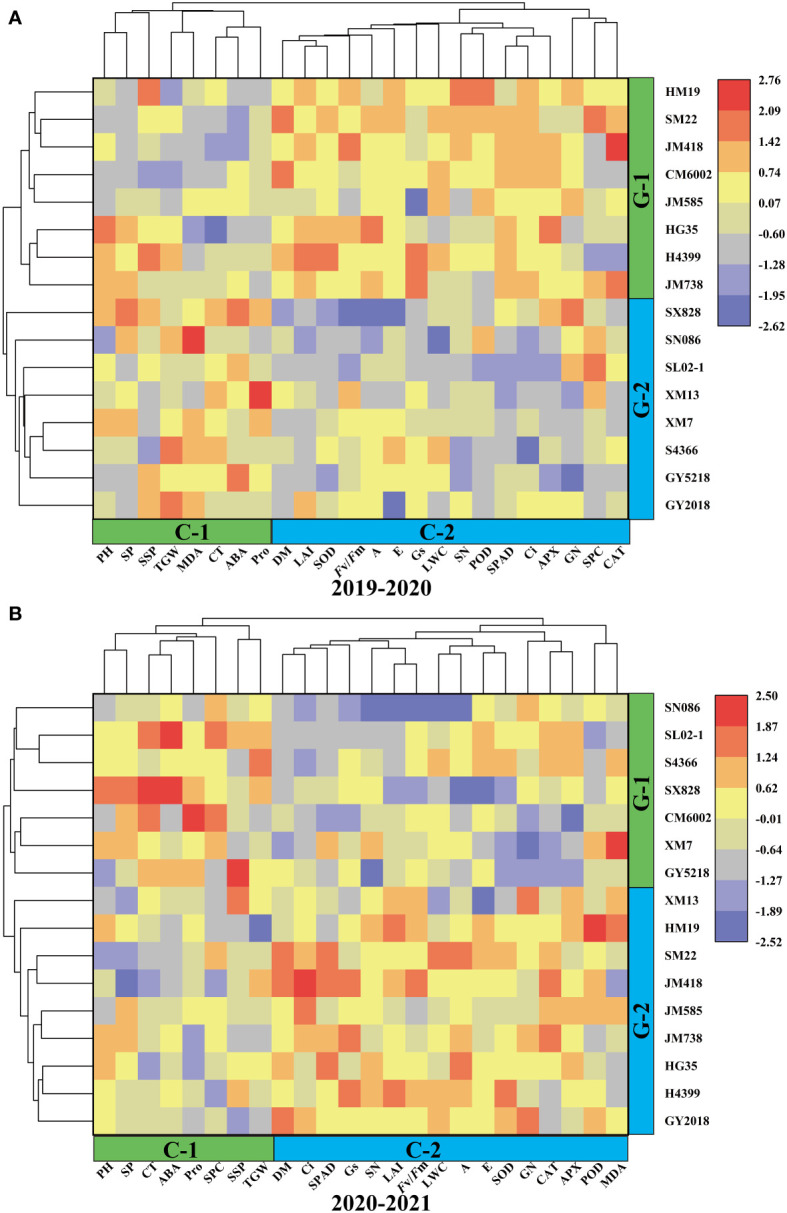
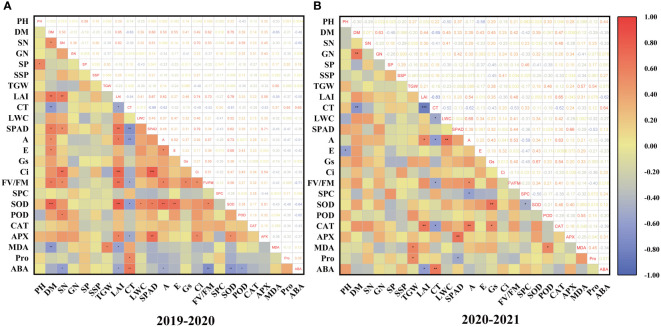
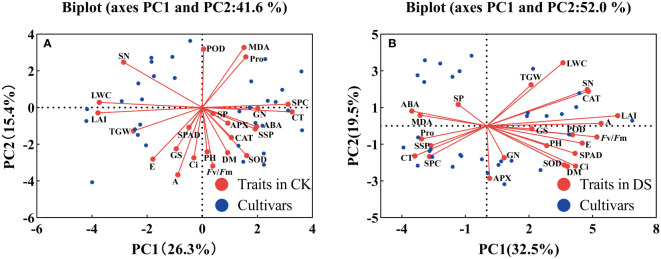
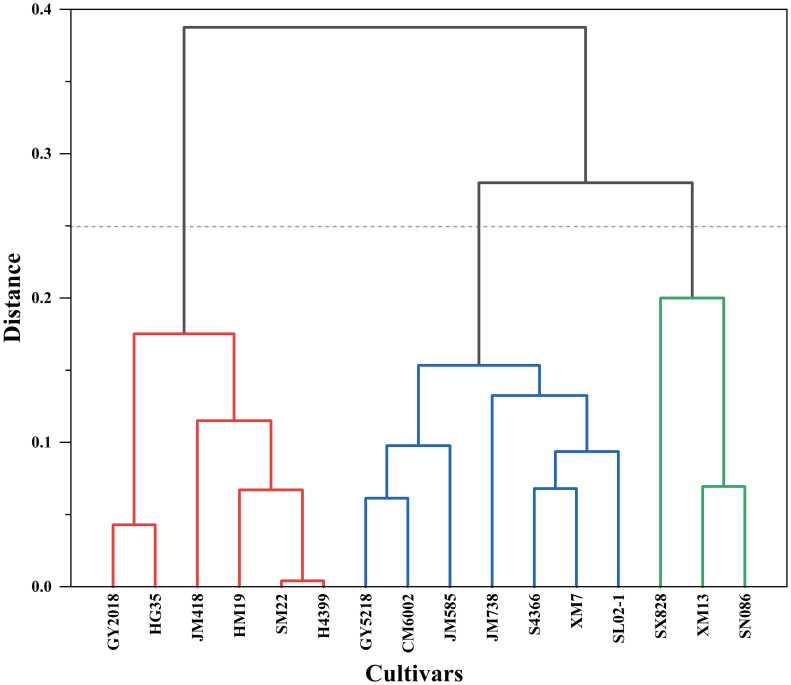
Verification
Claims the paper makes
The claims and statistics of this paper haven’t been checked yet.
Free: it reads the open-access text and checks the first 5 claims that cite a source we can check. Create a free account to check every claim.
Self-check
Percentages, sums and reported differences re-computed from the paper’s own numbers.
The self-check needs the paper’s full text.
Citations
Cites
Reactive oxygen species and antioxidant machinery in abiotic stress tolerance in crop plants
Gill, S. S., & Tuteja, N. (2010) · Plant Physiology and Biochemistry · doi:10.1016/j.plaphy.2010.08.016 · Cited by 11,663 · cited 1×
“Reactive oxygen species (ROS) are regarded as one of the mechanisms for enhancing the adaptation of plants to environmental stress conditions (Gill and Tuteja, 2010).”
BackgroundSuperoxide Dismutases: I. Occurrence in Higher Plants
Giannopolitis, C. N., & Ries, S. K. (1977) · Plant Physiology · doi:10.1104/pp.59.2.309 · Cited by 6,394 · cited 1×
“The superoxide dismutase(SOD) activity was determined us ing the ni t ro-b lue te t razo l ium (NBT) photoreduction method, while the catalase(CAT) activity was determined spectrophotometrically at 240 nm (Giannopolitis and Ries, 1977).”
MethodClimate Trends and Global Crop Production Since 1980
Lobell, D. B., Schlenker, W., & Costa-Roberts, J. (2011) · Science · doi:10.1126/science.1204531 · Cited by 4,546 · cited 2×
“In recent years, climate change has caused a decrease in the yield of gramineous crops, including a 5.5% decrease in the global wheat yield (Lobell et al., 2011).”
BackgroundInfluentialHodges, D. M., DeLong, J. M., Forney, C. F., & Prange, R. K. (1999) · Planta · doi:10.1007/s004250050524 · Cited by 4,236 · cited 1×
“The malondialdehyde (MDA) contents were determined by thiobarbituric acid and sulfosalicylic acid dihydrate methods (Hodges et al., 1999).”
MethodReactive oxygen species homeostasis and signalling during drought and salinity stresses
MILLER, G., SUZUKI, N., CIFTCI‐YILMAZ, S., & MITTLER, R. (2010) · Plant, Cell & Environment · doi:10.1111/j.1365-3040.2009.02041.x · Cited by 3,945 · cited 5×
“Reactive oxygen species (ROS) produced as a result of drought stress lead to lipid peroxidation and increased activities of superoxide dismutase (SOD), peroxidase (POD), catalase (CAT), and ascorbate peroxidase (APX), which are important components of the antioxidant enzyme system in the cell membrane and can reduce t…”
BackgroundInfluentialDrought stress and reactive oxygen species: production, scavenging and signaling
Cruz de Carvalho, M. H. (2008) · Plant Signaling & Behavior · doi:10.4161/psb.3.3.5536 · Cited by 1,496 · cited 1×
“The production of ROS can cause chemical damage to DNA and proteins, interfering with a series of physiological and biochemical processes (Cruz de Carvalho, 2008).”
BackgroundFang, Y., & Xiong, L. (2015) · Cellular and Molecular Life Sciences · doi:10.1007/s00018-014-1767-0 · Cited by 1,445 · cited 1×
“Drought is an abiotic stress with extensive crop yield losses and has become an important constraining factor of agricultural development (Fang and Xiong, 2015).”
BackgroundGrain filling of cereals under soil drying
Yang, J., & Zhang, J. (2006) · New Phytologist · doi:10.1111/j.1469-8137.2005.01597.x · Cited by 787 · cited 1×
“Water stress during the grain-filling period can lead to decreased photosynthesis, induce accelerated leaf senescence, and shorten the grain-filling period, with the latter being the main reason for the decrease in wheat yield (Yang and Zhang, 2006).”
BackgroundImproving water use in crop production
Morison, J. I. L., Baker, N. R., Mullineaux, P. M., & Davies, W. J. (2008) · Philosophical Transactions of the Royal Society B: Biological Sciences · doi:10.1098/rstb.2007.2175 · Cited by 606 · cited 1×
“Many strategies were implemented to alleviate the conflict between wheat production and water scarcity, including the planting of drought-resistant wheat varieties, the use of watersaving irrigation equipment, and water-saving irrigation field management (Morison et al., 2008).”
Cited by
Li, J., Abbas, K., Wang, L., Gong, B., Hou, S., Wang, W., Dai, B., Xia, H., Wu, X., Lü, G., et al. (2023) · Frontiers in Plant Science · doi:10.3389/fpls.2023.1228084 · Cited by 48
“In this regard, we propose the use of the CDC, D-value, and WDC to accurate assessment and screening of cultivars under both normal and drought conditions (Xu et al., 2020; Bao et al., 2023).”
MethodPantha, S., Kilian, B., Özkan, H., Zeibig, F., & Frei, M. (2024) · Environmental and Experimental Botany · doi:10.1016/j.envexpbot.2024.106047 · Cited by 39
Salami, M., Tan, H., Alizadeh, B., & Heidari, B. (2025) · Field Crops Research · doi:10.1016/j.fcr.2024.109733 · Cited by 35
Fu, Y., Li, P., Si, Z., Ma, S., & Gao, Y. (2024) · International Journal of Molecular Sciences · doi:10.3390/ijms25095055 · Cited by 34
“We speculated that this was mainly related to its drought and salt tolerance [88,89].”
BackgroundZong, J., Chen, P., Luo, Q., Gao, J., Qin, R., Wu, C., Lv, Q., Zhao, T., & Fu, Y. (2023) · International Journal of Molecular Sciences · doi:10.3390/ijms241814398 · Cited by 27
“The contents of malondialdehyde (MDA), soluble protein (SP), superoxide anion (O 2 − ), and chlorophyll (CHL) are the key indexes for evaluating the degree of drought tolerance [16].”
BackgroundKhan, R., Gao, F., Khan, K., Shah, M. A., Ahmad, H., Fan, Z. P., & Zhou, X. B. (2024) · PLANT PHYSIOLOGY · doi:10.1093/plphys/kiae335 · Cited by 26
Song, R., PeiChun, S., Li, X., He, Y., Dong, Y., Miao, Y., & Qi, J. (2024) · Frontiers in Plant Science · doi:10.3389/fpls.2024.1436872 · Cited by 23
Cropping System Approach in Climate-Resilient Food Crop Production
Maitra, S., Ray, S., Sagar, L., Sairam, M., Pramanick, B., Gitari, H. I., Santosh, D. T., Gaikwad, D. J., Atapattu, A. J., & Chappa, L. R. (2025) · Sustainability Sciences in Asia and Africa · doi:10.1007/978-981-96-7699-6_15 · Cited by 28
Response of Watermelon to Drought Stress and Its Drought-Resistance Evaluation
Ren, K., Tang, T., Kong, W., Su, Y., Wang, Y., Cheng, H., Yang, Y., & Zhao, X. (2025) · Plants · doi:10.3390/plants14091289 · Cited by 19
Self-citationDu, W., Zhang, F., Zhang, L., Hu, M., Tian, H., Hao, Y., Ding, S., & Zhang, D. (2025) · Frontiers in Plant Science · doi:10.3389/fpls.2025.1672228 · Cited by 21
“These fi ndings underscore the importance of early-stage growth in determining fi nal productivity, making the evaluation of drought resistance during germination and seedling stages essential for enhancing drought resilience and ensuring food security (Bao et al., 2023).”
Zhang, Y.-N., Zhuang, Y., Wang, X., & Wang, X.-D. (2024) · Frontiers in Plant Science · doi:10.3389/fpls.2024.1442618 · Cited by 19
Wang, M., Ahmad, I., Qin, B., Chen, L., Bu, W., Zhu, G., & Zhou, G. (2025) · Plants · doi:10.3390/plants14121793 · Cited by 14
Screening and Physiological Responses of Maize Inbred Lines to Drought Stress in South China
Zhang, Z., Xie, X., Naseer, M. A., Zhou, H., Cheng, W., HeXia, X., LanQiu, Q., Yang, X., Jiang, Y., & Zhou, X. B. (2024) · Sustainability · doi:10.3390/su16177366 · Cited by 12
Liu, X., Yang, H., Ata-Ul-Karim, S. T., Schmidhalter, U., Qiao, Y., Dong, B., Liu, X., Tian, Y., Zhu, Y., Cao, W., et al. (2025) · Computers and Electronics in Agriculture · doi:10.1016/j.compag.2025.110213 · Cited by 15
Self-citationTian, Z., Zhao, M., Wang, J., Yang, Q., Ma, Y., Yang, X., Ma, L., Qi, Y., Jinbo, L., Quinet, M., et al. (2024) · PeerJ · doi:10.7717/peerj.17136 · Cited by 12
Liu, X., Sun, T., Zhou, Z., Tong, Y., Zhou, Z., Cao, H., Qu, J., Li, Z., Yang, Q., Xu, M., et al. (2025) · BMC Plant Biology · doi:10.1186/s12870-025-06774-6 · Cited by 10
Self-citationWang, Y., Huang, Q., Liu, L., Li, H., Wang, X., Si, A., & Yu, Y. (2025) · Plants · doi:10.3390/plants14142191 · Cited by 10
“Bao et al. collected and analyzed 24 traits of winter wheat and ultimately screened out five drought-resistant varieties based on 10 key indicators [27].”
Self-citationExploring the Drought Tolerant Quantitative Trait Loci in Spring Wheat
Wang, Z., Lai, X., Wang, C., Yang, H., Liu, Z., Fan, Z., Li, J., Zhang, H., Liu, M., & Zhang, Y. (2024) · Plants · doi:10.3390/plants13060898 · Cited by 10
“The polymorphic SNPs selected after filtering based on the above-mentioned criteria were screened to determine their positions on the chromosomes based on the wheat consensus genetic map [36].”
MethodWang, Y., Li, B., Luo, M., Guo, H., Meng, X., & Cao, Z. (2026) · Agricultural Water Management · doi:10.1016/j.agwat.2026.110274 · Cited by 9
Self-citationZhang, Y. L., Yin, H., Wang, R., He, F., & Jiang, G. (2024) · Agronomy · doi:10.3390/agronomy14112647 · Cited by 8
Hassani, S. M. R., Pourdad, S. S., Naji, A. M., Fayaz, F., Pirseyedi, S. M., Anari, S. S., & Talebı, R. (2024) · Scientific Reports · doi:10.1038/s41598-024-82932-4 · Cited by 13
Ma, J., Zhao, Y., Cui, B., Liu, L., Ding, Y., Chen, Y., & Zhang, X. (2025) · Agronomy · doi:10.3390/agronomy15040954 · Cited by 11
Screening drought tolerance in potato germplasm resources in the northwestern region of China
Li, X., Luo, L., Shi, X., Li, S., Wang, L., Li, D., & Li, F. (2025) · BMC Plant Biology · doi:10.1186/s12870-025-06716-2 · Cited by 8
“For instance, Bao et al. [32] integrated PCA, membership function analysis, and multivariate regression to assess 10 wheat drought-tolerance traits, successfully screening six drought-tolerant varieties.”
(2025) · International Journal of Agriculture and Biosciences · doi:10.47278/journal.ijab/2025.179 · Cited by 6
Liu, M., & Cheng, J. (2025) · Theoretical and Applied Climatology · doi:10.1007/s00704-025-05549-1 · Cited by 6
“…geographical significance has made the region vulnerable to drought (Cai and Liu 2013); however, previous studies have largely focused on the North China Plain and the Loess Plateau, with limited research solely addressing the Taihang Moun-tains (Bao et al. 2023; Liu et al. 2025; Luan et al. 2024).”
Ahmad, S., Deng, Y., Lv, R., Akhtar, K., Muhammad, I., Farooq, M. A., & Wen, R. (2024) · Journal of Agronomy and Crop Science · doi:10.1111/jac.12784 · Cited by 6
Abdullaev, F., Churikova, D., Pirogova, P. A., Lysov, M., Vodeneev, V., & Николаевна, Ш. О. (2024) · Plants · doi:10.3390/plants14010091 · Cited by 7
“Currently, no single trait can be used to fully and accurately assess drought tolerance in wheat [47].”
Drought resistance cotton genotypes evaluation with multi-year & multi-site study
Li, J., Liu, S., Liu, R., Ma, H., Shen, Q., Zhang, S., Ge, C., & Pang, C. (2025) · Agricultural Water Management · doi:10.1016/j.agwat.2025.109523 · Cited by 5
Jia, Y., Ma, Y., Ma, J., Li, W., Jin, Y., & Han, G. (2024) · Journal of Food Composition and Analysis · doi:10.1016/j.jfca.2024.107158 · Cited by 5
Lee, J., Kim, J., Lee, S.-D., Park, G. H., & Jang, Y. (2024) · Journal of Bio-Environment Control · doi:10.12791/ksbec.2024.33.4.189 · Cited by 4
Abbasi, E. (2026) · Biosensors and Biomolecular Electronics · doi:10.1186/s44510-026-00007-2 · Cited by 4
“Enzyme-based insect bio-sensors, including acetylcholinesterase and cytochrome P450–derived systems, rely on catalytic or inhibition-based detection mechanisms for insecticide screening and resistance assessment [65].”
Li, J., Liu, R., Liu, S., Zhigang, G., Ma, H., Shen, Q., Zhang, S., Ge, C., & Pang, C. (2025) · Journal of Agronomy and Crop Science · doi:10.1111/jac.70113 · Cited by 2
Drought tolerance evaluation of Fraxinus mandshurica in a semi-arid area
Zhang, K., Cao, Y., Guo, X., Liu, X., Li, Q., Kong, F., Zeng, F., Jing, T., Zhan, Y., & Qi, F. (2025) · BMC Plant Biology · doi:10.1186/s12870-025-07146-w · Cited by 2
“We assessed drought tolerance following Bao et al. [22] using a comprehensive evaluation value ( D value) calculated according to Formula (5), where U is the membership function value (Formula (6)), X j is REGR factor score of each F. mandshurica line in j th principal component (PC) in the…”
Self-citationZhang, X., Guan, H., Zhao, J., Suo, L., Li, D., Ma, Z., Duan, J., He, L., Liu, W., & Feng, W. (2025) · Chemical and Biological Technologies in Agriculture · doi:10.1186/s40538-025-00834-7 · Cited by 2
Screening and Evaluation of Fifteen Sugarcane Varieties for Drought Resistance
Li, H., Luo, S., Zhu, K., Wei, J., Gui, Y., Xihui, L. I. U., Tang, Y., Tang, L., & Song, H. (2025) · Agronomy · doi:10.3390/agronomy16010034 · Cited by 2
Self-citationKordrostami, M., Ghasemi-Soloklui, A. A., & Rahimi, M. (2025) · Scientific Reports · doi:10.1038/s41598-025-33240-y · Cited by 2
Vargas-Rojas, L., Reynolds, M. P., & Wang, D. (2026) · in silico Plants · doi:10.1093/insilicoplants/diag001 · Cited by 2
Talai, J., Allahverdiyev, T. I., Abdulbagiyeva, S., Ibrahimova, I., & Zamanov, A. A. (2023) · Journal of life sciences and biomedicine · doi:10.59849/2710-4915.2023.2.61 · Cited by 2
Zhou, Q., Huang, M. D., Hu, C., Liu, A., Dong, S., Ren, K., Tian, W., Li, J., Li, F., Fu, G., et al. (2025) · Plants · doi:10.3390/plants14193030 · Cited by 1
“The weight of principal components were calculated using the contribution rate of each comprehensive index, Then we calculated scores for each principal component and composite scores to conduct a comprehensive evaluation of crop yield and quality [60,67].”
Multi-task monitoring of multi-scale wheat water status based on UAV multi-source data
Ni, M., Li, G., Zhou, B., Chen, H., Liu, Y., Zhao, X., Zhang, Y., Zhang, M., & Wang, M. (2025) · International Journal of Remote Sensing · doi:10.1080/01431161.2025.2588018 · Cited by 1
“With global climate change intensifying and water resources growing scarcer, agriculture faces unprecedented water-management challenges (Bao et al. 2023; Xu et al. 2023).”
Subramaniam, D., Krishnapillai, M., Galagedara, L., & Manful, C. F. (2025) · Applied Sciences · doi:10.3390/app16010195 · Cited by 1
Murtaza, G., Rizwan, M., Usman, M., Habib, R., Ahmed, Z., Deng, G., Iqbal, J., Elshikh, M. S., Aljowaie, R. M., Ahmad, S., et al. (2026) · New Zealand Journal of Crop and Horticultural Science · doi:10.1002/nzc2.70036 · Cited by 1
Cui, W., Jin, Y., Zhou, B., Chen, L. G., Song, J., & Song, Q. (2026) · Plants · doi:10.3390/plants15040576 · Cited by 2
“Thus, physiological and biochemical parameters—including photosynthetic rate, chlorophyll content, and antioxidant enzyme activities (SOD, POD, and CAT)—represent reliable indicators for the evaluation of drought resistance [24,25].”
Saputra, H., Soleh, M. A., Hamdani, J. S., & Saryoko, A. (2026) · BMC Plant Biology · doi:10.1186/s12870-026-09189-z · Cited by 1
“Similar multivariate approaches have been widely used to characterize complex plant responses to drought and other environmental stresses [62, 63, 65].”
Responses of Zea mays L. cultivars under drought stress at reproductive stage
Yendrembam, R., Benazir, S., & Sarangthem, K. (2024) · Vegetos · doi:10.1007/s42535-024-01025-9
“Bao et al 2023 also reported that in wheat varieties, traits such as plant height, leaf water content, photosynthetic rate, peroxidase, spike number and spikelet number per spike have a significant effect on wheat drought tolerance and can be used as main traits for screening cultivars in future.”
InfluentialProblems of experimental design in research on drought resistance of plants
Kolupaev, Y. E., Lugova, G. A., Рожков, Р. В., & Karpets, Y. V. (2025) · Fiziologia rastenij i genetika · doi:10.15407/frg2025.02.095
Wang, L., Zhang, Y., Li, H., Hu, X., Feng, P., Mo, Y., Zhang, B., Xu, D., & Gong, S. (2025) · Plant Stress · doi:10.1016/j.stress.2025.100981
Li, Y., Liu, L., Shu, X., Zhu, F., Xiang, X., Wu, C., Tang, B., Hu, Y., Chen, G., & Wang, Y. (2025) · Frontiers in Plant Science · doi:10.3389/fpls.2025.1685290
“They can be used to research the wheat drought tolerance mechanism and breed the drought-tolerant wheat varieties (Bao et al., 2023).”
Self-citationCheng, R., Zhao, S., Shi, X., Liu, X., Tang, Y., Xu, W., Xu, B., Jin, C., Sun, Y., & Wang, X. (2025) · Horticulturae · doi:10.3390/horticulturae11111374
“These include laboratory-based PEG-simulated drought assays [34–36], pot-based water control evaluations [37–39], and field-based natural identification [40–43].”
Self-citationGuo, C., Bao, X., Sun, H., Zhao, H., Zhu, L., Zhang, Y., Zhang, K., Li, A., Zhao, C., Liu, L., et al. (2025) · BMC Plant Biology · doi:10.1186/s12870-025-07346-4
Self-citationLin, Y., Qiao, W., Shi, Z., Yang, H., Fu, Y., Dai, J., Jia, M., Wang, L., Li, H., Qiao, Y., et al. (2026) · Agricultural Water Management · doi:10.1016/j.agwat.2026.110881
Boll-leaf system photosynthesis reveals systemic chilling responses in cotton
Yang, P., Cheng, C., Yan, P., Liang, F., Tian, J., Zhang, Y., Jiang, C., & Zhang, W. (2025) · Journal of Integrative Agriculture · doi:10.1016/j.jia.2025.12.039
Phenotyping maize stay green traits via in situ leaf hyperspectral reflectance sensing
Elsharawy, H., Lin, Y.-C., Urbany, C., Schön, C., & Yu, K. (2026) · Smart Agricultural Technology · doi:10.1016/j.atech.2026.101963 · Cited by 1
Fatullayev, P. U. O., Spiridonov, A. M., Mammadov, I. B. O., & Bayramov, B. S. O. (2026) · BIO Web of Conferences · doi:10.1051/bioconf/202623100032
Fatullayev, P. U. O., Spiridonov, A. M., Mammadov, I. B. O., & Bayramov, B. S. O. (2026) · Springer Link (Chiba Institute of Technology) · doi:10.1051/bioconf/202623100032/pdf
Zheng, H., Zhang, J. J., Wang, G., Chang, T., Yang, S., Qiu, H., Talpur, M. M. A., & Gao, Y. (2026) · Agriculture · doi:10.3390/agriculture16111138
Capo-chichi, L. J. A., Chang, S. X., Hucl, P., Aljarrah, M., Zantinge, J. L., Holtz, M., Elakhdar, A., Iqbal, M., & Hernandez‐Ramirez, G. (2026) · Plants · doi:10.3390/plants15131958
“…rate was identified as another major factor influencing WUE because increased respiration reduces net carbon assimilation [27,28]. https://doi.org/10.3390/plants15131958 Other physiological traits have also been suggested as useful indicators for screening crops for drought tolerance and WUE [29].”
InfluentialZhou, J., Bao, X., Guo, C., Fan, H., Jing, B., Sun, Y., He, W., Cui, F., Gao, X., Yang, L., et al. (2026) · Frontiers in Plant Science · doi:10.3389/fpls.2026.1875868
Self-citationKhoso, A. G. (2026) · Research Square · doi:10.21203/rs.3.rs-10517563/v1
He, Y., Wang, Y., Shi, J., Pang, S., Li, W., Wang, C., Ren, L., Xu, Z., Wang, D., & Zheng, J. (2026) · Plants · doi:10.3390/plants15182766
“These values were used to evaluate the callus-induction capacity of different treatments and wheat varieties and to identify the optimal treatment and genotype [2,25,26].”
Self-citationDu, M., 姚银娟, Lu, Z., Zhang, J., Wang, X., Zhang, J., Wang, J., & Shi, W. M. (2026) · Plants · doi:10.3390/plants15203169
“Following the PCA–membership function approach [47], the membership value ( U ij ), PC weight ( W j ), and relative composite score ( D i ) were calculated as follows: W j = P j ∑ P j (5) In Equations (3)–(6), F ij is the score of individual i on retained PC j; F j ,min and Fj ,max are the minimum…”
Lyu, X., Xie, X., Meng, X., Cui, Y., Zhang, W., Ren, K., Ni, J., Yang, F., Dai, X., Zeng, J., et al. (2026) · Theoretical and Applied Genetics · doi:10.1007/s00122-026-05437-w
“As climate change and global population growth continue to escalate, enhancing drought tolerance in wheat has become imperative for sustainable food production (Bao et al. 2023).”
Gonzales, V. S., Dubey, M. K., Jensen, D. F., Crespo, C. F., & Karlsson, M. (2026) · Journal of Plant Diseases and Protection · doi:10.1007/s10343-026-01465-0
Metadata
- Authors
- Bao, X., Hou, X., Duan, W., Yin, B., Ren, J., Wang, Y., Liu, X., Gu, L., & Zhen, W.
- Affiliations
- Hebei Agricultural University (CN)
- Ministry of Agriculture and Rural Affairs (CN)
- Corresponding author
- Liu, Xuejing
- Gu, Limin
- Zhen, Wenchao
- ORCID
- Venue
- Frontiers in Plant Science
- Publisher
- Frontiers Media SA
- Published
- 2023-06-16
- Volume
- 14
- Pages
- 1194759-1194759
- ISSN
- 1664-462X (ISSN-L)
- PMC
- PMC10313073
- OpenAlex
- W4380878396
- Cited by
- 59
- References
- 73
- Citations by year
- 2026: 15 · 2025: 26 · 2024: 15 · 2023: 3
- FWCI
- 9.27
- Type
- journal article
- Language
- en
- Open access
- gold
- doi.org
- Licence
- Locations
- Frontiers in Plant Science (publishedVersion, cc-by)
- PubMed Central (publishedVersion, cc-by)
- PubMed (publishedVersion)
- DOAJ (DOAJ: Directory of Open Access Journals) (submittedVersion, cc-by-sa)
- Greater South Information System
- Topics
- Life Sciences › Agricultural and Biological Sciences › Plant Science › Genetics and Plant Breeding
- Life Sciences › Agricultural and Biological Sciences › Plant Science › Plant Stress Responses and Tolerance
- Life Sciences › Agricultural and Biological Sciences › Plant Science › Wheat and Barley Genetics and Pathology
- Keywords
- winter wheat, drought tolerance, drought tolerance indices, cultivar screening, canopy temperature, leaf water content, photosynthetic rate, peroxidase activity, malondialdehyde, abscisic acid, North China Plain, drought tolerance breeding
About these checks
Registry, retraction, Cites and statistics results are computed, not judged, with one exception: a printed reference that no index lists is read once by a model before it counts as a citation error. Claims are extracted by a model and kept only when their quote appears verbatim in the text; each cited source is then checked, with a model’s help, for whether it says what the claim relies on. Those verdicts can be wrong — read the claim’s quote and the cited source before relying on one.
Statistics and arithmetic are recomputed, not judged.
Confidence bands are shown only for fields calibrated on our annotated test set. None is calibrated yet, so no band is shown.
What counts as a claim ›How we measure confidence ›How we check this ›
Are you an author, or do you see a problem with this page? Request a review
Data sources
Bibliographic data: Semantic Scholar, OpenAlex, Crossref.
Contains information from the Semantic Scholar Academic Graph Datasets, made available under the ODC Attribution License (ODC-BY 1.0).
Semantic Scholar’s data is described in: Kinney, R., et al. (2023). The Semantic Scholar Open Data Platform. arXiv:2301.10140.
