

The DOI matches its Crossref record; 66 of the 66 references it cites were found in a registry or an index.
The Influence of Self-Regulation on Learner’s Behavioral Intention to Reuse E-Learning Systems: A Moderated Mediation Model
Abstract
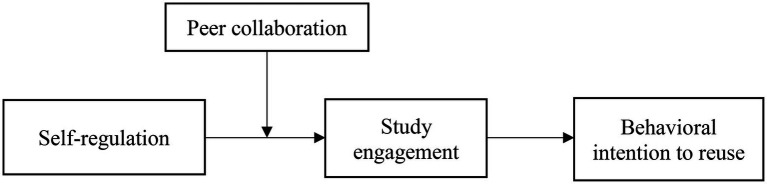
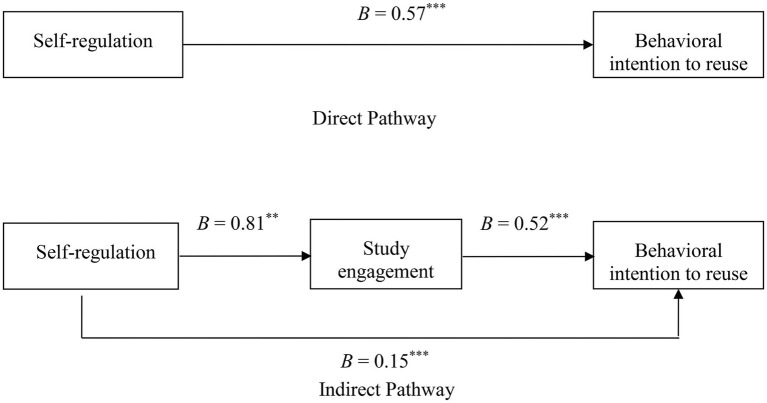
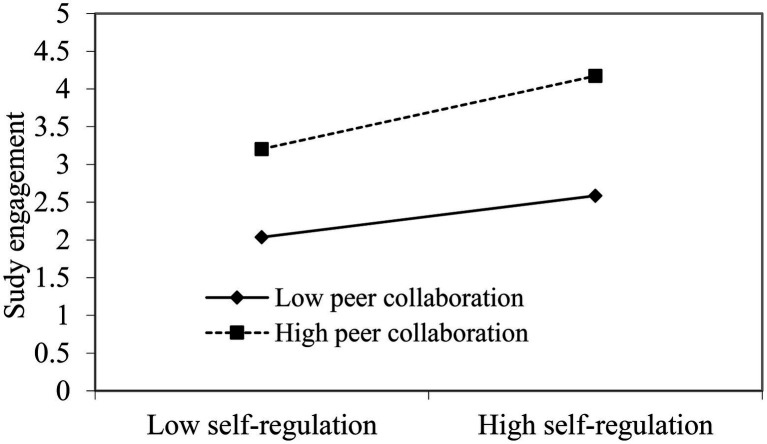
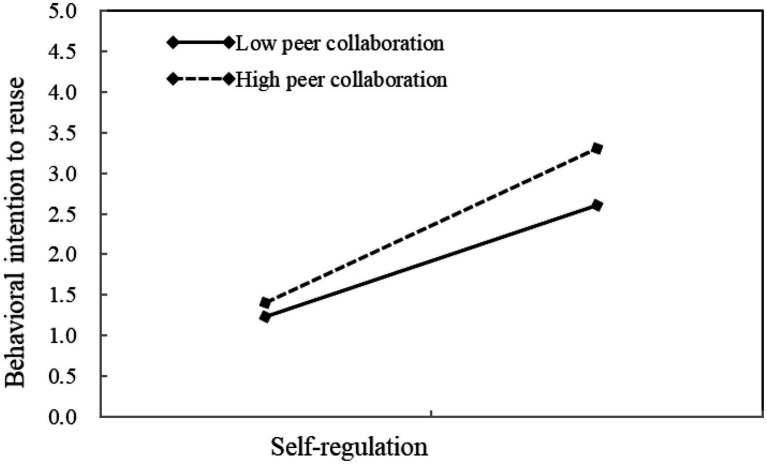
Learners’ behavioral intention to reuse e-learning is of great significance to the implementation and management of e-learning in higher education. This study examined the relationship between self-regulation and behavioral intention to reuse by focusing on the mediating role of study engagement and the moderating role of peer collaboration. Based on a sample of 379 undergraduates from central China, we found that self-regulation positively influences behavioral intention to reuse via study engagement. In addition, moderated path analysis indicated that peer collaboration strengthened the direct effect of self-regulation on study engagement and its indirect effect on behavioral intention to reuse. Theoretical and practical implications of these findings are discussed as well.
Overview
The claims and statistics of this paper haven’t been checked yet.
Run the check — free, no account needed. It reads the open-access text and checks the sources it cites.
Integrity signals
Registry
Cites
Statistics
Figures
Verification
Claims the paper makes
The claims and statistics of this paper haven’t been checked yet.
Run the check — free, no account needed. It reads the open-access text and checks the sources it cites.
Claims other papers make about this one
Each is checked against this paper’s own text: does it say what the citing paper says it does?
The cited source says what the claim attributes to it.
In the citing paper
“Behavioural intention and engagement could also be highly related to each other (Xu & Qiu, 2021).”
From Design and validation of the AI literacy questionnaire: The affective, behavioural, cognitive and ethical approach (2024) · cites this paper as Xu & Qiu, 2021
Self-check
Percentages, sums and reported differences re-computed from the paper’s own numbers.
The self-check needs the paper’s full text.
Citations
Cites
1 retracted
Almaiah, M. A. (2018) · Education and Information Technologies · doi:10.1007/s10639-018-9694-6 · Cited by 108
RetractedBaron, R. M., & Kenny, D. A. (1986) · Journal of Personality and Social Psychology · doi:10.1037/0022-3514.51.6.1173 · Cited by 91,532
Podsakoff, P. M., MacKenzie, S. B., Lee, J.-Y., & Podsakoff, N. P. (2003) · Journal of Applied Psychology · doi:10.1037/0021-9010.88.5.879 · Cited by 82,194
Ryan, R. M., & Deci, E. L. (2000) · American Psychologist · doi:10.1037//0003-066x.55.1.68 · Cited by 54,599
Preacher, K. J., & Hayes, A. F. (2008) · Behavior Research Methods · doi:10.3758/brm.40.3.879 · Cited by 34,117
Conservation of resources: A new attempt at conceptualizing stress
Hobfoll, S. E. (1989) · American Psychologist · doi:10.1037/0003-066x.44.3.513 · Cited by 18,187
The measurement of engagement and burnout: a two sample confirmatory factor analytic approach.
Schaufeli, W. B., Salanova, M., González-romá, V., & Bakker, A. B. (2002) · Journal of Happiness Studies · doi:10.1023/a:1015630930326 · Cited by 10,014
Accounting for common method variance in cross-sectional research designs
Lindell, M. K., & Whitney, D. J. (2001) · Journal of Applied Psychology · doi:10.1037/0021-9010.86.1.114 · Cited by 8,490
Edwards, J. R., & Lambert, L. S. (2007) · Psychological Methods · doi:10.1037/1082-989x.12.1.1 · Cited by 4,711
Moral Identity and Developmental Theory
Lapsley, D. K. (2015) · Human Development · doi:10.1159/000435926 · Cited by 3,843
Research works printed but not linked: 4
- Al-Emran, 2020, Do knowledge acquisition and knowledge sharing really affect e-learning adoption? An empirical study, 1983
- Ally, 2004, Foundations of educational theory for online learning, 15
- Lamborn, 1992, The significance and sources of student engagement, 11
- Radha, 2020, E-learning during lockdown of Covid-19 pandemic: a global perspective, Int. J. Control Autom., 13, 1088
Cited by
Ng, D. T. K., Wu, W., Leung, J. K. L., Chiu, T. K. F., & Chu, S. K. W. (2024) · British Journal of Educational Technology · doi:10.1111/bjet.13411 · Cited by 390
Metadata
- Authors
- Xu, J., & Qiu, X.
- Venue
- Frontiers in Psychology
- Publisher
- Frontiers Media SA
- Published
- 2021-10-18
- Volume
- 12
- ISSN
- 1664-1078
- PMC
- PMC8558232
- Cited by
- 13
- References
- 66
- Funders
- Fundamental Research Funds for the Central Universities (1203-413000068/2020AI010)
About these checks
Registry, retraction, Cites and statistics results are computed, not judged, with one exception: a printed reference that no index lists is read once by a model before it counts as a citation error. Claims are extracted by a model and kept only when their quote appears verbatim in the text; each cited source is then checked, with a model’s help, for whether it says what the claim relies on. Those verdicts can be wrong — read the claim’s quote and the cited source before relying on one.
Statistics and arithmetic are recomputed, not judged.
Confidence bands are shown only for fields calibrated on our annotated test set. None is calibrated yet, so no band is shown.
What counts as a claim ›How we measure confidence ›How we check this ›
Are you an author, or do you see a problem with this page? Request a review
How to cite
Cite CoChat for the checks on this page, and the paper for its own findings.
- This page
- CoChat. (2026). Citation check: The Influence of Self-Regulation on Learner’s Behavioral Intention to Reuse E-Learning Systems: A Moderated Mediation Model. https://app.cochat.ai/papers/10.3389/fpsyg.2021.763889
- The paper
- Xu, J., & Qiu, X. (2021). The Influence of Self-Regulation on Learner’s Behavioral Intention to Reuse E-Learning Systems: A Moderated Mediation Model. Frontiers in Psychology. https://doi.org/10.3389/fpsyg.2021.763889
Data sources
Bibliographic data: Semantic Scholar, OpenAlex, Crossref.
Contains information from the Semantic Scholar Academic Graph Datasets, made available under the ODC Attribution License (ODC-BY 1.0).
Semantic Scholar’s data is described in: Kinney, R., et al. (2023). The Semantic Scholar Open Data Platform. arXiv:2301.10140.
