

The global prevalence of autism spectrum disorder: A three-level meta-analysis
Open accessThe DOI matches its Crossref record; 118 of the 119 references it cites were found in a registry or an index; 8 of the 18 sources its claims cite were checked for support.
Abstract
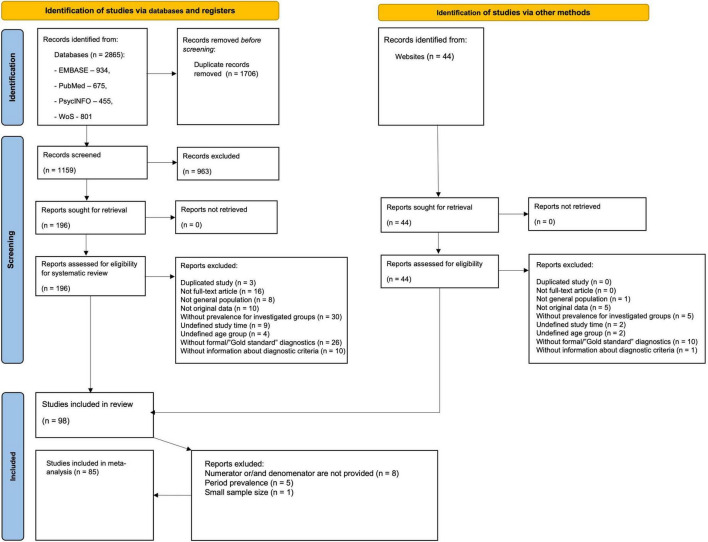
Autism spectrum disorder (ASD) is one the most disabling developmental disorders, imposing an extremely high economic burden. Obtaining as accurate prevalence estimates as possible is crucial to guide governments in planning policies for identification and intervention for individuals with ASD and their relatives. The precision of prevalence estimates can be heightened by summative analyses of the data collected around the world. To that end, we conducted a three-level mixed-effects meta-analysis. A systematic search of the Web of Science, PubMed, EMBASE, and PsycINFO databases from 2000 up to 13 July 2020 was performed, and reference lists of previous reviews and existing databases of prevalence studies were screened. Overall, 79 studies were included in the analysis of ASD and 59-in the analysis of previously existing relevant diagnoses: 30 for Autistic Disorder (AD), 15 for Asperger Syndrome (AS), and 14 for Atypical Autism (AA) and Pervasive Developmental Disorder - Not Otherwise Specified (PDD-NOS); these research reports covered the period from 1994 to 2019. Pooled prevalence estimates were 0.72% (95% CI = 0.61-0.85) for ASD, 0.25% (95% CI = 0.18-0.33) for AD, 0.13% (95% CI = 0.07-0.20) for AS, and 0.18% (95% CI = 0.10-0.28) for the combined group of AA and PDD-NOS. Estimates were higher (1) for the studies that used records-review surveillance rather than other designs; (2) in North America compared with other geographical regions; and (3) in high-income compared with lower-income countries. The highest prevalence estimates were registered in the USA. There was an increase in autism prevalence estimates over time. The prevalence was also significantly higher for children aged between 6 and 12 years compared to children under the age of 5 and over the age of 13 years. Systematic review registration: https://www.crd.york.ac.uk/prospero/display_record.php?ID=CRD42019131525, identifier CRD42019131525.
Overview
CoChat Summary
## TL;DR
This three-level meta-analysis estimated the global pooled prevalence of autism spectrum disorder (ASD) at 0.72% (95% CI 0.61–0.85) across studies from 1994–2019. Prevalence was higher in North America, in high-income countries, with records-review surveillance, and increased over time; the authors’ adjusted estimate for 2015–2019 in upper-middle/higher-income countries in Europe and North America was 1.18% (95% CI 0.92–1.48).
## Key findings
- Across 79 studies and 220 ASD estimates, the pooled prevalence of ASD was 0.72% (95% CI 0.61–0.85), with total I² = 99.96%.
- By diagnosis subgroup, pooled prevalence was 0.25% for Autistic Disorder (AD), 0.13% for Asperger Syndrome (AS), and 0.18% for the combined AA/PDD-NOS group.
- Prevalence was higher in North America (1.01%) than in Europe (0.73%) and Asia (0.41%); by income group, it was highest in high-income countries (0.79%).
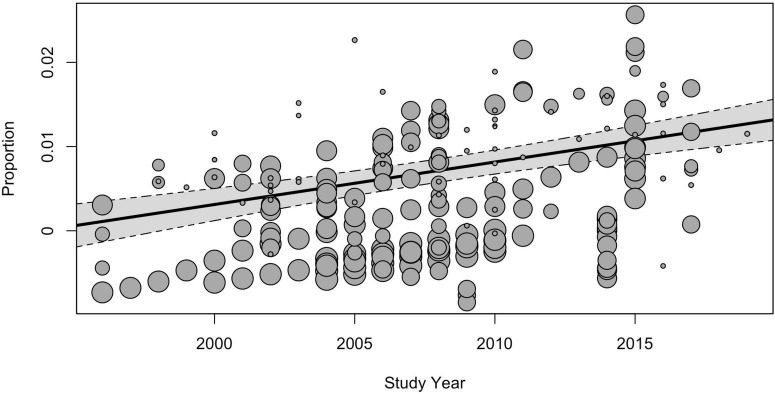
- Prevalence increased over time from 0.25% (1994–1999) to 0.99% (2015–2019), and was highest among children aged 6–12 years (0.82%) versus under 5 years (0.60%) and over 13 years (0.57%).
- By study design, the lowest prevalence estimates came from health insurance databases (0.35%) and administrative databases (0.48%), while records-review surveillance produced the highest estimates (1.22%).
## Methods
- Systematic review and three-level mixed-effects meta-analysis registered in PROSPERO (CRD42019131525) and reported per PRISMA.
- Searched Web of Science, PubMed, EMBASE, and PsycINFO; English-language studies published since 2000 were searched, with an update on 13 July 2020 and manual searching of databases/references.
- Included geographically and temporally defined prevalence studies with formal ASD/diagnostic subgroup identification using DSM/ICD or gold-standard tools (e.g., ADOS, ADI), and sample sizes >1,000; quantitative synthesis used random-effects three-level models, moderator analyses, and meta-regression.
## Limitations
- The authors state that only English-language studies were included, so some studies were missed.
- They state that moderator/meta-regression analyses may be under-powered because of limited data and a minimum 5 data-point cutoff per covariate level.
- They state that very substantial heterogeneity remained unaccounted for across all subgroups and models, which limits reliability and generalizability.
- Evident from the text: the sample was heavily weighted toward high-income countries and the USA, which the authors note may confound income-related findings.
Model-written summary. Check it against the paper before relying on it.
Integrity signals
Registry
Cites
Statistics
Figures
Verification
Claims the paper makes
6 Valid · 0 Not valid · 6 Not checked · 73 Own results and interpretations
The cited sources support only part of this claim — read each source’s verdict below.
In the paper
“For the whole group of ASD, the obtained estimate is equal to the proportions found in the systematic review of the ASD prevalence performed by Zeidan et al. (18) and in the meta-analysis of Loomes et al. (93), focusing specifically on the male-to-female ratio.”
§ The global prevalence of autism spectrum disorder: A three-level meta-analysis > 4. Discussion
What the sources say
- Partly supportedcites Zeidan et al. (18) Zeidan J Fombonne E Scorah J Ibrahim A Durkin M Saxena S Global prevalence of autism: a systematic review update. Autism Res. (2022) 15: 778– 90. 10.1002/aur.2696 35238171 PMC9310578 sourceExperimental — accuracy not yet measured
The Results (Table 2) report a median ASD male-to-female ratio of 4.2 across the reviewed estimates, with a range of 0.8–6.1. The citing sentence does not give its obtained estimate, so its assertion that the estimate equals the review’s proportion cannot be verified from this source. (LLM, conf=0.78)
- Supportedcites Loomes et al. (93) Loomes R Hull L Mandy W. What Is the male-to-female ratio in autism spectrum disorder? A systematic review and meta-analysis. J Am Acad Child Adolesc Psychiatry. (2017) 56: 466– 74. 10.1016/j.jaac.2017.03.013 28545751 source
The Data Analysis section identifies the male-to-female ratio as the meta-analysis’s outcome. The Discussion reports a pooled odds ratio of 4.20 and lower estimates in higher-quality subgroups. Whether the citing authors’ own estimate equals those values is their comparison, not a finding attributed to Loomes et al. (LLM, conf=0.91)
plain- Asserted: passes — The authors put it forward as true.
- Checkable: passes — It can be checked against evidence.
- Load-bearing: unclear — It is unclear whether the paper’s conclusions depend on it.
- Based: passes — The paper gives a reason why it holds.
- Partly supported
The sources with a verdict support this claim; the rest weren’t checked yet, have no full text we could read, or their verdicts aren’t rated yet.
In the paper
“To deal with this intra-study dependency of prevalence estimates, we opted for the three-level model with random effects for data points obtained within one article to calculate pooled prevalence estimates (29, 30).”
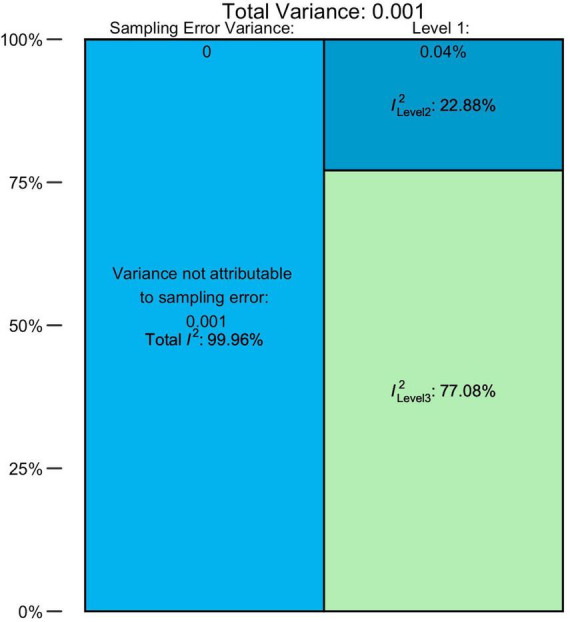
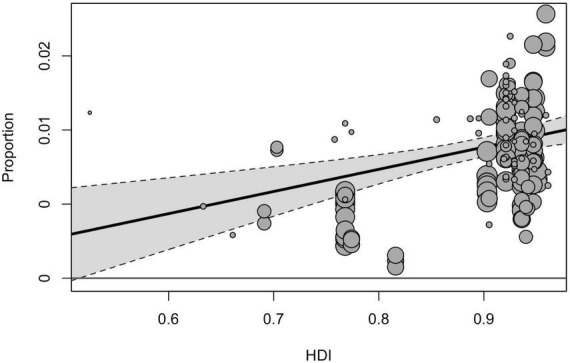
§ The global prevalence of autism spectrum disorder: A three-level meta-analysis > 2. Methods > 2.4. Data analysis To select the most optimal model for calculating the prevalence, we were guided by the following assumptions. First, because of anticipated heterogeneity influenced by the difference in study time, geographical location, diagnostic criteria, study design, and the age of the at-risk population, we selected the random-effect (compared with fixed-effect) model as better for included studies. Second, as we extracted multiple data points from one article contradicting the independence requirement (28), we assumed that an article could be seen as a higher-level variable in which multiple prevalence estimates could be nested. To deal with this intra-study dependency of prevalence estimates, we opted for the three-level model with random effects for data points obtained within one article to calculate pooled prevalence estimates (29, 30). To check that the three-level model has a better fit compared with the classical two-level random-effect model, we performed ANOVA. The final decision was based on the Akaike Information Criterion (AIC), Bayesian Information Criterion (BIC), and Log-likelihood absolute parameters with a preference for lower values along with the results of the likelihood ratio test. The Freeman–Tukey double-arcsine transformation was used to stabilize the variance of proportions before pooling the data with the multilevel random-effects model. Heterogeneity was assessed for each meta-analytical level using I2 with thresholds of ≥ 25%, ≥ 50%, and ≥ 75% indicating low, moderate, and high heterogeneity, respectively (31). The effects of categorical variables (i.e., geographical region, country of origin, country income group, study time, age group of participants, study design, and risk of bias) were assessed using the multilevel random-effects moderator analysis of subgroups. In order to categorize study time for this analysis, we subdivided it into the following time periods: 1994–1999, 2000–2004, 2005–2009, 2010–2014, and 2015–2019. As for variables of the age group, the following levels were selected: 0–5, 6–12, and > 13 years. For examining continuous variables (i.e., age, HDI, study time), meta-regression analysis was implemented. In this case, age was put as the reported mean or weighted mean age or, if this was not provided, as the midpoint of the age range. Only those levels of variables with at least five data points were included in the subgroup and regression analysis.
What the sources say
- Not checked — no full text of the sourcecites [29] Konstantopoulos S. Fixed effects and variance components estimation in three-level meta-analysis: three-level meta-analysis. Res Syn Meth. (2011) 2: 61– 76. 10.1002/jrsm.35 26061600 source
- Supportedcites [30] Assink M Wibbelink C. Fitting three-level meta-analytic models in R: a step-by-step tutorial. TQMP. (2016) 12: 154– 74. 10.20982/tqmp.12.3.p154 source
The Introduction explains that a three-level meta-analytic model accounts for dependency among estimates from the same study. In “Calculating an overall effect,” the tutorial specifies random effects for effect sizes within primary studies and for differences between studies. The citation supports the citing authors’ choice of method, not a claim that the tutorial itself pooled prevalence estimates. (LLM, conf=0.90)
plain- Asserted: passes — The authors put it forward as true.
- Checkable: passes — It can be checked against evidence.
- Load-bearing: passes — The paper’s conclusions depend on it.
- Based: passes — The paper gives a reason why it holds.
- Rests on an assumption not shown here.
The cited sources support only part of this claim — read each source’s verdict below.
In the paper
“In addition to time trends, there are other sources of heterogeneity, such as geographical region, country income, implemented study design, diagnostic criteria used, age of the studied population, and other socio-demographic factors (18–20).”
§ The global prevalence of autism spectrum disorder: A three-level meta-analysis > 1. Introduction
What the sources say
- Partly supportedcites [18] Zeidan J Fombonne E Scorah J Ibrahim A Durkin M Saxena S Global prevalence of autism: a systematic review update. Autism Res. (2022) 15: 778– 90. 10.1002/aur.2696 35238171 PMC9310578 sourceExperimental — accuracy not yet measured
The Discussion (page unavailable) attributes variability in prevalence estimates to study design, case-finding methods, clinical definitions, and community context. The Results (page unavailable) discuss variation by region and sociodemographic characteristics, while the Methods report estimates by age group. The paper does not establish country income as a distinct source of heterogeneity, and it cautions that regional variation cannot yet be assessed reliably with comparable studies. (LLM, conf=0.82)
- Partly supportedcites [19] Salari N Rasoulpoor S Rasoulpoor S Shohaimi S Jafarpour S Abdoli N The global prevalence of autism spectrum disorder: a comprehensive systematic review and meta-analysis. Ital J Pediatr. (2022) 48: 112. 10.1186/s13052-022-01310-w 35804408 PMC9270782 sourceExperimental — accuracy not yet measured
The Discussion links differences in ASD prevalence estimates to geography, study design, diagnostic criteria, sampling, and socio-economic and cultural factors (page unavailable). The Subgroup analysis reports that participant ages varied, but the paper does not identify age as a source of heterogeneity; nor does it specifically assess country income as distinct from broader socio-economic factors. (LLM, conf=0.85)
- Not checked yetcites [20] Solmi M Song M Yon D Lee S Fombonne E Kim M Incidence, prevalence, and global burden of autism spectrum disorder from 1990 to 2019 across 204 countries. Mol Psychiatry. (2022) 27: 4172– 80. 10.1038/s41380-022-01630-7 35768640 source
Checked before — its earlier verdict is held back until a new check runs.
plainstates an association- Asserted: passes — The authors put it forward as true.
- Checkable: passes — It can be checked against evidence.
- Load-bearing: passes — The paper’s conclusions depend on it.
- Based: passes — The paper gives a reason why it holds.
- Partly supported
A result the paper reports from its own data — it cites no other source for it, so there is none to check. The quote shows it is in the paper.
In the paper
“There was an increase in autism prevalence estimates over time.”
§ The global prevalence of autism spectrum disorder: A three-level meta-analysis > Abstract Autism spectrum disorder (ASD) is one the most disabling developmental disorders, imposing an extremely high economic burden. Obtaining as accurate prevalence estimates as possible is crucial to guide governments in planning policies for identification and intervention for individuals with ASD and their relatives. The precision of prevalence estimates can be heightened by summative analyses of the data collected around the world. To that end, we conducted a three-level mixed-effects meta-analysis. A systematic search of the Web of Science, PubMed, EMBASE, and PsycINFO databases from 2000 up to 13 July 2020 was performed, and reference lists of previous reviews and existing databases of prevalence studies were screened. Overall, 79 studies were included in the analysis of ASD and 59–in the analysis of previously existing relevant diagnoses: 30 for Autistic Disorder (AD), 15 for Asperger Syndrome (AS), and 14 for Atypical Autism (AA) and Pervasive Developmental Disorder - Not Otherwise Specified (PDD-NOS); these research reports covered the period from 1994 to 2019. Pooled prevalence estimates were 0.72% (95% CI = 0.61–0.85) for ASD, 0.25% (95% CI = 0.18–0.33) for AD, 0.13% (95% CI = 0.07–0.20) for AS, and 0.18% (95% CI = 0.10–0.28) for the combined group of AA and PDD-NOS. Estimates were higher (1) for the studies that used records-review surveillance rather than other designs; (2) in North America compared with other geographical regions; and (3) in high-income compared with lower-income countries. The highest prevalence estimates were registered in the USA. There was an increase in autism prevalence estimates over time. The prevalence was also significantly higher for children aged between 6 and 12 years compared to children under the age of 5 and over the age of 13 years.
plainstates an association- Asserted: passes — The authors put it forward as true.
- Checkable: passes — It can be checked against evidence.
- Load-bearing: passes — The paper’s conclusions depend on it.
- Based: passes — The paper gives a reason why it holds.
A result the paper reports from its own data — it cites no other source for it, so there is none to check. The quote shows it is in the paper.
In the paper
“Interestingly, AA/PDD-NOS was behind this trend: for this group, between-study heterogeneity (44.80%) was lower than within-study (53.23%).”
§ The global prevalence of autism spectrum disorder: A three-level meta-analysis > 3. Results > 3.3. Model fit and global pooled prevalence
plain- Asserted: passes — The authors put it forward as true.
- Checkable: passes — It can be checked against evidence.
- Load-bearing: unclear — It is unclear whether the paper’s conclusions depend on it.
- Based: passes — The paper gives a reason why it holds.
34 more claims
Create a free account to see all 85 claims and to verify the 1 reference still open.
- Probably not a substantial claim. 15
- It may state two separate claims as one. 38
Statistics that don’t add up
Each reported p-value recomputed from its test statistic and degrees of freedom, each partial η² from its F, and each ratio, mean difference or B printed with a p checked against its own confidence interval.
Rated major: it would touch a result — a value a result rests on, reported and recomputed p-values on opposite sides of the significance level, two passages that conflict with no sign which is right, or a cited work retracted before this paper was published.
In the paper
“F(2, 217) = 0.35, p < 0.05”
§ The global prevalence of autism spectrum disorder: A three-level meta-analysis > 3. Results > 3.4. Moderator analysis
Reported p < .05 · recomputed p = .705
Statistics recomputed
Every reported test result, recomputed from its test statistic and degrees of freedom. A result shows as not adding up only once an independent check has confirmed it.
- Doesn’t add upF(2, 217) = 0.35reported p < .05 · recomputed p = .705The two fall on opposite sides of .05
“F(2, 217) = 0.35, p < .05”
- ConsistentF(2, 211) = 8.58reported p < .001 · recomputed p < .001
“F(2, 211) = 8.58, p < .001”
- ConsistentF(9, 173) = 6.65reported p < .001 · recomputed p < .001
“F(9, 173) = 6.65, p < .001”
- ConsistentF(3, 214) = 199.6reported p < .001 · recomputed p < .001
“F(3, 214) = 199.60, p < .001”
- ConsistentF(1, 218) = 35.53reported p < .001 · recomputed p < .001
“F(1, 218) = 35.53, p < .001”
2 more recomputed tests
Create a free account to see every test the Stats check recomputed.
Self-check
Percentages, sums and reported differences re-computed from the paper’s own numbers.
Each contradiction between two passages listed here was confirmed by an independent check.
Rated minor: it would not touch a result — a value no result rests on, a p-value that stays on the same side of the significance level, or a conflict that is clerical, resolved elsewhere in the paper, or outside its own findings.
In the paper
§ The global prevalence of autism spectrum disorder: A three-level meta-analysis > 3. Results > 3.4. Moderator analysis
“the highest prevalence was in high-income countries (0.79% [95% CI = 0.67–0.93]), and the lowest–in lower middle-income ones (0.32% [95% CI = 0.80–0.71]).”
§ The global prevalence of autism spectrum disorder: A three-level meta-analysis > 3. Results > 3.4. Moderator analysis
“the highest prevalence was in high-income countries (0.79% [95% CI = 0.67–0.93]), and the lowest–in lower middle-income ones (0.32% [95% CI = 0.80–0.71]).”
Rated minor: it would not touch a result — a value no result rests on, a p-value that stays on the same side of the significance level, or a conflict that is clerical, resolved elsewhere in the paper, or outside its own findings.
In the paper
§ The global prevalence of autism spectrum disorder: A three-level meta-analysis > 3. Results > 3.4. Moderator analysis
“A significant moderating effect was found for the type of study design [F(5, 214) = 4.08, p < 0.01], while for the risk of bias, it was not revealed [F(2, 217) = 0.35, p < 0.05].”
§ The global prevalence of autism spectrum disorder: A three-level meta-analysis > 3. Results > 3.4. Moderator analysis
“while for the risk of bias, it was not revealed [F(2, 217) = 0.35, p < 0.05].”
Cited works that were retracted
Works this paper cites that were later retracted, from the retraction notices publishers deposit. Major when the notice came out before this paper was published.
Rated major: it would touch a result — a value a result rests on, reported and recomputed p-values on opposite sides of the significance level, two passages that conflict with no sign which is right, or a cited work retracted before this paper was published.
In the paper
“2018, Prevalence and characteristics of autism spectrum disorder among children aged 8 years — autism and developmental disabilities monitoring network, 11 sites, United States, 2012., MMWR Surveill Summ., 65, 1, 10.15585/mmwr.ss6513a1”
Cited work 10.15585/mmwr.ss6513a1 · retracted 2018-11-16 · notice 10.15585/mmwr.mm6745a7 · this paper published 2023-02-09
A note, not an issue: for example, a cited work that was retracted only after this paper was published, which its authors could not have known.
Cited work 10.15585/mmwr.ss6503a1 · retraction date not known · this paper published 2023-02-09
Citations
Cites
2 retracted
Christensen, D. L., Baio, J., Braun, K. V. N., Bilder, D., Charles, J., Constantino, J. N., Daniels, J., Durkin, M. S., Fitzgerald, R. T., Kurzius-Spencer, M., et al. (2016) · MMWR. Surveillance Summaries · doi:10.15585/mmwr.ss6503a1 · Cited by 1,964
RetractedChristensen, D. L., Braun, K. V. N., Baio, J., Bilder, D., Charles, J., Constantino, J. N., Daniels, J., Durkin, M. S., Fitzgerald, R. T., Kurzius-Spencer, M., et al. (2018) · MMWR. Surveillance Summaries · doi:10.15585/mmwr.ss6513a1 · Cited by 587
RetractedDiagnostic and Statistical Manual of Mental Disorders
American Psychiatric Association (2013) · doi:10.1176/appi.books.9780890425596 · Cited by 116,369
Quantifying heterogeneity in a meta‐analysis
Higgins, J. P. T., & Thompson, S. G. (2002) · Statistics in Medicine · doi:10.1002/sim.1186 · Cited by 36,763
Conducting Meta-Analyses in R with the metafor Package
Viechtbauer, W. (2010) · Journal of Statistical Software · doi:10.18637/jss.v036.i03 · Cited by 20,464 · cited 1×
“mv function in metafor package (33) in R 4.”
BackgroundBorenstein, M., Hedges, L. V., Higgins, J. P. T., & Rothstein, H. R. (2009) · doi:10.1002/9780470743386 · Cited by 14,225
Page, M. J., Moher, D., Bossuyt, P. M., Boutron, I., Hoffmann, T. C., Mulrow, C. D., Shamseer, L., Tetzlaff, J. M., Akl, E. A., Brennan, S. E., et al. (2021) · BMJ · doi:10.1136/bmj.n160 · Cited by 13,262 · cited 1×
“This meta-analytical study is reported according to the Preferred Reporting Items for Systematic Review and Meta-Analyses statement [PRISMA; (21)].”
Method(2000) · Cited by 9,198
Baio, J., Wiggins, L., Christensen, D. L., Maenner, M. J., Daniels, J., Warren, Z., Kurzius-Spencer, M., Zahorodny, W., Robinson, C., Rosenberg, et al. (2018) · MMWR. Surveillance Summaries · doi:10.15585/mmwr.ss6706a1 · Cited by 6,078
Maenner, M. J., Shaw, K. A., Baio, J., EdS1, Washington, A., Patrick, M., DiRienzo, M., Christensen, D. L., Wiggins, L. D., Pettygrove, S., et al. (2020) · MMWR. Surveillance Summaries · doi:10.15585/mmwr.ss6904a1 · Cited by 3,780
Research works printed but not linked: 6
- Centers for Disease Control and Prevention. Autism Prevalence Studies Data. DataCDC.gov. Atlanta, GA: Centers for Disease Control and Prevention (2022).
- Spectrum. Global Autism Prevalence Map. (2022). Available online at: https://prevalence.spectrumnews.org/ (accessed October 11, 2022).
- The World Bank. World Bank Country and Lending Groups – World Bank Data Help Desk. Washington, D.C: The World Bank (2022).
- United Nations. Human Development Index. New York, NY: United Nations (2022).
- Hill A Zuckerman K Fombonne E. Challenges and Options for Estimating the Prevalence of Autism in Population Surveys. (2016). Available online at: https://www.semanticscholar.org/paper/Challenges-and-Options-for-Estimating-the-of-Autism-Hill-Zuckerman/33c4328e99103e4fe8bf1a06e8265657b1b60b9e (accessed October 11, 2022).
- World Health Organization. Autism. Geneva: World Health Organization (2022).
Cited by
Items 101–200 of 300
Long, J., Niu, M., Liao, X., Han, K., Chen, J., Su, W., Wang, X., Liu, J., Zhang, Y., & Zhang, H. (2025) · Frontiers in Psychiatry · doi:10.3389/fpsyt.2025.1549982 · Cited by 3
Chivchibashi-Pavlova, D., & Bratoeva, K. Z. (2025) · Veterinární Medicína · doi:10.17221/87/2024-vetmed · Cited by 6
The Psychometric Properties of Autism Mental Status Examination (AMSE) in Turkish Sample
Meral, Y., Bıkmazer, A., Örengül, A. C., Çakıroğlu, S., Altınbilek, E., Bakır, F., Bıkmazer, B., Saleh, A., & Görmez, V. (2025) · Journal of Autism and Developmental Disorders · doi:10.1007/s10803-025-06761-8 · Cited by 1
Shpigelman, C., & Hassan, G. H. (2025) · Journal of Autism and Developmental Disorders · doi:10.1007/s10803-025-06872-2 · Cited by 3
Breaking barriers, building futures: Inclusive workplaces for autistic people
Failla, C., Chilà, P., Baluci, D., Caporlingua, C., Meduri, A., Pioggia, G., & Marino, F. (2025) · Frontiers in Psychiatry · doi:10.3389/fpsyt.2025.1606075 · Cited by 4
Kafami, Z., Upadhyaya, S., Ståhlberg, T., Arrhenius, B., Heinonen, E., & Sourander, A. (2025) · Journal of Autism and Developmental Disorders · doi:10.1007/s10803-025-07181-4 · Cited by 2
Aljubour, A. A., AbdElBaki, M. A., Meligy, O. E., Al-Jabri, B. A., Bashkail, F., Alamoudi, R. M., & Sabbagh, H. J. (2026) · Research in Developmental Disabilities · doi:10.1016/j.ridd.2026.105212 · Cited by 2
Rubinshtein, D., Zamstein, O., Wainstock, T., & Sheiner, E. (2026) · Frontiers in Clinical Diabetes and Healthcare · doi:10.3389/fcdhc.2026.1754571 · Cited by 3
John, J. R., Chua, A., & Eapen, V. (2026) · Autism · doi:10.1177/13623613261427131 · Cited by 2
A prevalence study of Autism Spectrum Disorder in Russia
Talantseva, O. I., Romanova, R. S., Kuznetsova, J. E., Manasevich, V. A., Lind, K. V., Ivashchenko, M., Benoit, J. S., & Grigorenko, E. L. (2026) · Frontiers in Psychiatry · doi:10.3389/fpsyt.2026.1790306 · Cited by 3
Self-citationЮрьевна, Д. Е., Анатольевна, Т. С., Davydov, D. V., Ilyunceva, A. A., Uskova, O. A., & Movchan, A. A. (2024) · Journal of Modern Foreign Psychology · doi:10.17759/jmfp.2023120407 · Cited by 3
Facial-Based Autism Classification Using Support Vector Machine Method
Muhathir, M., Maqfirah, D. R., Akmal, M. E., Ula, M., & Sahputra, I. (2024) · International Journal of Computing and Digital Systems · doi:10.12785/ijcds/160163 · Cited by 3
Disability and the dermatology patient—part 1: Improving access to dermatologic care
Muzumdar, S., Zemlok, S. K., Sloan, B., Krug, R., & Chang, M. W. (2024) · Journal of the American Academy of Dermatology · doi:10.1016/j.jaad.2024.10.122 · Cited by 2
Atefrad, S., Yousefnejad, A., Faraji, N., & Keshavarz, P. (2025) · IBRO Neuroscience Reports · doi:10.1016/j.ibneur.2025.01.018 · Cited by 3
Ramirez, A. C., Montenegro, M. C., Villalobos, B. T., Cañada, N. F., Núñez, G. G., Calderon, R., Kantor, S. P., Mares, M., Ortiz, M., Noel, G., et al. (2025) · Journal of Autism and Developmental Disorders · doi:10.1007/s10803-025-06921-w · Cited by 2
Bouaddi, O., Affane, A., malki, C. A., Souidi, Y., & Khalis, M. (2025) · Children and Youth Services Review · doi:10.1016/j.childyouth.2025.108547 · Cited by 3
Given, J. E., Paoletti, O., Bromley, R., Ballardini, E., Beau, A., Bartolini, C., Caillet, A., Coldea, A., Damase‐Michel, C., Evans, H., et al. (2025) · Journal of Autism and Developmental Disorders · doi:10.1007/s10803-025-06997-4 · Cited by 3
Cibralic, S., Barker, L., Hawker, P. J., Tonge, B. J., Williams, K. J., Elliott, E. J., Bellgrove, M. A., Silk, T. J., Anderson, V. A., Kohn, M. R., et al. (2025) · Child and Adolescent Psychiatry and Mental Health · doi:10.1186/s13034-025-00963-9 · Cited by 2
Cavenaghi, A., Mallah, N. E. Z., Navarro, L., Group Sensogenomics Working, Martinón-Torres, F., Gómez‐Carballa, A., & Salas, A. (2025) · Frontiers in Molecular Biosciences · doi:10.3389/fmolb.2025.1696704 · Cited by 6
Gabunia, M., Zirakashvili, M., Nadareishvili, V., Kim, Y. S., LEVENTHAL, B. L., & Stevanović, D. (2025) · Advances in Autism · doi:10.1108/aia-01-2025-0003 · Cited by 3
Das, M., Halder, A., & Mahadevappa, M. (2025) · Annual International Conference of the IEEE Engineering in Medicine and Biology Society (EMBC) · doi:10.1109/embc58623.2025.11253271 · Cited by 3
Autism Spectrum Disorder: Clinical and Genetic Aspects
Shukla, S. (2024) · Current Drug Therapy · doi:10.2174/0115748855313794241108080912 · Cited by 3
Norozi, M., Mire, S. S., Dadgar, H., Dalvand, H., & Marufizadeh, S. (2023) · International Journal of Developmental Disabilities · doi:10.1080/20473869.2023.2272089 · Cited by 1
The Use of MPR Scales of Development in the Assessment of Children at Risk of ASD
Ilyunceva, A. A., Movchan, A. A., & Uskova, O. A. (2024) · Autism and Developmental Disorders · doi:10.17759/autdd.2024220303 · Cited by 1
Validity of the Greek Knowledge About Childhood Autism Among Health Workers (KCAHW) Questionnaire
Zarokanellou, V., Gryparis, A., Papagiannopoulou, E., & Siafaka, V. (2024) · Psychiatry International · doi:10.3390/psychiatryint5040066 · Cited by 2
Saleh, M., Chanbour, H., Saoudi, L., Nader, I., & Hayek, M. (2025) · BMJ Open · doi:10.1136/bmjopen-2023-082281 · Cited by 2
Emisión de Certificado Único de Discapacidad por autismo en Buenos Aires: análisis longitudinal
Aragón-Daud, A., Vetere, G. L., Argañaraz, M., & Musich, F. M. (2025) · Vertex Revista Argentina de Psiquiatría · doi:10.53680/vertex.v35i166.724 · Cited by 2
Making a Case for an Autism-Specific Multimorbidity Index: A Comparative Cohort Study
Nijhof, D., Sosenko, F., Ward, L. M., Cairns, D., Hughes-McCormack, L. A., & Rydzewska, E. (2025) · Journal of Autism and Developmental Disorders · doi:10.1007/s10803-025-06823-x · Cited by 1
Conde, A. R., Mota, P., Botelho, T., Caldeira, S. N., Rego, I. E., Silva, O., Sousa, Á., & Freitas, C. (2025) · Current Psychology · doi:10.1007/s12144-025-08111-4 · Cited by 2
Orphan G Protein‐Coupled Receptors: A Novel Research Frontier in Autism and Associated Disorders
Gholamalizadeh, H., Rahimi, V. B., & Askari, V. R. (2025) · Archiv der Pharmazie · doi:10.1002/ardp.70018 · Cited by 2
Al-Juhaishi, H. Q. K., Jaber, O. A., Lami, F., Jasim, S. M., Nayeri, N. D., Sabet, M. S., & Al-Gburi, G. (2025) · Frontiers in Psychiatry · doi:10.3389/fpsyt.2025.1568467 · Cited by 1
Yeom, J. S., & Kim, Y.-S. (2025) · Brain and Development · doi:10.1016/j.braindev.2025.104436 · Cited by 2
Temel, S., Gasteiger‐Klicpera, B., & Steiner, M. (2025) · International Journal of Inclusive Education · doi:10.1080/13603116.2025.2555393 · Cited by 1
Elopement in Autism; impacts on parents in low-resource settings
Samadi, S. A., & Rashid, H. M. (2025) · Research in Autism · doi:10.1016/j.reia.2025.202718 · Cited by 1
Transcription Factor driven gene regulation in Autism Spectrum Disorder
Ghosh, N., Arancio, W., Jabry, T. A., Maskari, R. A., & Santoni, D. (2025) · Human Gene · doi:10.1016/j.humgen.2025.201489 · Cited by 1
Rinaldi, A., Mota, H. A. B., Rinaldi, S., & Fontani, V. (2025) · Journal of Clinical Medicine · doi:10.3390/jcm14217500 · Cited by 1
Jiménez, G. G., Manresa, S. T., & Marí-Sanmillán, M. I. (2025) · Education Sciences · doi:10.3390/educsci15111432 · Cited by 1
Jiang, W., & Liu, F. (2025) · Journal of Autism and Developmental Disorders · doi:10.1007/s10803-025-07100-7 · Cited by 2
Advancing Autism Spectrum Disorder Diagnosis Through Machine Learning
Uday Shankar., G., Radha, N., Ahamad, T. R., & Patil, P. (2025) · International Conference on Intelligent Algorithms for Computational Intelligence Systems (IACIS) · doi:10.1109/iacis65746.2025.11211005 · Cited by 1
Sravani, K., & Kuppusamy, P. (2025) · Journal of Neurorestoratology · doi:10.1016/j.jnrt.2025.100265 · Cited by 1
RetractedLong, J., Liao, X., Tang, Z., Han, K., Chen, J., Wang, X., Liu, J., Zhang, Y., & Zhang, H. (2025) · BMC Pharmacology and Toxicology · doi:10.1186/s40360-025-01052-5 · Cited by 3
Daniel, D., Dwidiyanti, M., & Zubaidah, Z. (2025) · Journal of Indian Association for Child and Adolescent Mental Health · doi:10.1177/09731342251397764 · Cited by 1
Miles, M. R., Golm, D., & Palmer-Cooper, E. C. (2025) · British Journal of Clinical Psychology · doi:10.1111/bjc.70020 · Cited by 4
Psychometric Properties of an Arabic Modified Childhood Autism Rating Scale 2 Standard Form
Al‐Shibly, M. N. R., AlHusseiny, A. H., Lami, F., Jasim, S. M., Jaber, O. A., Nayeri, N. D., Sabet, M. S., & Al‐Gburi, G. (2025) · International Journal of Methods in Psychiatric Research · doi:10.1002/mpr.70047 · Cited by 2
Al‐Sultan, R. R. H., Jasim, S. M., Lami, F. H., Jaber, O. A., Nayeri, N. D., Sabet, M. S., & Al-Gburi, G. (2025) · International Journal of Methods in Psychiatric Research · doi:10.1002/mpr.70048 · Cited by 1
Liu, D., Wei, Z., Maurer, U., Chung, K. K. H., Datu, J. A. D., Fern‐Pollak, L., Wydell, T. N., Tso, W. W. Y., Sun, F., Luo, L., et al. (2026) · BMC Psychiatry · doi:10.1186/s12888-025-07754-8 · Cited by 4
Uglik‐Marucha, N., Show, S., Vitoratou, S., Happe, F. G. E., & Belcher, H. (2026) · PLoS ONE · doi:10.1371/journal.pone.0337600 · Cited by 4
Cáceres, A. S. J., Burdeus-Olavarrieta, M., Vicente, C., Carbonell, N., Sipos, L., Fernández, L. S., Martín, L., Llauradó, E. V., & Parellada, M. (2026) · Frontiers in Psychology · doi:10.3389/fpsyg.2026.1716298 · Cited by 2
Daud, A. Z. C., Nayan, N. A. M., Toran, H. B., Ilias, K., Nor, N. K., Isa, K. A. M., Yang, W. W., Mohd, T. A. M. T., Baharom, N., & Kamaralzaman, S. (2026) · Autism Research · doi:10.1002/aur.70196 · Cited by 1
Peñalba, F., Guisande, A., Lamberti, L., Rusiñol, C., Irastorza, M., Konik, F., Iglesias, C., Dubourdieu, P. M., Garrido, G., Parada, A., et al. (2026) · Frontiers in Microbiomes · doi:10.3389/frmbi.2026.1777385 · Cited by 2
Martelli, M. E., Colella, S., Meloni, R., Gigliotti, F., Rosato, A., Panella, M., & Sogos, C. (2026) · NeuroSci · doi:10.3390/neurosci7020041 · Cited by 1
Elbeltagi, Y. M., Rasool, A. O. A. R. E., Elkashlan, A. M., & Al‐Beltagi, M. (2026) · World Journal of Clinical Pediatrics · doi:10.5409/wjcp.v15.i2.117274 · Cited by 1
Montoro‐Pérez, N., & Martínez‐González, A. E. (2026) · Child Psychiatry & Human Development · doi:10.1007/s10578-026-01974-z · Cited by 1
Liu, Y., Feng, J., Zhu, Y., Li, C., Zhou, Y., & Wang, X. (2026) · Frontiers in Psychology · doi:10.3389/fpsyg.2026.1832876 · Cited by 2
Autism Spectrum Disorder: Integrating Genetic and Environmental Risk
Kamijo, S., Miwa, H., & Ikeda, K. (2026) · Cells · doi:10.3390/cells15110985 · Cited by 3
Zoromba, M. A., & El‐Gazar, H. E. (2026) · Autism Research · doi:10.1002/aur.70279 · Cited by 3
Stress Factors in Parents of Autistic Children: An Umbrella Review
Tönis, K. J. M., Drossaert, C. H. C., ten Klooster, P. M., Segers, J., Staal, W., Schaer, M., & Bohlmeijer, E. T. (2026) · Review Journal of Autism and Developmental Disorders · doi:10.1007/s40489-026-00581-x · Cited by 4
Varlas, V. N. (2023) · FARMACIA · doi:10.31925/farmacia.2023.6.1 · Cited by 3
Jakobsen, K. D., Callesen, K., Larsen, E. B., Pedersen, O. B., Didriksen, M., Ostrowski, S. R., & Christensen, K. B. (2024) · Journal of Autism and Developmental Disorders · doi:10.1007/s10803-024-06511-2 · Cited by 1
Probing Autism and ADHD subtypes using cortical signatures of the T1w/T2w-ratio and morphometry
Norbom, L. B., Syed, B., Kjelkenes, R., Rokicki, J., Beauchamp, A., Nerland, S., Kushki, A., Anagnostou, E. A., Arnold, P. D., Crosbie, J., et al. (2025) · NeuroImage Clinical · doi:10.1016/j.nicl.2025.103736 · Cited by 5
Anjum, J., Waziha, A., Hia, N. A., & Kalpoma, K. A. (2024) · International Conference on Computer and Information Technology (ICCIT) · doi:10.1109/iccit64611.2024.11022343 · Cited by 1
Díaz, A. J. Z., & Reina, M. C. (2025) · Disability and Rehabilitation Assistive Technology · doi:10.1080/17483107.2025.2520881 · Cited by 3
Malek, A. N., Prelock, P., Pakdel, P., & Heydari, F. (2025) · Perspectives of the ASHA Special Interest Groups · doi:10.1044/2025_persp-25-00039 · Cited by 2
Munusturlar, M. A., Karakoç, U., Doğan, Ş., Köysu, C., & Bakır, N. (2025) · The Online Journal of Recreation and Sport · doi:10.22282/tojras.1684138 · Cited by 1
Autism trends in a medium size coastal town of England
Fleet, B. G., Elliott, A., Orwin, M., Spencer, M. A., & Sedda, L. (2023) · PLoS ONE · doi:10.1371/journal.pone.0287808 · Cited by 3
Aragón-Daud, A., Vetere, G. L., Argañaraz, M., & Musich, F. M. (2023) · medRxiv · doi:10.1101/2023.07.08.23292383 · Cited by 3
Salehi, M., Ahmad, A., Lotfi, A., & Gunturu, S. (2024) · Research Square · doi:10.21203/rs.3.rs-3921934/v1 · Cited by 1
Zhang, X. P., Yuan, Y., & Yang, Z. (2025) · Research Square · doi:10.21203/rs.3.rs-6868181/v1 · Cited by 1
Lacroix, A., Tzang, C.-C., Yu, J. X., Jacob, B., Alexandrovsky, M., Winge-Breen, A., Rodak, T., & Lai, M.-C. (2025) · medRxiv · doi:10.1101/2025.09.12.25335643 · Cited by 9
A prevalence study of Autism Spectrum Disorder in the Russian FederationPreprint
Talantseva, O. I., Romanova, R. S., Kuznetsova, J. E., Manasevich, V. A., Lind, K. V., Parfenenko, M. A., Benoit, J. S., & Grigorenko, E. L. (2025) · medRxiv · doi:10.1101/2025.10.20.25338431 · Cited by 1
Self-citationMuthuka, J. K., Onyango, C., Nzioki, J., Chebungei, L., Zimunya, R., Simengwa, A., Kim, S., & Nabaweesi, R. (2025) · medRxiv · doi:10.64898/2025.12.06.25341750 · Cited by 4
...Y la danza se hizo cuerpo: entrevista a Ryotaro Fujima
Lucas, F. C. (2014) · ADE teatro: Revista de la Asociación de Directores de Escena de España
Aragón-Daud1, A., Vetere, G. L., Argañaraz, M., & Musich, F. M. (2023) · Research Square · doi:10.21203/rs.3.rs-3147335/v1
Ponzo, S., May, M., Tamayo‐Elizalde, M., Bailey, K., Shand, A. J., Bamford, R., Multimeier, J., Griessel, I., Szulyovszky, B., Blakey, W., et al. (2023) · doi:10.31234/osf.io/tnkf2
Animal Models for the Study of Autism
Abdi, S. (2024) · BENTHAM SCIENCE PUBLISHERS eBooks · doi:10.2174/9789815196382124010013
Ellegård, S. E. B., Isaksen, J., & Eldevik, S. (2024) · lnternational Electronic Journal of Elementary Education · doi:10.26822/iejee.2024.341 · Cited by 1
Drug discovery and development and precision medicine for Autism Spectrum Disorder – current state
Stojanovska, I. (2024) · Journal of Health and Rehabilitation Sciences · doi:10.33700/jhrs.3.1.109 · Cited by 1
Efeitos da suplementação com probióticos no Transtorno do Espectro Autista: uma revisão sistemática
Barbosa, R. P. D. C., Barbosa, R. P. D. C., & Pureza, I. R. D. O. M. (2024) · Brazilian Journal of Health Review · doi:10.34119/bjhrv7n4-001 · Cited by 1
Aberrant flexibility of dynamic brain network in patients with autism spectrum disorderPreprint
Zhang, H., Peng, D., Tang, S., et al. (2024) · medRxiv · doi:10.1101/2024.07.14.24310380
The effect of DNA polymeraseβon autism tasted by aflatoxin B1
Dong, Z. (2024) · Theoretical and Natural Science · doi:10.54254/2753-8818/44/20240830
Effect of Parental Severe Mental Disorders on the Timing of Autism Diagnosis: A Family Linkage Study
Tuan, Y., Chen, L.-C., Chen, I.-C., Tsai, S., Chen, T., & Chen, M. (2024) · Journal of Autism and Developmental Disorders · doi:10.1007/s10803-024-06518-9
Die Zunahme von Entwicklungsstörungen – eine wachsende Herausforderung
Jenni, O. G. (2024) · Springer eBooks · doi:10.1007/978-3-662-69223-3_2
Lipid Profiles and Liver Enzymes in Autistic Patients in Iraq, a Case-Control Study
Saad, R., & Dawood, Y. J. (2024) · European Multidisciplinary Journal of Modern Science · doi:10.51699/emjms.v26i4.45
Yi, J., & Xuan, B. (2024) · Psychology in the Schools · doi:10.1002/pits.23311 · Cited by 2
Mengesha, A. K., Beyna, A. T., Kidanu, G. E., Misker, M. F., & Ayele, H. S. (2024) · Advances in Medicine · doi:10.1155/2024/9917927 · Cited by 2
Making a Case for an Autism-Specific Multimorbidity Index: A Comparative Cohort StudyPreprint
Sosenko, F., Nijhof, D., Ward, L. M., Cairns, D., Hughes, L., & Rydzeswka, E. (2024) · medRxiv · doi:10.1101/2024.02.23.24303273
Manoosi, M., Rezaei, B., Jenabi, E., Soltanian, A. R., & Rezaei, M. (2024) · Journal of Autism and Developmental Disorders · doi:10.1007/s10803-024-06659-x
Self-Determination in Adolescents on the Autism Spectrum and Intellectual Disability
Kan, D. D. D., & Poon, K. K. (2024) · Springer eBooks · doi:10.1007/978-3-031-40858-8_238-1
Mercury Exposure and Autistic Neurological Disability
Alom, S., Lyngkhoi, E., & Lartang, B. (2024) · Springer eBooks · doi:10.1007/978-3-031-40858-8_329-1
Zhang, F., & Wang, Z. (2025) · Journal of Contemporary Medical Practice · doi:10.53469/jcmp.2025.07(03).07
Phu, T. X., Loi, N. H., Hao, T. K., et al. (2025) · Tạp chí Y học lâm sàng Bệnh viện Trung Ương Huế · doi:10.38103/jcmhch.17.2.7
Toward Effective XR Cognitive Training for ASD: A Holistic Review Addressing Research Gaps
Augustinne, A. C., Hidayat, C. V., Adeta, F., & Nadia, N. (2024) · International Conference on Informatics, Multimedia, Cyber and Information System (ICIMCIS) · doi:10.1109/icimcis63449.2024.10957079
Mass Spectrometry in Medical Diagnostics: Principles and Applications
Fiai, K. A., Kadhim, M. M., Abdul-Hussein, L. S., & Ali, M. A. (2025) · Bright Sky Publications eBooks · doi:10.62906/bs.book.339
Naylor, S. J., & Adjorlu, A. (2025) · IEEE Conference on Virtual Reality and 3D User Interfaces Abstracts and Workshops (VRW) · doi:10.1109/vrw66409.2025.00119 · Cited by 2
Individualized Disability Support Schemes and Their Impact on Autism DiagnosesPreprint
Ranjan, M., & Breunig, R. V. (2025) · SSRN Electronic Journal · doi:10.2139/ssrn.5243076 · Cited by 1
El Trastorno del Espectro Autista y su inclusión a la Educación General Básica
del Azuay, U., & Palacios-Álvarez, C. (2025) · doi:10.33324/ceuazuay.398 · Cited by 1
Chen, Z., Yang, Q., Zhang, S., Yang, D.-J., & Peng, T. (2025) · Journal of Psychosomatic Research · doi:10.1016/j.jpsychores.2025.112189 · Cited by 1
Kullu, R., Watkin, A., Singh, G., & Jaydeokar, S. (2025) · Advances in Autism · doi:10.1108/aia-11-2024-0074
Nayyef, N. K., Jasim, S. M., Lami, F., Jaber, O. A., Nayeri, N. D., Sabet, M. S., & Al-Gburi, G. (2025) · Frontiers in Psychiatry · doi:10.3389/fpsyt.2025.1562083 · Cited by 4
Rybka, A. (2025) · Horyzonty Wychowania · doi:10.35765/hw.2025.2470.12
Metadata
- Authors
- Talantseva, O. I., Romanova, R. S., Shurdova, E. M., Dolgorukova, T. A., Sologub, P. S., Titova, O. S., Kleeva, D. F., & Grigorenko, E. L.
- Affiliations
- St Petersburg University (RU)
- Sirius University of Science and Technology (RU)
- National Research University Higher School of Economics (RU)
- Corresponding author
- Grigorenko, Elena L.
- ORCID
- Venue
- Frontiers in Psychiatry
- Publisher
- Frontiers Media SA
- Published
- 2023-02-09
- Volume
- 14
- Pages
- 1071181-1071181
- ISSN
- 1664-0640 (ISSN-L)
- PMC
- PMC9947250
- OpenAlex
- W4319768423
- Cited by
- 318
- References
- 119
- Citations by year
- 2026: 104 · 2025: 127 · 2024: 70 · 2023: 16
- FWCI
- 11.85
- Type
- journal article
- Language
- en
- Open access
- gold
- doi.org
- Licence
- Locations
- Frontiers in Psychiatry (publishedVersion, cc-by)
- PubMed Central (publishedVersion, cc-by)
- PubMed (publishedVersion)
- Research Repository Saint Petersburg State University (Saint Petersburg State University) (submittedVersion)
- Digital Commons-TMC (Texas Medical Center) (submittedVersion)
- DOAJ (DOAJ: Directory of Open Access Journals) (submittedVersion, cc-by-sa)
- Topics
- Life Sciences › Neuroscience › Cognitive Neuroscience › Autism Spectrum Disorder Research
- Health Sciences › Medicine › Psychiatry and Mental health › Child Nutrition and Feeding Issues
- Social Sciences › Psychology › Clinical Psychology › Family and Disability Support Research
- Keywords
- autism spectrum disorder, prevalence, autistic disorder, Asperger syndrome, pervasive developmental disorders, atypical autism, developmental disorders, global prevalence, prevalence trends, age differences in prevalence, income level differences, North America
About these checks
Registry, retraction, Cites and statistics results are computed, not judged, with one exception: a printed reference that no index lists is read once by a model before it counts as a citation error. Claims are extracted by a model and kept only when their quote appears verbatim in the text; each cited source is then checked, with a model’s help, for whether it says what the claim relies on. Those verdicts can be wrong — read the claim’s quote and the cited source before relying on one.
The claim verdicts this report counts are experimental: their accuracy is not yet measured.
A language model drew the claims from the paper on 2026-10-10, under version 3 of the claim definition (model deepseek-v4.1-flash, prompt extract-v3).
A second model labelled each claim on 2026-10-10 (model jev-1.13-20260917, definition revision gold-guideline-v0.2).
Cited sources are checked with a language model’s help (gpt-6-sol).
Statistics and arithmetic are recomputed, not judged.
Confidence bands are shown only for fields calibrated on our annotated test set. None is calibrated yet, so no band is shown.
What counts as a claim ›How we measure confidence ›How we check this ›
Are you an author, or do you see a problem with this page? Request a review
Data sources
Bibliographic data: Semantic Scholar, OpenAlex, Crossref.
Contains information from the Semantic Scholar Academic Graph Datasets, made available under the ODC Attribution License (ODC-BY 1.0).
Semantic Scholar’s data is described in: Kinney, R., et al. (2023). The Semantic Scholar Open Data Platform. arXiv:2301.10140.
