

The DOI matches its Crossref record; 30 of the 31 references it cites were found in a registry or an index, and 1 are not checked yet.
Early-Stage Alzheimer’s Disease Prediction Using Machine Learning Models
Open accessAbstract
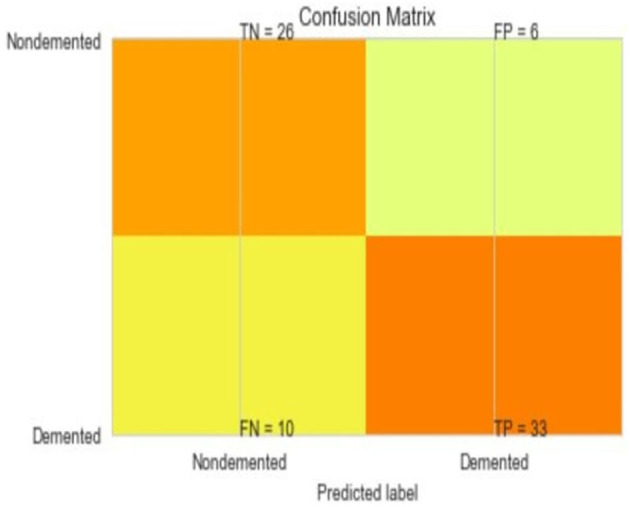
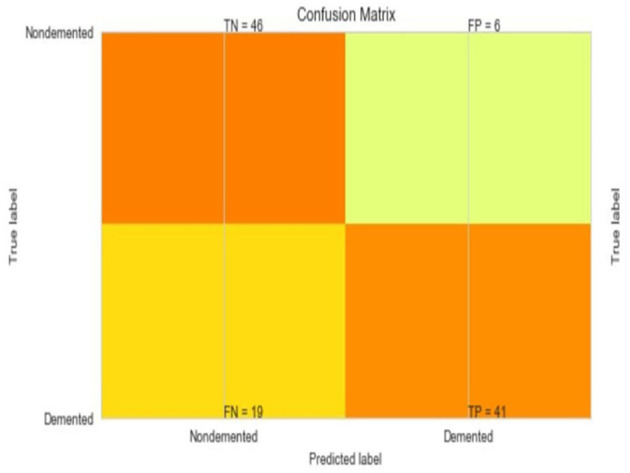
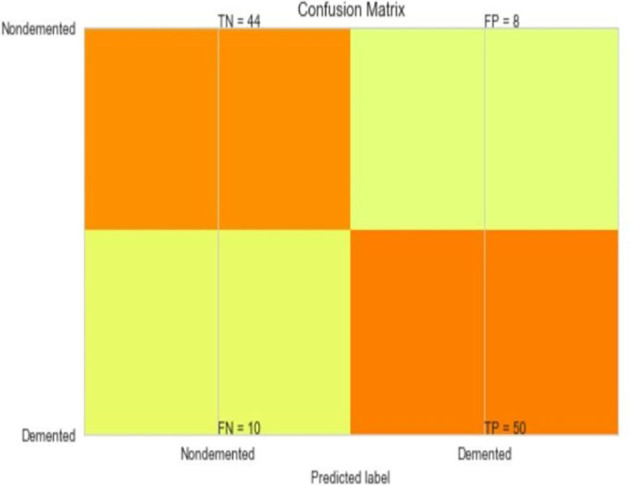
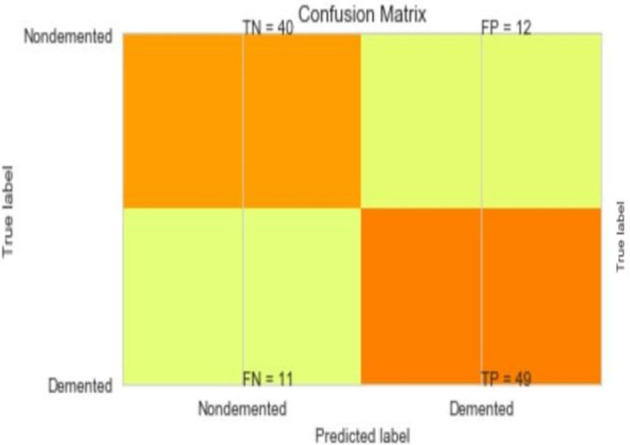
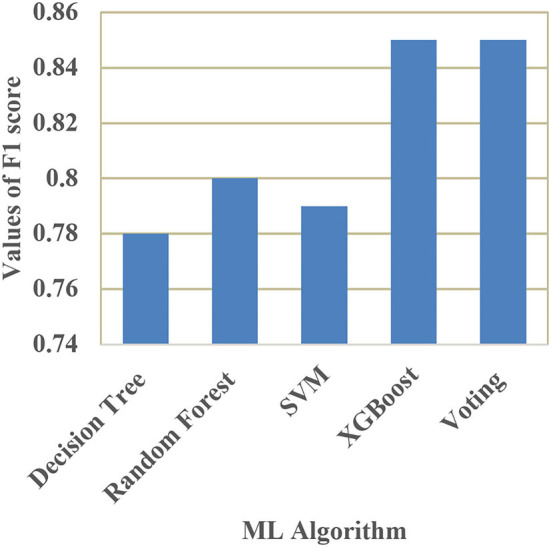
Alzheimer's disease (AD) is the leading cause of dementia in older adults. There is currently a lot of interest in applying machine learning to find out metabolic diseases like Alzheimer's and Diabetes that affect a large population of people around the world. Their incidence rates are increasing at an alarming rate every year. In Alzheimer's disease, the brain is affected by neurodegenerative changes. As our aging population increases, more and more individuals, their families, and healthcare will experience diseases that affect memory and functioning. These effects will be profound on the social, financial, and economic fronts. In its early stages, Alzheimer's disease is hard to predict. A treatment given at an early stage of AD is more effective, and it causes fewer minor damage than a treatment done at a later stage. Several techniques such as Decision Tree, Random Forest, Support Vector Machine, Gradient Boosting, and Voting classifiers have been employed to identify the best parameters for Alzheimer's disease prediction. Predictions of Alzheimer's disease are based on Open Access Series of Imaging Studies (OASIS) data, and performance is measured with parameters like Precision, Recall, Accuracy, and F1-score for ML models. The proposed classification scheme can be used by clinicians to make diagnoses of these diseases. It is highly beneficial to lower annual mortality rates of Alzheimer's disease in early diagnosis with these ML algorithms. The proposed work shows better results with the best validation average accuracy of 83% on the test data of AD. This test accuracy score is significantly higher in comparison with existing works.
Overview
The claims and statistics of this paper haven’t been checked yet.
Run the check — free, no account needed. It reads the open-access text and checks the sources it cites.
Integrity signals
Registry
Cites
Statistics
Figures
Verification
Claims the paper makes
The claims and statistics of this paper haven’t been checked yet.
Run the check — free, no account needed. It reads the open-access text and checks the sources it cites.
Claims other papers make about this one
Each is checked against this paper’s own text: does it say what the citing paper says it does?
In the citing paper
“Achieved 83% accuracy on test data”
From Edge AI for Early Detection of Chronic Diseases and the Spread of Infectious Diseases: Opportunities, Challenges, and Future Directions (2023) · cites this paper as [65]
In the citing paper
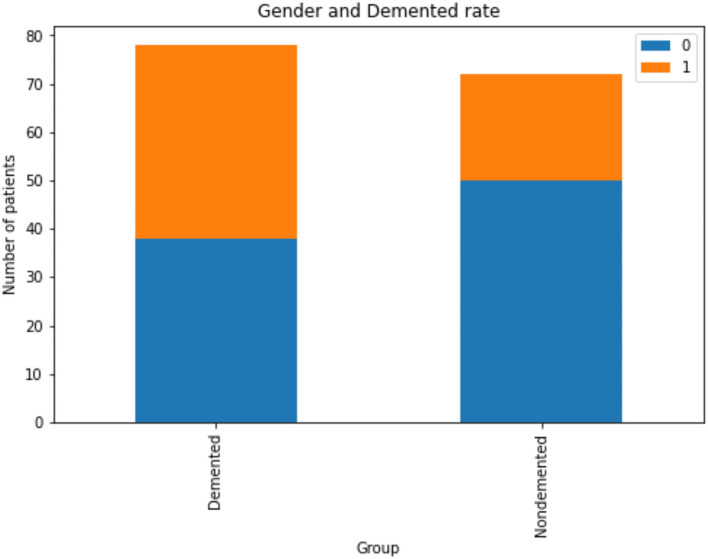
“likely to have dementia than women. Men are more”
From Edge AI for Early Detection of Chronic Diseases and the Spread of Infectious Diseases: Opportunities, Challenges, and Future Directions (2023) · cites this paper as [65]
Self-check
Percentages, sums and reported differences re-computed from the paper’s own numbers.
The self-check needs the paper’s full text.
Citations
Cites
1 retracted
RETRACTED ARTICLE: Hybrid genetic algorithm and a fuzzy logic classifier for heart disease diagnosis
Gadekallu, T. R., Maddikunta, P. K. R., Lakshmanna, K., Rajput, D. S., Kaluri, R., & Srivastava, G. (2019) · Evolutionary Intelligence · doi:10.1007/s12065-019-00327-1 · Cited by 407
RetractedCorrespondence - Tranexamic acid for traumatic brain injury
(2005) · London School of Economics and Political Science Theses Online (London School of Economics and Political Science) · doi:10.1016/s0140-6736 · Cited by 11,894
Dementia prevention, intervention, and care
Livingston, G., Sommerlad, A., Orgeta, V., Costafreda, S. G., Huntley, J., Ames, D., Ballard, C., Banerjee, S., Burns, A., Cohen-Mansfield, J., et al. (2017) · The Lancet · doi:10.1016/s0140-6736(17)31363-6 · Cited by 6,072
Deckers, K., van Boxtel, M. P. J., Schiepers, O. J. G., de Vugt, M., Muñoz Sánchez, J. L., Anstey, K. J., Brayne, C., Dartigues, J.-F., Engedal, K., Kivipelto, M., et al. (2015) · International Journal of Geriatric Psychiatry · doi:10.1002/gps.4245 · Cited by 534
Deep Learning Approach for Early Detection of Alzheimer’s Disease
Helaly, H. A., Badawy, M., & Haikal, A. Y. (2021) · Cognitive Computation · doi:10.1007/s12559-021-09946-2 · Cited by 397
Khan, P., Kader, M. F., Islam, S. M. R., Rahman, A. B., Kamal, M. S., Toha, M. U., & Kwak, K. S. (2021) · IEEE Access · doi:10.1109/access.2021.3062484 · Cited by 314
Deep neural networks to predict diabetic retinopathy
Gadekallu, T. R., Khare, N., Bhattacharya, S., Singh, S., Maddikunta, P. K. R., & Srivastava, G. (2020) · Journal of Ambient Intelligence and Humanized Computing · doi:10.1007/s12652-020-01963-7 · Cited by 285
Martínez-Murcia, F. J., Ortíz, A., Górriz, J. M., Ramı́rez, J., & Castillo-Barnés, D. (2019) · IEEE Journal of Biomedical and Health Informatics · doi:10.1109/jbhi.2019.2914970 · Cited by 264
Lifestyle for Brain Health (LIBRA): a new model for dementia prevention
Schiepers, O. J. G., Köhler, S., Deckers, K., Irving, K., O'Donnell, C. A., van den Akker, M., Verhey, F. R. J., Vos, S. J. B., de Vugt, M. E., & van Boxtel, M. P. J. (2018) · International Journal of Geriatric Psychiatry · doi:10.1002/gps.4700 · Cited by 208
Computational Modeling of Dementia Prediction Using Deep Neural Network: Analysis on OASIS Dataset
Basheer, S., Bhatia, S., & Sakri, S. B. (2021) · IEEE Access · doi:10.1109/access.2021.3066213 · Cited by 185
Research works printed but not linked: 7
- Sulaiman, 2014, “Effect of Using Different Propagations of OLSR and DSDV Routing Protocols”, Proceedings of the IEEE International Conference on Intelligent Systems Structureing and Simulation, 540
- Osamh Khalaf, 2020, Energy efficient routing and reliable data transmission protocol in WSN, Int J Adv Soft Comput Applicat., 12, 45
- 2018, Preventing cognitive decline and dementia: A way forward
- Khalaf, 2018, A modified algorithm for improving lifetime WSN, J Eng Appl Sci., 13, 9277
- Chyzhyk, 2010, Feature extraction from structural MRI images based on VBM: data from OASIS database, University of The Basque Country, Internal research publication
- Sudharsan, 2021, Alzheimer's disease prediction using machine learning techniques and principal component analysis (PCA), Materials Today: Proceedings
- Abdulsahib, 2018, An improved algorithm to fire detection in forest by using wireless sensor networks, Int J Civil Eng Technol (IJCIET)., 9, 369
Cited by
Sorted by citations
A Systematic Survey on Energy-Efficient Techniques in Sustainable Cloud Computing
Bharany, S., Sharma, S., Khalaf, O. I., Abdulsahib, G. M., Al-Humaimeedy, A. S., Aldhyani, T. H. H., Maashi, M. S., & Alkahtani, H. S. (2022) · Sustainability · doi:10.3390/su14106256 · Cited by 257
Self-citationAn Explainable AI Paradigm for Alzheimer’s Diagnosis Using Deep Transfer Learning
Mahmud, T., Barua, K., Habiba, S. U., Sharmen, N., Hossain, M. S., & Andersson, K. (2024) · Diagnostics · doi:10.3390/diagnostics14030345 · Cited by 167
Explainable AI-based Alzheimer’s prediction and management using multimodal data
Jahan, S., Abu Taher, K., Kaiser, M. S., Mahmud, M., Rahman, M. S., Hosen, A. S. M. S., & Ra, I.-H. (2023) · PLOS ONE · doi:10.1371/journal.pone.0294253 · Cited by 122
Sadr, H., Nazari, M., Khodaverdian, Z., Farzan, R., Yousefzadeh-Chabok, S., Ashoobi, M. T., Hemmati, H., Hendi, A., Ashraf, A., Pedram, M. M., et al. (2025) · European journal of medical research · doi:10.1186/s40001-025-02680-7 · Cited by 125
Badidi, E. (2023) · Future Internet · doi:10.3390/fi15110370 · Cited by 113
Metadata
- Authors
- Kavitha, C., Mani, V., Srividhya, S. R., Khalaf, O. I., & Tavera Romero, C. A.
- Affiliations
- Sathyabama Institute of Science and Technology (IN)
- Nahrain University (IQ)
- Corresponding author
- Kavitha, C.
- Venue
- Frontiers in Public Health
- Publisher
- Frontiers Media SA
- Published
- 2022-03-03
- Volume
- 10
- Pages
- 853294-853294
- ISSN
- 2296-2565 (ISSN-L)
- PMC
- PMC8927715
- OpenAlex
- W4214898695
- Cited by
- 373
- References
- 30
- Citations by year
- 2026: 64 · 2025: 135 · 2024: 90 · 2023: 56 · 2022: 28
- FWCI
- 50.29
- Type
- journal article
- Language
- en
- Open access
- gold
- doi.org
- Licence
- Locations
- Frontiers in Public Health (publishedVersion, cc-by)
- PubMed Central (publishedVersion, cc-by)
- PubMed (publishedVersion)
- DOAJ (DOAJ: Directory of Open Access Journals) (submittedVersion, cc-by-sa)
- Funders
- Universidad Santiago de Cali (01-2021)
- National Institute on Aging (P01AG003991)
- Topics
- Health Sciences › Medicine › Psychiatry and Mental health › Dementia and Cognitive Impairment Research
- Health Sciences › Health Professions › Health Information Management › Artificial Intelligence in Healthcare
- Life Sciences › Neuroscience › Cellular and Molecular Neuroscience › Alzheimer's disease research and treatments
- Keywords
- Alzheimer's disease, dementia, OASIS dataset, neuroimaging, machine learning classification, random forest, gradient boosting, support vector machine, decision tree, voting classifier, early diagnosis
- MeSH terms
- Machine Learning, Aged, Alzheimer Disease, Brain, Humans, Magnetic Resonance Imaging, Cognitive Dysfunction
About these checks
Registry, retraction, Cites and statistics results are computed, not judged, with one exception: a printed reference that no index lists is read once by a model before it counts as a citation error. Claims are extracted by a model and kept only when their quote appears verbatim in the text; each cited source is then checked, with a model’s help, for whether it says what the claim relies on. Those verdicts can be wrong — read the claim’s quote and the cited source before relying on one.
Statistics and arithmetic are recomputed, not judged.
Confidence bands are shown only for fields calibrated on our annotated test set. None is calibrated yet, so no band is shown.
What counts as a claim ›How we measure confidence ›How we check this ›
Are you an author, or do you see a problem with this page? Request a review
