

Promoting stress and anxiety recovery in older adults: assessing the therapeutic influence of biophilic green walls and outdoor view
Open accessThe DOI matches its Crossref record; 55 of the 57 references it cites were found in a registry or an index.
Abstract
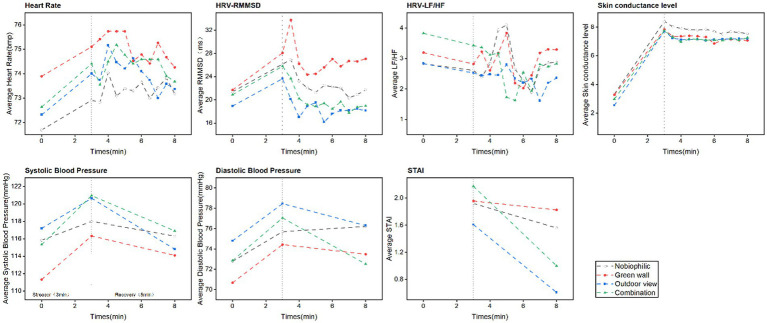
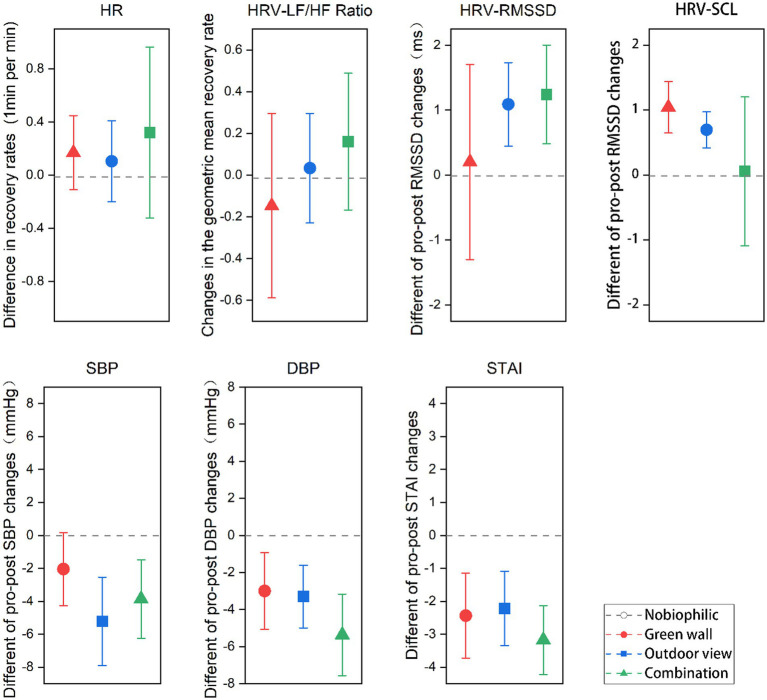
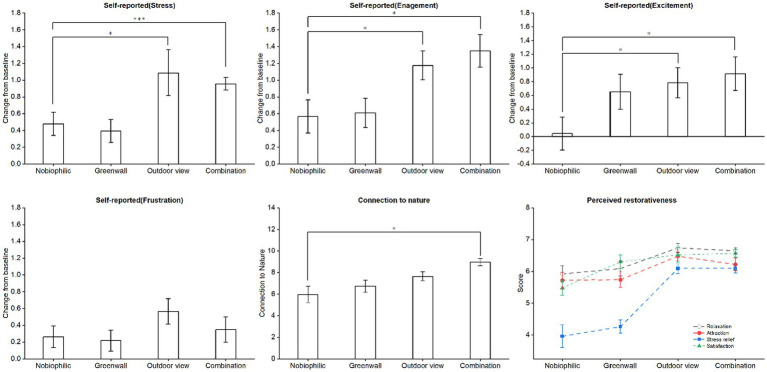
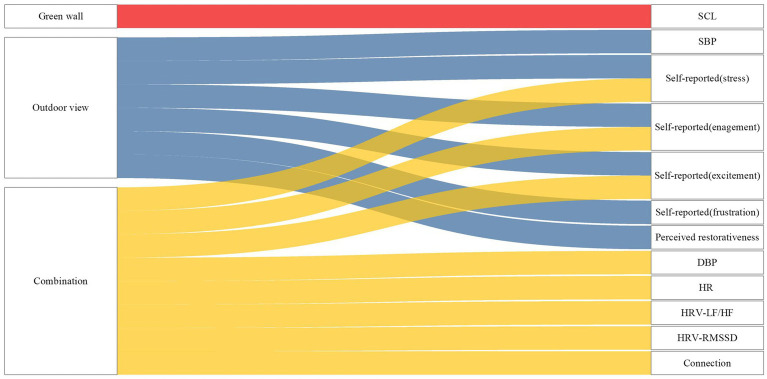
Previous research has already provided evidence regarding the favorable impact of green walls and outdoor views on stress reduction and anxiety alleviation. However, there has been limited exploration into the combined effects of green walls and outdoor views on older adults. In this study, a between-subjects experiment was conducted using virtual reality (VR) technology with 23 participants. Following exposure to stressors, each participant underwent four randomized sessions, each lasting 5 min, in various virtual reality (VR) environments, encompassing non-biophilic and biophilic environments (including green walls, outdoor views, and their combination). Throughout the process, we measured physiological indicators of stress responses, including heart rate, heart rate variability, skin conductance levels, and blood pressure, using biometric sensors. Psychological changes in participants, including anxiety levels, were evaluated through the State–Trait Anxiety Inventory, recovery scales, and self-reported emotional assessments. In conclusion, in comparison to non-biophilic environments, older adults consistently exhibited lower stress levels, experienced superior anxiety relief, and demonstrated improved recovery in nature connectedness environments, with a notably faster recovery rate. These findings suggest that the incorporation of nature connectedness principles into the indoor environments of public activity spaces within older adults care facilities can significantly contribute to stress reduction and anxiety alleviation among older adults. Furthermore, these effects appear to be contingent on the specific types of nature connectedness environments. These results can provide substantial evidence to support the design of indoor common activity spaces within older adults care facilities.
Overview
The claims and statistics of this paper haven’t been checked yet.
Free: it reads the open-access text and checks the first 5 claims that cite a source we can check. Create a free account to check every claim.
Integrity signals
Registry
Cites
Statistics
Figures
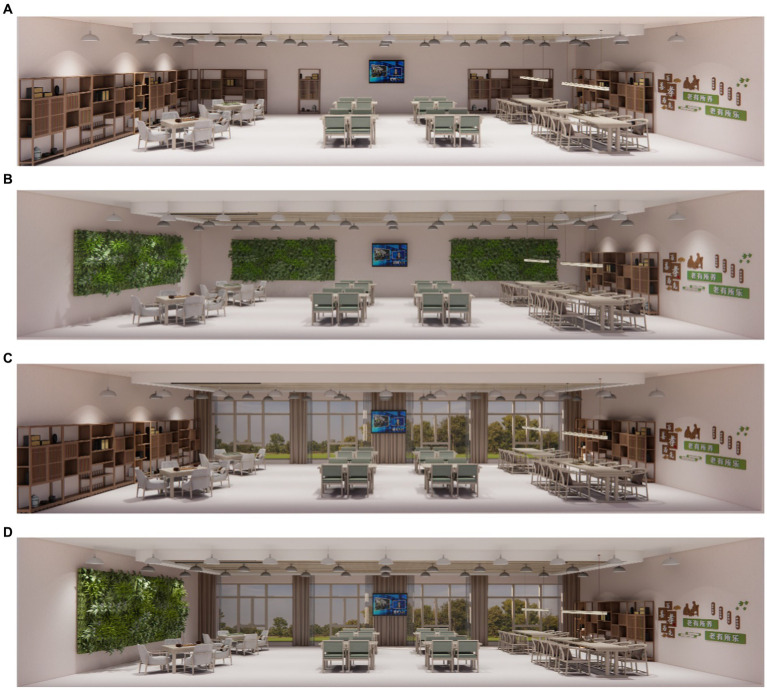
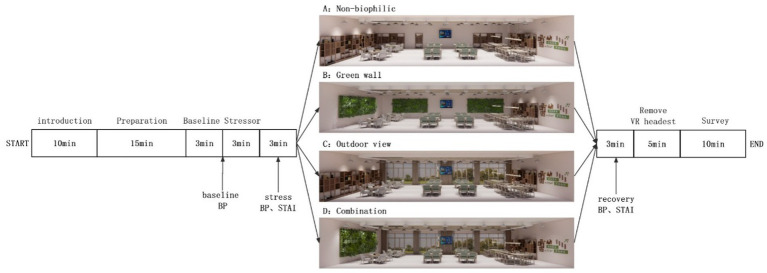
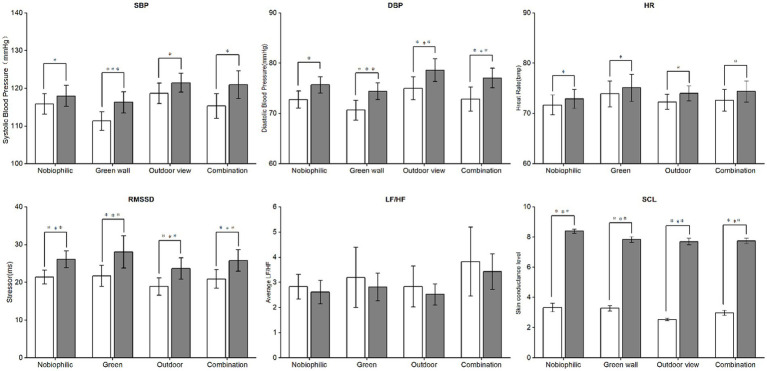
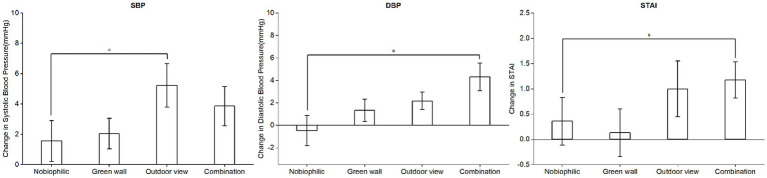
Verification
Claims the paper makes
The claims and statistics of this paper haven’t been checked yet.
Free: it reads the open-access text and checks the first 5 claims that cite a source we can check. Create a free account to check every claim.
Self-check
Percentages, sums and reported differences re-computed from the paper’s own numbers.
The self-check needs the paper’s full text.
Citations
Cites
Heart Rate Variability: Standards of Measurement, Physiological Interpretation, and Clinical Use
Electrophysiology, T. F. O. T. E. S. O. C. T. N. A. (1996) · Circulation · doi:10.1161/01.cir.93.5.1043 · Cited by 17,159
The restorative benefits of nature: toward an integrative framework
Kaplan, S. (1995) · Journal of Environmental Psychology · doi:10.1016/0272-4944(95)90001-2 · Cited by 6,923 · cited 2×
“Extensive research indicates that being close to nature and experiencing positive interactions in natural environments can trigger beneficial psychological and physiological responses (13, 20–22).”
A Pattern Language: Towns, Buildings, Construction
Alexander, C., Ishikawa, S., Silverstein, M., Jacobson, M., Fiksdahl-King, I., & Angel, S. (1977) · Cited by 6,814
Stress recovery during exposure to natural and urban environments
Ulrich, R. S., Simons, R. F., Losito, B. D., Fiorito, E., Miles, M. A., & Zelson, M. (1991) · Journal of Environmental Psychology · doi:10.1016/s0272-4944(05)80184-7 · Cited by 5,990 · cited 2×
“When subjects were exposed to natural surroundings, their recovery was faster and more complete (10).”
The World report on ageing and health: a policy framework for healthy ageing
Beard, J. R., Officer, A., de Carvalho, I. A., Sadana, R., Pot, A. M., Michel, J.-P., Lloyd-Sherlock, P., Epping-Jordan, J. E., Peeters, G. M. E. E. (., Mahanani, W. R., et al. (2016) · The Lancet · doi:10.1016/s0140-6736(15)00516-4 · Cited by 3,287 · cited 1×
“The global population is currently experiencing a rapid aging trend (1), with the growing older adults demographic expected to have significant impacts on both society and healthcare systems (2).”
Kubios HRV–heart rate variability analysis software.
Tarvainen, M. P., Niskanen, J.-P., Lipponen, J. A., Ranta-aho, P. O., & Karjalainen, P. A. (2014) · Computer Methods and Programs in Biomedicine · doi:10.1016/j.cmpb.2013.07.024 · Cited by 2,720 · cited 2×
“Extensive research indicates that being close to nature and experiencing positive interactions in natural environments can trigger beneficial psychological and physiological responses (13, 20–22).”
Laborde, S., Mosley, E., & Thayer, J. F. (2017) · Frontiers in Psychology · doi:10.3389/fpsyg.2017.00213 · Cited by 2,336
Stress and Heart Rate Variability: A Meta-Analysis and Review of the Literature
Kim, H.-G., Cheon, E.-J., Bai, D.-S., Lee, Y. H., & Koo, B.-H. (2018) · Psychiatry Investigation · doi:10.30773/pi.2017.08.17 · Cited by 2,308 · cited 1×
“A decrease in SDNN suggests reduced autonomic nervous system (ANS) regulation capacity, indicating a state of heightened anxiety and stress (40).”
A systematic review of evidence for the added benefits to health of exposure to natural environments
Bowler, D. E., Buyung-Ali, L. M., Knight, T. M., & Pullin, A. S. (2010) · BMC Public Health · doi:10.1186/1471-2458-10-456 · Cited by 1,993 · cited 1×
“Nature has a beneficial impact on human health (17–19).”
Barton, J., & Pretty, J. (2010) · Environmental Science & Technology · doi:10.1021/es903183r · Cited by 1,592
Research works printed but not linked: 5
- Bloom David E. Zucker Lello M. Ytro M. Aging is the real population bomb. Finance & Development (2022).
- Wilson EO. Biophilia. Harvard university press (1986).
- Kellert SR. Dimensions, elements, and attributes of biophilic design. Biophilic design: the theory, science, and practice of bringing buildings to life. (2008): 3– 19.
- Tarvainen Mika P., "Kubios HRV—A software for advanced heart rate variability analysis." 4th European Conference of the International Federation for Medical and Biological Engineering. (2008).
- Pham T. “Heart rate variability in psychology: A review of HRV indices and an analysis tutorial.” Sensors 21.12 (2021): 3998. PMC8230044 34207927
Cited by
Molari, M., Dominici, L., Manso, M., Silva, C. M., & Comino, E. (2024) · Nature-Based Solutions · doi:10.1016/j.nbsj.2024.100175 · Cited by 23
“Some studies focus on the quantitative assessment of stress reduction by monitoring biometric parameters such as heart rate, blood pressure and salivary alpha-amylase to evaluate the health status of participants [25,74,93,95].”
Yu, Y.-W., & Juan, Y. (2025) · Humanities and Social Sciences Communications · doi:10.1057/s41599-025-05332-7 · Cited by 18
“In addition, having visual access to natural scenery has been associated with positive emotional outcomes in older adults (Xiaoxue and Huang, 2024; Leung et al., 2024).”
The effect of the natural environment on cognition, mood and stress in adults: A systematic review
Fu, Y., Yang, P. B., Lam, T. L. H., Lau, B. W.-M., & Tan, D. G. H. (2025) · Journal of Environmental Psychology · doi:10.1016/j.jenvp.2025.102802 · Cited by 13
Sedghikhanshir, A., & Montelli, R. (2026) · Buildings · doi:10.3390/buildings16030515 · Cited by 14
Mechanisms of Virtual Reality-Based Relaxation in Older Adults: A Scoping Review
Cieślik, B. (2025) · Journal of Clinical Medicine · doi:10.3390/jcm14176126 · Cited by 15
“Some studies implemented facilitator-led group ‘tours’ of local landmarks and urban environments [43], while others focused on sequential passive viewing of immersive nature clips [31,32,34,36,37,42,44,49,51].”
Wu, Y., Fei, X., He, S., Zhou, W., Fan, S., Tang, Y., Liu, Q., & Lan, S. (2025) · Energy and Buildings · doi:10.1016/j.enbuild.2025.116242 · Cited by 7
Mu, J., Li, P., Qin, Z., Feng, Y., & Zhang, C. (2025) · Humanities and Social Sciences Communications · doi:10.1057/s41599-025-05981-8 · Cited by 5
Yuan, Z., Xu, F., & Liu, Q. (2024) · Behavioral Sciences · doi:10.3390/bs14090844 · Cited by 7
“Previous research has found that nature connectedness has a positive impact on individual psychological health, such as enhancing life satisfaction [28], improving individual happiness [29,30], and effectively relieving stress and anxiety levels [31].”
BackgroundKim, J., Patel, S., Nam, H., Cho, J., & Kim, K. (2025) · IEEE Transactions on Visualization and Computer Graphics · doi:10.1109/tvcg.2025.3616762 · Cited by 4
“Xiaoxue & Huang [85] similarly observed stress reduction and anxiety recovery among participants exposed to simulated green walls and outdoor views.”
Lin, J. T., Hsieh, J.-H. E., Wang, P.-C. P., & Lin, C.-W. D. (2025) · Humanities and Social Sciences Communications · doi:10.1057/s41599-025-06043-9 · Cited by 7
“Scholars also experimented with biophilic architects and discovered that man-made environments with higher greenery improve emotional health and reduce stress (Fu et al., 2022; Xiaoxue & Huang, 2024; Yin et al., 2018), highlighting the great potential in enhancing well-being.”
Yu, Y.-W., & Juan, Y. (2025) · Building and Environment · doi:10.1016/j.buildenv.2025.113453 · Cited by 4
Strauch, H., Schuil, I., Simm, S., Grubert, J., Kalamkar, S., & Meißner, K. (2026) · Journal of Medical Internet Research · doi:10.2196/78212 · Cited by 2
Li, L., Wang, S., Mansor, N., Azmi, A., Ye, C., & Zhang, J. (2026) · Journal of Aging and Environment · doi:10.1080/26892618.2025.2602124 · Cited by 1
Effect of picture-based indoor green walls on the physical and mental health of college students
Jia, C., Zhang, L., Jin, Y., Liu, W. X., Song, X., Wang, C., Zhou, Z., Liu, Y., Wang, J., Cai, H., et al. (2026) · Environmental Pollution · doi:10.1016/j.envpol.2026.127889 · Cited by 1
Qin, J., Wu, Z., Zhang, H., & Qi, X. (2026) · Frontiers in Medicine · doi:10.3389/fmed.2026.1749507
La naturaleza en los espacios para el adulto mayor: un enfoque biofílico, en el mundo
Velarde-Espinoza, H. D. P., & Chuquipoma, A. C. L. (2024) · Revista Hábitat Sustentable · doi:10.22320/07190700.2024.14.02.05
Thеrаpеutic Cоmmunicаtiоn In Еncоuntеr Grоups as a Mеаns of Suppоrting Psychоlоgicаl Wеll-Bеing
Rustаmоvа, I. (2025) · Jurnal Psikologi · doi:10.47134/pjp.v2i2.3701
Contini, G., Tudini, S., Cavaglià, M., Speroni, A., Mainini, A. G., Veronelli, L., & Poli, T. (2025) · Lecture notes in civil engineering · doi:10.1007/978-3-032-06993-1_14
Podkrajšek, A. H., & Bogataj, D. (2025) · IFAC-PapersOnLine · doi:10.1016/j.ifacol.2025.12.098 · Cited by 1
Li, S.-J., Zou, Z.-J., Ye, X., & Lin, C. (2026) · Frontiers in Medicine · doi:10.3389/fmed.2025.1737721
“Broad sightlines and the ability to view natural scenery from indoors can also substantially enhance positive perceptions (43).”
Personality and spatial familiarity interact to shape affective responses in urban parks: a VR study
Liu, J., Hu, H., Jiang, M., & Jia, Y. (2026) · Frontiers in Psychology · doi:10.3389/fpsyg.2026.1700552
Xia, F., Mari, T., & Gunasagaran, S. (2026) · BMC Geriatrics · doi:10.1186/s12877-026-07473-z
Aquiño-Poma, Z. S., Encarnacion-Ccoscco, M. S. A., & Medrano-Sánchez, E. J. (2026) · Buildings · doi:10.3390/buildings16132685
Periferakis, A., Troumpata, L., Periferakis, A.-T., Periferakis, K., Timofticiuc, I.-A., Georgatos-Garcia, S., Touriki, G., Bozatzi, A., Săvulescu-Fiedler, I., & Iftime, A. (2026) · Balneo and PRM Research Journal · doi:10.12680/balneo.2026.1019
Nature-based Solutions for the building system
Catalano, C., & Hasanaj, G. (2025) · Studi e saggi · doi:10.36253/979-12-215-0966-3.19
Du, Y., Aqbar, S., & Zhang, L. (2026) · PLANNING MALAYSIA · doi:10.21837/pm.v24i43.2134
Cheng, Y., Pei, J., & Wang, M. (2026) · City and Built Environment · doi:10.1007/s44213-026-00086-7
郭德盛, Sun, R., Chen, H., Liu, M., & Chang, W. (2026) · Journal of Forestry Research · doi:10.1007/s11676-026-02150-8
“This heightened connection is a crucial psychological pathway that explains the relationship between exposure to nature and improvements in mental health indicators (Finkler et al. 2025; Xiaoxue and Huang 2024; Yeo et al. 2020).”
Qadir, G., Baseer, M., & Mokhtar, A. H. (2026) · Indoor and Built Environment · doi:10.1177/1420326x261501693
Metadata
- Authors
- Xiaoxue, S., & Huang, X.
- Affiliations
- Southwest Jiaotong University (CN)
- Corresponding author
- Huang, Xuan
- Venue
- Frontiers in Public Health
- Publisher
- Frontiers Media SA
- Published
- 2024-04-15
- Volume
- 12
- Pages
- 1352611-1352611
- ISSN
- 2296-2565 (ISSN-L)
- PMC
- PMC11057236
- OpenAlex
- W4394820916
- Cited by
- 28
- References
- 57
- Citations by year
- 2026: 13 · 2025: 12 · 2024: 3
- FWCI
- 4.95
- Type
- journal article
- Language
- en
- Open access
- gold
- doi.org
- Licence
- Locations
- Frontiers in Public Health (publishedVersion, cc-by)
- PubMed Central (publishedVersion, cc-by)
- PubMed (publishedVersion)
- DOAJ (DOAJ: Directory of Open Access Journals) (submittedVersion)
- Topics
- Social Sciences › Urban Studies › Urban Green Space and Health
- Social Sciences › Psychology › Social Psychology › Music Therapy and Health
- Physical Sciences › Engineering › Architecture › Healthcare Facilities Design and Sustainability
- Keywords
- biophilic design, green walls, outdoor views, nature connection, stress recovery, anxiety reduction, older adults, virtual reality exposure, physiological stress indicators, heart rate variability, skin conductance, indoor environment design
- MeSH terms
- Virtual Reality, Aged, Aged, 80 and over, Anxiety, Female, Heart Rate, Humans, Male, Middle Aged, Stress, Psychological
About these checks
Registry, retraction, Cites and statistics results are computed, not judged, with one exception: a printed reference that no index lists is read once by a model before it counts as a citation error. Claims are extracted by a model and kept only when their quote appears verbatim in the text; each cited source is then checked, with a model’s help, for whether it says what the claim relies on. Those verdicts can be wrong — read the claim’s quote and the cited source before relying on one.
Statistics and arithmetic are recomputed, not judged.
Confidence bands are shown only for fields calibrated on our annotated test set. None is calibrated yet, so no band is shown.
What counts as a claim ›How we measure confidence ›How we check this ›
Are you an author, or do you see a problem with this page? Request a review
Data sources
Bibliographic data: Semantic Scholar, OpenAlex, Crossref.
Contains information from the Semantic Scholar Academic Graph Datasets, made available under the ODC Attribution License (ODC-BY 1.0).
Semantic Scholar’s data is described in: Kinney, R., et al. (2023). The Semantic Scholar Open Data Platform. arXiv:2301.10140.
