

The DOI matches its Crossref record; 196 of the 253 references it cites were found in a registry or an index.
A Systematic Review of Social Presence: Definition, Antecedents, and Implications
Open accessAbstract
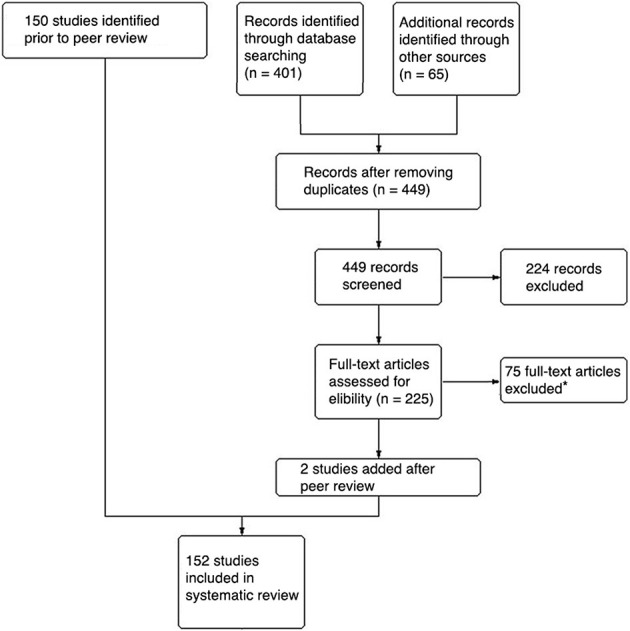
Social presence, or the feeling of being there with a "real" person, is a crucial component of interactions that take place in virtual reality. This paper reviews the concept, antecedents, and implications of social presence, with a focus on the literature regarding the predictors of social presence. The article begins by exploring the concept of social presence, distinguishing it from two other dimensions of presence-telepresence and self-presence. After establishing the definition of social presence, the article offers a systematic review of 233 separate findings identified from 152 studies that investigate the factors (i.e., immersive qualities, contextual differences, and individual psychological traits) that predict social presence. Finally, the paper discusses the implications of heightened social presence and when it does and does not enhance one's experience in a virtual environment.
Overview
The claims and statistics of this paper haven’t been checked yet.
Run the check — free, no account needed. It reads the open-access text and checks the sources it cites.
Integrity signals
Registry
Cites
Statistics
Figures
Verification
Claims the paper makes
The claims and statistics of this paper haven’t been checked yet.
Run the check — free, no account needed. It reads the open-access text and checks the sources it cites.
Claims other papers make about this one
Each is checked against this paper’s own text: does it say what the citing paper says it does?
The source backs part of the claim, not all of it — or backs it for a different population, condition or comparison.
In the citing paper
“Through the incorporation of avatars into networked virtual environments, IVR also offers older adults the opportunity to connect with others in a more meaningful way compared with other communication mediums [6] where meeting in person may not be possible—a reality forced upon many of us during the COVID-19 pandemic [7].”
From Older Adults’ Experiences and Perceptions of Immersive Virtual Reality: Systematic Review and Thematic Synthesis (2022) · cites this paper as [6]
Experimental — accuracy not yet measuredThe check wasn’t confident either way, so it gives no verdict — never disputed.
In the citing paper
“Specifically, intuitive interfaces and human-like feedback help individuals regain confidence in problem-solving, compensating for the control lost due to mortality salience, thereby increasing preference for anthropomorphized products [29].”
From Anthropomorphic Design in Mortality Salience Situations: Exploring Emotional and Non-Emotional Mechanisms Enhancing Consumer Purchase Intentions (2024) · cites this paper as [29]
Experimental — accuracy not yet measuredThe check wasn’t confident either way, so it gives no verdict — never disputed.
In the citing paper
“Mortality salience often leads to a reduced sense of control; however, anthropomorphic design, through its human-like understanding and feedback mechanisms, effectively enhances users’ sense of control [29].”
From Anthropomorphic Design in Mortality Salience Situations: Exploring Emotional and Non-Emotional Mechanisms Enhancing Consumer Purchase Intentions (2024) · cites this paper as [29]
Experimental — accuracy not yet measured
Self-check
Percentages, sums and reported differences re-computed from the paper’s own numbers.
The self-check needs the paper’s full text.
Citations
Cites
Organizational Information Requirements, Media Richness and Structural Design
Daft, R. L., & Lengel, R. H. (1986) · Management Science · doi:10.1287/mnsc.32.5.554 · Cited by 9,868 · cited 3×
“Studies suggest that higher levels of social presence are more beneficial in equivocal contexts wherein there is no “correct” outcome, such as negotiations (Daft and Lengel, 1986; Garau et al., 2003).”
BackgroundMeasuring Presence in Virtual Environments: A Presence Questionnaire
Witmer, B. G., & Singer, M. J. (1998) · Presence: Teleoperators and Virtual Environments · doi:10.1162/105474698565686 · Cited by 6,371 · cited 1×
“Incontrast to immersion, presence is the subjective experience of actually being in the mediated virtual environment (Slater and Wilbur, 1997; Witmer and Singer, 1998; Walther and Parks, 2002).”
BackgroundThe social psychology of telecommunications
Parker, E., Short, J., Williams, E., & Christie, B. (1976) · Contemporary Sociology A Journal of Reviews · doi:10.2307/2065899 · Cited by 6,031 · cited 9×
“…with a virtual cat, view virtual humans in pain CA Canada Short et al., 1976; Nowak and Biocca, 2003 Engage in a video call with a remote participant using a telepresence robot AP Korea Choi et al., 2001 Short et al., 1976; Lombard, 1995 affordance(s) that influenced perceptions of social presence.”
BackgroundMethodInfluentialDefining virtual reality: Dimensions determining telepresence
Steuer, J. (1992) · Journal of Communication · doi:10.1111/j.1460-2466.1992.tb00812.x · Cited by 5,459 · cited 1×
“Telepresence can be defined as “the extent to which one feels present in the mediated environment, rather than in the immediate physical environment” (Steuer, 1992, p. 75).”
BackgroundComputer-Mediated Communication: Impersonal, Interpersonal, and Hyperpersonal Interaction
WALTHER, J. B. (1996) · Communication Research · doi:10.1177/009365096023001001 · Cited by 4,798 · cited 1×
“Walther (1996) later expanded this theory to posit that people who communicate via text-based CMC platforms could, in some cases, achieve even higher levels of social presence than FtF interactants by carefully selecting which facets of themselves they wish to reveal (i.e., hyperpersonal model of…”
BackgroundAt the Heart of It All: The Concept of Presence
Lombard, M., & Ditton, T. B. (2006) · Journal of Computer-Mediated Communication · doi:10.1111/j.1083-6101.1997.tb00072.x · Cited by 4,021 · cited 1×
“When the perception of telepresence is strong, people should no longer be aware that their experiences are being mediated through technology (Lombard and Ditton, 1997).”
BackgroundSlater, M., & Wilbur, S. (1997) · Presence: Teleoperators and Virtual Environments · doi:10.1162/pres.1997.6.6.603 · Cited by 3,034 · cited 4×
“William Gibson famously described cyberspace as a “consensual hallucination experienced daily by billions of legitimate operators, in every nation” ( Gibson, 1984, p. 51), portraying the social nature of “stepping through a barrier” (Slater and Wilbur, 1997, p. 2) into the virtual environment.”
BackgroundInfluentialPlace illusion and plausibility can lead to realistic behaviour in immersive virtual environments
Slater, M. (2009) · Philosophical Transactions of the Royal Society B: Biological Sciences · doi:10.1098/rstb.2009.0138 · Cited by 2,691 · cited 3×
“One significant concept that was not included due to this criterion was plausibility illusion (Slater, 2009).”
BackgroundInterpersonal Effects in Computer-Mediated Interaction
Walther, J. B. (1992) · Communication Research · doi:10.1177/009365092019001003 · Cited by 2,664 · cited 3×
“In contrast to these medium-centric views of social presence, Walther (1992) argued that individuals are capable of adapting to different communication media, and can thus achieve their communication goals accordingly.”
BackgroundToward a More Robust Theory and Measure of Social Presence: Review and Suggested Criteria
Biocca, F. A., Harms, C., & Burgoon, J. K. (2003) · PRESENCE Virtual and Augmented Reality · doi:10.1162/105474603322761270 · Cited by 2,365 · cited 3×
“…al., 2013 Gerhard et al., 2001; Bailenson et al., 2005 Interact with a virtual cat, view virtual humans in pain CA Canada Short et al., 1976; Nowak and Biocca, 2003 Engage in a video call with a remote participant using a telepresence robot AP Korea Choi et al., 2001 Short et al., 1976; Lombard,…”
BackgroundMethod
Research works printed but not linked: 38
- Alge, 2003, When does the medium matter? Knowledge-building experiences and opportunities in decision-making teams, Organ. Behav. Hum. Decis. Proces., 91, 26, 10.1016/S0749-5978(02)00524-1 · DOI
- Alghamdi, 2016, Social presence and mode of videocommunication in a collaborative virtual environment,
- Altman, 1973, Social Penetration: The Development of Interpersonal Relationships
- Aymerich-Franch, 2012, Effects of facial and voice similarity on presence in a public speaking virtual environment,
- Bente, 2007, Effects of simulated gaze on social presence, person perception and personality attribution in avatar-mediated communication,
- Biocca, 2002, Defining and measuring social presence: Contribution to the networked minds theory and measure,
- Biocca, 2001, The networked minds measure of social presence: pilot test of the factor structure and concurrent validity,
- Casanueva, 2001, The effects of avatars on co-presence in a collaborative virtual environment,
- Cuddetta, 2003, Scala di Presenza Sociale
- Cummings, 2012, How immersive is enough? A foundation for a meta-analysis of the effect of immersive technology on measured presence,
- Cummings, 2018, Technological predictors of social presence: A foundation for a meta-analytic review and empirical concept explication,
- Dalzel-Job, 2014, Social Interaction in Virtual Environments: the Relationship Between Mutual Gaze, Task Performance And Social Presence
- de Greef, 2014, Video communication best for female friends?
- DeSchryver, 2009, Moodle vs. Facebook: Does using Facebook for discussions in an online course enhance perceived social presence and student interaction?, 329
- Dicke, 2010, The influence of audio quality on the perception of social presence,
- Gibson, 1984, Neuromancer
- Gimpel, 2016, Customer satisfaction in digital service encounters: The role of media richness, social presence, and cultural distance,
- Gong, 2007, See minorities through the lens of ethnic identity: Reflected unto racial representations of real humans and virtual humans,
- Harms, 2004, Internal consistency and reliability of the networked minds social presence measure,
- Hauber, 2005, Social presence in two-and three-dimensional videoconferencing,
- Hayes, 2015, The Experience of Physical and Social Presence in a Virtual Learning Environment as Impacted by the Affordance of Movement Enabled by Motion Tracking
- Hills, 2005, Social Presence and Communication Quality in Videoconferencing
- IJsselsteijn, 2008, Measuring the experience of digital game enjoyment,
- Jordan, 2002, Collaboration in a mediated haptic environment,
- Kothgassner, 2014, Does social exclusion hurt virtually like it hurts in real-life? the role of agency and social presence in the perception and experience of social exclusion,
- Lanier, 2017, Dawn of the New Everything: Encounters With Reality And Virtual Reality
- Lee, 2007, Effects of networked interactivity in educational games: Mediating effects of social presence,
- Lombard, 2000, Measuring presence: a literature-based approach to the development of a standardized paper-and-pencil instrument,
- Lombard, 2009, Measuring (tele)presence: the Temple Presence Inventory,
- Nowak, 2001, Defining and differentiating copresence, social presence and presence as transportation,
- Pan, 2008, The impact of avatar blushing on the duration of interaction between a real and virtual person,, 26
- Ratan, 2009, Self-presence standardized: Introducing the self-presence questionnaire (SPQ),
- Rauh, 2004, Feedback delay effects in video monitor communication,
- Reeves, 1996, The Media Equation
- Shimoda, 2007, Quitting smoking is easy, I've done it hundreds of times: intelligent agents, feedback loops, and relevant advice,
- Swinth, 2001, Conformity to group norms in an immersive virtual environment,
- Walther, 2002, Cues filtered out, cues filtered in: computer-mediated communication and relationships,, 529
- Zelenkauskaite, 2009, Presence, participation, and political text-on-television: testing a converged technology,
Cited by
Sorted by citations
Items 901–979 of 979
Nkanyani, T., Mudau, A. V., & Sikhosana, L. (2025) · Frontiers in Education · doi:10.3389/feduc.2025.1595770
Be Driven, Work Together: The Emergence of Autonomous Vehicles as Collaborative Workspaces
Machalett, F., Uehlin, F., Kern, F., & Wienrich, C. (2025) · Proc. ACM Hum. Comput. Interact. · doi:10.1145/3757556
“Social Presence primarily influences productivity and is often used to evaluate collaborative work environments [5, 34].”
Fang, A., Shi, J., Chhabria, H., & Zhu, H.-Y. (2025) · doi:10.48550/arxiv.2510.12081
“…environments [5], a number of works have shown how embodied environments foster richer interactions than traditional 2D communication platforms [69]; combined with experiential learning theory, we can then see how simulation in embodied environments is a highly useful tool for situated…”
Kunitake, Y., & Song, M.-D. (2025) · 2025 IEEE International Symposium on Mixed and Augmented Reality Adjunct (ISMAR-Adjunct) · doi:10.1109/ismar-adjunct68609.2025.00095
“By existing in the virtual space through an avatar, users achieve a high level of immersion [8, 17, 10].”
Virtually Be: Interaction between Physical and Virtual Actors in Theatrical Performances
Ternova, A., Gorisse, G., & Gagneré, G. (2025) · KUI · doi:10.1145/3769526.3769664
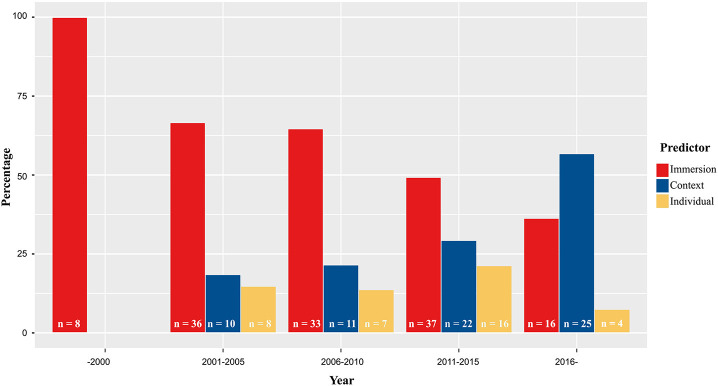
“In their meta-analysis, Oh et al. [24] identified three key predictors of social presence, namely immersion, context and individual.”
Yassien, A., & Abdennadher, S. (2025) · International Conference on Human-Computer Interaction with Mobile Devices and Services · doi:10.1145/3737821.3749449
Sarkar, N., Tate, J. A., Tauseef, M., Ullal, A., Maxwell, C. A., Juckett, L., Scharre, D. W., Tan, A., Zhang, R., Ingram, Z., et al. (2025) · JMIR Research Protocols · doi:10.2196/83864
“Age does not appear to have an association with levels of social presence in ICT; however, women tend to report higher levels of social presence when using ICT [24].”
Evaluating Multi-user Telepresence Robot Interaction in Cybersecurity Education
Leoste, J., Kasuk, T., Marmor, K., & Käver, A. (2025) · 2025 IEEE Conference on Telepresence · doi:10.1109/telepresence66096.2025.11521717
“It is defined as the sense of being with others despite physical separation [13].”
InfluentialFeel the Presence: The Effects of Haptic Sensation on VR-Based Human-Robot Interaction
Yu, X.-Y., Hoggenmüller, M., Tran, T. T. M., & Tomitsch, M. (2025) · IEEE International Symposium on Robot and Human Interactive Communication · doi:10.1109/ro-man63969.2025.11217679
“Higher social presence fosters authentic and nuanced social interactions [57], potentially influencing their social perceptions of the robot.”
Breaking the mould of Social Mixed Reality - State-of-the-Art and Glossary
Bieńkiewicz, M., Ayache, J., Charalambous, P., Becchio, C., Corragio, M., Taetz, B., Lellis, F. D., Grotta, A., Server, A., Rammer, D., et al. (2025) · arXiv.org · doi:10.48550/arxiv.2507.23454
“…a sense of embodiment, (ii) social presence and (ii) for exchanging social information via propagation and/or synchronisation, with humans interacting with each other as avatars (L1) or with (semi-) autonomous virtual agents (L2/L3) (Lombardi et al., 2021; Oh et al. 2018; Bailenson, 2021).”
Hallmann, M., Peperkorn, N., Vona, F., Shiban, Y., & Voigt-Antons, J.-N. (2025) · JMIR XR and spatial computing · doi:10.2196/81537
“Prior research suggests that the representation and embodiment of virtual interaction partners can influence users’ sense of social presence and interpersonal engagement within immersive environments [36,37].”
Atagbuzia, C., Ng, E. H., Natarajan, G., Calvo‐Amodio, J., & Goleva, Z. (2026) · JMIR Formative Research · doi:10.2196/81061
“These findings are consistent with prior research demonstrating that virtual simulations and serious games can achieve ecological validity and usability when grounded in theory and empirically evaluated [71,86-88].”
Ye, F.-F., & Baloran, A. (2025) · Proceedings of the 2025 16th International Conference on E-business, Management and Economics · doi:10.1145/3760557.3760610
“social presence was defined as the salience of the interactants and their interpersonal relationship during a mediated conversation [8].”
Correlation Between Perceived Social Presence and Perceived Animacy Induced by Haptic Stimuli
Kurogi, T., Fujiwara, T., & Minamizawa, K. (2025) · World Haptics Conference · doi:10.1109/whc64065.2025.11123297
LINKING THEORY AND PRACTICE: Developing an Image-Schema-based Design Tool for Closeness Technologies
Baur, C., Friedenberger, T., Maas, F., Maurer, L., & Hurtienne, J. (2025) · Conference on Designing Interactive Systems · doi:10.1145/3715336.3735418
Learning by Non-Interactive Teaching:
Kakihana, S., Ito, T., & Fukutomi, T. (2025) · The Japanese Journal of Educational Psychology · doi:10.5926/jjep.73.93
Building a Spoken Dialogue Game Interface that Increases Social Presence and Intimacy
Anzai, S., & Hoshino, J. (2025) · 2025 Nicograph International (NICOInt) · doi:10.1109/nicoint67466.2025.00015
“Catherine et al. [2] also examined and synthesized 233 findings from 152 studies on social presence.”
Lee, Y., Kim, G., Lee, B., Park, J., & Kim, H. K. (2025) · International journal of human computer interactions · doi:10.1080/10447318.2025.2513027
“…responses to spatial cues (Biocca et al., 2003; Riva et al., 2003), is related to the user’s experience of the surrounding environment and space (Oh et al., 2018), and is defined as the degree to which the user feels present in the intermediate environment rather than in a direct physical…”
Bahri, S. A. S., & Bakar, Z. A. (2025) · Journal of Mathematical Sciences and Informatics · doi:10.46754/jmsi.2025.06.005
Efficient, effective, or both? The effect of immersion and goal on design review team performance
Horvat, N., Martinec, T., Škec, M. M., & Škec, S. (2025) · Expert Systems with Applications · doi:10.1016/j.eswa.2025.127561
Positive Communication: Classroom, Workplace, And Parenting
Kennette, L. N., & Rausch, L. (2025) · Journal of Innovation in Polytechnic Education · doi:10.69520/jipe.v7i1.210
“…make a conscious effort to develop or nurture our social/teacher presence as instructors by communicating with them during class or outside of class, individually or in groups, which has been shown to increase student engagement, motivation, and satisfaction (Jaggars & Xu, 2016; Oh et al., 2018).”
Cirillo, G., Runnqvist, E., Strijkers, K., Nguyen, N., & Baus, C. (2025) · Quarterly Journal of Experimental Psychology · doi:10.1177/17470218251322347
“Notably, the robot’s physical presence has been shown to enhance the sense of social presence (i.e., the feeling of “being there” with another real person; Jung & Lee, 2004; Oh et al., 2018).”
Enhancing Human-Agent Interaction via Artificial Agents That Speculate About the Future
Bennett, C. C., Bae, Y.-H., Yoon, J. H., Kim, S. Y., & Weiss, B. (2025) · Future Internet · doi:10.3390/fi17020052
Healy, D., Flynn, A., Reilly, G., Conlan, O., Browne, A. C., & Walsh, J. C. (2025) · Psychology and Health · doi:10.1080/08870446.2024.2414807
“Co-location Co-location and co-presence are two similar experiences, referring to networked virtual environments that enable participants to interact with others (co-location) and feel as if they are present in a virtual space together (co-presence) (Oh et al., 2018).”
Metaverse and education: affective bonds, cognition, and ethics in immersive environments
Buelvas, R. Y. P., Ramírez-Narváez, J., & Sierra, C. S. S. (2024) · Metaverse Basic and Applied Research · doi:10.56294/mr2024.94
Exploring the Dynamics of Career Events in Education: A Study Using Activity Theory
Nash, K., & Kalyvaki, M. (2024) · Journal of Higher Education Theory and Practice · doi:10.33423/jhetp.v24i11.7408
“Self-presence in a social environment is the ability to project oneself socially and emotionally as a "real person" in a community (Oh et al., 2018), which results in the subjective experience of being present (Heater, 1992).”
You can’t judge me! Virtual observers do not influence moral judgments in virtual environments
Sterna, R., Pilarczyk, J., Szczugiel, J., Kulej, T., & Kuniecki, M. (2024) · Cyberpsychology: Journal of Psychosocial Research on Cyberspace · doi:10.5817/cp2024-5-5
“To this end, using an immersive medium (head-mounted display), we display a detailed virtual observer which makes realistic eye contact with participants, a known factor in co-presence (Oh et al., 2018).”
Frediani, G., & Carpi, F. (2024) · Italian National Conference on Sensors · doi:10.3390/s24206770
“…the sense of touch while probing the softness of a virtual object can be desirable for a diversity of applications, such as simulators for medical training [1], tele-operation systems [2], computer-aided design [3], 3D model exploration [4] and tele-presence systems for social interactions [5].”
BackgroundExamining the role of virtual teams on project management processes in the Nigerian fintech sector
Agbakwuru, K. N., Iyawe, B. O., Onyekonwea, V. C., & Oyedare, I. (2024) · World Journal of Advanced Research and Reviews · doi:10.30574/wjarr.2024.23.3.2821
“A recent study by Oh et al. (2018) also supports the fact that social presence plays a critical role within networked environments such as virtual teams.”
BackgroundResultBirnbaum, G., Friedman, D., Zholtack, K., Gilad, N., Bergman, N., Pollak, D., & Reis, H. T. (2024) · Journal of Sex Research · doi:10.1080/00224499.2024.2391105
“This approach is supported by past research showing that people often treat virtual beings as real entities, regardless of how photorealistic they appear (e.g., Oh et al., 2018; Slater, 2009).”
Aydemir, M. (2024) · Nevşehir Hacı Bektaş Veli Üniversitesi SBE Dergisi · doi:10.30783/nevsosbilen.1474093
Simon, C., Hacene, M. B., Lebrun, F., Otmane, S., & Chellali, A. (2024) · Interaction Homme-Machine · doi:10.1145/3649792.3649793
“…de l’instructeur est justifié par des re-cherches antérieures indiquant que le degré selon lequel une entité virtuelle est perçue comme une représentation d’une personne réelle (agentivité perçue) influence l’expérience uti-lisateur et la présence sociale dans un environnement virtuel [16, 34].”
Influence of Prior Acquaintance on the Shared VR Experience
Küçüktütüncü, E., Oliva, R., & Slater, M. (2024) · 2024 IEEE Conference on Virtual Reality and 3D User Interfaces Abstracts and Workshops (VRW) · doi:10.1109/vrw62533.2024.00325
몰입형 가상환경에서 가상 보조 에이전트의 인터페이스 응용
Na, G.-R., & Kim, J.-M. (2024) · Journal of the Korea Computer Graphics Society · doi:10.15701/kcgs.2024.30.1.1
Prompting Fairness: Artificial Intelligence as Game PlayersPreprint
Henry, J. (2024) · arXiv (Cornell University) · doi:10.48550/arxiv.2402.05786
Dowd, J. P. (2023) · New Explorations · doi:10.7202/1107736ar
“This is due largely to the absence of shared physical space, which is an often underacknowledged aspect of social or co -presence (Oh, Bailenson, & Welch, 2018).”
BackgroundBarzon, P., Gunkel, S., Alexiou, E., & Dijkstra-Soudarissanane, S. (2023) · 2023 IEEE International Conference on Metrology for eXtended Reality, Artificial Intelligence and Neural Engineering (MetroXRAINE) · doi:10.1109/metroxraine58569.2023.10405623
“According to Oh et al. [30], social presence is positively correlated with social cues and the presence of others.”
BackgroundBuilding Social Presence for Transnational Families Through Mixed Reality Shared Experiences
Zhou, S., Morris, A., & Diamond, S. (2023) · 2023 IEEE International Symposium on Mixed and Augmented Reality Adjunct (ISMAR-Adjunct) · doi:10.1109/ismar-adjunct60411.2023.00067
“To assess social presence in social VR apps, this work makes use of criteria based on Oh et al.'s (2018) research [45].”
MethodThe Use and Effects of Social Cues in Human-Machine Communication
牟, 怡., & 官, 奕. (2023) · Global Journal of Media Studies · doi:10.26599/gjms.2023.9330054
Ma, H., Keum, S. Y., Pang, S., Oh, J., Lee, J., & Lee, B. (2023) · Korean Journal of Journalism & Communication Studies · doi:10.20879/kjjcs.2023.67.4.002 · Cited by 1
A Virtual You: Reading Kurahashi Yumiko’s Kurai Tabi through Virtuality
Beckman, J. M. (2023) · Literature · doi:10.3390/literature3030019
Mehmood, F., Mahzoon, H., Yoshikawa, Y., & Ishiguro, H. (2023) · Advanced Robotics · doi:10.1080/01691864.2023.2206453
“text only channel offers reduced social presence to users compared to audio-only [40,41].”
BackgroundPrésence et incarnation dans les jeux sérieux : Une revue de la littérature
Basille, A., Lavoué, É., & Serna, A. (2023) · Interaction Homme-Machine · doi:10.1145/3583961.3583982
“mesurer, les analyser et expliquer leurs influence les uns sur les autres, notamment entre présence et incarnation [26, 27, 51, 63, 64].”
BackgroundDigital Marketing Strategy Wedding Planning Tools in Indonesia
Rahmah, R., & Setiawan, M. (2023) · ARBITRASE: Journal of Economics and Accounting · doi:10.47065/arbitrase.v3i3.540
“Various positive communication outcomes, such as persuasion and attraction, are linked to social presence, according to studies (Oh et al., 2018).”
BackgroundCallwood, A., Harris, J., Gillam, L., Roberts, S., Kubacki, A., & Tiffin, P. (2023) · medRxiv · doi:10.1101/2023.03.09.23287032
“45 (32) 15 “4 minutes per question was quite pressuring to fill” “Ticking down time was off-putting”.”
BackgroundRajanikanth, K. N., Sait, M. R., & Kashi, S. R. (2023) · International Conference on Advances in Intelligent Computing and Applications (AICAPS) · doi:10.1109/aicaps57044.2023.10074544 · Cited by 1
“Spatial presence is enhanced when adaptation of the camera to suit the remote user’s need is provided [16].”
BackgroundLadwig, P., Ebertowski, R., Pech, A., Dörner, R., & Geiger, C. (2023) · arXiv.org · doi:10.48550/arxiv.2301.01490
Chu, V., & Monroy-Hernández, A. (2022) · arXiv.org · doi:10.48550/arxiv.2207.13904
“With face-to-face interaction being considered the baseline for social presence [5], we learned that CaminAR made participants desire higher levels of”
BackgroundMethodGillner, E., Hassler, M., Breves, P., & Schramm, H. (2022) · Jahrbuch Musikpsychologie · doi:10.5964/jbdgm.103
“Faktoren, die zu einer Steigerung des sozialen Präsenzerlebens führen können, sind (non-)verbale Hinweisreize, wie zum Beispiel der Blickkontakt (Biocca et al., 2003; Oh et al., 2018).”
BackgroundSoziale Interaktionen in digitalen Lernumgebungen
Loy, C. (2021) · MedienPädagogik: Zeitschrift für Theorie und Praxis der Medienbildung · doi:10.21240/mpaed/40/2021.11.25.x
Ahmed, S., Mitchell, P., & Trevitt, J. (2021) · doi:10.37517/978-1-74286-671-0
“A definition of social presence is the extent to which a person feels 'socially connected’ to others in their online environment (Oh et al., 2018; Stone & Springer, 2019).”
BackgroundDianiska, R. E., Wu, P., Peasley, C., Ouverson, K., Stonewall, J. H., Oldham, E., Israelsen, B., Gilbert, S. B., & Oliver, J. (2021) · PsyArXiv (OSF Preprints) · doi:10.31234/osf.io/3q4u2 · Cited by 2
“Several self-report measures have been created to assess users’ experiences of presence and immersive tendencies (e.g., Witmer & Singer, 1998; for review, see Oh et al., 2018).”
BackgroundEffectiveness of Social Virtual Reality
Izzouzi, L., & Steed, A. (2021) · arXiv.org · doi:10.48550/arxiv.2104.05366
Craig, D., Lin, J., & Cunningham, S. D. (2021) · Wanghong as Social Media Entertainment in China · doi:10.1007/978-3-030-65376-7_3
Regulated Body-Sharing Virtual Trips for Pleasure and Business
Elkhouly, R., Fukui, S., & Tamaki, E. (2020) · Interacción · doi:10.1007/978-3-030-49907-5_19
Miller, M. R., & Bailenson, J. N. (2020) · The Handbook of Listening · doi:10.1002/9781119554189.ch28
Self-citationMehler-Bicher, A., & Steiger, L. (2020) · Von Augmented Reality bis KI - Die wichtigsten IT-Themen, die Sie für Ihr Unternehmen kennen müssen · doi:10.3139/9783446464353.004
“Beispielsweise beschreibt die räumliche Präsenz (Cummings & Bailenson, 2016), inwieweit Personen sich selbst als in der VR-Welt wahrnehmen, die soziale Präsenz (Oh et al., 2018 Chemielabor für Experimente) zeit-und kostenintensiv und muss von Expert*innen übernommen werden.”
BackgroundHow Perceived Real-World Danger Affects Virtual Reality Experiences
Yao, S., & Kim, G. (2019) · International Conference on Intelligent Human Systems Integration · doi:10.1007/978-3-030-11051-2_30
Corrò, C., & Chittaro, L. (2026) · IEEE Transactions on Learning Technologies · doi:10.1109/tlt.2026.3683471
“The psychoeducation module’s interactive elements positioned the agent as an active facilitator rather than a passive instructor, aligning with findings that virtual agents’interactivebehaviorsenhancesocialpresence[8].”
InfluentialVirtual vistas: Exploring the demographics of the virtual reality user base
Schaffer, S., Campbell, L., & Kohut, T. (2025) · Social Sciences & Humanities Open · doi:10.1016/j.ssaho.2025.102347
Investigating Effects of Telepresence and Social Presence in Online Courses
Park, C.-G., & Kim, D.-G. (2026) · Journal of Information Systems Education · doi:10.62273/unzr9442
“Oh et al. (2018) reviewed 152 studies on perceived social presence and attempted to provide a holistic understanding of the most influential features in predicting social presence.”
Coulon, T., Barondeau, R., Bourdeau, S., & Hémond, Y. (2026) · The International Journal of Management Education · doi:10.1016/j.ijme.2026.101444
Pimentel, D., Burrell, S. L., Maduneme, E., Lorenzo, S. B., Gattis, L., Walker, L. A., & Ahn, S. (2026) · Computers & Education: X Reality · doi:10.1016/j.cexr.2026.100178
Zhao, Y.-T., Wang, S.-J., Meng, J.-C., Chen, J.-Y., Li, X.-Y., Xu, X.-M., Luo, S.-L., Kuang, Y.-Q., & Liang, Z.-Z. (2026) · International Journal of Mental Health Promotion · doi:10.32604/ijmhp.2026.085638
“The characteristics of digital media, such as immediacy, immersiveness, and a sense of presence [39], provide adolescents with diverse contexts for emotional learning and social interaction.”
Padayachee, K. K., Levitt, S., & Nixon, K. J. (2025) · IEEE Access · doi:10.1109/access.2025.3609542
“Immersion can be defined as the extent to which a computer display is able to deliver an inclusive, extensive, surrounding and vivid illusion of reality to the senses of a user interacting with a VE [13], [32].”
Dufresne, F., Gorisse, G., & Christmann, O. (2025) · SpaceCHI · doi:10.4230/oasics.spacechi.2025.13
“Leveraging this quale may benefit positive communication outcomes, like persuasion among others [21].”
Huang, Y. (2025) · Proceedings of the 3rd International Conference on Data Analysis and Machine Learning · doi:10.5220/0014760100004818
“This kind of instant feedback mechanism satisfies users' emotional needs while also enhancing their immersion experience through Haptic Feedback (Oh et al., 2018).”
Lauharatanahirun, N., Wom, A., & Hwang, A. H. (2024) · Human-Machine Communication · doi:10.30658/hmc.8.6 · Cited by 1
Bodies without organs tactility of networked bodies
Güzelis, C. (2024) · SAJ. Serbian architectural journal · doi:10.5937/saj2401057g
On the Potential of an Independent Avatar to Augment Metaverse User Socialization Time
Raptis, T., Boldrini, C., Conti, M., & Passarella, A. (2023) · arXiv.org · doi:10.48550/arxiv.2312.07077
“As the survey [17] nicely points out, the majority of the related literature converges to the conclusion that avatars generally elicit greater social presence value than agents, in the sense that users typically feel higher levels of social presence when a virtual counterpart was thought to be…”
BackgroundMethodAssessing User Requirements for e-Resources Interface Design in University Libraries
Rohmiyati, Y., Wook, T., Sahari, N., & Hanawi, S. A. (2023) · International Journal of Advanced Computer Science and Applications · doi:10.14569/ijacsa.2023.0141227
“Social activities in this system include greetings [28] [47], chats [48] [49], and images [50] [51].”
BackgroundHe, V. F., Landau, D., Stern, I., & Vanneste, B. S. (2023) · SSRN Electronic Journal · doi:10.2139/ssrn.4658368
“Previous research supports this expectation, indicating that individuals in general are more likely to trust representations that appear human-like (Oh et al., 2018).”
BackgroundResultKljajević, V. (2021) · Cognitive systems monographs · doi:10.1007/978-3-662-63742-5_3
Kljajević, V. (2021) · Cognitive systems monographs · doi:10.1007/978-3-662-63742-5_1
Gillow-Wiles, H., & Niess, M. (2021) · Handbook of Research on Transforming Teachers’ Online Pedagogical Reasoning for Engaging K-12 Students in Virtual Learning · doi:10.4018/978-1-7998-7222-1.ch001
Social Presence in Technology-Enabled Team Learning Environments
Kairu, C. (2021) · Educational communications and technology: issues and innovations · doi:10.1007/978-3-030-77614-5_11
Revisiting Musings on Co-Designing Identity-Aware Realities in Virtual Learning
Yonekura, F. (2019) · Recent Advances in Applying Identity and Society Awareness to Virtual Learning · doi:10.4018/978-1-5225-9679-0.ch006
Huh, Y., Jeong, E., Kim, J., & Lee, H. (2026) · International Journal of Hospitality Management · doi:10.1016/j.ijhm.2026.104875
Metadata
- Authors
- Oh, C. S., Bailenson, J. N., & Welch, G. F.
- Affiliations
- Stanford University (US)
- Corresponding author
- Oh, Catherine S.
- ORCID
- Bailenson, Jeremy N.
- Venue
- Frontiers in Robotics and AI
- Publisher
- Frontiers Media SA
- Published
- 2018-10-15
- Volume
- 5
- Pages
- 114-114
- ISSN
- 2296-9144 (ISSN-L)
- PMC
- PMC7805699
- OpenAlex
- W2896735034
- Cited by
- 1,032
- References
- 253
- Citations by year
- 2026: 174 · 2025: 206 · 2024: 167 · 2023: 168 · 2022: 118 · 2021: 118 · 2020: 59 · 2019: 20 · 2018: 1
- FWCI
- 6.16
- Type
- journal article
- Language
- en
- Open access
- gold
- doi.org
- Locations
- Frontiers in Robotics and AI (publishedVersion, cc-by)
- Europe PMC (PubMed Central) (publishedVersion, cc-by)
- PubMed Central (publishedVersion, cc-by)
- PubMed (publishedVersion)
- Journal of International Crisis and Risk Communication Research (submittedVersion)
- DOAJ (DOAJ: Directory of Open Access Journals) (submittedVersion, cc-by-sa)
- Funders
- National Science Foundation (1800961)
- Office of Naval Research (N00014-17-1, N00014-17-1-2927, N00014, N00014-17)
- Topics
- Physical Sciences › Computer Science › Human-Computer Interaction › Virtual Reality Applications and Impacts
- Social Sciences › Psychology › Social Psychology › Social Robot Interaction and HRI
- Social Sciences › Education › Online and Blended Learning
- Keywords
- social presence, telepresence, self-presence, virtual reality, contextual factors, individual psychological characteristics, virtual worlds, human-robot interaction
About these checks
Registry, retraction, Cites and statistics results are computed, not judged, with one exception: a printed reference that no index lists is read once by a model before it counts as a citation error. Claims are extracted by a model and kept only when their quote appears verbatim in the text; each cited source is then checked, with a model’s help, for whether it says what the claim relies on. Those verdicts can be wrong — read the claim’s quote and the cited source before relying on one.
Statistics and arithmetic are recomputed, not judged.
Confidence bands are shown only for fields calibrated on our annotated test set. None is calibrated yet, so no band is shown.
What counts as a claim ›How we measure confidence ›How we check this ›
Are you an author, or do you see a problem with this page? Request a review
