

A practical guide for the generation of model-based virtual clinical trials
Open accessThe DOI matches its Crossref record; 61 of the 61 references it cites were found in a registry or an index.
Abstract
Mathematical modeling has made significant contributions to drug design, development, and optimization. Virtual clinical trials that integrate mathematical models to explore patient heterogeneity and its impact on a variety of therapeutic questions have recently risen in popularity. Here, we outline best practices for creating virtual patients from mathematical models to ultimately implement and execute a virtual clinical trial. In this practical guide, we discuss and provide examples of model design, parameter estimation, parameter sensitivity, model identifiability, and virtual patient cohort creation. Our goal is to help researchers adopt these approaches to further the use of virtual population-based analysis and virtual clinical trials.
Overview
The claims and statistics of this paper haven’t been checked yet.
Free: it reads the open-access text and checks the first 5 claims that cite a source we can check. Create a free account to check every claim.
Integrity signals
Registry
Cites
Statistics
Figures
Verification
Claims the paper makes
The claims and statistics of this paper haven’t been checked yet.
Free: it reads the open-access text and checks the first 5 claims that cite a source we can check. Create a free account to check every claim.
Claims other papers make about this one
Each is checked against this paper’s own text: does it say what the citing paper says it does?
The cited source says what the claim attributes to it.
In the citing paper
“Because virtual population generation and virtual clinical trials depend on parameter distributions rather than point estimates4,5, calibration must quantify uncertainty.”
From Structured Schemas for Provenance-Rich, LLM-Assisted QSP Model Calibration (2026) · cites this paper as [5]
The cited source says what the claim attributes to it.
In the citing paper
“Because virtual population generation and virtual clinical trials depend on parameter distributions rather than point estimates [4, 5], calibration must quantify uncertainty.”
From Structured Schemas for Provenance‐Rich, LLM ‐Assisted QSP Model Calibration (2026) · cites this paper as [5]
Self-check
Percentages, sums and reported differences re-computed from the paper’s own numbers.
The self-check needs the paper’s full text.
Citations
Cites
A methodology for performing global uncertainty and sensitivity analysis in systems biology
Marino, S., Hogue, I. B., Ray, C. J., & Kirschner, D. E. (2008) · Journal of Theoretical Biology · doi:10.1016/j.jtbi.2008.04.011 · Cited by 2,999
Handbook of Markov Chain Monte Carlo
Brooks, S., Gelman, A., Jones, G., & Meng, X.-L. (2011) · Chapman & Hall/CRC eBooks · doi:10.1201/b10905 · Cited by 2,993 · cited 1×
“Using such an algorithm (e.g., the Metropolis-Hastings sampling), and sampling from a prior PDF (e.g., a uniform distribution), we can construct a Markov chain that converges to the stationary distribution described above (Brooks et al., 2011).”
Mckay, M. D., Beckman, R. J., & Conover, W. J. (2000) · Technometrics · doi:10.1080/00401706.2000.10485979 · Cited by 2,833
Raue, A., Kreutz, C., Maiwald, T., Bachmann, J., Schilling, M., Klingmüller, U., & Timmer, J. (2009) · Bioinformatics · doi:10.1093/bioinformatics/btp358 · Cited by 1,442
Approximate Bayesian Computation (ABC) in practice
Csilléry, K., Blum, M. G. B., Gaggiotti, O. E., & François, O. (2010) · Trends in Ecology & Evolution · doi:10.1016/j.tree.2010.04.001 · Cited by 1,302 · cited 1×
“There also exist non-parametric methods for generating posterior distributions for the fi t parameters, including MCMC and the relatively new Approximate Bayesian Computation (ABC) method (Csilléry et al., 2010).”
Mould, D., & Upton, R. (2013) · CPT: Pharmacometrics & Systems Pharmacology · doi:10.1038/psp.2013.14 · Cited by 897
Sensitivity and specificity of information criteria
(2019) · doi:10.1093/bib/bbz016 · Cited by 718
Basic Concepts in Population Modeling, Simulation, and Model‐Based Drug Development
Mould, D., & Upton, R. (2012) · CPT: Pharmacometrics & Systems Pharmacology · doi:10.1038/psp.2012.4 · Cited by 544 · cited 1×
“…by different authors and been applied to a variety of questions, ranging from the standard population pharmacokinetics analysis used in drug discovery and development (Mould and Upton, 2012; Mould and Upton, 2013), to simulating treatment impact over a range of patient-speci fi c characteristics.”
Zhang, X., Trame, M., Lesko, L., & Schmidt, S. (2015) · CPT: Pharmacometrics & Systems Pharmacology · doi:10.1002/psp4.6 · Cited by 467 · cited 5×
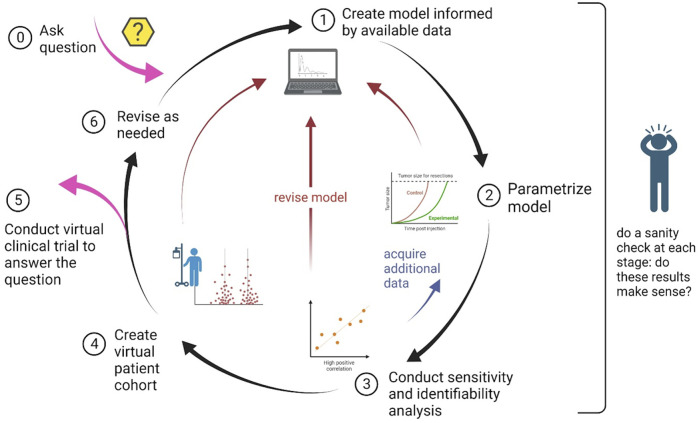
“This in turn informs model structure, as highlighted in the schematic in Figure 1, and may even lead to recommendations for future experimental design (Zhang et al., 2015).”
InfluentialSensitivity analysis approaches applied to systems biology models
Zi, Z. (2011) · IET Systems Biology · doi:10.1049/iet-syb.2011.0015 · Cited by 384 · cited 5×
“A number of methods exist to approximate this partial derivative (Zi, 2011), though the simplest uses a fi nite difference approximation: The larger the value of S i , the more the parameter perturbation affects model output, and thus the more locally sensitive the parameter is considered.”
Influential
Research works printed but not linked: 2
- FDA (2022). Project Optimus Reforming the dose optimization and dose selection paradigm in oncology. Bethesda, MD: Food and Drug Administration of the United States of America.
- Mendes P. (2001). Modeling large biological systems from functional genomic data: Parameter estimation. Found. Syst. Biol. 2001, 163– 168.
Cited by
Wang, H., Arulraj, T., Ippolito, A., & Popel, A. S. (2024) · npj Digital Medicine · doi:10.1038/s41746-024-01188-4 · Cited by 122
Highly Multiplexed Tissue Imaging in Precision Oncology and Translational Cancer Research
Bollhagen, A., & Bodenmiller, B. (2024) · Cancer Discovery · doi:10.1158/2159-8290.cd-23-1165 · Cited by 59
Embracing the future of medicine with virtual patients
Wang, K., Parrott, N. J., & Lavé, T. (2025) · Drug Discovery Today · doi:10.1016/j.drudis.2025.104322 · Cited by 21
Mathematical Oncology: How Modeling Is Transforming Clinical Decision-Making
Scibilia, K., Gallagher, K., Masud, M. A., Robertson‐Tessi, M., Gatenbee, C., West, J., Llamas, P., Prabhakaran, S., Gallaher, J. A., & Anderson, A. R. A. (2025) · Cancer Research · doi:10.1158/0008-5472.can-25-0750 · Cited by 20
Porthiyas, J., Nussey, D., Beauchemin, C. A. A., Warren, D. C., Quirouette, C., & Wilkie, K. P. (2024) · npj Systems Biology and Applications · doi:10.1038/s41540-024-00409-6 · Cited by 21
“Butthisso-callednoiseistypically thecombinedresultof(1)experimentalmeasurementaccuracy(signal-to-noiseratio),whichcorrespondinglydegradestheaccuracyofpara-meterestimates;and(2)inter-experimentalvariabilitysuchasthat observedacrossasetofpatients.”
BackgroundSelf-citationRoman, Y. M. (2025) · Personalized Medicine · doi:10.1080/17410541.2025.2504329 · Cited by 15
Braniff, N., Joshi, T., Cassidy, T., Trogdon, M., Kumar, R., Poels, K. E., Allen, R., Musante, C. J., & Shtylla, B. (2024) · CPT Pharmacometrics & Systems Pharmacology · doi:10.1002/psp4.13270 · Cited by 14
Mittal, R., Ho, A., Adivikolanu, H., Sawhney, M., Lemos, J. R. N., Mittal, M., & Hirani, K. (2025) · Frontiers in Pharmacology · doi:10.3389/fphar.2025.1644907 · Cited by 12
“Technological advancements have opened new avenues for innovative alternatives, with simulation models emerging as a transformative approach in biomedical research (Nithin et al., 2023; Ingber, 2020; Madden et al., 2020; Huang et al., 2021; Craig et al., 2023).”
Gonçalves, M., Barata, P. A., & Vale, N. (2026) · Journal of Clinical Medicine · doi:10.3390/jcm15031210 · Cited by 13
“By randomly sampling known distributions of demographic and biological parameters, one can generate large cohorts of virtual patients that capture the spectrum of human variability [74].”
Assessing the Role of Patient Generation Techniques in Virtual Clinical Trial Outcomes
Gevertz, J. L., & Wares, J. R. (2024) · Bulletin of Mathematical Biology · doi:10.1007/s11538-024-01345-6 · Cited by 12
“Following model parametrization, it is important to further understand the structure of parameter space (Step 3), which can be done using sensitivity and identifiability analyses [21].”
InfluentialSelf-citationRahman, E., Rao, P., Nassif, A. D., Webb, W. R., Wu, W. T. L., & CARRUTHERS, J. D. A. (2025) · European Journal of Plastic Surgery · doi:10.1007/s00238-025-02331-4 · Cited by 11
From cellular perturbation to probabilistic risk assessments
Maertens, A., Kincaid, B., Bridgeford, E., Brochot, C., Silva, A. D. C. E., Dorne, J. L. C. M., Geris, L., Husøy, T., Kleinstreuer, N., Ladeira, L., et al. (2025) · ALTEX · doi:10.14573/altex.2501291 · Cited by 11
A Step‐by‐Step Workflow for Performing In Silico Clinical Trials With Nonlinear Mixed Effects Models
Cortes-Rios, J. A., Magee, M. H., Sher, A., Jusko, W. J., & Desikan, R. (2025) · CPT Pharmacometrics & Systems Pharmacology · doi:10.1002/psp4.70122 · Cited by 9
“In addition, model parameterization can be set according to multiple experimental conditions, e.g., untreated patient datasets versus treated patient datasets, to hierarchically estimate physiological disease progression parameters and differentiate them from drug effect parameters [45].”
InfluentialTosca, E. M., Carlo, A. D., Bartolucci, R., Fiorentini, F., Tollo, S. D., Caserini, M., Rocchetti, M., Bettica, P. U., & Magni, P. (2024) · CPT Pharmacometrics & Systems Pharmacology · doi:10.1002/psp4.13087 · Cited by 8
Virtual Patients in Clinical Trials for Drug Development: A Narrative Review
Kleeberger, J. (2025) · Cureus · doi:10.7759/cureus.85380 · Cited by 11
Sauteur-Robitaille, J. L., Crosley, P., Hitt, M., Jenner, A. L., & Craig, M. (2023) · Cancer Biology & Therapy · doi:10.1080/15384047.2023.2283926 · Cited by 7
“34 Thus, the integration of mathematical and computational models is cost effective 35,36 and helps to reduce attrition along the drug development pipeline.”
BackgroundSelf-citationMathematical modeling framework enhances clinical trial design for maintenance treatment in oncology
Kozłowska, E., Haltia, U., Puszyński, K., & Färkkilä, A. (2024) · Scientific Reports · doi:10.1038/s41598-024-80768-6 · Cited by 5
“Thus, computational biologists have employed mathematical modeling to perform clinical trials in silico 14 .”
Hilhorst, P., van de Wouw, B., Zając, K., Veer, M. V. ’., Tonino, P. A. L., van de Vosse, F. N., & Huberts, W. (2025) · Philosophical Transactions of the Royal Society A Mathematical Physical and Engineering Sciences · doi:10.1098/rsta.2024.0230 · Cited by 5
Cortes-Rios, J. A., Ren, T., Hanan, N., Sher, A., Nader, A., Magee, M. H., Jusko, W. J., & Desikan, R. (2025) · Clinical Pharmacology & Therapeutics · doi:10.1002/cpt.3718 · Cited by 5
“3,7,49,50 This includes constructing a mechanistic mathematical model based on biological knowledge of HBV disease progression and treatments; utilizing non-linear mixed effects fitting to estimate population parameter distributions using individual-level clinical data from multiple sources;…”
Delaying cancer progression by integrating toxicity constraints in a model of adaptive therapy
Gevertz, J. L., Jain, H. V., Kareva, I., Wilkie, K. P., Brown, J. S., Huang, Y., Sontag, E. D., Vinogradov, V., & Davies, M. (2026) · npj Systems Biology and Applications · doi:10.1038/s41540-025-00635-6 · Cited by 4
Self-citationA Nonparametric Approach to Practical Identifiability of Nonlinear Mixed Effects Models
Cassidy, T., Johnston, S. T., Plank, M., Botha, I., Flegg, J. A., Murphy, R. J., & Hamis, S. (2026) · Bulletin of Mathematical Biology · doi:10.1007/s11538-025-01583-2 · Cited by 4
“…models are extensively used throughout the pharmacokinetics community, and the NLME framework is increasingly used in the development of mathematical models to understand clinical trial data (Iyaniwura et al. 2025; Cortés-Ríos et al. 2025; Marc et al. 2023; Traynard et al. 2020; Lavielle 2014).”
InfluentialVirtual patient model for evaluating automated inspired oxygen control
Herrmann, J., Cruz, A. F., Varghese, F., LeCroy, D., Harvey, B. C., Giacometti, P., Lampe, J. W., Beck, G., Branson, R. D., & Kaczka, D. W. (2025) · Computers in Biology and Medicine · doi:10.1016/j.compbiomed.2025.110505 · Cited by 4
In silico trials in ocular drug development: a new frontier in ophthalmology
Panos, G. D., Dutton, G. N., Empeslidis, T., & Konstas, A.-G. P. (2025) · Expert Opinion on Drug Discovery · doi:10.1080/17460441.2025.2556863 · Cited by 4
Iterative Algorithms for the Reconstruction of Early Stages of Prostate Cancer Growth
Beretta, E., Cavaterra, C., Fornoni, M., Lorenzo, G., & Rocca, E. (2025) · Journal of Nonlinear Science · doi:10.1007/s00332-025-10204-0 · Cited by 6
“Of note, for such a challenging mathematical problem, it might be necessary to first perform a sensitivity analysis and a parameter identifiability study to find a small set of significant parameters that can be effectively reconstructed [17, 47].”
Wu, C., Chen, L., Dickson, J. R., Zhang, B., Arnold, S. E., & Dodge, H. H. (2025) · Alzheimer s & Dementia · doi:10.1002/alz.70460 · Cited by 3
Lee, K. M., Choodari‐Oskooei, B., Grayling, M. J., Jacko, P., Kimani, P., Mukherjee, A., Pallmann, P., Parke, T., Robertson, D. S., Wang, Z., et al. (2026) · Statistics in Medicine · doi:10.1002/sim.70449 · Cited by 4
Metzcar, J., Guenter, R. E., Wang, Y., Baker, K. M., & Lines, K. E. (2025) · Endocrine Oncology · doi:10.1530/eo-24-0025 · Cited by 3
Quantitative calibration of a spatial QSP model identifies fibroblast impact on HCC immunotherapy
Zhang, S., Wang, H., Cho, Y., da Rocha, H. L., Wong, W., Yarchoan, M. M., Jaffee, E. M., Ho, W. J., Kagohara, L. T., Fertig, E. J., et al. (2026) · Proceedings of the National Academy of Sciences · doi:10.1073/pnas.2525799123 · Cited by 3
Agbo, C. E., Nwankwo, C. K., Onyehalu, J. C., Agu, M. C., Opah, C., & Nworu, C. S. (2026) · Journal of Pharmacology and Experimental Therapeutics · doi:10.1016/j.jpet.2026.104986 · Cited by 2
Sensitivity analysis of key CT simulation parameters and their impact on quality of virtual images
Montero, I., Samei, E., & Abadi, E. (2025) · Medical Physics · doi:10.1002/mp.70114 · Cited by 1
Zugaj, D., & Nekka, F. (2025) · Journal of Pharmacokinetics and Pharmacodynamics · doi:10.1007/s10928-025-10009-4 · Cited by 2
Varakunan, S., Stadt, M. M., & Kohandel, M. (2026) · Bulletin of Mathematical Biology · doi:10.1007/s11538-026-01633-3 · Cited by 1
“Instead, their main function involves enhancing the function of other immune cells, including CD8 + T cells, through the secretion of cytokines such as interferon-gamma (IFN-γ ) and interleukin-2 (IL-2) (Ahrends et al. 2017).”
An MRI-informed poromechanical model for organ-scale prediction of glioma growth
Andaloussi, M. A., Urcun, S., Hormuth, D. A., Lorenzo, G., Sciumè, G., Wu, C., Yankeelov, T. E., & Bordas, S. (2026) · Computer Methods in Applied Mechanics and Engineering · doi:10.1016/j.cma.2026.119305 · Cited by 1
Sheen, J. K., Curtin, L. A., Finley, S. D., Konstorum, A., McGee, R. L., & Craig, M. (2024) · Bulletin of Mathematical Biology · doi:10.1007/s11538-024-01282-4 · Cited by 1
“…include departing from seeking a single parameterization to considering a range of parameterizations for a model to encompass observed diversity (Craig et al. 2023), modifications of model structure to better represent differences between individuals/groups of individuals and using parameter…”
BackgroundSelf-citationSynthetic pulse wave dataset for analysis of vascular ageing in elderly patients
Rogov, A. A., Gamilov, T. M., Bragina, A. E., Abdullaev, M., Дружинина, Н. А., Rodionova, Y., Shikhmagomedov, R., Tyulin, M., & Podzolkov, V. I. (2024) · Mathematical Modelling of Natural Phenomena · doi:10.1051/mmnp/2024017 · Cited by 1
“One of the ways to reduce the costs is utilizing synthetic patient data and virtual populations [1, 2].”
BackgroundHarbour, N., Curtin, L. A., Michaelides, L., Hubbard, M. E., Jackson, P., Rani, V., Kenchappa, R. S., Farias, V., Carrano, A., Owen, M. R., et al. (2024) · bioRxiv (Cold Spring Harbor Laboratory) · doi:10.1101/2024.08.22.609156 · Cited by 1
Translating and evaluating single-cell Boolean network interventions in the multiscale settingPreprint
Metzcar, J., Pletz, K., da Rocha, H. L., & Rozum, J. C. (2025) · arXiv (Cornell University) · doi:10.48550/arxiv.2501.16052 · Cited by 1
Beigmohammadi, F., Weaver, J. J. A., Hegarty-Cremer, S. G. D., Jeynes‐Smith, C., Smith, A. M., & Craig, M. (2025) · bioRxiv (Cold Spring Harbor Laboratory) · doi:10.1101/2025.09.26.678800 · Cited by 3
Self-citationStructured Schemas for Provenance-Rich, LLM-Assisted QSP Model Calibration
Eliason, J., & Popel, A. S. (2026) · bioRxiv (Cold Spring Harbor Laboratory) · doi:10.64898/2026.03.05.709623
“Because virtual population generation and virtual clinical trials depend on parameter distributions rather than point estimates 4,5 , calibration must quantify un-41 certainty.”
Structured Schemas for Provenance‐Rich, LLM ‐Assisted QSP Model Calibration
Eliason, J., & Popel, A. S. (2026) · CPT: Pharmacometrics & Systems Pharmacology · doi:10.1002/psp4.70306
Qian, L., Chen, J., Ma, L., Urakov, T. M., Gu, W., & Liang, L. (2025) · SPIE Medical Imaging: Image Processing · doi:10.1117/12.3038529
Sharing and reuse of mental health research data: Introducing the HeSANDA mental health node
Yung, A. R., Zivanov, N., Milicevic, M., Kang, K., Thompson, A. D., Turner, A., Barutchu, A., Llorente, L., Samuel, D., Dean, O. M., et al. (2025) · Australasian Psychiatry · doi:10.1177/10398562251382462
Integrating machine learning into the in silico clinical trial pipeline
Bekker, R. A., Brady‐Nicholls, R., de Pillis, L. G., Gevertz, J. L., & Jain, H. V. (2025) · Mathematical Biosciences · doi:10.1016/j.mbs.2025.109583 · Cited by 1
Self-citationMulder, M. P., Warnaar, R. S. P., Arendshorst-Ruuls, T. F., van Loon, L. M., Meuwese, C. L., Broomé, M., Oppersma, E., Donker, D. W., & Fresiello, L. (2026) · Computers in Biology and Medicine · doi:10.1016/j.compbiomed.2026.111561
A virtual cohort framework with applications to adoptive cell therapy in bladder cancerPreprint
Anderson, H. G., Bazargan, S., Nusbaum, D. J., Poch, M. A., Pilon‐Thomas, S., & Rejniak, K. A. (2026) · bioRxiv (Cold Spring Harbor Laboratory) · doi:10.64898/2026.03.06.710135
Oh, C., & Wilkie, K. P. (2026) · Mathematical Biosciences · doi:10.1016/j.mbs.2026.109685
“Dose is distributed equally for these models, with chemotherapy doses of [5 , 5 , 5] mg/kg and radiation doses of [3 , 3] Gy.”
InfluentialSelf-citationPanayotova, I. N., Hallare, M., & Savatorova, V. L. (2026) · Synthesis lectures on mathematics and statistics · doi:10.1007/978-3-032-17486-4_1
Marques, L., & Vale, N. (2026) · Pharmaceutics · doi:10.3390/pharmaceutics18060636
“Recently, virtual patients and in silico clinical trials (also referred to as virtual clinical trials) have emerged as innovative approaches capable of overcoming many of the operational, ethical, and logistical constraints associated with conventional clinical trials [30–32].”
Bozkurt, S. (2026) · MedComm – Future Medicine · doi:10.1002/mef2.70062
A virtual epidemics approach to HIV dynamics in the United States (1981–2030)
Tuncer, N., Liyanage, Y. R., Holmlund, V. D., & Martcheva, M. (2026) · Mathematical Biosciences & Engineering · doi:10.3934/mbe.2026085
Assessing the Role of Model Complexity in Virtual Clinical Trial Outcomes
Gevertz, J. L., & Wares, J. R. (2026) · Bulletin of Mathematical Biology · doi:10.1007/s11538-026-01715-2
“Conducting a virtual clinical trial is a multi-step process (Craig et al. 2023; Cortés-Ríos et al. 2025) that begins with identifying an intervention of interest.”
InfluentialSelf-citationKohan, L. M., Martcheva, M., & Tuncer, N. (2026) · medRxiv · doi:10.64898/2026.07.30.26359343
Vallée, A. (2026) · Frontiers in Digital Health · doi:10.3389/fdgth.2026.1908794 · Cited by 1
“…and scenario-based simulations generated by the twin should remain compatible with the empirical joint distribution of outcomes, transitions, treatment patterns, competing events, and care pathways in the intended-use population (31, 32) (Pash et al. is a preprint and was not peer reviewed).”
A Mathematical Model Based Evaluation of Probiotic Effects on Antibiotic-Disrupted Gut Microbiota
Vadivel, S. (2026) · The Atrium (University of Guelph) · Cited by 1
In silico methodologies in computational medicine: From complex disease modeling to virtual clinics
Italia, M., Otero, J. G., Azzimonti, L., García‐Aznar, J. M., Dercole, F., & Belmonte-Beitia, J. (2026) · Biophysics Reviews · doi:10.1063/5.0285118 · Cited by 1
DiffDose: Differentiable Programming for Personalized Dose-Regimen Optimal ControlPreprint
Hajhashemi, S., Emad, A., & Craig, M. (2026) · bioRxiv (Cold Spring Harbor Laboratory) · doi:10.64898/2026.09.07.749974
Self-citationБорзова, М. А. (2026) · Real-World Data & Evidence · doi:10.37489/2782-3784-myrwd-109
The case for model-informed vaccine development
Bai, J. P. F., Beigmohammadi, F., Craig, M., Dalton, M., Desikan, R., Easlick, T., Gazeau, S., Heffernan, J., Kirpichnikova, A., Padmanabhan, P., et al. (2026) · Vaccine · doi:10.1016/j.vaccine.2026.128780 · Cited by 1
Self-citationKosinsky, Y., Azarov, I., Zhudenkov, K., Peskov, K. V., Гришин, С., Alina, E., Berezovskaya, Y. V., Lemak, M. S., Samsonov, M. Y., & Feist, E. (2026) · Journal of Clinical Medicine · doi:10.3390/jcm15197660
“Population pharmacokinetic/pharmacodynamic (PK/PD) modeling integrated with virtual clinical trial simulations represents a promising approach to mitigate these limitations [22,23].”
Metadata
- Authors
- Craig, M., Gevertz, J. L., Kareva, I., & Wilkie, K. P.
- Affiliations
- Centre Hospitalier Universitaire Sainte-Justine (CA)
- The College of New Jersey (US)
- EMD Serono, Inc. (United States) (US)
- Toronto Metropolitan University (CA)
- Corresponding author
- Craig, Morgan
- Wilkie, Kathleen P.
- Venue
- Frontiers in Systems Biology
- Publisher
- Frontiers Media SA
- Published
- 2023-06-16
- Volume
- 3
- Pages
- 1174647-1174647
- ISSN
- 2674-0702 (ISSN-L)
- PMC
- PMC12341971
- OpenAlex
- W4380988248
- Cited by
- 52
- References
- 60
- Citations by year
- 2026: 21 · 2025: 20 · 2024: 10 · 2023: 1
- FWCI
- 10.57
- Type
- journal article
- Language
- en
- Open access
- gold
- doi.org
- Licence
- Locations
- Frontiers in Systems Biology (publishedVersion, cc-by)
- Europe PMC (PubMed Central) (publishedVersion, cc-by)
- PubMed Central (publishedVersion, cc-by)
- PubMed (publishedVersion)
- DOAJ (DOAJ: Directory of Open Access Journals) (submittedVersion, cc-by-sa)
- Funders
- Natural Sciences and Engineering Research Council of Canada (RGPIN-2018-04546)
- Fonds de Recherche du Québec—Santé
- Topics
- Physical Sciences › Mathematics › Statistics and Probability › Statistical Methods in Clinical Trials
- Health Sciences › Medicine › Pediatrics, Perinatology and Child Health › Pharmaceutical studies and practices
- Life Sciences › Pharmacology, Toxicology and Pharmaceutics › Drug Discovery › Computational Drug Discovery Methods
- Keywords
- virtual clinical trials, virtual patients, mathematical modeling, patient heterogeneity, parameter estimation, parameter sensitivity analysis, model identifiability, virtual patient cohorts, drug development
About these checks
Registry, retraction, Cites and statistics results are computed, not judged, with one exception: a printed reference that no index lists is read once by a model before it counts as a citation error. Claims are extracted by a model and kept only when their quote appears verbatim in the text; each cited source is then checked, with a model’s help, for whether it says what the claim relies on. Those verdicts can be wrong — read the claim’s quote and the cited source before relying on one.
Statistics and arithmetic are recomputed, not judged.
Confidence bands are shown only for fields calibrated on our annotated test set. None is calibrated yet, so no band is shown.
What counts as a claim ›How we measure confidence ›How we check this ›
Are you an author, or do you see a problem with this page? Request a review
Data sources
Bibliographic data: Semantic Scholar, OpenAlex, Crossref.
Contains information from the Semantic Scholar Academic Graph Datasets, made available under the ODC Attribution License (ODC-BY 1.0).
Semantic Scholar’s data is described in: Kinney, R., et al. (2023). The Semantic Scholar Open Data Platform. arXiv:2301.10140.
