

The Burden of Drug Abuse in Nigeria: A Scoping Review of Epidemiological Studies and Drug Laws
Open accessThe DOI matches its Crossref record; 29 of the 40 references it cites were found in a registry or an index; 36 of the 203 sources its claims cite were checked for support.
Abstract
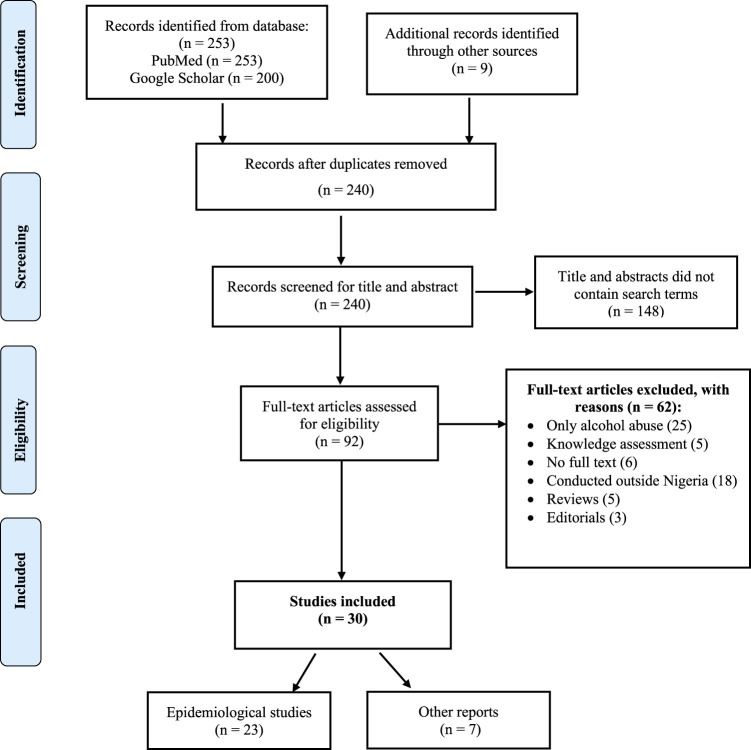
Background: The burden of drug abuse is becoming a public health concern in Nigeria. Preventive measures should include identifying the root causes of the burden for targeted intervention. We, therefore, aim to conduct a scoping review of the literature to summarize the findings of epidemiological studies on drug abuse and provisions of drug laws in Nigeria. The review also provides appropriate recommendations as interventions for prevention. Methods: We conducted a systematic search of the literature on PubMed to identify information on drug abuse and drug laws in Nigeria from the inception of the database to March 2020. Additional information was retrieved from Google Scholar, a manual search of included articles, discussion with experts on the subject matter, and gray literature. Study selection was performed using the Preferred Reporting Items for Systematic Reviews and Meta-Analyses (PRISMA) statements. Information from gray literature was assessed for quality and accuracy using the AACODS checklist (authority, accuracy, coverage, objectively, date, significance). Results: The systematic search of the literature generated 253 studies. Nine articles were obtained from other sources. After the selection process, 23 eligible studies were included for review. A prevalence of 20–40% and 20.9% of drug abuse was reported among students and youths, respectively. Commonly abused drugs include cannabis, cocaine, amphetamine, heroin, diazepam, codeine, cough syrup and tramadol. Sources where abusers obtained drugs, were pharmacies/patent medicine shops, open drug markets, drug hawkers, fellow drug abusers, friends, and drug pushers. Drug abuse was common among undergraduates and secondary school students, youths, commercial bus drivers, farmers, and sex workers. Reason for use included to increase physical performance, stress and to derive pleasure. Poor socioeconomic factors and low educational background were the common risk factors associated with drug abuse. We identified several drug laws and policies that were established under government agencies such as the National Drug Law Enforcement Agency (NDLEA), National Agency for Foods and Drugs Administration and Control (NAFDAC), Pharmacists Council of Nigeria (PCN) and a Presidential Advisory Committee. Conclusion: Findings from epidemiological studies on drug abuse in Nigeria has demonstrated that the burden of drug abuse is still high despite the existing drug laws, policies, and strategies for prevention. Measures to reduce the burden should involve the community, government, and religious bodies. Preventive measures should target the youths, the students, identified sources of the drugs, reasons and risk factors associated with drug abuse in Nigeria.
Overview
CoChat Summary
TL;DR
This scoping review of 23 epidemiological studies plus agency reports and drug laws found that drug abuse remains a high burden in Nigeria despite existing laws and policies. Reported prevalence was 20–40% among secondary school students, 20.9% among youths, 14.4% among the general public, and 81.1% among commercial bus drivers.
Key findings
- Among 30 included sources (23 epidemiological studies, one thesis, five agency/UNODC reports, two newspaper articles), prevalence was 20–40% among secondary school students, 20.9% among youths, 14.4% among the general public, and 81.1% among commercial bus drivers.
- Commonly abused drugs included cannabis, cocaine, amphetamine, heroin, diazepam, codeine, cough syrup, and tramadol. Cannabis was the most consistently reported: 10.8% among the general public, 22.7% among adolescents ≤25 years, 0.6–34% among secondary school students (pooled 12.5%), and 8–11% among undergraduates.
- Reported sources of drugs included pharmacies/patent medicine shops (23–33%), open markets (17%), drug hawkers, fellow drug abusers (8%), friends (up to 61%), family members (1.6–33%), teachers (3%), physicians (8.3%), other health practitioners (3.0%), and underground agents (57%).
- Frequently reported risk factors were male gender, younger age, poor economic status, unemployment, parental deprivation/broken home, lower education level, and peer-group influence; common reasons for use were to increase physical performance, derive pleasure, relax/sleep, experiment/curiosity, keep awake, relieve stress, and relieve anxiety.
Methods
- Systematic PubMed search from database inception to March 13, 2020, plus Google Scholar (first 200 results), manual reference searches, expert discussion, and gray literature; selection followed PRISMA, and gray literature was assessed with the AACODS checklist.
- Inclusion criteria covered prevalence/incidence of drug abuse in Nigeria, community populations, government policies/interventions, and drug laws; alcohol-only studies were excluded.
- Data extracted included authors, population/sample size, settings, prevalence, commonly abused drugs, sources, reasons, and associated factors; heterogeneity prevented determination of a pooled prevalence.
Limitations
- Stated by the authors: the systematic search was limited to two electronic databases, which may have excluded eligible studies; the review did not assess the quality of included studies.
- Evident from the text: study heterogeneity meant a pooled prevalence of drug abuse in Nigeria could not be determined; most epidemiological studies were conducted among secondary school students, with few among the general population; only three studies examined psychiatric admission due to drug abuse, the most recent published in 1986; and only five studies reported sources of drugs.
Model-written summary. Check it against the paper before relying on it.
Integrity signals
Registry
Cites
Statistics
Figures
Verification
Claims the paper makes
16 Valid · 7 Not valid · 56 Not checked · 39 Own results and interpretations
The sources with a verdict support this claim; the rest weren’t checked yet, have no full text we could read, or their verdicts aren’t rated yet.
In the paper
“Of the 23 epidemiological studies, only seven reported an overall prevalence of drug abuse among the study sample [3, 11-13, 21, 22, 27].”
§ The Burden of Drug Abuse in Nigeria: A Scoping Review of Epidemiological Studies and Drug Laws > Results and Discussion > Prevalence of Drug Abuse in Nigeria
What the sources say
- Not matchedcites [3] United Nations Office on Drugs and Crime (2018). Drug use in Nigeria. Available at: https://www.unodc.org/documents/data-and-analysis/statistics/Drugs/Drug_Use_Survey_Nigeria_2019_BOOK.pdf (Accessed 3 18, 2020).
Its entry has no title and year that we can search by.
- Not matchedcites [11] Gobir A Sambo M Bashir S Olorukoba A Ezeh O Bello M (2017). Prevalence and determinants of drug abuse among youths in A rural community in north western Nigeria. Trop J Health Sci. 24 (4), 5– 8.
We searched by its title and found no matching paper.
- Not checked — no full text of the sourcecites [12] Erah F Omatseye A (2017). Drug and alcohol abuse among secondary school students in a rural community in south-south Nigeria. Ann Med and Surg Pract. 2 (2), 85– 91.
- Supportedcites [13] Yunusa U Bello UL Idris M Haddad MM Adamu D (2017). Determinants of substance abuse among commercial bus drivers in Kano Metropolis, Kano State, Nigeria. Ajns. 6 (2), 125– 130. 10.11648/j.ajns.20170602.16 source
The citation identifies this paper as one of the studies reporting an overall prevalence, not as the source of the count of 23 studies or seven reports. Table 2 reports substance use among 158 of 196 respondents (81.1%), and the Results section describes this as the proportion taking a substance. (LLM, conf=0.91)
- Not checked — no full text of the sourcecites [21] Abdulkarim AA Mokuolu OA Adeniyi A (2005). Drug use among adolescents in Ilorin, Nigeria. Trop Doct. 35 (4), 225– 228. 10.1258/004947505774938620 16354478 source
- Not matchedcites [22] Edafiadhe EW (2005). Drug abuse among secondary school studentsin Benin city, Nigeria. Faculty of Psychiatry. Available at: https://www.dissertation.npmcn.edu.ng/index.php/FMCPsych/article/view/1518. (Accessed 27/01/2021).
We searched by its title and found no matching paper.
- Not checked — no full text of the sourcecites [27] Akpala C Bolaji I (1991). Drug abuse among secondary school students in Sokoto, Nigeria. Psychopathol Afr. 23, 197– 204.
plain- Asserted: passes — The authors put it forward as true.
- Checkable: passes — It can be checked against evidence.
- Load-bearing: passes — The paper’s conclusions depend on it.
- Based: passes — The paper gives a reason why it holds.
- Not matched
The sources with a verdict support this claim; the rest weren’t checked yet, have no full text we could read, or their verdicts aren’t rated yet.
In the paper
“Nineteen of the included studies examined factors that could raise people’s likelihood of drug abuse [3, 11–23, 25, 27–32].”
§ The Burden of Drug Abuse in Nigeria: A Scoping Review of Epidemiological Studies and Drug Laws > Results and Discussion > Risk Factors Associated With Drug Abuse
What the sources say
- Not matchedcites [3] United Nations Office on Drugs and Crime (2018). Drug use in Nigeria. Available at: https://www.unodc.org/documents/data-and-analysis/statistics/Drugs/Drug_Use_Survey_Nigeria_2019_BOOK.pdf (Accessed 3 18, 2020).
Its entry has no title and year that we can search by.
- Not matchedcites [11] Gobir A Sambo M Bashir S Olorukoba A Ezeh O Bello M (2017). Prevalence and determinants of drug abuse among youths in A rural community in north western Nigeria. Trop J Health Sci. 24 (4), 5– 8.
We searched by its title and found no matching paper.
- Not checked — no full text of the sourcecites [12] Erah F Omatseye A (2017). Drug and alcohol abuse among secondary school students in a rural community in south-south Nigeria. Ann Med and Surg Pract. 2 (2), 85– 91.
- Supportedcites [13] Yunusa U Bello UL Idris M Haddad MM Adamu D (2017). Determinants of substance abuse among commercial bus drivers in Kano Metropolis, Kano State, Nigeria. Ajns. 6 (2), 125– 130. 10.11648/j.ajns.20170602.16 source
The Abstract identifies this as a study of determinants of substance abuse among commercial bus drivers and reports factors associated with their substance abuse. The citation identifies one study in the citing paper’s group; the count of nineteen describes that group, not a finding attributed to Namadi. (LLM, conf=0.92)
- Supportedcites [14] Namadi MM (2016). Drug abuse among adolescents in Kano metropolis, Nigeria. IJASS. 2 (1), 195– 206. 10.11648/j.ajns.20170602.16 source
The Abstract identifies this as a study of determinants of substance abuse among commercial bus drivers in Kano and reports factors associated with abuse. It therefore supports its inclusion as one of the studies examining factors that may raise likelihood of drug abuse; the count of nineteen describes the citing review, not this source's finding. (LLM, conf=0.92)
- Not checked — no full text of the sourcecites [15] Dankani I (2012). Abuse of cough syrups: a new trend in drug abuse in northwestern Nigerian states of kano, sokoto, katsina, zamfara and kebbi. Int J Phys Soc Sci. 2 (8), 199– 213.
- Not checked — no full text of the sourcecites [16] Famuyiwa O Aina OF Bankole-Oki OM (2011). Epidemiology of psychoactive drug use amongst adolescents in metropolitan Lagos, Nigeria. Eur Child Adolesc Psychiatr. 20 (7), 351– 359. 10.1007/s00787-011-0180-6 21713507 source
- Not matchedcites [17] Essien CF (2010). Drug use and abuse among students in tertiary institutions-the case of federal university of technology, Minna. JORIND. 8 (1), 35– 42.
We searched by its title and found no matching paper.
- Supportedcites [18] Adamson TA Onifade PO Ogunwale A (2010). Trends in sociodemographic and drug abuse variables in patients with alcohol and drug use disorders in a Nigerian treatment facility. W Afr J Med. 29 (1), 12– 18. 10.4314/wajm.v29i1.55947 20496332 source
The Abstract (page not provided) describes a study of sociodemographic and family variables among patients with drug use disorders. The Discussion (page not provided) examines age and birth position in relation to drug abuse, so this paper fits the citing sentence’s description of an included study examining possible contributing factors. The count of nineteen is the citing authors’ count, not a finding attributed to this individual paper. (LLM, conf=0.85)
- Not checked — no full text of the sourcecites [19] Makanjuola BA Sabitua Oyelekeandtanimola M (2007). Psychoactive substance use among long distance vehicle drivers ln llorin, Nigeria. Niger J psychiatry. 5 (1), 14–18. source
plainstates a possible cause- Asserted: passes — The authors put it forward as true.
- Checkable: passes — It can be checked against evidence.
- Load-bearing: unclear — It is unclear whether the paper’s conclusions depend on it.
- Based: passes — The paper gives a reason why it holds.
- Not matched
The cited sources that could be checked couldn’t confirm or dispute this claim.
In the paper
“The prevalence of cannabis abuse among members of the general public was 10.8% [3] and 22.7% among adolescents of 25 years and younger [14].”
§ The Burden of Drug Abuse in Nigeria: A Scoping Review of Epidemiological Studies and Drug Laws > Results and Discussion > Commonly Abused Drugs in Nigeria
What the sources say
- Could not verifycites [14] Namadi MM (2016). Drug abuse among adolescents in Kano metropolis, Nigeria. IJASS. 2 (1), 195– 206. 10.11648/j.ajns.20170602.16 sourceExperimental — accuracy not yet measured
The Introduction discusses cannabis use among school-going youths but gives no prevalence for adolescents aged 25 or younger. Table 3 reports 23.5% marijuana abuse among commercial bus drivers, not 22.7% in the claimed age group; searches for “22.7” and “25 years and younger” found no matching result in our copy. (LLM, conf=0.76)
plain- Asserted: passes — The authors put it forward as true.
- Checkable: passes — It can be checked against evidence.
- Load-bearing: unclear — It is unclear whether the paper’s conclusions depend on it.
- Based: passes — The paper gives a reason why it holds.
- Could not verify
Every source the paper cites for this claim was checked and supports it.
In the paper
“A prevalence of 14.4% was reported among members of the general public (all ages), 20.9% among youths in the community [11], and 81.1% among commercial bus drivers [13].”
§ The Burden of Drug Abuse in Nigeria: A Scoping Review of Epidemiological Studies and Drug Laws > Results and Discussion > Prevalence of Drug Abuse in Nigeria
What the sources say
- Supportedcites [13] Yunusa U Bello UL Idris M Haddad MM Adamu D (2017). Determinants of substance abuse among commercial bus drivers in Kano Metropolis, Kano State, Nigeria. Ajns. 6 (2), 125– 130. 10.11648/j.ajns.20170602.16 source
The Abstract reports that 81.1% of the 196 surveyed commercial bus drivers in Kano Metropolis had ever abused a substance. The figure is a prevalence of ever having abused a substance, not necessarily current use. (LLM, conf=0.93)
plain- Asserted: passes — The authors put it forward as true.
- Checkable: passes — It can be checked against evidence.
- Load-bearing: unclear — It is unclear whether the paper’s conclusions depend on it.
- Based: passes — The paper gives a reason why it holds.
- Supported
The cited sources that could be checked couldn’t confirm or dispute this claim.
In the paper
“0.1–0.6% among members of the general public [3, 14]”
§ The Burden of Drug Abuse in Nigeria: A Scoping Review of Epidemiological Studies and Drug Laws > Results and Discussion > Commonly Abused Drugs in Nigeria
What the sources say
- Not matchedcites [3] United Nations Office on Drugs and Crime (2018). Drug use in Nigeria. Available at: https://www.unodc.org/documents/data-and-analysis/statistics/Drugs/Drug_Use_Survey_Nigeria_2019_BOOK.pdf (Accessed 3 18, 2020).
Its entry has no title and year that we can search by.
- Could not verifycites [14] Namadi MM (2016). Drug abuse among adolescents in Kano metropolis, Nigeria. IJASS. 2 (1), 195– 206. 10.11648/j.ajns.20170602.16 sourceExperimental — accuracy not yet measured
The Introduction mentions cocaine but gives no prevalence range for cocaine abuse among Nigeria’s general public. The Results and Table 2 concern commercial bus drivers, not the general public. Searches for the 0.1–0.6% range and for Nigerian cocaine prevalence found no supporting passage in our copy. (LLM, conf=0.74)
plain- Asserted: passes — The authors put it forward as true.
- Checkable: passes — It can be checked against evidence.
- Load-bearing: unclear — It is unclear whether the paper’s conclusions depend on it.
- Based: passes — The paper gives a reason why it holds.
- Not matched
76 more claims · 18 with their cited sources checked
Create a free account to see all 118 claims and to verify the 14 references still open.
- It may state two separate claims as one. 23
- Probably not a substantial claim. 14
- The quote only partly states this claim. 2
Self-check
Percentages, sums and reported differences re-computed from the paper’s own numbers.
Each contradiction between two passages listed here was confirmed by an independent check.
Rated minor: it would not touch a result — a value no result rests on, a p-value that stays on the same side of the significance level, or a conflict that is clerical, resolved elsewhere in the paper, or outside its own findings.
In the paper
§ The Burden of Drug Abuse in Nigeria: A Scoping Review of Epidemiological Studies and Drug Laws > Results and Discussion > Prevalence of Drug Abuse in Nigeria
“20.9% among youths in the community [11]”
§ The Burden of Drug Abuse in Nigeria: A Scoping Review of Epidemiological Studies and Drug Laws > Results and Discussion
“Gobir et al., 2017 [11] | 359 youths from the general population | Rural communities in Sokoto state | Prevalence (10%)”
Rated minor: it would not touch a result — a value no result rests on, a p-value that stays on the same side of the significance level, or a conflict that is clerical, resolved elsewhere in the paper, or outside its own findings.
In the paper
§ The Burden of Drug Abuse in Nigeria: A Scoping Review of Epidemiological Studies and Drug Laws > Results and Discussion > Sources Where Drug Abusers Obtained Drugs
“pharmacies/patent medicine shops (23–33%) [15, 25, 31, 32]”
§ The Burden of Drug Abuse in Nigeria: A Scoping Review of Epidemiological Studies and Drug Laws > Results and Discussion
“Underground agents (57%), chemists (45%), home (33%), open markets (17%)”
Rated minor: it would not touch a result — a value no result rests on, a p-value that stays on the same side of the significance level, or a conflict that is clerical, resolved elsewhere in the paper, or outside its own findings.
In the paper
§ The Burden of Drug Abuse in Nigeria: A Scoping Review of Epidemiological Studies and Drug Laws > Results and Discussion > Prevalence of Drug Abuse in Nigeria
“Four of the studies were conducted among secondary school students and reported a prevalence between 20 and 40% [12, 21, 22, 27].”
§ The Burden of Drug Abuse in Nigeria: A Scoping Review of Epidemiological Studies and Drug Laws > Results and Discussion
“Akpala and Bolaji 1991 [27] | 306 secondary school students | Three secondary schools in sokoto state | Prevalence of 41%”
Rated minor: it would not touch a result — a value no result rests on, a p-value that stays on the same side of the significance level, or a conflict that is clerical, resolved elsewhere in the paper, or outside its own findings.
In the paper
§ The Burden of Drug Abuse in Nigeria: A Scoping Review of Epidemiological Studies and Drug Laws > Results and Discussion > Sources Where Drug Abusers Obtained Drugs
“Only five studies reported the sources of the drugs being abused.”
§ The Burden of Drug Abuse in Nigeria: A Scoping Review of Epidemiological Studies and Drug Laws > Results and Discussion > Sources Where Drug Abusers Obtained Drugs
“The common sources included: pharmacies/patent medicine shops (23–33%) [15, 25, 31, 32], open markets (17%) [31], drug hawkers [25, 32], hawkers of traditional herbal preparations [25], fellow drug abusers (8%) [15], underground agents (57%) [31], family members (1.6–33%) [22, 27, 31]”
Rated minor: it would not touch a result — a value no result rests on, a p-value that stays on the same side of the significance level, or a conflict that is clerical, resolved elsewhere in the paper, or outside its own findings.
In the paper
§ The Burden of Drug Abuse in Nigeria: A Scoping Review of Epidemiological Studies and Drug Laws > Results and Discussion > Gaps Identified in the Included Literature
“Of the three studies, the most recent was published in 1986.”
§ The Burden of Drug Abuse in Nigeria: A Scoping Review of Epidemiological Studies and Drug Laws > Results and Discussion
“Ohaeri and odejide 1993 [25]”
1 more finding
Create a free account to see every finding of this check.
Citations
Cites
Bramer, W. M., Rethlefsen, M. L., Kleijnen, J., & Franco, O. H. (2017) · Systematic Reviews · doi:10.1186/s13643-017-0644-y · Cited by 2,114 · cited 1×
“” Based on previous recommendations, only the first 200 search results from the Google scholar search were considered for inclusion [8].”
BackgroundHurst, T. (2019) · The Encyclopedia of Women and Crime · doi:10.1002/9781118929803.ewac0543 · Cited by 339
United Nations Office on Drugs and Crime (2019) · World Drug Report · doi:10.18356/a4dd519a-en · Cited by 161
Status of drug use/abuse in Africa: a review
Odejide, A. O. (2006) · International Journal of Mental Health and Addiction · doi:10.1007/s11469-006-9015-y · Cited by 145 · cited 2×
“The widespread use of cocaine in Nigeria may be related to easy access due to increased trafficking of drugs despite the existing legal control measures [22, 34].”
BackgroundPsychoactive substance use among medical students in a Nigerian university.
(2007) · Europe PMC (PubMed Central) · Cited by 102
Drug use among adolescents in Ilorin, Nigeria
Abdulkarim, A. A., Mokuolu, O. A., & Adeniyi, A. (2005) · Tropical Doctor · doi:10.1258/004947505774938620 · Cited by 47 · cited 5×
“8% among secondary school students [12, 16, 21, 22], 0.”
BackgroundInfluentialEpidemiology of psychoactive drug use amongst adolescents in metropolitan Lagos, Nigeria
Famuyiwa, O., Aina, O. F., & Bankole-Oki, O. M. (2011) · European Child & Adolescent Psychiatry · doi:10.1007/s00787-011-0180-6 · Cited by 43 · cited 5×
“8% among secondary school students [12, 16, 21, 22], 0.”
BackgroundInfluentialPrevalence and pattern of substance use among undergraduates in a Nigerian University
Adelekan, M. (1992) · Drug and Alcohol Dependence · doi:10.1016/0376-8716(92)90100-q · Cited by 42
Determinants of Substance Abuse among Commercial Bus Drivers in Kano Metropolis, Kano State, Nigeria
Yunusa, U. (2017) · American Journal of Nursing Science · doi:10.11648/j.ajns.20170602.16 · Cited by 41
Admissions for drug and alcohol-related problems in Nigerian psychiatric care facilities in one year
Ohaeri, J. U., & Odejide, O. A. (1993) · Drug and Alcohol Dependence · doi:10.1016/0376-8716(93)90062-u · Cited by 40 · cited 5×
“Ohaeri and odejide 1993 [25] A retrospective study of records of all (10,396) patients admitted in 1989 All (14) psychiatric care facilities in Nigeria Cannabis (NR), cocaine (NR), pethidine (NR), amphetamine (NR), a mixture of aspirin (NR), codeine and dexamphetamine (Pemoline ®) (NR), barks of unidentified trees (NR…”
BackgroundInfluential
Research works printed but not linked: 8
- United Nations Office on Drugs and Crime (2017). The drug problem and organized crime, illicit financial flows, corruption and terrorism. Vienna, Austria: United Nations.
- Ohuabunwa SI (2019). Tackling the menace of drug abuse: a disruptive innovative approach. Available at: https://psnnational.org/index.php/2019/08/01/association-of-community-pharmacists-of-nigeria-acpn-bational-conference-holding-in-kano-state-june-1-4-2019/ (Accessed 3 18, 2020).
- Gureje O Olley D (1992). Alcohol and drug abuse in Nigeria: a review of the literature. Contemp Drug Probs. 19, 491.
- Gobir A Sambo M Bashir S Olorukoba A Ezeh O Bello M (2017). Prevalence and determinants of drug abuse among youths in A rural community in north western Nigeria. Trop J Health Sci. 24 (4), 5– 8.
- Namadi MM (2016). Drug abuse among adolescents in Kano metropolis, Nigeria. IJASS. 2 (1), 195– 206. 10.11648/j.ajns.20170602.16 · DOI · Paper page
- Essien CF (2010). Drug use and abuse among students in tertiary institutions-the case of federal university of technology, Minna. JORIND. 8 (1), 35– 42.
- Edafiadhe EW (2005). Drug abuse among secondary school studentsin Benin city, Nigeria. Faculty of Psychiatry. Available at: https://www.dissertation.npmcn.edu.ng/index.php/FMCPsych/article/view/1518. (Accessed 27/01/2021).
- Abdallah MM (2019). Text of the pre-event press briefing to flag-off the commemoration of 2019 international day against drug abuse and illicit drug trafficking. Available at: https://www.vanguardngr.com/2019/06/drug-abuse-ndlea-takes-campaign-to-streets-markets-schools-chairman/ (Accessed 12/09/2020).
Cited by
Mental health in Nigeria: A Neglected issue in Public Health
Wada, Y. H., Rajwani, L., Anyam, E., Karikari, E., Njikizana, M., Srour, L., & Khalid, G. M. (2021) · Public Health in Practice · doi:10.1016/j.puhip.2021.100166 · Cited by 99
Self-citationOnaolapo, O. J., Olofinnade, A. T., Ojo, F. O., Adeleye, O., Falade, J., & Onaolapo, A. Y. (2022) · World Journal of Psychiatry · doi:10.5498/wjp.v12.i10.1268 · Cited by 61
Substance use among young people in sub-Saharan Africa: a systematic review and meta-analysis
Ebrahim, J., Adams, J., & Demant, D. (2024) · Frontiers in Psychiatry · doi:10.3389/fpsyt.2024.1328318 · Cited by 85
Chu, C., Roxas, N., Aguocha, C. M., Nwefoh, E., Wang, K., Dike, C., & Iheanacho, T. (2022) · BMC Health Services Research · doi:10.1186/s12913-022-07703-1 · Cited by 30
“Substance-use disorders have been estimated between 20 and 40% among youths and 14% in the general population [10].”
BackgroundPrevalence and patterns of substance use in West Africa: A systematic review and meta-analysis
Emmanuel, G. O., Akinsolu, F. T., Abodunrin, O. R., & Ezechi, O. C. (2024) · PLOS Global Public Health · doi:10.1371/journal.pgph.0004019 · Cited by 24
Adesida, S. A., Quadri, M. O., & Adedeji, A. M. (2022) · Scientific African · doi:10.1016/j.sciaf.2022.e01139 · Cited by 31
Peprah, E. K., MYERS, B. J., Kengne, A. P., Peer, N., Shahawy, O. E., Ojo, T., Mukasa, B., Ezechi, O., Iwelunmor, J., Ryan, N., et al. (2022) · International Journal of Environmental Research and Public Health · doi:10.3390/ijerph19031097 · Cited by 20
“Numerous reasons are provided for their use among the population including as a coping mechanism for stress [57].”
BackgroundAjibola, I., Aremu, A. O., Mary, A. I., Gloria, E., Victoria, A., Loliya, A., Olumide, A. A., Daniella, A., Blessing, A. O., Ayomikun, O., et al. (2023) · African Health Sciences · doi:10.4314/ahs.v23i4.59 · Cited by 31
Pattern of Psychoactive Substance Use in Sierra Leone: A Descriptive Retrospective Study
Eze, G., Onyishi, N. T., Nnaji, F. C., Jalloh, A., Kpallu, K. K., & Goba, K. (2024) · Sierra Leone journal of medicine. · doi:10.69524/sljm.v1i2.85 · Cited by 6
Risk Factors Associated with Substance Abuse among Adolescents
Igunma, C. H., Ohaeri, B. M., Ojo, I. O., & Babarimisa, O. (2022) · International Neuropsychiatric Disease Journal · doi:10.9734/indj/2022/v18i130214 · Cited by 20
Exploring the operations of itinerant medicine sellers within urban bus terminals in Kumasi, Ghana
Nyarko, J. A., Akuoko, K. O., Dapaah, J. M., & Gyapong, M. (2023) · Health Policy OPEN · doi:10.1016/j.hpopen.2023.100108 · Cited by 7
“Again, the fact that the IMSs are not recognised by the government, the informal sources of medicines served them well than the formal sources [56].”
BackgroundResultE‐cigarettes in Nigeria: A scoping review of evidence
Adegbile, O. E., Adeniji, O. D., Amzat, J., & Kanmodi, K. K. (2024) · Health Science Reports · doi:10.1002/hsr2.2074 · Cited by 6
Factors Influencing Drug Abuse among Youth (15-24 Years) in Kisenyi Slum, Kampala District of Uganda
Nakibuuka, I., & Nalubega, M. J. (2022) · Cognizance Journal of Multidisciplinary Studies · doi:10.47760/cognizance.2022.v02i09.005 · Cited by 10
Rotimi, K., Edeh, F. K., Aiden, J., Itiola, A. J., & Obamiro, K. O. (2022) · Exploratory Research in Clinical and Social Pharmacy · doi:10.1016/j.rcsop.2022.100189 · Cited by 5
“However, studies have shown that these outlets also stock prescription medicines(29) and often act as channels for some prescription medicines.(30) Currently pharmacists in Nigeria are trained as healthcare professionals authorized to import, export, mix, compound, prepare, dispense, counsel, sell, procure and distrib…”
BackgroundFoláyan, M. O., Ibigbami, O. I., Tantawi, M. E., Aly, N. M., Zúñiga, R. A. A., Abeldaño, G. F., Ara, E., Ellakany, P., Gaffar, B. O., Al‐Khanati, N. M., et al. (2023) · BMC Public Health · doi:10.1186/s12889-023-16440-x · Cited by 7
“Increased alcohol consumption and the use of some psychoactive sub-stances like marijuana [67]—a common psychoactive substance used in Nigeria [68, 69]—are associated with arousal, desire, responsiveness, and loss of inhibition [70] and increase in risky sexual behaviors [71].”
BackgroundMadaki, K. (2023) · Scientific African · doi:10.1016/j.sciaf.2023.e01952 · Cited by 11
Akunna, G. G., & Lucyann, C. A. (2023) · Studies in Social Science & Humanities · doi:10.56397/sssh.2023.10.06 · Cited by 14
Orabueze, I. N., Ike, A. C., Aniche, O. M.-C., Nwafia, I. N., & Ebede, S. O. (2024) · BMC Public Health · doi:10.1186/s12889-024-18675-8 · Cited by 7
“Despite this, several studies have found that young people use drugs at a significant rate, with cannabis being the most popular drug [6, 7].”
BackgroundPeng, C., Liu, Z., Lee, J.-Y., Liu, S., & Wen, F. (2022) · Frontiers in Psychology · doi:10.3389/fpsyg.2022.919928 · Cited by 13
A Community-Based Study of Behavioural Perception of Psychoactive Drug Abuse in Southern Nigeria
Ajuzie, G., Martin, E., & Onwuka, O. M. (2023) · Annals of Health Research (The Journal of the Medical and Dental Consultants Association of Nigeria OOUTH Sagamu Nigeria) · doi:10.30442/ahr.0901-03-187 · Cited by 4
An analysis of child sexual abuse seen in a teaching hospital of a developing country
Ohayi, S. R., Mba, S. G., & Ezeme, M. S. (2022) · Egyptian Journal of Forensic Sciences · doi:10.1186/s41935-022-00305-2 · Cited by 4
Ekpo, U. U., Umana, U. E., Sadeeq, A. A., Shuaib, Y., Oderinde, G. P., Dauda, K., & Teryila, G. (2023) · NIgerian Journal of Neuroscience · doi:10.47081/njn2023.14.3/003 · Cited by 4
The opioid crisis in Nigeria: a call for public health and policy interventions
Alare, K., & Muili, A. (2024) · The Lancet · doi:10.1016/s0140-6736(24)01855-5 · Cited by 3
WOMEN AND ILLEGAL DRUG USE IN ZIMBABWE: CAUSES AND EFFECTS
Muzondo, E. (2023) · Sprin Journal of Arts Humanities and Social Sciences · doi:10.55559/sjahss.v2i07.128 · Cited by 3
Abdullahi, A. A., Abidemi, O. R., & Ntozini, A. (2023) · Conflict Resolution Quarterly · doi:10.1002/crq.21410 · Cited by 5
Sarkingobir, Y., Waheed, S. A., & Gilani, N. (2023) · International Journal of Innovation in Teaching and Learning (IJITL) · doi:10.35993/ijitl.v9i2.2774 · Cited by 3
“In the same streak, the general effects (mental illness, sickness, loss/ lack of morale) of drugs mentioned in Table 4, are in tandem with many studies' findings (Bawa et al., 2019; Jatau et al., 2021).”
BackgroundResultInfluentialCharacterizing substance users and risk profiles across treatment centers: insights from Iran
Mirzaei, S., Yazdi‐Feyzabadi, V., Mehrolhassani, M. H., Nakhaee, N., & Oroomiei, N. (2025) · Harm Reduction Journal · doi:10.1186/s12954-025-01226-8 · Cited by 4
“A key finding was that 41% of participants cited peer influence, particularly from friends, as a major factor in initiating substance use, emphasizing the importance of social networks—a pattern also noted by Jatau et al. [26] and Daneshman-dan et al. [27].”
A Model for Predicting the Class of Illicit Drug Suspects and Offenders
Atsa’am, D. D., Balogun, O. S., Agjei, R. O., Devine, S. N. O., Akingbade, T. J., & Omotehinwa, T. O. (2021) · Journal of Drug Issues · doi:10.1177/00220426211049358 · Cited by 3
“This could be attributed to the resilience and modern production practices in use by drug traf fi ckers (Jatau et al., 2021).”
BackgroundInfluentialOgbodo, J. C., Ogbuabor, J. E., Omenazu, C., Eyimoga, A., & David, A. O. (2024) · The International Journal of Health Planning and Management · doi:10.1002/hpm.3796 · Cited by 3
Agwogie, M. O., Kliewer, W. L., & Ibrahim, M. B. (2024) · Journal of Traumatic Stress · doi:10.1002/jts.23043 · Cited by 3
ASSESSING THE IMPACT OF SUBSTANCE ABUSE ON CONSTRUCTION PROJECTS IN JOS, NIGERIA
Sanda, Y. N., Anigbogu, N. A., Panshak, R. D., et al. (2023) · Journal of Surveying Construction & Property · doi:10.22452/jscp.vol14no1.6 · Cited by 2
Effects of banditry security risk on livelihood of cattle herders in Katsina State, Nigeria
Julius, I. U., & Odemero, A. F. (2024) · Magna Scientia Advanced Research and Reviews · doi:10.30574/msarr.2024.10.1.0010 · Cited by 4
“According to Bashir and Mustapha (2021) The menaces of cattle rustling, and banditry activities have become a serious threat to the safety and lives of the entire people of Zamfara State (including Anka and Maradun local government area) and the case of Katsina state is not different.”
BackgroundResultEbuehi, O. A. T., & Osibogun, A. (2024) · European Journal of Public Health Studies · doi:10.46827/ejphs.v7i1.169 · Cited by 2
“Previous researchers have found an alarming proportion of drug abuse among medical students (Johnson et al. , 2017; Jatau et al. , 2021).”
BackgroundObande-Ogbuinya, N. E., Aleke, C. O., Omaka-Amari, L. N., Uba, M. B. I., Anyigor-Ogah, S. C., Mong, E. U., Afoke, E. N., Nnaji, T. N., Nwankwo, O., Okeke, I. M., et al. (2024) · BMC Public Health · doi:10.1186/s12889-024-19921-9 · Cited by 9
“In Nigeria, the prevalence of 20% to 65.7% of lifetime and current use of any illicit drug among adolescent/youth population has been documented [1, 9–12].”
BackgroundMethodResultInfluentialYouth Substance Use and Addiction: An African Perspective Toward Better Quality of Life
Majee, W., David, I., & Onyeaka, K. (2024) · International handbooks of quality-of-life · doi:10.1007/978-3-031-65873-0_31 · Cited by 3
Youth Invasion: The Dramatic Surge in Drug Abuse and Criminal Behaviors in Southwest Nigeria
Ajiboye, B. M., & Olademo, O. (2025) · Journal of Black Studies · doi:10.1177/00219347251327692 · Cited by 4
“Reinforcing the trend among youths in Nigeria, a scoping review by Jatau et al. (2021), exposed a pervasiveness of drug abuse to be as high as 20% to 40% and 20.9% among Nigerian youths.”
InfluentialKienka, R. (2023) · Global Journal of Guidance and Counseling in Schools Current Perspectives · doi:10.18844/gjgc.v13i1.8827 · Cited by 2
Kienka, R., Osarenren, N., & Peter, N. I. (2023) · Contemporary Educational Researches Journal · doi:10.18844/cerj.v13i2.7797 · Cited by 2
Jimoh, A. O., Hudu, S. A., Ibeabuchi, O. E., Abubakar, B., Umaru, M. L., Sani, Z., Otalike, E. G., Umar, M., Haruna, M. S., & Adeshina, K. A. (2025) · Journal of Toxicology · doi:10.1155/jt/5535209 · Cited by 1
“Nigeria, being the most populous country in Africa, has evolved to be a centre for the usage and trafcking of drugs, commonly among the population’s youth [2].”
Adesina, M. A., Olufadewa, I. I., Oladele, R. I., Ayorinde, T. A., Solagbade, A. J., Isiek, E., Ishatah, G. C., & Muleta, T. (2022) · Research Square · doi:10.21203/rs.3.rs-1994061/v1 · Cited by 2
Onuorah, S. I., Agbaje, O. S., Ene, O. C., & Ugwueze, F. C. (2024) · Health Education Journal · doi:10.1177/00178969241268172 · Cited by 8
“The burden of substance use and associated disorders (e.g. SUD) is high in Nigeria, especially among adolescents and young adults (Jatau et al., 2021).”
Workplace drug use, emotion regulation, and perceived family income among Nigerian employees
Ugwu, J. N., Nnam, M. U., Iloma, D. O., Chiegeonu, A. M., Kelvin-Iloafu, L. E., Udeze, C. C. G., & Iroegbu, N. F. (2024) · Journal of Workplace Behavioral Health · doi:10.1080/15555240.2024.2394688 · Cited by 3
“Jatau et al. (2021) carried out a systematic review of 253 studies in Nigeria and found a prevalence of 20 to 40% drug use, with heroin, cannabis, cough sirup, amphetamine, cocaine, diazepam, codeine, and tramadol as commonly used drugs.”
Agunbiade, S., Gbaja-Biamila, T. A., Oladele, D. A., Obiezu‐Umeh, C., Musa, A. Z., Blessing, L. A., Tahlil, K. M., Akinsolu, F. T., Conserve, D. F., Adeoti, E., et al. (2025) · Drug and Alcohol Dependence · doi:10.1016/j.drugalcdep.2025.112666 · Cited by 1
Wonuola, M. M. (2024) · Media and Communication Review · doi:10.32350/mcr.42.04 · Cited by 2
Prevalence and determinants of recreational drug use and related health effects among youths
Oritsemuelebi, B., Ben‐Azu, B., Ordinioha, B., Orovwigho, O., Asiwe, J. N., Chidebe, E. O., Iyere, P. I., Ijirigho, B., & Oghenerukevwe, T. (2025) · Emerging Trends in Drugs Addictions and Health · doi:10.1016/j.etdah.2025.100180 · Cited by 2
Patterns of Substance use among Young People in Ado Ekiti, Southwest, Nigeria
Offie, D. C. (2022) · Texila international journal of public health · doi:10.21522/tijph.2013.10.02.art024 · Cited by 2
Drug Addiction a Growing Social Problem: Historical and Theoretical Approach
Banjo, O. O., Ajayi, O., & Kumolalo, B. F. (2022) · Springer eBooks · doi:10.1007/978-3-030-68127-2_283-1 · Cited by 2
Ali, O. J. A., Felix, S., Sheila, O., et al. (2022) · Nigerian Journal of Health Sciences · doi:10.4103/njhs.njhs_7_22 · Cited by 1
Oyenuga, A., & Farinde, O. M. (2023) · Asian Journal of Education and Social Studies · doi:10.9734/ajess/2023/v43i3944 · Cited by 2
Bilateral Self-enucleation of the Eyes
Nwosu, S. N. N., Nwosu, V. O., Akudinobi, C. U., et al. (2023) · Journal of West African College of Surgeons · doi:10.4103/jwas.jwas_225_22 · Cited by 1
The Psycho-Social and Health Effect of Substance Abuse on Lafia Youths
Ebiai, A. E., Mgbeanuli, C. C., Audu, C., et al. (2023) · International Journal of Health and Psychology Research · doi:10.37745/ijhpr.13/vol11n116 · Cited by 1
Uroko, F. C. (2023) · Journal for Semitics · doi:10.25159/2663-6573/11774 · Cited by 1
Obiagu, A. N., & Onele, A. V. (2024) · Canadian Journal of Family and Youth / Le Journal Canadien de Famille et de la Jeunesse · doi:10.29173/cjfy29979 · Cited by 1
“For example, in Nigeria, a scoping review of drug studies showed a prevalence level of 20 – 40% drug abuse among youths in Nigeria (Jatau et al., 2021).”
BackgroundResultInfluentialPrevalence and Determinants of Alcohol Use in Benue South Senatorial District, Nigeria
Obekpa, I. O., Agbo, P. E., Amedu, M. A., & Itodo, S. A. (2024) · European Journal of Medical and Health Research · doi:10.59324/ejmhr.2024.2(2).13 · Cited by 1
SUBSTANCE ABUSE AND ANTISOCIAL BEHAVIOUR OF YOUTH IN NSUKKA LOCAL GOVERNMENT AREA, ENUGU STATE
Ndu, A. V., Ugwuoke, C. O., & Eze, O. J. (2024) · Gusau Journal of Sociology · doi:10.57233/gujos.v4i2.1 · Cited by 1
Gwarzo, I., & Danja, A. J. (2024) · World Social Psychiatry · doi:10.4103/wsp.wsp_9_24 · Cited by 2
Combating opioid misuse in Nigeria: A comprehensive strategy for public health and social stability
Oladapo, R. K., & Oladapo, M. O. (2024) · Addiction · doi:10.1111/add.16710 · Cited by 3
Ogbodu, O. M., & Adekola, A. P. (2024) · F1000Research · doi:10.12688/f1000research.158366.1 · Cited by 2
Improving Quality of Life Among Substance Users in Nigeria: Implications for Evidence-Based Practice
Kehinde, O. B., Tefera, G. M., Yu, M., Florence, M. A., Adonis, T.-A., & Mpisane, N. (2024) · International handbooks of quality-of-life · doi:10.1007/978-3-031-65873-0_21 · Cited by 1
The Menace of Drug Abuse among Teenagers a Ticking Time Bomb in Taraba State, Nigeria
Lumun, A. N., & Joshua, G. M. (2022) · The International Journal of Humanities & Social Studies · doi:10.24940/theijhss/2022/v10/i8/hs2208-005 · Cited by 1
Substance Abuse among Residents of Gwagwalada Abuja, Nigeria
Umarudeen, A. M., Okoli, O. C., Mundi, J., Mitaire-Idonor, E., Moore, E. O., & Adah, E. U. (2023) · Archives of Current Research International · doi:10.9734/acri/2023/v23i7586 · Cited by 2
A Survey on Substance Abuse in Northern NigeriaPreprint
Salubuyi, S. B., Makun, H. A., Muhammad, H. L., et al. (2022) · Research Square · doi:10.21203/rs.3.rs-1887008/v1 · Cited by 1
Effect of Drug Abuse Among Persons with Disabilities in South-East Nigeria
Isiaku, W. B., Ofuebe, J. I., Dede, C., et al. (2021) · International Journal of Current Research and Review · doi:10.31782/ijcrr.2021.132032
Eze, N. O., & Salifu, P. O. (2022) · Sprin Journal of Arts Humanities and Social Sciences · doi:10.55559/sjahss.v1i04.19
Knowledge and perception of university students on drug Abuse in Delta State, South-South, Nigeria
Abazie Nneka, R., & Nnenna, A. (2022) · Open Journal of Clinical and Medical Images · doi:10.52768/2833-2725/1049
Drug Abuse in Nigerian Adolescents: Patterns and Determinants among Senior Secondary School Students
Danraka, A., Omotolani, O. O., Mmaduka, C. A., & Kolawole, I. J. (2023) · Nigerian Journal of Pharmacy · doi:10.51412/psnnjp.2023.23 · Cited by 1
A Concept Paper: Risk and Protective Factors as a Substance Abuse Prevention Approach
Halim, M. A. F. A., Shafie, A. A. H., Baharudin, D. F., Mokhtar, A. N., Jaladin, R. A. M., Amat, S., Wahab, S. B., & Othman, K. B. (2024) · International Journal of Academic Research in Business and Social Sciences · doi:10.6007/ijarbss/v14-i2/20661 · Cited by 1
Obeweh, D. O. (2023) · World Journal of Advanced Research and Reviews · doi:10.30574/wjarr.2024.21.3.0902
Nwoga, C. N., David, A. M., Dusu, S. J., Kwei, M. D., Dakwak, S., Ndak, A. Z., & Stephen, B. (2024) · Open Journal of Psychiatry · doi:10.4236/ojpsych.2024.143012
Omreore, O. E., & Ojaide, J. (2024) · International Journal of Innovative Approaches in Education · doi:10.29329/ijiape.2024.662.2
“Trafficking and use of illicit psychoactive especially among young people has been on the rise in Nigeria leading to an increased burden of substance-related ailments (Jatau et al., 2021).”
Sahoo, A., Mohapatra, N., Khatua, B., et al. (2024) · SSR Institute of International Journal of Life Sciences · doi:10.21276/ssr-iijls.2024.10.3.10
“[9,10]”
Peer Facilitator Training for Diabetes Prevention in a Nigerian Drug Treatment Center
Adejumo, O. A., Ogunbiyi, E. O., Fornili, K. S., Chen, L.-Y., Makanjuola, A. B., & Ernest, S. K. (2024) · Journal of Addictions Nursing · doi:10.1097/jan.0000000000000575
Chukwuemeka, G. N., Okafor, E. G., Odogwu, C. E., et al. (2024) · British Journal of Mass Communication and Media Research · doi:10.52589/bjmcmr-xce3n9vq
Substance Abuse and Human Security in Nigeria
Obafemi, F., Ejalonibu, G. L., & Abdullahi, A. A. (2024) · Africa’s global engagement · doi:10.1007/978-981-97-5012-2_7
Fawole, O. I. (2024) · African Journal of Biomedical Research · doi:10.53555/ajbr.v27i4s.1466
Characterization of substance use pattern among secondary school students in Nasarawa State, Nigeria
Egga, D. K., Oduyoye, O., Jacob, I. A., Akinyoye, J., Alaku, A., & Nwaru, B. I. (2024) · Discover Public Health · doi:10.1186/s12982-024-00367-8
“In a scoping review marijuana was common among secondary school students in Nigeria with a pooled prevalence of 12.5% [22].”
InfluentialSerum Levels of Lead and Selected Acute Phase Proteins in Patients with Substance Use Disorders
Rahamon, S. K., Ojediran, M., Yaqub, S. A., Osikorobia, J., Oladele, O. O., & Lasebikan, V. O. (2024) · Journal of Basic and Applied Research in Biomedicine · doi:10.51152/jbarbiomed.v10i1.237
“Other substances that are frequently abused include tobacco, sedatives, stimulants, cannabis and cocaine (Gureje et al. , 2007; Jatau et al. , 2021).”
Putro, H. W., Sholahuddin, A., & Wahyudi, C. (2025) · Journal of Management World · doi:10.53935/jomw.v2024i4.746
“…(Cannabis sativa), and coca leaves (Erythroxylum), now the chemical revolution has produced new synthetic derivatives such as morphine, heroin and cocaine (new synthetic drugs), which are increasingly driving mass commercialization (Jatau et al., 2021; Moore & Barnett, 2015; Paudyal et al., 2022).”
Olabisi, O. I., Owoeye, M. O., Samuel-Ajayi, Y. A., Olabisi, T. E., Oladepo, E. P., & Odira, C. C. H. (2025) · Research Square · doi:10.21203/rs.3.rs-5967319/v1
Zakhidova, G., Pikirenia, U. I., Syunyakov, T., & Prilutskaya, M. (2025) · Consortium Psychiatricum · doi:10.17816/cp15531
“According to Jatau et al., such community-centered measures aimed at changing behavior through the implementation of motivational and cognitive behavioral strategies may be useful [21].”
Boniface, O. B., Emmanuel, G. O., Umoh, P., et al. (2025) · MGM Journal of Medical Sciences · doi:10.4103/mgmj.mgmj_302_24
Rahamon, S. K., Sikirullah, A. A., Bello, S. O., Oladele, O. O., & Lasebikan, V. O. (2025) · medRxiv · doi:10.1101/2025.04.10.25325594
Biochemical changes in rats after treatment with soft drink and menthol flavoured candy
Isoje, E. F., Okoro, I. O., Basem, A., Edo, G. I., Yousif, E. A., Okpoghono, J., Okoro, E. O., Okom, S. U., Essaghah, A. E. A., Umar, H., et al. (2025) · Food systems · doi:10.21323/2618-9771-2025-8-1-106-113
Isaiah, R. O., Esmaeilzadeh, S., & Aygün, M. (2025) · Journal of International Health Sciences and Management · doi:10.48121/jihsam.1667132
Udoumoh, E. F., Emaikwu, P. O., Agada, P. O., & Subeno, T. (2024) · FUDMA Journal of Sciences · doi:10.33003/fjs-2024-0803-1988
Knowledge and Prevalence of Marijuana Usage Among Youths in Ilishan Community, Ogun State
Eleagu, J. C., & Chigeru, C. F. (2025) · International Journal of Public Health and Pharmacology · doi:10.52589/ijphp-w3xarlin
Uvere, E., Akinyemi, J. O., Sarfo, F. S., Fakunle, A. G., Okekunle, A. P., Akpa, O. M., Akpalu, A. K., Wahab, K., Obiako, R., Komolafe, M. A., et al. (2025) · eNeurologicalSci · doi:10.1016/j.ensci.2025.100573
Martins, S. (2025) · International Journal of Economics Business and Social Science Research · doi:10.37602/ijebssr.2025.3303
Facility-Based Focus Group Exploration of Psychoactive Substance Use
(2025) · Texila international journal of academic research · doi:10.21522/tijar.2014.12.03.art020
Aghukwa, C. N., Baguda, A. S., Danjumma, M. M., Abdurrahman, Z. I., & Yakub, H. (2025) · Open Journal of Psychiatry · doi:10.4236/ojpsych.2025.155033
Community Pharmacists’ Challenges with Non-Codeine OTC Cough Syrup Abuse Among Nigerian YouthsPreprint
Chinonyerem, D. S. (2025) · medRxiv · doi:10.1101/2025.10.22.25338550
Okesanya, O. J., Okon, I. I., Ogaya, J. B., Oso, T. A., Adesola, R. O., Chung, W., Ahmed, M. M., Adebayo, U. O., Manirambona, E., Kab, T., et al. (2025) · Journal of Global Health Science · doi:10.35500/jghs.2025.7.e17
Boulahia, M. (2026) · medRxiv · doi:10.64898/2026.01.15.26344188 · Cited by 1
Marke, C., Jegede, O. O., Mukhtar, H., Ojo, A., Boman, Y. M., Yakasai, B. A., & Dike, C. C. (2026) · BJPsych International · doi:10.1192/bji.2025.10092
“21 The problem is compounded by the resources needed to engage a massive public health campaign to alert the public of the dangers of SUD.”
Nyarko, S., Atinga, R. A., & Mahama, J. C. (2026) · Health Policy and Planning · doi:10.1093/heapol/czag035 · Cited by 4
“Even in cases where illegal use has been documented, like in Nigeria, similar epidemiological data are rare across the region (Jatau et al. 2021, Emmanuel et al. 2024, Kyei-Gyamfi et al. 2024, UNODC 2024).”
Ezenwa, M. O., Nwankwo, N. I., Udeze, C. N., & Omale, L. E. (2026) · Discover Psychology · doi:10.1007/s44202-026-00655-1
Adewuya, A. O., & Wright, O. (2026) · Substance Use & Misuse · doi:10.1080/10826084.2026.2629000 · Cited by 1
“…such as cocaine and amphetamines; (4) Sedatives/hypnotics, including tramadol, codeine, and Rohypnol—substances that are of particular concern in Nigeria (Alare & Muili, 2024; Jatau et al., 2021); (5) Hallucinogens; (6) Opioids such as heroin and morphine; (7) Inhalants; and (8) Other substances.”
Oguche, E. E., Agbon, A. N., Danborno, A. M., Auza, M. I., Ndomi, B. M., & Abraham, A. (2026) · Tropical Journal of Natural Product Research · doi:10.26538/tjnpr/v10i4.33
Wang, Z. H., Obeweh, D. O., & Gıovanıs, E. (2026) · Social Sciences & Humanities Open · doi:10.1016/j.ssaho.2026.103119
Metadata
- Authors
- Jatau, A. I., Sha’aban, A., Gulma, K. A., Shitu, Z., Khalid, G. M., Isa, A., Wada, A. S., & Mustapha, M.
- Affiliations
- University of Tasmania (AU)
- Euclid University (GM)
- University of Milan (IT)
- Bayero University Kano (NG)
- Ahmadu Bello University (NG)
- Corresponding author
- Jatau, Abubakar Ibrahim
- ORCID
- Venue
- Public Health Reviews
- Publisher
- Frontiers Media SA
- Published
- 2021-01-29
- Volume
- 42
- Pages
- 1603960-1603960
- ISSN
- 0301-0422 (ISSN-L)
- 2107-6952
- PMC
- PMC7904248
- OpenAlex
- W3128831240
- Cited by
- 110
- References
- 40
- Citations by year
- 2026: 12 · 2025: 19 · 2024: 34 · 2023: 24 · 2022: 18 · 2021: 3
- FWCI
- 3.02
- Type
- journal article
- Language
- en
- Open access
- gold
- doi.org
- Licence
- Locations
- Public health reviews (publishedVersion, cc-by)
- PubMed Central (publishedVersion, cc-by)
- PubMed (publishedVersion)
- UTAS Research Repository (acceptedVersion)
- Research Repository (Kingston University London) (acceptedVersion)
- DOAJ (DOAJ: Directory of Open Access Journals) (submittedVersion, cc-by-sa)
- Figshare (submittedVersion)
- Topics
- Health Sciences › Medicine › Epidemiology › Substance Abuse Treatment and Outcomes
- Health Sciences › Medicine › Public Health, Environmental and Occupational Health › Youth, Drugs, and Violence
- Social Sciences › Law › Criminal Law and Policy
- Keywords
- drug abuse, drug abuse prevalence, drug law, drug policy, substance use prevention, adolescent substance use, students, cannabis, cocaine, amphetamine, heroin, diazepam, tramadol, drug sources, risk factors, socioeconomic factors, NAFDAC, Nigeria
About these checks
Registry, retraction, Cites and statistics results are computed, not judged, with one exception: a printed reference that no index lists is read once by a model before it counts as a citation error. Claims are extracted by a model and kept only when their quote appears verbatim in the text; each cited source is then checked, with a model’s help, for whether it says what the claim relies on. Those verdicts can be wrong — read the claim’s quote and the cited source before relying on one.
The claim verdicts this report counts are experimental: their accuracy is not yet measured.
A language model drew the claims from the paper on 2026-10-10, under version 3 of the claim definition (model deepseek-v4.1-flash, prompt extract-v3).
A second model labelled each claim on 2026-10-10 (model jev-1.13-20260917, definition revision gold-guideline-v0.2).
Cited sources are checked with a language model’s help (gpt-6-sol).
Statistics and arithmetic are recomputed, not judged.
Confidence bands are shown only for fields calibrated on our annotated test set. None is calibrated yet, so no band is shown.
What counts as a claim ›How we measure confidence ›How we check this ›
Are you an author, or do you see a problem with this page? Request a review
Data sources
Bibliographic data: Semantic Scholar, OpenAlex, Crossref.
Contains information from the Semantic Scholar Academic Graph Datasets, made available under the ODC Attribution License (ODC-BY 1.0).
Semantic Scholar’s data is described in: Kinney, R., et al. (2023). The Semantic Scholar Open Data Platform. arXiv:2301.10140.
