

The DOI matches its Crossref record; 2 of the 2 references it cites were found in a registry or an index.
Recurrent Urinary Tract Infections (UTIs): A Review and Proposal for Clinicians
Open accessAbstract
The pathogenesis of recurrent urinary tract infections (rUTIs), a common problem in the female population, is becoming better understood following recent studies of bacterial persistence and intracellular bacterial communities. Incorporating these new insights, we propose pulsed antibiotic therapy with intracellular activity as a possible treatment for rUTIs.
Overview
The claims and statistics of this paper haven’t been checked yet.
Run the check — free, no account needed. It reads the open-access text and checks the sources it cites.
Integrity signals
Registry
Cites
Statistics
Figures
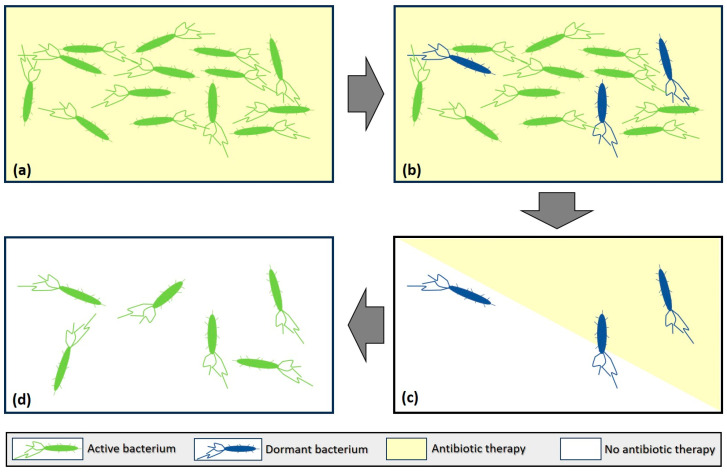
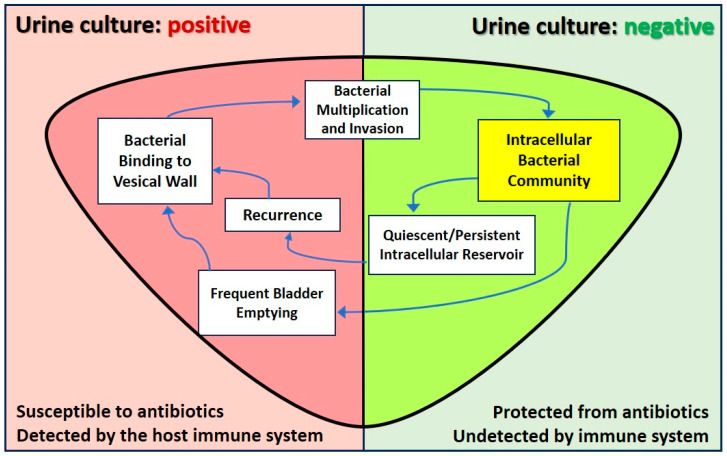
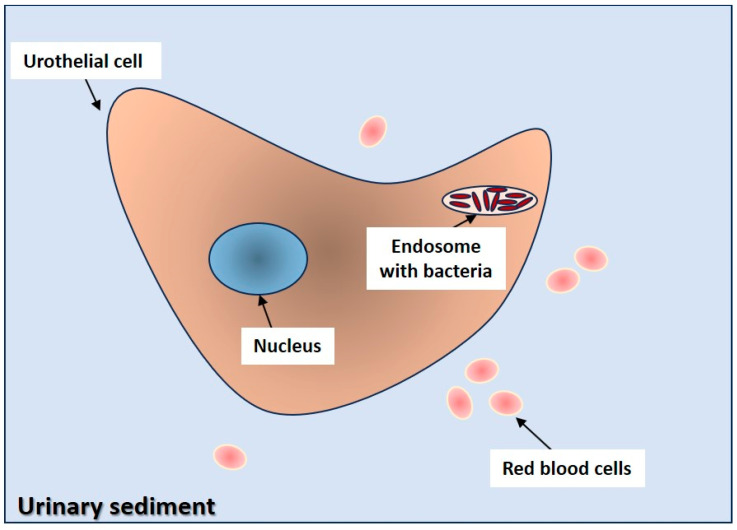
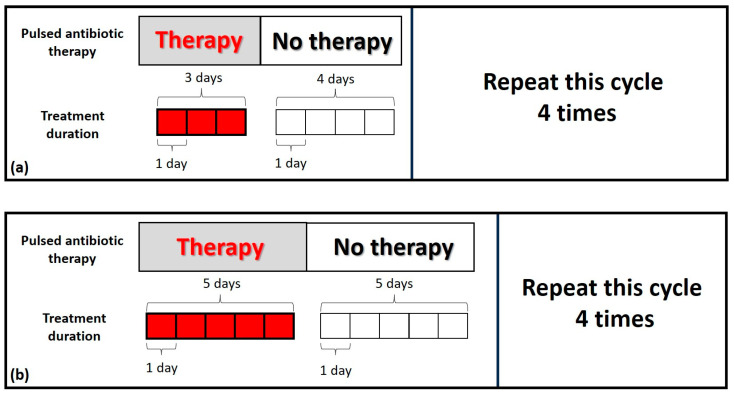
Verification
Claims the paper makes
The claims and statistics of this paper haven’t been checked yet.
Run the check — free, no account needed. It reads the open-access text and checks the sources it cites.
Claims other papers make about this one
Each is checked against this paper’s own text: does it say what the citing paper says it does?
The source backs part of the claim, not all of it — or backs it for a different population, condition or comparison.
In the citing paper
“IBCs are bacteria contained in the endosomes of urothelial cells protected by the antibiotic effect during therapy [22].”
From Vaginal microbiota and urinary tract infections in women: the protective role of vaginal lactobacilli in counteracting urinary tract infections occurrence and recurrence (2026) · cites this paper as [22]
Experimental — accuracy not yet measuredThe cited source says what the claim attributes to it.
In the citing paper
“The IBCs may lead to a phenomenon known as Bacterial persistence: an identical pathogen remaining dormant between two isolated episodes of UTIs [5, 22].”
The cited source says what the claim attributes to it.
In the citing paper
“Recurrent UTIs are often caused by the same bacterium that remains hidden in the bladder between an acute cystitis event and a subsequent infection that is undetected by urine culture collected 2 or 3 weeks after a short term antibiotic treatment [22].”
The cited source says what the claim attributes to it.
In the citing paper
“To date, the standard therapy for recurrent UTIs is to treat each episode using a short antibiotic treatment cycle. When the interval between infection events is short, prolonged use of prophylactic antibiotics may be administered [22].”
Self-check
Percentages, sums and reported differences re-computed from the paper’s own numbers.
The self-check needs the paper’s full text.
Citations
Cites
Llor, C., & Bjerrum, L. (2014) · Therapeutic Advances in Drug Safety · doi:10.1177/2042098614554919 · Cited by 2,079
Detection of Intracellular Bacterial Communities in Human Urinary Tract Infection
Rosen, D. A., Hooton, T. M., Stamm, W. E., Humphrey, P. A., & Hultgren, S. J. (2007) · PLoS Medicine · doi:10.1371/journal.pmed.0040329 · Cited by 651
Research works printed but not linked: 33
- Zhou, Y., Zhou, Z., Zheng, L., Gong, Z., Li, Y., Jin, Y., Huang, Y., and Chi, M. (2023). Urinary Tract Infections Caused by Uropathogenic Escherichia coli: Mechanisms of Infection and Treatment Options. Int. J. Mol. Sci., 24. · DOI
- Foxman, 2014, Urinary Tract Infection Syndromes: Occurrence, Recurrence, Bacteriology, Risk Factors, and Disease Burden, Infect. Dis. Clin. N. Am., 28, 1, 10.1016/j.idc.2013.09.003 · DOI
- Geerlings, 2016, Clinical Presentations and Epidemiology of Urinary Tract Infections, Microbiol. Spectr., 4, 1, 10.1128/microbiolspec.UTI-0002-2012 · DOI
- Dason, 2011, Guidelines for the diagnosis and management of recurrent urinary tract infection in women, Can. Urol. Assoc. J., 5, 316, 10.5489/cuaj.687 · DOI
- Kint, 2012, New-found fundamentals of bacterial persistence, Trends Microbiol., 20, 577, 10.1016/j.tim.2012.08.009 · DOI
- Spira, 2023, Bacterial toxin-antitoxin systems: Novel insights on toxin activation across populations and experimental shortcomings, Curr. Res. Microb. Sci., 5, 100204
- Jung, 2019, Bacterial persistence: Fundamentals and clinical importance, J. Microbiol., 57, 829, 10.1007/s12275-019-9218-0 · DOI
- Kang, S.M., Kim, D.H., Jin, C., and Lee, B.J. (2018). A Systematic Overview of Type II and III Toxin-Antitoxin Systems with a Focus on Druggability. Toxins, 10. · DOI
- Zhu, 2023, Stringent response ensures the timely adaptation of bacterial growth to nutrient downshift, Nat. Commun., 14, 467, 10.1038/s41467-023-36254-0 · DOI
- Pan, X., Liu, W., Du, Q., Zhang, H., and Han, D. (2023). Recent advances in bacterial persistence mechanisms. Int. J. Mol. Sci., 24. · DOI
- Agarwal, 2012, Pathogenomics of uropathogenic Escherichia coli, Indian. J. Med. Microbiol., 30, 141, 10.4103/0255-0857.96657 · DOI
- Eirnaes, 2011, Bacterial characteristics of importance for recurrent urinary tract infections caused by Escherichia coli, Dan. Med. Bull., 58, B4187
- Kim, 2021, What is the Cause of Recurrent Urinary Tract Infection? Contemporary Microscopic Concepts of Pathophysiology, Int Neurourol. J., 25, 192, 10.5213/inj.2040472.236 · DOI · Paper page
- Berry, 2009, Urothelial cultures support bacterial Community formation by uropathogenic Escherichia coli, Infect. Immun., 77, 2762, 10.1128/IAI.00323-09 · DOI
- Martinez-Figueroa, C., Cortés-Sarabia, K., Alarcò-Romero, L.d.C., Catalàn-Nàjera, H.G., Martinez-Alarcòn, M., and Vences-Velasquez, A. (2020). Observation of intracellular bacterial communities in urinary sediment using brightfield microscopy; a case report. BMC Urol., 20. · DOI
- Gupta, 2011, International Clinical Practice Guidelines for the Treatment of Acute Uncomplicated Cystitis and Pyelonephritis in Women: A 2010 Update by the Infectious Diseases Society of America and the European Society for Microbiology and Infectious Diseases, Clin. Infect. Dis., 52, e103, 10.1093/cid/ciq257 · DOI · Paper page
- Nelson, 2024, Guidelines for the Prevention, Diagnosis, and Management of Urinary Tract Infections in Pediatrics and Adults: A WikiGuidelines Group Consensus Statement, JAMA Netw. Open, 7, e2444495, 10.1001/jamanetworkopen.2024.44495 · DOI
- Nicolle, 2008, Short-term therapy for urinary tract infection: Success and failure, Int. J. Antimicrob. Agents, 31, S40, 10.1016/j.ijantimicag.2007.07.040 · DOI
- Zdzieblo, 2014, Fosfomycin as an alternative therapeutic option for treatment of infections caused by multi-resistant Gram-negative bacteria, J. Pre-Clin. Clin. Res., 8, 51
- Albert, 2004, Antibiotics for preventing recurrent urinary tract infection in non-pregnant women, Cochrane Database Syst. Rev., 2004, CD001209
- Anger, 2019, Recurrent Uncomplicated Urinary Tract Infections in Women: AUA/CUA/SUFU Guideline, J. Urol., 202, 282, 10.1097/JU.0000000000000296 · DOI
- Harding, 1982, Long-term antimicrobial prophylaxis for recurrent urinary tract infection in women, Rev. Infect. Dis., 4, 438, 10.1093/clinids/4.2.438 · DOI
- Pfau, 1991, Effective postcoital prophylaxis of recurrent urinary tract infections in premenopausal women: A review, Int. Urogynecol J., 2, 156, 10.1007/BF01997427 · DOI
- Raz, 1993, A controlled trial of intravaginal estriol in postmenopausal women with recurrent urinary tract infections, N. Engl. J. Med., 329, 753, 10.1056/NEJM199309093291102 · DOI
- Sihra, 2018, Nonantibiotic prevention and management of recurrent urinary tract infection, Nat. Rev. Urol., 15, 750, 10.1038/s41585-018-0106-x · DOI
- Faist, E., Meakins, J.L., and Schildberg, F.W. (1993). Intraphagocytic cell penetration and intracellular bioactivity of antibiotics. Host Defense Dysfunction in Trauma, Shock and Sepsis, Springer. Mechanisms and Therapeutic Approaches. · DOI
- Jeong, 2015, Intermittent antibiotic therapy for nodular bronchiectatic Mycobacterium avium complex lung disease, Am. J. Resp. Crit Care Med., 191, 96, 10.1164/rccm.201408-1545OC · DOI
- Spencer, 2022, Intermittent prophylactic antibiotics for bronchiectasis, Cochrane Database Syst. Rev., 1, CD013254
- Usui, M., Yoshii, Y., Thiriet-Rupert, S., Ghigo, J.M., and Biloin, C. (2023). Intermittent antibiotic treatment of bacterial biofilm favors the rapid evolution of resistance. Commun. Biol., 6. · DOI
- Ebert, 2023, Pulsed antibiotic treatments of gnotobiotic mice manifest in complex bacterial community dynamics and resistance effects, Cell Host Microbe, 31, 1007, 10.1016/j.chom.2023.05.013 · DOI
- Tyers, 2019, Drug combinations: A strategy to extend the life of antibiotics in the 21st century, Nat. Rev. Microbiol., 17, 141, 10.1038/s41579-018-0141-x · DOI
- Coates, 2020, Antibiotic combination therapy against resistant bacterial infections: Synergy, rejuvenation and resistance reduction, Expert. Rev. Anti Infect. Ther., 18, 5, 10.1080/14787210.2020.1705155 · DOI
- Sulakvelidze, 2001, Bacteriophage therapy, Antimicrob. Agents Chemother., 45, 649, 10.1128/AAC.45.3.649-659.2001 · DOI
Cited by
Sorted by citations
Metadata
- Authors
- Sgarabotto, D., Andretta, E., & Sgarabotto, C.
- Affiliations
- Policlinico Abano Terme (IT)
- Spinal Unit, Oras Hospital, 31045 Motta di Livenza, Treviso, Italy
- Department of Anesthesia and Intensive Care Unit, ULSS6 Euganea, 35013 Cittadella, Padova, Italy
- Corresponding author
- Sgarabotto, Dino
- Venue
- Antibiotics
- Publisher
- MDPI AG
- Published
- 2025-01-02
- Volume
- 14
- Issue
- 1
- Pages
- 22
- ISSN
- 2079-6382 (ISSN-L)
- PMC
- PMC11762684
- OpenAlex
- W4405992286
- Cited by
- 9
- References
- 2
- Citations by year
- 2026: 8 · 2025: 1
- FWCI
- 6.24
- Type
- journal article
- Language
- en
- Open access
- gold
- doi.org
- Licence
- Locations
- Antibiotics (publishedVersion, cc-by)
- PubMed Central (publishedVersion, cc-by)
- PubMed (publishedVersion)
- DOAJ (DOAJ: Directory of Open Access Journals) (submittedVersion, cc-by-sa)
- Topics
- Health Sciences › Medicine › Urology › Urinary Tract Infections Management
- Health Sciences › Medicine › Urology › Urinary Bladder and Prostate Research
- Health Sciences › Medicine › Pediatrics, Perinatology and Child Health › Pediatric Urology and Nephrology Studies
- Keywords
- recurrent urinary tract infection, pathogenesis, bacterial persistence, intracellular bacterial communities, women
About these checks
Registry, retraction, Cites and statistics results are computed, not judged, with one exception: a printed reference that no index lists is read once by a model before it counts as a citation error. Claims are extracted by a model and kept only when their quote appears verbatim in the text; each cited source is then checked, with a model’s help, for whether it says what the claim relies on. Those verdicts can be wrong — read the claim’s quote and the cited source before relying on one.
Statistics and arithmetic are recomputed, not judged.
Confidence bands are shown only for fields calibrated on our annotated test set. None is calibrated yet, so no band is shown.
What counts as a claim ›How we measure confidence ›How we check this ›
Are you an author, or do you see a problem with this page? Request a review
How to cite
Cite CoChat for the checks on this page, and the paper for its own findings.
- This page
- CoChat. (2026). Citation check: Recurrent Urinary Tract Infections (UTIs): A Review and Proposal for Clinicians. https://app.cochat.ai/papers/10.3390/antibiotics14010022
- The paper
- Sgarabotto, D., Andretta, E., & Sgarabotto, C. (2025). Recurrent Urinary Tract Infections (UTIs): A Review and Proposal for Clinicians. Antibiotics. https://doi.org/10.3390/antibiotics14010022
