

FSCB-IDS: Feature Selection and Minority Class Balancing for Attacks Detection in VANETs
Open accessThe DOI matches its Crossref record; 39 of the 39 references it cites were found in a registry or an index.
Abstract
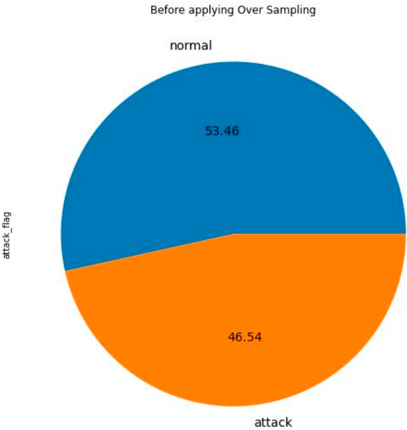
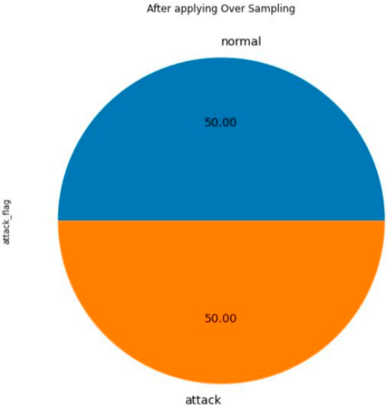
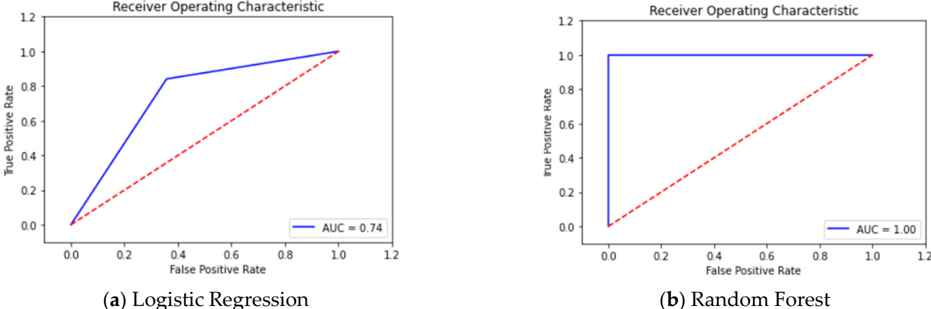
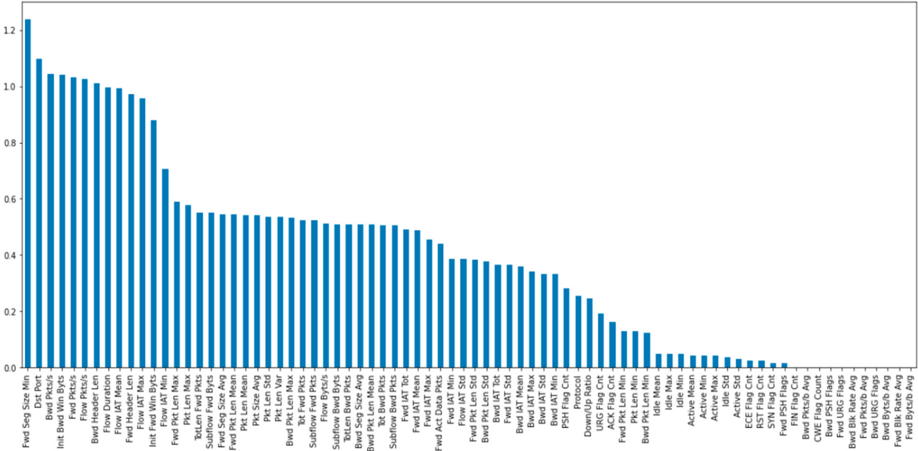
Vehicular ad hoc networks (VANETs) are used for vehicle to vehicle (V2V) and vehicle to infrastructure (V2I) communications. They are a special type of mobile ad hoc networks (MANETs) that can share useful information to improve road traffic and safety. In VANETs, vehicles are interconnected through a wireless medium, making the network susceptible to various attacks, such as Denial of Service (DoS), Distributed Denial of Service (DDoS), or even black hole attacks that exploit the wireless medium to disrupt the network. These attacks degrade the network performance of VANETs and prevent legitimate users from accessing resources. VANETs face unique challenges due to the fast mobility of vehicles and dynamic changes in network topology. The high-speed movement of vehicles results in frequent alterations in the network structure, posing difficulties in establishing and maintaining stable communication. Moreover, the dynamic nature of VANETs, with vehicles joining and leaving the network regularly, adds complexity to implementing effective security measures. These inherent constraints necessitate the development of robust and efficient solutions tailored to VANETs, ensuring secure and reliable communication in dynamic and rapidly evolving environments. Therefore, securing communication in VANETs is a crucial requirement. Traditional security countermeasures are not pertinent to autonomous vehicles. However, many machine learning (ML) technologies are being utilized to classify malicious packet information and a variety of solutions have been suggested to improve security in VANETs. In this paper, we propose an enhanced intrusion detection framework for VANETs that leverages mutual information to select the most relevant features for building an effective model and synthetic minority oversampling (SMOTE) to deal with the class imbalance problem. Random Forest (RF) is applied as our classifier, and the proposed method is compared with different ML techniques such as logistic regression (LR), K-Nearest Neighbor (KNN), decision tree (DT), and Support Vector Machine (SVM). The model is tested on three datasets, namely ToN-IoT, NSL-KDD, and CICIDS2017, addressing challenges such as missing values, unbalanced data, and categorical values. Our model demonstrated great performance in comparison to other models. It achieved high accuracy, precision, recall, and f1 score, with a 100% accuracy rate on the ToN-IoT dataset and 99.9% on both NSL-KDD and CICIDS2017 datasets. Furthermore, the ROC curve analysis demonstrated our model’s exceptional performance, achieving a 100% AUC score.
Overview
The claims and statistics of this paper haven’t been checked yet.
Free: it reads the open-access text and checks the first 5 claims that cite a source we can check. Create a free account to check every claim.
Integrity signals
Registry
Cites
Statistics
Figures










Verification
Claims the paper makes
The claims and statistics of this paper haven’t been checked yet.
Free: it reads the open-access text and checks the first 5 claims that cite a source we can check. Create a free account to check every claim.
Self-check
Percentages, sums and reported differences re-computed from the paper’s own numbers.
The self-check needs the paper’s full text.
Citations
Cites
SMOTE synthetic minority over-sampling technique
Chawla, N. V., Bowyer, K. W., Hall, L. O., & Kegelmeyer, W. P. (2002) · Journal of Artificial Intelligence Research · doi:10.1613/jair.953 · Cited by 32,865
Machine Learning Algorithms - A Review
Mahesh, B. (2020) · International Journal of Science and Research (IJSR) · doi:10.21275/art20203995 · Cited by 2,510
Vehicular ad hoc networks (VANETS): status, results, and challenges
Zeadally, S., Hunt, R., Chen, Y.-S., Irwin, A., & Hassan, A. (2012) · Telecommunication Systems · doi:10.1007/s11235-010-9400-5 · Cited by 1,208
Kaiwartya, O., Abdullah, A. H., Cao, Y., Altameem, A., Prasad, M., Lin, C.-T., & Liu, X. (2016) · IEEE Access · doi:10.1109/access.2016.2603219 · Cited by 711
Vehicular Ad Hoc Networks (VANETs): Challenges and Perspectives
Yousefi, S., Mousavi, M., & Fathy, M. (2006) · 2006 6th International Conference on ITS Telecommunications · doi:10.1109/itst.2006.289012 · Cited by 555
Mutual information-based feature selection for intrusion detection systems
Amiri, F., Rezaei Yousefi, M., Lucas, C., Shakery, A., & Yazdani, N. (2011) · Journal of Network and Computer Applications · doi:10.1016/j.jnca.2011.01.002 · Cited by 471
Towards software-defined VANET: Architecture and services
Ku, I., Lu, Y., Gerla, M., Gomes, R. L., Ongaro, F., & Cerqueira, E. (2014) · 2014 13th Annual Mediterranean Ad Hoc Networking Workshop (MED-HOC-NET) · doi:10.1109/medhocnet.2014.6849111 · Cited by 362
Evaluation of machine learning algorithms for intrusion detection system
Almseidin, M., Alzubi, M., Kovacs, S., & Alkasassbeh, M. (2017) · 2017 IEEE 15th International Symposium on Intelligent Systems and Informatics (SISY) · doi:10.1109/sisy.2017.8080566 · Cited by 326
Gad, A. R., Nashat, A. A., & Barkat, T. M. (2021) · IEEE Access · doi:10.1109/access.2021.3120626 · Cited by 323
Delay-Minimization Routing for Heterogeneous VANETs With Machine Learning Based Mobility Prediction
Tang, Y., Cheng, N., Wu, W., Wang, M., Dai, Y., & Shen, X. (2019) · IEEE Transactions on Vehicular Technology · doi:10.1109/tvt.2019.2899627 · Cited by 206
Research works printed but not linked: 5
- Nirmala, 2014, A Relativity Cram between MANET and VANET Background along Routing Protocols, Int. J. Adv. Inf. Sci. Technol., 26, 153
- Rai, 2016, Decision Tree Based Algorithm for Intrusion Detection, Int. J. Adv. Netw. Appl., 7, 2828
- Grover, J., Prajapati, N.K., Laxmi, V., and Gaur, M.S. International Conference on Advances in Computing and Communications, Springer.
- Guezzaz, A., Asimi, A., Azrour, M., Batou, Z., and Asimi, Y. (2020). Big Data and Networks Technologies, Springer.
- (2023, January 11). NSL-KDD Dataset. Available online: https://web.archive.org/web/20150205070216/http://nsl.cs.unb.ca/NSL-KDD/.
Cited by
Makhadmeh, S. N., Fraihat, S., Awad, M., Sanjalawe, Y., Al-Betar, M. A., & Awadallah, M. A. (2025) · Internet of Things · doi:10.1016/j.iot.2025.101536 · Cited by 164
Empowering sustainability in the built environment: A technological Lens on industry 4.0 Enablers
Pachouri, V., Singh, R., Gehlot, A., Pandey, S., Akram, S. V., & Abbas, M. A. E. (2023) · Technology in Society · doi:10.1016/j.techsoc.2023.102427 · Cited by 98
Khalil, A., Farman, H., Nasralla, M. M., Jan, B., & Ahmad, J. (2024) · Ain Shams Engineering Journal · doi:10.1016/j.asej.2023.102616 · Cited by 54
Self-citationEl‐Shafai, W., Azar, A. T., & Ahmed, S. (2025) · IEEE Access · doi:10.1109/access.2025.3552544 · Cited by 44
“The rapid and unpredictable movement of vehicles often leads to challenges in maintaining stable and reliable network connectivity [12].”
Review of filtering based feature selection for Botnet detection in the Internet of Things
Saied, M., Guirguis, S. K., & Madbouly, M. M. (2025) · Artificial Intelligence Review · doi:10.1007/s10462-025-11113-0 · Cited by 33
“Amaouche et al. (2023) proposed an enhanced intrusion detection framework for Vehicular ad hoc networks (VANETs).”
HYRIDE: HYbrid and Robust Intrusion DEtection approach for enhancing cybersecurity in Industry 4.0
Srivastav, S., Shukla, A. K., Kumar, S., & Muhuri, P. K. (2025) · Internet of Things · doi:10.1016/j.iot.2025.101492 · Cited by 24
A Hybrid Deep Learning Model for Detection and Mitigation of DDoS Attacks in VANETs
Jayakrishna, N., & Prasanth, N. N. (2025) · Scientific Reports · doi:10.1038/s41598-025-15215-1 · Cited by 20
“Verma et al. 46 introduced PREVIR, combining Logit and LogitBoost models for DoS detection, achieving 99.99% accuracy and 100% TPR, albeit with a 35% FPR. Amaouche et al. 47 developed FSCB-IDS, integrating mutual information-based feature selection and SMOTE for addressing class imbalance, using Random Forest as the p…”
InfluentialSarathkumar, K., Sudhakar, P., & Kanmani, A. C. (2024) · International Journal of Information Technology · doi:10.1007/s41870-024-01827-9 · Cited by 17
A Secure Framework for WSN-IoT Using Deep Learning for Enhanced Intrusion Detection
Kumar, C. U. O., Gajendran, S., Marappan, S., Zakariah, M., & Almazyad, A. S. (2024) · Computers, materials & continua/Computers, materials & continua (Print) · doi:10.32604/cmc.2024.054966 · Cited by 16
Dual Model for International Roughness Index Classification and Prediction
Molinero-Pérez, N., Montalbán-Domingo, L., Sanz-Benlloch, A., & García-Segura, T. (2025) · Infrastructures · doi:10.3390/infrastructures10010023 · Cited by 13
Cyberattack defense mechanism using deep learning techniques in software-defined networks
Rao, D. S., & Jubilson, E. A. (2023) · International Journal of Information Security · doi:10.1007/s10207-023-00785-w · Cited by 11
Soares, K., & Shinde, A. A. (2024) · Multimedia Tools and Applications · doi:10.1007/s11042-024-20489-0 · Cited by 10
“VANET are more vulnerable to the attacks than the wired forms of communication networks due to their high mobility, common forms of network medium and a lack of centrally managing security devices [5].”
An integrated IDS for the Internet of Vehicles using a Large Language Model framework
Aishwarya, R., Vetriselvi, V., Srinivas, N., & Ashwin Muthuraman, A. (2025) · Internet of Things · doi:10.1016/j.iot.2025.101666 · Cited by 10
A Network Traffic Abnormal Detection Method: Sketch-Based Profile Evolution
Yi, J., Zhang, S., Tan, L., & Tian, Y. (2023) · Applied Sciences · doi:10.3390/app13169087 · Cited by 8
Pareek, P. K., Siddhanti, P. N., Anupkant, S., Husain, S. O., & Bhuvaneshwarri, I. (2024) · International Conference on Data Science and Information System (ICDSIS) · doi:10.1109/icdsis61070.2024.10594488 · Cited by 8
“Additionally, this method innovates over just the traditional techniques that use RSSI or geographical location comparisons solely as bases [4].”
MethodDhand, G., Rao, M., Chaudhary, P., & Sheoran, K. (2024) · Journal of Network and Computer Applications · doi:10.1016/j.jnca.2024.104093 · Cited by 15
Anitha, C. L., & Sumathi, R. (2023) · Multimedia Tools and Applications · doi:10.1007/s11042-023-17894-2 · Cited by 7
Saranya, T., & Indra Priyadharshini, S. (2025) · IEEE Access · doi:10.1109/access.2025.3582788 · Cited by 5
Banafshehvaragh, S. T., Zarei, M., & Rahmani, A. M. (2025) · Scientific Reports · doi:10.1038/s41598-025-08228-3 · Cited by 5
“Unlike some other IDSs 29 , the proposed RSR-IDS covers the mobility of vehicles in urban environments and solves the overfitting of ML algorithms in some classifiers.”
Idboufker, N., Mssassi, S., Alaoui, C. M., & Zougagh, H. (2023) · Electronics · doi:10.3390/electronics12163390 · Cited by 5
Duarte, J. D., Bispo, G. D., Rodrigues, G. A. P., Serrano, A. L. M., Saiki, G. M., & Gonçalves, V. P. (2025) · Journal of Internet Services and Applications · doi:10.5753/jisa.2025.5251 · Cited by 5
SHAP-based feature selection and MASV-weighted SMOTE for enhanced attack detection in VANETs
Saharuna, Z., Ahmad, T., & Ijtihadie, R. M. (2025) · Vehicular Communications · doi:10.1016/j.vehcom.2025.100970 · Cited by 7
Khan, M. D., Ta, V.-T., Rafiq, H., & Nnamoko, N. (2025) · Applied Artificial Intelligence · doi:10.1080/08839514.2025.2538453 · Cited by 4
State-Of-The-Art Methods for Dynamic Texture Classification: A Comprehensive Review
Benzyane, M., Azrour, M., Zeroual, I., & Agoujil, S. (2024) · World sustainability series · doi:10.1007/978-3-031-52419-6_1 · Cited by 4
Self-citationUsing Learning Focal Point Algorithm to Classify Emotional Intelligence
Sakhi, A., Mansour, S.-E., & Sekkaki, A. (2024) · Journal of Robotics and Control (JRC) · doi:10.18196/jrc.v5i1.20895 · Cited by 3
“A primary and innovative focus of this endeavor lies in the infusion of emotional intelligence (EI) into robot teachers, achieved through the sophisticated analysis of facial expressions using advanced artificial intelligence techniques [3], [4], [5].”
BackgroundTrajectory tracking attack for vehicular ad‐hoc networks
Li, C., & Li, Z. (2024) · Security and Privacy · doi:10.1002/spy2.433 · Cited by 3
Liu, C. K., Zhang, Y. K., Xue, Z., Sheng, Z., Kang, J., & Han, G. (2026) · IEEE Transactions on Intelligent Transportation Systems · doi:10.1109/tits.2026.3669369 · Cited by 2
“1) Data Pre-Processing: In real-world application scenarios, network tra ffi c data typically exhibits class imbalance [45], Authorized licensed use limited to the terms of the applicable license agreement with IEEE.”
Malicious Node Detection in VANETs via Enhanced DSR and ML
Palaniappan, A. N., Pranav, J., Shivamanikkavasakam, S., Kumar, S. D., & Gandhiraj, R. (2024) · International Conference on Wireless Communications, Signal Processing and Networking (WiSPNET) · doi:10.1109/wispnet61464.2024.10532957 · Cited by 2
“The base paper [8] which was referred had the classification report as mentioned is the right side of Table.”
BackgroundThe Emotionality Tool: Evaluating Usability with Facial Emotions Analysis
Rodrigues, A. A., Santos, F. D. S., & Gama, S. P. (2025) · International Journal of Human-Computer Interaction · doi:10.1080/10447318.2025.2491789 · Cited by 3
“In a similar vein, Amaouche et al. (2023) introduced feature selection and minority class balancing strategies in their work on attack detection in Vehicular Ad Hoc Networks (VANETs), which may also be applicable in facial emotion recognition.”
A Balanced and Feature-Optimized Intrusion Detection Approach for Threat Mitigation in IoMT
Sharma, P., Nishita, & Saxena, A. (2025) · IEEE Guwahati Subsection Conference (GCON) · doi:10.1109/gcon65540.2025.11173384 · Cited by 2
Intelligent Real-Time Monitoring System for Wastewater Management Using Artificial Neural Network
Essahlaoui, F., Elhajrat, N., Halimi, M., Azrour, M., Kılıç, Z., & Abbassi, A. E. (2024) · World sustainability series · doi:10.1007/978-3-031-52419-6_2 · Cited by 1
Self-citationFederated Learning Approach for Distributed DDoS Detection in VANETs
Thakur, N. V., Vijayakumar, S., Meenachi, L., Das, S., & Patro, P. (2025) · Transactions on Emerging Telecommunications Technologies · doi:10.1002/ett.70312 · Cited by 1
Balakumar, C., & Shanmugapriya, N. (2025) · International Conference on Communication and Electronics Systems (ICCES) · doi:10.1109/icces67310.2025.11336887 · Cited by 1
“Amaouche, Set al. [14](2023)study proposes an effective intrusion detection system for VANETs that uses mutual information for feature selection, utilizes SMOTE to address class imbalance, and implements Random Forest as the primary classifier, with Logistic Regression, K-Nearest Neighbors,…”
A Collaborative Anomaly Detection Model Using En-Semble Learning and Blockchain
Hazman, C., Guezzaz, A., Benkirane, S., Azrour, M., & Amaouche, S. (2024) · Lecture notes in networks and systems · doi:10.1007/978-3-031-48573-2_37 · Cited by 1
Self-citationSharma, A., & Rani, S. (2025) · Transactions on Emerging Telecommunications Technologies · doi:10.1002/ett.70132 · Cited by 2
“Eavesdropping, message manipulation, and unauthorized access may damage critical user data, interfere with network operations, and even risk human lives [9, 10].”
Helmet Guard: Engine Management and Accident Severity Assessment for Motorcycles
Vanga, S. R., Angadala, N., & Alajangi, P. G. (2024) · International Conference on Computing, Communication and Networking Technologies (ICCCNT) · doi:10.1109/icccnt61001.2024.10724091
Wang, G., Gao, Y., Chen, Y., Wang, P., & Ding, Y. (2026) · Lecture notes in computer science · doi:10.1007/978-981-95-3551-4_18
Arunachalavel, D., & Pandeeswari, N. (2026) · Smart Science · doi:10.1080/23080477.2026.2635104
“[18] FSCB-IDS Uses only feature selection and SMOTE to deal with class imbalance; resistant classification.”
Weighted Averaging-Based Ensemble Learning for Network Intrusion Detection
Madhuridevi, L., & Lakshmi, N. V. S. S. R. (2026) · Journal of Circuits Systems and Computers · doi:10.1142/s0218126626501446
Sagar, M., Kamalakar, R., Subrahmanyam, V., & Biksham, V. (2026) · Blockchain Research and Applications · doi:10.1016/j.bcra.2026.100562
Olanrewaju, C. O. (2026) · WORLD JOURNAL OF INNOVATION AND MODERN TECHNOLOGY · doi:10.56201/wjimt.v10.no4.2026.pg57.77
A Hybrid Routing Algorithm for Smartwatch MANET Technology in Wearable IoT Systems
Salih, B. F., Hassan, M. H., Kashmoola, S. A., Hassan, H. H., Jubair, M. A., & Khalid, H. F. (2026) · International Conference on Advancements in Smart, Secure and Intelligent Computing (ASSIC) · doi:10.1109/assic70037.2026.11717131
“In [14], the author proposes a model, FSCB-IDS, for attack detection in VANETs.”
Metadata
- Authors
- Amaouche, S., Guezzaz, A., Benkirane, S., Azrour, M., Khattak, S. B. A., Farman, H., & Nasralla, M. M.
- Affiliations
- Cadi Ayyad University (MA)
- Université Moulay Ismail de Meknes (MA)
- Prince Sultan University (SA)
- Corresponding author
- Azrour, Mourade
- Nasralla, Moustafa M.
- ORCID
- Venue
- Applied Sciences
- Publisher
- MDPI AG
- Published
- 2023-06-25
- Volume
- 13
- Issue
- 13
- Pages
- 7488
- ISSN
- 2076-3417 (ISSN-L)
- OpenAlex
- W4382135263
- Cited by
- 42
- References
- 39
- Citations by year
- 2026: 6 · 2025: 17 · 2024: 13 · 2023: 6
- FWCI
- 3.13
- Type
- journal article
- Language
- en
- Open access
- gold
- doi.org
- Licence
- Locations
- Applied Sciences (publishedVersion, cc-by)
- DOAJ (DOAJ: Directory of Open Access Journals) (submittedVersion, cc-by-sa)
- Funders
- Université Moulay Ismaïl
- Prince Sultan University
- Université Cadi Ayyad
- Topics
- Physical Sciences › Engineering › Electrical and Electronic Engineering › Vehicular Ad Hoc Networks (VANETs)
- Physical Sciences › Computer Science › Computer Networks and Communications › Network Security and Intrusion Detection
- Physical Sciences › Computer Science › Computer Networks and Communications › Security in Wireless Sensor Networks
- Keywords
- vehicular ad hoc networks, intrusion detection, attack detection, feature selection, mutual information, SMOTE, class imbalance, random forest, denial-of-service attacks, black hole attack, network security
About these checks
Registry, retraction, Cites and statistics results are computed, not judged, with one exception: a printed reference that no index lists is read once by a model before it counts as a citation error. Claims are extracted by a model and kept only when their quote appears verbatim in the text; each cited source is then checked, with a model’s help, for whether it says what the claim relies on. Those verdicts can be wrong — read the claim’s quote and the cited source before relying on one.
Statistics and arithmetic are recomputed, not judged.
Confidence bands are shown only for fields calibrated on our annotated test set. None is calibrated yet, so no band is shown.
What counts as a claim ›How we measure confidence ›How we check this ›
Are you an author, or do you see a problem with this page? Request a review
Data sources
Bibliographic data: Semantic Scholar, OpenAlex, Crossref.
Contains information from the Semantic Scholar Academic Graph Datasets, made available under the ODC Attribution License (ODC-BY 1.0).
Semantic Scholar’s data is described in: Kinney, R., et al. (2023). The Semantic Scholar Open Data Platform. arXiv:2301.10140.
